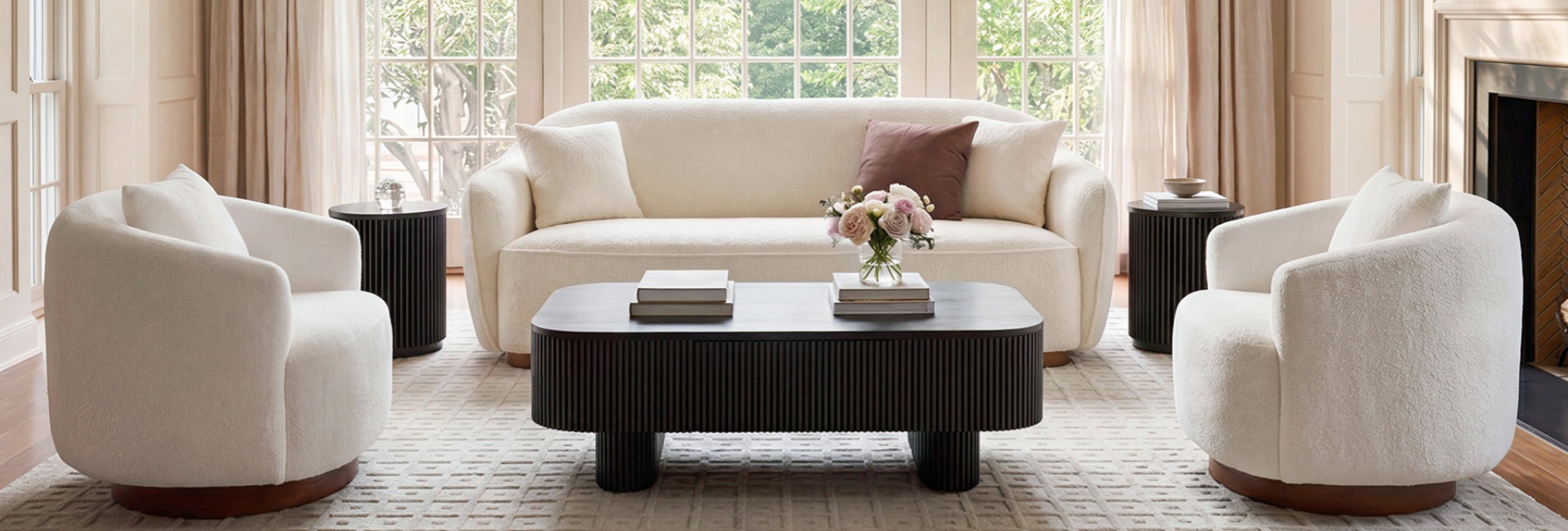
If you've ever stood in an empty room with a tape measure and no idea what to buy first, you already know that furnishing a home is rarely as simple as making a shopping list. A sofa, sideboard, desk, or storage cabinet may all serve very different purposes. The best choice depends on how you use the room, how much space you have, and how the furniture needs to work together.
That's also why types of furniture can mean several things. Furniture can be grouped by function, such as seating or storage; by room, such as bedroom or dining room furniture; by material, including wood, metal, glass, and upholstery; or by style, from Mid-Century Modern to traditional.
This guide breaks down the most common furniture types and names, where they are typically used, what they are designed to do, and what to consider before buying. You'll also find practical tips for choosing furniture based on room size, layout, material, and everyday use.
Table of Contents
- What Are the Main Types of Furniture?
- Common Furniture Types and Names
- Types of Furniture by Room
- Types of Living Room Furniture
- Types of Bedroom Furniture
- Types of Dining Room Furniture
- Types of Home Office Furniture
- Types of Entryway Furniture
- Types of Outdoor Furniture
- How Furniture Is Classified: Room, Function, Material, and Style
- Types of Furniture by Material
- Common Furniture Styles
- Common Furniture Terms That Are Easy to Confuse
- Small-Space Furniture: Pieces That Do More Than One Job
- How to Choose the Right Furniture for Your Space
- A Furniture Buying Checklist
- What Furniture Does a Home Actually Need?
- Final Takeaway
- FAQs
- What are the four basic types of furniture?
- What are the main categories of furniture?
- What are 10 common types of furniture?
- What are the different types of furniture by room?
- What are the types of living room furniture?
- What are the types of bedroom furniture?
- What are the types of dining room furniture?
- How do you classify furniture by material?
- What is the difference between a sideboard and a media console?
- What is the difference between a dresser and a chest?
- What furniture should every home have?
- How do I choose the right furniture for my space?
What Are the Main Types of Furniture?
There is no single official system for dividing every piece of furniture into a fixed number of categories. A practical starting point is to group furniture by what it does: seating, tables and surfaces, storage, and sleeping furniture.
Two additional groups are useful when planning a modern home: work furniture and multifunctional furniture.
Furniture categories often overlap. A nightstand provides both a surface and storage. A sofa bed works as seating and sleeping furniture, while a lift-top coffee table can provide a table surface, workspace, and concealed storage.
A useful way to understand furniture is through four questions:
Function: What does the piece do?
Room: Where will it be used?
Material: What is it made from?
Style: How does it look and feel?
For most buying decisions, start with function. Figure out what the room needs to support—sitting, sleeping, eating, working, or storage—then narrow your choices by dimensions, materials, and design.
Types of Furniture at a Glance
These categories are meant for practical home planning rather than strict industry classification. A single piece may fit several groups depending on how it is used.
Common Furniture Types and Names
If you're looking for a quick list of furniture names, grouping them by function makes the list easier to understand.
Seating Furniture
Sofa
Armchair
Recliner
Ottoman
Bench
Stool
Tables and Surface Furniture
Storage Furniture
Chest of drawers
Wardrobe
Cabinet
Buffet
TV stand
Sleeping Furniture
Platform bed
Upholstered bed
Storage bed
Bunk bed
Daybed
Work Furniture
Writing desk
Office chair
Filing cabinet
Credenza
Drawer unit
The same furniture piece can belong to more than one category. A storage bench, for instance, provides both seating and storage, while a media console combines storage with a surface for a television and entertainment equipment.
Types of Furniture by Room
Organizing furniture by room is one of the easiest ways to build a practical shopping list. Each space has different requirements, although many pieces can work in multiple rooms.
A compact apartment may need one piece to perform several jobs. In a larger home, separate furniture can be used for seating, storage, work, and entertaining.
Types of Living Room Furniture
Living rooms tend to contain a broad mix of furniture because they may need to support relaxing, watching TV, entertaining, reading, and occasional work.
Sofas, Sectionals, and Accent Chairs
A sofa is a long upholstered seating piece designed for multiple people. A sectional consists of connected seating sections and can make good use of larger or L-shaped rooms. An accent chair adds another seat without taking up the space of a second sofa.
Don't look at width alone. Sofa depth can have just as much impact on circulation, particularly in an apartment or narrow living room. A deeper sofa may feel comfortable in a large room but leave a smaller space feeling cramped.
An 80- to 90-inch sofa can often accommodate three or four people, but seating capacity varies by design, cushion width, and arm style. Always compare the actual dimensions with the rest of the layout.
Coffee Tables, Side Tables, and End Tables
A coffee table sits in front of seating and provides a convenient surface for drinks, books, decor, and everyday items. A side table or end table sits beside a sofa or chair and keeps smaller items within easy reach.
The shape can affect both appearance and movement:
Rectangular: A natural match for longer sofas.
Round: Useful where people regularly move around the seating area.
Oval: Provides a longer surface while softening sharp corners.
Square: Works well with balanced or sectional seating arrangements.
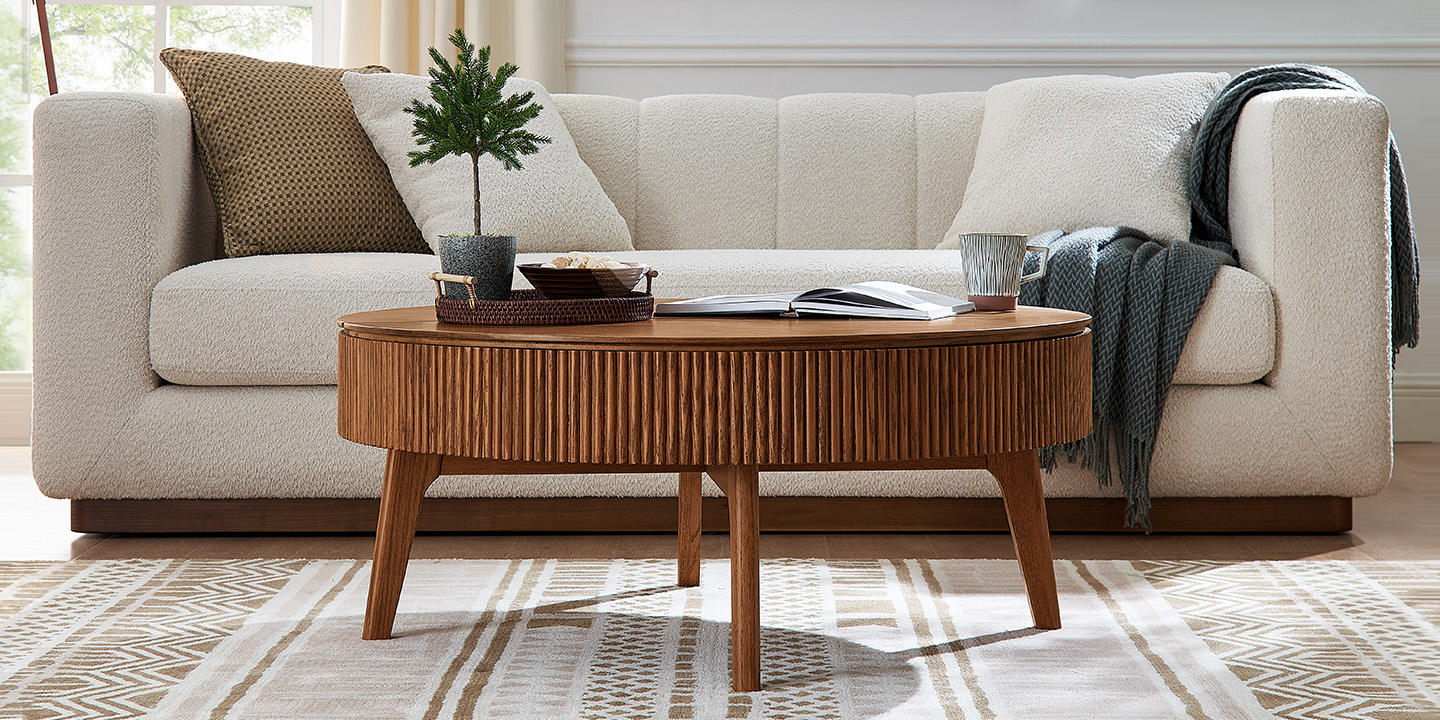
For smaller rooms, multifunctional furniture can reduce the number of pieces required. The Magnus 39" Lift-Top Oak Coffee Table, for example, combines a coffee table surface with a lift-top workspace and concealed storage.
Media Consoles and TV Storage
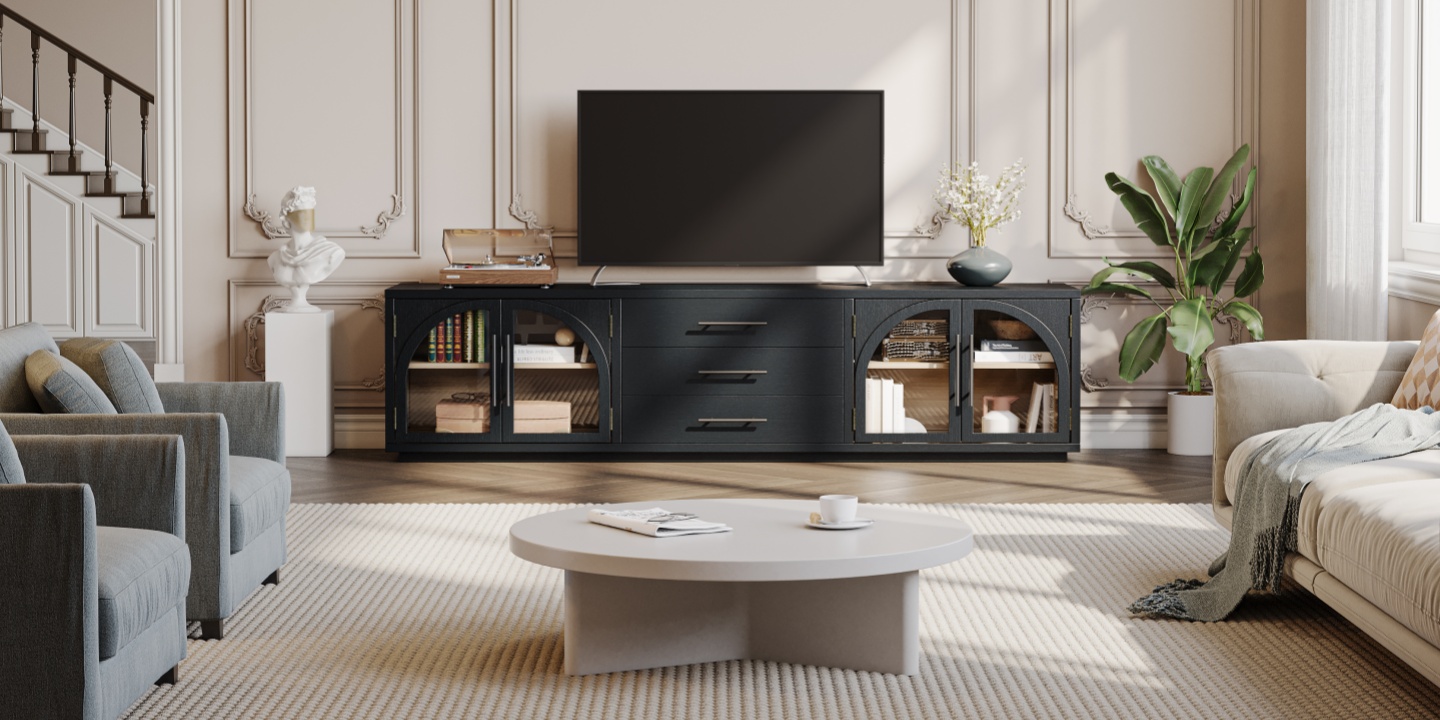
A media console is a low storage unit designed to support a television while keeping electronics, accessories, and cables organized. Compared with a basic TV stand, it often offers more storage and dedicated features for media equipment.
When choosing one, check:
TV width and recommended console width
Overall height
Storage capacity
Shelf dimensions
Cable-management openings
Door and drawer clearance
A console can look appropriately sized under a television and still fall short if there is nowhere to place a router, game console, remote controls, or other accessories.
The Valborg 80" Oak Media Console is one example of a media-focused storage piece, combining enclosed storage, adjustable shelving, and cord cutouts.
Types of Bedroom Furniture
Bedroom furniture usually starts with the bed because its dimensions and placement determine how much room remains for nightstands, clothing storage, and circulation.
Beds and Bed Frames
A bed frame supports the mattress and establishes the visual scale of the bedroom. Common options include platform beds, upholstered beds, storage beds, canopy beds, bunk beds, and daybeds.
Before buying a bed, compare more than the mattress size. Check the overall frame dimensions, headboard height, mattress support, and clearance around the bed.
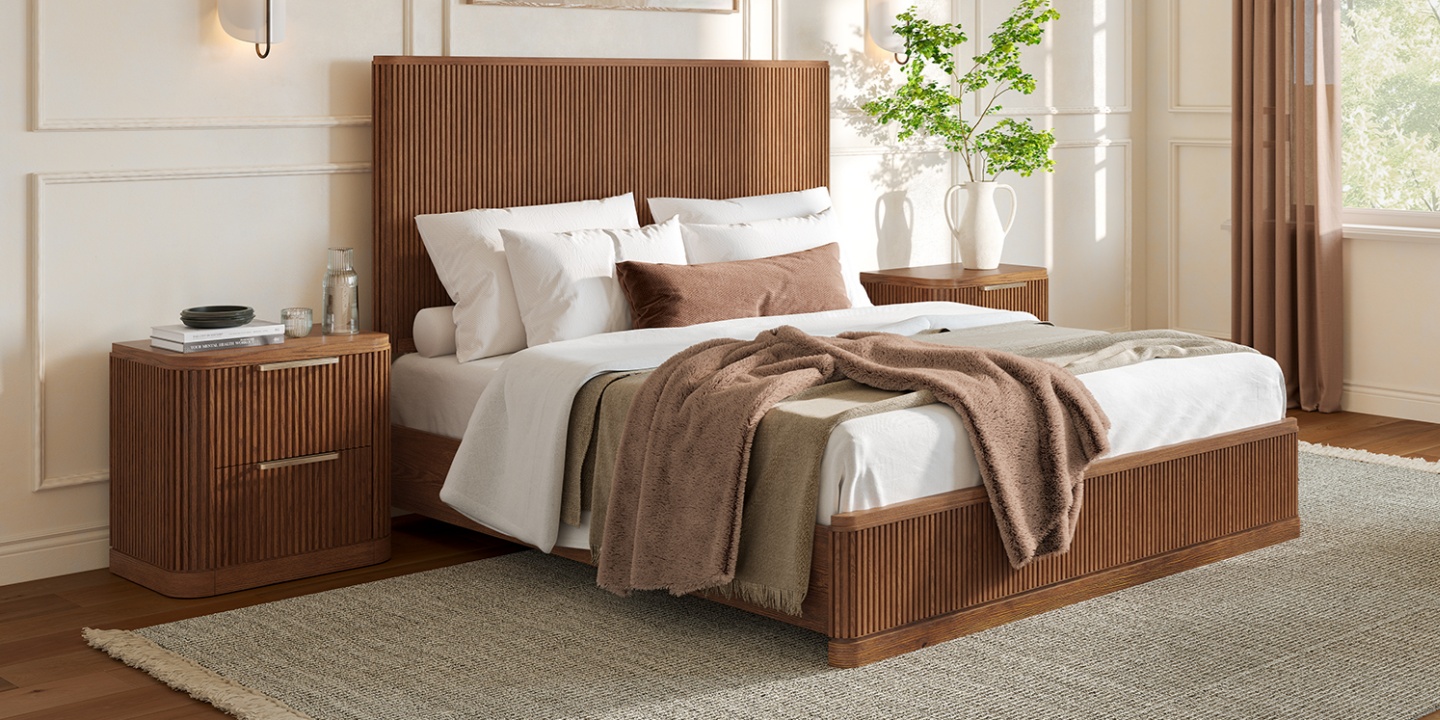
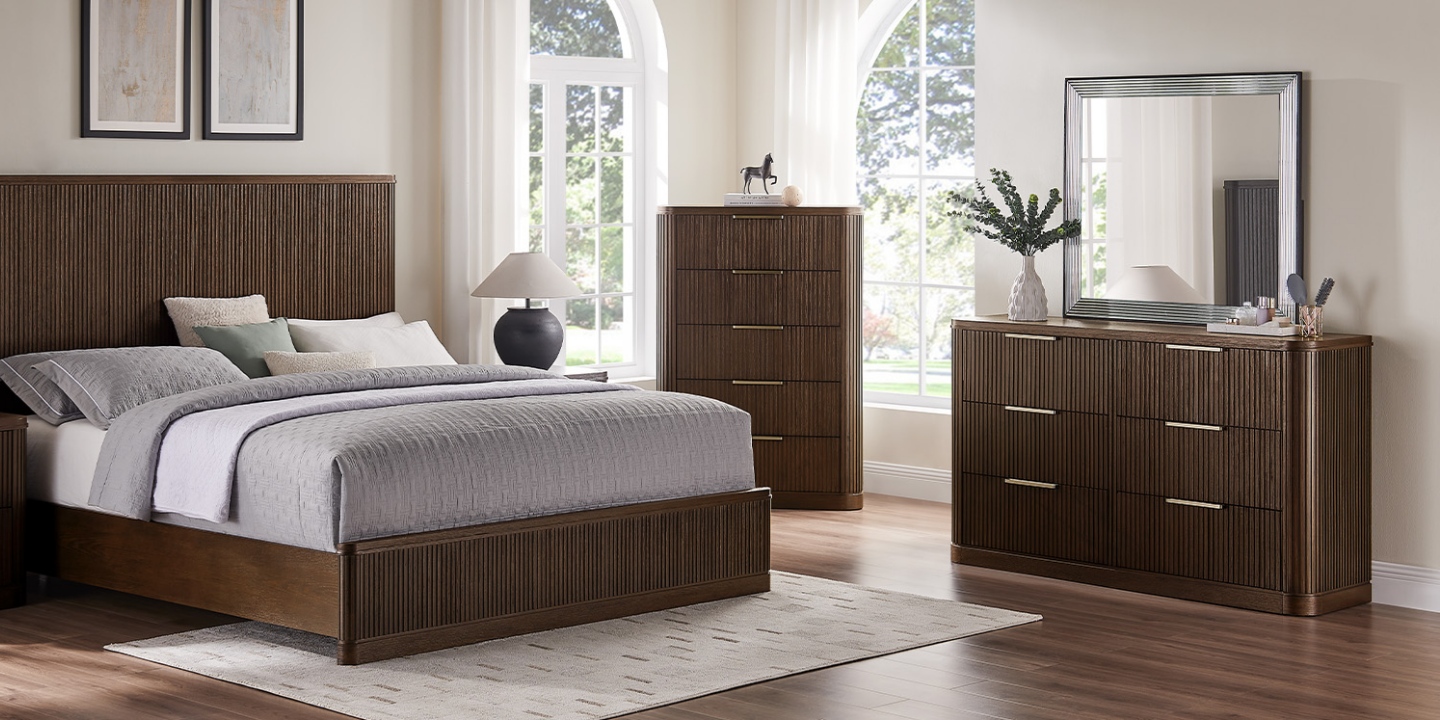
The Finnley Fluted Bed shows how structural details can also become part of the design. Its King size measures 79.5"W × 87.4"D × 60"H and features vertical solid-wood fluting, a tall headboard, reinforced center support, and 10 middle legs. The kiln-dried wood construction and rounded footboard add practical details, while the design gives the bed a strong presence without relying on excessive ornament.
Nightstands
A nightstand, also called a bedside table, is a small table or storage unit placed beside the bed for items used before sleeping or after waking.
A practical nightstand usually needs room for:
A lamp
A phone
A book
Glasses
A glass of water
If cables, books, or personal items tend to collect beside the bed, drawers or enclosed storage can be more useful than an open shelf.
The height matters too. A nightstand surface that sits reasonably close to mattress height is generally easier to reach from bed.
Dressers and Chests
A dresser is generally wider and lower, with multiple drawers for folded clothing. A chest of drawers is usually taller and narrower, making it useful when floor space is limited.
The Finnley 62" Fluted 6-Drawer Dresser measures 62"W × 18"D × 38"H and provides six drawers for clothing and everyday storage. Its poplar wood and engineered wood construction, solid wood fluted front, and wire-brushed finish add texture and warmth, while dovetail drawer joints provide a durable detail for regular use.
Types of Dining Room Furniture
Dining rooms are usually built around one central piece: the dining table. Seating and storage should be selected according to the table's size, the room's layout, and how often the space is used for meals or gatherings.
Dining Tables
A dining table provides a surface for eating, gathering, working, and entertaining. Common shapes include:
Rectangular: A practical choice for longer rooms and larger groups.
Oval: Offers a long seating surface with softer corners.
Round: Encourages conversation and can work well in compact spaces.
Square: Best suited to relatively balanced rooms and seating layouts.
As a general planning reference, allow about 24 inches of table edge per seated person. Actual capacity depends on the table's base, chair width, and how much personal space diners prefer.
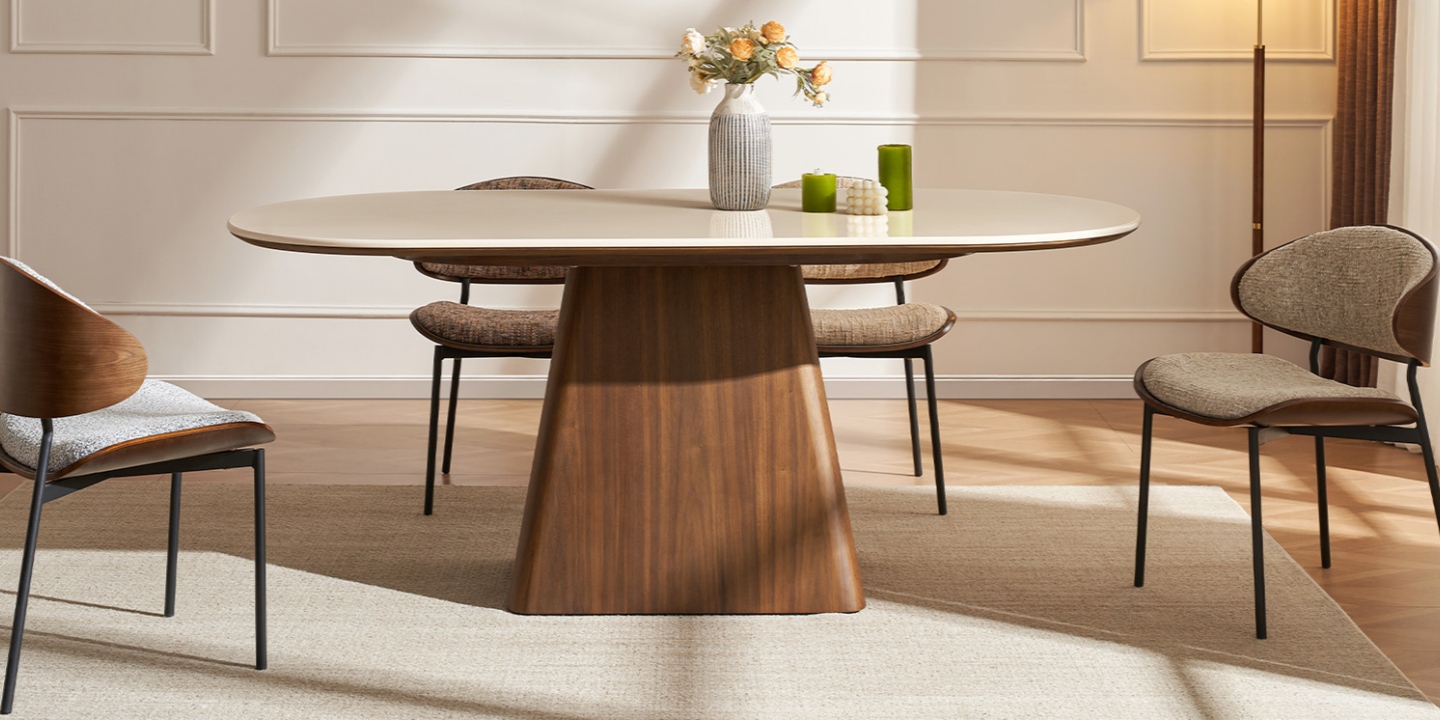
The Thorsten 72" Oval Dining Table demonstrates how shape can affect both seating and circulation. Its oval surface maintains a generous dining area while eliminating the sharp corners found on a traditional rectangular table.
Dining Chairs and Benches
A dining chair is designed to pair with a dining table, while a dining bench provides shared seating for two or more people.
The chair height should work with the table, and there should be enough room for diners to pull the chair out comfortably. A bench can be particularly useful along one side of a rectangular or oval table when occasional extra seating is needed.
Sideboards and Buffets
A sideboard is a long, low storage cabinet commonly used in dining rooms for tableware, linens, serving dishes, and entertaining supplies. A buffet serves a similar purpose, and the two terms are often used interchangeably.
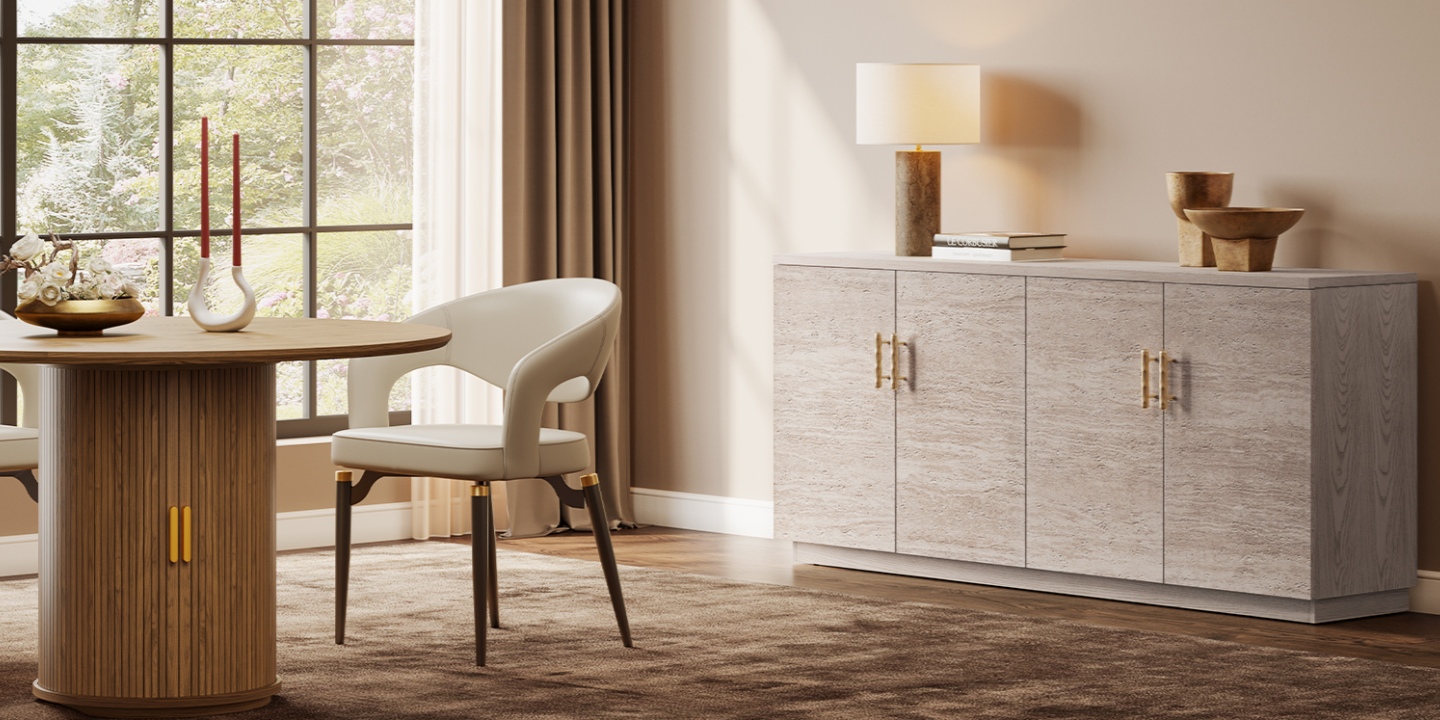
The Renata 72" Travertine-Textured Sideboard is a practical example. Measuring 72"W × 17.7"D × 30"H, it has four doors and adjustable shelves for flexible storage, while its low profile leaves room for serving pieces or decor on top. The travertine-inspired texture and brass-toned hammered hardware add visual interest without making the cabinet overly decorative.
Types of Home Office Furniture
Home office furniture needs to support focused work while fitting naturally into the rest of the home. This matters even more when a workspace shares a bedroom, living room, or other multifunctional area.
Desk Types
A desk is a work surface designed for writing, studying, computer use, or other tasks. Common styles include writing desks, computer desks, executive desks, corner desks, and standing desks.
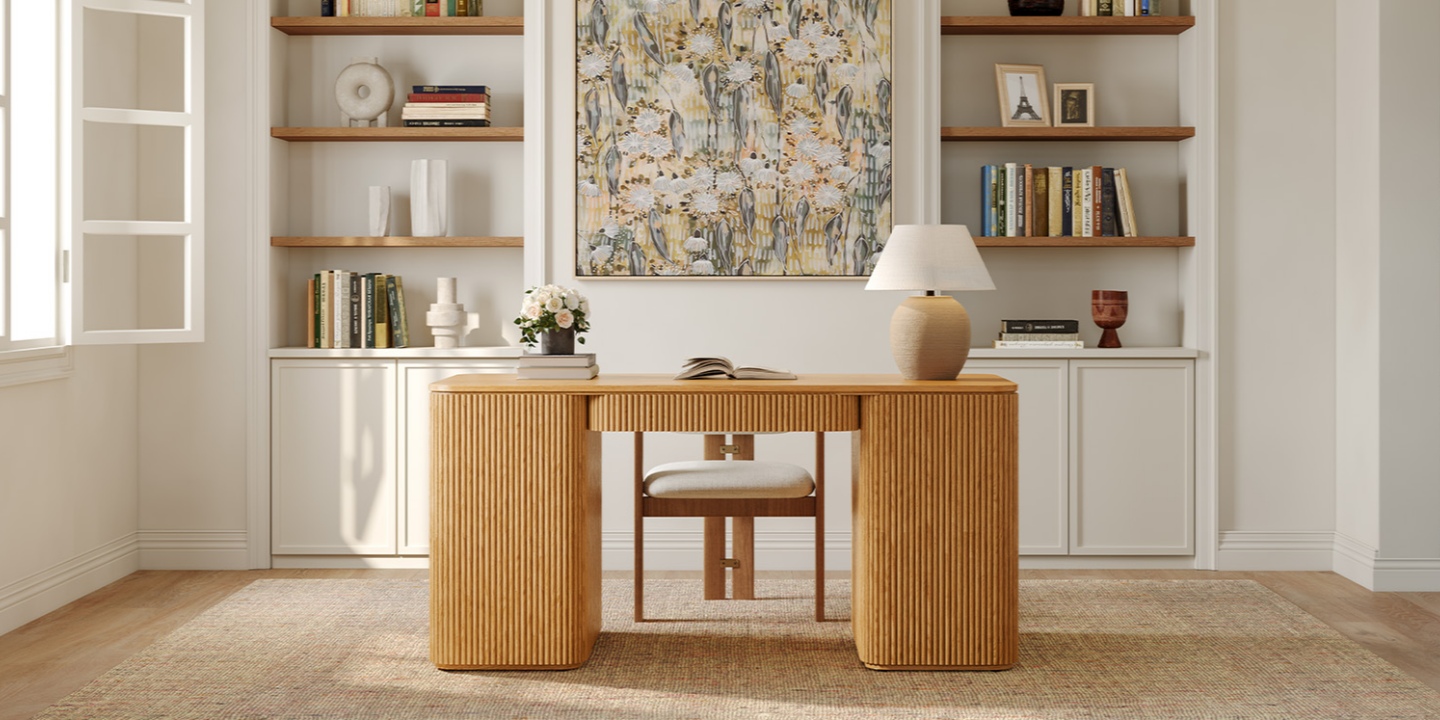
The Lundbord 64" Desk measures 63.8"W × 29.3"D × 30.9"H, giving you a broad surface for a monitor, laptop, and everyday accessories. Seven drawers provide space for documents and supplies, while American oak, plywood, and oak veneers give the desk a furniture-like finish. Solid wood fluting and dovetail drawer construction add detail without taking away from its practical role as a home office workspace.
Office Storage
Home office storage can include:
Bookcases
Filing cabinets
Drawer units
Credenzas
Storage cabinets
A small drawer unit may be enough for a mostly digital workspace. If you regularly keep books, files, samples, printers, or equipment nearby, deeper shelving or enclosed cabinets may be more useful.
Types of Entryway Furniture
Entryway furniture creates a practical transition between the outside and the rest of the home. Even a small entryway can benefit from one or two pieces that give keys, shoes, bags, and other everyday items a designated place.
Common entryway furniture includes:
Console tables
Storage benches
Shoe cabinets
Coat racks
Wall-mounted storage
Accent cabinets
A console table is typically narrow enough to sit against a wall without taking up much floor space. A bench provides a place to sit while putting on shoes, while a shoe cabinet keeps footwear organized near the door.
For narrow entryways, depth often matters more than width. A shallow cabinet can provide useful storage while preserving a comfortable walkway.
Types of Outdoor Furniture
Outdoor furniture is designed for patios, decks, balconies, gardens, and other exterior spaces.
Common types include:
Outdoor dining tables
Outdoor dining chairs
Lounge chairs
Chaise loungers
Benches
Outdoor sofas
Coffee tables
Side tables
Material selection matters more outdoors because furniture can be exposed to sunlight, rain, moisture, and temperature changes.
Before buying, consider whether the area is fully exposed, partially covered, or protected from direct weather. The right material and maintenance routine will depend on those conditions.
How Furniture Is Classified: Room, Function, Material, and Style
The same furniture piece can belong to several categories at once.
A sideboard, for example, can be described as:
Storage furniture by function
Dining-room furniture by room
Wood furniture by material
Mid-Century Modern furniture by style
This layered approach is more useful than forcing every furniture piece into a single category.
Types of Furniture by Material
Material affects more than appearance. It can influence weight, durability, maintenance, moisture response, and how a piece ages over time.
Many furniture pieces also combine materials. A table may use solid wood for its frame, veneer for a large surface, and metal for hardware or supports.
Solid Wood Furniture
Solid wood furniture is made from natural wood rather than a printed wood-look surface. Common species include:
Oak
Walnut
Ash
Maple
Pine
Depending on the wood species, construction, and finish, solid wood can sometimes be repaired or refinished. It also naturally responds to changes in humidity, which makes construction, joinery, and indoor conditions important.
Engineered Wood Furniture
Engineered wood includes materials such as plywood and MDF. These materials are manufactured for consistency and can provide stable panels for furniture construction.
A furniture piece may combine engineered wood with solid wood or veneer. Performance depends on the specific material, construction method, thickness, and finish rather than the material label alone.
Wood Veneer Furniture
Wood veneer is a thin layer of real wood applied over a stable core. It allows natural wood grain to cover larger surfaces while helping manage some of the movement associated with solid-wood panels.
Veneer is a long-established furniture-making technique. Its performance depends on the veneer, core material, construction, adhesive, and finish.
Metal Furniture
Metal is commonly used in:
Dining tables
Desks
Shelving
Bed frames
Accent furniture
Steel and aluminum can provide structural strength while allowing for relatively slim legs, frames, and supports.
Glass Furniture
Glass is often used for:
Tabletops
Shelves
Cabinet doors
Accent tables
Because light passes through glass, it can make furniture appear visually lighter. The trade-off is that fingerprints, dust, and smudges tend to be more noticeable.
Upholstered Furniture
Upholstered furniture includes:
Sofas
Armchairs
Benches
Headboards
Fabric, leather, and performance textiles have different durability and care requirements. A frequently used family-room sofa may need a more practical upholstery choice than an occasional accent chair.
Common Furniture Styles
Furniture can also be grouped by design style. These categories overlap, and many homes combine elements from more than one.
Mid-Century Modern
Mid-Century Modern furniture commonly features:
Clean lines
Functional forms
Warm wood tones
Tapered legs
Restrained decoration
Scandinavian
Scandinavian furniture often features light woods, simple silhouettes, soft colors, and an uncluttered appearance.
Traditional
Traditional furniture commonly incorporates classic proportions, richer finishes, decorative details, and more formal silhouettes.
Industrial
Industrial furniture often combines wood and metal with exposed hardware and utilitarian forms.
Contemporary
Contemporary furniture tends to reflect current design preferences through streamlined silhouettes, mixed materials, and relatively simple forms.
Furniture styles don't have to be used in isolation. A Mid-Century Modern sideboard can work alongside contemporary seating when the proportions, materials, and overall visual weight feel connected.
Common Furniture Terms That Are Easy to Confuse
Sideboard vs. Buffet
Both are low storage pieces commonly found in dining rooms. The terms are often used interchangeably, although sideboard generally refers to a long, low cabinet placed against a wall.
Dresser vs. Chest
A dresser is usually wider and lower, while a chest is taller and narrower. A chest can be useful when you need more vertical storage without using as much wall width.
TV Stand vs. Media Console
A TV stand is primarily intended to support a television. A media console generally offers more substantial storage and may include features for electronics and cable management.
Nightstand vs. Bedside Table
The terms generally refer to the same type of furniture: a small table or storage unit positioned beside a bed.
Console Table vs. Sideboard
A console table is generally narrower and shallower, making it useful in entryways, hallways, or behind sofas. A sideboard is usually deeper and provides more enclosed storage.
Small-Space Furniture: Pieces That Do More Than One Job
Small rooms often benefit from furniture that serves two functions without making either one awkward.
Common examples include:
A lift-top coffee table that works as a table and workspace
A storage ottoman that provides seating and concealed storage
A sofa bed that combines seating and sleeping
A bed with drawers underneath
A sideboard that provides storage and a usable display surface
Extra functionality is only worthwhile when the primary function remains convenient. A storage ottoman should still be comfortable to sit on, and a lift-top coffee table should remain practical when the top is closed.
How to Choose the Right Furniture for Your Space
Knowing the different furniture categories makes shopping easier, but the right piece still depends on how the room will actually be used.
1. Start With the Room's Function
Ask what needs to happen in the room.
For example:
A living room may need conversation, entertainment, and relaxation.
A bedroom needs sleep and clothing storage.
A dining room needs seating and enough table space for everyday meals or guests.
A home office needs a work surface and storage for the items used during the workday.
Choose the essential functions first. Decorative furniture can come later.
2. Measure the Room and Access Points
Measure more than the wall where the furniture will sit.
Check:
Door openings
Hallways
Stairways
Elevator dimensions, if applicable
Ceiling height
Walking paths
Clearance around drawers and doors
A dresser may fit perfectly against the bedroom wall and still create a delivery problem if it cannot pass through a narrow hallway or staircase.
3. Plan Walking Clearance
Furniture should leave enough room for people to move comfortably.
Around 36 inches is a useful general planning reference for many high-traffic paths, but the ideal clearance depends on the room, furniture, and how the space is used.
Think about actual movement through the room. A route between the sofa and kitchen may need more clearance than the gap between an occasional chair and a wall.
4. Choose Material Based on Use
A dining table used every day has different requirements from an occasional side table. A family-room sofa used by children or pets may need different upholstery from a chair in a formal sitting room.
Consider:
Frequency of use
Exposure to moisture or sunlight
Cleaning requirements
Expected wear
Weight and durability
5. Match Scale Before Style
An oversized sofa can make a small room difficult to navigate. A tiny coffee table can look disconnected from a large sectional.
Before comparing finishes and decorative details, look at how the major pieces relate to one another in size and proportion.
A useful sequence is:
Function
Size and scale
Layout and clearance
Material
Style
A Furniture Buying Checklist
Before placing an order, consider:
What Furniture Does a Home Actually Need?
There is no universal furniture shopping list. The essentials depend on the rooms available, the size of the home, and how each space is used.
A typical starting point includes:
Living room: Sofa or sectional, coffee table, side tables, and media or storage furniture.
Bedroom: Bed, nightstand, and clothing storage such as a dresser or wardrobe.
Dining room: Dining table, chairs or a bench, and optional storage.
Home office: Desk, task chair, and storage if needed.
Entryway: Console, bench, shoe storage, or another drop-zone solution.
Outdoor space: Seating and tables appropriate for the local weather and exposure.
Start with what each room needs to function. Once the essential pieces are in place, add accent furniture where it solves a genuine need or improves the overall layout.
Final Takeaway
When furnishing a room from scratch, you don't need to decide on every piece at once.
Start with the furniture that supports the room's main purpose. Make sure the largest pieces fit, leave enough room to move around them, and then add storage and secondary surfaces where they're genuinely useful.
A sofa should fit both the room and the people using it. A media console should accommodate the equipment around the TV, not just the television itself. A dining table should work for the number of people you regularly seat rather than simply filling an empty area.
Once the layout works, choosing materials and style becomes much easier. At that point, you're deciding how the room should feel—not trying to fix a space that never functioned properly.
FAQs
What are the four basic types of furniture?
There is no single official system for classifying all furniture. A simple functional framework includes seating, tables and surfaces, storage, and sleeping furniture. Work and multifunctional furniture can be treated as additional categories for practical home planning.
What are the main categories of furniture?
Furniture can be classified by function, room, material, and style. Common functional categories include seating, tables and surfaces, storage, sleeping furniture, work furniture, and multifunctional furniture.
What are 10 common types of furniture?
Ten common furniture types include sofas, chairs, dining tables, coffee tables, beds, nightstands, dressers, desks, bookcases, and sideboards.
What are the different types of furniture by room?
Living rooms commonly use sofas, sectionals, chairs, coffee tables, and media consoles. Bedrooms use beds, nightstands, dressers, and wardrobes. Dining rooms use tables, chairs, benches, and sideboards. Home offices typically include desks, office chairs, and storage furniture.
What are the types of living room furniture?
Common living room furniture includes sofas, sectionals, accent chairs, coffee tables, side tables, end tables, media consoles, bookcases, cabinets, and storage ottomans.
What are the types of bedroom furniture?
Bedroom furniture commonly includes bed frames, headboards, nightstands, dressers, chests, wardrobes, benches, and vanities. The bed is usually the largest piece, while bedside and clothing storage support everyday use.
What are the types of dining room furniture?
Dining room furniture includes dining tables, dining chairs, benches, sideboards, buffets, hutches, and china cabinets. The dining table is the central piece, while seating and storage should be chosen according to room size and how the space is used.
How do you classify furniture by material?
Furniture can be classified by materials such as solid wood, engineered wood, wood veneer, metal, glass, and upholstery. Many pieces combine several materials within the same construction.
What is the difference between a sideboard and a media console?
A sideboard is primarily designed for storage and is commonly used in dining rooms. A media console is designed around entertainment equipment and often includes shelving, cable management, and dimensions suited to a television.
What is the difference between a dresser and a chest?
A dresser is usually wider and lower, while a chest is taller and narrower. A dresser provides more horizontal drawer space, while a chest can make better use of vertical space in a smaller bedroom.
What furniture should every home have?
Most homes need furniture for sleeping, sitting, eating, working, and storage. A typical starting point includes a bed, seating, tables or work surfaces, and enough storage for everyday belongings.
How do I choose the right furniture for my space?
Start with the room's function, then measure the room, access points, and walking areas. Choose furniture based on size and function before deciding on style. Then compare materials, storage capacity, maintenance requirements, and how the new piece will work with the furniture you already own.