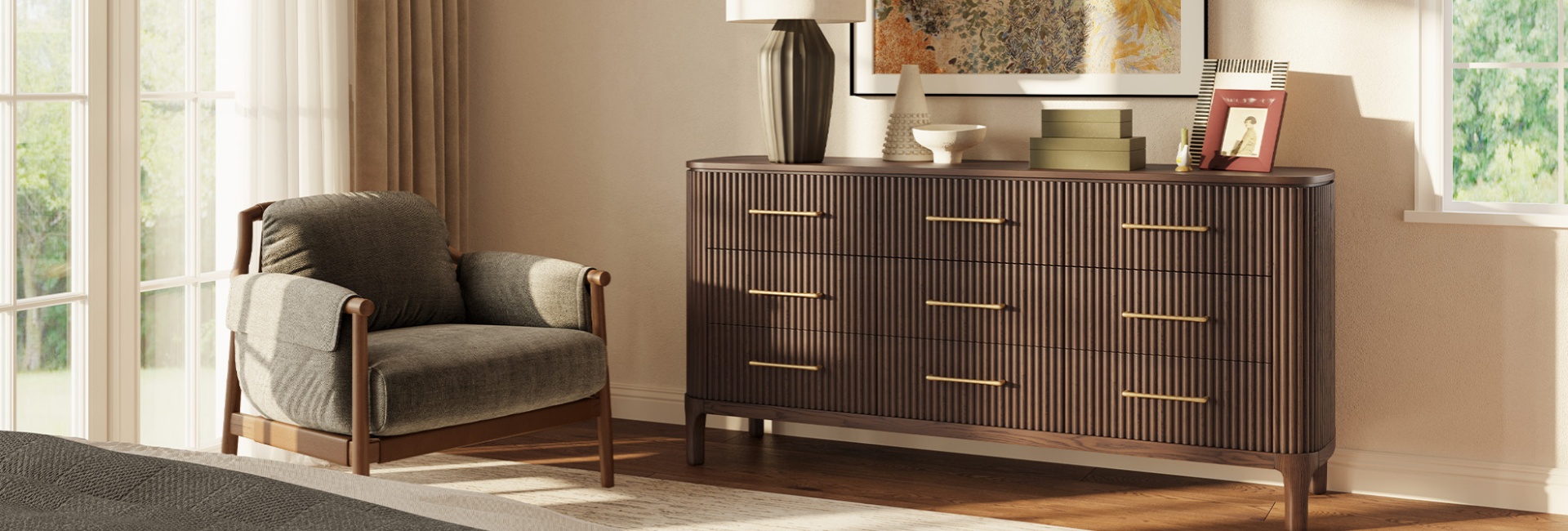
A wood dresser can be one of the most useful pieces of bedroom furniture you buy. It provides everyday storage, fills a large visual area, and can influence the overall feel of the room.
But choosing a wood dresser is about more than picking a wood color you like. The material, construction, drawer layout, dimensions, finish, and storage capacity all affect how well a dresser works in your space.
Some dressers use solid wood throughout, while others combine wood veneer with engineered wood. Some prioritize deep drawers for clothing, while others use a wider mix of drawer sizes. Finishes can range from natural-looking matte surfaces to darker or more polished treatments.
If you're shopping for a wood dresser, here are the details worth checking before you buy.
Table of Contents
- What Is a Wood Dresser?
- Solid Wood vs. Wood Veneer
- A Real Wood Dresser Example
- Which Wood Is Best for a Dresser?
- What to Look for in Wood Dresser Construction
- How Much Storage Does a Wood Dresser Need?
- Choosing the Right Wood Dresser Size for Your Bedroom
- How to Choose the Right Wood Dresser Finish
- Oil vs. Polyurethane for a Wood Dresser
- Lacquer vs. Polyurethane
- Water-Based vs. Oil-Based Polyurethane
- How to Choose the Right Sheen
- How to Match a Wood Dresser to Your Bedroom
- Wood Dresser Care
- How to Refresh a Worn Wood Dresser Finish
- How to Choose a Wood Dresser: 5 Questions to Ask
- Bottom Line
- FAQs
- Is a wood dresser durable?
- Is solid wood better than veneer for a dresser?
- What is the best wood for a dresser?
- How many drawers should a wood dresser have?
- How do you care for a wood dresser?
- Should a wood dresser match the bed?
- How deep should a wood dresser be?
- Is a wood dresser a good choice for a modern bedroom?
What Is a Wood Dresser?
A wood dresser is a bedroom storage piece made primarily from wood or wood-based materials. Depending on the construction, it may use solid wood, wood veneer, engineered wood, or a combination of these materials.
The term "wood dresser" does not automatically mean that every part of the dresser is solid wood. That's why it is worth checking the product specifications rather than judging construction by appearance alone.
A well-designed wood dresser should give you a practical combination of:
-
Durable case construction
-
Smooth and properly aligned drawers
-
Reliable drawer hardware
-
A finish suited to everyday use
-
Enough storage for your clothing and personal items
-
Dimensions that work with your bedroom layout
The right combination matters more than any single material label.
Solid Wood vs. Wood Veneer
One of the first decisions when shopping for a wood dresser is whether you want solid wood or a combination of veneer and engineered materials.
Solid Wood
Solid wood is made from natural lumber rather than a wood-based core covered with a decorative wood layer.
Common advantages include:
-
Natural grain variation
-
A substantial feel
-
The ability to develop character over time
-
Strong appeal for buyers who prioritize natural materials
However, solid wood can also expand and contract as humidity changes. Different species also have different hardness, grain patterns, and color characteristics.
Wood Veneer
Wood veneer is a thin layer of real wood applied over another material, such as engineered wood.
A quality veneer can provide the appearance and grain pattern of a particular wood species while allowing manufacturers more control over stability and material use.
For a wood dresser, veneer is not automatically a lower-quality choice. The overall construction still matters, including the substrate, joinery, drawer hardware, and finish.
What Should You Choose?
If your priority is natural material throughout, look for a dresser made primarily from solid wood. If you care about appearance, stability, and overall construction, a well-made veneer dresser can also be a practical option.
Instead of asking only "Is it solid wood?", look at the entire dresser.
A Real Wood Dresser Example
For example, the Finnley 76-Inch Fluted 9-Drawer Dresser combines a wood-focused design with nine drawers and a fluted front. Its layout is useful for shoppers who want substantial bedroom storage without giving up a more decorative furniture profile.
The larger point is that material should be considered alongside storage and construction. A dresser can look beautiful in a product photo, but its everyday usefulness depends on what is inside the case as well as what you see on the outside.
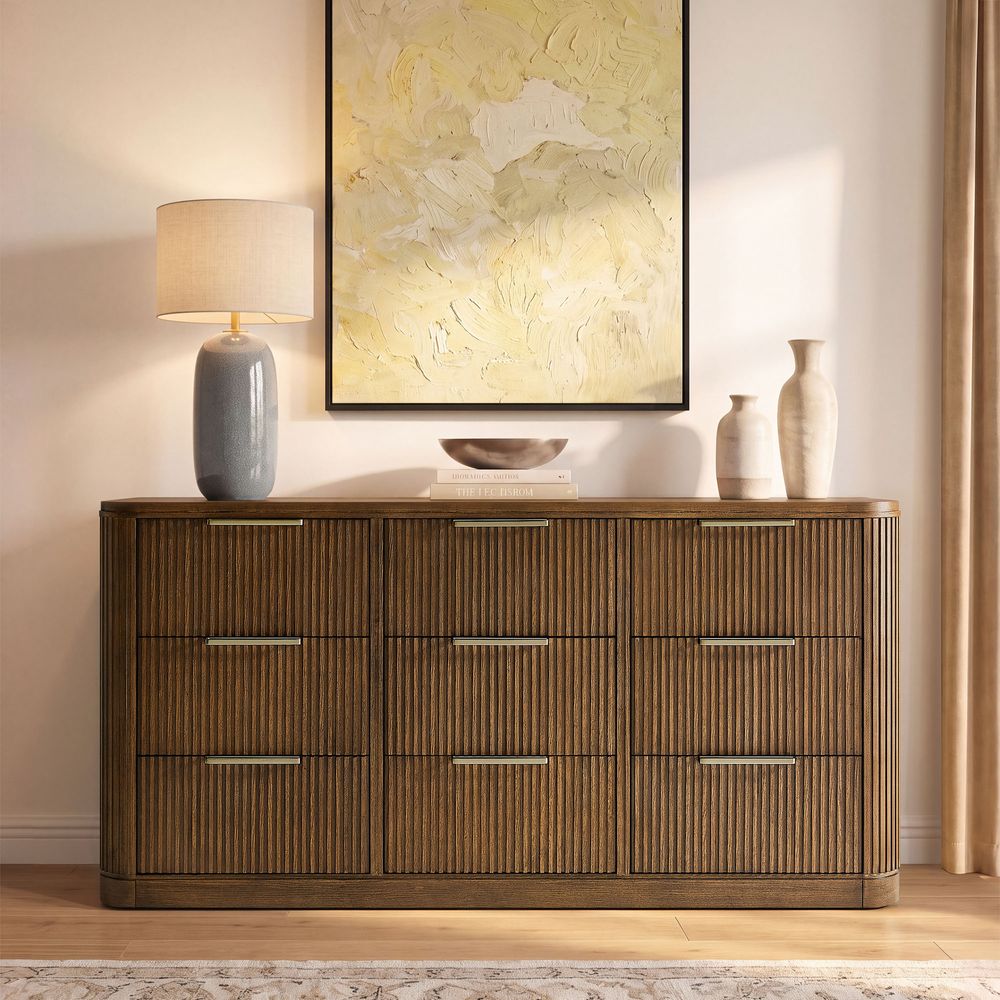
Finnley 76-Inch Fluted 9-Drawer Dresser
View Product
Which Wood Is Best for a Dresser?
There is no single wood species that is right for every wood dresser. Oak, walnut, ash, and poplar can all produce different looks and characteristics.
Oak
Oak is popular for its visible grain and relatively versatile appearance. Depending on the finish, it can work with modern, minimalist, traditional, or mid-century-inspired interiors.
Oak is particularly useful when you want the wood grain to remain part of the visual design rather than being hidden beneath an opaque finish.
Walnut
Walnut is known for its naturally darker brown tones and distinctive grain. It can give a bedroom a warmer, richer appearance without requiring a very dark stain.
If you are trying to create a darker wood palette, walnut or a walnut-toned finish may be worth considering.
Ash
Ash typically has a noticeable grain and a lighter overall appearance. It can work well in bedrooms where you want furniture to feel visually lighter while still retaining natural wood character.
Poplar
Poplar is another wood used in furniture construction. It can be finished in different ways, making it useful for pieces where the final color or painted appearance is an important part of the design.
The most important question is not simply which species is "best." Consider the combination of wood characteristics, construction, finish, and the way the dresser will be used.
What to Look for in Wood Dresser Construction
A wood dresser can look excellent from the outside and still disappoint if the drawers or internal construction are poorly designed.
When evaluating a dresser, check these details.
Drawer Joints
Look at how the drawer components are joined together. Strong, consistent joinery can help drawers withstand repeated opening and closing.
The exact joint construction varies by product, so check the manufacturer's specifications when this information is provided.
Drawer Glides
Drawer glides have a direct effect on everyday use.
Look for drawers that:
-
Open and close smoothly
-
Stay properly aligned
-
Do not wobble excessively
-
Support the intended load
-
Have hardware appropriate for the size of the drawer
Large drawers are especially worth checking because they can carry heavier loads.
Drawer Alignment
When looking at product photos or an in-person dresser, check whether the drawer fronts appear evenly aligned.
Uneven gaps can be a sign that the drawer system or case construction deserves closer inspection.
Case Construction
Don't focus only on the drawer fronts. The dresser case, back panel, legs or base, and internal supports all contribute to the overall structure.
For a wood dresser that will be used every day, these less visible details can matter just as much as the finish.
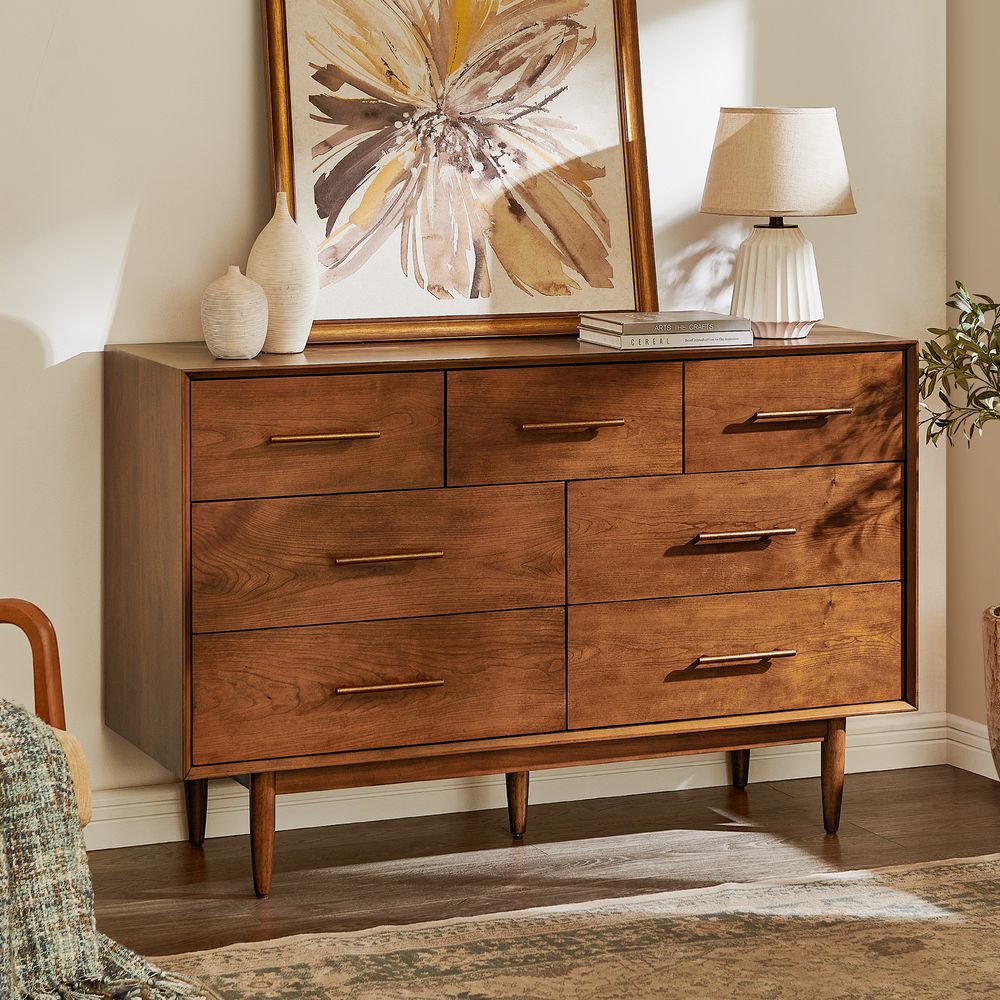
Kaden 55-Inch Mid-Century 7-Drawer Dresser
View Product
How Much Storage Does a Wood Dresser Need?
The right amount of storage depends on what you plan to keep inside the dresser.
A six-drawer dresser may work well for a bedroom with a moderate amount of folded clothing, while a nine-drawer dresser can provide more separation between clothing categories.
Think about your actual storage habits instead of choosing based only on drawer count.
For example:
-
6 drawers: Useful when you need organized storage without a very wide dresser.
-
7 drawers: Can provide a mix of storage capacity and flexible drawer organization.
-
9 drawers: Better suited to shoppers who want more divided storage or need to organize a larger clothing collection.
If you're comparing drawer layouts in more detail, see our guide to 6-Drawer Dressers and our guide to 9-Drawer Dressers.
Also consider drawer depth. A wide drawer is not necessarily more useful if it is too shallow for the items you want to store.
Choosing the Right Wood Dresser Size for Your Bedroom
Before buying a wood dresser, measure the available wall space rather than estimating by eye.
Start with three measurements:
-
Available width — Measure the wall where the dresser will sit.
-
Available depth — Leave enough room for walking and opening drawers comfortably.
-
Available height — Consider windows, artwork, mirrors, and other furniture nearby.
Then account for clearance.
A dresser may physically fit against a wall but still be inconvenient if you cannot fully open the drawers without blocking a walkway or another piece of furniture.
Wide vs. Tall Dressers
A wide dresser generally gives you more horizontal storage and can work well on a larger bedroom wall.
A taller dresser takes up less floor width but adds vertical storage. This can be useful when floor space is limited.
Your choice should depend on both storage needs and the proportions of the room.
How to Choose the Right Wood Dresser Finish
The finish affects more than color. It also influences how the wood grain appears and how the dresser fits into the rest of the bedroom.
Before choosing a finish, consider:
-
The color of your flooring
-
Existing wood furniture
-
Wall color
-
Natural light
-
The overall style of the room
-
How much visible wood grain you want
Natural Wood Finishes
A natural-looking finish allows more of the wood's grain and variation to remain visible.
This can work especially well when you want the dresser to feel warm and organic without becoming visually heavy.
Dark Wood Finishes
Dark finishes can create more contrast and give a bedroom a richer appearance.
If your flooring and other furniture are already dark, however, a dark dresser can make the room feel visually dense. In that situation, a lighter wood tone may create better balance.
Warm Brown Finishes
Warm brown finishes can sit comfortably between light and dark furniture. They can also complement neutral bedding, natural textiles, and warm lighting.
The key is to consider the undertone rather than simply asking whether the finish is "brown."
Oil vs. Polyurethane for a Wood Dresser
Oil and polyurethane finishes behave differently and create different appearances.
Oil Finishes
Oil-based finishes can emphasize the natural character of wood and create a more organic appearance.
They may also require periodic maintenance depending on the specific product and finish system.
Polyurethane
Polyurethane creates a protective film over the surface of the wood. It is commonly used when added resistance to everyday wear and moisture is desired.
The final appearance depends on the formulation and sheen, so two polyurethane finishes can look quite different.
For a bedroom dresser, the best choice depends on the desired appearance, level of protection, and the manufacturer's care recommendations.
Lacquer vs. Polyurethane
Lacquer and polyurethane are both used as furniture finishes, but they are not interchangeable.
Lacquer can create a smooth, consistent surface and is often associated with a refined furniture finish.
Polyurethane tends to be selected when a more durable protective coating is desired.
When shopping for a finished wood dresser, you generally do not need to choose the finishing chemistry yourself. Instead, focus on the actual surface appearance, care requirements, and durability information provided by the manufacturer.
Water-Based vs. Oil-Based Polyurethane
If you're comparing polyurethane finishes, water-based and oil-based formulas can produce different results.
Water-based polyurethane generally dries more clear and tends to preserve a lighter appearance.
Oil-based polyurethane can add warmth and may deepen the appearance of some woods.
For a wood dresser, the right choice depends on the wood species, desired color, finish appearance, and manufacturing process.
How to Choose the Right Sheen
Finish sheen changes how much light reflects from the dresser surface.
Common options include:
-
Matte: Low reflection and a more understated appearance
-
Satin: Moderate reflection with a balanced appearance
-
Semi-gloss: More noticeable reflection and a more polished look
-
Gloss: High reflection and a distinctly smooth appearance
For bedroom furniture, lower or medium sheens can make natural wood grain feel more relaxed and less visually harsh.
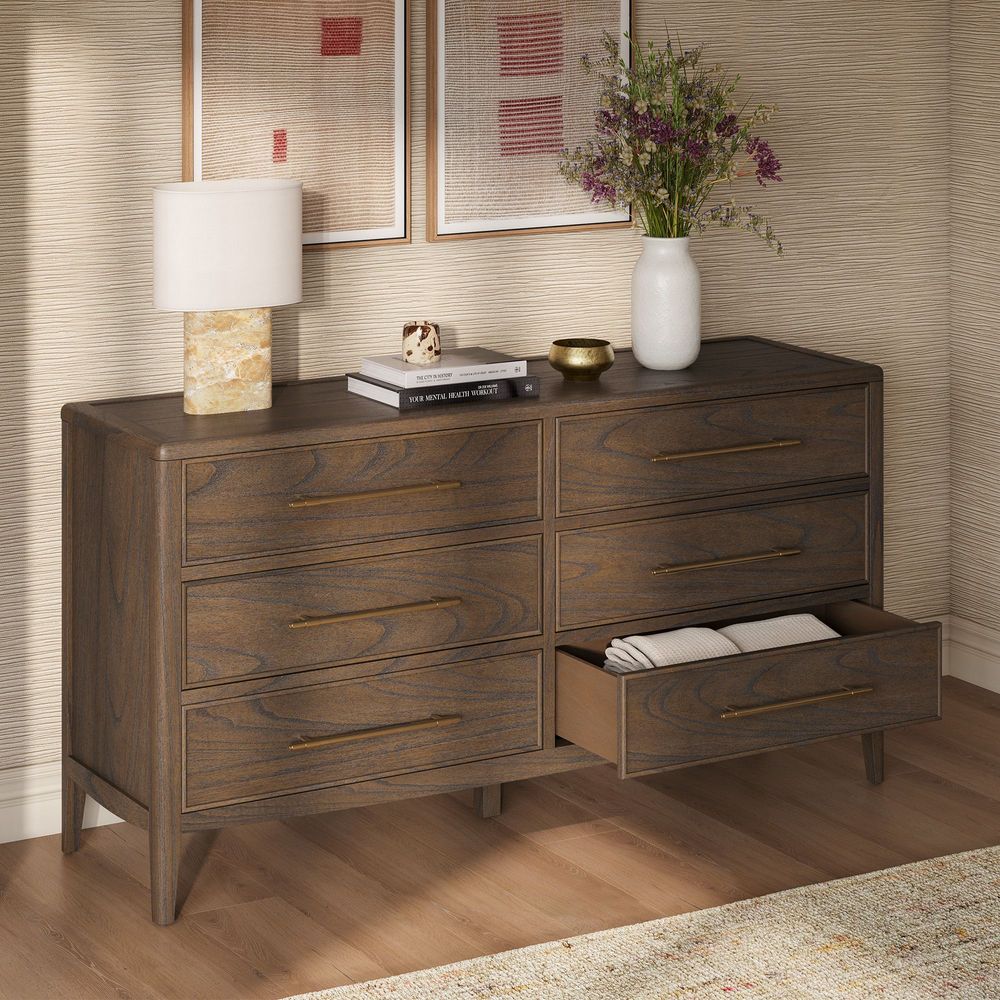
Harrison 65-Inch 6-Drawer Dresser
View Product
How to Match a Wood Dresser to Your Bedroom
A wood dresser does not need to perfectly match every other wood surface in the room.
In fact, using slightly different wood tones can create a more layered look.
Instead, look for relationships between the furniture pieces.
Match the Undertone
Two pieces can both be "brown" but still look different because one has a warm red or golden undertone while another appears cooler.
When combining wood furniture, compare undertones as well as overall darkness.
Repeat One Wood Tone
If you already have a strong wood finish in the bedroom, repeating that tone on another piece can create visual continuity.
For example, a warm brown dresser can work with a matching or complementary bed frame, nightstand, or media piece.
Mix Wood Tones Carefully
You do not have to use one wood tone throughout the entire bedroom.
A lighter dresser can create contrast against a darker bed, while a darker dresser can provide visual weight in a room with lighter furniture.
The goal is balance rather than perfect matching.
Wood Dresser Care
Regular care can help preserve the appearance of a wood dresser.
For everyday cleaning:
-
Use a soft, dry or lightly damp cloth
-
Wipe spills promptly
-
Avoid leaving standing water on the surface
-
Follow the manufacturer's cleaning recommendations
-
Avoid harsh cleaners unless specifically approved for the finish
Direct sunlight can also affect some wood finishes over time. If possible, avoid placing the dresser where strong sunlight falls on the same area of the surface for extended periods.
Do not place very hot or wet objects directly on the dresser surface.
How to Refresh a Worn Wood Dresser Finish
If a wood dresser starts looking dull or develops minor surface wear, first identify the existing finish.
Do not automatically apply a new coating over the old one.
A basic refresh may involve:
-
Cleaning the surface thoroughly.
-
Identifying whether the existing finish is oil, lacquer, polyurethane, paint, or another coating.
-
Checking the manufacturer's care recommendations.
-
Testing any cleaning or refinishing product on an inconspicuous area.
-
Using a compatible repair or refinishing method.
For significant scratches, peeling, water damage, or structural problems, professional furniture repair may be more appropriate than a simple surface treatment.
How to Choose a Wood Dresser: 5 Questions to Ask
Before purchasing, ask these five questions:
1. What is the dresser actually made from?
Check whether it uses solid wood, veneer, engineered wood, or a combination.
2. Does the drawer layout fit what I need to store?
Consider both the number of drawers and their dimensions.
3. Will the dresser fit comfortably in my room?
Measure width, depth, height, drawer clearance, and walking space.
4. Does the finish work with my existing furniture?
Look at wood tone, undertone, grain visibility, and sheen.
5. How much maintenance does the finish require?
Check the manufacturer's cleaning and care instructions before buying.
These questions can help narrow your options without relying on appearance alone.
Bottom Line
The right wood dresser is not simply the one with the most attractive wood finish.
Material, construction, drawer layout, dimensions, finish, and everyday maintenance all contribute to whether a dresser works well in your bedroom.
Solid wood can offer natural character, while quality veneer construction can provide a practical alternative. Oak, walnut, ash, and poplar each create different visual effects, and the finish can significantly change how the wood looks in your space.
Start with your storage needs and room measurements. Then evaluate the material, construction, drawer hardware, and finish. That approach makes it easier to find a wood dresser that looks right and works well for everyday use.
FAQs
Is a wood dresser durable?
A wood dresser can be very durable when the case, drawer joints, glides, and finish are well constructed. Solid wood is not automatically more durable than veneer; the quality of the construction and materials used throughout the dresser matters more.
Is solid wood better than veneer for a dresser?
Not necessarily. Solid wood offers natural material and grain variation, while quality veneer can provide an attractive wood surface with a stable underlying construction. Compare the entire dresser rather than focusing on one material alone.
What is the best wood for a dresser?
There is no single best wood for every dresser. Oak, walnut, ash, and poplar each offer different grain patterns, colors, and characteristics. The best choice depends on your preferred appearance, room design, construction, and budget.
How many drawers should a wood dresser have?
It depends on how much you need to store. Six drawers can work well for moderate storage, while seven- or nine-drawer dressers can provide more organization and capacity.
How do you care for a wood dresser?
Use a soft cloth, clean spills promptly, avoid standing moisture and excessive heat, and follow the manufacturer's care instructions for the specific finish. Avoid harsh cleaning products unless they are approved for the surface.
Should a wood dresser match the bed?
It does not have to match exactly. A dresser can coordinate with a bed through similar wood tones, complementary undertones, or contrasting finishes. The overall combination should feel balanced within the room.
How deep should a wood dresser be?
There is no single standard depth that works for every bedroom. Measure the available space and consider drawer clearance, walking paths, and the depth required for the items you plan to store. A dresser that fits the wall but blocks movement is not a practical fit.
Is a wood dresser a good choice for a modern bedroom?
Yes. Wood can work with a wide range of modern bedroom designs. The final look depends on the wood tone, grain, silhouette, hardware, legs, and finish. Clean lines and restrained details can create a contemporary appearance, while tapered legs and other period-inspired details can create a mid-century look.