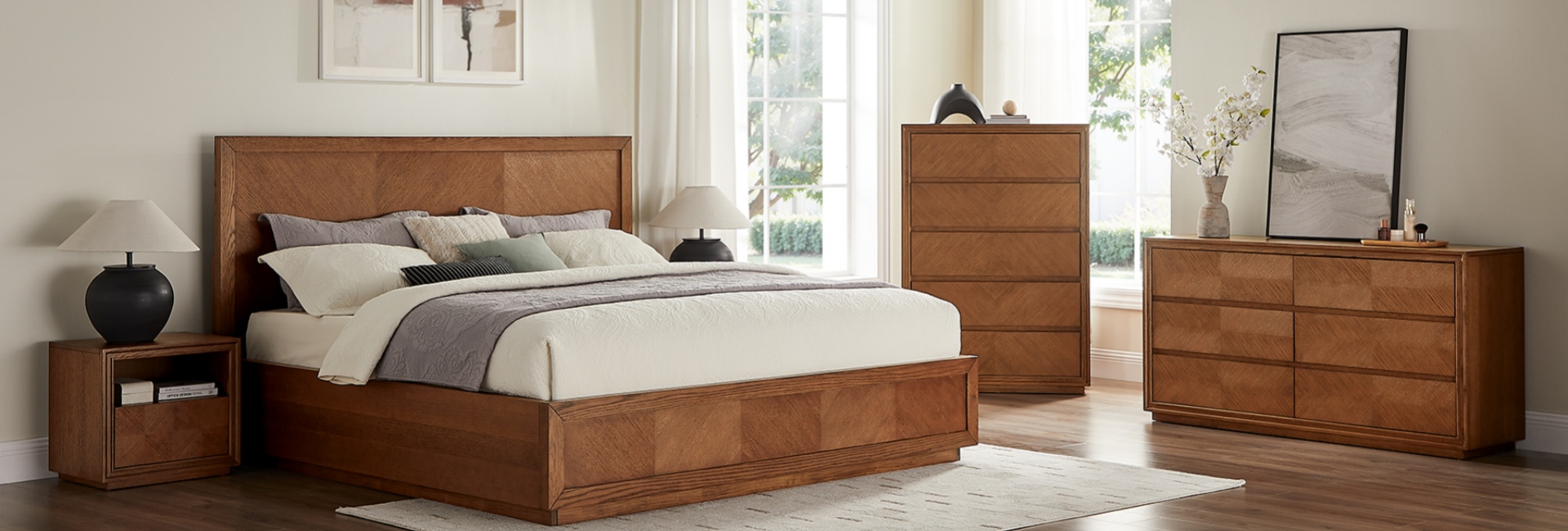
A 6-drawer dresser is a practical choice for many bedrooms because it provides substantial storage without taking up as much vertical space as a tall chest. For one adult with a closet, six drawers are often enough for folded clothes. For two people, the answer depends on how much each person stores in the dresser and how much closet space is available.
The important thing is not simply the number of drawers. Drawer width, depth, height, and the type of clothing you store can make a six-drawer dresser feel surprisingly spacious or quickly overcrowded.
If you're deciding whether six drawers are enough, start with your actual wardrobe rather than an idealized storage plan. This guide covers typical 6-drawer dresser sizes, approximate storage capacity, organization, materials, construction features, weight, cost, and the situations where you may need more storage.
Table of Contents
- Quick Answer: Is a 6-Drawer Dresser Enough?
- Why Choose a 6-Drawer Dresser?
- How Much Storage Does a 6-Drawer Dresser Provide?
- What Is the Average Size of a 6-Drawer Dresser?
- 6-Drawer Dresser vs. Other Dresser Sizes
- Is a 6-Drawer Dresser Enough for One Person or a Couple?
- How to Organize a 6-Drawer Dresser
- What Features Matter Most in a 6-Drawer Dresser?
- What Are the Best Materials for a Durable 6-Drawer Dresser?
- How Much Does a 6-Drawer Dresser Weigh?
- How Much Does a 6-Drawer Dresser Cost?
- Styles to Match Your Bedroom
- Safety: Anchor Your Dresser to the Wall
- Find the Right 6-Drawer Dresser for Your Bedroom
- FAQs
- Is a 6-drawer dresser enough for one person?
- Is a 6-drawer dresser enough for two people?
- How big is a typical 6-drawer dresser?
- How many clothes can a 6-drawer dresser hold?
- How deep should dresser drawers be?
- What should I look for in a 6-drawer dresser?
- How much does a 6-drawer dresser weigh?
- What materials are best for a 6-drawer dresser?
- Should I anchor a 6-drawer dresser?
- How should I organize a 6-drawer dresser?
- What is the difference between a 6-drawer dresser and an 8-drawer dresser?
Quick Answer: Is a 6-Drawer Dresser Enough?
For one adult with a closet, a 6-drawer dresser is usually enough for folded clothing and everyday basics. It may also work for two people if most hanging clothes stay in a closet and the dresser is used for items such as T-shirts, underwear, pajamas, workout clothes, and sweaters.
Six drawers may not be enough if:
-
You store most of your wardrobe in drawers rather than a closet.
-
Two people share the dresser and both have large wardrobes.
-
You regularly store bulky sweaters, jeans, or seasonal clothing.
-
The drawers are unusually shallow or narrow.
-
You need storage for more than clothing, such as linens and accessories.
In other words, six drawers can be a good middle ground, but drawer dimensions matter as much as drawer count.
Why Choose a 6-Drawer Dresser?
A typical six-drawer dresser uses two rows of three drawers, creating a low, wide storage piece. This layout gives you enough room to separate clothing categories while keeping the furniture relatively low in the room.
The wide top is useful, too. Depending on the room, it can hold a mirror, lamp, decorative objects, a jewelry tray, or other everyday items.
The two-column layout also makes it easier to organize clothes by category. You might use separate drawers for underwear and socks, T-shirts, casual tops, pants, sweaters, and pajamas or workout clothes. You do not have to follow that exact system; the advantage is simply having enough separate compartments to create a system that matches your wardrobe.
A six-drawer dresser can also work well in bedrooms where a tall chest would take up too much visual or vertical space. Its lower profile can sit beneath a mirror, artwork, or window while still providing substantial storage.
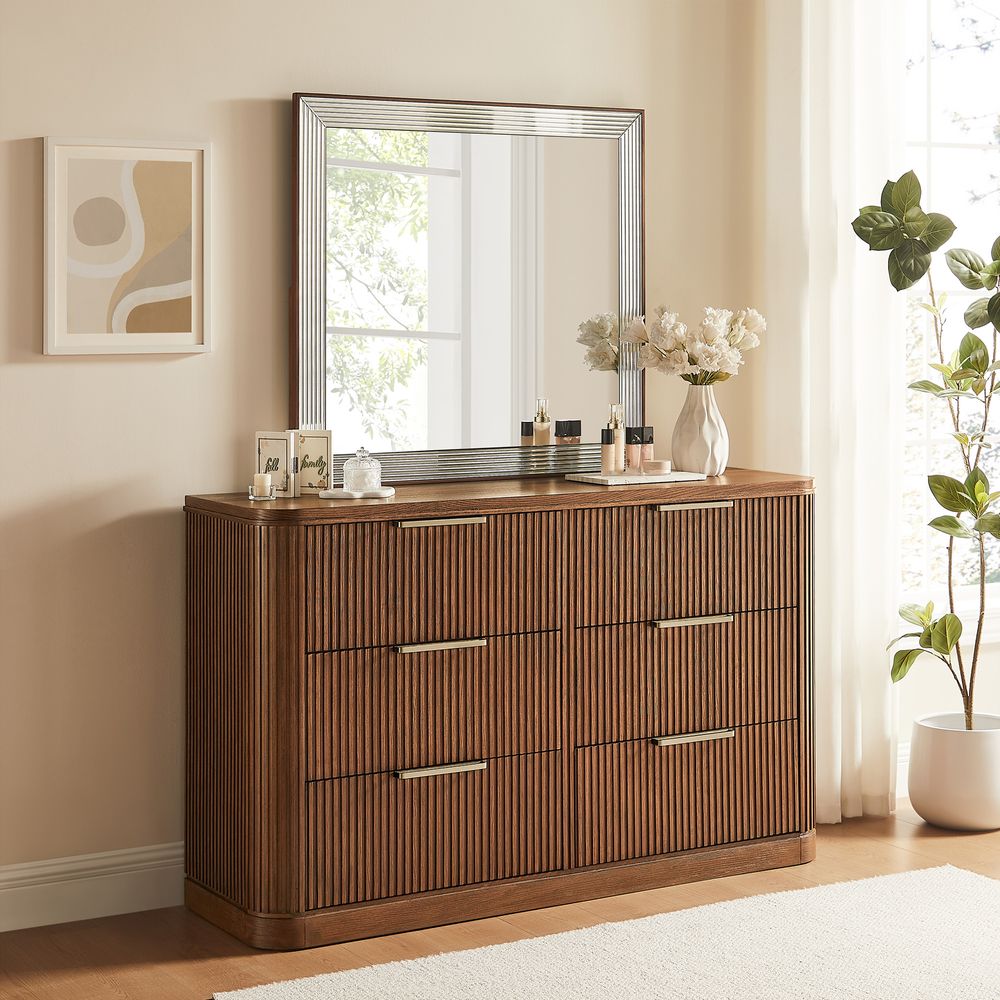
Finnley 62-Inch Fluted 6-Drawer Dresser
View Product
How Much Storage Does a 6-Drawer Dresser Provide?
The storage capacity of a six-drawer dresser depends heavily on the size of each drawer.
A wider, deeper drawer can hold considerably more than a shallow drawer, even when both dressers have six drawers. Clothing type matters as well. Folded T-shirts take up much less space than bulky sweaters, denim, or winter layers.
As a rough planning estimate, a medium-sized dresser drawer may hold around 10 to 15 folded T-shirts, although actual capacity varies with drawer dimensions, clothing thickness, and folding method. Across six drawers, that can translate to roughly 70 to 100 lightweight clothing items, but bulky clothing will reduce the total.
These numbers are best treated as planning estimates rather than fixed capacity standards. The actual interior dimensions of the drawers are a more useful specification when comparing dressers.
A Practical 6-Drawer Organization
A six-drawer dresser might be organized like this:
-
Top left: socks, underwear, and small accessories
-
Top right: T-shirts and tank tops
-
Middle left: casual tops and button-downs
-
Middle right: pants, shorts, and leggings
-
Bottom left: sweaters, hoodies, and other bulky layers
-
Bottom right: pajamas, workout clothes, or seasonal pieces
This is only one possible arrangement. If you own more tops than pants, for example, you may want two drawers for shirts and one for bottoms.
The goal is to give each drawer a clear purpose without making the system so complicated that you stop using it.
When Six Drawers May Not Be Enough
A six-drawer dresser can feel small in three common situations.
First, two people sharing one dresser may find three drawers each limiting if both store a large amount of folded clothing. Second, someone without much closet space may need more drawers because dresses, jackets, shirts, and other normally hung items also have to fit somewhere. Third, shallow drawers can make a six-drawer dresser less useful than a larger dresser with fewer but deeper drawers.
If you are storing most of your wardrobe in drawers, look beyond drawer count and compare the actual interior dimensions.
What Is the Average Size of a 6-Drawer Dresser?
A typical low, wide 6-drawer dresser is often around:
-
50–70 inches wide
-
30–36 inches high
-
18–24 inches deep
Actual dimensions vary by design, construction, and drawer layout, so these ranges are better used as a starting point when planning your room.
A dresser around 60 inches wide and 20 inches deep can be a useful reference when measuring a bedroom wall. For a real example, the Finnley 62-Inch Fluted 6-Drawer Dresser is 62 inches wide, 18 inches deep, and 38 inches high.
The Walter 65-Inch Linen-Blend 6-Drawer Dresser and Renata 65-Inch Travertine-Textured 6-Drawer Dresser are both 65 inches wide. Walter measures 65"W × 18.1"D × 33.9"H, while Renata measures 65"W × 17.7"D × 34.1"H.
If you're comparing different widths, finishes, and storage configurations, explore the Hernest 6 Drawer Dressers collection before choosing a specific model.
Width, Height, and Depth
Width determines how much wall space the dresser uses. Measure the entire wall rather than relying only on the space between two pieces of furniture.
Height affects the visual balance of the room and what you can comfortably place above the dresser. A lower dresser leaves more open wall space for artwork or a mirror.
Depth determines how far the dresser extends into the room. This becomes especially important in smaller bedrooms or rooms where the bed sits directly opposite the dresser.
Don't Forget Front Clearance
The wall measurement is only part of the equation. You also need usable floor space in front of the dresser for opening drawers and standing comfortably.
Aim for about 30–36 inches of clearance in front of the dresser as a practical starting point. If two people regularly use the dresser at the same time, additional space can make the room easier to navigate.
Before ordering, measure the wall, account for baseboards and nearby furniture, and then check the floor area in front of the dresser.
6-Drawer Dresser vs. Other Dresser Sizes
Drawer count is useful, but it should match the amount of clothing you actually need to store.
4-Drawer Dresser
A four-drawer dresser can work well in a guest room, child's room, studio apartment, or bedroom with generous closet space. It takes up less wall space but provides less room for separating clothing categories.
5-Drawer Dresser
Five-drawer dressers are often designed as taller, narrower chests, although wider configurations are also available. They can provide useful storage when floor space is limited, but the vertical design may not offer the same surface area as a wide six-drawer dresser.
6-Drawer Dresser
A six-drawer dresser offers a useful balance between storage capacity and footprint. It works particularly well for one adult with a closet and can also serve two people when the dresser is used mainly for folded basics.
8- or 9-Drawer Dresser
Larger dressers make more sense when you need substantial folded-clothing storage or are furnishing a larger bedroom. They require more wall space, so measure carefully before choosing one.
The right number of drawers depends on your wardrobe, room size, and closet space—not simply on how many drawers a dresser happens to have.
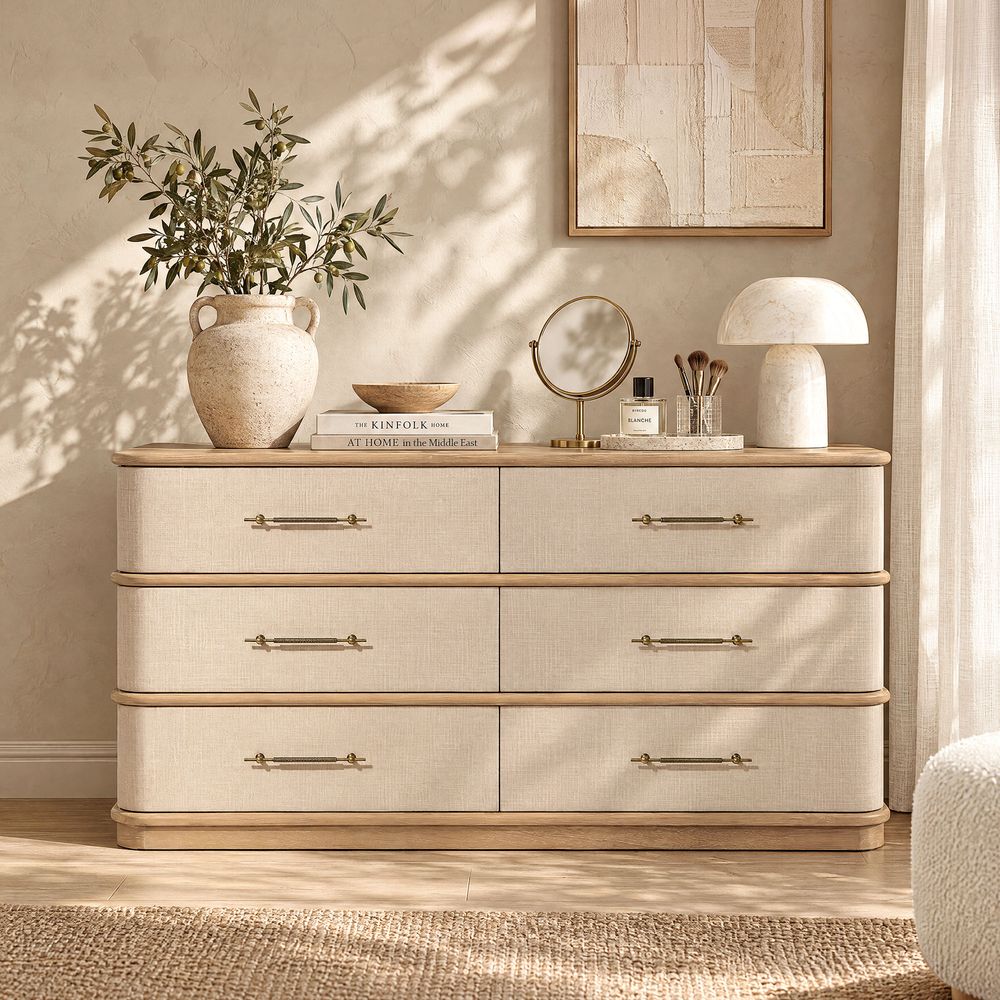
Walter 65-Inch Linen-Blend 6-Drawer Dresser
View Product
Is a 6-Drawer Dresser Enough for One Person or a Couple?
For One Adult
For one adult with a working closet, six drawers are usually enough for folded everyday clothing. Hanging clothes such as jackets, dresses, dress shirts, and other items can stay in the closet while the dresser handles T-shirts, underwear, pants, pajamas, workout clothing, and sweaters.
In a smaller bedroom or apartment, a wide six-drawer dresser can also consolidate storage that would otherwise require several smaller pieces.
For Two People Sharing
For a couple, six drawers can work if both people use the dresser for folded basics and keep most hanging clothes in the closet.
A simple arrangement is three drawers per person, but that only works when both wardrobes are relatively modest. If either person stores a large amount of denim, sweaters, workout clothing, or seasonal pieces in the dresser, six drawers may feel restrictive.
If closet space is limited, consider the total number of drawers needed across the bedroom rather than assuming one six-drawer dresser has to do everything.
How to Organize a 6-Drawer Dresser
A well-organized dresser is easier to use because you can find clothes without moving half the drawer.
Assign Each Drawer a Purpose
Start with broad categories rather than creating too many small sections. For example:
-
Everyday tops
-
Underwear and socks
-
Pants and shorts
-
Sweaters and layers
-
Pajamas and workout clothes
-
Seasonal or less frequently used items
The categories can change depending on your wardrobe.
Fold Clothes Upright
Folding clothes upright can make it easier to see individual pieces instead of creating a tall stack where the bottom items disappear.
This works especially well for T-shirts, tank tops, leggings, and other relatively thin clothing.
Use Dividers for Smaller Items
Drawer dividers can keep socks, underwear, accessories, or other small items from spreading across a wide drawer.
For larger clothing categories, however, you may not need dividers. Leaving some open space can make it easier to put clothes away.
Use the Top Surface Carefully
The top of a dresser can be useful for a mirror, lamp, jewelry tray, books, or a few decorative pieces. Avoid covering the entire surface with objects, especially if you need the dresser to remain easy to clean.
What Features Matter Most in a 6-Drawer Dresser?
Two dressers with similar exterior dimensions can feel very different to use. Pay attention to the construction of the drawers, hardware, and safety features.
Drawer Joints and Glides
The drawer box is one of the most frequently used parts of a dresser. Dovetail joints are one example of a strong drawer construction method because the pieces interlock rather than relying only on fasteners.
Drawer glides also affect everyday use. Metal or ball-bearing systems can provide smooth movement, while full-extension glides allow more of the drawer to open so you can reach items near the back.
The Renata 65-Inch Travertine-Textured 6-Drawer Dresser, for example, uses precision dovetail drawer joints and soft-close rails.
Soft-Close and Full Extension
Soft-close rails reduce the noise and impact associated with closing drawers. They can be especially useful in bedrooms where drawers may be opened early in the morning or late at night.
Full-extension drawers are useful when you regularly store items toward the back. Instead of leaving the rear section difficult to reach, the drawer opens farther so more of the storage space is accessible.
Hardware and Anti-Tip Protection
Drawer pulls should feel secure and comfortable to use. Their finish also contributes to the overall appearance of the dresser.
The Walter 65-Inch Linen-Blend 6-Drawer Dresser, for example, combines a linen-blend exterior with slender vintage-inspired handles.
Anti-tip hardware is another feature that should not be overlooked. A loaded dresser can be heavy, and open drawers can shift the center of gravity forward. Use the supplied anti-tip hardware according to the manufacturer's instructions.
What Are the Best Materials for a Durable 6-Drawer Dresser?
There is no single material that determines whether a dresser will last. Construction quality, joinery, drawer support, finish, and everyday use all matter.
Solid Wood
Solid wood can be durable and repairable, and many hardwood species can be refinished over time. It is generally heavier and may cost more than other construction methods.
Wood Veneer
Wood veneer uses a thin layer of real wood over a core material. Quality veneer construction can provide the appearance and grain of real wood while allowing the manufacturer to use a more dimensionally stable core.
Engineered Wood
MDF and particleboard are common engineered materials used in furniture. Their performance depends on density, construction, edge treatment, hardware, and how the piece is assembled.
Rather than judging a dresser only by whether it is labeled "solid wood," look at the entire construction.
Why Kiln-Dried Wood Matters
Kiln-drying reduces the moisture content of wood before it is used in furniture. This can help limit movement caused by changes in humidity and support more stable construction over time.
For wood furniture, it is one useful specification to consider alongside the frame construction, drawer joints, and hardware.
How Much Does a 6-Drawer Dresser Weigh?
Weight varies considerably depending on the materials, dimensions, and construction.
As a broad planning range, a six-drawer dresser may weigh anywhere from around 100 pounds to more than 300 pounds, depending on its size and materials. For example, the Finnley 62-Inch Fluted 6-Drawer Dresser weighs about 172 pounds, Walter 65-Inch Linen-Blend 6-Drawer Dresser weighs about 220 pounds, and Renata 65-Inch Travertine-Textured 6-Drawer Dresser weighs about 297 pounds.
Clothing adds additional weight once the drawers are filled. Denim, sweaters, and other dense materials can add considerably more than lightweight T-shirts.
For moving, empty the drawers first whenever possible. Once the dresser is positioned, install its anti-tip hardware according to the manufacturer's instructions.
How Much Does a 6-Drawer Dresser Cost?
Price varies based on material, construction, dimensions, hardware, finish, and brand.
As a general buying guide, lower-priced six-drawer dressers often use engineered wood and simpler hardware, while higher-priced models may include solid wood, real wood veneer, upgraded drawer construction, soft-close hardware, or more specialized finishes.
Rather than using price alone to judge quality, compare the materials and construction details.
For example, these Hernest six-drawer dressers illustrate how materials, construction, and finishes can vary:
Prices and promotions can change, so check the individual product page for the current price before purchasing.
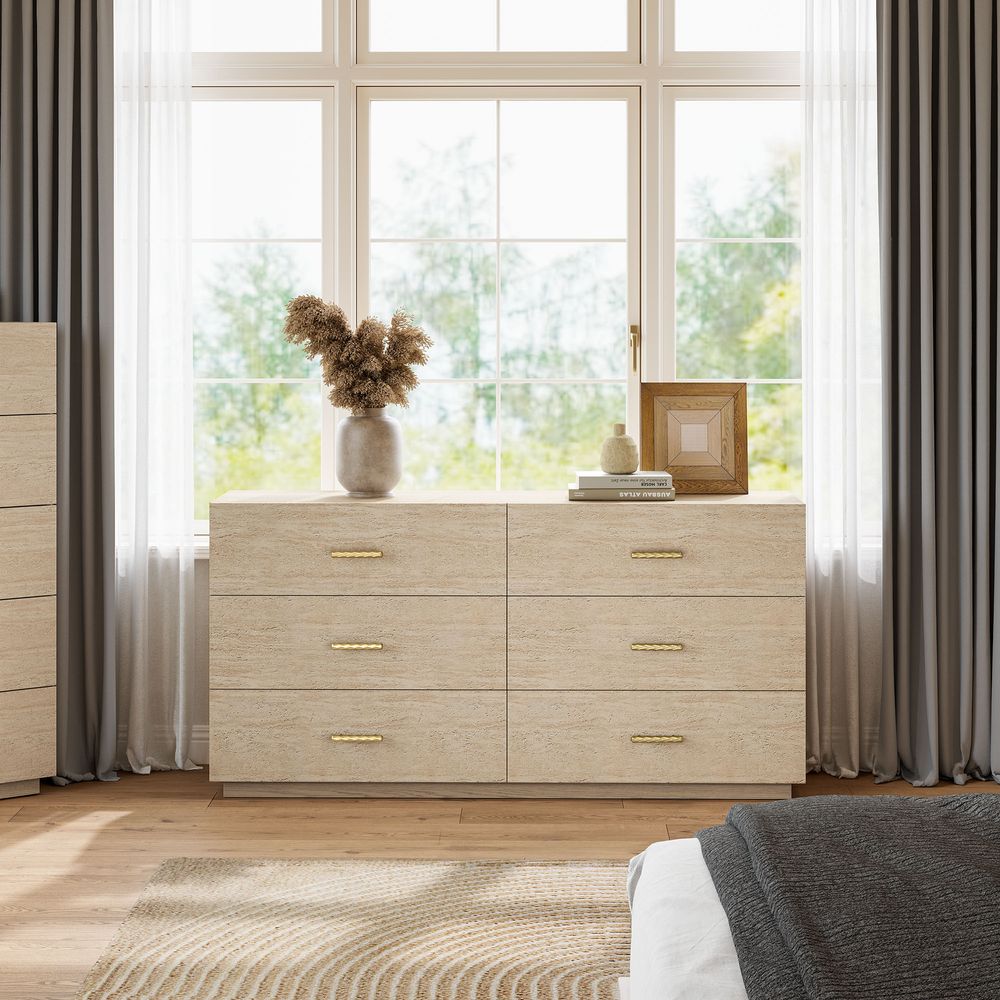
Renata 65-Inch Travertine-Textured 6-Drawer Dresser
View Product
Styles to Match Your Bedroom
Once the size and storage requirements are right, the dresser's finish and details can help tie the bedroom together.
Fluted and Modern
Vertical fluting adds texture and creates subtle shadows across the drawer fronts. The Finnley uses a fluted front with a warm brown poplar finish, making it suitable for bedrooms that already use wood tones or other textured surfaces.
Linen-Blend
A linen-blend exterior creates a softer, more relaxed look than a fully wood or painted dresser. Walter combines a linen-blend exterior with a mindi wood frame, and mindi veneers.
Travertine-Textured
A travertine-inspired texture can add an organic, stone-like appearance without the weight of a solid stone furniture piece. Renata combines American oak veneers with a textured resin finish, brass-toned hammered hardware, dovetail drawer joints, and soft-close rails.
When choosing a finish, consider the bed frame, nightstands, flooring, and wall color rather than treating the dresser as a standalone piece.
Safety: Anchor Your Dresser to the Wall
Dressers can tip when drawers are opened, especially when multiple drawers are extended at the same time. This creates a serious risk for children and adults.
In the United States, federal requirements for certain clothing storage units address tip-over stability. Under the CPSC's current rule, qualifying clothing storage units manufactured after September 1, 2023 are subject to requirements under 16 CFR Part 1261, including stability testing, warning information, and packaging of an anti-tip device that meets ASTM F3096.
The CPSC also recommends furniture anchoring as part of its consumer safety guidance. Use the anti-tip hardware supplied with your dresser and follow the manufacturer's installation instructions.
Keep heavier items in lower drawers where practical, and do not place a television on a dresser unless the dresser is specifically designed and rated for that use.
Find the Right 6-Drawer Dresser for Your Bedroom
Choosing a six-drawer dresser is ultimately about matching storage capacity to the way you actually use your bedroom. Measure the available wall and floor space, compare interior drawer dimensions, consider what you plan to store, and look at construction details before making a decision.
If six drawers fit your wardrobe and room layout, explore the Hernest 6 Drawer Dressers collection to compare widths, materials, finishes, and drawer configurations.
FAQs
Is a 6-drawer dresser enough for one person?
Usually, yes. For one adult who keeps hanging clothes in a closet, six drawers can provide enough space for folded everyday clothing. Your actual needs depend on drawer dimensions and how much clothing you store.
Is a 6-drawer dresser enough for two people?
It can be, if both people use the dresser mainly for folded basics and have sufficient closet space. If both wardrobes are large or most clothing is stored in drawers, consider additional storage.
How big is a typical 6-drawer dresser?
Many low, wide six-drawer dressers are approximately 50–70 inches wide, 30–36 inches high, and 18–24 inches deep. Always check the exact product dimensions before purchasing.
How many clothes can a 6-drawer dresser hold?
There is no fixed capacity because drawer dimensions and clothing types vary. As a rough estimate, six drawers may hold around 70–100 lightweight folded clothing items, while bulky sweaters and denim will reduce the total.
How deep should dresser drawers be?
For everyday clothing, drawers around 14–18 inches deep can provide useful storage, but the ideal depth depends on the dresser design and the items you plan to store. Deeper drawers are useful for bulky clothing but can be harder to organize if they are overfilled.
What should I look for in a 6-drawer dresser?
Look at the actual drawer dimensions, drawer construction, glides, extension range, frame materials, hardware, finish, and anti-tip hardware. These details often matter more than drawer count alone.
How much does a 6-drawer dresser weigh?
Weight varies by material and construction. A six-drawer dresser can weigh roughly 100 pounds to more than 300 pounds depending on its dimensions and materials. Check the manufacturer's specifications for the exact model.
What materials are best for a 6-drawer dresser?
Solid wood can offer durability and repairability, while quality veneer and engineered construction can also perform well when properly designed and built. Look at the complete construction rather than choosing based on material name alone.
Should I anchor a 6-drawer dresser?
Yes. Use the supplied anti-tip hardware and follow the manufacturer's installation instructions. Anchoring helps reduce the risk of tip-over when drawers are opened or the dresser is pulled forward.
How should I organize a 6-drawer dresser?
Assign each drawer a broad category, such as tops, underwear, pants, sweaters, or pajamas. Keep frequently used items easy to reach, fold clothes upright where practical, and use dividers for smaller items.
What is the difference between a 6-drawer dresser and an 8-drawer dresser?
A six-drawer dresser generally uses less wall space and can provide enough storage for one adult's folded clothing. An eight-drawer dresser provides more capacity but requires more floor or wall space. Choose based on your wardrobe and bedroom dimensions.