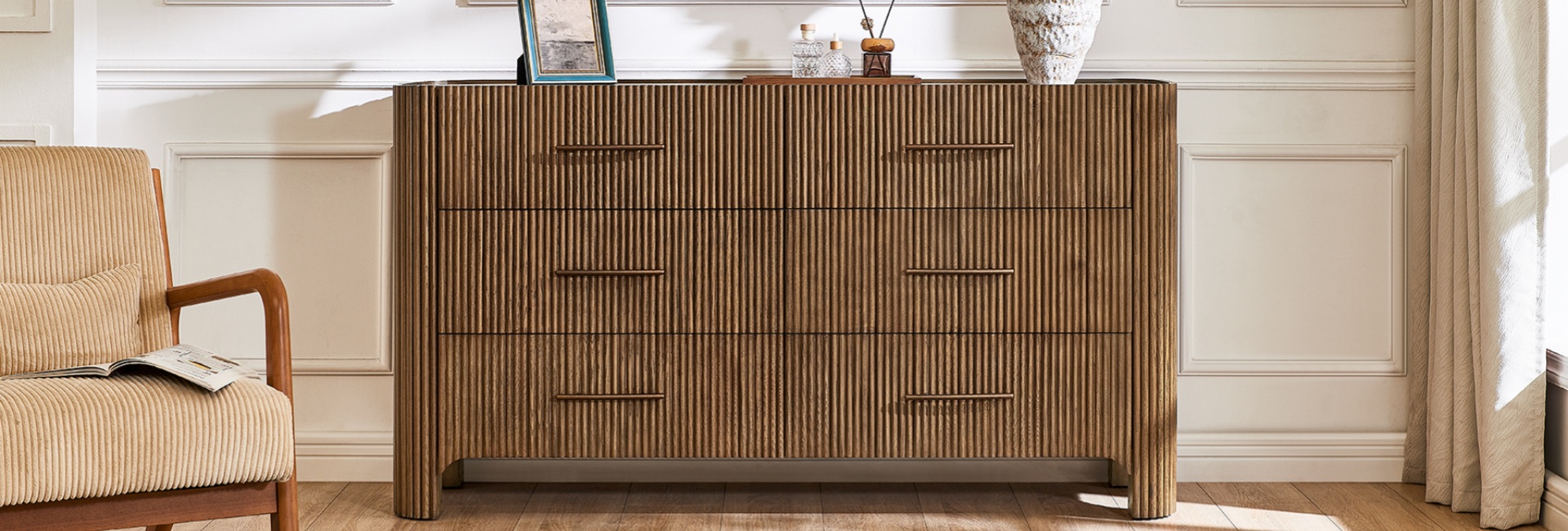
When comparing fluted dressers, start with four things: case size, drawer layout, materials, and drawer construction. The fluted detail affects the look, but those practical details determine whether the dresser works well in your bedroom.
A fluted dresser is a chest of drawers with parallel vertical grooves across the front. The grooves catch light and create subtle shadows, giving the piece more texture than a flat-front dresser without relying on a bold color or pattern.
If you are shopping for a fluted wood dresser, this guide covers the details worth checking before you buy, from sizing and materials to drawer hardware, construction, styling, and everyday care.
Table of Contents
- What Is a Fluted Dresser?
- Why Choose a Fluted Dresser?
- Fluted Dresser for Bedroom: How to Choose the Right Size
- Solid Wood vs. Veneer: What Matters Under the Flutes?
- How to Tell If a Fluted Dresser Is Well Made
- Joinery and Hardware That Matter
- Different Fluted Dresser Designs
- How to Style a Fluted Dresser
- How to Clean and Care for Fluted Wood
- Fluted Dresser vs. Other Bedroom Storage
- What to Consider Before Buying a Fluted Dresser
- FAQs
What Is a Fluted Dresser?
A fluted dresser has repeated vertical grooves or ridges across some or all of its surfaces, most commonly the drawer fronts. The grooves may be shallow and subtle or deeper and more sculptural, depending on the design.
The technique has a long history in architecture and furniture. Today, it is used on modern bedroom furniture to add texture while keeping the overall form relatively simple.
Why Choose a Fluted Dresser?
The main reason to choose a fluted dresser is visual texture. A flat-front dresser can look clean and understated, while vertical fluting introduces lines and shadows that make the piece more visually interesting.
That texture can work especially well in bedrooms with:
-
Neutral walls and bedding
-
Natural wood finishes
-
Minimalist furniture
-
Modern or Mid-Century Modern interiors
-
Simple rugs and window treatments
Fluting can also help break up a large wood surface. On a wider dresser, repeated vertical lines add visual structure without requiring decorative hardware or a busy finish.
The key is balance. If the rest of the room already has several strong patterns or heavily textured surfaces, a simpler fluted dresser may work better than one with especially deep or dramatic grooves.
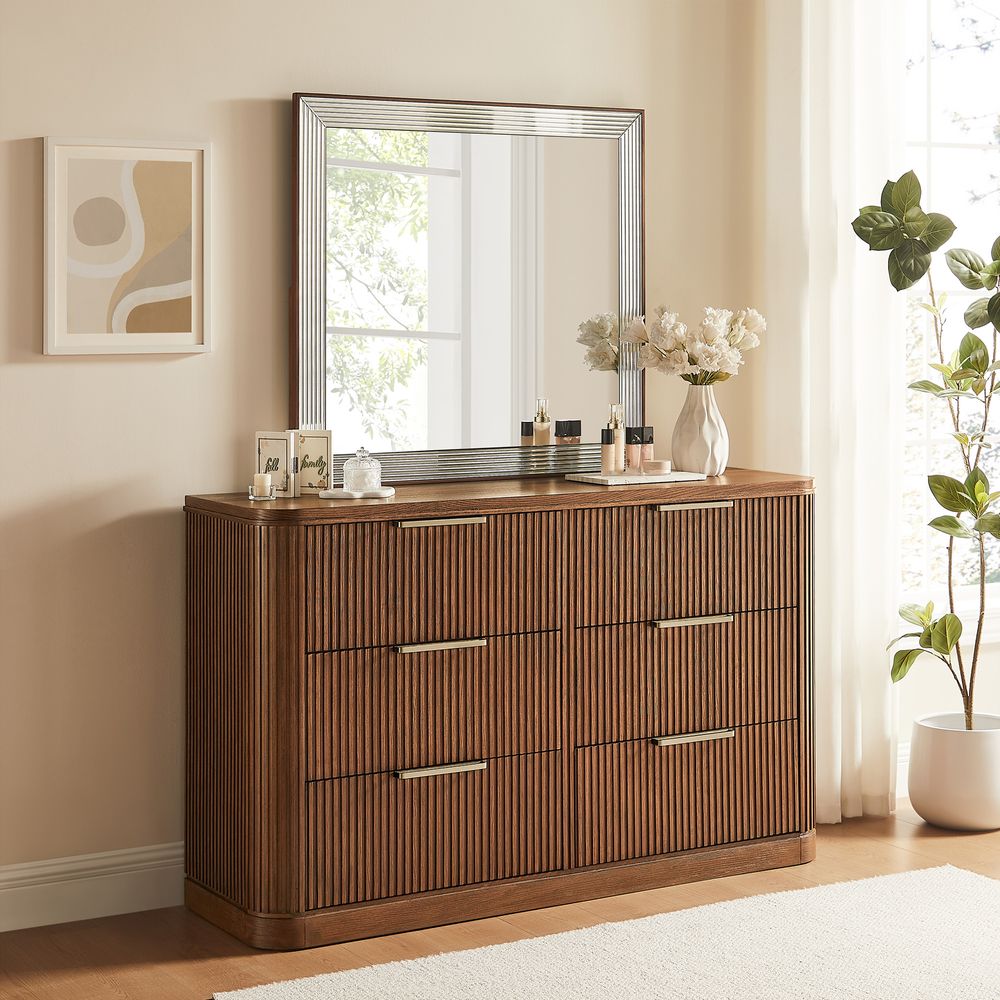
Finnley 62-Inch Fluted 6-Drawer Dresser
View Product
Fluted Dresser for Bedroom: How to Choose the Right Size
Size should come before appearance when choosing a dresser. Measure the available wall space, check the location of doors and windows, and leave enough room to open drawers comfortably.
For most bedrooms, a practical starting point is:
-
Width: about 30–72 inches
-
Depth: about 16–20 inches
-
Height: about 30–48 inches
These are general ranges rather than fixed standards. The right dimensions depend on the room, bed size, drawer layout, and available wall space.
Leave roughly 18–24 inches of clearance in front of the dresser when possible so you can stand comfortably while opening drawers.
A wider dresser can provide more storage, but it also needs more uninterrupted wall space. In a smaller bedroom, a narrower six-drawer dresser may be easier to fit without making the room feel crowded.
Finnley 62-Inch Fluted 6-Drawer Dresser
For a medium-sized bedroom, the Finnley 62-inch fluted 6-drawer dresser provides six drawers in a relatively wide horizontal layout. Its fluted drawer fronts add texture while the warm brown finish keeps the overall look grounded in natural wood tones.
The drawers use dovetail joints, and the case combines a kiln-dried poplar frame with poplar wood veneers. These construction details are more useful when evaluating the dresser than the fluting alone.
Finnley 76-Inch Fluted 9-Drawer Dresser
If you need more divided storage, the Finnley 76-inch fluted 9-drawer dresser uses a wider case with nine drawers. Its fluted wood front creates a continuous textured surface across the dresser.
The larger width makes it better suited to bedrooms with more available wall space. Before choosing a nine-drawer dresser, measure both the wall and the clearance needed to use the drawers comfortably.
Solid Wood vs. Veneer: What Matters Under the Flutes?
The word “wood” on a furniture listing does not tell you everything about how a dresser is constructed.
A fluted dresser may use solid wood, wood veneer over an engineered or solid-wood substrate, plywood, MDF, or a combination of materials. None of these descriptions alone tells you whether a dresser is well made.
Here is what to look for:
-
Solid wood: Made from natural wood throughout the specified component. It can be durable, but construction quality, wood species, joinery, and finishing still matter.
-
Wood veneer: A thin layer of real wood applied over another material. Veneer can provide a genuine wood surface while allowing manufacturers to control movement and create consistent panels.
-
Plywood: Multiple layers of wood veneer bonded together. Quality varies depending on the plywood construction and finish.
-
MDF: A dense engineered wood product made from wood fibers. It can provide a smooth and stable surface, although its performance depends on construction and where it is used.
For a fluted dresser, the surface material matters because the grooves are part of the visual design. Look for product specifications that clearly identify the materials used in the drawer fronts and case rather than assuming the entire dresser is made from one material.
How to Tell If a Fluted Dresser Is Well Made
Fluting can make a dresser look substantial, but appearance alone does not tell you much about construction.
Before buying, check these details:
1. Drawer Construction
Look for information about drawer boxes and joinery. Dovetail joints are commonly used in quality furniture because they mechanically connect the drawer sides and front.
Also check whether the drawer bottoms are properly supported and whether the product provides information about the drawer materials.
2. Drawer Glides
Smooth drawer movement depends heavily on the glide system.
Soft-close glides can reduce noise and prevent drawers from slamming shut. Under-mounted glides can also create a cleaner appearance because much of the hardware is hidden beneath the drawer.
3. Case Construction
Check what materials are used for the frame, top, sides, and back. A detailed product specification is more useful than simply seeing “wood dresser” in a product title.
4. Fluting Quality
Look closely at how the grooves are formed. The spacing should look consistent across the drawer fronts, and the finish should follow the shape of the surface without obvious gaps or rough edges.
5. Stability
A dresser should sit level and feel stable when the drawers are opened. Pay attention to the base design, leg construction, and overall weight distribution.
6. Safety Hardware
Anti-tip hardware is an important safety feature for a dresser. Follow the manufacturer's installation instructions and secure the dresser as recommended, particularly in homes with children.
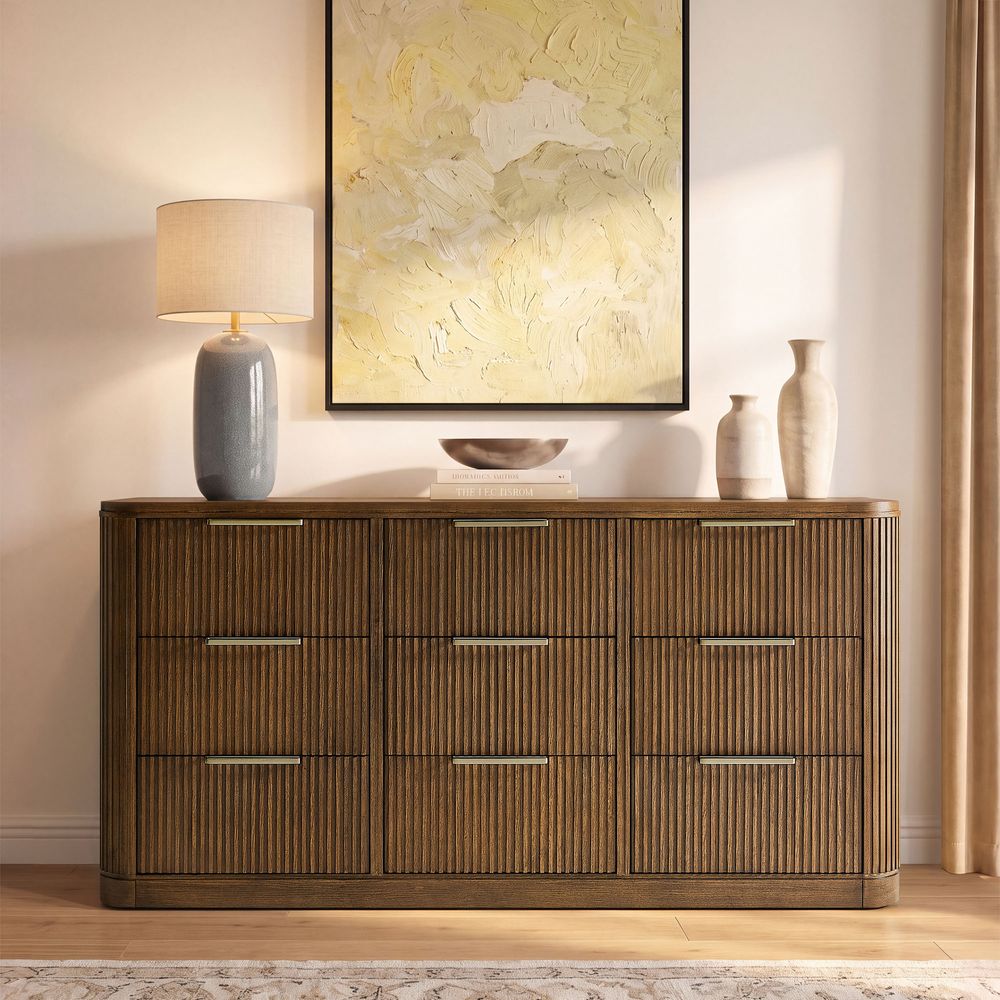
Finnley 76-Inch Fluted 9-Drawer Dresser
View Product
Joinery and Hardware That Matter
The decorative front is only one part of a dresser. The drawer system and case construction affect how the furniture performs over time.
For example, dovetail-jointed drawers can provide a strong mechanical connection between drawer components. Soft-close hardware can make daily use quieter and smoother.
Other details worth checking include:
-
Drawer glide type
-
Drawer weight capacity, if provided
-
Joinery
-
Back-panel construction
-
Leg or base construction
-
Anti-tip hardware
-
Finish and surface treatment
When a product page provides these specifications, use them to compare construction rather than relying only on photographs.
Different Fluted Dresser Designs
Fluting does not have to look the same from one dresser to another.
Some designs use shallow grooves that create a subtle vertical pattern. Others use deeper or more rounded fluting to create a stronger three-dimensional effect.
The placement can vary as well. Fluting may cover:
-
Drawer fronts
-
Cabinet doors
-
The entire case
-
A central section
-
The sides of the dresser
Orson 63-Inch 6-Drawer Dresser
The Orson 63-inch 6-drawer dresser takes a different approach to texture. Its fluted mindi-wood panels extend across the case, while rounded corners soften the overall form.
It also uses under-mounted soft-close glides and a welded cross stretcher between its brushed brass-tone steel legs. These details give the dresser a more structured appearance while keeping the storage layout practical.
How to Style a Fluted Dresser
Because the drawer fronts already provide texture, styling does not need to be complicated.
A few simple approaches work well:
Keep the top relatively simple
A table lamp, framed artwork, vase, or small decorative object can be enough. Leaving some of the surface visible allows the fluting to remain the main visual detail.
Use contrasting textures
Pair a wood fluted dresser with softer materials such as linen bedding, a wool rug, or upholstered furniture. The contrast can make the room feel layered without adding another strong pattern.
Match the wood tone carefully
If the dresser has a warm brown finish, look for complementary wood tones rather than trying to match every wood surface exactly. Small differences in wood color can look intentional when the rest of the room is cohesive.
Consider the wall behind it
A plain wall can make the fluting more noticeable. If you already have textured wallpaper, paneling, or a heavily patterned wall treatment, keep the accessories on the dresser simpler.
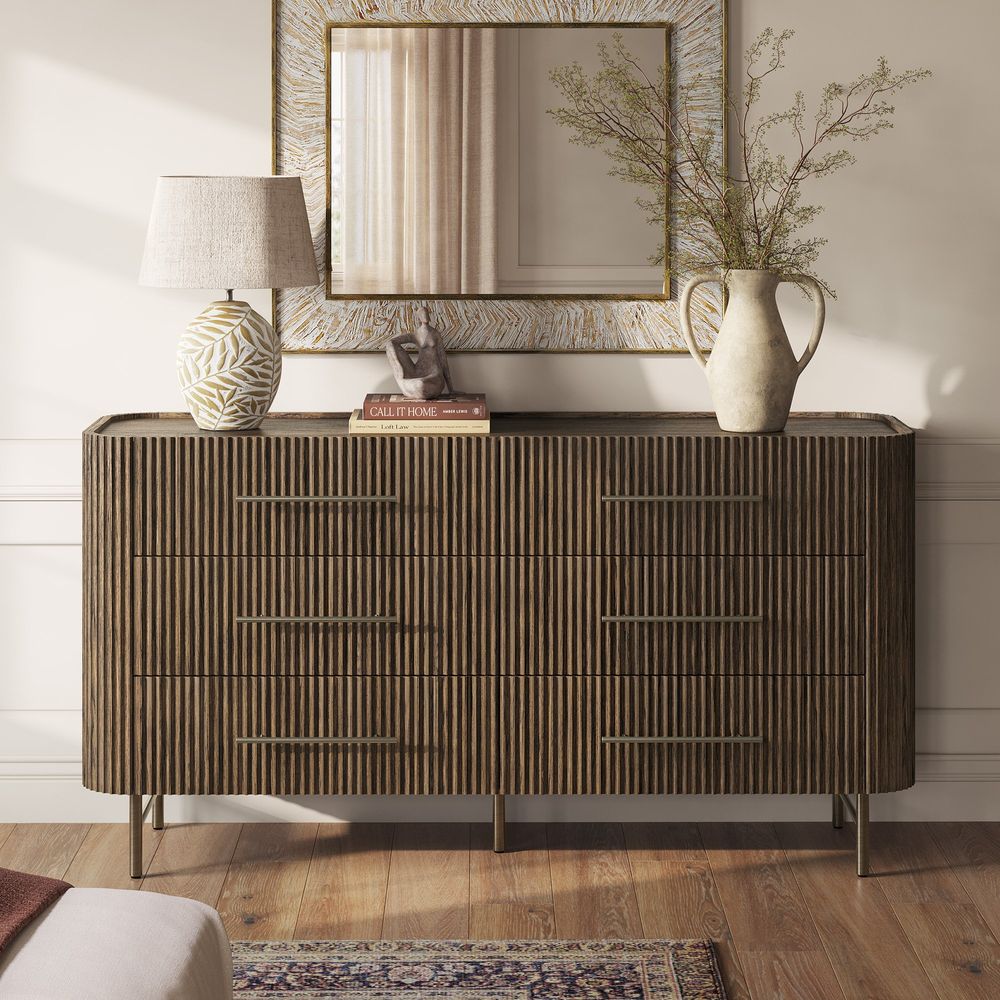
Orson 63-Inch 6-Drawer Dresser
View Product
How to Clean and Care for Fluted Wood
The grooves on a fluted dresser can collect more dust than a flat surface, so regular light cleaning is useful.
For everyday care:
-
Dust the surface with a soft, dry cloth.
-
Follow the grooves rather than pushing dust across them.
-
For light spills, use a slightly damp cloth and wipe the area dry.
-
Avoid soaking the surface or allowing water to sit in the grooves.
-
Use cleaning products only if they are compatible with the manufacturer's finish.
-
Keep the dresser away from excessive moisture and prolonged direct sunlight when possible.
Avoid abrasive cleaners, rough sponges, or aggressive scrubbing. They can damage the finish and make textured surfaces more difficult to maintain.
Fluted Dresser vs. Other Bedroom Storage
A fluted dresser is not the only option for bedroom storage. The right format depends on how much space you have and how you prefer to organize clothing.
A tall dresser can make sense when floor space is limited, while a wider dresser generally provides a broader surface and easier access to multiple drawers at once.
What to Consider Before Buying a Fluted Dresser
Before placing an order, run through this checklist:
Measure the space. Check wall width, depth, drawer clearance, door swings, and nearby furniture.
Check the drawer layout. Six drawers and nine drawers can provide very different storage arrangements even when the overall style is similar.
Read the material specifications. Look for the actual materials used for the case, drawer fronts, and drawer boxes.
Check the hardware. Drawer glides, joinery, and soft-close mechanisms can affect everyday use.
Look at the base. Legs and supports affect both the appearance and stability of the dresser.
Check safety information. Make sure anti-tip hardware is included or available and follow the installation instructions.
Think about the room as a whole. The fluted detail should work with the existing furniture, wood tones, textiles, and wall treatments.
FAQs
Are fluted dressers still popular in 2026?
Fluted furniture remains a recognizable choice for modern interiors because it adds surface texture without requiring a bold pattern. Whether it works in your bedroom depends on how well the design fits with the rest of the room.
Is a fluted dresser hard to clean?
Not usually. The grooves can collect more dust than a flat surface, but regular dusting with a soft cloth and prompt cleanup of spills can keep the dresser in good condition.
What size fluted dresser should I get?
Start with the available wall space and the storage you need. A dresser around 30–48 inches wide can work well in smaller bedrooms, while 48–72 inches provides more storage for larger rooms.
Are fluted dressers durable?
Durability depends more on construction, materials, joinery, and hardware than on the fluted surface itself. Check drawer construction, case materials, glide systems, and stability before buying.
How many drawers should a fluted dresser have?
Six drawers work well for many bedrooms because they provide divided storage without requiring an especially large case. Nine drawers can be useful when you want more organization or have a larger wardrobe.
What should I put on top of a fluted dresser?
Keep the arrangement practical. A lamp, framed artwork, mirror, vase, or a few small decorative objects can work well. Avoid overcrowding the surface, especially when the drawer fronts already provide visual texture.