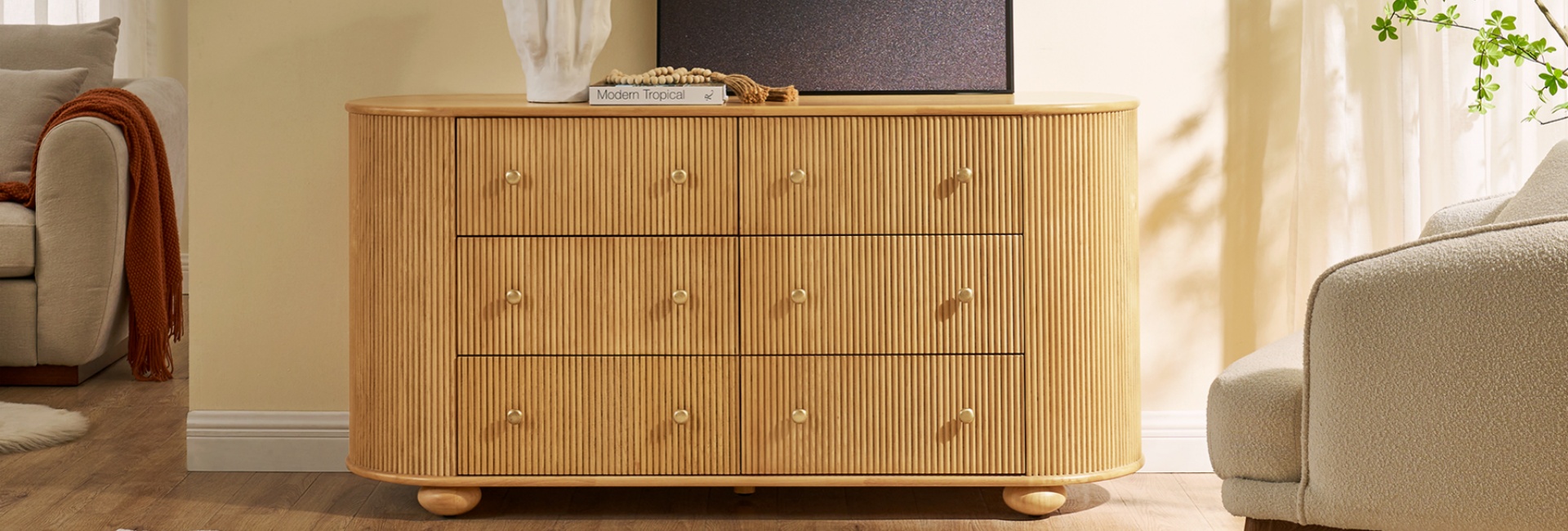
A dresser earns its keep in a way few other bedroom pieces do. It holds the clothes, linens, and everyday things that keep a morning moving, often for years without asking for much attention. But even a well-used dresser eventually reaches a point where another repair no longer makes sense.
So when is it time to replace your dresser? Usually, the answer comes down to four things: structural stability, drawer function, material condition, and repair cost. A dresser with a scratched top may still have decades of useful life left. One with a warped frame, failing joints, or swollen particleboard may not.
This guide explains how long dressers can last, which problems are worth repairing, when replacement makes more sense, and what to look for when choosing a dresser that fits your room, budget, and everyday life.
Table of Contents
- When Should You Replace a Dresser?
- How Long Should a Dresser Last?
- 7 Signs Your Dresser May Need to Be Replaced
- Should You Repair or Replace Your Dresser?
- What Makes a Dresser Last?
- How Much Should You Spend on a Good Dresser?
- A 60-Second Quality Checklist Before You Buy
- Choosing a Dresser That Fits Your Room
- Choose a Style You Can Live With
- Hernest Dressers: Accessible MCM and Organic Modern Design for Everyday Rooms
- Safety First: Anchor Your Dresser to the Wall
- The Smart Way to Replace Your Dresser
- FAQs
- When is it time to replace a dresser?
- How long should a dresser last?
- What are the signs that a dresser needs to be replaced?
- Should I repair or replace my dresser?
- Can dresser drawer slides be replaced?
- What is the most durable material for a dresser?
- How can you tell if a dresser is good quality?
- How much should you spend on a good dresser?
- What is the difference between a dresser and a chest of drawers?
- How wide should a dresser be for a bedroom?
- Should a dresser be anchored to the wall?
- Is a solid wood dresser worth the extra money?
- What dresser style works well for a modern bedroom?
When Should You Replace a Dresser?
You should consider replacing a dresser when its structure is no longer stable, its drawers cannot be reliably repaired, moisture has damaged the core material, or repairs are approaching the cost of a comparable replacement. Cosmetic wear alone usually isn't a reason to replace a well-built dresser.
Before buying a new piece, check these five things:
-
Does the frame wobble or rack? Structural movement can indicate failing joints.
-
Do the drawers stick, sag, or stop closing properly? Hardware can often be replaced, but damaged drawer boxes or carcasses may not be worth saving.
-
Is the material swollen or crumbling? Moisture-damaged particleboard is difficult to restore.
-
Can the problem be repaired without rebuilding the piece? Replacing drawer slides or tightening hardware is very different from repairing a failing frame.
-
Would the repair cost approach a comparable new dresser? If so, replacement may make more practical sense.
The goal isn't to replace furniture at the first sign of wear. It's to recognize when the underlying structure has reached the end of its useful life.
How Long Should a Dresser Last?
There isn't one lifespan that applies to every dresser. Materials, construction, hardware, moisture exposure, how often the piece is moved, and everyday use all make a difference.
A Dutch government furniture study estimates a useful life of roughly 10 to 20 years for dressers and chests, although individual pieces can last substantially longer or shorter depending on construction and use.
A well-built solid-wood dresser can remain serviceable for decades when its joints and hardware are maintained. A dresser made from lower-quality particleboard may have a shorter useful life, particularly if it has been exposed to moisture or repeatedly disassembled and moved.
Rather than asking only, "How old is my dresser?", ask:
Is the underlying structure still sound?
Age is a useful reference point. Condition is the better indicator.
What Usually Determines a Dresser's Lifespan?
Material: Solid wood and well-constructed plywood-based components generally provide better long-term repairability than low-density particleboard.
Joinery: Strong drawer joints, such as dovetail construction, can withstand repeated opening and closing better than basic glued or stapled connections.
Hardware: Drawer slides eventually wear. Hardware can often be replaced without replacing the entire dresser.
Moisture: Water damage can cause engineered wood and particleboard to swell, weaken, or lose their ability to hold fasteners.
Maintenance: Keeping a dresser level, avoiding excessive drawer loads, and addressing loose hardware early can extend its useful life.
In other words, a dresser is worth keeping as long as its core structure remains repairable.
7 Signs Your Dresser May Need to Be Replaced
You don't need a calendar to decide whether a dresser has reached the end of its useful life. Start with the way it behaves.
1. The Drawers Stick, Sag, or Won't Close Properly
A drawer should open smoothly, stay aligned, and close without forcing it.
If a drawer suddenly sticks, first check whether the problem is a loose screw, debris in the track, or worn hardware. Replacement drawer slides can solve many of these issues.
A different situation is a drawer box that has warped, a cabinet that has shifted out of square, or hardware that has repeatedly pulled out of the surrounding material. Those problems can point to structural failure rather than a simple hardware repair.
If you have to use your hip to close a drawer every morning, it's worth figuring out why.
2. The Frame Wobbles or Racks
Put your hands on the top and gently push the dresser from side to side.
A small amount of movement caused by an uneven floor can sometimes be corrected by leveling the furniture. Persistent movement, visible gaps at the joints, or diagonal twisting is more concerning.
A dresser that has become structurally unstable shouldn't be treated as a cosmetic problem. Stability matters for everyday use and for tip-over prevention.
3. The Material Has Swollen or Started to Crumble
This is particularly important with particleboard and other wood-based panels.
A small surface scratch is one thing. A panel that has swollen after absorbing moisture is another. Once the material has significantly expanded or lost its ability to hold screws securely, repairing the finish won't restore the original structural strength.
For moisture-damaged furniture, replacement may make more sense than repeatedly repairing the surface.
4. The Joints Keep Coming Loose
Loose hardware is usually fixable.
A joint that repeatedly separates after being tightened is different. If the surrounding material has stripped, cracked, or lost its shape, the dresser may no longer be able to maintain its original structure.
This is one reason construction matters when buying a dresser in the first place.
5. The Finish Is Damaged Beyond What You Want to Live With
Deep scratches, stains, water rings, and worn finishes can make a dresser look tired, but cosmetic damage doesn't automatically mean replacement.
Solid wood can often be refinished. Some veneer surfaces can also be repaired depending on the extent of the damage.
Before replacing a dresser because of appearance alone, ask whether the finish is actually damaged—or whether the piece simply needs a refresh.
6. Your Storage Needs Have Changed
Sometimes the dresser isn't failing. Your life has changed.
You may have moved into a larger bedroom, started sharing storage, added a child's room, or simply accumulated more clothing than the old six-drawer piece can handle.
That's a legitimate reason to replace furniture even when the original dresser is structurally sound.
The important distinction is that you're replacing it because it no longer serves your needs—not because it has mechanically failed.
7. It Has Become a Safety Concern
A dresser that tips, shifts significantly when drawers are opened, or has damaged structural components should not be ignored.
Tip-over prevention is especially important in homes with children. Secure dressers to the wall according to the manufacturer's instructions and use the included anti-tip hardware where provided.
A stable dresser is part of a safe bedroom, not just a piece of furniture.
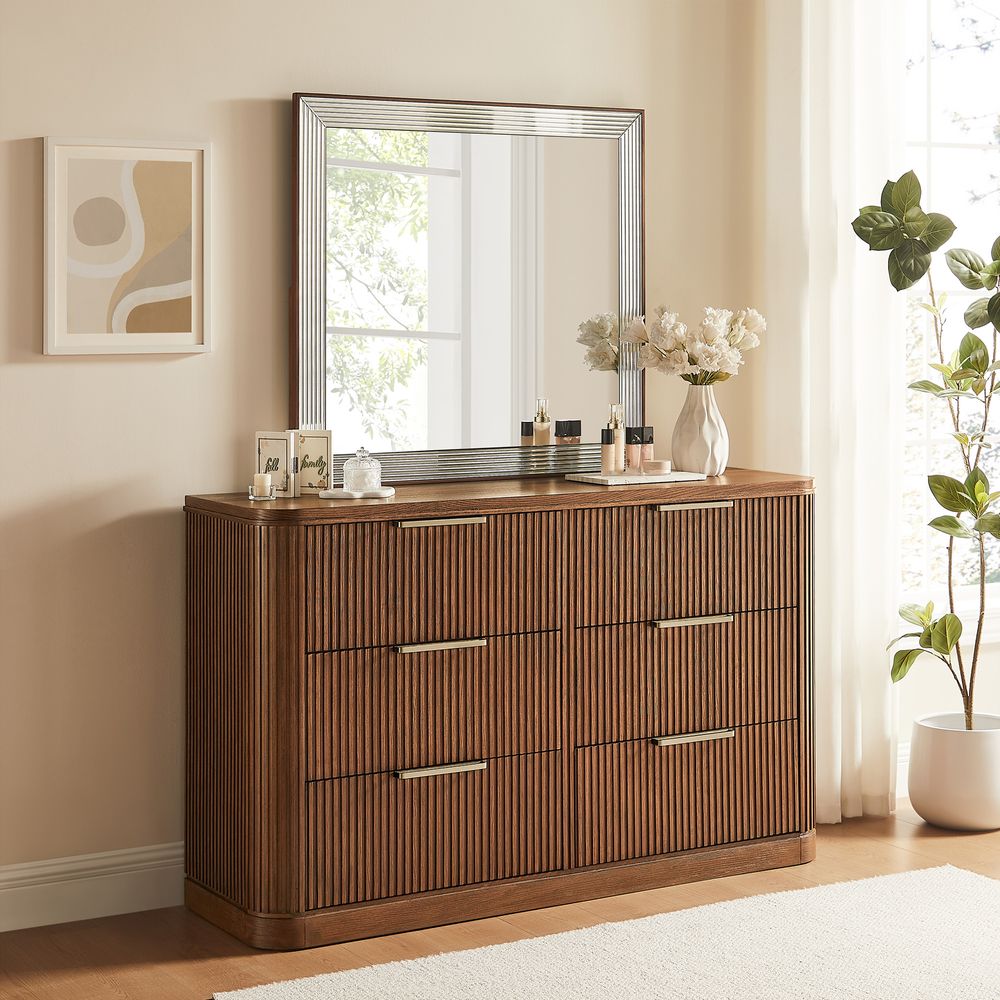
Finnley 62-Inch Fluted 6-Drawer Dresser
View Product
Should You Repair or Replace Your Dresser?
Not every damaged dresser belongs at the curb.
Use the condition of the core structure to make the decision.
Repair It When:
-
The frame remains square and stable.
-
The wood or panel material is structurally sound.
-
Drawer slides are worn but replaceable.
-
Handles, screws, or other hardware are loose.
-
The finish is scratched but the underlying material is intact.
-
The dresser has sentimental or vintage value.
-
The repair is relatively simple compared with buying a comparable replacement.
Consider Replacing It When:
-
Particleboard has swollen, crumbled, or lost its ability to hold fasteners.
-
The frame has significant racking or separation.
-
Multiple structural joints have failed.
-
Drawer boxes are badly warped or damaged.
-
The dresser remains unstable after leveling and tightening.
-
Repairs would require extensive rebuilding.
-
The estimated repair cost is close to the price of a comparable new piece.
There isn't a universal repair-to-replacement percentage that works for every dresser. A $100 vintage piece with sentimental value may be worth restoring, while a newer inexpensive dresser with widespread structural damage may not be.
The better question is:
Can the underlying structure be restored to a condition you'd trust for everyday use?
If yes, repair may be worthwhile. If no, replacement is usually the more practical path.
What Makes a Dresser Last?
When you're replacing an old dresser, don't judge the next one only by its finish.
Look at the construction underneath.
Start With the Frame and Materials
Solid wood is highly repairable and can develop character over time. Well-made engineered wood and plywood-based construction can also provide dependable everyday performance when properly designed and protected from moisture.
The important thing is to understand exactly what you're buying.
Look for clear information about:
-
Solid wood components
-
Wood veneer
-
Engineered wood
-
Plywood
-
Drawer construction
-
Drawer hardware
-
Back-panel construction
"Wood" by itself doesn't tell you enough.
Look at the Drawer Joints
Dovetail joinery is a useful quality signal, particularly for frequently used drawers. The interlocking shape creates a strong mechanical connection rather than relying entirely on glue or fasteners.
It isn't the only way to build a durable drawer, but it's one of the details worth checking when comparing dressers.
Check the Drawer Hardware
Smooth, properly aligned drawer slides make a noticeable difference in everyday use.
Soft-close and full-extension hardware can improve the experience, but the presence of premium hardware doesn't compensate for a weak cabinet. Think of hardware as one part of the overall construction rather than the definition of quality.
Consider the Finish
A finish should protect the underlying material while working with the room rather than fighting it.
This is especially relevant if you're choosing furniture for a home that you expect to evolve. Natural wood grain, tactile finishes, and restrained forms can remain useful across changing decor instead of forcing you to redesign the entire room around one trend.
How Much Should You Spend on a Good Dresser?
There isn't one correct price for a dresser because the right budget depends on how long you expect to keep it, the materials you want, the size you need, and how much storage it provides.
For a temporary bedroom, rental, dorm, or guest room, a lower-cost dresser may make sense.
For a primary bedroom piece that you expect to use every day for years, it can be worth spending more on construction, hardware, materials, and finish.
Instead of judging the price only by the initial purchase, consider cost per year of use.
For example, if a $1,500 dresser provides 15 years of useful service:
$1,500 ÷ 15 years = $100 per year
The calculation doesn't prove that a more expensive dresser is always the better value. It simply gives you another way to compare furniture that has different expected lifespans.
Also consider delivery and assembly. A lower-priced piece that requires extensive assembly may have a different overall cost than a more fully assembled dresser.
A 60-Second Quality Checklist Before You Buy
You can learn a surprising amount about a dresser in a showroom or store without taking it apart.
1. Push the Top
Gently test for excessive wobble. If the dresser moves substantially on a level floor, ask why.
2. Open Every Drawer
Don't test only the easiest drawer. Open several, including the lower ones.
Look for:
-
Smooth movement
-
Consistent alignment
-
Solid drawer boxes
-
Minimal side-to-side movement
-
A clean closing action
3. Inspect the Drawer Joints
Look at the corners of the drawer box. Dovetail joints are one useful indicator of construction quality.
4. Look at the Back
The back panel contributes to the overall stability of the cabinet. Check how it is attached and whether it feels substantial enough for the size of the piece.
5. Check the Hardware
Open and close the drawers several times. Pay attention to whether the movement feels controlled or loose.
6. Look at the Materials
Don't assume that a wood-look surface means the entire dresser is solid wood. Check the product specifications for the actual material construction.
7. Check the Anti-Tip Hardware
A dresser should come with appropriate anti-tip provisions or installation instructions. Plan to secure it according to the manufacturer's guidance after bringing it home.
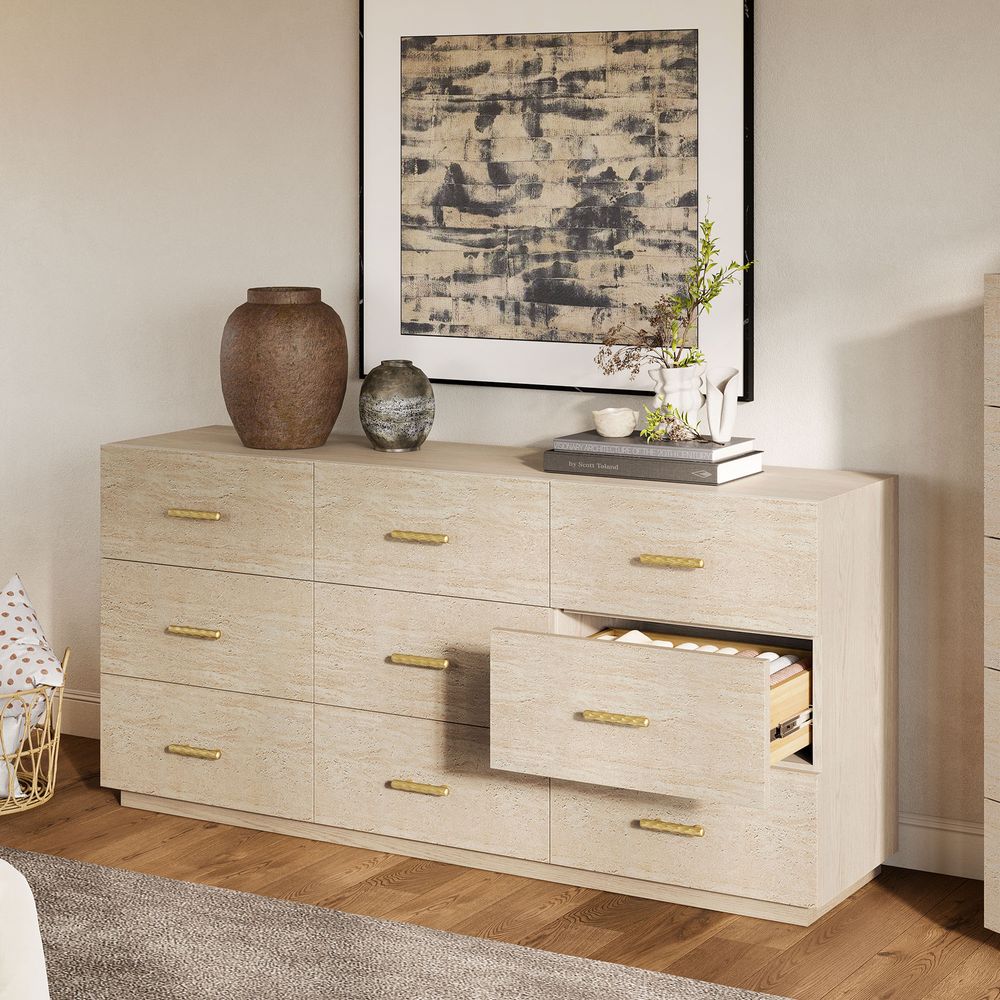
Renata 80-Inch Travertine-Textured 9-Drawer Dresser
View Product
Choosing a Dresser That Fits Your Room
Replacing a dresser is also an opportunity to fix a problem that may have nothing to do with the old furniture's condition: scale.
A dresser that's too large can make a bedroom feel cramped. One that's too small may leave you short on storage.
Dresser vs. Chest of Drawers
A dresser is generally wider and lower, making it useful along a larger bedroom wall and providing a surface for a mirror, lamp, artwork, or everyday items.
A chest of drawers is typically narrower and taller, making it useful when floor space is limited.
Neither is inherently better. The right choice depends on your wall dimensions, storage needs, and how much floor space you want to preserve.
Measure the Wall Before Shopping
Measure the actual wall rather than relying on an estimate.
Then check:
-
Overall dresser width
-
Dresser depth
-
Drawer clearance
-
Door swing
-
Walkway space
-
Nearby furniture
-
Delivery path into the room
Don't forget that the dresser has to make it through the front door, hallway, stairway, and bedroom doorway before you worry about whether it fits against the wall.
Choose a Style You Can Live With
Replacing a dresser doesn't necessarily mean chasing the latest furniture trend.
For a long-term piece, look for proportions, materials, and details that can work with more than one decorating direction. Mid-Century Modern and Organic Modern design can both offer that balance: distinctive enough to add character, but restrained enough to evolve with the rest of the room.
Mid-Century Modern
Mid-Century Modern (MCM) remains a natural fit for dressers because the style emphasizes proportion, functional forms, warm wood tones, and restrained detailing.
That emphasis on proportion and function also makes MCM practical for everyday bedrooms. You can introduce an MCM dresser without turning the entire room into a period-style interior.
Look for details such as:
-
Clean, balanced proportions
-
Warm wood tones
-
Tapered or streamlined forms
-
Simple hardware
-
Functional storage
-
Minimal ornamentation
Organic Modern
Organic Modern takes a similarly restrained approach but brings in softer textures, natural materials, warm neutrals, and more relaxed shapes.
For furniture, that can mean:
-
Natural wood grain
-
Tactile or lightly textured surfaces
-
Warm neutral finishes
-
Softened or understated forms
-
Simple, functional silhouettes
In a bedroom, these elements can work with linen bedding, natural textiles, stone-inspired accents, woven materials, or greenery without requiring every piece to match.
The result is a room that can evolve. You can change accessories, textiles, or wall colors without making the dresser feel out of place.
Accessible Design
Style doesn't have to mean expensive-looking, complicated, or difficult to live with.
Accessible doesn't have to mean basic, inexpensive, or disposable.
For Hernest, accessible design means making considered furniture approachable for real homes and real routines. It's about creating pieces with enough character to feel intentional while keeping everyday function at the center.
That means paying attention to details people actually interact with:
-
Drawers that are easy to use
-
Storage that makes sense for everyday clothing
-
Materials and finishes that work with different rooms
-
Designs that can complement changing decor
-
Clear construction information so shoppers know what they're buying
The goal isn't furniture that only works in a perfectly styled photograph. It's furniture that can become part of an actual home.
Hernest Dressers: Accessible MCM and Organic Modern Design for Everyday Rooms
If you're replacing a dresser because the old one no longer works for your room, the replacement doesn't have to be purely functional.
Hernest brings Mid-Century Modern and Organic Modern influences into bedroom furniture through natural-looking materials, considered proportions, tactile surfaces, and practical storage. The goal is not to create furniture that only works within one perfectly matched interior, but pieces that can adapt to the way real rooms are used and changed over time.
The Hernest Renata 80-Inch Travertine-Textured 9-Drawer Dresser is one example. Its nine drawers provide substantial storage for a primary bedroom, while the travertine-inspired surface introduces texture without requiring actual stone construction. The warm material tones and restrained detailing allow it to work as a focal point without overwhelming the rest of the room.
For a different direction, the Hernest Finnley 62-Inch Fluted 6-Drawer Dresser brings vertical fluting and a wood-forward finish into a more compact footprint. Its textured front adds visual interest while the overall proportions remain practical for a bedroom.
These are different expressions of the same idea: a dresser can have personality without becoming disposable when the trend changes.
For shoppers who want MCM or Organic Modern furniture without turning the bedroom into a showroom set, that flexibility matters.
Safety First: Anchor Your Dresser to the Wall
A dresser can be attractive, functional, and well-built, but it still needs to be installed safely.
Follow the manufacturer's anti-tip instructions and secure the dresser to the wall using the hardware provided or an appropriate anchoring system.
Additional precautions include:
-
Keep heavier items in lower drawers.
-
Avoid placing tempting climbing objects on top.
-
Don't allow children to climb open drawers.
-
Keep drawers closed when they aren't being used.
-
Check the anchor periodically if the furniture is moved.
For Hernest dressers that include anti-tip hardware, use it as intended rather than treating it as optional.
A few minutes spent securing a dresser is a small part of setting up a bedroom, but it's an important one.
The Smart Way to Replace Your Dresser
Replacing a dresser doesn't have to mean throwing away a perfectly usable piece or buying the most expensive option available.
Start by checking the old dresser's structure.
If the frame is stable and the problem is limited to hardware or finish, repair may be enough.
If the structure has failed, materials have swollen, or the piece has become unstable, replacement may make more sense.
When shopping for the replacement:
-
Measure your room first.
-
Choose the storage capacity you actually need.
-
Check the construction rather than judging only by appearance.
-
Look for durable, repairable components.
-
Consider cost over the expected years of use.
-
Choose a design that can work with your room as it evolves.
-
Anchor the dresser after installation.
For a bedroom built around MCM, Organic Modern, or similarly warm and contemporary interiors, a dresser can be both a practical storage solution and an important part of the room's visual identity.
Hernest focuses on furniture designed to make that balance easier: distinctive enough to bring personality to a room, practical enough for everyday life, and approachable enough for real homes.
The right dresser isn't necessarily the newest, cheapest, or most elaborate one. It's the one that fits your space, supports your daily routine, and remains useful as your home changes.
FAQs
When is it time to replace a dresser?
It may be time to replace a dresser when its frame is persistently unstable, structural joints have failed, moisture has damaged the core material, drawers can no longer be reliably repaired, or extensive repairs are needed to make it safe and functional. Cosmetic wear alone usually isn't enough reason to replace a structurally sound dresser.
How long should a dresser last?
A dresser's useful life depends on its materials, construction, hardware, environment, and use. A Dutch government furniture study estimates roughly 10 to 20 years of useful life for dressers and chests, while well-built solid-wood furniture can remain serviceable for decades with proper care and repair.
What are the signs that a dresser needs to be replaced?
Common signs include a persistently unstable frame, drawers that cannot be properly repaired, swollen or crumbling panels, failing structural joints, and serious damage that affects safe use. Scratches or finish wear alone usually aren't enough reason to replace a structurally sound dresser.
Should I repair or replace my dresser?
Repair is usually worth considering when the frame is stable and the problem is limited to hardware, finish, or other replaceable components. Replacement makes more sense when the core material has swollen or crumbled, structural joints have failed, or extensive repairs would be required to restore stability.
Can dresser drawer slides be replaced?
Yes. Worn or damaged drawer slides can often be replaced if the drawer box and cabinet are still structurally sound. Measure the existing hardware and follow the manufacturer's installation requirements when choosing replacements.
What is the most durable material for a dresser?
Well-built solid hardwood is among the most durable dresser materials, particularly when combined with strong joinery and serviceable hardware. Quality plywood-based construction can also provide good long-term performance. Lower-quality particleboard can be more vulnerable to moisture and repeated fastener removal.
How can you tell if a dresser is good quality?
Check the frame for stability, open multiple drawers, inspect drawer joints, examine the back panel, test the hardware, and verify the actual materials used. Strong joinery, solid-feeling components, good alignment, and clear construction specifications are useful quality indicators.
How much should you spend on a good dresser?
There isn't one correct price. Your budget should reflect the size, materials, construction, storage capacity, and how long you expect to keep the piece. For long-term furniture, comparing purchase price against expected years of use can be more useful than looking at the initial price alone.
What is the difference between a dresser and a chest of drawers?
A dresser is generally wider and lower, while a chest of drawers is typically narrower and taller. Dressers work well when you have more horizontal wall space; chests can provide storage where floor space is limited.
How wide should a dresser be for a bedroom?
There is no universal ideal width. Measure the available wall, then account for drawer clearance, walkways, doors, and nearby furniture. Choose the widest dresser that fits comfortably without making the room difficult to navigate.
Should a dresser be anchored to the wall?
Yes. Follow the manufacturer's anti-tip instructions and secure the dresser to the wall using the supplied or appropriate anchoring hardware. This is particularly important in homes with children.
Is a solid wood dresser worth the extra money?
It can be, particularly if you plan to keep the dresser for many years. Solid wood is generally durable and repairable, but construction quality matters just as much as the material label. A well-built dresser with strong joinery and serviceable hardware can offer better long-term value than a cheaper piece that needs to be replaced frequently.
What dresser style works well for a modern bedroom?
Mid-Century Modern and Organic Modern dressers can both work well in modern bedrooms. MCM typically emphasizes clean proportions, warm woods, and functional forms, while Organic Modern adds natural textures, tactile finishes, softer forms, and warm neutral materials. Both can provide visual character without requiring the entire room to follow one strict style.