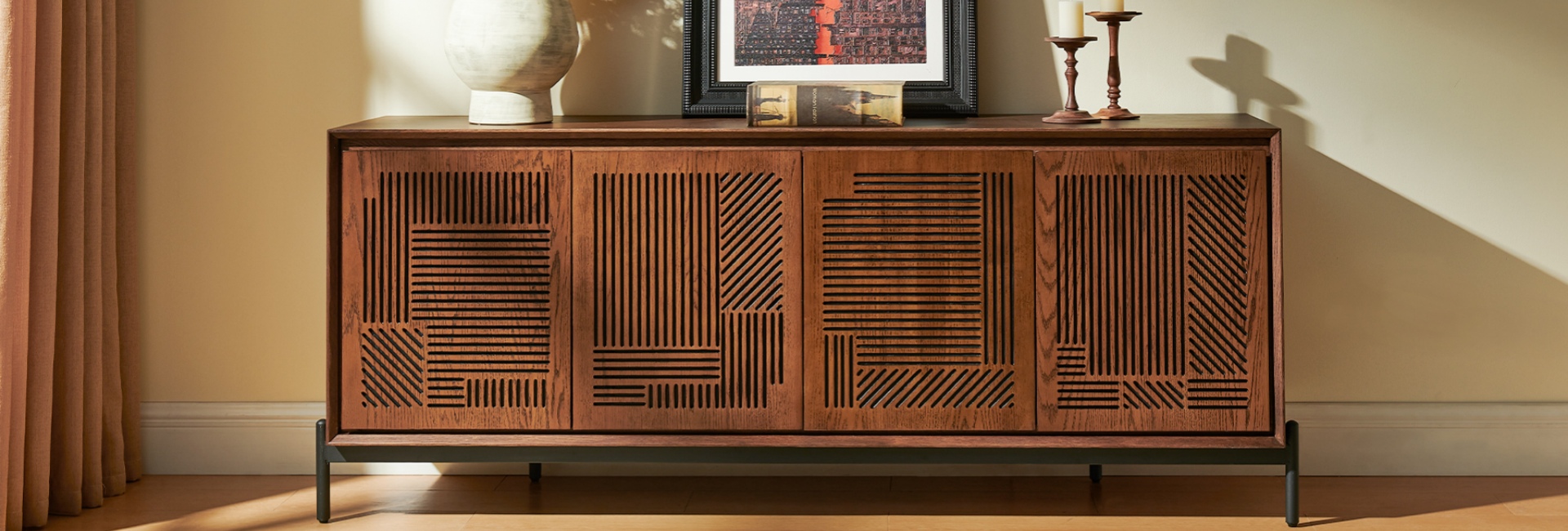
A small TV stand has to work harder than a large console. It needs to hold the TV securely, give cables and electronics somewhere to go, and leave enough floor space to move around the room.
We've seen media consoles used in apartments where the living room also serves as the route to the kitchen or bedroom. In those spaces, the problem is rarely that the stand looks too plain. It's usually too deep, too wide for the available wall, or positioned where it interferes with the only clear walkway.
In a small room, “compact” should mean easier to fit—not simply smaller in every dimension. Before choosing a finish or storage layout, start with three measurements: usable wall width, available depth, and seated eye level.
Quick Answer: For many small living rooms, a TV stand about 12–16 inches deep and roughly 70–75% of the usable wall width is a practical starting point. Choose the height based on your seated eye level, and make sure the console is wide enough for the TV, soundbar, and equipment without narrowing the walkway.
Table of Contents
- Small TV Stand Size at a Glance
- Why a Small TV Stand Is a Different Problem
- Measure Three Things Before You Shop
- What Size TV Stand Do You Need?
- How Tall Should a Small TV Stand Be?
- How Deep Should a TV Stand Be in a Small Living Room?
- Choose Storage That Earns Its Footprint
- Cable Management Matters More in a Small Room
- Which Material Is Best for a Small TV Stand?
- How to Make a Small Room Feel Bigger
- Small TV Stand Ideas for Apartments, Bedrooms, and Corners
- TV Stand Safety: Anchor It
- How to Clean and Maintain a Small TV Stand
- Shop TV Stands for Small Spaces
- FAQs
- What is the best size TV stand for a small living room?
- Can a TV stand be smaller than the TV?
- What size TV stand do I need for a 55-inch TV?
- How tall should a small TV stand be?
- How deep should a TV stand be in a small living room?
- What is the best material for a small TV stand?
- How do I hide cables with a TV stand?
- How do I make a TV stand safer around kids and pets?
Small TV Stand Size at a Glance
If you need a quick starting point, these measurements work well for many compact living rooms:
Depth: 12–16 inches is a practical range; around 14 inches works well when floor space is especially limited.
Width: A stand around 70–75% of the usable wall width can be a useful starting point for a balanced look, but the right proportion depends on the room and furniture around it.
TV overhang: Ideally, let the stand extend about 2–6 inches beyond each side of the TV.
Walkway: As a general planning guideline, about 30–36 inches of clear passage can make a busy walkway more comfortable.
Height: Base the stand on your seated eye level rather than a fixed furniture standard.
55-inch TV: A stand around 54–66 inches wide is a useful starting range.
65-inch TV: A stand around 63–72 inches wide generally gives the screen enough visual and functional support.
These are practical starting points, not hard rules. Your wall, seating position, TV base, soundbar, and room layout should have the final say.
Why a Small TV Stand Is a Different Problem
In a large living room, a few extra inches of furniture depth may barely register. In a studio or compact apartment, they can change the entire walking path.
The average U.S. apartment is about 908 square feet, while a studio averages about 457 square feet, based on 2024 data from RentCafe cited by the National Apartment Association. When the TV wall is also part of the route between rooms, furniture dimensions become much more noticeable.
That is why a TV stand for small spaces should be judged on geometry before style. A console can look clean and modern in a product photo but feel bulky at home if it blocks a doorway or projects too far into the room.
The narrowest option is not always the best option. In some rooms, reducing depth makes a bigger difference than reducing width.
This matters particularly in rental homes, where furniture may need to work in more than one space over time. A compact console with a practical depth and flexible storage is easier to move from one apartment to the next than a bulky piece designed for a single wall.
Measure Three Things Before You Shop
Before choosing a finish, pull out a tape measure. Three numbers will tell you whether a stand is likely to work: wall width, depth, and viewing height.
1. Measure the usable wall width
Measure the section of wall where the TV and stand will actually sit. Leave out doorways, large trim, radiators, vents, and other areas that the furniture cannot realistically occupy.
For a balanced arrangement, a useful starting point is to make the stand roughly 70–75% of the usable wall width.
For example, if you have 90 inches of uninterrupted wall, a console around 66–68 inches wide can leave some visual breathing room while still giving the TV a substantial base.
The TV itself matters too. A stand generally looks more balanced when it extends beyond the screen on both sides. Around 2–6 inches of extra width per side is a useful starting range, although a larger overhang can work when the room and furniture style call for it.
2. Measure the available depth
Depth is often the dimension that causes problems in a small room.
Measure from the wall toward the nearest walkway, doorway, sofa, or other piece of furniture. Then decide how much floor space you can realistically give up.
For many compact setups, 12–16 inches of TV stand depth is a useful range. Around 14 inches can be a good compromise when every inch matters.
Don't measure only the furniture itself. Check how much space you need behind it for plugs, power strips, and cable routing. A console that is technically shallow can still push farther into the room once cords are forced behind it.
3. Measure your seated eye level
TV stand height should start with your sofa, not a catalog.
Sit in your normal viewing position and measure from the floor to your eyes. This gives you a better reference point than choosing a stand simply because its listed height "looks standard."
For many adults sitting on a typical sofa, eye level falls somewhere around 40–43 inches from the floor, but your own seating position may be different.
What Size TV Stand Do You Need?
TV sizes are measured diagonally, which can make furniture sizing confusing. A 65-inch TV is not 65 inches wide. A typical 16:9 screen is around 57 inches wide.
When choosing a small TV stand, compare the stand's actual width with the TV's actual width.
These ranges are starting points rather than strict requirements. Check the TV manufacturer's actual dimensions, especially if the TV has a wide pedestal base or unusually thick bezels.
If you're between two stand sizes, the larger option often gives you more useful surface area for a soundbar, speakers, remotes, or decor—as long as the console still fits the wall and doesn't interfere with the walkway.
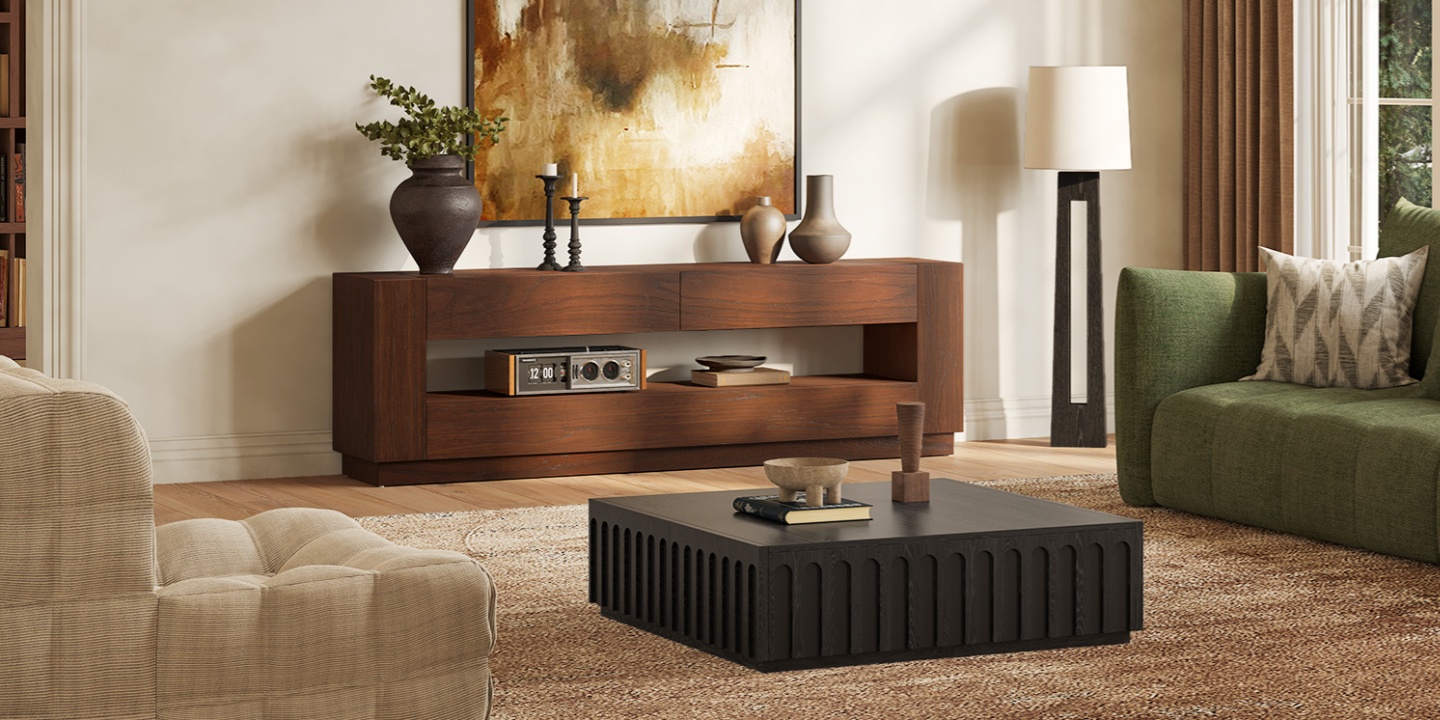
For a large TV in a relatively small room, a shallow console can sometimes make more sense than a genuinely short console. The Torben 70" Old Elm Media Console, for example, measures 70.9 inches wide and just 13.8 inches deep. It is designed for TVs up to 75 inches, giving you a relatively shallow option when depth is the main constraint. It also combines an open shelf with two drawers for everyday media storage.
The point is simple: a small room does not necessarily require a small-width TV stand. It may simply require a shallower one.
How Tall Should a Small TV Stand Be?
The most comfortable height depends on where your eyes land while you're sitting.
The basic calculation is:
Ideal stand height ≈ seated eye level − half the TV's height
For example, imagine your seated eye level is 42 inches from the floor and your TV is about 32 inches tall. Half of the TV height is 16 inches, so a stand around 26 inches high would put the screen center close to your eye level.
The exact result will vary depending on the TV's bezel, feet, mounting method, and whether you plan to place the TV directly on the console.
Why larger TVs usually need shorter stands
A larger screen extends farther above and below its center point. If your viewing eye level stays the same, increasing the TV height means the furniture underneath generally needs to become shorter.
As a practical starting point:
55-inch TV: around 24–28 inches of stand height
65-inch TV: around 22–26 inches
75-inch TV: around 20–24 inches
These aren't universal standards. Use your seated eye level and the actual TV height to make the final decision.
If you are deciding between two similar heights, the lower stand is usually the safer choice for a relaxed sofa viewing position.
For more detail on this calculation, see Hernest's TV Stand Height Guide.
How Deep Should a TV Stand Be in a Small Living Room?
For a TV stand for small living room layout, depth can matter more than width.
A console that is only a few inches deeper can noticeably reduce the space between the TV wall and the sofa or walkway. That's why shallow designs are often more useful than simply choosing a shorter console.
For most compact rooms, consider:
12–14 inches: best when floor space is especially tight
14–16 inches: useful when you need room for electronics or a soundbar
16–20 inches: more comfortable for equipment, but harder to fit into a narrow layout
If you regularly walk between the TV stand and another piece of furniture, try to preserve around 30–36 inches of clear passage where possible.
Also check the depth of your equipment. A soundbar, game console, receiver, or cable connections may require more usable surface than the console's advertised depth suggests.
A narrow TV stand can therefore mean two different things. Some people mean a short width, while others mean shallow front-to-back depth. When shopping for a small room, be clear about which measurement you need to reduce.
For more detailed measurements, see Hernest's TV Stand Depth Guide.
Choose Storage That Earns Its Footprint
A small console has limited real estate, so every compartment should have a purpose.
Think about what you actually need to store:
Game consoles and controllers
Streaming devices
Remotes
Routers
DVDs or books
Extra cables and chargers
Children's toys
Speakers and other accessories
Closed cabinets, open shelves, or drawers?
Each storage type works better for certain items.
A combination of storage types is often the most practical arrangement. Cabinets hide visual clutter, an open shelf keeps frequently used electronics accessible, and a drawer gives small items a place to disappear.
The Torben 70" Old Elm Media Console is a good example of this mixed approach. Its 70.9-inch width includes an open shelf measuring 59.1 inches wide and two drawers, while the overall depth is only 13.8 inches. That combination can be useful when you need storage without giving up much floor depth.
If you use a game console or receiver, make sure the compartment has enough ventilation. Electronics generate heat, and a tightly enclosed cabinet without airflow is not an ideal setup.
Cable Management Matters More in a Small Room
A small TV setup can look more cluttered than a large one because every visible cable competes with the limited visual space.
Look for:
Cord cutouts in the back panel
Enough room behind the stand for plugs
A clear route to the wall outlet
Ventilation around electronics
Separate paths for power and signal cables where practical
Two or more cable openings can make it easier to route power, HDMI, and audio cables without creating one large bundle.
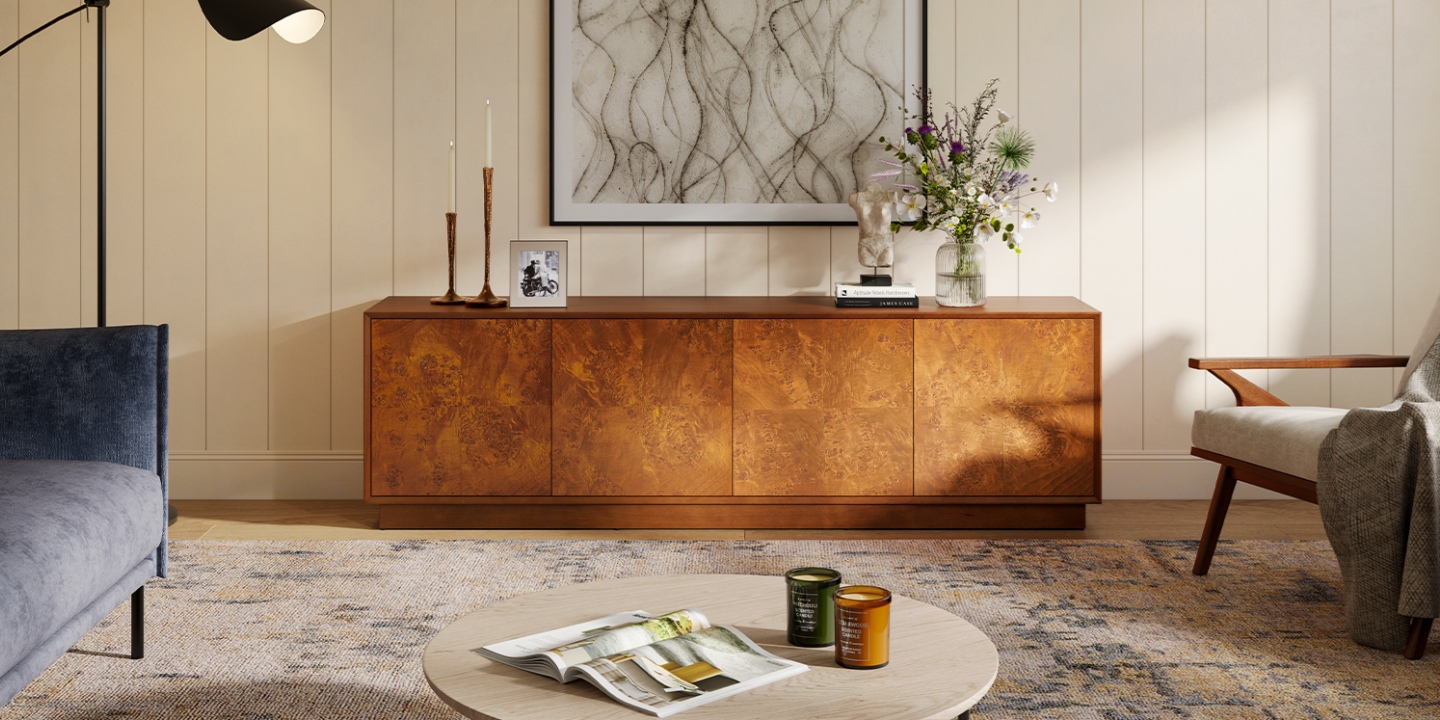
The Bodil 78" Burl Media Console has a rear cord cutout and adjustable interior shelves. It measures 78.7 inches wide and 15.7 inches deep, so it is better suited to a room with enough wall width while still keeping the front-to-back footprint relatively moderate. It is designed for TVs up to 80 inches.
That makes it useful for another small-room scenario: when the room is short on depth but has enough wall width for a larger TV.
Keep cables bundled with reusable ties, and leave enough slack that pulling one device does not tug on the others.
Which Material Is Best for a Small TV Stand?
For most wood TV stands, the practical choices are solid wood, real-wood veneer over a stable core, and engineered wood with laminate.
Solid wood
Oak, walnut, and maple are durable choices when the construction and finish are good. Solid wood can also be repaired or refinished more easily than many inexpensive composite materials.
The trade-off is weight. A solid wood console can be harder to move, especially up apartment stairs.
Real-wood veneer
Real-wood veneer combines a thin layer of natural wood with a stable core. It can provide the look and texture of solid wood while allowing manufacturers more control over construction and weight.
When comparing pieces, look beyond the word "wood." Check the core material, joinery, finish, and overall construction.
The Torben uses old elm and plywood with old elm wood veneers, while the Bodil combines rubber wood and engineered wood with burl veneers. Both illustrate why checking the actual construction is more useful than judging a TV stand simply by whether its product title says "wood."
Engineered wood and laminate
Engineered wood can be a practical choice when budget matters. A quality laminate surface is easy to clean, but exposed edges need protection from standing moisture.
For a busy household, the finish matters as much as the material. A sealed wood surface is generally easier to maintain than an unfinished one.
How to Make a Small Room Feel Bigger
The furniture's visual weight matters almost as much as its measurements.
Choose an open base
A console with legs that lift the cabinet several inches off the floor allows more of the floor to remain visible. That visual gap can make the room feel less crowded.
Mid-century modern TV stands often use this approach with tapered or angled legs and relatively clean fronts.
A solid base that runs directly to the floor can look substantial, but it also creates a stronger visual block.
Use the finish strategically
Light or medium wood finishes can help keep a compact room from feeling visually heavy. Strong grain patterns can also add interest without requiring extra decor.
The Bodil 78" Burl Media Console uses burl veneers with a pronounced natural grain. Its reverse-chamfered edges soften the silhouette, while the natural variation in the burl pattern gives the long front more visual texture.
The console is 78.7 inches wide, so it is not a choice for a genuinely narrow TV wall. But in a compact room with enough wall width, its 15.7-inch depth shows how a wider console can still be relatively shallow front-to-back.
For smaller furniture, the same idea applies: visual lightness can matter just as much as physical size.
Small TV Stand Ideas for Apartments, Bedrooms, and Corners
Where the TV sits changes the calculation. A studio, bedroom, and corner setup each have different constraints.
Apartments and studios
In an apartment or studio, prioritize depth first if the TV wall sits along a major walkway.
A shallow console can preserve floor space while still providing storage. If you expect to move, also check the package dimensions and doorway clearance before ordering.
Bedrooms
Bedroom viewing is different because you're often reclined rather than sitting upright.
The screen can therefore sit higher relative to the floor than it would in a primary living-room setup. Measure from your actual bed or chair rather than copying a living-room measurement.
For many bedrooms, a narrower console also makes sense because the TV wall tends to compete with a bed, nightstands, and other furniture.
Corners
A corner can sometimes be the most efficient location for a TV in a very small room.
Angled or tapered furniture can make better use of the space, but check the footprint carefully. A corner arrangement may look compact from the front while taking up more floor area behind it.
With a large TV, always verify the manufacturer's weight capacity and the stability of the setup.
TV Stand Safety: Anchor It
A TV stand can be attractive and well proportioned while still creating a safety risk if it is not secured.
The U.S. Consumer Product Safety Commission estimates that thousands of people are injured each year in furniture and TV tip-over incidents, with children accounting for a significant share of those injuries.
A wide or heavy stand can improve stability, but anchoring the furniture and TV is the more important safety step.
Use the anti-tip hardware supplied with the furniture when available, or use an appropriate anchoring system attached to a wall stud. The CPSC's Anchor It! campaign provides installation guidance.
Also:
Keep climbable objects off the top
Route cords so they cannot easily be pulled
Avoid placing heavy objects where children can reach them
Follow the TV manufacturer's mounting or stand instructions
Check the stand's weight rating before placing the TV on it
How to Clean and Maintain a Small TV Stand
Most finished wood TV stands don't need an elaborate cleaning routine.
Dust regularly with a soft, lint-free cloth, preferably following the direction of the grain. For normal spills, use a slightly damp cloth and dry the surface afterward.
Avoid letting water sit on wood, and don't spray household cleaner directly onto the furniture.
For the safest approach, follow the care instructions supplied with your specific finish. Different materials and finishes can react differently to waxes, oils, solvents, and household cleaners.
Use coasters under drinks and keep the furniture away from prolonged direct sunlight when possible. Those simple habits will usually do more for the finish than frequent polishing.
Shop TV Stands for Small Spaces
Once you've measured your wall width, depth, and viewing height, you can narrow your options much faster.
Explore Hernest's TV & Media Consoles collection to compare different widths, depths, storage layouts, materials, and styles for your space.
FAQs
What is the best size TV stand for a small living room?
Start with the usable wall width, available floor depth, and TV size. For many compact living rooms, a stand around 70–75% of the usable wall width and 12–16 inches deep provides a good balance between storage and floor space.
Can a TV stand be smaller than the TV?
It can physically be smaller, but a stand wider than the TV generally looks more balanced and provides a more stable visual base. Aim for roughly 2–6 inches of extra width on each side when the room allows.
What size TV stand do I need for a 55-inch TV?
A typical 55-inch TV is about 48 inches wide. A stand around 54–66 inches wide is a useful starting range, with the final choice depending on your wall width, TV base, soundbar, and available floor space.
How tall should a small TV stand be?
Calculate the height from your seated eye level and the TV's actual height. A useful formula is seated eye level minus half the TV height. For many setups, a 55-inch TV works with a stand around 24–28 inches high, while a 65-inch TV often works around 22–26 inches.
How deep should a TV stand be in a small living room?
For most compact rooms, 12–16 inches is a practical range. Around 14 inches works well when floor space is especially limited, while 15–16 inches may be preferable if you need room for a soundbar or game console.
What is the best material for a small TV stand?
Solid wood and quality real-wood veneer can provide good durability and a natural appearance. Engineered wood with laminate can be a practical budget option. The construction, finish, and care requirements matter as much as the material itself.
How do I hide cables with a TV stand?
Choose a console with rear cable cutouts and enough clearance for plugs and power strips. Bundle cables with reusable ties, keep power and signal cables organized, and make sure electronics still have adequate ventilation.
How do I make a TV stand safer around kids and pets?
Anchor the TV stand and television to a wall stud using appropriate anti-tip hardware, keep climbable objects off the furniture, and route cords so they cannot easily be pulled. Follow the TV and furniture manufacturer's safety instructions as well.