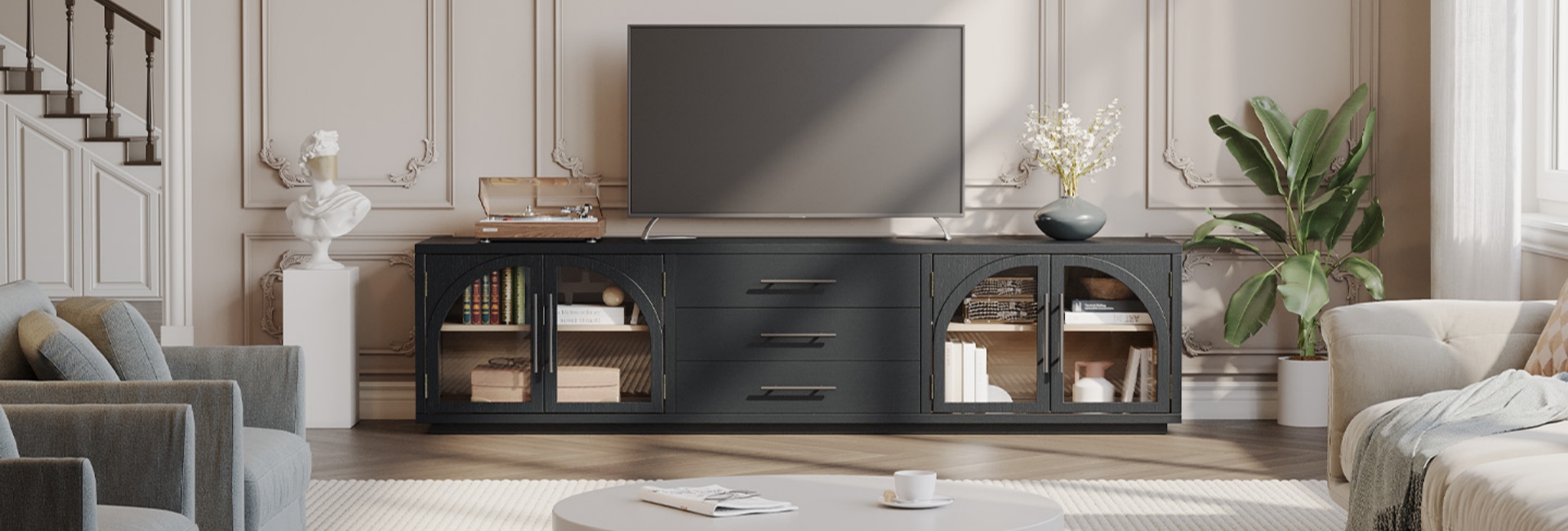
You finally find the media console that fits your wall, your TV, and the rest of the room. Then you see three words that change the experience: some assembly required.
Now the furniture is not quite furniture yet. It is a box of panels, hardware, instructions, and several hours of work waiting for you at home.
At Hernest, we take a different approach. Our fully assembled furniture is built before it leaves the factory, so the main construction, alignment, and finishing work are completed before the piece arrives at your home.
That decision does make furniture more complicated to ship. A finished dresser or media console takes up more space than a flat-packed box, requires more careful packaging, and can cost more to transport.
We choose that trade-off because the customer experience matters.
More importantly, building furniture as a finished object gives the manufacturer greater control over the construction before it reaches you. Structural areas can be reinforced during manufacturing, drawers and doors can be installed and aligned, and the finished piece can be inspected before shipment.
The result is simple: you receive furniture, not a furniture-building project.
Table of Contents
- What Does Fully Assembled Furniture Actually Mean?
- What Are You Really Paying For?
- Why Factory Construction Matters
- Structural Reinforcement Starts Before Delivery
- Factory Alignment Is Part of the Experience
- A Real Example: A Fully Assembled Dresser
- Convenience You Feel Every Day
- Fully Assembled Furniture for Real Homes
- Material Choice Still Matters
- Is Fully Assembled Furniture More Expensive?
- The Delivery Trade-Off: Finished Furniture Takes More Space
- How to Shop for Fully Assembled Furniture
- Why Hernest Chooses Fully Assembled Furniture
- Where to Buy Furniture That's Already Assembled
- Is Fully Assembled Furniture Right for You?
- FAQs
- What does fully assembled furniture mean?
- Why does Hernest offer fully assembled furniture?
- Is fully assembled furniture more expensive than flat-pack furniture?
- Is fully assembled furniture more durable?
- Does fully assembled furniture use solid wood?
- Why does factory assembly matter?
- Is fully assembled furniture worth the higher shipping cost?
- Can fully assembled furniture fit through a doorway?
- What should I check before buying fully assembled furniture?
- Where can I buy fully assembled furniture?
What Does Fully Assembled Furniture Actually Mean?
Fully assembled furniture means the main construction of the piece has already been completed before delivery.
The frame is built. Structural components are connected. Drawers and doors are installed. The piece is finished and inspected as a complete product.
Your job is primarily to get it into the room, position it, and start using it.
That is different from ready-to-assemble, or RTA, furniture, where the customer receives separate components and completes much of the construction at home.
The distinction sounds straightforward, but furniture listings can make it less clear than it should be.
Watch for "Minimal Assembly"
A product may be described as "assembled" even when the customer still needs to attach legs, handles, a tabletop, or another component.
That does not necessarily make the furniture a bad choice. It simply means it is not the same experience as furniture that arrives fully built.
If avoiding assembly is important to you, check the actual product specifications.
Look for terms such as:
-
Fully assembled
-
No assembly required
-
Assembly required: none
If the listing says:
-
Minor assembly
-
Legs to be attached
-
Handles to be fitted
-
Some assembly required
find out exactly what remains.
A few minutes of setup is one thing. Building an entire cabinet is another.
What Are You Really Paying For?
One reason fully assembled furniture can cost more is easy to understand: someone has already done the work for you.
But the difference goes beyond labor.
When a manufacturer builds furniture as a finished object, the factory takes responsibility for more of the final construction process.
That can include:
-
Building the main structure
-
Completing structural joints
-
Installing drawers and doors
-
Aligning moving components
-
Checking the finished piece
-
Protecting a larger finished object for shipment
With flat-pack furniture, much of that construction work moves to the customer.
That is why comparing only the sticker price can be misleading.
A lower-priced flat-pack piece may still require your time, tools, assembly effort, or professional installation. A fully assembled piece shifts more of that work back to the manufacturer.
Why Hernest Accepts the Shipping Trade-Off
There is a real logistical cost to shipping finished furniture.
A flat-packed dresser can be broken down into panels and packed into a relatively compact carton. A finished dresser occupies considerably more volume.
The same applies to a large media console or sideboard.
Finished furniture therefore requires more attention to packaging, handling, warehouse space, and transportation.
Hernest chooses to accept that trade-off because we believe customers should not have to recreate the furniture's main structure in their living room.
The additional logistics are part of delivering a finished product.
Instead of asking you to complete the last major stage of construction, we complete that work before the furniture leaves the factory.
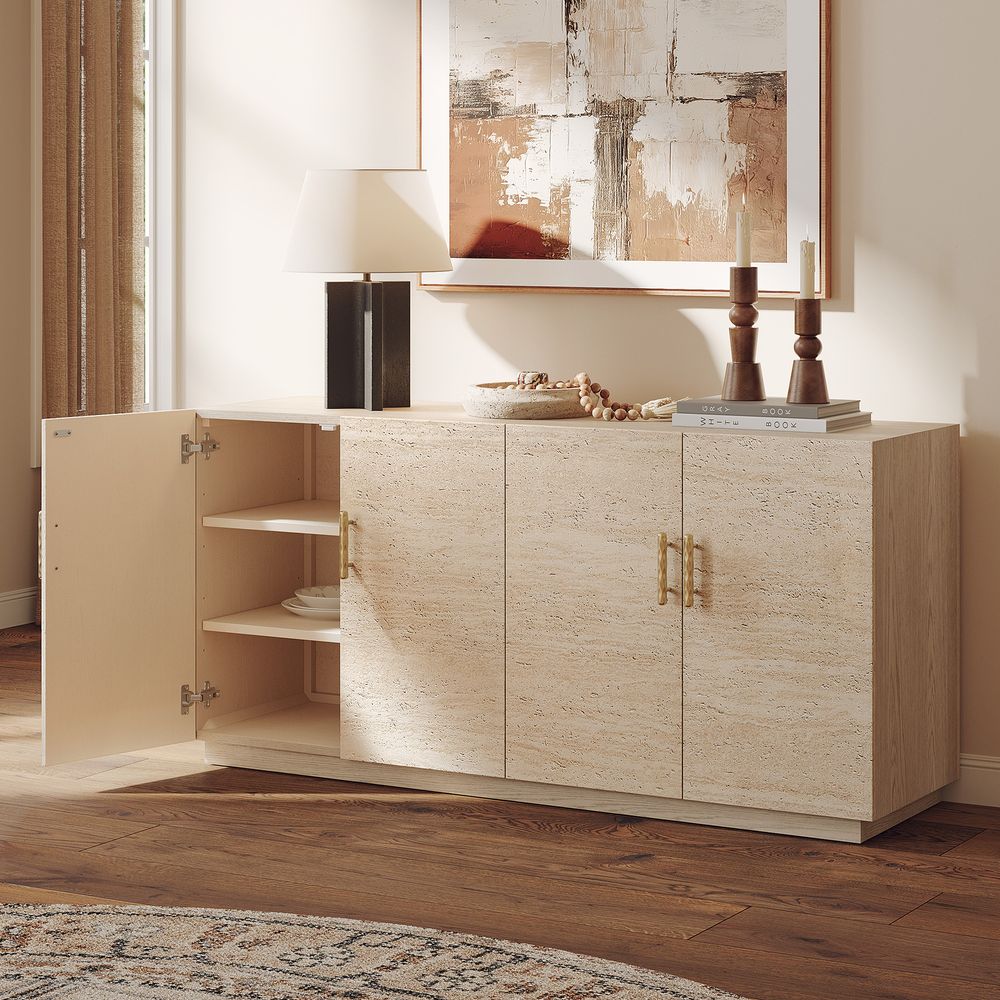
Renata 63-Inch Travertine-Textured Sideboard
View Product
Why Factory Construction Matters
Convenience is the most obvious benefit of fully assembled furniture.
Construction control is the less obvious one.
When furniture is assembled at home, the final result depends partly on how accurately the customer follows the instructions, tightens the hardware, aligns the components, and works through each construction step.
A professional production environment is different.
Furniture can be assembled using dedicated work surfaces, clamps, jigs, adhesives, and repeatable processes. Workers can check whether a case is square, whether drawers operate correctly, and whether doors are aligned before the finished product is packed.
That does not mean every flat-pack product is unstable or poorly made. Well-designed RTA furniture can perform very well.
The difference is where the responsibility for the final construction sits.
With fully assembled furniture, more of that responsibility stays with the manufacturer.
Structural Reinforcement Starts Before Delivery
This is especially important for larger furniture.
A wide dresser has to support its top, drawers, stored belongings, and repeated daily use. A large media console needs to maintain its structure across a longer span. A sideboard has to support storage while keeping its doors and drawers properly aligned.
At Hernest, building furniture as a finished object gives us more flexibility to integrate reinforcement into the construction rather than designing every structural connection around future customer assembly.
Where appropriate, solid-wood components can be used to reinforce key structural areas.
That matters because the construction of a piece of furniture is not just about what you can see on the outside. The internal frame, supports, joints, and connection points all contribute to how the finished piece performs.
This is one reason we do not view fully assembled furniture as simply a convenience feature.
It is part of how the furniture is made.
Joinery Matters, Too
The type of joint used in a piece also affects its construction.
Depending on the design, furniture may use dovetail drawers, dowel joints, mortise-and-tenon connections, reinforced frames, screws, brackets, or other fastening methods.
For example, dovetail drawers create a mechanical connection between the drawer sides and front. Mortise-and-tenon construction creates another traditional connection between wood components.
The important point is not that one joint automatically makes a piece better than another.
It is that joinery, materials, reinforcement, and assembly method work together as one construction system.
That is much more useful to consider than simply asking whether furniture is assembled or unassembled.
Factory Alignment Is Part of the Experience
Some of the best benefits of fully assembled furniture are easy to overlook because they are not dramatic.
A drawer opens smoothly.
Two doors meet evenly.
The gaps around a drawer look consistent.
A cabinet sits square.
A top aligns correctly with the frame.
These details are part of the finished furniture experience.
When the main construction happens in the factory, the manufacturer can inspect and adjust those elements before the piece is shipped.
At home, that same work becomes part of the customer's assembly process.
That distinction becomes more noticeable with furniture that has several drawers or doors.
A six-drawer dresser, for example, needs the entire case to remain properly aligned while each drawer opens and closes repeatedly. A wide media console needs its doors, shelves, and frame to work together across a much larger structure.
The furniture should feel finished when you first use it.
That is the point.
A Real Example: A Fully Assembled Dresser
The Thursen 60-Inch Chevron 6-Drawer Dresser illustrates why construction matters beyond appearance.
Its American solid oak, engineered wood with oak veneers, and dovetail drawers combine material selection with purposeful joinery. The dresser also includes an anti-tip kit, adding an important safety measure once the piece is positioned in the home.
The chevron pattern is what catches your eye first.
The construction is what matters after the novelty wears off.
A dresser is opened and closed constantly. Drawers carry clothing and other belongings. The case has to remain properly aligned while all of that happens.
That is where factory-built construction becomes more than a convenience.
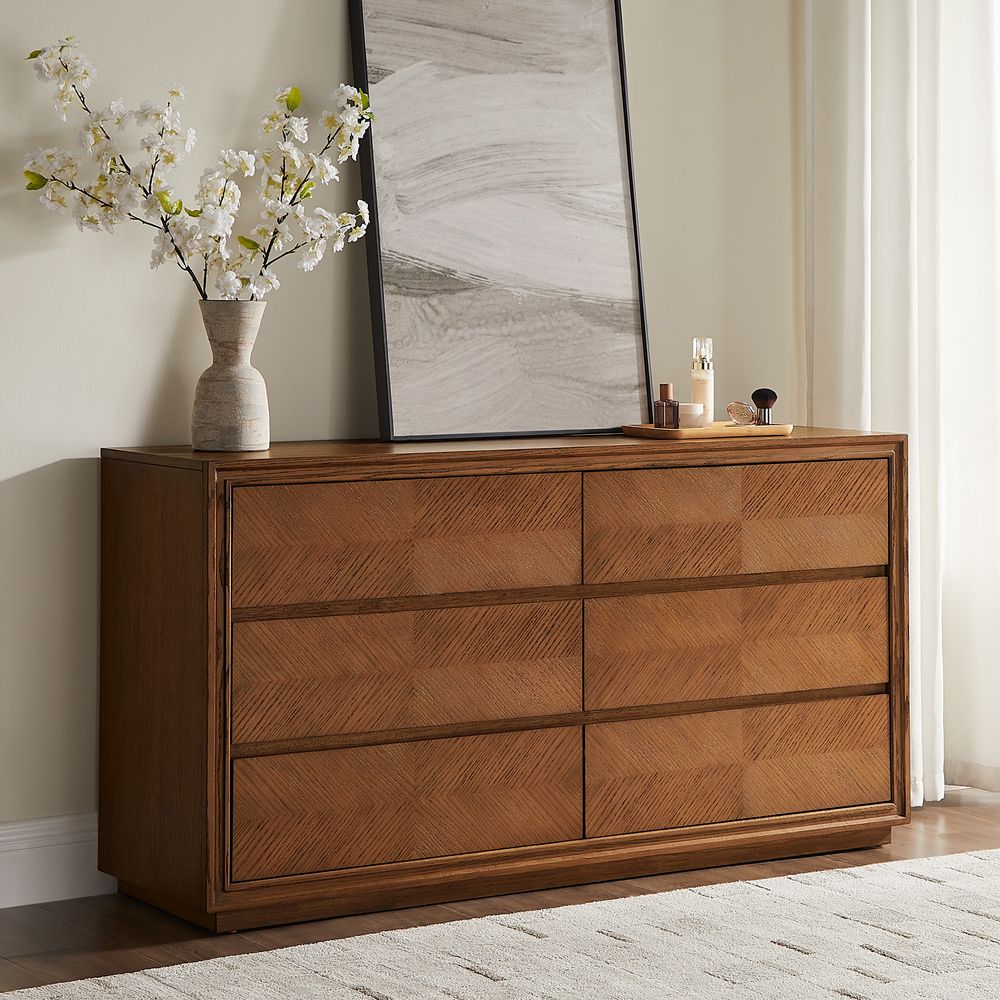
Thursen 60-Inch Chevron 6-Drawer Dresser
View Product
Convenience You Feel Every Day
The most obvious benefit of fully assembled furniture happens on delivery day.
You do not have to spend your evening sorting hardware.
You do not have to find the right screwdriver.
You do not have to figure out which panel is "Part B."
And you do not have to wonder whether the last screw is actually supposed to be left over.
But the convenience does not end when the packaging is gone.
A drawer that has already been installed and aligned is ready to use. A media console with factory-created cable cutouts does not require you to modify the back panel. A sideboard with its doors already installed does not turn into a weekend adjustment project.
The Stria 84-Inch Fluted Media Console is a good example.
At 84 inches wide, it is designed for TVs up to 85 inches and includes four cord cutouts and adjustable shelves. The customer can focus on positioning the console and connecting their equipment instead of constructing the cabinet.
That is what convenience should feel like.
You use the furniture.
You do not spend your weekend building it.
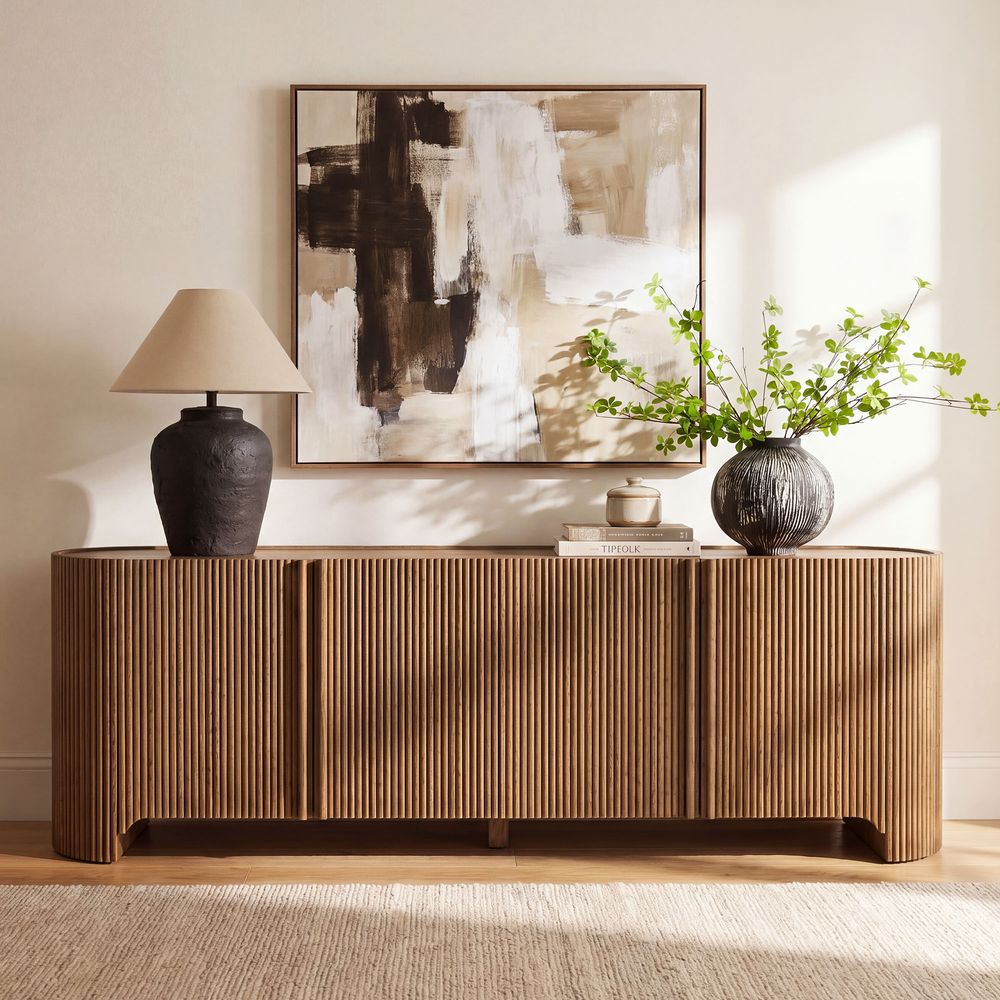
Stria 84-Inch Fluted Media Console
View Product
Fully Assembled Furniture for Real Homes
Furniture does not live in a showroom.
It lives around work schedules, meals, pets, children, moving boxes, and all the small interruptions that make up everyday life.
For a busy household, eliminating furniture assembly removes one more project from an already long list.
For someone furnishing a new home, fully assembled furniture can make the room usable as soon as the pieces are safely positioned.
For renters, there is also a practical advantage. A finished piece does not need to be constructed after every move. You still have to move it, of course, but you do not have another assembly project waiting once it reaches the new apartment.
When Furniture Gets Used Hard
The value of construction becomes more obvious when furniture receives frequent use.
A dresser drawer may be opened several times a day.
A sideboard door may be opened whenever dishes are needed.
A media console may support a television and several pieces of equipment.
A nightstand may be touched every morning and evening.
These repeated interactions put the construction to work.
A well-designed piece needs more than an attractive exterior. It needs a frame, joints, hardware, and moving components that work together.
Fully assembled construction gives the manufacturer greater control over that finished system before it reaches the customer.
Material Choice Still Matters
Fully assembled does not automatically mean solid wood.
And solid wood does not automatically mean better furniture.
Construction quality depends on how the materials are selected and used.
Solid wood can provide structural strength, repairability, and the possibility of refinishing over time. Veneers can provide a real wood surface while allowing manufacturers to manage material movement and create particular visual effects.
Engineered materials such as MDF and particleboard can also have legitimate applications in furniture.
When evaluating a piece, look beyond a single material label.
Ask:
-
What material is used in the structural frame?
-
Where is solid wood used?
-
How are the drawers constructed?
-
What type of joinery is used?
-
Are key areas reinforced?
-
How are the doors and drawers installed?
-
Has the finished furniture been inspected before shipment?
Those questions tell you considerably more about construction than simply seeing the words "solid wood" or "engineered wood."
Is Fully Assembled Furniture More Expensive?
Usually, yes, the initial price can be higher.
That makes sense.
The manufacturer has already completed the assembly, inspected the finished product, and prepared a larger object for transportation.
But the higher price should not be presented as mysterious.
You are paying for a different product experience.
With flat-pack furniture, you receive components designed to be transported efficiently and assembled later.
With fully assembled furniture, you receive the result of that construction process.
Your own time also has value. So does professional assembly if you choose to hire someone else. Tools, mistakes, damaged components, and missing hardware can also add friction to the process.
The better comparison is therefore not simply:
"Which one has the lower price?"
Instead, consider:
"How much of the construction process do I want to handle myself?"
When Flat-Pack Still Makes Sense
There are situations where flat-pack furniture is practical.
A temporary room may not justify paying more for a finished piece.
A very tight budget may make the lower initial price important.
An unusually narrow doorway may make compact packaging useful.
And some people simply enjoy assembling furniture.
Those are legitimate reasons to choose RTA furniture.
The point of fully assembled furniture is not that every customer needs it.
The point is that some customers would rather pay for the manufacturer to handle the construction and receive the finished piece ready to use.
The Delivery Trade-Off: Finished Furniture Takes More Space
There is one part of fully assembled furniture that deserves more attention: delivery.
A finished piece is larger and heavier than its flat-packed equivalent.
That means you need to think about the route into your home before ordering.
Measure:
-
The entry door
-
Interior doorways
-
Hallways
-
Staircases and turns
-
Elevator openings
-
Narrow corners
-
The final placement area
Do not measure only the room.
How to Shop for Fully Assembled Furniture
If you are specifically shopping for fully assembled furniture, do not stop at the product title.
Look for evidence of how the furniture is actually constructed.
1. Confirm the Assembly Level
Look for "fully assembled" or "no assembly required" in the product specifications.
If the listing says "minor assembly," find out what still needs to be attached.
2. Look at the Construction
Check for information about:
-
Dovetail drawers
-
Reinforced frames
-
Solid-wood structural components
-
Dowel joints
-
Mortise-and-tenon construction
-
Other specified joinery
Specific construction information is more useful than vague claims about "premium quality."
3. Check the Materials
Find out what materials are used in the frame, drawers, doors, shelves, and exterior surfaces.
4. Look for Structural Reinforcement
For large case goods, see whether the manufacturer explains how the frame and other load-bearing areas are supported.
5. Read the Warranty
Check what the warranty covers, how long it lasts, and which components are included.
6. Understand Delivery
Find out whether delivery is threshold, room-of-choice, or white glove, and whether packaging removal is included.
7. Measure the Path
Measure the route from the delivery point to the room, not just the final space where the furniture will sit.
Why Hernest Chooses Fully Assembled Furniture
Fully assembled furniture requires more from the manufacturer.
It requires more factory work.
It requires more attention to the completed structure.
It requires more packaging around a finished object.
And it can require more transportation space than a flat-packed equivalent.
We choose this approach because we want the customer to receive the finished result of that work.
At Hernest, fully assembled construction is not simply a shortcut around a screwdriver. It is part of the product experience.
The furniture is built before it arrives.
Structural areas can be reinforced during manufacturing.
Drawers and doors can be installed and aligned.
The finished piece can be inspected before shipment.
And the customer can spend delivery day doing something more useful than assembling furniture.
We take on more of the work at the factory so you have less to do at home.
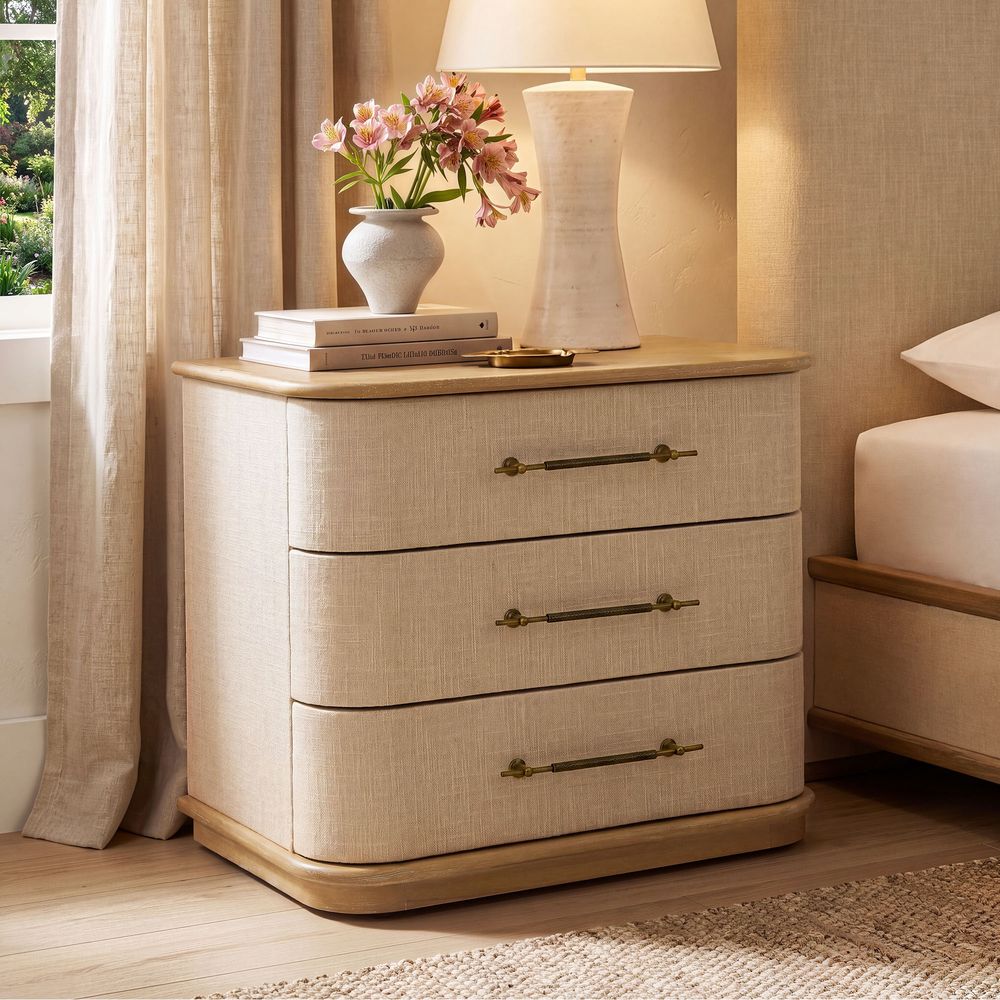
Walter 26-Inch Linen-Blend Nightstand
View Product
Where to Buy Furniture That's Already Assembled
If you are searching for fully assembled furniture, start by looking for brands that clearly explain their assembly policy and construction details.
Do not rely only on phrases such as "easy assembly" or "quick setup."
If your goal is to avoid construction altogether, look specifically for fully assembled or no assembly required.
At Hernest, you can explore fully assembled furniture across categories including media consoles, sideboards, dressers, bedroom furniture, and other goods.
The product page should be your final checkpoint. Confirm the assembly level, dimensions, materials, construction details, delivery requirements, and warranty before placing an order.
Is Fully Assembled Furniture Right for You?
Fully assembled furniture is a good fit when you want the manufacturer to handle the main construction and you value having a finished piece ready to use.
It can make particular sense when:
-
The furniture will stay in your home for years.
-
The piece gets used every day.
-
It contains multiple drawers or doors.
-
You want to avoid home assembly.
-
You value factory alignment and finished construction.
-
You want the manufacturer to handle the structural assembly.
Flat-pack furniture may make more sense when:
-
Initial price is your primary consideration.
-
The furniture is temporary.
-
You enjoy assembling furniture.
-
Compact shipping is particularly important.
-
Your home has unusually difficult access.
There is no need to turn the choice into a battle between two furniture formats.
They simply put more of the work in different places.
Flat-pack furniture puts more construction work in the customer's hands.
Fully assembled furniture puts more of that responsibility on the manufacturer.
At Hernest, we choose the second approach because we believe your furniture should arrive as a finished part of your home—not as another project waiting for your weekend.
FAQs
What does fully assembled furniture mean?
Fully assembled furniture means the main construction has already been completed before the furniture is shipped. The frame, structural connections, drawers, and other major components are installed before delivery, so the customer can position the furniture and begin using it without completing the main assembly.
Why does Hernest offer fully assembled furniture?
Hernest offers fully assembled furniture because factory construction allows more of the assembly, alignment, reinforcement, and quality-control process to be completed before the furniture reaches the customer. It also means customers do not have to recreate the main structure at home.
Is fully assembled furniture more expensive than flat-pack furniture?
The initial price can be higher because the manufacturer has already completed the assembly and must package and ship a larger finished object. When comparing prices, also consider your time, professional assembly costs if applicable, tools, and the overall construction of the specific furniture.
Is fully assembled furniture more durable?
Assembly format alone does not determine durability. Materials, joinery, structural reinforcement, hardware, manufacturing quality, and use all matter. Fully assembled construction gives the manufacturer greater control over the finished structure and allows the completed piece to be inspected before shipment.
Does fully assembled furniture use solid wood?
Not necessarily. Fully assembled furniture can use solid wood, veneers, engineered wood, or combinations of materials. What matters is how those materials are used throughout the structure and how the furniture is constructed.
Why does factory assembly matter?
Factory assembly allows the manufacturer to control more of the finished construction process. Components can be joined, aligned, reinforced, adjusted, and inspected before the furniture is packaged and shipped to the customer.
Is fully assembled furniture worth the higher shipping cost?
Finished furniture generally requires more transportation space than flat-packed furniture. At Hernest, that additional logistics requirement is part of the decision to deliver furniture as a finished product. Customers receive the completed construction rather than having to assemble the main structure themselves.
Can fully assembled furniture fit through a doorway?
It depends on the dimensions of the finished furniture and the route into the room. Measure entry doors, interior doorways, hallways, stair turns, elevator openings, and other tight areas before ordering large pieces.
What should I check before buying fully assembled furniture?
Check the assembly level, dimensions, materials, joinery, structural reinforcement, warranty, delivery service, and the dimensions of your delivery path. Product specifications are more reliable than assuming that every product described as "assembled" requires no setup.
Where can I buy fully assembled furniture?
Look for furniture retailers and manufacturers that clearly identify their products as fully assembled or requiring no assembly. Hernest offers fully assembled furniture across categories including dressers, media consoles, sideboards, and bedroom furniture.