What are the different types of tables, and which ones does your home actually need? The answer depends on where you plan to use a table, what you need it to hold, and how much room you have available.
Common types of tables include dining tables, coffee tables, side tables, end tables, console tables, nightstands, desks, and outdoor tables. Other designs, such as nesting, extendable, drop-leaf, and pedestal tables, offer additional flexibility for different room layouts and seating needs.
In this guide, we'll explain the main types of tables, where each works best, and what to consider when choosing one. You'll learn how to compare dimensions, materials, and storage options so you can find tables that fit your home without making rooms harder to navigate.
Table of Contents
- How to Understand the Different Types of Tables
- Dining Tables: A Surface for Meals and Gatherings
- Coffee Tables: The Center of the Living Room
- Side, End, and Accent Tables: Small Surfaces With Different Roles
- Console Tables: A Practical Fit for Narrow Spaces
- Bedroom Tables: Nightstands and Vanities
- Work and Office Tables: Choosing the Right Desk
- Outdoor and Patio Tables: Choosing Materials for the Weather
- Flexible Tables: Nesting, Extendable, and Pedestal Designs
- Understanding Table Materials: Solid Wood, Veneer, Stone, and Metal
- How to Choose the Right Type of Table for Your Home
- FAQs
- What are the main types of tables?
- What are the different types of tables used in homes and offices?
- What is the difference between a side table, an end table, and an accent table?
- What is the standard height for a coffee table?
- What is a console table used for?
- How much space should you allow per person at a dining table?
- What is the difference between solid wood and veneer tables?
- What is a nesting table, and when should I use one?
- What is a pedestal table?
- Are extendable tables worth it for a small home?
- What type of table is best for a small living room?
- How do I choose the right table size for my room?
How to Understand the Different Types of Tables
Tables are easiest to compare by function rather than style. A table's purpose influences its ideal height, surface area, storage needs, and placement. Its design and material then determine how it fits with the rest of your room.
Most tables fall into four functional groups:
-
Dining and work tables: Provide a primary surface for eating, working, studying, or meeting.
-
Living room and bedroom tables: Keep everyday essentials within reach of sofas, chairs, and beds.
-
Accent and utility tables: Add a useful surface to entryways, narrow walls, and otherwise unused corners.
-
Flexible tables: Adapt to changing space requirements through nesting designs, extension leaves, folding sides, or alternative base structures.
These categories can overlap. A round pedestal table, for example, may serve as a dining table or an entryway accent table. A nesting set can function as a coffee table when grouped together and as separate side tables when guests arrive.
Start by identifying the job you need a table to do. Then consider its placement, dimensions, and construction. This makes it easier to compare options and avoid buying multiple pieces that serve the same purpose.
Dining Tables: A Surface for Meals and Gatherings
Dining tables provide space for everyday meals, family gatherings, and entertaining. The right choice depends on how many people typically sit together, the shape of your dining area, and the room available around the chairs.
Choose a Shape That Fits Your Room
Rectangular dining tables work well in long or narrow rooms and can accommodate several diners along their longer sides. They are also practical when you need space for serving dishes or additional place settings.
Round dining tables encourage conversation by allowing diners to face one another without a prominent head of the table. Their curved edges can also make it easier to move around a compact dining area.
Oval dining tables combine a longer seating surface with rounded ends. They suit rooms where a rectangular table feels too angular but a round table would not provide enough seating space.
Square dining tables work particularly well in square rooms or compact dining areas where four people typically eat together.
Choose a shape based on the room's dimensions, chair placement, and usual number of diners rather than following a particular trend.
How Big Should a Dining Table Be?
As a starting point, allow approximately 24 inches of table edge per seated diner. The actual space needed depends on chair width, table-leg placement, and how comfortably you want people to sit.
A 72-inch rectangular table may accommodate six people, while an 84-inch table can provide additional seating space. These are general guidelines, not guarantees, so check the manufacturer's recommended seating capacity before buying.
You should also measure the space around the table. Approximately 36 inches between the table edge and nearby walls or obstacles is a useful starting point where people need to pull out chairs and walk past. More clearance may be necessary in a busy dining area or beside a main walkway.
If you entertain occasionally but have limited space during the week, consider an extendable dining table. It provides a smaller everyday footprint and additional surface area when guests arrive. If your seating needs rarely change, a fixed-size table may be simpler to arrange.
Which Dining Table Material Should You Choose?
Solid wood offers natural grain variation and can often be repaired or refinished, depending on its construction and finish. Wood veneer provides a real-wood surface over an engineered core, offering a different balance of appearance, stability, and maintenance.
Sintered stone is another option for dining tabletops. Its performance depends on the specific material and finish, so consult the manufacturer's care instructions before assuming a surface is resistant to every stain, scratch, or heat source.
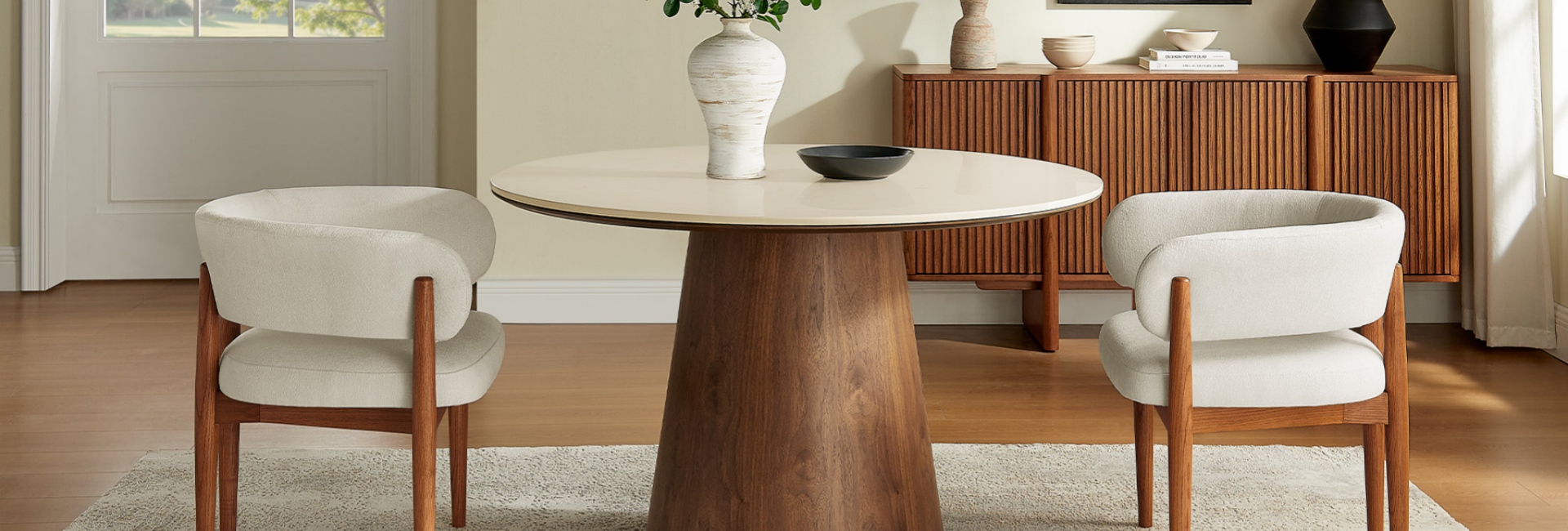
For example, the Thorsten 72" Oval Dining Table combines a sintered stone tabletop with an engineered wood base featuring American walnut veneer. The tabletop has a travertine-inspired texture, while the sculptural base creates an open area beneath the table.
The 72-inch version measures 72"W × 39"D × 30"H and is listed to seat four to six people comfortably. An 84-inch version is also available. Compare the dimensions and seating guidance with your room before deciding which size will work best.
When comparing other shapes, finishes, and sizes, explore Hernest dining tables.

Thorsten 72-Inch Oval Dining Table
View Product
Coffee Tables: The Center of the Living Room
A coffee table brings the seating area together and provides a convenient place for drinks, books, remotes, and decorative objects. Its dimensions should work with the sofa and surrounding furniture rather than simply filling the center of the room.
Choose the Right Coffee Table Height and Length
A coffee table is generally most comfortable when its top is level with the sofa seat or slightly lower. Many designs fall around 16–18 inches tall, although the best height depends on the sofa's seat height and how you use the table.
A coffee table approximately two-thirds the length of the sofa is a useful starting point. Shorter designs may work better in compact rooms, particularly when the seating arrangement needs additional walking space.
Leave roughly 16–18 inches between the sofa and coffee table as a starting point for comfortable access. Adjust the gap to suit your room layout, the depth of the sofa, and the needs of anyone using the seating area.
Also check the table's base and leg placement. A tabletop may be the right length but still feel cramped if its legs interfere with your feet or the sofa's position. Before buying, measure the full seating arrangement rather than the sofa alone.
Should You Choose a Coffee Table With Storage?
Coffee tables with drawers or shelves help organize smaller living room items. Closed storage is useful for remotes, chargers, coasters, and other belongings you prefer to keep out of sight. Open shelving makes frequently used items easier to reach and can keep the furniture looking visually lighter.
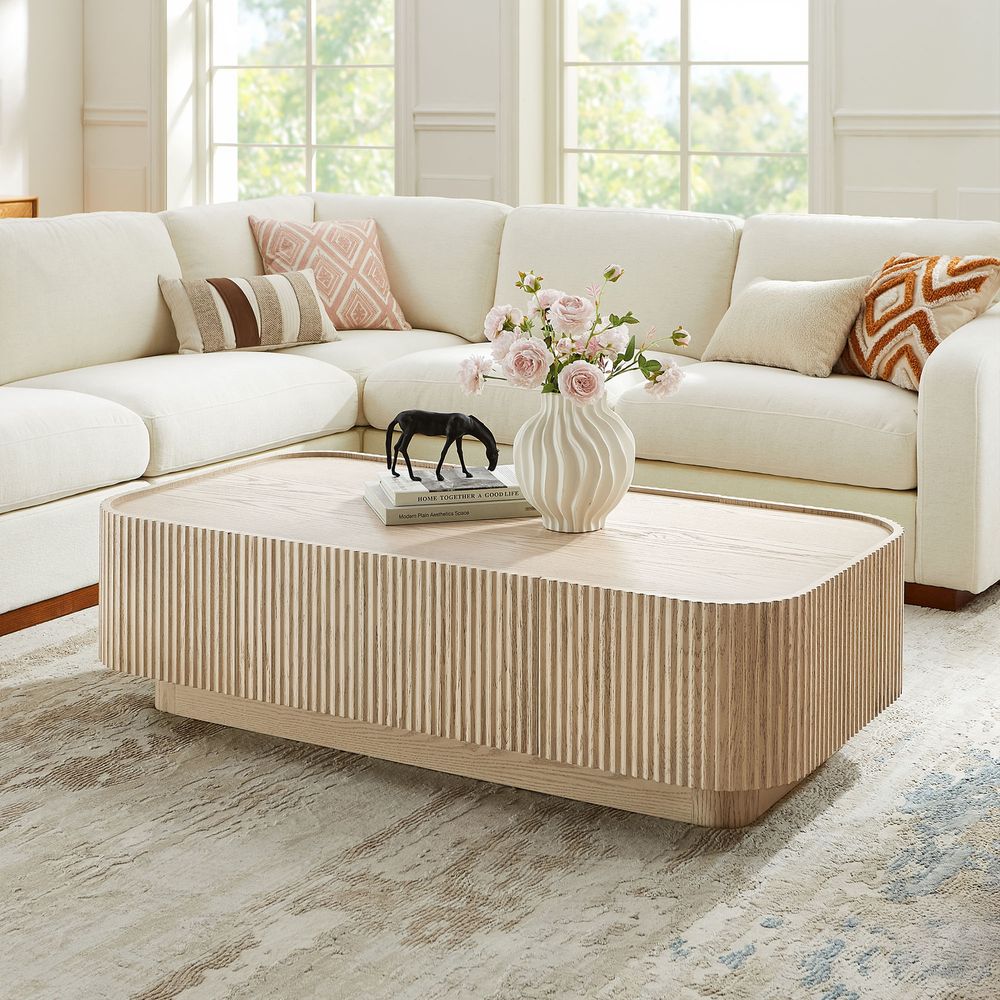
The Skimra 55" Oak Coffee Table combines a streamlined profile with a dovetail-jointed drawer and a whitewashed oak finish. Its fluted solid oak detailing adds texture, while the drawers provide space for everyday items.
The table measures approximately 55.1 inches wide, 27.6 inches deep, and 15.5 inches high. Its depth is worth checking carefully in a smaller living room: measure the distance from your sofa to the opposite walkway to make sure the table leaves enough room to move comfortably.
For more options, browse Hernest coffee tables to compare sizes, shapes, finishes, and storage configurations.
Skimra 55-Inch Oak Coffee Table
View Product
Side, End, and Accent Tables: Small Surfaces With Different Roles
Side tables, end tables, and accent tables often look similar, but their names emphasize slightly different functions.
A side table is a small table placed beside a sofa, armchair, or bed. An end table usually refers to a table positioned at the end of a sofa or beside a chair. An accent table emphasizes decorative design and may serve as a focal point as well as a practical surface.
The terms overlap in everyday furniture shopping, so focus on dimensions and intended use rather than the label alone.
Match the Table Height to the Seating
A side or end table is generally easiest to use when its top is level with or slightly below the armrest of the sofa or chair beside it. Check the actual measurements of both pieces, especially if the table will hold a lamp, drink, or frequently used items.
Also consider the tabletop's shape and the furniture's position. A round table can be easier to navigate in a tight corner because it has no protruding corners, but its diameter still matters. A large round table may take up more floor space than a compact square design.
Drink Tables and C-Tables
Two specialized designs solve different space problems.
A drink table is a compact surface designed primarily for a glass, phone, or book beside a reading chair. Its small footprint makes it useful where a larger side table would take up too much room.
A C-table has a base designed to slide beneath a sofa or chair, allowing its top to extend over the seat area. It can provide a convenient surface for a laptop or snack without occupying the center of the room. Check the base clearance and tabletop height to ensure it fits around your furniture.
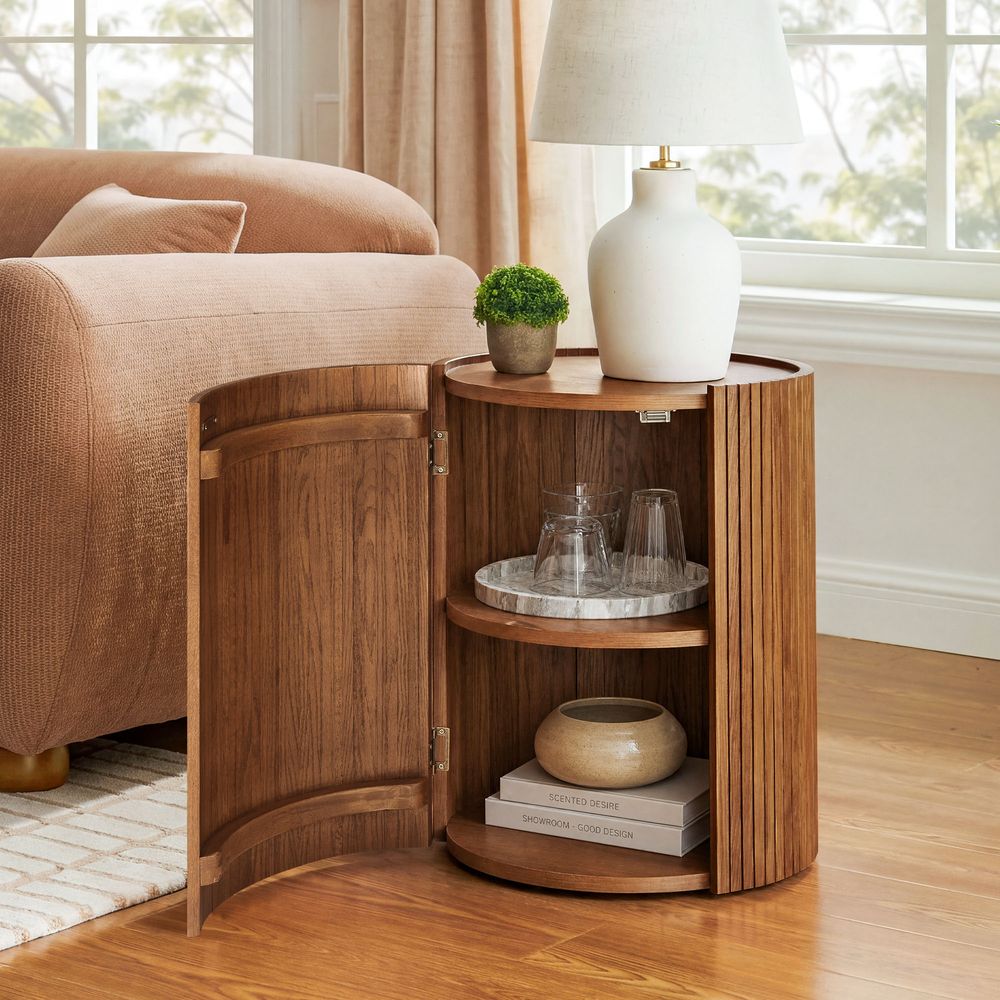
For a compact living room or bedside setup, consider the Elliot 16" Solid Oak Side Table. The product measures approximately 16.9"W × 16.9"D × 22"H and features a round top, fluted detailing, concealed storage, and an open shelf. Its actual footprint and height should be compared with the chair or bed it will serve.
You can compare other shapes and configurations in Hernest side tables.
Elliot 16-Inch Solid Oak Side Table
View Product
Console Tables: A Practical Fit for Narrow Spaces
A console table is typically long and relatively shallow. It is commonly placed against a wall, in an entryway, or behind a sofa where a deeper piece of furniture would take up too much space.
Its usefulness comes from combining a narrow footprint with a convenient surface for everyday items or display objects.
Use a Console Table in the Entryway
An entryway console can hold keys, mail, a small tray, or decorative accessories. If you use it as a drop zone, consider how much surface space you need and whether drawers would help keep smaller items organized.
Measure the distance between the wall and the main walkway before choosing a table. A narrow design can still obstruct movement if the room is especially tight or if nearby doors swing into the same area.
Add Function Behind a Sofa
In an open-plan living room, a console table behind a floating sofa can provide space for lamps, books, and decorative objects. It can also help define the seating area without introducing a full-height divider.
Check the console's height against the sofa back and consider the location of power outlets if you plan to use lamps. Leave enough room for people to pass behind the sofa comfortably.
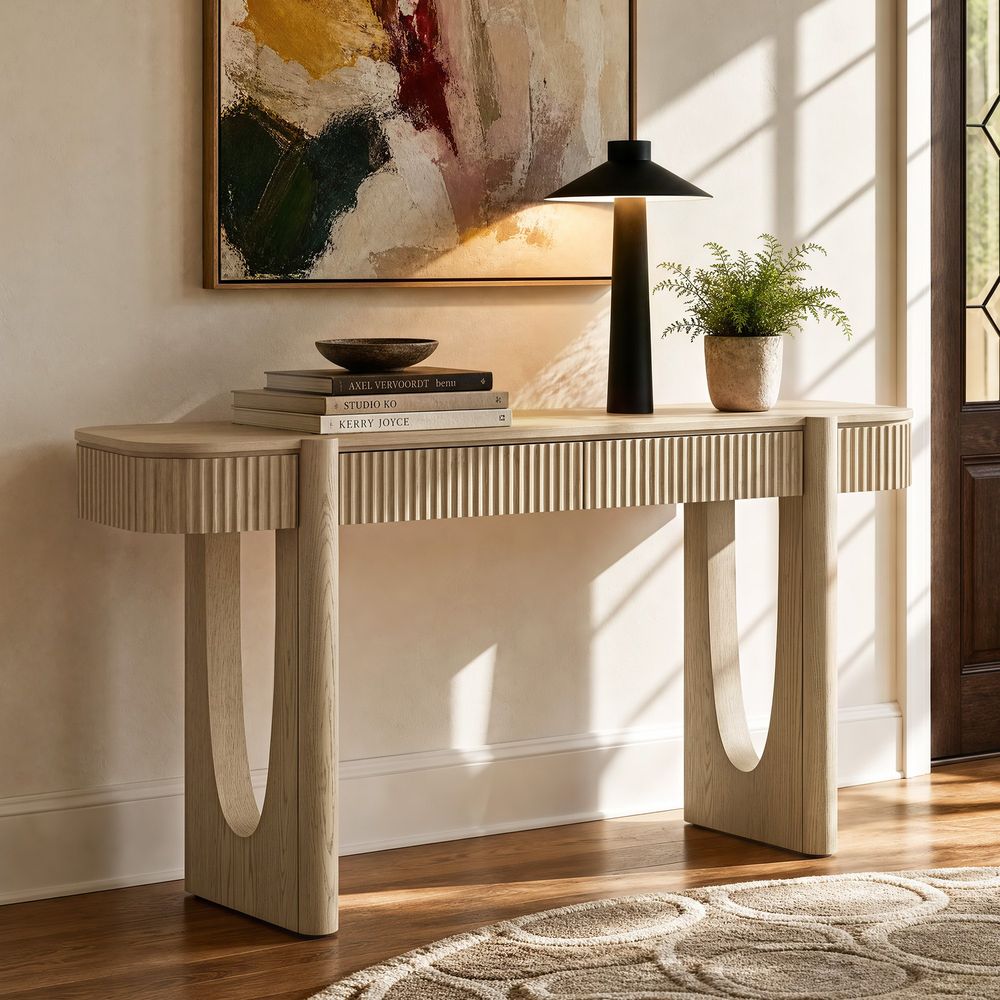
The Skimra 60" Oak Console Table features a whitewashed oak finish, wave-inspired fluting, and dovetail-jointed drawers. Its dimensions are approximately 60.2"W × 16.9"D × 31.5"H.
That depth may work well against a wall, but measure the available space before placing it behind a sofa. Check the height against the sofa back and confirm that the drawers can open without interfering with nearby furniture or walkways.
For more sizes and configurations, browse Hernest console tables.
Skimra 60-Inch Oak Console Table
View Product
Bedroom Tables: Nightstands and Vanities
Bedrooms benefit from smaller tables that keep everyday essentials within reach without taking up unnecessary floor space.
Nightstands for Everyday Essentials
A nightstand provides a place for a bedside lamp, phone, book, glasses, and other items you use before sleeping or after waking up.
A practical starting point is to choose a tabletop close to the height of the mattress. This makes it easier to reach items without stretching, although the ideal height depends on your bed frame, mattress thickness, and personal preference.
Consider how you use the space. Drawers help conceal small belongings, while open shelves make books and baskets easier to access. If your bedroom is narrow, measure the gap between the bed and the wall before selecting a nightstand.
Account for drawer clearance and the space needed to move around the bed. A nightstand that fits the available width on paper may still be inconvenient if its drawers cannot open fully.
Vanity and Dressing Tables
A vanity table provides a dedicated surface for grooming, skincare, and getting ready. It may include drawers, a mirror, or space for a separate stool.
When choosing one, check the tabletop height, available legroom, and dimensions of the stool you intend to use. Drawer depth and internal organization matter if you need to store bottles, cosmetics, or grooming tools.
A compact vanity can also work in a walk-in closet or bedroom corner, provided there is enough light and room to sit comfortably.
Work and Office Tables: Choosing the Right Desk
A desk needs to support the way you work, whether you use a laptop occasionally or maintain a full workstation throughout the day.
Start with the equipment you plan to place on the desk. A depth of at least 24 inches can be a useful starting point for many setups, but monitor size, viewing distance, keyboard placement, and available room may call for more space.
A writing desk suits lighter tasks and compact rooms. A larger workstation may be more practical if you use multiple monitors, external devices, or paperwork. Drawers and cable-management features can also help keep the surface organized.
Sit-stand desks allow you to change working positions throughout the day. If several people share the same workspace, an adjustable-height design may be more adaptable than a fixed-height desk.
The chair matters too. Choose one that allows your feet to rest comfortably and your arms to reach the desk without excessive shoulder strain. Desk height, chair adjustment, monitor placement, and regular movement all contribute to a more comfortable workspace.
Outdoor and Patio Tables: Choosing Materials for the Weather
Outdoor tables must withstand conditions that indoor furniture typically does not encounter, including direct sunlight, moisture, and temperature changes.
Teak and other suitable outdoor hardwoods can be used in patio furniture, but their performance depends on the species, construction, and finish. Some develop a silver-gray patina over time, while particular finishes may require maintenance to retain their original appearance.
Aluminum is lightweight and generally resistant to rust, making it convenient for furniture that needs to be moved. Powder-coated steel can offer a sturdy structure, but damage to its protective coating may expose the underlying metal to corrosion.
Glass, stone, and composite surfaces also vary in their suitability for outdoor use. Check the manufacturer's specifications for the complete table rather than assuming that one weather-resistant material makes the entire piece suitable for year-round exposure.
Size the table to the way you plan to use the space. A small bistro table may be sufficient for two people on a balcony, while a larger patio dining table requires additional room for chairs and circulation.
In areas with harsh winters or prolonged wet weather, follow the manufacturer's recommendations for covers, storage, and seasonal care. Even outdoor-rated furniture can benefit from protection when it is not in use.
Flexible Tables: Nesting, Extendable, and Pedestal Designs
Some tables are defined by their structure or ability to adapt rather than by the room in which they are used. These designs can be particularly useful in smaller homes or spaces that serve more than one purpose.
Nesting Tables
Nesting tables are sets of two or more tables designed to fit together when not in use. The smaller tables can be pulled out when additional surfaces are needed and tucked back together to save floor space.
They work well in apartments, reading areas, and living rooms where a permanent coffee table might feel too large. Check the height and stability of each table separately, because the pieces may be used independently when guests arrive.
Extendable and Drop-Leaf Tables
Extendable tables use leaves or extension mechanisms to increase the usable tabletop area. They are useful when a household needs a smaller everyday dining surface but occasionally hosts additional guests.
Drop-leaf tables have hinged sections that can be lowered when less surface area is needed. Depending on the design, they may fit against a wall or work in a compact dining nook.
Before buying either type, measure the table in both its compact and fully extended positions. Check that the extended version leaves enough room for chairs and walkways, and review the manufacturer's instructions for operating the mechanism.
Pedestal Tables
A pedestal table is supported by a central base rather than four legs positioned near the corners. This structure can provide more flexibility when arranging chairs around the tabletop, although the shape and width of the pedestal still affect legroom.
Pedestal bases appear in round dining tables, breakfast tables, and occasional tables. Their suitability depends on the size of the top, the stability of the base, and the amount of space needed by the people sitting around them.
A central base does not automatically guarantee more seating or better stability. Check the table's recommended seating capacity and base dimensions before buying.
Understanding Table Materials: Solid Wood, Veneer, Stone, and Metal
Material affects a table's appearance, maintenance requirements, and performance in everyday use. Construction and finish matter just as much as the material name, so review the product specifications before making a decision.
Solid Wood
Solid wood is made from natural wood rather than a thin decorative layer over an engineered core. Its grain varies from piece to piece, and many solid wood surfaces can be repaired or refinished depending on their construction and finish.
Wood can respond to changes in humidity and temperature, so appropriate care and stable indoor conditions help maintain its appearance. Follow the manufacturer's instructions for cleaning and protecting the surface.
Wood Veneer and Engineered Wood
Wood veneer is a thin layer of real wood applied to a substrate such as plywood or engineered wood. It can provide the appearance of natural wood grain while allowing different construction methods and design options.
Veneered surfaces require appropriate care. Deep scratches or damaged veneer may be more difficult to repair than marks on a solid wood surface, and sanding through the veneer can damage the finish.
Neither solid wood nor veneer is automatically the better choice for every household. Consider the product's construction, intended use, finish, and maintenance requirements.
Stone and Sintered Stone
Stone and sintered stone offer different appearances and performance characteristics depending on their composition and finish. They are popular for dining tabletops because they can create a durable surface that is relatively easy to clean when maintained according to the manufacturer's instructions.
Do not assume that every stone surface is resistant to all stains, scratches, or heat. Use suitable cleaning products and follow the product's care guidance.
Metal and Glass
Metal bases can provide structural support and create a range of visual effects, from understated to industrial. Aluminum and steel have different weights, corrosion characteristics, and maintenance requirements.
Glass tabletops can make a room feel visually open, but they show fingerprints and may require frequent cleaning. Consider the table's edge design, glass specifications, and placement in busy walkways before choosing one.
What About Sustainability?
A material's name alone does not establish how environmentally responsible a product is. Sourcing, manufacturing, transportation, durability, maintenance, repairability, and end-of-life options all contribute to its broader environmental impact.
The U.S. Environmental Protection Agency's Sustainable Materials Management framework offers a useful overview of evaluating materials across their life cycles.
When comparing tables, look for clear information about material composition, construction, care requirements, and expected use. Avoid relying on broad environmental claims that are not supported by specific evidence.
How to Choose the Right Type of Table for Your Home
Before buying a table, identify the problem you need it to solve. You may need more dining space, a place to put a drink beside your favorite chair, or a narrow surface for an entryway.
Use this checklist to compare your options:
After measuring, consider how often you will use the table and what you expect it to hold. A table that provides the surface area you need may be a better choice than a larger one that makes the room harder to navigate.
If you are uncertain about the fit, outline the table's dimensions on the floor with painter's tape. Include the space required for chairs, drawers, and walking paths. This simple check can reveal layout problems before you buy.
Finally, compare materials and maintenance requirements. Choose a finish suited to your household, and avoid paying for features you are unlikely to use. The most useful table is one that fits the room and supports your everyday routine.
FAQs
What are the main types of tables?
The main types of tables include dining tables, coffee tables, side tables, end tables, console tables, nightstands, desks, vanity tables, and outdoor tables. Nesting, extendable, drop-leaf, and pedestal designs describe additional configurations that can serve different purposes.
What are the different types of tables used in homes and offices?
Homes commonly use dining tables, coffee tables, side tables, console tables, nightstands, vanities, and outdoor tables. Offices use desks, writing tables, conference tables, and meeting tables. The best option depends on the activity, available space, and required surface area.
What is the difference between a side table, an end table, and an accent table?
A side table is a small table placed beside seating or other furniture. An end table usually sits at the end of a sofa or next to a chair. An accent table emphasizes decorative design and may also provide a practical surface. The categories overlap, so compare the dimensions and intended use.
What is the standard height for a coffee table?
Many coffee tables are approximately 16–18 inches tall, often placing the top level with or slightly below the sofa seat. The ideal height depends on the sofa and how you use the table. Leave enough space between the table and seating for comfortable access.
What is a console table used for?
A console table is a relatively narrow table commonly placed against a wall, in an entryway, or behind a sofa. It provides space for keys, mail, lamps, and decorative objects without the footprint of a deeper cabinet. Check its depth and height against the surrounding layout.
How much space should you allow per person at a dining table?
Approximately 24 inches of table edge per seated diner is a useful starting point. The actual space needed depends on chair width, table shape, and leg placement. Allow about 36 inches between the table edge and nearby obstacles where people need to move around, and leave more room where traffic is heavy.
What is the difference between solid wood and veneer tables?
Solid wood is made from natural wood throughout the relevant solid-wood components, while veneer uses a thin layer of real wood over a substrate. Solid wood may allow more extensive refinishing, depending on construction and finish. Veneer can provide a natural wood appearance but requires care to avoid damaging its thin surface layer.
What is a nesting table, and when should I use one?
A nesting table is a set of two or more tables designed to fit together when not in use. Pull the smaller tables out when you need extra surfaces and tuck them away afterward. They are useful in compact living rooms, apartments, and reading areas where floor space is limited.
What is a pedestal table?
A pedestal table uses a central support base instead of four legs near the corners. This design can make chair placement more flexible, but the base dimensions still affect legroom and stability. Check the table's seating recommendations and measurements before buying.
Are extendable tables worth it for a small home?
Extendable tables can be worthwhile if you regularly need more dining space for guests but prefer a smaller table for everyday use. Measure both the compact and fully extended dimensions to ensure the table fits your room in either position. If your seating needs rarely change, a fixed-size table may be more practical.
What type of table is best for a small living room?
A compact coffee table, nesting tables, or a small side table can work well in a small living room. The best choice depends on the seating arrangement, available floor space, and how much surface area you need. Measure the room and preserve clear walking paths before selecting a design.
How do I choose the right table size for my room?
Measure the available floor space, nearby furniture, and the clearance needed for chairs, drawers, and walkways. Then compare those measurements with the table's listed width, depth, and height. Consider the table's fully extended dimensions if it has a leaf or other adjustable feature.
The right table is not necessarily the biggest or most decorative option. Choose one that fits your space, supports the way you live, and provides the surface area you need without making the room harder to use.