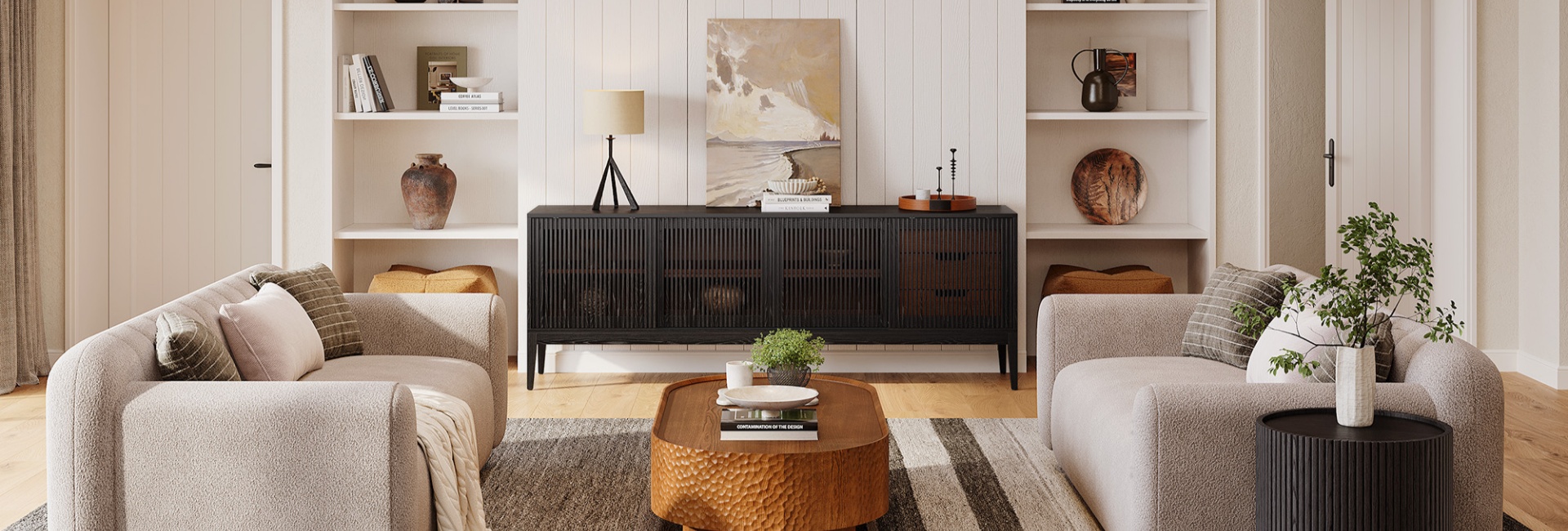
Moving a large piece of furniture up a flight of stairs takes more than strength. A sofa might clear the front door but get stuck at the first landing. A bed frame may seem manageable until you need to turn it through a narrow hallway. And a long media console can fit along a straight staircase but leave too little room to make the next turn.
The safest way to move furniture upstairs is to plan the route, check the dimensions, prepare the furniture, and decide whether you have the right people and equipment for the job. Some pieces may be manageable with two capable adults. Others need specialized equipment or professional movers.
This guide explains how to measure your staircase, move different types of furniture, protect your home, and determine when professional delivery is the better option.
Table of Contents
- Measure the Furniture and Staircase Before You Lift
- Clear the Route and Protect Your Home
- How to Carry Furniture Up Stairs Safely
- Tools That Can Make Moving Furniture Upstairs Easier
- How to Move a Couch Up Stairs
- How to Move Beds, Dressers, and Sectionals Upstairs
- Moving Long, Low Pieces Like a Media Console
- How to Handle Tight Landings and Staircase Turns
- Can You Move Furniture Upstairs by Yourself?
- When to Hire Professional Movers
- Protect Your Furniture and Home After the Move
- FAQs
- What is the safest way to move heavy furniture up stairs?
- How do you move a large couch through a narrow doorway?
- Can you move a bed upstairs without taking it apart?
- Is it safe to move furniture upstairs alone?
- What tools help when moving furniture up stairs?
- How do you move furniture around a tight stair landing?
- Does White Glove Delivery include carrying furniture upstairs?
- How many people are needed to move a couch upstairs?
Measure the Furniture and Staircase Before You Lift
Before moving anything, check whether the furniture can pass through the entire route. Measuring only the front doorway is not enough. The narrowest point may be a hallway, stairwell, ceiling clearance, or landing where the furniture needs to turn.
Measure the Furniture
Record the furniture's overall width, height, and depth. Also check its diagonal dimensions where relevant, particularly for sofas and tall cabinets.
Measure the largest fixed parts, including arms, backs, feet, and decorative edges. If the item can be disassembled safely, note which parts can be removed to reduce its overall dimensions.
For furniture that arrives in multiple cartons or modules, use the dimensions of each individual piece rather than relying only on the assembled dimensions.
Measure the Entire Route
Check these areas before moving day:
-
Doorways: Measure the usable opening with the door fully open. Account for handles, stops, and other obstructions.
-
Stair width: Check the narrowest point between walls, railings, or other fixed obstacles.
-
Ceiling clearance: Look for low ceilings, light fixtures, and sloped ceilings above the staircase.
-
Landings: Measure the available floor space and check whether the furniture can rotate without hitting walls or railings.
-
Hallways and destination doors: Confirm that the furniture can enter the room after reaching the top of the stairs.
Walk the complete route without carrying anything. Pay particular attention to L-shaped and U-shaped staircases, where a piece that fits along a straight flight may not have enough room to turn.
The key is to check three-dimensional clearance, not just the width of the doorway. A diagonal measurement can help you evaluate a potential fit, but it does not guarantee that the furniture will pass through. Its height, depth, shape, and available turning space all matter.
If the measurements are close, consult the furniture manufacturer or a professional mover before attempting the lift.
Clear the Route and Protect Your Home
A clear staircase makes it easier to maintain stable footing and coordinate each movement. Before lifting, remove shoes, boxes, and other trip hazards. Secure doors so they cannot swing into someone carrying the furniture, and keep children and pets away from the route.
Protect the home as well as the furniture.
-
Cover finished furniture with moving blankets, paying particular attention to corners and edges.
-
Secure blankets around the item without wrapping stretch film directly onto delicate finishes.
-
Use suitable floor protection on surfaces that could be scratched or marked.
-
Pad vulnerable corners of walls and railings where contact is possible.
-
Wear closed-toe shoes with good traction and clothing that allows you to move freely.
Check apartment or building requirements before moving day. Some properties require advance reservations, designated moving hours, protective coverings, or proof of insurance.
Do not cover stair treads with loose rugs or blankets that could slide underfoot. Use securely installed protection designed for the surface, or leave the treads clear if safe protection cannot be arranged.
How to Carry Furniture Up Stairs Safely
The right carrying method depends on the furniture's shape, weight, grip points, and the staircase. There is no single technique that works for every item.
Work With a Partner and Agree on Commands
For furniture that can be safely carried by two people, assign clear roles before lifting. Both people should understand where to hold the item, where they will step, and how they will communicate.
Use short commands such as "lift," "stop," "step," and "lower." Agree that either person can call for a stop if the load shifts or footing becomes uncertain.
Two people are not automatically enough for a heavy or awkward item. Both carriers need adequate space to move, secure grip points, and the ability to control the load throughout the route.
Keep the Load Controlled
Hold the furniture at stable, approved grip points and avoid carrying it farther from your body than necessary. Move slowly and maintain secure footing.
Avoid twisting your torso while supporting a load. If you need to change direction at a landing, stop in a stable position and reassess the turn before moving again.
Do not continue if the item begins slipping, becomes difficult to control, or blocks your view of the next step. Lower it only when a safe, stable resting position is available.
Know When Not to Lift
Furniture can be awkward even when it is not especially heavy. A long sofa, tall dresser, or bulky bed frame may be difficult to control because of its dimensions and limited grip points.
If the load is too heavy or awkward, use appropriate equipment or call professional movers. Do not improvise with ropes, unstable carts, or makeshift lifting systems.
For additional guidance, consult the NIOSH materials-handling resources before attempting to move large or difficult loads.
Tools That Can Make Moving Furniture Upstairs Easier
You do not need every moving tool available. Choose equipment based on the furniture, the floor surface, and the staircase.
A stair-climbing dolly is not automatically safe for every heavy item or staircase. Some models are designed for particular loads and stair configurations, and operating one may require training or a second person.
Never choose a tool based only on the furniture's weight. The equipment must be suitable for the item's shape, dimensions, center of gravity, and the conditions of the route.
Furniture sliders can be helpful when moving a low cabinet or media console across a level room. However, they are not a substitute for appropriate lifting or stair-moving equipment.
How to Move a Couch Up Stairs
Sofas are challenging because they combine a large frame with limited handholds. Their arms, backs, and upholstery can also make it difficult to judge the space needed for a turn.
Start by checking the sofa's overall dimensions against every doorway, hallway, stair flight, and landing. If the manufacturer permits it, remove loose cushions and detachable legs. Keep all hardware together so the sofa can be reassembled correctly.
Wrap vulnerable surfaces with moving blankets and identify stable places to grip the frame. Do not lift by loose upholstery, decorative trim, or parts that are not designed to support the load.
For a sectional, check whether it separates into individual modules. Moving the modules separately may make the route easier to manage, but confirm each module's dimensions and weight before deciding how many people are needed.
Can You Stand a Couch Upright to Fit Through a Narrow Door?
Sometimes, but standing a couch on one end does not guarantee that it will fit. You must account for its height, depth, arms, frame shape, and the space available to rotate it.
Before attempting a pivot, measure the opening and the space on both sides of the doorway. Make sure the sofa can be supported securely in the proposed position and that neither carrier will be trapped against a wall.
Do not force a couch through a gap simply because the measurements appear close. Excessive pressure can damage the frame, upholstery, doorframe, or the people carrying it.
If a sofa cannot pass safely, check whether the manufacturer permits further disassembly or consult a professional mover.
Plan Ahead for a Large Power Sleeper Sofa
If you are buying a large sofa for an upstairs living room, consider delivery access before placing your order.
The Warren 124-Inch Power Sofa Bed is available in a three-piece sectional configuration. Its modular arrangement may offer more flexibility than moving one oversized assembled unit, but confirm the dimensions and weight of each module before assuming it will fit your staircase.
Measure every doorway and landing, and check whether the pieces can be transported in their intended configuration. Do not assume that modular construction makes every component easy for two people to carry.
You can also explore Hernest's Power Sleeper Sofas to compare available configurations when planning furniture for an upstairs room.
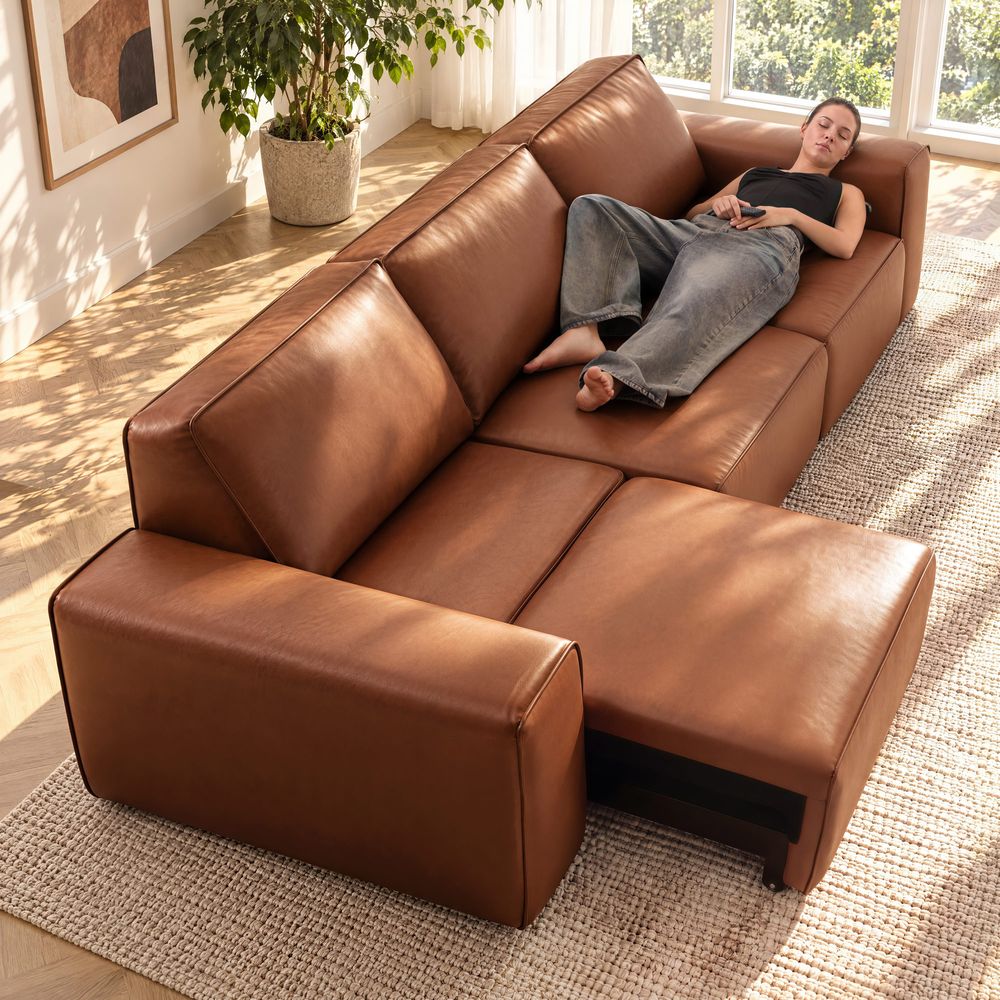
Warren 124-Inch Power Sofa Bed
View Product
How to Move Beds, Dressers, and Sectionals Upstairs
Disassembling furniture can reduce the space it occupies and make individual components easier to handle. However, only remove parts that the manufacturer identifies as removable or that can be safely disassembled according to its instructions.
Remove Detachable Parts Before Moving a Bed
Before moving a bed frame, remove the mattress, bedding, and any detachable components. If the frame includes drawers, check whether they can be removed safely and whether doing so is necessary for transport.
Keep screws, brackets, and other hardware in labeled bags. Photograph complicated connections before disassembly, and follow the manufacturer's assembly instructions when putting the bed back together.
The Renata Travertine-Textured Bed is one example of a bed that requires planning before an upstairs move. Check the product instructions to determine which components can be removed for transport.
Do not assume that every support, or frame component is detachable. Avoid removing structural parts unless the instructions explicitly allow it.
For more options, browse Hernest's bed frames before choosing a bed for a room with limited stair access.
Move Mattresses Separately
A mattress is often easier to carry once it has been separated from the bed frame. Use a mattress bag to protect it from dirt and contact with walls in shared stairwells.
Keep the mattress supported as you move, and do not fold or sharply bend it unless the manufacturer specifically permits that handling method. Some mattress constructions can be damaged by bending or compressing them incorrectly.
Take Apart Sectionals and Dressers When Appropriate
For a sectional, locate the approved connection points and follow the manufacturer's instructions for separating its modules.
For a dresser, remove loose items and any drawers that can be safely removed. This reduces shifting and may improve access to secure grip points.
Keep detached parts organized and make sure the remaining structure is stable before lifting. If the furniture is unusually heavy, top-heavy, or difficult to grip, seek professional assistance rather than attempting to carry it with an improvised setup.

Renata Travertine-Textured King Size Bed
View Product
Moving Long, Low Pieces Like a Media Console
Media consoles and TV stands can be deceptively difficult to move upstairs. Their low profile may help with some clearance issues, but their length can make turning through a doorway or landing challenging.
Before moving a console, remove the television, accessories, and loose items. Secure any doors or drawers that cannot be removed, and protect corners and decorative surfaces with moving blankets.
The Kaisa 86-Inch Carving Media Console measures 86.6 inches wide, 19 inches deep, and 24.4 inches high, with a listed weight of 173.72 pounds. Because it arrives fully assembled, check the complete dimensions against your doorways, stair width, ceiling clearance, and landing space before delivery.
Its low profile does not guarantee that it can turn through a narrow stairwell. Given its size and weight, do not assume it is suitable for a DIY stair carry. If the route is difficult to assess, consult a professional mover before attempting to move it upstairs.
When choosing a new console for an upstairs room, browse Hernest's media consoles to compare available designs and dimensions. You can also explore mid-century modern TV stands if you are looking for a particular style.
The best choice is not simply the cabinet that looks right in your room. It is one whose dimensions and delivery configuration work with your home's access points.

Kaisa 86-Inch Warm Brown Oak Carved Media Console
View Product
How to Handle Tight Landings and Staircase Turns
A landing can be more difficult than a straight flight because the furniture must change direction within a limited space.
Before moving, measure the landing and identify anything that reduces the usable area, including railings, light fixtures, and nearby doorways. Consider the furniture's full dimensions and whether it can be safely rotated without losing control.
If the item does not appear to have enough room, stop and reassess before lifting. Removing permitted detachable parts may help, but do not assume that standing an item vertically will solve every clearance problem.
Spiral staircases, narrow switchbacks, and open-riser stairs require particular care. Their geometry may make some furniture impossible to carry through safely.
If you cannot establish a clear, controlled route, ask a professional mover to assess the space. A piece that cannot safely turn through the stairwell may require an alternative delivery route or a specialist moving service.
Can You Move Furniture Upstairs by Yourself?
You may be able to move small, lightweight items on your own if they are stable, easy to grip, and do not obstruct your view or compromise your footing.
A small side table, dining chair, or lightweight nightstand may be manageable for one person. The decision should depend on the item's actual weight, dimensions, grip points, and the staircase rather than a universal weight limit.
Large sofas, heavy beds, tall dressers, and top-heavy cabinets are generally poor candidates for solo stair carries. On stairs, you have less room to recover your balance, and losing control of the load can endanger both you and anyone nearby.
If you do not have adequate help, wait until assistance is available or arrange professional moving services. Do not attempt a difficult lift simply because the furniture needs to be moved that day.
When to Hire Professional Movers
Professional help is worth considering when the furniture is too heavy or awkward to control, the staircase is narrow, or the item cannot turn safely at a landing.
Consider professional assistance if:
-
The item is large, unusually heavy, or difficult to grip.
-
The staircase is steep, spiral, or has tight switchbacks.
-
The furniture blocks your view of the next step.
-
You cannot establish a safe route through doorways and landings.
-
The item is valuable, delicate, or difficult to disassemble.
-
Moving it would require a window lift, balcony hoist, or other specialized equipment.
Professional movers can assess the furniture, route, and equipment requirements before attempting the move. For particularly difficult access, ask whether a specialist crew is needed.
Does White Glove Delivery Help With Moving Furniture Upstairs?
If you are ordering a large sofa, bed, or media console for an upstairs room, check the delivery arrangements before moving day.
Hernest's White Glove Delivery is a premium delivery service that includes scheduled delivery into the designated room, professional placement, unpacking, and removal of packaging materials.
It need $199 service fee. Deliveries to the second floor or above may incur additional stair carry fees, so confirm the applicable charges and service availability with Hernest before your order arrives.
Stair width, ceiling clearance, landings, and the furniture's dimensions can affect whether delivery is possible. Keep the route clear and make sure the delivery team has the access information it needs.
White Glove Delivery can reduce the work you need to handle yourself, but it does not guarantee that every piece will fit through every staircase.
Protect Your Furniture and Home After the Move
Once the furniture reaches its destination, lower it carefully onto a stable surface. Remove the protective wrapping without dragging it across delicate finishes, and inspect the item for any visible damage.
Check the walls, stair treads, railings, and flooring along the route as well. If the furniture needs assembly, follow the manufacturer's instructions and confirm that all required hardware is in place before using it.
Do not rush to declare the job finished. Taking a few minutes to check the furniture and the home can help you identify damage while the details are still clear.
The most important lesson is simple: moving furniture upstairs is a planning task, not a test of strength. Accurate measurements, a clear route, suitable equipment, and the willingness to stop when conditions are unsafe will help you make better decisions before the first lift.
FAQs
What is the safest way to move heavy furniture up stairs?
Measure the entire route, clear the stairs, protect vulnerable surfaces, and choose a carrying method or equipment suited to the item. Use capable helpers when needed, communicate before each movement, and hire professionals if the load cannot be controlled safely.
How do you move a large couch through a narrow doorway?
Measure the doorway, couch, and available turning space before lifting. Removing permitted detachable parts or separating a sectional may help. Standing a couch upright can sometimes improve clearance, but it does not guarantee a fit. Never force furniture through an opening.
Can you move a bed upstairs without taking it apart?
It depends on the bed's dimensions, construction, and the available route. If the assembled frame cannot turn through the doorways or landings, follow the manufacturer's instructions to remove permitted components. Keep hardware organized and reassemble the bed according to its instructions.
Is it safe to move furniture upstairs alone?
Small, lightweight, stable items may be manageable for one person. Large sofas, heavy bed frames, tall dressers, and awkward cabinets are much riskier because they can compromise balance and footing. Wait for suitable assistance or hire professional movers when needed.
What tools help when moving furniture up stairs?
Moving blankets, suitable floor protection, and properly selected carrying equipment can help. Furniture sliders are useful on compatible flat floors, while stair-climbing dollies must be appropriate for the load and staircase. Follow equipment instructions and do not improvise with unstable devices.
How do you move furniture around a tight stair landing?
Measure the landing and surrounding clearance before lifting. Check whether the item can turn safely and whether manufacturer-approved disassembly would help. If the route does not provide enough space to control the furniture, stop and ask a professional mover to assess alternative options.
Does White Glove Delivery include carrying furniture upstairs?
Hernest's White Glove Delivery includes in-room delivery and other premium services, but deliveries to the second floor or above may incur additional stair carry fees. Confirm service availability, access requirements, and applicable charges with Hernest before delivery.
How many people are needed to move a couch upstairs?
The number depends on the couch's weight, dimensions, grip points, and staircase. A large sectional may require more help than a compact sofa, but adding people is not enough if the route is too narrow. Assess the load and use professional equipment when necessary.