A family room has to do more than look good. It may be where everyone watches movies, where kids spread out toys, where friends gather on weekends, or where someone stretches out after a long day. The best family room furniture ideas start with those everyday activities rather than a picture-perfect arrangement.
A comfortable room does not need to be crowded with furniture or filled with matching pieces. It needs seating that fits the household, surfaces that are easy to use, storage for everyday clutter, and enough open space to move around comfortably. A few thoughtful choices can make the room feel more inviting without making it harder to maintain.
Table of Contents
- Start With How Your Family Uses the Room
- Choose a Sofa That Fits Your Space and Routine
- Arrange Seating to Encourage Conversation
- Create Zones in an Open Family Room
- Add a Coffee Table That Works for Everyday Life
- Make Storage Part of the Furniture Plan
- Choose Materials and Finishes for a Lived-In Space
- Make the Layout Easier to Maintain
- Avoid Common Family Room Furniture Mistakes
- Create a Family Room That Works for You
- FAQs
- What furniture should a family room have?
- How do you arrange furniture in a small family room?
- What size coffee table works best with a family room sofa?
- How can I make a family room look cozy without overcrowding it?
- Is a power sofa bed a good choice for a family room?
- How do I keep a family room organized?
- What furniture materials are practical for a busy family room?
Start With How Your Family Uses the Room
Before choosing furniture, think about what happens in the room on a typical day. A household that watches TV together has different needs from one that uses the family room for reading, games, or entertaining guests.
Consider these questions:
-
Who uses the room most often? A large household may need more seating, while a smaller family may prefer a more open layout.
-
What activities happen here? Movie nights, playtime, reading, and casual entertaining each call for different furniture arrangements.
-
What needs to be stored? Remotes, blankets, toys, books, and game controllers can quickly take over a shared space without a designated home.
-
How much walking space is necessary? Leave clear paths between entrances, seating, and frequently used areas.
These answers help you prioritize the pieces that matter instead of buying furniture simply because it looks good in a showroom.
Choose a Sofa That Fits Your Space and Routine
The sofa often anchors a family room, so its size, configuration, and comfort deserve careful consideration. A compact sofa can preserve floor space in a smaller room, while a sectional may provide more places to sit in a larger, open-plan layout.
Measure the available floor area before choosing a sofa. Include its full footprint, not just the width shown on a product page. Consider nearby doors, windows, walkways, side tables, and any space needed to extend moving furniture components.
For households that want flexible lounging space, a power sofa bed can be worth considering. The Calla 126-Inch Power Sofa Bed has a motorized lower-seat section that extends outward using the controls or remote. When extended, the seating area creates additional space for stretching out or sleeping.
This type of design can be useful for movie nights, relaxed lounging, or accommodating an overnight guest. However, plan around the extended footprint as well as the sofa's regular dimensions. Keep the moving section clear of nearby furniture and walkways, and follow the product's operating instructions.
When comparing sofas, look beyond the overall appearance. Seat depth, cushion support, upholstery, and the amount of room available around the sofa all affect how well it works for daily family life.
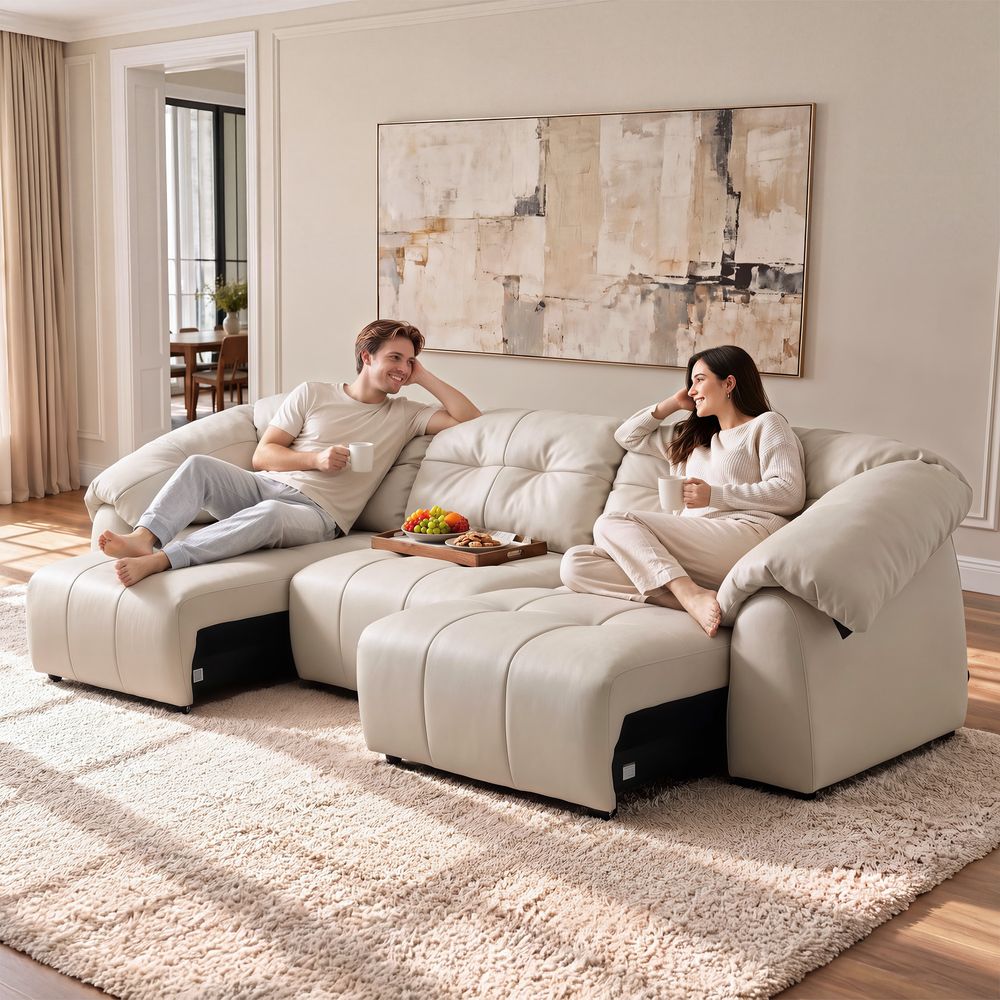
Calla 126-Inch Power Sofa bed
View Product
Arrange Seating to Encourage Conversation
A family room should make it easy to talk, watch TV, or spend time together without forcing everyone into an awkward position. The right arrangement depends on the room's shape, focal point, and main activities.
Face Seating Toward a Shared Focal Point
If the TV is the room's main attraction, orient the sofa and chairs toward it while keeping viewing angles comfortable. If conversation is more important, position seats so people can see one another without turning too far.
In larger rooms, two sofas or a sofa paired with accent chairs can create a more balanced arrangement. In smaller rooms, one well-sized sofa and a movable chair may provide enough seating without overwhelming the space.
Keep Walkways Open
Avoid arranging furniture so people have to squeeze between the sofa and coffee table or walk directly through the main seating area to reach another room. Leave practical paths around large pieces and check how cabinet doors, drawers, and reclining or extending components operate.
Use Rugs to Define the Seating Area
A properly sized area rug can visually connect the sofa, chairs, and coffee table. Ideally, the rug should relate to the scale of the seating group rather than appear like a small island in the middle of the room.
Before buying, measure the furniture arrangement and compare it with the rug dimensions. A rug that is too small can make the seating area feel disconnected, while an appropriately sized one helps the layout look intentional.
Create Zones in an Open Family Room
In an open-plan home, the family room may share space with the kitchen, dining area, or a home workspace. Furniture can help distinguish these functions without adding walls.
Start by identifying the main zones. The sofa and rug can establish the lounging area, while a console or shelving unit may help separate it visually from another part of the room. Keep the arrangement open enough for natural movement and conversation.
Lighting can also help define each area. A floor lamp near a reading chair creates a comfortable reading spot, while softer ambient lighting helps the main seating area feel relaxed in the evening.
Try not to divide the room into too many small sections. A few clearly defined zones usually work better than filling every empty corner with another piece of furniture.
Add a Coffee Table That Works for Everyday Life
A coffee table provides a convenient place for drinks, snacks, books, remotes, and board games. It should be proportionate to the sofa and leave enough room for people to sit down and move around without bumping into it.
Before choosing a table, consider its:
-
Size: Compare its length and depth with the sofa and available floor space.
-
Height: Choose a height that feels comfortable to reach from the seating.
-
Shape: Rounded or oval edges may make circulation easier in tighter layouts, while rectangular designs can suit longer seating arrangements.
-
Storage: Drawers or a lower shelf can help keep small items organized, depending on the design.
-
Surface: Consider how the finish will look with your flooring and how it will handle your household's everyday use.
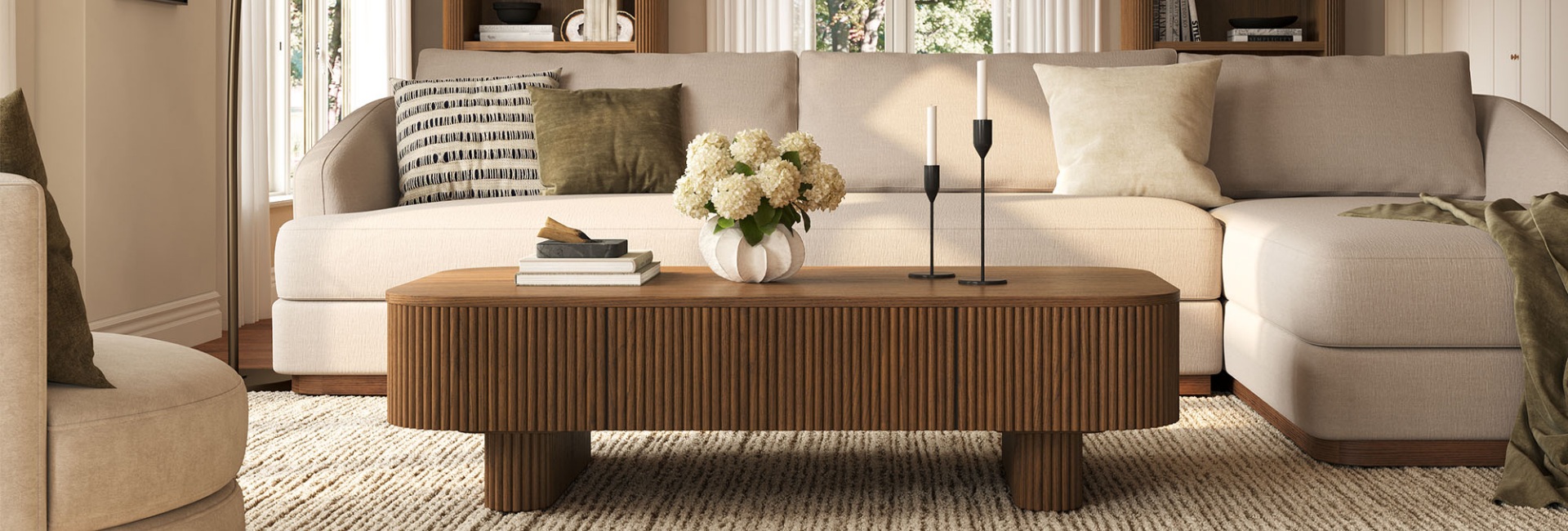
The Marisol 55-Inch Oak Coffee Table is one option for a family room that needs a substantial central surface. Its oak finish and ribbed detailing add texture, while the natural wood tones can work with a range of neutral and warm color schemes.
For more sizes, shapes, and finishes, explore Hernest's coffee tables. Measure the available space before choosing a table, and account for the distance needed to walk between it and the surrounding seating.

Marisol 55-Inch Oak Coffee Table
View ProductMake Storage Part of the Furniture Plan
Clutter is easier to manage when frequently used items have a convenient place to go. Instead of relying on small decorative baskets alone, consider how larger furniture pieces can support the room's storage needs.
A media console can hold compatible electronics and help organize the TV area. Cabinets can conceal items that do not need to stay on display, while shelves can keep books and decorative objects accessible. Storage ottomans and side tables with drawers may also help keep everyday essentials close at hand.
The Bodil 78.7-Inch Burl Media Console combines a distinctive burl finish with enclosed storage and cable-management features. Its warm, varied wood pattern can add visual interest while helping the TV area feel more organized.
Check the dimensions of your TV, media devices, and accessories before selecting a console. Leave enough room for cables and ventilation where required, and confirm that the available compartments fit the equipment you plan to store.
You can compare more sizes and styles in Hernest's media consoles and TV stands. If you prefer clean lines, warm wood tones, and timeless silhouettes, explore Hernest's mid-century modern TV stands for more style options.
Storage works best when it matches your routine. Put frequently used items within easy reach and reserve less accessible compartments for things you need less often. This makes tidying up simpler without requiring the room to stay perfectly arranged all day.
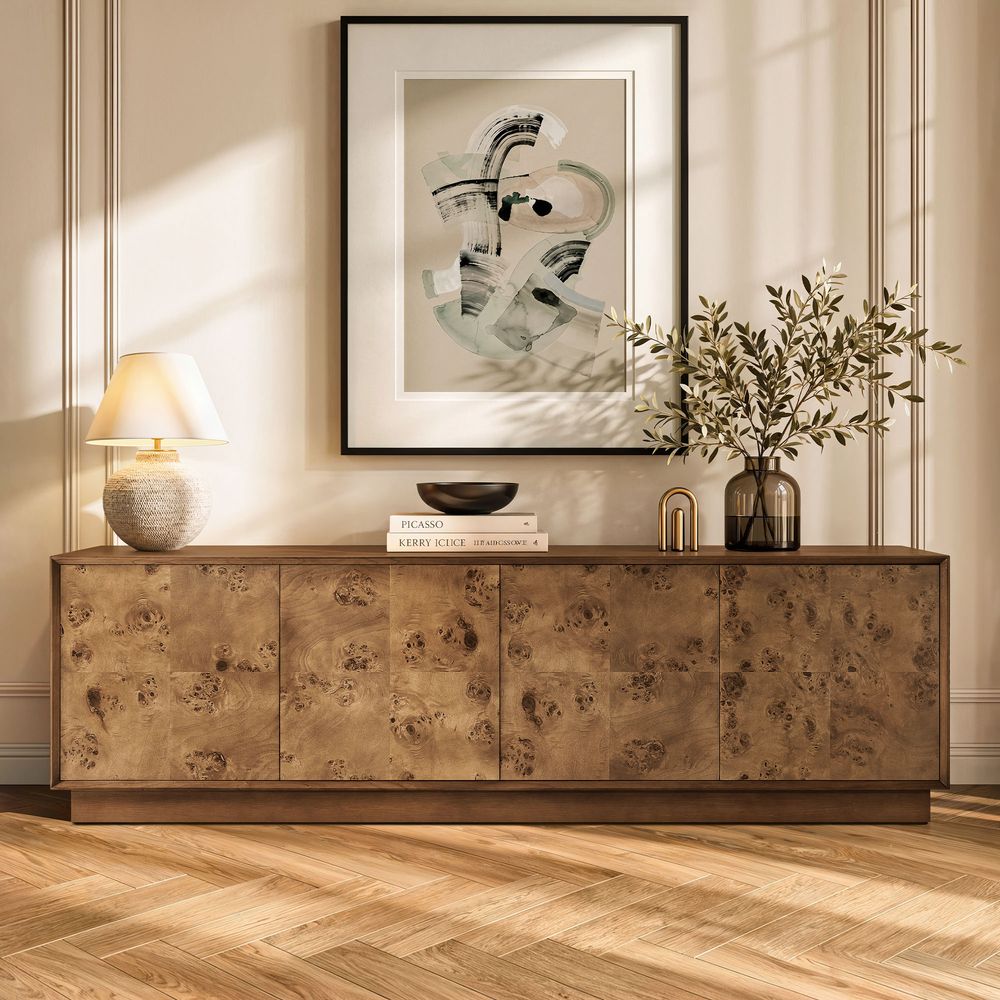
Bodil 78-Inch Burl Media Console
View Product
Choose Materials and Finishes for a Lived-In Space
Family room furniture needs to suit the way the household uses it. The best material depends on your priorities, including appearance, cleaning requirements, comfort, and how much everyday wear the furniture is likely to experience.
Consider Upholstery Carefully
Different upholstery materials have different cleaning and maintenance needs. If spills and frequent use are a concern, review the manufacturer's care instructions before choosing a sofa. A material described as easy to clean still needs the appropriate cleaning method.
Removable covers can be useful when a product is specifically designed to support them, but not every sofa has this feature. Check the product details rather than assuming covers can be removed or machine-washed.
Use Wood to Add Warmth
Wood finishes can help a family room feel grounded and welcoming. Oak tones often create a lighter, natural look, while darker or more patterned finishes can add contrast and depth. Mixing different wood tones can also work when the finishes share a compatible undertone or relate to other elements in the room.
You do not need every table and cabinet to match exactly. Instead, repeat a few colors, shapes, or materials so the room feels connected without looking overly coordinated.
Balance Texture and Color
A neutral sofa can be paired with textured cushions, a patterned rug, or a warm wood coffee table. If the room already has prominent flooring or a distinctive media console, keep some surrounding pieces simpler so the space does not feel visually crowded.
For a practical family room, choose decorative accents that can be moved or replaced easily. Smaller changes can refresh the room without requiring you to replace its main furniture.
Make the Layout Easier to Maintain
A family room does not have to remain spotless to feel comfortable, but a few practical decisions can make everyday upkeep easier.
-
Leave accessible cleaning paths. Avoid filling every gap with a small table or decorative object.
-
Keep essentials close to where they are used. A side table near the sofa can reduce clutter on the coffee table.
-
Give loose items a designated home. Use suitable drawers, cabinets, baskets, or storage ottomans for blankets, toys, and accessories.
-
Check furniture movement before finalizing the layout. Drawers, doors, and extending seat sections need sufficient clearance.
-
Follow care instructions for each material. Use cleaning products and methods recommended for the specific upholstery, wood finish, or surface.
A little planning can prevent a room from becoming difficult to clean or inconvenient to use. It also makes it easier to adjust the arrangement as your household's needs change.
Avoid Common Family Room Furniture Mistakes
Even attractive furniture can make a room less functional if the layout does not suit the space. Keep these common mistakes in mind when planning your arrangement.
Choosing furniture before measuring. A sofa or console may look suitable online but leave too little space for movement once it arrives. Measure the room, entryways, and intended furniture footprint first.
Buying pieces that are too large. Oversized furniture can dominate a small room and make it harder to reach other areas. Consider the visual weight and depth of each piece, not only its width.
Ignoring the extended footprint. Furniture with moving sections needs more space when in use. Measure both its standard and extended dimensions where applicable.
Prioritizing appearance over routine. A delicate finish or difficult-to-maintain fabric may not suit every busy household. Compare care requirements with how the room will actually be used.
Forgetting about storage. Without a plan for everyday items, even a well-designed room can quickly look untidy. Choose storage that is convenient for the people using it.
Filling every empty corner. Open space is useful. Resist adding furniture simply to occupy an area; make sure each piece has a clear purpose.
Create a Family Room That Works for You
The most useful family room furniture ideas are the ones that balance comfort, function, and the way your household lives. Start with a suitable sofa, arrange seating around your main activities, choose a coffee table that fits the space, and use storage to keep everyday items organized.
You do not need to furnish every corner or make every piece match. Focus on furniture that serves a clear purpose, leave room to move, and bring the space together with complementary finishes and textures. With a practical layout and a few thoughtful choices, your family room can feel welcoming, organized, and ready for everyday life.
FAQs
What furniture should a family room have?
Most family rooms benefit from comfortable seating, a coffee table or other accessible surface, appropriate TV or media storage if needed, and lighting. Additional chairs, side tables, or storage pieces should depend on the room's size and how the household uses it.
How do you arrange furniture in a small family room?
Start with the largest piece, usually the sofa, and arrange the remaining furniture around the room's main activity. Keep walking paths clear, choose tables that fit the available space, and avoid adding pieces that obstruct doors or windows. A rug can help define the seating area without using extra floor space.
What size coffee table works best with a family room sofa?
The right size depends on the sofa's dimensions, the seating layout, and the room's available clearance. Compare the coffee table's length and height with the sofa, then leave enough room for people to sit down and move comfortably around it. Measure the space instead of relying on a single size rule.
How can I make a family room look cozy without overcrowding it?
Use comfortable seating, warm lighting, a well-proportioned rug, and a few tactile accents such as cushions or throws. Choose a consistent color palette and use storage to control everyday clutter. Leaving some open floor space helps the room feel more relaxed rather than crowded.
Is a power sofa bed a good choice for a family room?
A power sofa bed can be useful when you want flexible lounging space and a seating area that extends for sleeping. Check the specific model's dimensions, controls, and operating instructions, and allow enough clearance for its moving section. The extension mechanism varies by design, so review the product details before arranging nearby furniture.
How do I keep a family room organized?
Give frequently used items a convenient place to go, such as a drawer, cabinet, basket, or storage ottoman. Choose furniture with storage that matches your household's needs, and keep the most-used items near their point of use. A simple daily reset can help prevent clutter from accumulating.
What furniture materials are practical for a busy family room?
There is no single best material for every household. Consider how the furniture will be used, how often it needs cleaning, and the care requirements of the finish or upholstery. Review the manufacturer's instructions and choose materials that fit your household's routines and maintenance preferences.