
A wood TV stand collects more than dust. Fingerprints gather around cabinet doors, crumbs settle along shelf edges, and everyday spills can leave marks on the surface. The challenge is cleaning these areas without dulling the finish, scratching the wood, or allowing moisture to reach vulnerable seams.
The safest approach is straightforward: start with a soft, dry cloth, use as little moisture as possible, and choose any additional cleaner based on the furniture’s finish. Solid wood, wood veneer, and specialty finishes can respond differently to the same cleaning product, so one method should not be assumed to work for every TV stand.
This guide explains how to clean a wood TV stand, remove everyday marks, care for different finishes, and prevent avoidable damage.
Table of Contents
- Start by Understanding Your TV Stand’s Surface
- What You Need to Clean a Wood TV Stand
- How to Clean a Wood TV Stand Step by Step
- How to Care for Different Wood Finishes
- Common Cleaning Mistakes That Can Damage a Wood TV Stand
- How to Deal With Water Rings, Heat Marks, and Scratches
- How to Keep a Wood TV Stand Clean Longer
- Choosing a Wood TV Stand That Is Easier to Maintain
- When to Seek Professional Furniture Repair
- Final Thoughts
- FAQs
- How often should I clean a wood TV stand?
- Can I use water to clean a wood TV stand?
- Is vinegar safe for cleaning wood furniture?
- Can I use furniture polish on a wood TV stand?
- How do I clean a wood TV stand without leaving streaks?
- How do I clean a wood-veneer TV stand?
- What should I do if my TV stand has a white water ring?
- Can I use disinfecting wipes on a wood TV stand?
- Should I oil a wood TV stand when it looks dry?
- How can I prevent scratches on a wood TV stand?
Start by Understanding Your TV Stand’s Surface
Before reaching for a cleaner, identify what you are cleaning. A wood TV stand may be made from solid wood, engineered wood with a real wood veneer, or another material with a wood-look finish. Its protective coating may also affect which cleaning methods are appropriate.
Solid Wood vs. Wood Veneer
Solid wood is made from wood throughout the relevant component. Wood veneer is a thin layer of real wood attached to a supporting material, such as engineered wood. Both can have a protective coating, but veneer requires particular care around edges, seams, and joints where moisture could penetrate.
Neither construction is automatically waterproof. Avoid soaking either surface, and never assume that a real wood grain means the furniture can tolerate sanding or aggressive cleaning.
Check the Manufacturer’s Care Instructions
Look for the product’s care guide or ask the manufacturer if the finish is unclear. Do not try to identify a finish by touch alone: a smooth or glossy surface does not reliably tell you whether it is lacquered, oiled, waxed, or coated with another material.
Use this simple decision process:
-
For routine dust: Start with a clean, soft microfiber cloth.
-
For fingerprints or light marks: Check whether the finish permits a slightly damp cloth or a specific cleaner.
-
For oil, wax, or specialty finishes: Use only a maintenance product recommended for that finish.
-
For peeling, bubbling, deep scratches, or cloudy patches: Stop cleaning and assess whether repair is needed.
The Canadian Conservation Institute’s guidance on furniture finishes explains why the surface coating and its condition matter when choosing a cleaning method.

Valborg 80-Inch Oak Media Console
View Product
What You Need to Clean a Wood TV Stand
For ordinary maintenance, keep the supplies simple:
-
A clean, soft microfiber or lint-free cloth
-
A second dry cloth for removing residual moisture
-
A soft brush or vacuum with a suitable brush attachment for dust in corners and around hardware
-
A finish-compatible wood cleaner, if needed and approved for the furniture
You do not need a cabinet full of polishes to maintain a clean TV stand. In fact, adding products unnecessarily can leave residue or create compatibility problems with the existing finish.
Avoid abrasive pads, scouring powders, bleach, ammonia-based cleaners, strong solvents, steam cleaners, and aerosol products unless the furniture manufacturer specifically approves the product in question. Never mix cleaning products.
How to Clean a Wood TV Stand Step by Step
Step 1: Turn Off Your TV and Clear the Surface
Turn off the television and move remotes, decorative objects, and other items out of the way. If you need to move the TV or lift a heavy item, get appropriate help rather than risking a drop or injury.
Keep liquids away from electrical outlets, cable openings, power strips, and connected devices. Do not spray cleaner directly onto the TV stand. Apply an approved product to the cloth instead, following its label directions.
Step 2: Remove Dust Before Wiping
Use a clean, dry microfiber cloth to remove loose dust from the top, sides, cabinet fronts, shelves, and legs. Follow the wood grain where it is visible, and use light pressure rather than scrubbing.
Pay attention to the back edge of the stand, the space beneath the top panel, door handles, and shelf corners. A soft brush can help loosen dust in narrow areas without scraping the finish.
Dusting first matters because rubbing loose grit across the surface can create fine scratches.
Step 3: Clean Fingerprints and Everyday Marks
If dry dusting is not enough, check the care instructions before adding moisture. When a slightly damp cloth is suitable for the finish, wring it out thoroughly so it feels barely damp rather than wet.
Wipe the affected area gently. For a persistent mark, use a cleaner specifically approved for the finish and follow the product label. Test it on a discreet area first, then stop if the surface changes color, gloss, texture, or feel.
Do not scrub stubborn spots with a rough sponge or use a stronger cleaner simply because the mark does not disappear immediately.
Step 4: Dry the Surface Immediately
Use a separate, soft, dry cloth to remove any remaining moisture. Check around seams, door edges, joints, and cable openings, where liquid can collect.
This step is especially important for veneered furniture. The Timber Veneer Association of Australia’s cleaning and general care guidance advises against leaving veneered surfaces damp and warns that harsh chemicals and abrasive cleaning can affect the finish.
Step 5: Clean Shelves, Handles, and Hard-to-Reach Areas
Remove items from open shelves and wipe away dust and debris. For cabinet interiors, follow the same finish-appropriate approach used on the exterior.
Clean handles carefully, particularly where fingerprints build up. If the hardware requires a different cleaning product, apply it without letting the product run onto the surrounding wood finish.
Finish by checking the top and corners for missed dust, streaks, or damp spots before returning your belongings.
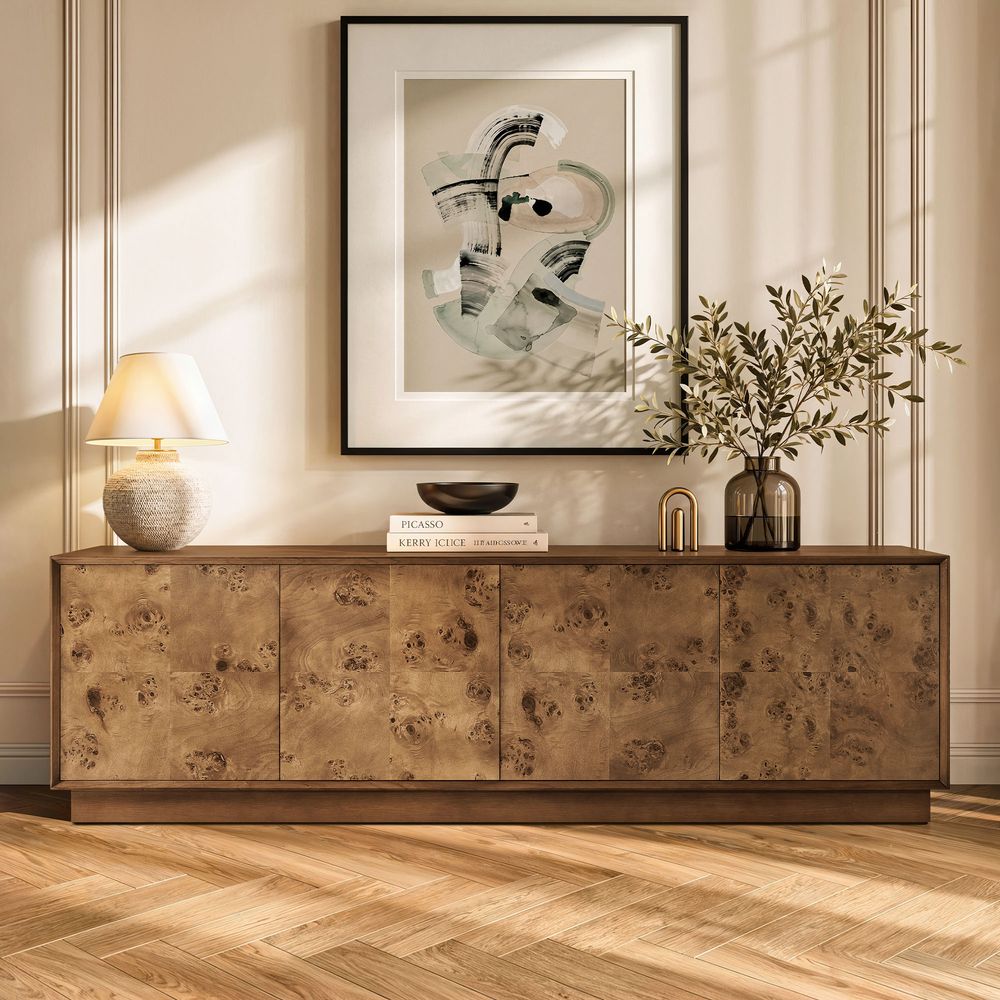
Bodil 78-Inch Burl Media Console
View Product
How to Care for Different Wood Finishes
The correct cleaning method depends on the surface, not simply on whether the furniture looks like wood.
Lacquered or Other Sealed Finishes
Many finished wood surfaces can be maintained with regular dusting and, when permitted by the manufacturer, a lightly damp cloth followed by immediate drying. However, cleaners that work on one sealed finish may damage another.
Avoid assuming that all glossy finishes are alike. Skip unapproved polishes, solvents, and abrasive products, which can dull or mark some coatings.
Oiled Wood
Oiled furniture may require occasional maintenance with a particular oil, but not every wood surface that looks dry needs additional oil. Using the wrong product can change the color, leave residue, or interfere with the existing finish.
Use only the oil and maintenance procedure recommended for the specific furniture. Remove excess product as directed by its label.
Safety note: Some oil-based finishing products can make used rags heat up and ignite if they are left bunched together. Follow the product’s disposal instructions carefully. The Massachusetts Department of Fire Services provides guidance on safe disposal of oily rags.
Waxed Wood
Waxed surfaces may be sensitive to solvents, excess moisture, and incompatible cleaners. Dust gently and avoid adding another layer of wax simply to make the furniture look shinier.
If the finish looks uneven or sticky, repeated polishing may make the buildup worse. Confirm the original care instructions before attempting to remove residue.
Unknown or Specialty Finishes
If you cannot identify the finish, stay with gentle dry dusting until you can confirm the appropriate cleaning method. Avoid experimenting with vinegar, alcohol, oils, waxes, or multipurpose cleaners.
For an antique, hand-finished, or visibly deteriorating piece, a furniture conservator or experienced restorer may be a better choice than trial-and-error cleaning.
Common Cleaning Mistakes That Can Damage a Wood TV Stand
The central rule is simple: more product and more scrubbing do not necessarily mean better cleaning.
How to Deal With Water Rings, Heat Marks, and Scratches
Not every mark is surface dirt. Before trying to remove a blemish, determine whether it sits on top of the finish or indicates damage beneath it.
Water Rings
A pale ring may be associated with moisture trapped in or affecting a finish, but not every ring has the same cause. Blot fresh spills promptly with a soft, dry cloth. Do not use an iron, hair dryer, abrasive powder, or solvent as a universal fix.
If a ring remains after the surface is dry, consult the furniture manufacturer or a qualified restorer before attempting a treatment. An unsuitable method can turn a small blemish into a larger damaged area.
Heat Marks
Hot dishes, heated appliances, and other hot objects can discolor or damage a finish. Allow the surface to cool and assess the mark before doing anything else.
Avoid applying additional heat to try to reverse the damage. If the mark remains, professional assessment is safer than experimenting with household remedies.
Scratches
First, distinguish a surface scuff from a scratch that has penetrated the finish. A clean microfiber cloth may remove a light mark sitting on the surface, but it will not repair missing finish or exposed wood.
For deeper scratches, chipped edges, lifting veneer, or bubbling, avoid sanding or filling the area without confirming the correct repair method. Veneer is thin, and aggressive sanding can remove the decorative wood layer.
How to Keep a Wood TV Stand Clean Longer
A few habits can reduce the need for deeper cleaning:
-
Dust regularly: A quick weekly dusting is a useful starting point in many homes; adjust the frequency for pets, dust levels, and daily use.
-
Wipe spills promptly: Use a soft, dry cloth and check that no moisture remains around seams or edges.
-
Protect the top: Use coasters or suitable protective pads under drinks, planters, and decorative objects.
-
Avoid direct heat: Keep hot items away from the surface and follow the furniture maker’s placement guidance.
-
Limit prolonged direct sunlight: Strong sunlight can change the appearance of wood and some finishes over time.
-
Use care with decorations: Rough bases, sharp objects, and certain rubber materials can scratch or react with a finish.
-
Keep the area ventilated and stable: Avoid prolonged exposure to damp conditions or large environmental swings.
These habits are especially useful for TV stands because the top often holds electronics and décor, while the rear panel contains cable openings that should not be exposed to cleaning liquid.

Lira 84-Inch Oak Media Console
View Product
Choosing a Wood TV Stand That Is Easier to Maintain
Cleaning is only one part of furniture care. The construction, finish, storage layout, and placement of a TV stand can all affect how easy it is to maintain.
When comparing options, consider the following:
-
Surface and construction: Check whether the product uses solid wood, veneer, or a combination, and review the care instructions for the finished surface.
-
Storage layout: Cabinet doors and drawers can help keep remotes, cables, and accessories out of sight, while open shelves may be quicker to access but collect visible dust.
-
Cable management: Cord openings can help organize electronics, but they should not be treated as areas to spray or pour cleaner into.
-
Dimensions and placement: Choose a stand that suits your TV and room, leaving enough access to clean around it without repeatedly moving heavy equipment.
You can browse Hernest’s media consoles to compare storage layouts and sizes, or explore its mid-century modern TV stands for additional designs.
For specific examples, consider these options and review each product page for its current materials and care guidance:
-
Valborg 80-Inch Oak Media Console: Its oak and engineered-wood construction makes it important to follow the care instructions for the finished surface, especially around edges and joints.
-
Lira 84-Inch Oak Media Console: A wider console option with cable-management openings; keep cleaning liquid away from those openings and connected electronics.
-
Bodil 78-Inch Burl Media Console: Its burl-veneer appearance is a reminder to avoid abrasive scrubbing or sanding that could damage the decorative surface.
These examples are not maintenance-free furniture. As with any wood or wood-veneer piece, appropriate cleaning and prompt spill removal help preserve the finish.
When to Seek Professional Furniture Repair
Routine cleaning is appropriate for dust, fingerprints, and some everyday marks. It is not a substitute for repairing a damaged finish.
Consider contacting the manufacturer or a qualified furniture restorer if you notice:
-
Veneer that is lifting, bubbling, or separating
-
A finish that is peeling, sticky, cloudy, or transferring to a cloth
-
Deep scratches that expose the underlying material
-
Persistent water rings or heat marks that do not respond to ordinary care
-
Swelling, cracking, or changes in the shape of a panel
Stop using cleaners on the affected area until you understand the problem. A repair professional can identify the likely cause and recommend a suitable treatment without unnecessary damage.
Final Thoughts
The safest way to clean a wood TV stand is to remove dust gently, use only finish-compatible cleaning methods, and dry the surface promptly whenever moisture is permitted. Avoid unverified home remedies, unnecessary polish, and aggressive scrubbing. With consistent care, you can keep the stand looking good while reducing the risk of scratches, cloudy finishes, and moisture damage.
FAQs
How often should I clean a wood TV stand?
Dust it about once a week as a starting point, and wipe up spills or fresh fingerprints as needed. Homes with pets, open windows, or heavy daily use may need more frequent dusting.
Can I use water to clean a wood TV stand?
Only use a slightly damp cloth if the furniture’s care instructions permit it. Avoid soaking the surface, and dry it immediately. Keep moisture away from veneer edges, joints, and cable openings.
Is vinegar safe for cleaning wood furniture?
Do not assume vinegar is safe for every wood finish. Its suitability depends on the coating and manufacturer’s guidance. Use a cleaner specifically approved for your furniture instead of testing household acids on an unknown finish.
Can I use furniture polish on a wood TV stand?
Only if the polish is compatible with the finish and recommended for the product. Some polishes contain waxes, oils, or silicones that can build up or complicate later maintenance.
How do I clean a wood TV stand without leaving streaks?
Start with a clean microfiber cloth and remove dust before treating marks. If a damp cloth or approved cleaner is suitable, use very little product and buff away remaining moisture with a separate dry cloth.
How do I clean a wood-veneer TV stand?
Dust gently and use minimal moisture only when the care instructions allow it. Dry the surface promptly, particularly near edges and joints. Do not sand the veneer to remove scratches.
What should I do if my TV stand has a white water ring?
Let the area dry and check whether the mark remains. Avoid ironing or applying heat as a general remedy. If the ring persists, ask the manufacturer or a qualified furniture restorer about the finish-specific repair method.
Can I use disinfecting wipes on a wood TV stand?
Avoid using them unless the furniture manufacturer confirms they are compatible with the finish. Disinfecting wipes may contain alcohol, solvents, or other ingredients that can affect some coatings.
Should I oil a wood TV stand when it looks dry?
Not automatically. Oiling is appropriate only for finishes designed to receive that treatment. Confirm the product’s maintenance instructions before applying oil, and follow the product label.
How can I prevent scratches on a wood TV stand?
Use soft cloths, keep grit off the surface, avoid dragging objects across it, and place suitable protective pads beneath décor. Avoid abrasive cleaners and keep sharp or rough objects away from the finish.