The best wood for furniture depends on what you're buying. A dining table needs a surface that can handle plates, spills, and daily contact. A bed frame needs reliable structural support, while a dresser must withstand repeated drawer use without becoming unstable. Choosing the right wood means understanding these differences rather than looking for one species that works for everything.
Oak, maple, walnut, cherry, and ash are popular hardwood choices for indoor furniture, but pine and engineered wood products also have practical uses. Beyond the species, moisture control, joinery, surface finish, and material construction all affect how furniture performs over time.
This guide compares common furniture woods, explains what durability ratings actually tell you, and shows what to look for when buying tables, bed frames, dressers, and media consoles.
Table of Contents
- What Is the Best Wood for Furniture?
- Hardwood vs. Softwood: Which Is Better for Furniture?
- 6 Types of Wood for Furniture Worth Considering
- What Makes Wood Furniture Durable?
- Best Wood for Different Types of Furniture
- Solid Wood vs. Veneer vs. Laminate
- Is Sustainable Wood Better for Furniture?
- How to Care for Wooden Furniture
- Quick Guide: Matching Wood to the Furniture
- FAQs
- What type of wood is best for furniture?
- What is the most durable wood for furniture?
- Which wood is best for bedroom furniture?
- Is hardwood always better than softwood for furniture?
- Is solid wood better than veneer for furniture?
- What is the best wood for a dining table?
- Does kiln-dried wood prevent furniture from warping?
- How do I maintain wooden furniture for years?
What Is the Best Wood for Furniture?
For many indoor furniture applications, oak is a dependable all-around choice because it combines good hardness, distinctive grain, and versatility. Hard maple offers greater resistance to indentation, walnut provides rich color, and cherry develops a deeper tone as it ages. Pine is worth considering for budget-friendly furniture and painted finishes.
However, the best wood for furniture isn't necessarily the hardest or most expensive. Start with three questions:
-
What must the furniture support? Check the frame, joints, legs, and load-bearing components, especially on beds and large storage pieces.
-
How much wear will it receive? Dining tables and frequently used desktops need good resistance to dents, scratches, and spills.
-
What appearance and budget do you prefer? Natural grain, stain color, paint, solid wood, and veneer all affect the finished look and cost.
A well-constructed piece made from an appropriate, moderately priced material can be a better purchase than expensive hardwood furniture with weak joints or poorly fitted drawers.
Hardwood vs. Softwood: Which Is Better for Furniture?
Hardwood and softwood are botanical classifications. Hardwoods generally come from broadleaf trees, while softwoods come from conifers. Although many common furniture hardwoods are harder than many softwoods, the categories alone don't determine strength or durability.
Hardwood: A Strong Choice for Everyday Use
Oak, maple, walnut, cherry, and ash are widely used in indoor furniture. Their properties vary, but many offer good resistance to everyday wear and attractive natural grain.
Hardwood is particularly useful for dining tables, dressers, cabinets, chairs, and other frequently used pieces. Oak and maple are practical options when surface durability matters, while walnut and cherry appeal to buyers who want distinctive color and grain.
Hardwood does have trade-offs. Some species cost more, and denser woods can be more difficult to machine. A hardwood surface also needs appropriate protection against moisture and staining.
Softwood: Practical for Budget-Friendly Furniture
Pine is relatively affordable, easy to work with, and suitable for painted furniture, shelving, and rustic designs. Its softer surface can develop dents and scratches more readily than many common hardwoods.
Cedar is used for certain storage and outdoor applications because some species contain natural compounds that help resist insects and decay. Its performance still depends on the species, treatment, and environment.
Which should you choose? Consider hardwood for surfaces exposed to frequent impacts, but don't rule out softwood for lighter-duty furniture. Construction quality, appropriate finishes, and the intended use matter more than the category name alone.
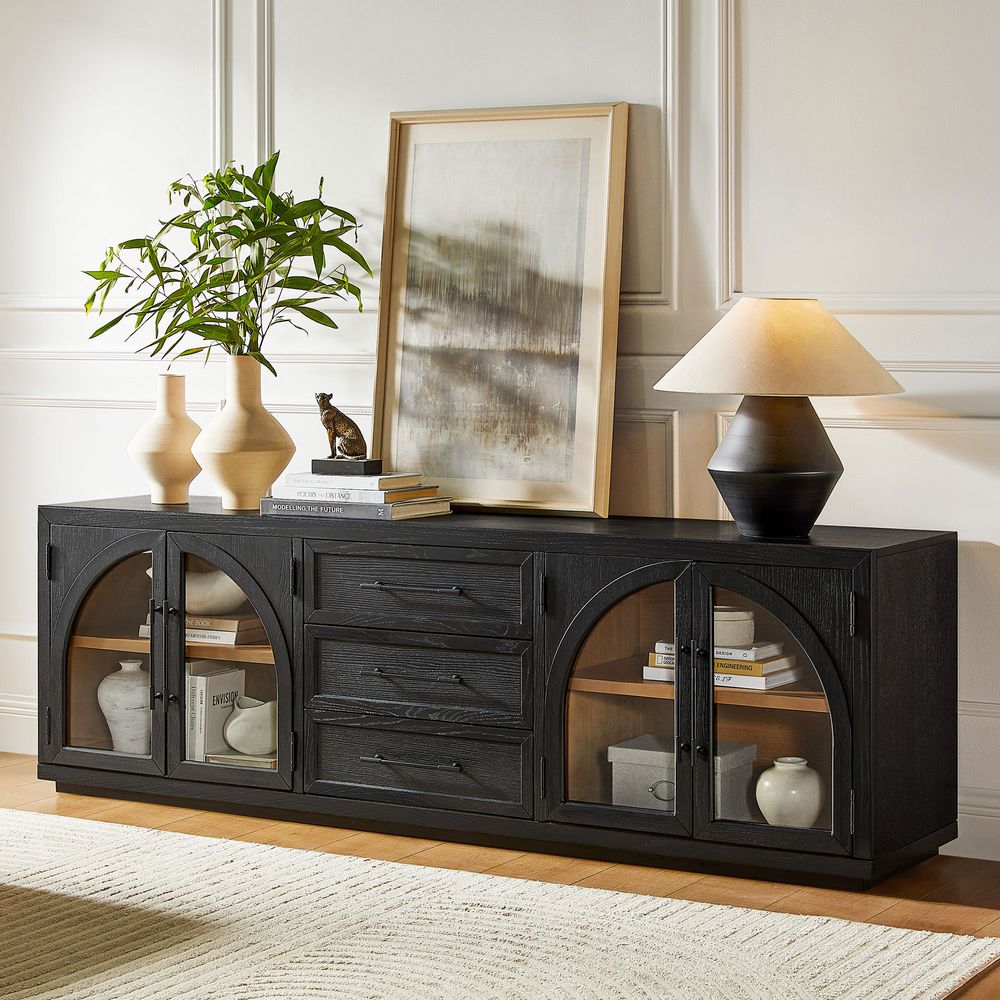
Valborg 80-Inch Oak Media Console
View Product
6 Types of Wood for Furniture Worth Considering
Each species offers a different balance of hardness, appearance, workability, and price. These six options cover many common indoor furniture needs, from durable tabletops to decorative storage.
1. Oak: A Dependable All-Around Choice
Oak is a versatile furniture wood with a prominent grain that suits both traditional and mid-century-inspired interiors. White oak has a Janka hardness rating of approximately 1,360 lbf, while red oak measures around 1,290 lbf.
White oak is generally less permeable than red oak, although neither is waterproof. Both can work well for dining tables, cabinets, dressers, and other frequently used furniture when properly finished.
Oak also accepts a variety of stains, making it relatively easy to coordinate with different room palettes.
Best for: Dining tables, cabinets, dressers, and everyday storage.
Trade-off: Its pronounced grain may feel visually busy if you prefer a very uniform surface.
2. Hard Maple: Excellent Resistance to Dents
Hard maple measures approximately 1,450 lbf on the Janka hardness scale, making it one of the harder woods commonly used for furniture. Its pale color and relatively fine grain create a clean, understated appearance.
Maple is a good option for tabletops, dressers, and other surfaces where resistance to indentation matters. Its density can make it more challenging to machine, and achieving an even stain may require careful preparation.
Best for: Frequently used surfaces, dressers, and dining furniture.
Trade-off: Its subtle grain offers less visual drama than walnut or oak.
3. Walnut: Rich Color and Distinctive Grain
Black walnut has a Janka hardness rating of approximately 1,010 lbf. Its deep brown color and varied grain make it a popular choice for desks, headboards, sideboards, and accent furniture.
Walnut is hard enough for many indoor applications and can provide a refined finish without relying on a heavy stain. Its main drawback is cost, which often makes it more expensive than oak or maple.
Best for: Statement cabinets, desks, headboards, and accent pieces.
Trade-off: Walnut generally costs more than many common furniture woods, so consider whether its appearance justifies the difference.
4. Cherry: Warm Color That Changes With Age
Black cherry measures approximately 950 lbf on the Janka scale. It starts with a warm pinkish-brown tone and typically darkens with exposure to light.
Cherry is valued for its smooth grain and ability to take a fine finish. It works well for bedroom furniture, cabinets, and decorative pieces where a warm, evolving color is desirable.
Best for: Dressers, cabinets, and furniture with a warm, refined appearance.
Trade-off: It is more susceptible to dents than harder options such as oak and hard maple.
5. Ash: Strength and a Lighter Visual Look
Ash has a relatively straight grain and a light appearance that works well in contemporary and mid-century-inspired interiors. Green ash has a Janka rating of approximately 1,200 lbf, although ratings vary by species and test conditions.
Ash is commonly used for chairs, tables, cabinets, and furniture with shaped components. Its grain can resemble oak, but the overall appearance may feel lighter.
Best for: Chairs, sideboards, tables, and pieces with curved or shaped details.
Trade-off: Ash still requires suitable drying and finishing to manage moisture-related movement.
6. Pine: Affordable and Easy to Work With
Pine is a practical option when budget and workability matter more than maximum dent resistance. Eastern white pine, for example, measures approximately 380 lbf on the Janka scale.
Its knots and natural grain suit rustic, casual, and painted furniture. Pine is relatively easy to cut and finish, which also makes it useful for simple DIY projects.
Best for: Shelves, painted furniture, rustic pieces, and budget-conscious projects.
Trade-off: Expect more visible dents and scratches on high-use surfaces.
For a broader comparison of wood species and their properties, consult the American Hardwood Information Center's wood species guide.
What Makes Wood Furniture Durable?
Wood durability isn't determined by hardness alone. Three factors deserve attention when you're comparing furniture: resistance to indentation, dimensional stability, and construction quality.
Janka Hardness: What the Numbers Tell You
The Janka test measures the force required to embed a steel ball into wood to a specified depth. Results are commonly expressed in pounds-force (lbf) in the United States.
A higher rating generally indicates greater resistance to indentation. That makes Janka values useful when comparing woods for tabletops and other surfaces that receive frequent contact.
However, Janka hardness does not measure a finished furniture piece's overall strength, resistance to water damage, or expected lifespan. A hard wood cannot compensate for weak joints or a poorly supported frame.
Moisture Content and Dimensional Stability
Wood absorbs and releases moisture as its surrounding environment changes. This can cause swelling, shrinkage, warping, or cracking if the material and furniture design don't accommodate normal movement.
Kiln-drying helps bring wood to a suitable moisture content before manufacturing, but it doesn't make wood immune to future humidity changes. Proper construction and an appropriate indoor environment remain important.
The USDA Forest Products Laboratory explains these properties in its technical reference, Wood Handbook: Wood as an Engineering Material.
Joinery and Construction
Construction determines how well the different parts of a furniture piece work together.
When inspecting furniture, check:
-
Frames and joints: Look for secure connections and a stable structure without obvious looseness.
-
Drawers: Open and close each drawer to assess alignment, movement, and fit.
-
Load-bearing components: For beds, examine the rails, center support, legs, and connection points.
-
Surface finish: Check whether exposed surfaces have a consistent finish and whether edges are adequately protected.
Dovetail joints can provide strong drawer connections, but their presence alone doesn't guarantee quality. Material thickness, fit, drawer support, and overall construction matter too.
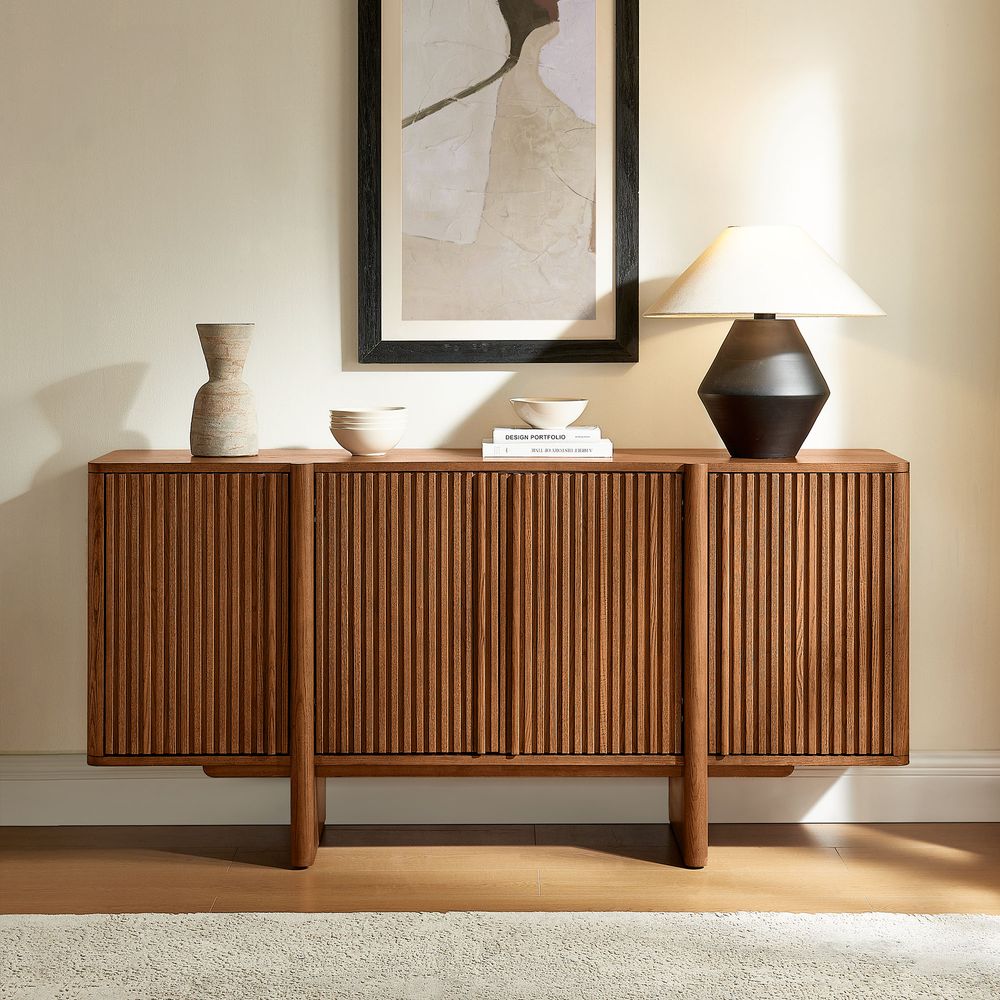
Sabina 64-Inch Ash Wood Sideboard
View Product
Best Wood for Different Types of Furniture
Choosing by furniture type is often more useful than ranking wood species in isolation. Here's what to prioritize for common household pieces.
Dining Tables: Prioritize Surface Durability
White oak and hard maple are good starting points for dining tables because they offer useful resistance to indentation. Walnut is another option if you prefer darker grain.
Regardless of the wood, a suitable protective finish helps reduce staining and moisture damage. If the table will see heavy daily use, prioritize easy maintenance alongside appearance.
Bed Frames: Check the Structure First
Oak, maple, and ash can be suitable for bed frames, but the wood species alone doesn't establish how much weight a frame can support.
Inspect the side rails, center support, legs, and joints. Follow the manufacturer's assembly instructions and weight limits, and don't assume that a more expensive wood automatically means a stronger bed.
Dressers: Focus on Drawers and Stability
Dressers experience repeated pulling, loading, and closing. Their durability depends on the cabinet frame, drawer boxes, runners, hardware, and overall stability.
The Kaden 55-Inch Mid-Century 7-Drawer Dresser uses kiln-dried rubber wood, engineered wood with cherry veneers and dovetail-jointed drawers. It also includes an anti-tip kit, an important safety feature for a tall dresser.
Rubber wood can be a practical material for indoor furniture when properly dried and constructed, while cherry veneer provides a warm wood appearance. This example also illustrates why it's worth checking the materials used in individual components rather than judging a dresser by its visible finish alone.
If you're comparing drawer counts, finishes, and storage layouts, explore Hernest's dressers to find a configuration that suits your bedroom.
Sideboards and Credenzas: Balance Storage and Appearance
Sideboards need stable construction, practical storage, and a finish that complements the room. Oak and ash offer visible grain, while walnut creates a deeper, richer look.
The Sabina 64-Inch Ash Wood Sideboard combines solid American ash with kiln-dried rubber wood and plywood, along with ash veneers on selected surfaces. Its fluted doors integrate the handles into the design, while adjustable interior shelves accommodate items of different heights.
When evaluating a sideboard, check the door alignment, shelf adjustability, panel construction, and hardware. These details affect everyday use as much as the visible wood grain.
For more sizes, finishes, and storage configurations, browse Hernest's sideboards.
TV Stands and Media Consoles: Look Beyond the Wood Species
A media console needs to support a television, organize electronics, and provide convenient access to cables and accessories. Stability, dimensions, storage layout, and weight capacity are key considerations.
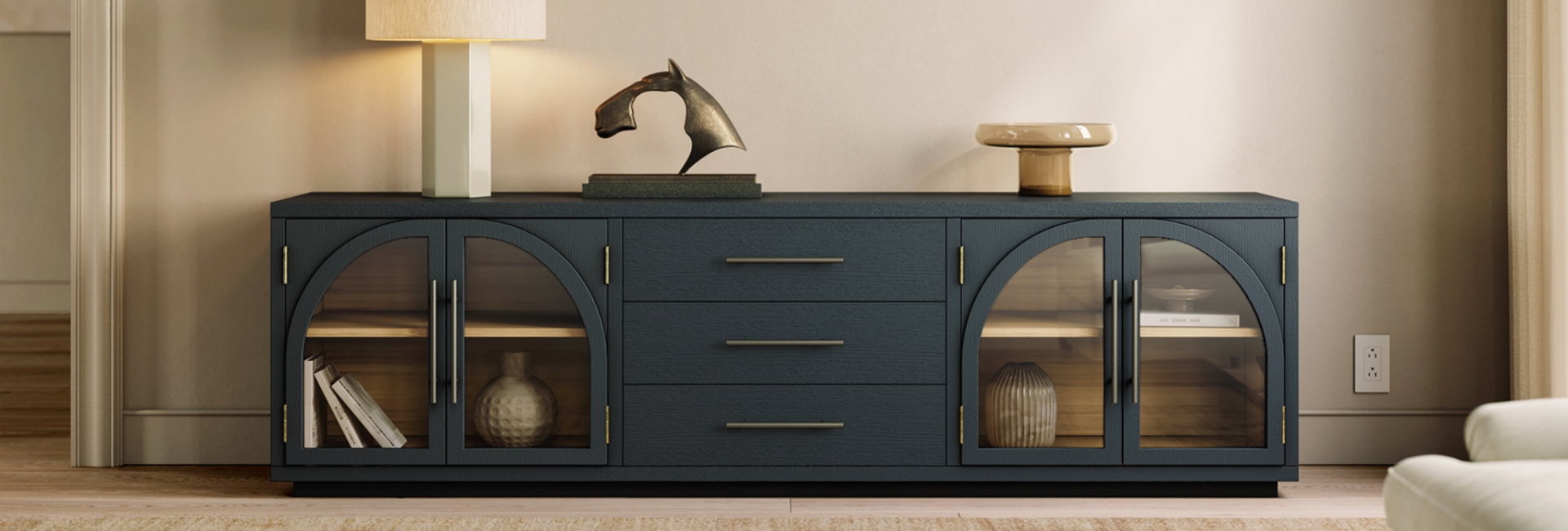
The Valborg 80-Inch Oak Media Console combines an arched silhouette with two spacious cabinets and three drawers. The cabinets provide room for larger items, while the drawers help organize smaller essentials such as remotes and manuals.
Its black finish offers a different visual effect from natural oak or ash, making it easier to coordinate with different living-room palettes.
If you're comparing widths, finishes, and storage configurations, explore Hernest's media consoles to find an option that fits your television and living-room layout.
Solid Wood vs. Veneer vs. Laminate
Understanding furniture materials helps you compare products accurately and decide where spending more on solid wood makes sense.
Solid wood is wood throughout the thickness of the component. A finished furniture piece may still combine solid-wood components with other materials.
Wood veneer is a thin layer of real wood bonded to a core material, such as plywood or MDF. It provides genuine wood grain on the surface without requiring the entire panel to be solid hardwood.
Laminate generally uses a decorative printed or patterned surface over a core material. It can reproduce the look of wood without using real wood as the visible surface.
Which Material Should You Choose?
Solid wood can be a good option for components where natural grain, repairability, or traditional joinery matters. However, large solid-wood panels can move with changes in moisture, so their design must accommodate that movement.
Veneered panels can offer a consistent appearance and good dimensional stability when properly manufactured. A cabinet that combines solid-wood components with veneered panels can therefore be a sensible design choice.
Laminate may suit buyers who prioritize an easy-care surface and a particular look at a more accessible cost.
Don't rely on appearance alone to identify the material. Read the product specifications, check which components use each material, and ask about repair or refinishing options if those matter to you.
Is Sustainable Wood Better for Furniture?
Sustainable sourcing matters, but no wood species is automatically the most environmentally responsible choice in every situation. The origin of the timber, forest management, manufacturing process, transport, and useful life of the finished furniture all contribute to its impact.
When comparing products, consider these questions:
-
Can the source be verified? Look for clear information about the wood species and its origin.
-
Is certification available? FSC certification can help verify claims about forest management and certified material supply chains. Check whether the specific product carries an applicable certification.
-
Is the furniture built to last? Durable construction and repairable components can reduce the need for frequent replacement.
-
Are materials used efficiently? Properly manufactured veneer and engineered panels can make effective use of wood resources.
-
Could reclaimed wood work? Reclaimed timber can extend the useful life of existing material, provided it is suitable for the intended application.
The Forest Stewardship Council explains its certification system, including forest management and chain-of-custody certification.
Treat environmental claims carefully. A species name or a general statement that wood is renewable isn't enough to establish that a particular furniture product is responsibly sourced.
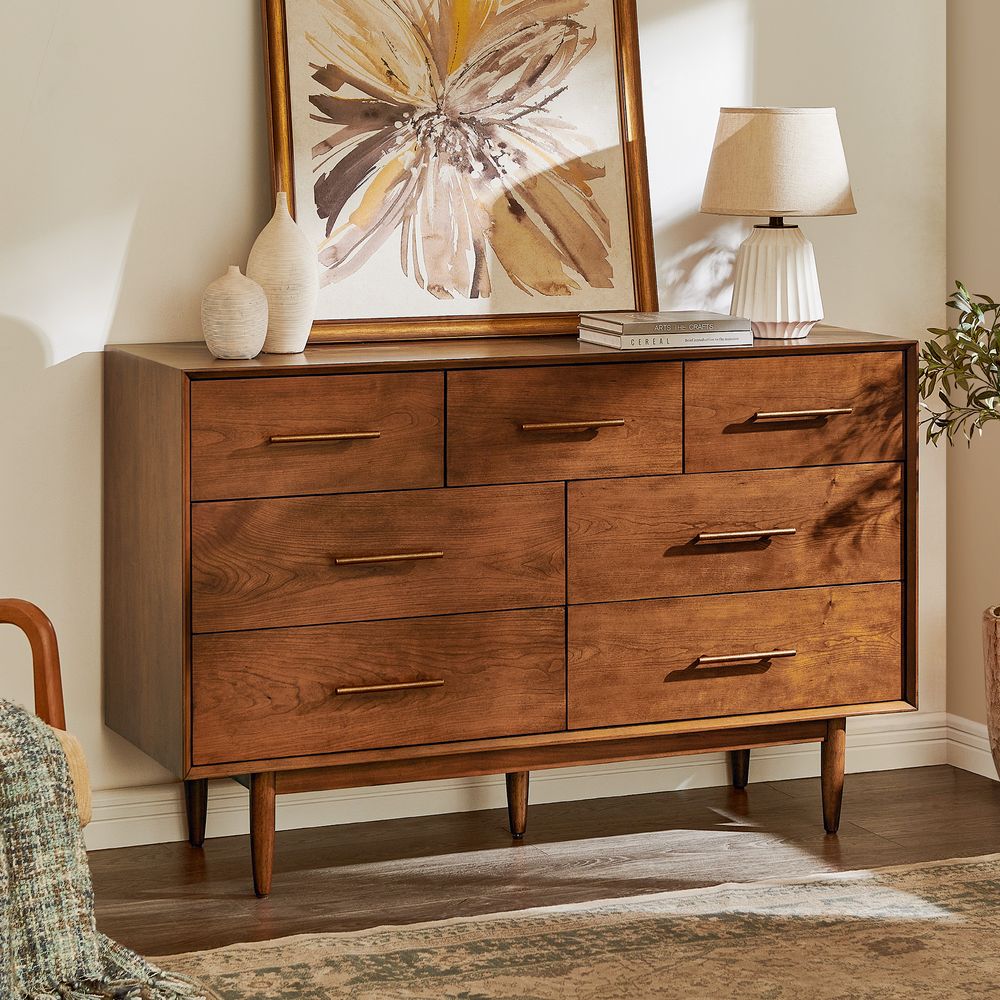
Kaden 55-Inch Mid-Century 7-Drawer Dresser
View Product
How to Care for Wooden Furniture
Good maintenance helps preserve the finish and reduces unnecessary wear, regardless of the wood species.
-
Dust regularly: Use a soft, clean cloth to remove dust without scratching the surface.
-
Wipe up spills promptly: Don't allow water or other liquids to sit on the finish.
-
Use suitable cleaning products: Follow the manufacturer's instructions and avoid abrasive cleaners.
-
Limit prolonged direct sunlight: UV exposure can change the color of wood and finishes over time.
-
Maintain a stable indoor environment: Large humidity changes can contribute to swelling, shrinkage, and cracking.
-
Protect frequently used surfaces: Coasters, placemats, and felt pads help reduce stains and scratches.
Solid wood can often be repaired or refinished, depending on its thickness and finish. Veneered furniture may also be repairable, but aggressive sanding can damage the thin surface layer. Always check the manufacturer's care instructions before attempting repairs.
Quick Guide: Matching Wood to the Furniture
Janka Hardness Comparison
The figures below are approximate reference values from the American Hardwood Information Center for commonly cited species. Hardness varies by species and test conditions, and it should be used to compare resistance to indentation rather than overall furniture quality.
These values help compare common American hardwoods. Softwoods such as pine vary substantially by species, so a single generic pine rating shouldn't be applied to every type.
FAQs
What type of wood is best for furniture?
Oak is a dependable all-around choice for many indoor furniture applications. Hard maple offers greater resistance to indentation, walnut provides distinctive color, and cherry brings a warm finish. The best option depends on the furniture's use, construction, appearance, and budget.
What is the most durable wood for furniture?
Hickory and hard maple are among the harder commonly used furniture woods, while white oak offers a useful balance of hardness and versatility. However, overall durability also depends on joinery, moisture control, finish quality, and how the piece is used.
Which wood is best for bedroom furniture?
Oak, maple, and ash are good options for many structural and storage applications. Cherry and walnut suit headboards and accent pieces, while rubber wood can work well for indoor dressers when properly dried and constructed. Check drawer quality and frame stability alongside the wood species.
Is hardwood always better than softwood for furniture?
No. Hardwood often offers greater dent resistance than many softwoods, but the category alone doesn't establish quality. Pine can be suitable for painted furniture and shelving, while a poorly constructed hardwood piece may not perform well over time.
Is solid wood better than veneer for furniture?
Not always. Solid wood offers natural grain throughout the component and may allow more extensive refinishing, depending on its thickness. Veneer provides a real-wood surface over a core material and can be a practical choice for large panels. Construction quality and intended use matter more than the label alone.
What is the best wood for a dining table?
White oak and hard maple are good starting points because they offer useful resistance to indentation. Walnut is another option for buyers who prefer a darker grain. Choose a suitable protective finish and consider how much maintenance the table will need.
Does kiln-dried wood prevent furniture from warping?
No. Kiln-drying helps bring wood to a suitable moisture content before manufacturing, reducing the risk of moisture-related problems. Wood can still respond to changes in humidity, so proper design, construction, and indoor conditions remain important.
How do I maintain wooden furniture for years?
Dust with a soft cloth, clean spills promptly, avoid abrasive cleaners, and protect the finish from prolonged sunlight and excessive heat. Keep the indoor environment reasonably stable and follow the manufacturer's care instructions. Repair or refinishing options depend on the material and finish.