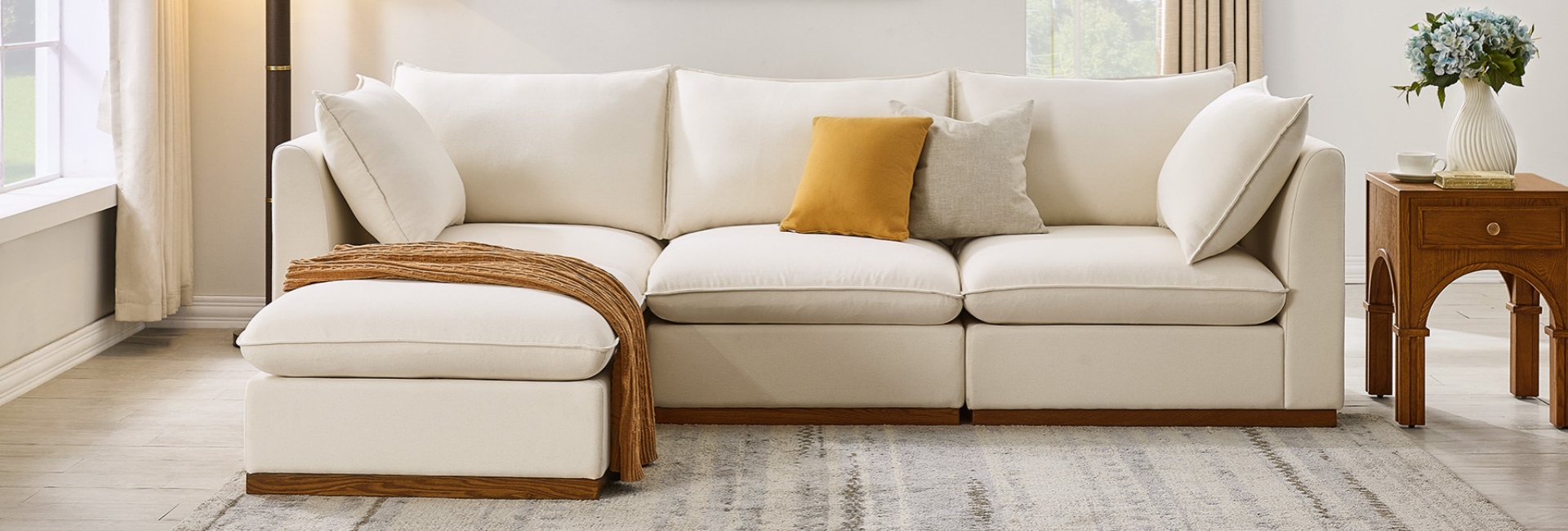
When you start shopping for types of couches, the label on the showroom tag tells you almost nothing about whether the piece will fit your life. A "couch" and a "sofa" are the same piece of furniture to most American buyers today, and the real decision comes down to shape: how many people it seats, how much floor it takes up, and whether it can pull double duty as a guest bed.
Below, we'll walk through the seven couch types you'll commonly find in stores, what each one is good at, and how to match one to the room you have.
Table of Contents
- How "Couch" and "Sofa" Differ (and Why It Barely Matters)
- Standard Sofas: The Everyday Three-Seater
- Loveseats Work When Space Is Tight
- Sectionals Create One Anchored Seating Zone
- Why Modular Sofas Make Sense for Flexible Rooms
- The Chaise Sofa: Lounge Without a Full Sectional
- Sofa Beds Add a Sleeping Function
- The Chesterfield: A Tufted Statement Piece
- How to Match a Couch Type to Your Room Size
- Match the Couch to How You Actually Live
- What to Check Beyond the Shape
- Where to Start If You're Still Unsure
- FAQs
- What are the different types of couches?
- What is the difference between a couch and a sofa?
- What is a standard sofa and how big is it?
- What is a loveseat and how many people does it seat?
- What is the difference between a sectional and a modular sofa?
- What is a chaise sofa and when does it make sense?
- What is a sofa bed and how is it different from a futon?
- What is a Chesterfield sofa and what defines it?
- How do I choose the right type of couch for a small living room?
- How much clearance should I leave around a couch?
How "Couch" and "Sofa" Differ (and Why It Barely Matters)
The words come from different places. "Sofa" traces back to the Arabic suffah, a padded bench built into a wall, and entered English in the early 1700s. "Couch" comes from the French couche, meaning a place to lie down, and in North America it's the word many people use for the living-room seat. Historically, a sofa was sometimes associated with more upright seating, while a couch suggested something you could stretch out on. Those distinctions faded decades ago.
Today, retailers use the terms interchangeably, and so do we. When you search for types of couches, you'll see "sofa" and "couch" applied to the same silhouettes. The useful split isn't the word. It's the form: a two-seat loveseat is a different animal from a U-shaped sectional, and a Chesterfield reads nothing like a modular sofa.
We've organized this guide around form because that's what changes how your room feels and functions.
Quick Reference
Standard Sofas: The Everyday Three-Seater
The standard sofa is the baseline most of us picture: a three-cushion seat, a back, two arms, and enough room for two or three people to sit without touching shoulders. You'll see it called a "three-seater" or simply "the couch," and it's the safest starting point because it fits a wide range of rooms and decorating styles.
Most standard sofas land around 84 inches wide. Push past 90 inches and you're entering larger, more substantial territory, which can look great in an open-concept room but gets harder to move through doorways and up stairs. Go below about 72 inches and you're getting closer to an apartment sofa designed for tighter spaces.
Width affects how many people can sit comfortably. Depth affects how you sit. A deeper seat lets you tuck your legs up and lounge, while a shallower seat keeps you more upright. If the sofa is mainly for stretching out and watching TV, lean deeper. If you use it for conversation or more formal sitting, a shallower profile may feel better.
The point is simple: don't judge a sofa by width alone. Two sofas can both be 84 inches wide and feel completely different once you sit down.
Loveseats Work When Space Is Tight
A loveseat is a couch built for two. The name stuck because it was originally associated with couples, but today it earns its place in apartments, reading corners, bedrooms, and as companion seating alongside a larger sofa.
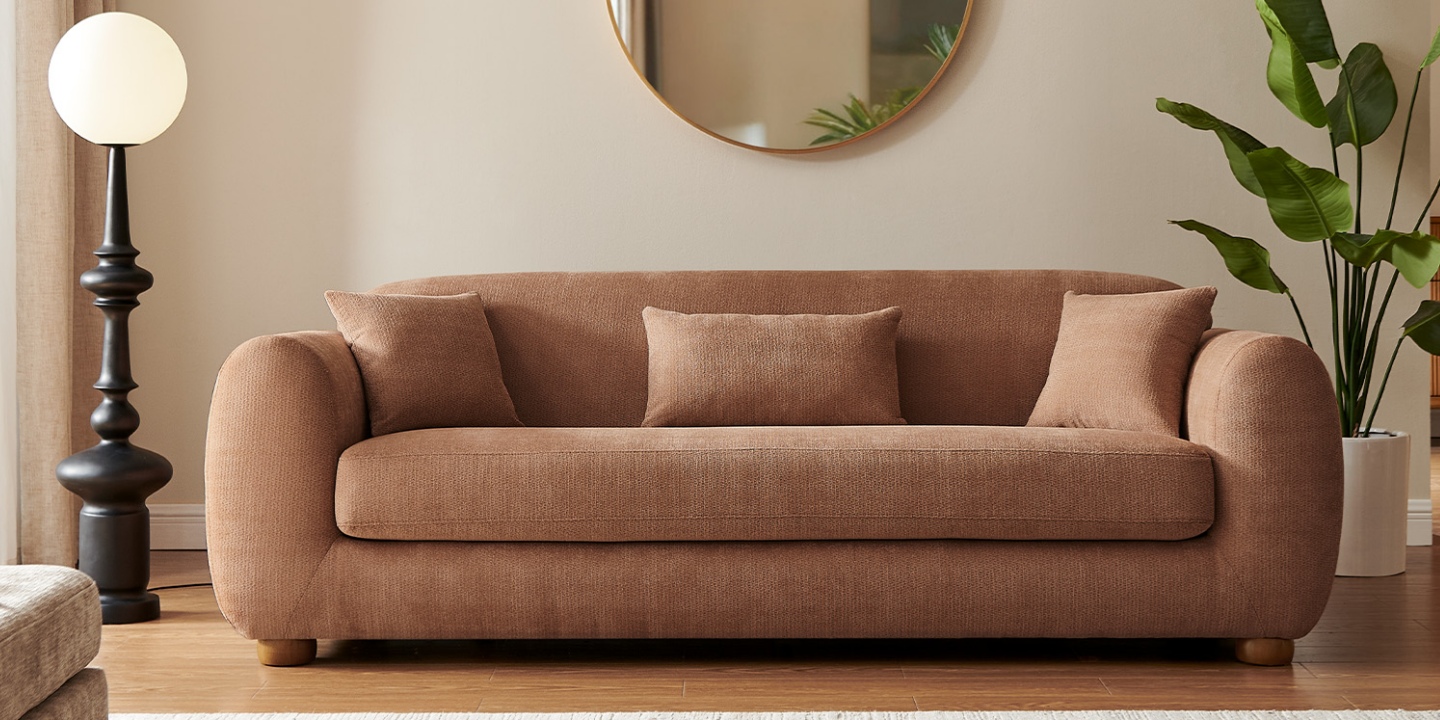
Typical loveseats run about 65 to 75 inches wide, although some modern designs stretch beyond that range. The compact profile is the main advantage. In a small living room, a loveseat can leave enough room for a chair and coffee table without crowding the walkway. In a larger room, it can add another seating zone without making the space feel like one giant block of furniture.
If you prefer a roomier two-seater, the Frosta 91" Chenille Loveseat gives you more sitting space than a classic loveseat while keeping the proportions of a two-person piece. It pairs a solid-wood-and-plywood frame with Sirocco chenille upholstery, removable seat cushion covers, and a spill-resistant finish. Rounded arms and a continuous back create a softer outline, so it feels cozy rather than boxy.
One honest caveat: a loveseat is designed around two adults. Three people may fit in a pinch, but if you host often, treat it as companion seating rather than your only sofa.
Sectionals Create One Anchored Seating Zone
A sectional is built from multiple connected pieces, most commonly forming an L. The shape wraps around a corner and turns what might otherwise be dead space into seating, which is why sectionals work so well in family rooms and larger living areas.
The big win is togetherness. Instead of a sofa plus a chair with an awkward gap between them, a sectional creates one clear zone where everyone can sit together. Families and anyone who hosts movie nights tend to appreciate that setup.
The trade-off is floor space. A sectional needs enough room for the sofa itself plus clear paths around it. In a tight apartment, a large sectional can swallow the room.
Many sectionals are L-shaped with three or more seats and a chaise on one end. Some add an ottoman or additional piece to create a U-shaped arrangement. Before buying, confirm the orientation. A "right-facing" chaise means the extended section sits on your right as you face the sofa. Getting that detail wrong can make an otherwise perfect sectional look misplaced.
Measure the corner it will occupy and picture the chaise extending away from the main walkway before you order.
Why Modular Sofas Make Sense for Flexible Rooms
A modular sofa can look similar to a sectional but behaves differently. A sectional usually stays in one connected configuration, while a modular sofa is made from independent pieces that can be rearranged into different layouts.
That flexibility is useful if you move, regularly change your room arrangement, or expect your space to evolve. You can separate the pieces, add to the configuration, or shift the layout without replacing the entire sofa.
The downside is that modular pieces can look more boxy than a sculpted sectional, and the seams between individual units are often more noticeable. For renters and anyone who changes layouts regularly, that flexibility may be worth it. For a settled room with one obvious seating arrangement, a fixed sectional can look cleaner.
Here's a practical rule: if you regularly rearrange your living room or expect to move within a few years, modular is worth considering. If your sofa has one permanent corner, a traditional sectional may be the simpler choice.
The Chaise Sofa: Lounge Without a Full Sectional
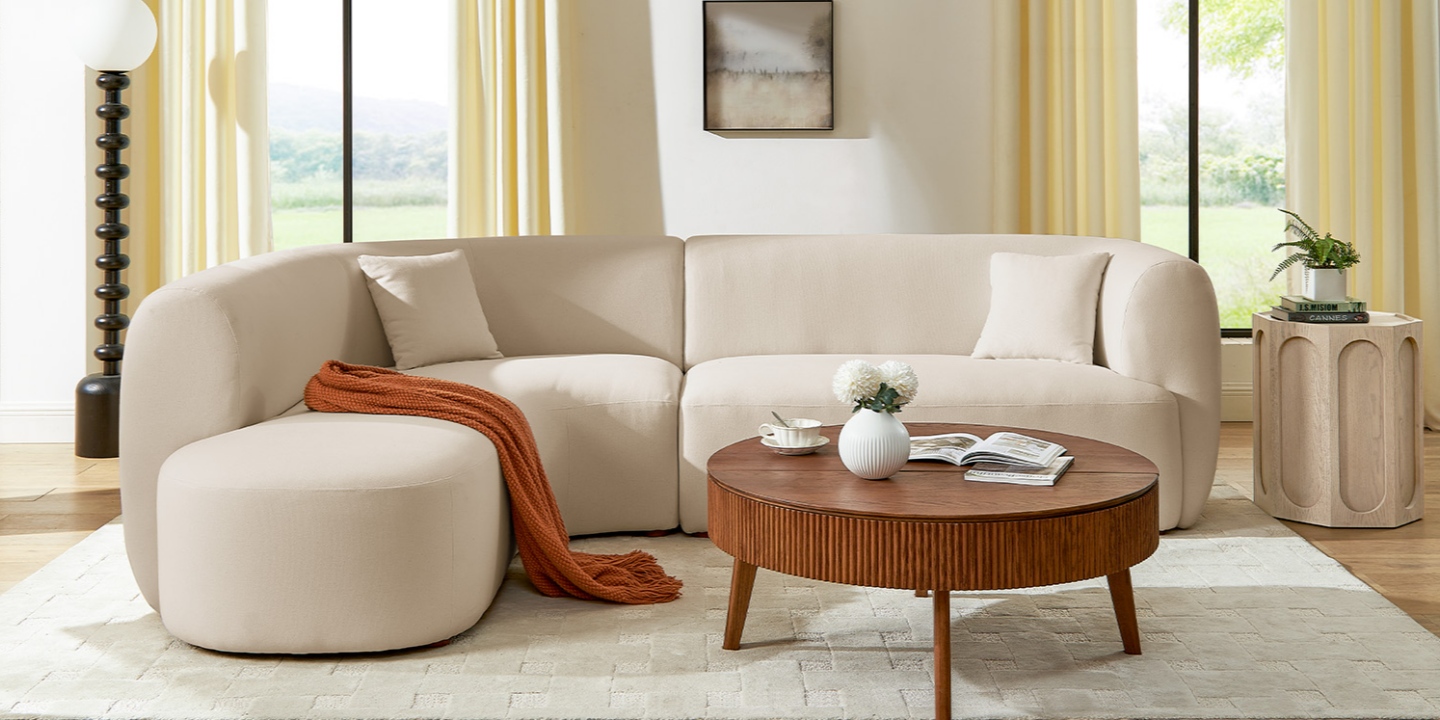
A chaise sofa has one extended portion built for stretching your legs, so you don't need a separate ottoman. The word comes from the French chaise longue, or "long chair," and the appeal is straightforward: you get a dedicated lounging spot without committing to a full L-shaped sectional.
This is a good fit for someone who reads, scrolls, watches TV, or naps solo and wants to stretch out. A chaise can work in rooms that don't have enough space for a full sectional, provided the extended portion doesn't interfere with traffic.
Keep the chaise away from the main walkway. A beautiful lounging spot quickly becomes annoying if everyone has to step around it to cross the room.
The Krono Chaise Sectional Sofa is an example of how a chaise can be built into a two-piece L-shaped configuration. Its components can be rearranged into several layouts, giving it some of the flexibility associated with modular seating. A solid-wood-and-plywood frame, sinuous spring suspension, and curved silhouette keep the long chaise from feeling overly bulky.
If you want a place to stretch out but don't have the room for a large sectional, this is the kind of configuration worth considering.
Sofa Beds Add a Sleeping Function
A sofa bed, often called a sleeper sofa, combines everyday seating with a built-in sleeping surface. Depending on the design, a mattress folds or pulls out from inside the frame, giving overnight guests a place to sleep without requiring a separate bed.
Modern sofa beds can use memory foam or innerspring mattresses, although the mechanism still makes them heavier than a standard sofa.
The common comparison is sofa bed versus futon. A futon folds its seating surface flat to create the sleeping surface, while a sofa bed typically keeps the sitting cushions separate from a dedicated mattress. Sofa beds tend to feel more like conventional sofas during the day, while futons are often lighter and simpler.
If overnight guests are a regular part of your home, a sofa bed can earn its extra weight and complexity. If sleeping space is only an occasional need, a futon or another compact solution may make more sense.
Size matters here more than with many other couch types. Measure the room with the bed fully open, not just with the sofa closed. A queen-size sleeper can require roughly 90 inches of open floor space, and your coffee table or other furniture needs to stay clear of that area.
The Chesterfield: A Tufted Statement Piece
The Chesterfield is the couch style with perhaps the strongest visual identity. It is traditionally associated with deep button tufting, arms and back at roughly the same height, and rolled arms that flow into the back.
Traditional versions are often upholstered in leather, but the silhouette also works in velvet and other fabrics if you want a softer or more contemporary look.
The equal-height arms and back create a contained, tailored shape that tends to feel more formal than a deep lounge sofa. That makes a Chesterfield a natural fit for a study, formal sitting room, or design-led living space.
It's less obvious as an everyday flop-down-and-watch-TV couch. The upright posture and structured upholstery aren't designed primarily for sprawling. We'd put one where guests notice it, rather than where the dog claims the corner every night.
How to Match a Couch Type to Your Room Size
Shape follows space. Before you fall for a silhouette, get a tape measure on the room and answer three questions:
How wide is the wall where the couch will sit?
How much walking space do you need around it?
Where do people naturally pass through the room?
A useful rule we repeat to customers is to leave at least 18 inches between the couch and coffee table, and around 30 to 36 inches for a comfortable walking path between the couch and other furniture or walls.
Those numbers aren't laws, but they're useful starting points. A sectional that feels airy in a 14-foot living room can overwhelm a 10-foot room.
If you're furnishing a primary living space and can only buy one piece, start with the footprint your room can handle. Then think about function, followed by style. That order keeps you from buying a gorgeous couch that simply doesn't fit.
Match the Couch to How You Actually Live
Two homes with the same square footage can need completely different couches. One may host overnight guests, another may have kids and pets, while a third may be used mainly for conversation and reading.
Small Apartments
Start with the footprint rather than the seat count. A loveseat or apartment sofa can leave more usable floor area, while a sofa bed can make sense when the same room occasionally needs to serve as a guest space.
If a full-size sofa would leave only narrow paths around it, going smaller is usually the better choice.
Families and Pet Homes
Sectionals, modular sofas, and durable standard sofas can all work well when several people share the same seating space. Fabric choice may matter more than the silhouette. Tighter weaves, performance fabrics, and removable or washable covers can make everyday maintenance easier.
Think about how people actually use the couch, too. If family members sit upright with drinks while kids stretch out to watch TV, a medium-to-deep seat may be more versatile than an especially shallow sofa.
Flexible Homes
If the room needs to serve different purposes throughout the week, prioritize flexibility. A modular sofa can change configuration, a sofa bed can add sleeping space, and a chaise can create a dedicated lounging position without requiring a large sectional.
The best option depends on what you need the room to do, rather than how many seats you can technically fit.
What to Check Beyond the Shape
Choosing the right couch type gets you only part of the way there. Fabric, seat depth, suspension, and frame construction can have just as much impact on how the sofa feels over time.
Upholstery
Cotton and chenille tend to feel soft and casual and work well in everyday living spaces. Performance fabrics and treated finishes can be useful when spills and frequent cleaning are part of normal life.
Leather is durable and easy to wipe clean, while linen has a lighter, more textured appearance that can work particularly well in lower-traffic spaces.
Whatever material you choose, check whether the cushion covers are removable. A zip-off cover can turn a coffee spill from a major problem into a straightforward laundry job.
Seat Depth and Support
Think about your normal sitting position rather than choosing a seat based only on how plush it looks in a photograph.
If you sit upright most of the time, a shallower seat may provide better support. If you tend to curl up, stretch your legs out, or lounge while watching TV, a deeper seat will probably feel more natural.
Your height matters, too. A seat that feels comfortable for one person can feel too shallow or too deep for another.
Suspension and Frame
Sinuous, zig-zag springs are common in sofas and can provide a comfortable balance of support and flexibility. Elastic webbing is another common suspension method.
For the frame, solid wood and plywood construction can provide a more substantial structure than lower-cost pressed-board alternatives. When comparing sofas, ask what is inside the frame and underneath the cushions. Those details often tell you more about the construction than the style name does.
Where to Start If You're Still Unsure
If you're still deciding, keep it simple: measure the wall, decide whether you need sleeping space, and then choose the smallest couch type that meets those requirements.
Most people are better served by getting the footprint right first and worrying about style second. A couch that fits the room and works with your routine will feel better than a larger one that blocks the way through the space.
For a roomier two-person sofa, the Frosta 91" Chenille Loveseat is one option to consider. If you want dedicated lounge space without committing to a large sectional, the Krono Chaise Sectional Sofa offers another approach.
The smartest couch isn't necessarily the trendiest one. It's the one that fits your real life without making the room harder to live in.
FAQs
What are the different types of couches?
The most common couch types include standard sofas, loveseats, sectionals, modular sofas, sofa beds, chaise sofas, and Chesterfields. They differ mainly in size, seating capacity, layout, and function.
What is the difference between a couch and a sofa?
In modern American usage, "couch" and "sofa" generally mean the same thing. Historical distinctions existed between the terms, but retailers now use both words for many of the same furniture silhouettes. The useful distinction is the couch's shape and function, not the name.
What is a standard sofa and how big is it?
A standard sofa is the typical three-seat couch used as the main seating piece in many living rooms. It commonly measures around 84 inches wide, although actual dimensions vary. Sofas over 90 inches need more room, while shorter sofas are often designed for apartments or smaller spaces.
What is a loveseat and how many people does it seat?
A loveseat is a two-person couch, typically around 65 to 75 inches wide, although some designs are wider. It works well in small living rooms, bedrooms, reading areas, and as companion seating next to a larger sofa.
What is the difference between a sectional and a modular sofa?
A sectional usually stays in one connected L-shaped or U-shaped configuration. A modular sofa uses independent pieces that can be rearranged into different layouts. Choose a sectional when the room has one clear seating arrangement; consider modular seating when flexibility matters.
What is a chaise sofa and when does it make sense?
A chaise sofa has one extended seat designed for stretching your legs. It gives you dedicated lounge space without requiring a full sectional, making it useful for solo lounging or rooms where an L-shaped sectional would take up too much floor space.
What is a sofa bed and how is it different from a futon?
A sofa bed typically contains a separate mattress that pulls or folds out from the frame. A futon folds the seating surface itself into a sleeping position. Sofa beds generally feel more like conventional sofas during the day, while futons tend to be simpler and lighter.
What is a Chesterfield sofa and what defines it?
A Chesterfield is traditionally defined by deep button tufting, arms and back at roughly the same height, and rolled arms that flow into the back. Its structured appearance makes it a natural fit for formal or design-focused rooms.
How do I choose the right type of couch for a small living room?
Start with the smallest couch type that meets your needs. Loveseats and apartment sofas work well when seating is the priority, while sofa beds make sense when you also need occasional sleeping space. Measure the wall and keep enough clearance for walking before choosing a sectional.
How much clearance should I leave around a couch?
A useful starting point is about 18 inches between the couch and coffee table, plus roughly 30 to 36 inches of walking space between the couch and other furniture or walls. For a sofa bed, measure with the bed fully open and keep that entire area clear.