
If you're asking how wide is a king bed frame, here's the straight answer: a standard U.S. king mattress is 76 inches wide and 80 inches long, while the frame usually takes up about 78 to 81 inches in width and 82 to 85 inches in length. In other words, plan on roughly 6.5 feet of width once the frame is in the room.
That extra space matters. A few inches can change whether you have room for two nightstands, a comfortable walking path, or the dresser you already own. Before you buy, measure the frame's exterior dimensions rather than relying on the mattress size alone.
Table of Contents
- The Short Answer: A King Frame Is About 6.5 Feet Wide
- King Mattress vs. King Bed Frame: Why the Frame Is Larger
- King Bed Frame Dimensions Compared With Other Sizes
- King vs. Queen: How Much Wider Is a King?
- King vs. California King: Width or Length?
- Not All King Frames Have the Same Footprint
- How Much Room Does a King Bed Frame Need?
- Will a King Bed Fit Through the Door?
- What Else Should You Check Before Buying a King Frame?
- Choosing a King Frame That Fits Your Room
- When Is a King Bed the Right Choice?
- FAQs
- How much wider is a king bed frame than a queen?
- Are all king bed frames the same size?
- How wide is a standard king bed frame in feet?
- How much bigger is a king bed frame than the mattress?
- What's the difference between a king and a California king bed frame?
- What size room do I need for a king bed frame?
- Do I need a box spring with a king bed frame?
The Short Answer: A King Frame Is About 6.5 Feet Wide
The mattress is 76 inches across, or 6 feet 4 inches. The frame needs a little more room for its side rails, supports, upholstery, or other construction details, so most standard king frames end up around 78 to 81 inches wide.
Length works the same way. A king mattress is 80 inches long, while the completed frame commonly reaches 82 to 85 inches depending on the design.
That distinction is easy to overlook. A 76-inch mattress may seem manageable in a 10-foot-wide bedroom, but add the frame, nightstands, and walking space and the room can feel much tighter than expected.
When you're planning the room, use the frame's measurements—not just the mattress size.
King Mattress vs. King Bed Frame: Why the Frame Is Larger
The mattress and frame have different dimensions because they serve different purposes. The mattress has a standardized sleeping surface. The frame has to support it while leaving room for rails, joints, brackets, slats, and other structural components.
How Much Bigger Is a King Frame Than the Mattress?
There isn't one universal amount because frame construction varies.
Many king frames add a few inches to the mattress's overall width and length, although slim rail frames can add less and upholstered or heavily built designs can add more.
For example, a simple metal rail may sit very close to the mattress edges. A thick upholstered frame may extend several inches farther on each side.
That's why the word "king" isn't enough when you're checking whether a bed will fit. It tells you the mattress size the frame is designed to hold, not the frame's exact exterior footprint.
What "Standard King Bed Frame Size" Really Means
When a listing says a frame is made for a standard king, it generally means the interior is designed for a 76 × 80-inch mattress. The outside dimensions are determined by the frame's construction.
So if you're checking whether a king bed will fit against a particular wall, look for:
Overall frame width
Overall frame length
Headboard width
Footboard depth, if applicable
Clearance around the bed for nearby furniture
The exterior measurements are the numbers that matter when you're planning your room.
King Bed Frame Dimensions Compared With Other Sizes
Looking at the common U.S. mattress sizes makes the difference easier to understand. Mattress dimensions are standardized, but actual frame dimensions vary by manufacturer and design.
A standard king and queen share the same mattress length, but the king gives you 16 additional inches of width. A California king changes the proportions instead: it's 4 inches narrower than a standard king but 4 inches longer.
Split king setups have the same overall mattress footprint as a standard king, but use two separate 38 × 80-inch mattresses. That makes them useful for adjustable bases or couples who want independent positioning.
King vs. Queen: How Much Wider Is a King?
The biggest difference between a queen and king is width.
A queen mattress is 60 inches wide. A king mattress is 76 inches wide, giving you 16 more inches of sleeping width.
For two people, that works out to about 30 inches of mattress width per person on a queen versus about 38 inches on a king.
That extra space can make a noticeable difference if either person moves around during the night, keeps a pet on the bed, or simply prefers more room to spread out.
The tradeoff is floor space. A king frame can take up roughly 16 inches more wall width than a queen frame, before you account for differences in frame construction. If your bedroom is compact, that extra width may leave less room for nightstands and walking paths.
If the room has enough floor space, though, the additional sleeping area is hard to give up once you're used to it.
King vs. California King: Width or Length?
A standard king isn't the same shape as a California king.
Standard king: 76 × 80 inches
California king: 72 × 84 inches
The California king trades 4 inches of width for 4 inches of length.
That makes the standard king a better choice when side-to-side sleeping space is the priority. A California king can make more sense for taller sleepers or rooms where the longer, narrower footprint works better.
The same distinction applies to the frames. A typical standard king frame is about 78 to 81 inches wide, while a California king frame is usually around 74 to 77 inches wide.
Neither mattress size is interchangeable with the other, so choose the mattress first and match the frame to it.
Not All King Frames Have the Same Footprint
"King" tells you what mattress the frame is designed to hold. It doesn't tell you how much furniture you'll actually have to fit into the room.
How Frame Style Changes the Size
A low platform frame with slim rails can stay relatively close to the mattress dimensions. A thick upholstered frame or a design with wide side rails can take up considerably more space.
Sleigh beds and frames with substantial footboards can also extend farther than a simple platform design.
Headboards are another variable. A slim panel may add very little to the overall width, while a wingback or heavily padded design can extend several inches beyond the mattress.
That's why two beds labeled "king" can have noticeably different footprints.
Think About the Usable Space, Too
The outside dimensions aren't the only thing to consider.
A thick footboard can make the bed feel longer even when the mattress length is identical. A wide headboard can also change how much wall space the bed visually occupies.
When comparing frames, look at the complete product dimensions rather than just the mattress size.
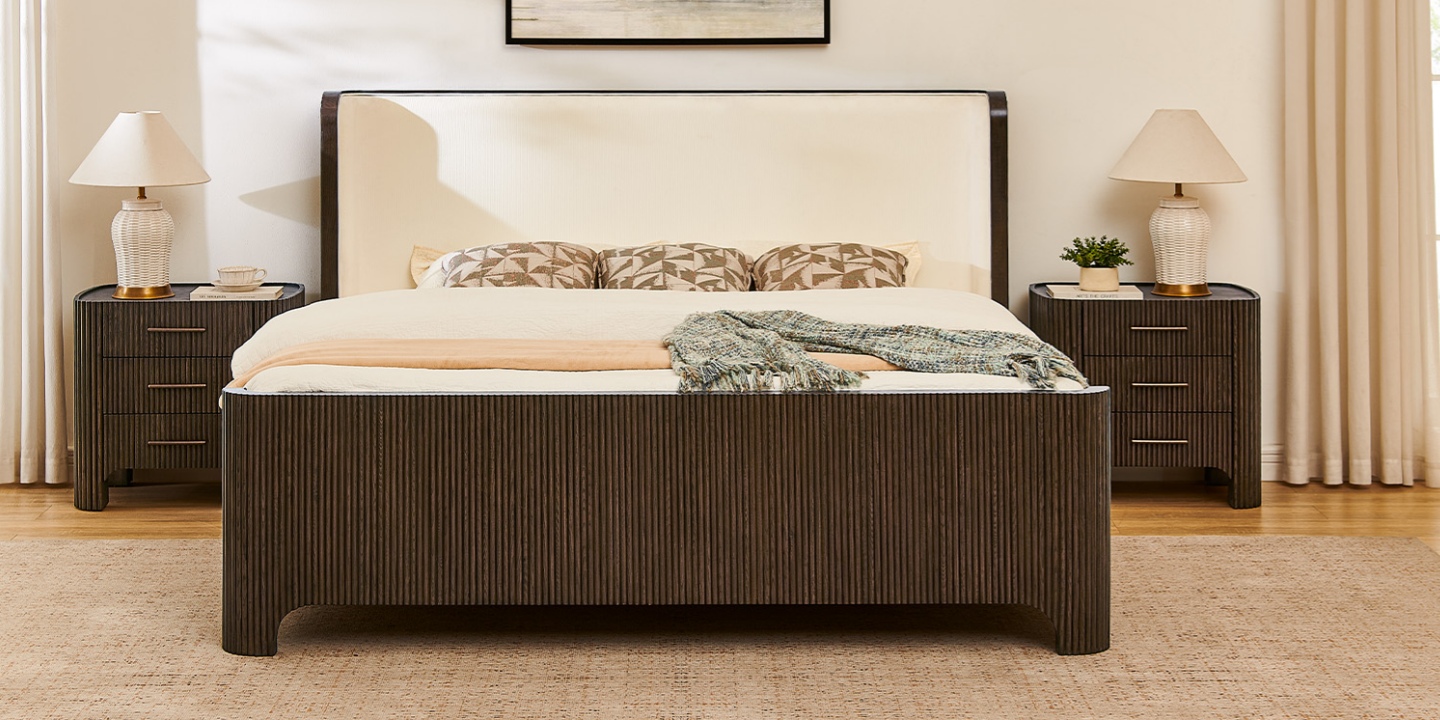
The Alexa Fluted Solid Oak Bed, for example, combines a substantial wood frame with an upholstered wingback headboard. Its design shows why the exterior footprint can differ from the 76 × 80-inch mattress inside it.
How Much Room Does a King Bed Frame Need?
Knowing the frame width is only half the equation. You also need enough space to walk around the bed and use the furniture beside it.
A practical starting point is:
24–30 inches of walking space on each side
About 36 inches at the foot of the bed
Enough additional room for nightstands, dressers, or other furniture to remain easy to access
For many layouts, a 12 × 12-foot bedroom can work for a king, while 12 × 14 feet gives you more flexibility for nightstands and other furniture.
The Clearance Math
For example, imagine an 80-inch-wide king frame with two 22-inch nightstands and 24 inches of clearance on each side:
80 + 22 + 22 + 24 + 24 = 172 inches
That's about 14.3 feet of wall width.
You don't necessarily need a 14.3-foot-wide room because furniture arrangements can vary, and smaller nightstands or different placement can reduce the total. But the calculation shows why a king that technically fits can still make a bedroom feel crowded.
Measure the wall, then sketch the bed and nightstands before buying.
Don't Forget the Rug
A 9 × 12-foot rug generally gives a king bed enough surrounding coverage to extend beyond the sides and foot of the bed.
An 8 × 10-foot rug can work when space is tighter, but it may leave less rug visible around the bed.
The rug doesn't determine whether the frame fits, but it can change how large the entire setup feels once everything is in place.
Will a King Bed Fit Through the Door?
This is one measurement people often forget.
Before buying a king frame, measure the delivery path—not just the bedroom.
Check:
Front and bedroom door widths
Hallway width
Staircase turns
Stair landing dimensions
Elevator openings, if applicable
Many modern bed frames arrive partially disassembled or flat-packed, which makes delivery easier. But the packaging still has to make it through the tightest point in the route.
A king mattress is also large and flexible but can still become difficult to maneuver through narrow stairways or sharp corners.
Measure the route before delivery day. It's much easier than discovering a beautiful king bed is waiting in the foyer because nobody measured the turn at the top of the stairs.
What Else Should You Check Before Buying a King Frame?
Once you've confirmed the footprint, there are a few practical details worth checking.
Center Support
A king mattress spans a wider area than a queen, so center support matters.
Look for a frame with a center rail and adequate support legs rather than relying only on the two outer side rails. The exact support configuration depends on the frame and mattress manufacturer.
Our featured king beds use six middle support legs to help distribute the load across the frame.
Slat Spacing
Slat spacing should match your mattress manufacturer's requirements, particularly with foam mattresses. Don't assume every mattress can sit on the same slat system.
Check the mattress warranty or manufacturer's specifications before choosing a frame.
Box Spring Compatibility
Not every king frame needs a box spring.
Platform beds and many modern wood frames are designed to support the mattress directly on slats. Other traditional designs may be intended for use with a box spring or foundation.
If you prefer a taller bed, check whether the frame is compatible with the foundation you plan to use.
Choosing a King Frame That Fits Your Room
Once the dimensions work, choose the frame based on how you want the bedroom to look and function.
If the bedroom already feels visually crowded, a lighter frame profile can keep the bed from overwhelming the space. Tapered legs, slimmer rails, or an open headboard can make a large bed feel less imposing.
In a larger room, a deeper frame, substantial headboard, or footboard can give the bed more presence without making the proportions feel cramped.
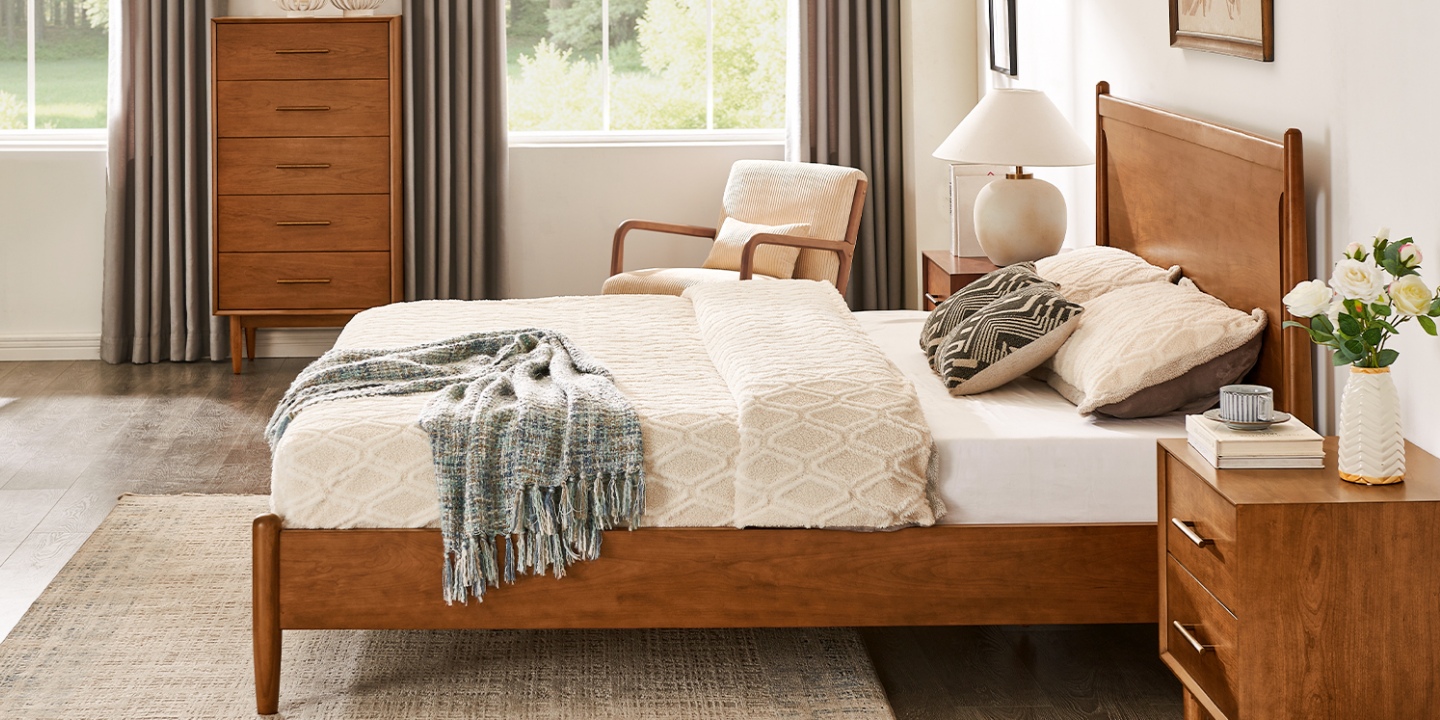
The Kaden Mid-Century Bed, for example, uses tapered legs and an openwork headboard to create a lighter profile while still accommodating a king mattress.
The key is to compare the actual exterior dimensions with your room measurements before you decide on the style.
You can browse Hernest beds and compare the listed dimensions to see how different king frame designs use the same mattress footprint.
When Is a King Bed the Right Choice?
A king makes sense when two people share the bed and want more personal sleeping space, when you regularly let a pet or child join you, or when your bedroom has enough floor area to accommodate the larger frame comfortably.
A queen may be the better option if your bedroom is small, your furniture already fills most of the available floor space, or you move frequently and want something easier to handle.
If you're tall and find yourself running out of legroom on a standard king, a California king may be worth considering instead.
Measure the room, check the delivery path, and compare both against the frame's actual exterior dimensions. Once those numbers work, the rest comes down to how you want the bed to look and function.
FAQs
How much wider is a king bed frame than a queen?
A king mattress is 16 inches wider than a queen. The frame difference is usually similar, but the exact number depends on the construction and exterior dimensions of each frame.
Are all king bed frames the same size?
No. All standard U.S. king frames are designed around a 76 × 80-inch mattress, but their exterior dimensions vary. Upholstery, side rails, headboards, footboards, and other design features can all change the footprint.
How wide is a standard king bed frame in feet?
Most standard king frames are about 78 to 81 inches wide, which is roughly 6.5 feet. Use the manufacturer's exterior width when planning your room.
How much bigger is a king bed frame than the mattress?
It varies by design. Slim frames may add only a small amount around the mattress, while upholstered or heavily built frames can add several inches. Always check the listed exterior dimensions.
What's the difference between a king and a California king bed frame?
A standard king is wider, while a California king is longer. The mattresses are 76 × 80 inches and 72 × 84 inches respectively, so the frame dimensions follow those different proportions.
What size room do I need for a king bed frame?
For many layouts, a 12 × 12-foot room can work for a king, while 12 × 14 feet provides more flexibility for nightstands and other furniture. Aim for roughly 24–30 inches of walking space beside the bed and about 36 inches at the foot.
Do I need a box spring with a king bed frame?
Not necessarily. Many platform and slatted king frames support the mattress without a box spring, while some traditional frames require a foundation. Check the frame and mattress manufacturer's requirements before buying.