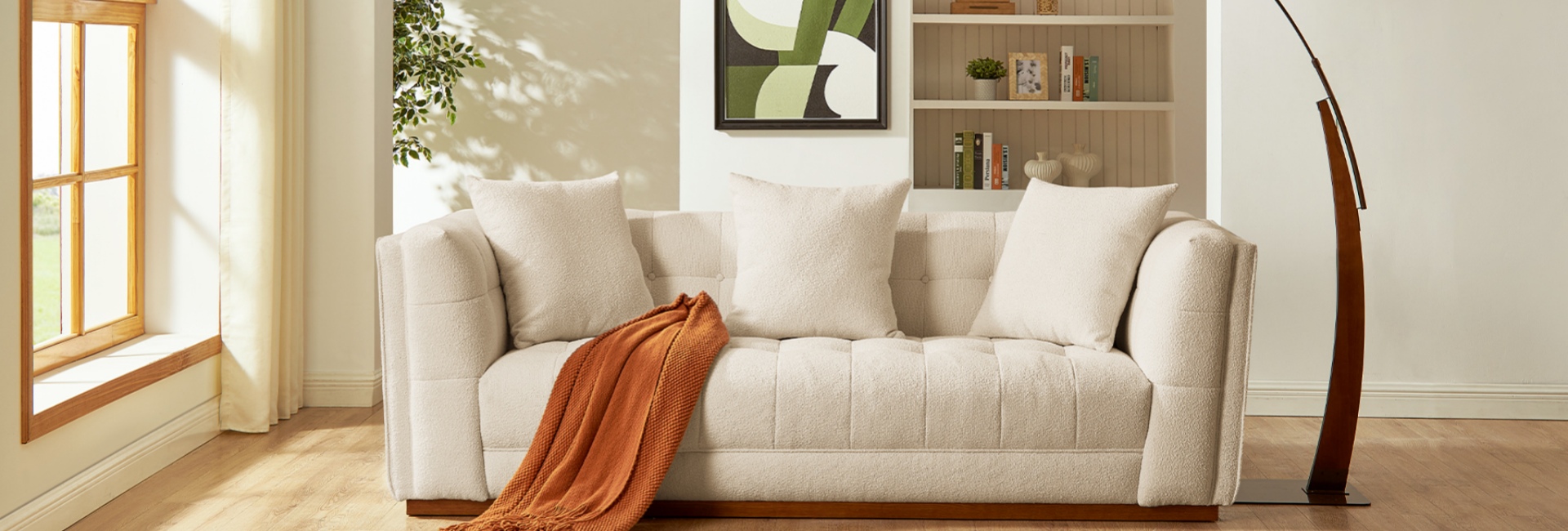
When shopping for living room furniture, you may see the same type of seating described as a sofa or a couch. Does the name tell you anything about its size, comfort or design?
In most cases, sofa and couch mean the same thing: an upholstered seat with a back and usually arms, designed for two or more people. The words can carry slightly different associations, but neither term guarantees a particular shape, level of formality or construction.
If you're choosing new living room seating, the more useful questions are how much space you have, how you like to sit, how many people need a seat and which features suit your routine. Here's how to compare your options and choose the right one.
Table of Contents
- Sofa vs Couch: What's the Difference?
- Sofa vs Couch: Which Features Actually Matter?
- Sofa and Couch Sizes: How Much Space Do You Need?
- Sofa vs Couch Comfort: Seat Depth, Cushions and Support
- Sofa, Couch or Sectional: Which Layout Works Best?
- Do You Need a Regular Sofa or a Power Sofa Bed?
- Other Living Room Seating Terms Worth Knowing
- How to Choose the Right Sofa or Couch for Your Home
- Final Thoughts
- FAQs
Sofa vs Couch: What's the Difference?
In everyday, sofa and couch are largely interchangeable. The Cambridge Dictionary's definition of sofa lists couch as a synonym, and its definition of couch identifies a sofa as one of its meanings.
Some shoppers use sofa when discussing a more formal living room or a coordinated furniture set. Others say couch when talking about everyday lounging, watching TV or spending time with family. These are common associations, not reliable rules for identifying a piece of furniture.
A sofa can be deep and relaxed, while a couch can have a tailored silhouette and firm cushions. The name alone won't tell you whether a seat is supportive, oversized, modular or suitable for a smaller room.
Where Do the Words Come From?
The terms have different histories. Sofa entered English through Turkish, from Arabic suffah, referring to a bench or raised seating area. The word couch traces back through Old French couche and coucher, terms associated with lying down or resting.
These origins help explain why the words developed different associations over time. They don't, however, establish a modern furniture-design distinction. When you're comparing products, dimensions, construction and features are much more useful than the label.
Sofa vs Couch: Which Features Actually Matter?
Instead of choosing based on the name, compare the details that affect how a piece will work in your home.
Two products both called sofas may feel completely different once you sit down. A compact, upright model may suit a formal sitting area, while a deeper design may work better for movie nights. Neither is inherently better; the right choice depends on how you use the room.
Sofa and Couch Sizes: How Much Space Do You Need?
Furniture dimensions are more useful than the distinction between sofa and couch when you're planning a room. As a general shopping guide, a loveseat is often around 48–72 inches wide, a standard three-seat sofa around 72–96 inches, and a larger sofa may measure 90 inches or more. These ranges overlap and are not fixed industry standards, so always check the actual product dimensions.
Width is only part of the picture. A deep sofa can take up substantial floor space even if its width looks manageable online. Seat depth also affects comfort: a deeper seat may suit lounging, while a shallower seat can make it easier to sit upright with your feet on the floor.
Before you buy, measure the available area and consider the following:
-
Room clearance: Leave enough space to walk around the furniture and reach nearby doors, windows and storage.
-
Coffee table spacing: Make sure the table remains easy to reach without blocking the main walkway.
-
Delivery access: Measure doorways, hallways, staircases and tight turns, not just the room where the sofa will sit.
-
Furniture proportions: Compare the sofa's height and depth with nearby chairs, tables and other pieces.
For more options across different sizes and configurations, browse Hernest Sofas and Loveseats.
Sofa vs Couch Comfort: Seat Depth, Cushions and Support
Comfort depends on a combination of seat dimensions, cushion materials, back support and personal preference. The word sofa doesn't mean a seat is firmer or more formal, just as couch doesn't guarantee a soft, oversized design.
Choose a Seat Depth That Fits How You Sit
If you usually sit upright while reading, talking or working on a laptop, check that the seat depth allows you to sit comfortably without feeling that the seat pushes against the backs of your knees. If you like stretching out or sitting with your legs tucked up, a deeper seat may feel more accommodating.
Your height matters, too. A seat that feels roomy to one person may be awkward for another. When possible, try the furniture in person. If you're shopping online, review the listed seat depth and height rather than relying on lifestyle photos alone.
Look Beyond the Upholstery
Fabric affects the feel and maintenance of a sofa, but it isn't the only factor that determines comfort. Cushion filling, suspension, frame construction and cushion shape all play a part.
For example, the Rufus 92-Inch Sofa features Juniper chenille upholstery, rounded cushions and channel-tufted detailing. Its product specifications list fiber-wrapped high-resiliency polyurethane foam, sinuous spring suspension and reinforced elastic webbing. The upholstery also has a spill- and stain-resistant surface treatment designed to simplify routine care.
When comparing sofas, look for specific material and construction details like these. They provide a clearer picture of the product than a general description such as “soft,” “cozy” or “luxurious.”

Rufus 92-Inch Sofa
View Product
Sofa, Couch or Sectional: Which Layout Works Best?
A standard sofa usually works well when you want one main seating piece and a straightforward layout. A loveseat can fit a smaller room or complement a larger sofa. A sectional provides more continuous seating and can help define a larger living area.
Modular seating adds another option: individual pieces can be arranged to suit the available space. This can be useful if you expect your layout to change or want more flexibility than a fixed sofa provides.
The Solsta Left Arm Modular Sectional Sofa is one example. Its configuration includes an ottoman, a corner chair, two armless chairs, and a left-arm chair. The product measures 102 inches wide by 94 inches deep by 33 inches high, with a seat depth of 27.5 inches. Its frame combines solid ash wood and plywood, and it features chenille upholstery.
The generous footprint means it's important to check the available floor space before choosing this type of arrangement. Measure the full proposed configuration, including the ottoman, and confirm that the layout leaves enough room to move around.
If you need more seating or want to explore different configurations, browse Hernest Sectional Sofas.
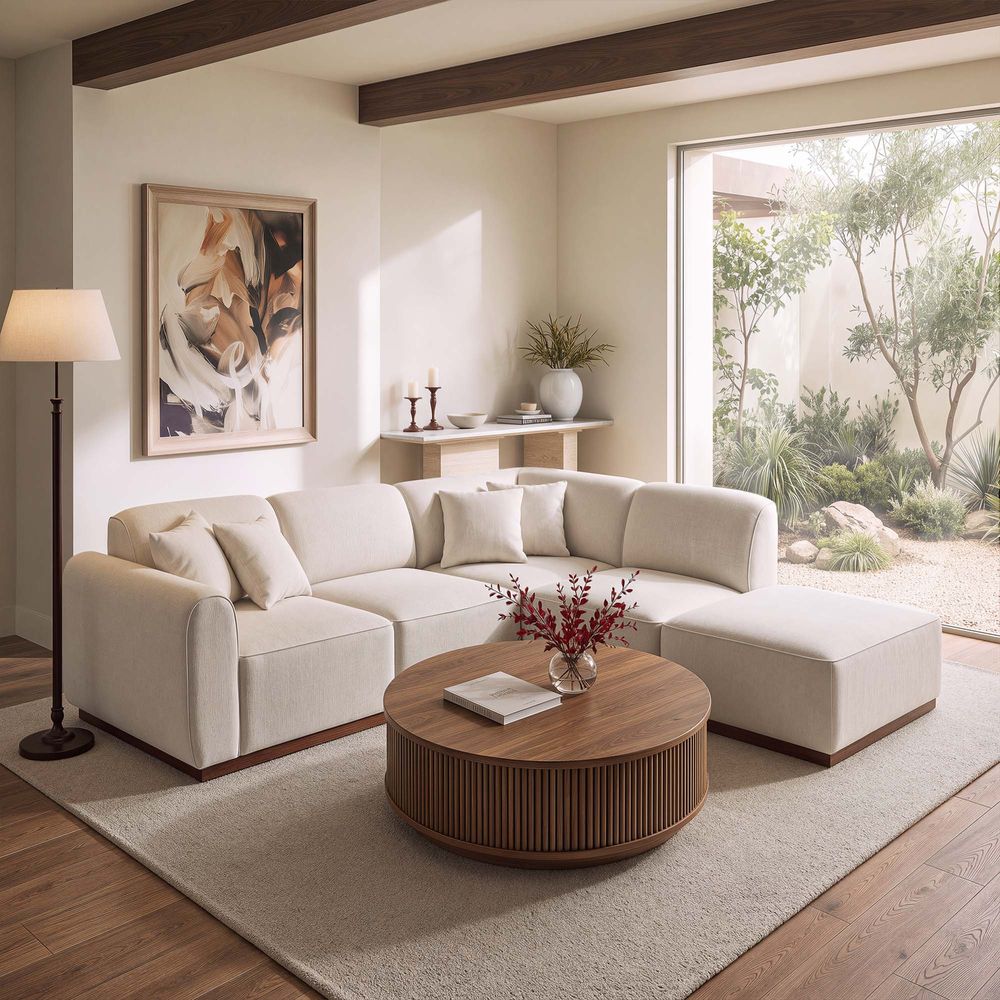
Solsta Left Arm Modular Sectional Sofa
View Product
Do You Need a Regular Sofa or a Power Sofa Bed?
Some sofas focus on straightforward seating, while others add features designed for lounging or occasional sleeping. If you're comparing a regular sofa with a power sofa bed, pay close attention to how the mechanism works. Products that use similar names may offer different functions.
A power sofa bed can use a motorized mechanism to extend part of the seating area. This is different from a traditional pull-out sleeper sofa that unfolds a separate mattress from inside the frame. A powered extension may create a longer surface for stretching out or lying down, but it should not automatically be treated as a separate mattress or a conventional pull-out bed.
The Warren 91-Inch Power Sofa Bed is an example of a powered design. Its motorized lower section extends outward to create more room to lounge or lie down. The mechanism should not be confused with a traditional fold-out mattress, and it does not adjust the backrest into a reclined position.
Before buying a multifunctional model, ask yourself:
-
Do you mainly want more room to stretch out while watching TV?
-
Do you need a larger surface for occasional lounging or sleeping?
-
Do overnight guests need a dedicated mattress?
-
Is a powered mechanism useful for your daily routine, and do you have enough clearance for its moving parts?
If you need a dedicated mattress or a traditional pull-out sleeper, verify that the specific model includes that mechanism. A powered seat extension is a different design and may not meet the same needs.
You can compare available options in Hernest Power Sofa Beds, checking each product's specifications and operating mechanism before making a decision.
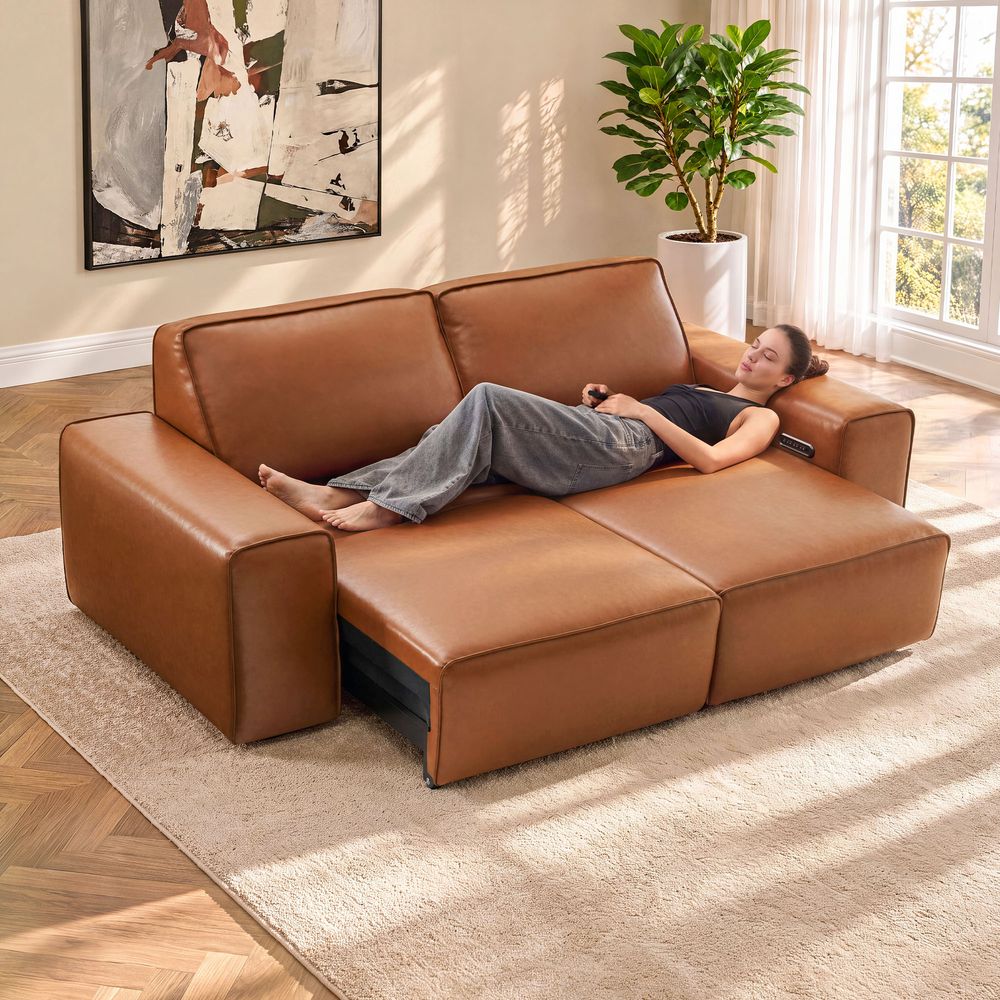
Warren 91-Inch Power Sofa Bed
View Product
Other Living Room Seating Terms Worth Knowing
While sofa and couch are generally interchangeable, other furniture terms can refer to more specific forms or arrangements.
-
Loveseat: A compact sofa designed for two people, often used in smaller rooms or alongside a larger sofa.
-
Sectional: A multi-part seating arrangement that typically forms an L or U shape. Some sectionals use modular pieces that can be rearranged.
-
Settee: A term often used for a smaller or more traditional upholstered seat, although its meaning can vary by retailer and style.
-
Chesterfield: A recognizable sofa style often associated with deep button tufting and rolled arms. The term describes a design tradition, not a separate category based on size.
-
Divan: A type of upholstered seating that may have a low profile and little or no back, depending on the design.
-
Daybed: A piece designed for both sitting and reclining, often with a shape that resembles a bed.
Retailers may use these terms differently, so review the product's photos, dimensions and description rather than assuming every item under a particular label has the same construction.
How to Choose the Right Sofa or Couch for Your Home
Once you've narrowed down the style, use these four questions to make the final decision.
1. How Will You Use It Most Often?
Think about your everyday routine. A sofa for entertaining may need supportive seats and a layout that encourages conversation. A family living room may call for durable upholstery and enough space for everyone to sit together. If you regularly stretch out to watch films, seat depth and overall length may matter more than a formal silhouette.
2. How Much Space Can You Give It?
Measure the room, check the full product dimensions and account for walkways. For a sectional, measure the entire arrangement rather than just one side. Also confirm that the furniture can get through your home's entrances and hallways.
3. What Materials and Maintenance Suit Your Household?
Consider how the upholstery will hold up to everyday use and how much maintenance you're willing to do. Different fabrics and finishes have different care requirements. Review the manufacturer's instructions and any stated stain-resistant treatment instead of assuming that all upholstery can be cleaned the same way.
4. Which Features Will You Actually Use?
A standard sofa may be all you need. A sectional may provide a more flexible layout, while a power sofa bed may offer an extended lounging surface.
The best choice is the one that fits your space, comfort preferences and routine—not the one marketed as a sofa rather than a couch.
Final Thoughts
When it comes to sofa vs couch, the name usually matters less than the furniture itself. Focus on dimensions, seating comfort, upholstery, layout and any features you plan to use. A well-chosen sofa, couch or sectional should fit your room and support the way you live every day.
FAQs
Is a sofa different from a couch?
The terms are generally interchangeable. Both usually refer to an upholstered seat with a back and enough room for two or more people. Some people associate sofa with a more formal setting and couch with casual lounging, but those associations are not strict design rules.
Is a couch more comfortable than a sofa?
Not necessarily. Comfort depends on the seat depth, cushion construction, back support, upholstery and your personal preferences. Compare the product's dimensions and materials, and test it in person if possible.
Is a sofa bigger than a couch?
No standard size difference separates the two. A sofa and a couch can be compact, oversized or designed for multiple people. Check the listed width, depth and height of each model before comparing options.
Should I choose a sofa, loveseat or sectional?
Choose based on the space available and the number of people you want to seat. A loveseat can suit a smaller room, a standard sofa works in many living spaces, and a sectional can provide more continuous seating in a larger area. Measure the full layout before buying.
Does a power sofa bed work like a pull-out sleeper sofa?
Not always. Some power sofa beds use a motorized lower section to extend the seating area for lounging or lying down. A traditional pull-out sleeper sofa unfolds a separate mattress. Check the mechanism and sleeping surface of the specific model to make sure it meets your needs.