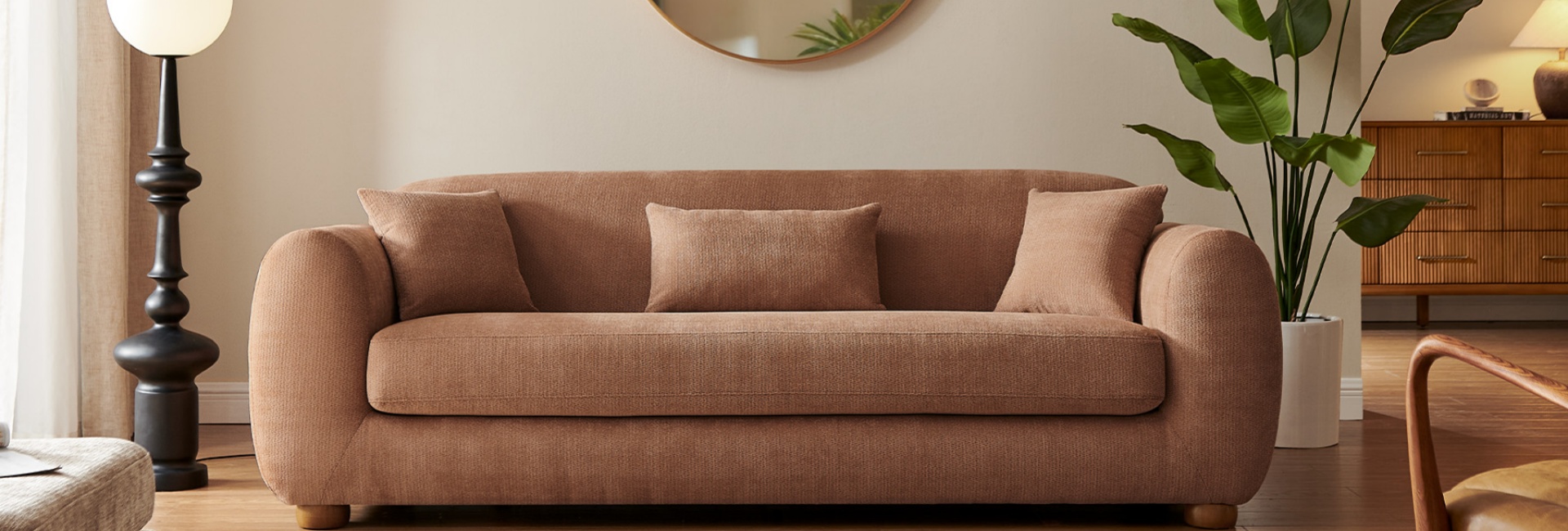
When choosing a sofa, the upholstery affects more than its appearance. It influences how the sofa feels, how you clean it, and how well it suits your household's daily routine.
In the leather vs fabric sofa debate, leather appeals to buyers who prefer a smooth finish and relatively straightforward surface cleaning. Fabric offers more variety in texture, color, and pattern. Neither material is automatically more durable or comfortable; performance depends on the specific upholstery, construction, and care it receives.
It is also important to distinguish genuine leather from microfiber leather. Genuine leather is made from animal hide, while microfiber leather is a synthetic upholstery material with different characteristics and care requirements.
This guide compares leather and fabric sofas across durability, comfort, cleaning, pets, cost, and room conditions to help you choose the right option for your home.
Table of Contents
- Leather vs Fabric Sofas: A Side-by-Side Comparison
- Which Sofa Lasts Longer, Leather or Fabric?
- Are Leather Sofas More Comfortable Than Fabric Sofas?
- Leather vs Fabric Sofa: Cleaning and Maintenance
- Pros and Cons of Leather Sofas
- Why Fabric Sofas Appeal to Comfort and Style
- Which Sofa Is Better for Pets and Allergies?
- Leather vs Fabric Sofa: How to Compare Long-Term Cost
- How Room Conditions Affect Your Sofa Choice
- How to Choose the Right Sofa for Your Home
- Find the Right Sofa for Your Lifestyle at Hernest
- FAQs
- Which sofa is better, leather or fabric?
- Does leather furniture work with modern interiors?
- How long does a leather sofa last?
- Are leather sofas easier to clean than fabric sofas?
- Which sofa material is better for pets?
- Are leather sofas better for people with allergies?
- Is microfiber leather the same as genuine leather?
- How much does a leather sofa cost compared with a fabric sofa?
- What should I check before buying a sofa online?
Leather vs Fabric Sofas: A Side-by-Side Comparison
These are general tendencies, not guarantees. A particular fabric may be easier to maintain than a poorly finished leather-like material, and a well-constructed fabric sofa may outlast a lower-quality leather sofa.
Which Sofa Lasts Longer, Leather or Fabric?
A sofa's lifespan depends on several components: the frame, suspension, seat cushions, seams, upholstery quality, and how often the sofa is used. The material alone cannot predict how many years a sofa will last.
Leather sofa durability
Genuine leather can develop a patina over time, changing in appearance as it is used. Some buyers appreciate this natural aging, while others prefer upholstery that maintains a more uniform appearance.
Performance also varies by leather type and finish. Some surfaces show scratches or scuffs readily, and unsuitable cleaning products can damage the finish. Bonded leather and other materials made with surface layers may peel as those layers deteriorate.
Microfiber leather is different from genuine leather. Its durability depends on the backing, surface coating, manufacturing quality, and care instructions. A leather-like appearance does not by itself indicate how well the material will perform over time.
Fabric sofa durability
Fabric upholstery includes a wide range of materials, from delicate decorative textiles to tightly woven fabrics intended for regular use. Depending on the material, a fabric sofa may develop pilling, fading, loose threads, or visible wear in frequently used areas.
If you are comparing fabric sofas, look for information about the upholstery composition, cleaning requirements, and abrasion-test results when available. The Association for Contract Textiles' abrasion guidance explains that abrasion results alone do not predict overall upholstery durability. Cleaning, maintenance, application, and other types of wear also matter.
Why construction matters as much as upholstery
Before choosing either material, review the frame, suspension, and cushion construction. A sofa with suitable materials and sound construction is generally a more sensible long-term choice than one selected for upholstery alone.
Check the manufacturer's specifications and warranty, and consider how much daily use the sofa will receive. A main living room sofa used for hours every day has different demands from occasional seating in a guest room.
Are Leather Sofas More Comfortable Than Fabric Sofas?
Comfort is subjective. Some people prefer leather's smooth surface, while others enjoy the softer, more varied feel of fabric.
Temperature and texture
Leather responds to its surroundings. It may feel cool when you first sit down in a chilly room and warm up with body contact. In hot conditions, some leather finishes can feel sticky against bare skin.
Fabric offers more textural choices. Chenille can feel soft and plush, while linen-like and other woven upholstery may feel drier or more structured. However, breathability varies by fiber, weave, backing, and construction, so fabric is not automatically cooler in every environment.
Seat design makes a difference
Seat depth, cushion firmness, back support, and the shape of the sofa can have as much influence on comfort as the upholstery itself.
For example, the Frosta 91-Inch Sofa features Sirocco chenille upholstery, a rounded silhouette, and cushions made with high-resiliency polyurethane foam. With a 26-inch seat depth, it may appeal to those who prefer a deeper, more relaxed seating position.
Before buying, compare the dimensions and cushion details with your own preferences. If possible, try the sofa in person. When shopping online, use the measurements and product specifications rather than relying on photos alone.

Frosta 91-Inch Sofa
View Product
Leather vs Fabric Sofa: Cleaning and Maintenance
Cleaning requirements can influence how satisfied you feel with a sofa after months or years of everyday use. The right choice depends on the types of messes you encounter and the amount of maintenance you are willing to do.
Cleaning leather and microfiber leather
Many finished leather surfaces are relatively easy to wipe clean when small spills occur. Use a soft cloth and follow the manufacturer's care instructions. Avoid assuming that a household cleaner or leather conditioner is suitable for every finish.
Genuine leather may require a compatible conditioner, depending on its type and finish. Microfiber leather has different material properties, so it should be cleaned according to its own instructions rather than automatically treated like genuine leather.
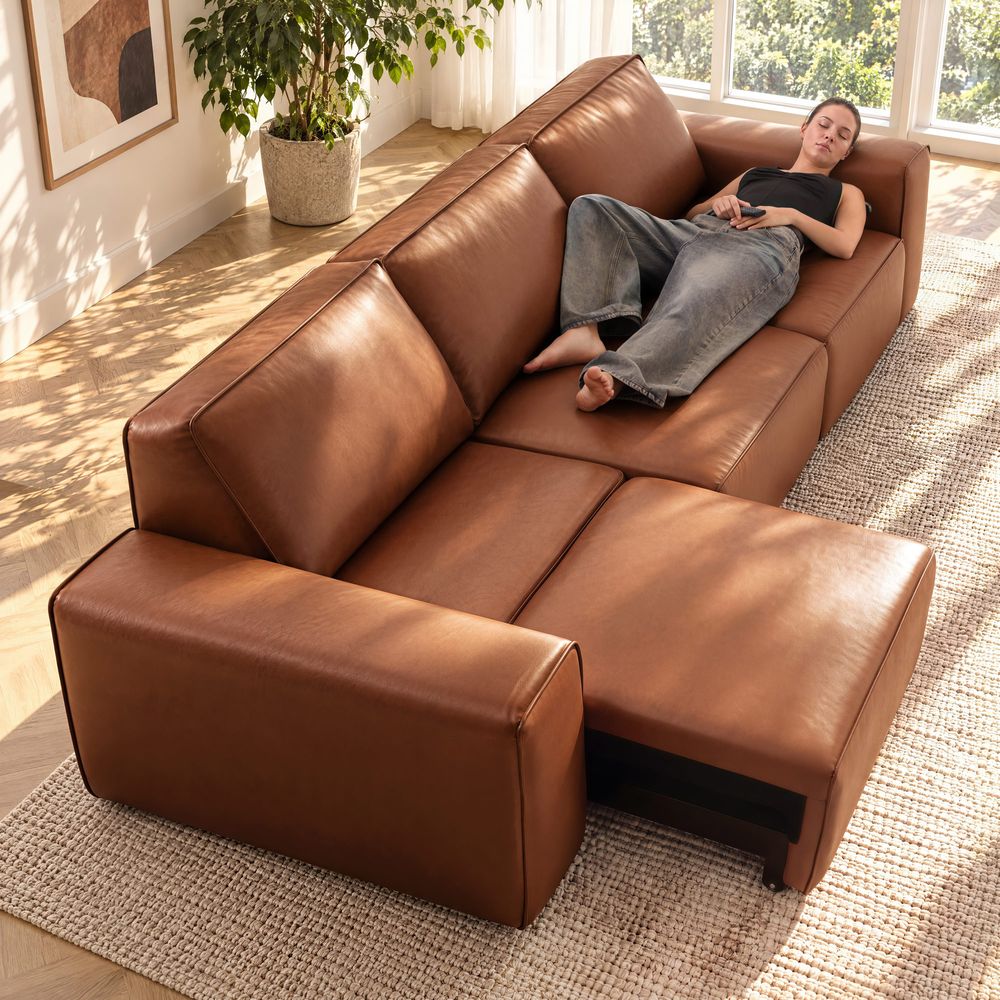
The Warren 124-Inch Power Sofa Bed is upholstered in Nut microfiber leather, described as water- and stain-resistant. Its power-operated seat extension and protective guard beneath the moving seat area add practical features for everyday use.
These features may be useful in a busy household, but water- and stain-resistant does not mean completely waterproof or maintenance-free. Follow the product's cleaning guidance and address spills promptly.
Cleaning fabric upholstery
Fabric sofas generally benefit from regular vacuuming to remove loose dirt, crumbs, and pet hair. For spills, use the cleaning method recommended for the particular fabric.
Some upholstery has a surface treatment designed to repel everyday spills, while other fabrics rely on prompt cleaning and careful maintenance. A removable cover can make access easier, but it does not necessarily mean the cover is machine-washable.
The Rufus 92-Inch Sofa features Juniper chenille upholstery with a surface treatment designed to resist spills and simplify routine cleaning. Its rounded cushions and channel-tufted detailing also add texture and visual interest to the design.
The Frosta 91-Inch Sofa has cushion covers that unzip and can be removed. Check the product's care instructions before washing them; removable covers should not automatically be assumed to be machine-washable.
For either material, the most useful question is not simply which sofa is easier to clean. It is whether the recommended care method fits your household and whether you can maintain it consistently.

Rufus 92-Inch Sofa
View Product
Pros and Cons of Leather Sofas
Leather can work well for buyers who prefer a smooth surface and a distinctive finish, but it has limitations worth considering.
Pros
-
Many finished surfaces are easy to wipe clean.
-
Quality genuine leather can develop a distinctive patina.
-
Pet hair is often easier to remove from smooth upholstery.
-
Available in a range of colors and finishes.
-
Can complement modern, minimalist, and mid-century-inspired interiors.
Cons
-
Quality genuine leather often has a higher initial cost.
-
Some finishes show scratches and scuffs readily.
-
The surface may feel cool or sticky depending on room conditions.
-
Cleaning methods must match the specific material.
-
Genuine leather is animal-derived, which may not suit every buyer's preferences.
If you prefer the look of leather, check whether a sofa uses genuine leather, microfiber leather, bonded leather, or another material. These terms describe different constructions and should not be treated as interchangeable.
Why Fabric Sofas Appeal to Comfort and Style
Fabric upholstery gives you more ways to shape the look and feel of a living room. Weave, texture, color, and pattern can change the character of a sofa even when its overall shape remains similar.
Color and texture create different looks
A green chenille sofa can become a focal point in a neutral room, while a lighter woven fabric can create a more understated look. Textured upholstery can also coordinate with rugs, curtains, and accent pillows.
The Rufus 92-Inch Sofa is one option for buyers who want color and texture to play a prominent role. Its Juniper chenille upholstery and rounded, channel-tufted form give it a distinctive look.
For a softer, more relaxed silhouette, the Frosta 91-Inch Sofa offers Sirocco chenille upholstery and curved lines. Its listed dimensions are 91 inches wide by 37.4 inches deep, making those measurements useful to check against your room layout before ordering.
Choose fabric for your actual routine
Fabric can be practical for everyday seating when its construction and care requirements suit your needs. If you have children or pets, review the weave, surface treatment, and cleaning instructions rather than assuming every chenille or woven fabric performs the same way.
To compare different seating sizes, silhouettes, and upholstery options, browse Hernest's sofas and loveseats collection.
Which Sofa Is Better for Pets and Allergies?
Pets change the way you evaluate upholstery. Shedding, muddy paws, claws, and everyday accidents can all influence which material is most practical for your household.
Consider shedding and claw damage
Smooth leather and microfiber leather surfaces can make loose pet hair easier to remove. However, some finishes show scratches, and repeated claw contact can leave visible marks.
Fabric can hold hair within textured weaves, and some textiles are vulnerable to snagging. A tightly constructed fabric may be worth considering, but no upholstery should be assumed to resist every pet-related form of wear.
Think about your pet's behavior, not just its size. A dog that sheds heavily but rarely scratches furniture presents different challenges from a cat that regularly climbs or sharpens its claws on upholstery.
Regular grooming, suitable throws, and prompt cleaning can help protect either material.
What about dust mites and allergies?
Smooth upholstery may be easier to wipe down than a deeply textured surface, but leather does not eliminate pet dander, dust mites, or other household allergens.
The Mayo Clinic's guidance on reducing household allergens discusses household cleaning and other measures for managing common allergens. Upholstery is just one part of the overall indoor environment.
If someone in your home has allergies, consider how easily the sofa can be cleaned, whether compatible covers can be washed, and how the furniture fits into your regular cleaning routine. Do not rely on the upholstery material alone to prevent allergy symptoms.
Leather vs Fabric Sofa: How to Compare Long-Term Cost
Genuine leather often has a higher initial cost, while fabric sofas span a broad range of price points. However, the purchase price alone cannot tell you which option will provide better value.
One simple way to compare options is to divide the purchase price by the number of years you expect to use the sofa. For example, a sofa costing $1,200 that is used for 10 years has an average purchase cost of $120 per year, before maintenance or other expenses. A $700 sofa used for seven years averages $100 per year on the same basis.
These are illustrative calculations, not predictions of either sofa's lifespan. Actual value depends on construction, material quality, use, maintenance, and repair needs.
Before buying, consider:
-
Initial cost: Does the sofa fit your budget?
-
Expected use: Will it be your main seating every day or occasional seating?
-
Maintenance: What cleaning products or services may be required?
-
Construction: Are the frame, cushions, and suspension suited to your intended use?
-
Warranty: Which parts are covered, and for how long?
A well-constructed fabric sofa may be a better investment than a poorly made leather sofa. Compare the complete product rather than assuming that a more expensive upholstery material always offers better value.
How Room Conditions Affect Your Sofa Choice
Temperature, sunlight, and humidity can influence comfort and upholstery care.
In a warm room, some leather-like surfaces may feel sticky against bare skin, while certain fabrics offer a softer feel. In a cooler room, smooth upholstery may feel chilly at first. The experience varies with the material, finish, and indoor conditions.
Sunlight also matters. Prolonged direct exposure can fade many fabrics and affect some leather finishes. Excess moisture and poor ventilation can create problems for upholstery and other furniture materials.
To help keep either type of sofa in good condition:
-
Avoid prolonged direct sunlight.
-
Maintain reasonable indoor humidity.
-
Clean spills promptly using the recommended method.
-
Leave adequate space around furniture.
-
Follow the manufacturer's care instructions for the specific upholstery.
Room conditions should be one part of your decision, alongside comfort, maintenance, and how the sofa will be used.
How to Choose the Right Sofa for Your Home
Before making a final decision, consider these five practical questions.
1. What is your budget?
Set a realistic spending limit, then compare upholstery quality, construction, dimensions, and warranty coverage. A lower purchase price is useful only if the sofa also meets your needs.
2. Who will use the sofa?
A household with children, pets, or frequent guests may prioritize easy cleaning and durable construction. A sofa used occasionally in a spare room may have different requirements.
3. Which upholstery do you prefer?
Choose genuine leather or microfiber leather if you prefer a smooth finish and convenient surface cleaning. Choose fabric if texture, color variety, and a soft feel are higher priorities. Compare the actual materials rather than relying on broad labels.
4. Does the sofa fit your room and routine?
Measure the room, doorway, and delivery route before ordering. Check seat depth and overall width, and leave sufficient clearance for any moving or extending components.
5. Have you checked the care instructions?
Confirm how to clean the upholstery, which products to avoid, whether covers are removable, and what the warranty covers. These details can have a meaningful impact on long-term satisfaction.
If you are considering a sofa with a power-operated extending seat, explore Hernest's Power Sofa Beds collection and check each model's listed features.
Warren 124-Inch Power Sofa Bed
View Product
Find the Right Sofa for Your Lifestyle at Hernest
The best sofa material is the one that suits your everyday routine, comfort preferences, and expectations for maintenance.
Genuine leather may appeal to buyers who value its distinctive aging process and smooth surface. Microfiber leather offers a leather-like appearance with different material characteristics, while fabric provides a broad choice of colors, textures, and finishes.
Start with how you live: consider pets, cleaning habits, room conditions, and how often you use your seating. Then compare the actual upholstery, construction, dimensions, and care instructions for the sofas you are considering.
Browse Hernest's sofa collection to compare seating configurations and upholstery styles, and choose an option that works for your space and daily life.
FAQs
Which sofa is better, leather or fabric?
Neither material is universally better. Leather is often easier to wipe clean and can develop a distinctive patina, while fabric offers more colors, textures, and soft-touch options. The right choice depends on upholstery quality, construction, pets, maintenance habits, and budget.
Does leather furniture work with modern interiors?
Yes. Leather can complement modern and mid-century-inspired interiors, depending on its color, finish, and the sofa's shape. Neutral finishes can create a restrained look, while darker or richer colors can add contrast. Fabric is also versatile and offers more choices in patterns and textures.
How long does a leather sofa last?
There is no single lifespan that applies to every leather sofa. Longevity depends on the leather type, finish, frame, cushion construction, frequency of use, and care. Review the product specifications and warranty rather than relying on a fixed lifespan estimate.
Are leather sofas easier to clean than fabric sofas?
Many finished leather and microfiber leather surfaces are relatively easy to wipe clean, while fabric often needs regular vacuuming and material-specific spot cleaning. Actual performance varies, so follow the cleaning instructions for the specific sofa.
Which sofa material is better for pets?
Smooth leather-like upholstery can make loose hair easier to remove, but claws may scratch some surfaces. Fabric can trap hair or snag, depending on the weave. Consider your pet's behavior, upholstery construction, and cleaning requirements before choosing.
Are leather sofas better for people with allergies?
Smooth surfaces may be easier to wipe down than textured upholstery, which can help with routine dust and pet-hair removal. However, no sofa material eliminates household allergens. Regular cleaning and appropriate allergy-management measures remain important.
Is microfiber leather the same as genuine leather?
No. Genuine leather is made from animal hide, while microfiber leather is a synthetic upholstery material. Their construction, care requirements, and performance differ, so check the product specifications to confirm which material a sofa uses.
How much does a leather sofa cost compared with a fabric sofa?
Genuine leather sofas often have a higher initial cost, but prices vary with material quality, construction, size, and design. Compare the purchase price, expected use, maintenance needs, and warranty to assess overall value.
What should I check before buying a sofa online?
Review the upholstery material, overall dimensions, seat measurements, frame and cushion specifications, cleaning instructions, warranty terms, and delivery access requirements. If the sofa has a power-operated extension, check how the mechanism works and how much clearance it needs.