A dining table needs to do more than look good in a showroom. It should handle daily meals, homework, family gatherings, and the occasional spill without becoming difficult to maintain. If you're shopping for a durable dining room table, focus on the tabletop material, protective finish, frame construction, and how the table will be used in your home.
No single material is best for every household. Sintered stone and other engineered surfaces may be practical for people who prioritize stain resistance and easy cleanup, while solid wood offers natural grain and can often be refinished. Marble brings distinctive veining but requires more careful maintenance.
This guide explains what to compare before buying, how different materials perform, and which features are worth prioritizing for long-term use.
Table of Contents
- What Makes a Dining Room Table Durable?
- Which Dining Table Materials Resist Scratches Best?
- Scratch-Resistant Does Not Mean Scratch-Proof
- How Does the Finish Affect Dining Table Durability?
- How to Spot a Durable Dining Room Table Before Buying
- Which Durable Dining Table Should You Choose?
- Stone Tabletops for Busy Weeknights
- Is Marble a Durable Choice for a Dining Table?
- Everyday Habits That Help Protect a Dining Table
- FAQs
- What is the most durable material for a dining room table?
- Are sintered-stone dining tables scratch-proof?
- Is solid wood more durable than engineered stone?
- Does a thicker tabletop mean a more durable table?
- Can I put hot pots and pans directly on a dining table?
- Is marble too delicate for everyday dining?
- How can I prevent scratches on my dining table?
- Are round dining tables durable?
- Are extendable dining tables durable enough for daily use?
- What should I check before buying a durable dining table?
What Makes a Dining Room Table Durable?
A dining table's durability depends on more than its tabletop. Four factors deserve attention before you buy.
-
Surface resistance: Consider how well the top handles everyday scratches, spills, and contact with dishes or serving items.
-
Finish and maintenance: Some finishes need more careful cleaning or periodic maintenance than others. Follow the care instructions for the specific material.
-
Base and joints: A stable base, secure connections, and well-fitted components help the table remain steady during everyday use.
-
Construction and intended use: Materials, weight capacity, extension mechanisms, and overall dimensions all affect how a table performs in your home.
Think about your daily routine, too. A household with young children may prioritize easy cleanup and a surface that tolerates frequent use. Someone who loves natural wood grain may prefer a wood table and be comfortable protecting it from moisture and heat.
The most durable choice is the one that suits both your space and your maintenance habits.
Which Dining Table Materials Resist Scratches Best?
Different materials respond differently to scratches, heat, moisture, and impact. The table below offers a practical starting point, but performance also depends on the product's exact composition, finish, and care requirements.
Sintered Stone and Engineered Surfaces
Sintered stone is worth considering if you want a contemporary tabletop that can handle many common dining-room messes. It is generally resistant to scratches, stains, and heat, although it is not indestructible. A hard impact can still damage an edge, and the care instructions for the specific table should take priority.
Engineered stone is a broader category, so don't assume every product has the same performance characteristics. Check the manufacturer's material description and maintenance recommendations rather than judging by appearance alone.
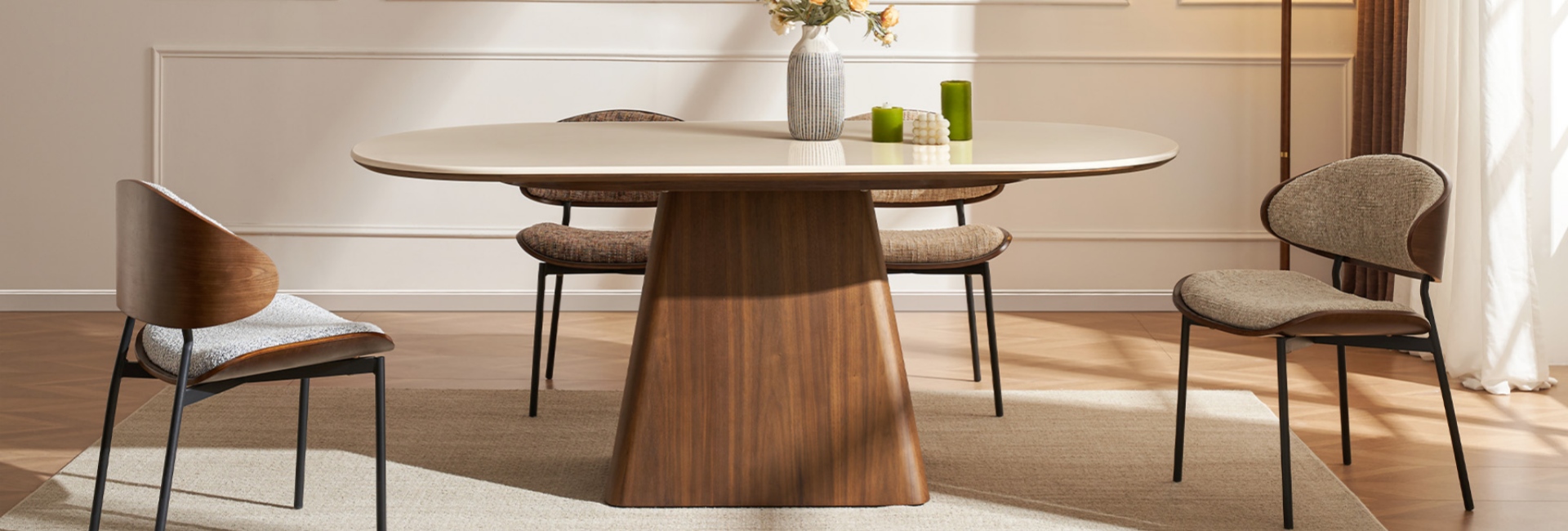
For example, the Thorsten 72-Inch Oval Dining Table offers a sintered-stone tabletop with an engineered-wood base finished in American walnut veneer. Its oval shape provides a softer outline than a rectangular table while accommodating a dining area that needs room for several people.
Solid Wood and Wood Veneer
Solid wood is a strong option for buyers who value natural character and a material that may be repairable or refinishable, depending on its construction and finish. Oak, walnut, and other hardwoods are often used for dining furniture, but species alone doesn't determine how a finished table will withstand daily use.
The finish matters. A well-maintained protective finish can help limit moisture penetration and surface marks, but it won't make wood immune to scratches, dents, or heat. Wipe up spills promptly, use coasters, and avoid dragging heavy objects across the tabletop.
Wood veneer offers a similar visual appeal through a thinner layer of real wood applied to a supporting material. It can be a practical choice, but deep damage may be harder to repair than on solid wood. Check the product specifications to understand which parts are solid wood, veneer, or another material.
The Valo 72"-92" Extendable Dining Table combines American solid oak and plywood with oak veneers. Its two self-storing extension leaves let you expand the table when you need more seating, making it worth considering for households that host guests but don't always need a larger tabletop.
Marble and Glass
Marble is chosen for its natural pattern and distinctive surface, not because it is maintenance-free. It can be vulnerable to etching from acidic foods and drinks, including citrus juice and vinegar. A sealed surface can help with some staining risks, but sealing does not make marble resistant to every kind of damage.
The Estelle 42-Inch Dining Table is available with a Carrara marble top and a carbon-steel base. This configuration can suit a compact dining area, but marble owners should clean spills promptly and use care products suitable for natural stone.
Tempered glass is another option for people who prefer a smooth, easy-to-wipe surface. However, it shows fingerprints readily and can be damaged by hard impacts. If you choose glass, check the manufacturer's safety and care guidance and avoid striking the edges.
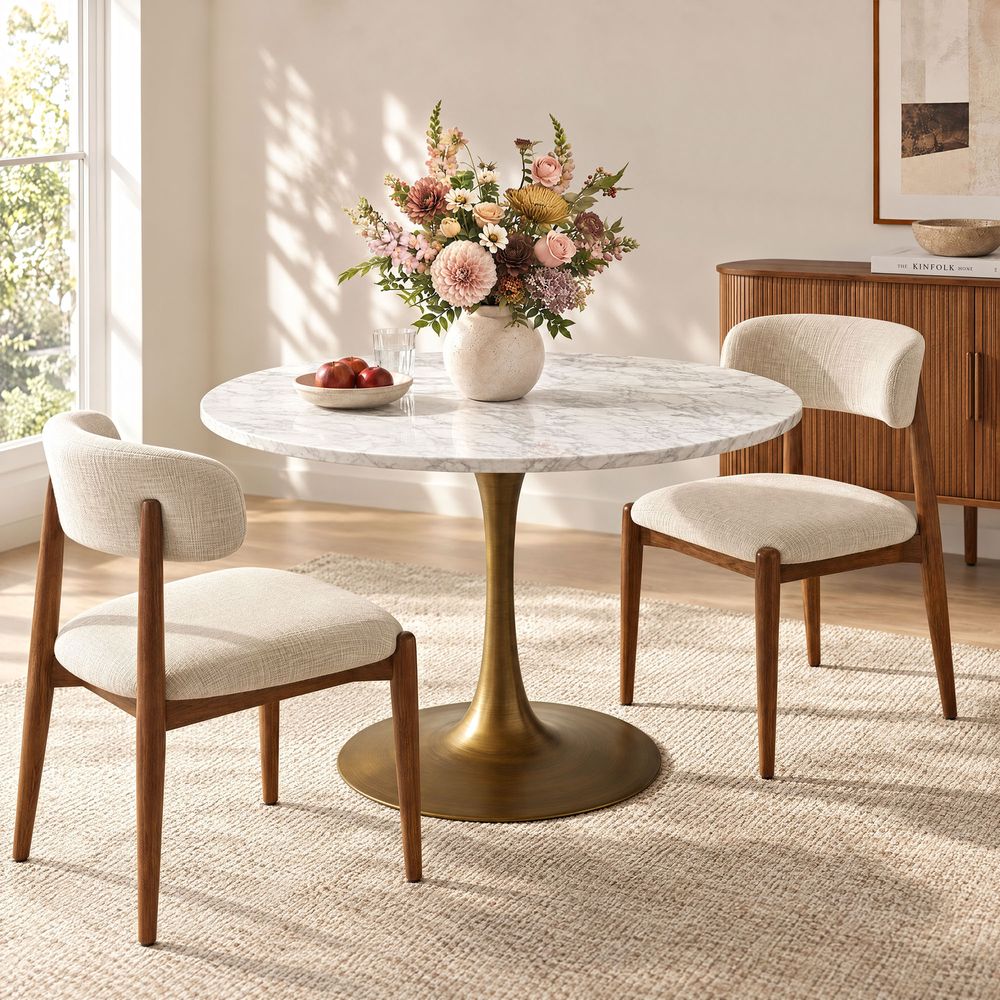
Estelle 42-Inch Dining Table
View Product
Scratch-Resistant Does Not Mean Scratch-Proof
A scratch-resistant dining table is designed to withstand everyday wear better than a less resistant surface, but no tabletop should be treated as completely scratch-proof.
Even a durable surface can be damaged by abrasive grit, sharp tools, or heavy objects dragged across it. Ceramic dishes, cutlery, and decorative pieces can also leave marks if moved carelessly, depending on the materials involved.
To reduce the risk of scratches:
-
Use placemats, coasters, and serving mats where practical.
-
Lift dishes, appliances, and decorative objects instead of sliding them across the tabletop.
-
Wipe away crumbs and grit before cleaning, so particles don't get rubbed against the surface.
-
Use a cutting board for food preparation.
-
Follow the manufacturer's instructions for cleaning products and tools.
These habits are useful regardless of whether you choose wood, stone, glass, or another material.
How Does the Finish Affect Dining Table Durability?
The tabletop material is only part of the equation. Its finish affects how the surface looks, how it should be cleaned, and how well it handles everyday contact.
A protective finish on wood can help reduce moisture absorption and make routine cleaning easier. However, the degree of protection depends on the finish type and its condition. Scratches or worn areas may expose the wood beneath, so avoid treating a coated surface as waterproof.
Stone surfaces also vary. Some are sealed or treated, while others have specific cleaning requirements. Marble, in particular, needs care that accounts for its sensitivity to acidic substances. Use products recommended for the actual tabletop material rather than a generic household cleaner.
Gloss level is mainly an appearance choice, not a reliable measure of durability. A glossy surface may make fingerprints or fine marks more noticeable, while a matte surface may conceal some everyday smudges. Neither finish should be assumed to resist scratches better without product-specific information.
Before buying, check the care instructions and ask what routine maintenance the finish requires. A table that suits the way you're willing to care for it is more likely to remain attractive over time.
How to Spot a Durable Dining Room Table Before Buying
Product photos can show style, but they cannot tell you everything about construction. Review these details before making a decision.
Check the Tabletop Specifications
Look for the exact material, thickness where provided, finish, and care instructions. Descriptions such as “stone look” or “wood finish” aren't enough to identify the material. If a product offers several finish options, confirm the details for the configuration you plan to order.
Examine the Base and Connections
A sturdy tabletop needs a stable foundation. Look for a base designed to support the tabletop's size and weight, secure joints, and clear assembly instructions. If possible, test a display model for wobbling or movement when gentle pressure is applied.
For pedestal tables, consider whether the base leaves enough room for chairs and legs. For four-leg tables, check that the legs won't obstruct seating or make it difficult to tuck chairs underneath.
Consider Weight Capacity and Assembly
Check the listed weight capacity and assembly requirements. A heavy tabletop does not automatically mean the entire table is better built, and a product that requires assembly needs to be fitted according to its instructions.
Also think about delivery access. Measure doorways, hallways, stairs, and the intended dining area before ordering, especially for a large stone tabletop or a table shipped in multiple boxes.
Match the Table to Your Household
A table used for daily family meals may need different features from one used occasionally for formal dinners. If you regularly host guests, an extendable table can provide extra space without requiring a permanently oversized dining area.
For example, Valo extends from 72 to 92 inches and includes two self-storing leaves. If you usually eat with a smaller group but occasionally need more seats, that flexibility may be more useful than choosing a large fixed table.

Valo 72"-92" Extendable Dining Table
View Product
Which Durable Dining Table Should You Choose?
The right option depends on what matters most in your home.
-
For frequent meals and easy cleanup: Consider a suitable sintered-stone or other engineered tabletop, while checking the exact material and care instructions.
-
For a natural wood look: Consider solid wood or a wood-and-veneer construction, and be prepared to protect the surface from moisture, heat, and sharp objects.
-
For a small dining nook: A compact round table can make the most of limited space. The Rolf 31-Inch Dining Table has a white engineered-stone top and a warm-brown oak base and is designed for two people.
-
For occasional entertaining: An extendable table such as Valo lets you add tabletop space when needed.
-
For a natural stone look: Marble can create a distinctive focal point, but it calls for more careful spill management. The Estelle 42-Inch Dining Table is one compact option with a Carrara marble configuration.
Use these examples as starting points rather than as a ranking of which table will last longest. Durability depends on the exact material, construction, use, and care.

Rolf 31-Inch Dining Table
View Product
Stone Tabletops for Busy Weeknights
Stone and engineered-stone tabletops appeal to households that want a firm surface and a streamlined look. Their everyday performance still depends on the material.
Sintered stone is generally resistant to common stains and heat, but edges can be vulnerable to impact. Engineered stone products differ in composition, so check the specific manufacturer's guidance before placing hot cookware on the surface or using abrasive cleaning tools.
For routine cleaning, start with a soft cloth and a suitable mild cleaner if the manufacturer permits it. Avoid harsh chemicals or scouring pads unless the care instructions specifically allow them. Use trivets for hot pots and pans, and clean spills promptly rather than assuming the tabletop can tolerate anything.
A stone surface can reduce some maintenance concerns, but sensible care remains important.
Is Marble a Durable Choice for a Dining Table?
Marble can work well as a dining tabletop if you appreciate its natural veining and are comfortable with its care requirements. However, it is not the best fit for everyone.
Acidic foods and drinks can etch marble, leaving dull areas that may look different from the surrounding finish. Spills can also stain some stone surfaces if they are not cleaned promptly. Sealing may help reduce certain staining risks, but it does not prevent etching.
If you choose marble, use coasters and placemats, wipe up spills quickly, and follow stone-specific cleaning guidance. Avoid vinegar, lemon-based cleaners, and other acidic products unless the manufacturer explicitly recommends them for your particular finish.
For households that prefer lower-maintenance dining furniture, comparing marble with sintered stone or other engineered surfaces may help clarify the trade-offs.

Thorsten 72-Inch Oval Dining Table
View Product
Everyday Habits That Help Protect a Dining Table
Good care helps preserve a table's appearance, regardless of the material.
-
Clean promptly. Wipe up food, drinks, and moisture before they have time to leave marks.
-
Use protective accessories. Coasters, placemats, trivets, and table pads can reduce contact with heat, moisture, and abrasive objects.
-
Choose suitable cleaning products. Follow the manufacturer's instructions and avoid abrasive tools or unapproved chemicals.
-
Avoid dragging heavy items. Lift serving dishes, appliances, and decorative pieces when moving them.
-
Check the base periodically. Follow the assembly guide and inspect for loosened connections or wobbling.
-
Use the table as intended. Do not stand or sit on the tabletop, and observe the listed weight capacity.
These steps won't prevent every mark, but they can help limit avoidable damage and keep the table looking its best.
FAQs
What is the most durable material for a dining room table?
There is no single best material for every household. Sintered stone generally offers strong scratch, stain, and heat resistance, while solid wood may be repairable or refinishable depending on its construction. Compare the exact material, finish, care requirements, and intended use before deciding.
Are sintered-stone dining tables scratch-proof?
No. Sintered stone is generally scratch-resistant, but sharp or abrasive objects and heavy impacts can still damage the surface or its edges. Use protective accessories and follow the manufacturer's care instructions.
Is solid wood more durable than engineered stone?
Neither is automatically more durable in every situation. Engineered stone may offer easier resistance to certain everyday stains and scratches, while solid wood can have repair or refinishing advantages. The best choice depends on the specific construction and the type of wear you expect.
Does a thicker tabletop mean a more durable table?
Not necessarily. Thickness is only one factor. Material quality, construction, support, edge design, joints, and finish all influence performance. Check the complete specifications rather than using thickness alone as a durability measure.
Can I put hot pots and pans directly on a dining table?
It's safest to use a trivet or heat-resistant mat unless the manufacturer explicitly says direct contact is suitable for that surface. Heat can damage wood finishes and may affect other tabletop materials in different ways.
Is marble too delicate for everyday dining?
Not necessarily, but it requires more care than some alternatives. Marble can etch when exposed to acidic foods and drinks, and spills should be cleaned promptly. If you prefer a lower-maintenance surface, compare marble with sintered stone or other engineered options.
How can I prevent scratches on my dining table?
Use placemats and coasters, lift rather than drag objects, clear grit before wiping the surface, and use a cutting board for food preparation. The right precautions depend on the tabletop material and finish.
Are round dining tables durable?
Shape alone does not determine durability. A round table can be just as suitable for regular use as a rectangular one if its materials, base, and construction meet your needs. Round tables can also work well in compact spaces, depending on their diameter and seating arrangement.
Are extendable dining tables durable enough for daily use?
They can be, provided the extension mechanism and supporting structure are well designed and used according to the manufacturer's instructions. Check how the leaves are stored, how the table extends, and whether the expanded dimensions suit your room.
What should I check before buying a durable dining table?
Confirm the tabletop and base materials, finish and care requirements, dimensions, weight capacity, assembly instructions, and seating recommendations. Consider your daily routine and measure your room and delivery route before ordering.