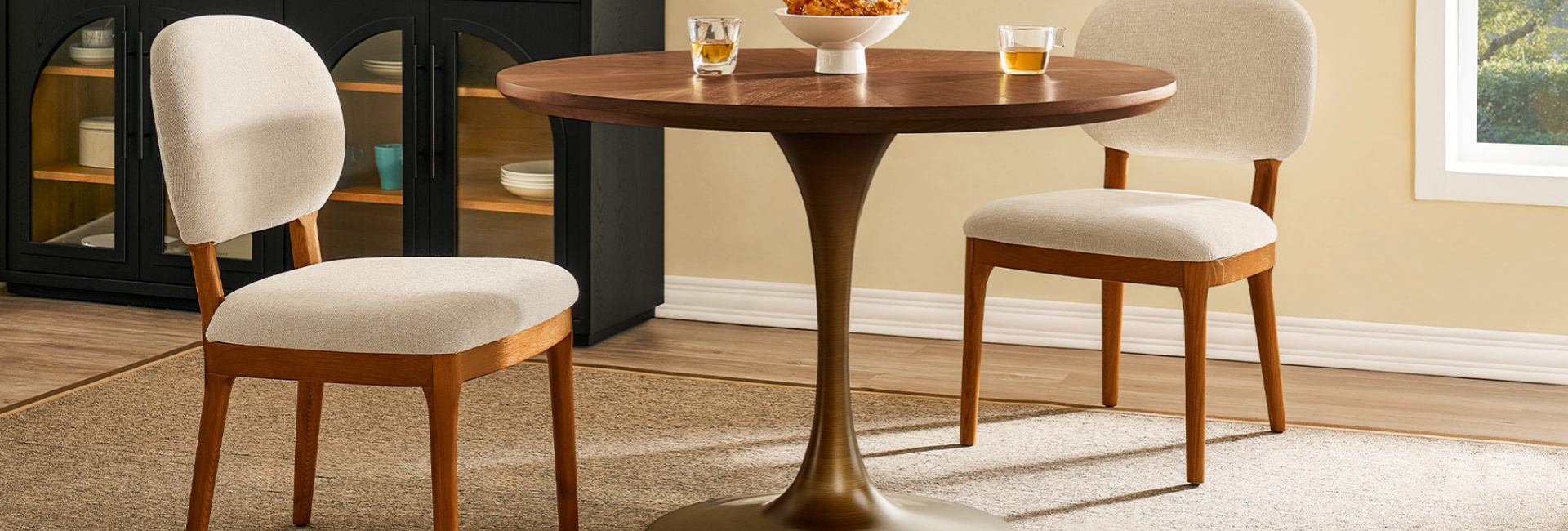
If you want to know how to select dining chairs for a round table, start with one habit most people skip: measure before you fall in love with a silhouette. A round table hides its seating limits in plain sight. Every chair shares the same continuous edge, so a chair that is slightly too wide can make the entire arrangement feel crowded.
The good news? You do not need to match every piece perfectly. Start with table diameter, chair dimensions, and room clearance. Once those numbers work, you can choose the style, material, and finish that make the dining area feel like yours.
Table of Contents
- Quick Answer: How Do You Choose Chairs for a Round Table?
- How Many Chairs Fit Around a Round Table?
- Choose the Right Dining Chair Height
- Armless or Armchair: Which Works Better?
- Do Dining Chairs Have to Match the Table?
- How to Match Dining Chairs to a Round Table
- Pick Dining Chair Materials for Everyday Use
- Leave Enough Room Around the Round Table
- A Buyer's Checklist Before You Check Out
- FAQs
- How Many Chairs Fit Around a Round Dining Table?
- What Size Dining Chairs Work Best With a Round Table?
- What Is the Ideal Seat Height for a Dining Chair?
- How Much Space Should You Leave Between a Round Table and the Wall?
- Do Dining Chairs Have to Match the Table?
- Can You Mix Different Chair Styles Around a Round Table?
- Are Armchairs a Good Choice for a Round Dining Table?
- Should Dining Chairs Be Lighter or Darker Than the Table?
Quick Answer: How Do You Choose Chairs for a Round Table?
For most round dining tables, start with three measurements:
-
Allow about 24 inches of table edge per person as a comfortable spacing guideline, not a guaranteed seat count.
-
Choose a 17–19 inch seat height for a typical 28–30 inch dining table, then check the actual table and apron clearance.
-
Leave at least 36 inches around the table for chairs to pull out and people to walk behind them.
From there, check the chair's widest point, arm height, seat depth, and the table base. A pedestal table generally gives you more flexibility than a four-leg table, while slim armless chairs are usually the easiest choice when space is limited.
How Many Chairs Fit Around a Round Table?
A round table's seating capacity depends on more than its diameter. Circumference is useful for planning, but chair width, table base, and the amount of elbow room you want ultimately determine how many people can sit comfortably.
Use circumference as a starting point
Multiply the table diameter by pi, or about 3.14, to estimate its circumference. For planning purposes, allow about 24 inches of table edge per person. Treat this as a spacing guideline rather than a guaranteed seat count, because chair width, armrests, and the table base can change the practical capacity.
For example, a 48-inch round table has a circumference of about 151 inches. The math suggests that six seats could fit along the edge, but that does not mean six standard dining chairs will be comfortable. Chair width, armrests, the table apron, and the way the base occupies the space can all reduce the practical seat count.
That is why a 48-inch table is generally better planned as a four-seat table for everyday dining. Six slim, armless chairs may work in a tighter arrangement, but they leave less elbow room.
A 60-inch round table has a circumference of about 188 inches and is a more comfortable choice for six people. Eight slim chairs may work for occasional gatherings, but six is usually the easier everyday arrangement.
The table base matters, too. A central pedestal keeps the perimeter relatively open, while four outer legs can create fixed chair positions. If a table leg lands where a chair needs to sit, the theoretical seating capacity becomes much less useful.
Round Table Seating Guide
Use this table as a starting point rather than a strict capacity chart. Your chair width and table base can change the final arrangement.
Choose the Right Dining Chair Height
For most standard dining tables that are 28–30 inches high, a chair with a 17–19 inch seat height is a good starting range. The exact fit depends on the thickness of the tabletop, the table apron, and the chair cushion.
Height is the specification people remember last and regret first. A chair that is too tall can make the table feel cramped, while one that is too low can leave you reaching upward toward your plate.
What to Measure Before You Buy
Do not rely on the product photo alone. Check these measurements for every chair you consider:
-
Overall width: Measure the widest point, including arms or a curved backrest.
-
Seat height: Compare it with your actual table height.
-
Arm height: Make sure the arms can clear the table apron if you want the chairs to tuck underneath.
-
Seat depth: Around 18–20 inches works well for many adults, but body size and chair design matter.
-
Under-table clearance: Check the distance between the top of the seat and the underside of the table or apron.
The cushion matters, too. A thick upholstered seat can compress during use, so the listed seat height does not tell the entire comfort story.
For longer dinners, look for a seat that supports your thighs without pushing you too far forward. A gently curved or contoured back can also feel more supportive than a completely flat profile.
Finally, check the manufacturer's stated weight capacity. This is especially important when chairs will see frequent daily use or when multiple users have different body sizes.
Armless or Armchair: Which Works Better?
For a round table, chair arms can change the seating arrangement more than you might expect. They add width and also need enough vertical clearance to slide under the table.
For round tables under about 48 inches, armless chairs are usually the safer choice because they keep the perimeter open. At 54 inches and above, there is generally more room to introduce armchairs, particularly at two host positions.
Armless chairs also have a practical advantage: they slide in and out more easily and can usually be positioned closer together. That makes them useful for apartments, breakfast nooks, and smaller dining areas.
If you love the comfort of arms but do not want to give up too much space, try a 2 + 2 arrangement: use two armchairs at the main host positions and slimmer armless chairs around the remaining sides.
Before buying an armchair, check the arm height against the lowest point underneath your table. A chair can have the right seat height and still fail to tuck in because the arms hit the apron.
For a larger round table, the Liliana Armrest Leather Dining Chairs (Set of 2) can work as a pair of more substantial host chairs. Their ergonomic armrests, floating-leg frame, black carbon steel structure, and beige PU leather upholstery give the two positions a little more visual weight without requiring every chair around the table to have arms.

Liliana Armrest Leather Dining Chairs (Set of 2)
View Product
Do Dining Chairs Have to Match the Table?
No. Dining chairs do not have to match the table exactly. In a modern dining room, coordination usually matters more than a perfect match.
Think of the table and chairs as sisters, not twins. The table is the anchor; the chairs respond to it through color, material, shape, or finish.
A fully matched dining set is certainly easy, but mixing pieces can make the room feel more collected. The key is to give the different pieces something in common.
Choose One Common Thread
A mixed dining set feels intentional when at least one element repeats:
-
Wood tone: Pair warm wood chairs with a warm-toned table, or keep cool undertones together.
-
Metal finish: Black chair frames can connect with black table details or lighting fixtures.
-
Color: Keep the chairs in the same neutral family even when the silhouettes differ.
-
Seat height: Keep chair heights relatively close so everyone sits comfortably at the same table.
You do not need every detail to match. One strong visual connection is often enough.
Try to keep the arrangement to two main chair styles around one table. That gives you room to create contrast without making the dining area look accidental.
Three Ways to Mix Dining Chairs
A dining room table with different chairs works best when the mix has a structure. Try one of these approaches:
-
The 2 + 2 end-cap: Use one chair style along the sides and a different, often more substantial, style at the two host positions.
-
Same color, different silhouettes: Choose chairs in the same shade while allowing the backs, legs, or upholstery to vary.
-
Same silhouette, related tones: Use the same chair design in two or three colors that belong to the same palette.
If you want a bolder look, anchor the table with two distinctive chairs and keep the remaining seats visually quieter. In a home with kids or limited floor space, a bench on one side can also be more practical than adding another mismatched chair.
How to Match Dining Chairs to a Round Table
Matching dining chairs to a round table is less about copying its shape and more about responding to its proportions, materials, and visual weight.
Curved Backs Echo the Circle; Straight Backs Add Contrast
A round table already has a soft, continuous shape. Curved-back chairs reinforce that line and create a natural visual flow around the table.
Straight or angular chairs can work just as well when you want more contrast. In that case, connect the chairs to the table through another detail, such as the wood tone, leg profile, metal finish, or overall frame thickness.
The Lars Leather Dining Chairs (Set of 2) are one example. Their gently curved backrest works naturally with a round tabletop, while the warm wood-toned frame, black PU leather upholstery, and carbon steel construction keep the look firmly modern.
Let One Material Lead
Round tables tend to read as one complete visual object, so competing materials can be more noticeable than they are with a long rectangular table.
If your tabletop is the focal point, keep the chairs relatively quiet. A stone or bold wood table can pair well with simple frames and neutral upholstery.
If the table is more understated, the chairs can introduce texture through upholstery or a distinctive frame.
As a general styling guideline, keeping the material palette focused can help the dining area feel layered without becoming visually busy. Wood, metal, and leather or PU leather, for example, can create enough contrast without making the room feel cluttered.
PU leather can also be practical for everyday dining because it is generally easy to wipe clean. Both the Liliana and Lars chairs use PU leather upholstery, giving them a tailored appearance while keeping routine cleanup simple.
Pedestal or Four Legs Changes the Seating Plan
Before choosing chairs, look underneath the table.
A pedestal base usually leaves more of the perimeter open, allowing chairs to be positioned more freely around the table. A four-leg base creates specific positions, and one of those legs can interfere with a chair even when the table's listed seating capacity looks sufficient.
The apron matters as well. A deep apron can reduce legroom and make armchairs harder to tuck underneath.
For a pedestal table, check the width and shape of the pedestal foot so it does not interfere with diners' feet or chair legs. For a four-leg table, map the leg positions before deciding how many chairs you need.

Lars Leather Dining Chairs (Set of 2)
View Product
Pick Dining Chair Materials for Everyday Use
Style gets the photos, but material determines how the chairs fit into daily life.
Wood
Wood chairs are durable, versatile, and especially easy to pair with a wood dining table. The trade-off is that an unpadded wood seat can feel less comfortable during long meals.
Metal
Metal frames create a lighter, more contemporary or industrial look. They are easy to wipe down, but add felt or non-marking pads to the feet if the chairs will sit on hardwood or another easily scratched surface.
Upholstery
Upholstered chairs are often the most comfortable option for long dinners. The fabric or covering also determines how much maintenance the chair will need.
Fabric offers softness and warmth but generally requires more attention to spills. Leather and PU leather are easier to wipe clean, making them practical choices for busy dining areas.
Why PU Leather Can Work Well for a Family Table
For everyday dining, easy cleanup can matter more than having the most delicate upholstery. PU leather can be wiped down after meals and gives the room a warmer, more finished look than a bare frame.
The trade-off is that PU leather can be less breathable than fabric and can be damaged by sharp objects. If your dining area gets heavy daily use, consider the cleaning routine and durability of the material before choosing based on appearance alone.
For households with children, performance fabrics, darker colors, patterns, or wipe-clean surfaces can make everyday maintenance easier.
Whatever material you choose, add felt or non-marking foot pads to the chair legs. Dining chairs move constantly, and that repeated movement is what can eventually mark a hardwood floor.
Leave Enough Room Around the Round Table
A comfortable chair arrangement needs more than enough space between seats. You also need room to pull the chairs out and walk behind them.
Plan for at least 36 inches from the table edge to the nearest wall or furniture. If the dining area is a busy pass-through or you entertain frequently, 42–48 inches gives people more room to move.
Think about the full chair footprint, not just the tabletop. A chair pushed away from the table can extend significantly farther into the room.
This matters especially with round tables because the table sits in the middle of the space rather than naturally aligning with a wall. A chair can follow the curve perfectly and still end up blocking a walkway.
If the dining area is part of an open-plan room, use a rug, pendant light, sideboard, or other visual element to define the dining zone. The goal is to make the table feel like a deliberate part of the room rather than an obstacle placed in the middle of it.
A Buyer's Checklist Before You Check Out
Run through this list before buying your dining chairs:
-
Measure the room length and width, including doors, windows, and walkways.
-
Plan for at least 36 inches between the table edge and nearby walls or furniture.
-
Allow about 24 inches of table edge per diner as a starting point.
-
Check the actual chair width at its widest point, including arms and curved backs.
-
Compare a 17–19 inch seat height with your table's actual height and apron clearance.
-
Decide whether armless chairs or armchairs make more sense for the table size and layout.
-
Check the chair's arm height if you want it to tuck underneath the table.
-
Choose one common thread, such as wood tone, metal finish, color, or seat height, if you are mixing chair styles.
-
Keep the overall material palette focused so the room does not feel visually cluttered.
-
Add felt or non-marking foot pads if the chairs will sit on hardwood.
-
Review delivery, assembly, warranty, and return terms before buying chairs sold as sets.
Most of the decision comes down to a few measurements and an honest look at how you actually use the room. Buy the math first, then buy the style. Once the proportions work, the round table can become the gathering spot you pictured instead of the piece everyone has to squeeze around.
FAQs
How Many Chairs Fit Around a Round Dining Table?
As a general planning guide, allow about 24 inches of table edge per person. A 48-inch round table typically works best with four chairs, while a 54-inch table can accommodate four to six. A 60-inch table is comfortable for about six, and a 72-inch table can usually handle six to eight. Chair width and the table base can change the final count.
What Size Dining Chairs Work Best With a Round Table?
Look for chairs that fit the table's available perimeter without forcing diners too close together. A chair around 16–18 inches wide is a common starting point, but measure the widest point, including arms or curved backs, rather than relying only on seat width.
What Is the Ideal Seat Height for a Dining Chair?
For a typical 28–30-inch dining table, a 17–19-inch seat height is a useful starting range. Also check the distance between the seat and the underside of the tabletop or apron, since table thickness and apron depth can change the actual legroom.
How Much Space Should You Leave Between a Round Table and the Wall?
Leave at least 36 inches between the table edge and a wall or other furniture so chairs can pull out and people can pass behind them. In a busy dining area or pass-through space, 42–48 inches provides more comfortable circulation.
Do Dining Chairs Have to Match the Table?
No. Dining chairs can be different from the table as long as they share a visual connection. Repeat one element, such as wood tone, metal finish, upholstery color, or overall style, to make the combination feel intentional.
Can You Mix Different Chair Styles Around a Round Table?
Yes. Mixing chairs can make a dining room feel more collected than a fully matched set. Keep the mix structured by using two main chair styles, repeating one common element, and keeping seat heights relatively close.
Are Armchairs a Good Choice for a Round Dining Table?
Armchairs can work well, particularly with round tables around 54 inches and larger. On smaller tables, armless chairs are generally easier to space. Another option is to use two armchairs as host seats and slimmer armless chairs around the remaining positions.
Should Dining Chairs Be Lighter or Darker Than the Table?
There is no fixed rule. Contrast often works well: darker chairs can add definition to a light table, while lighter chairs can keep a dark table from feeling heavy. Instead of matching colors exactly, look for compatible undertones and repeat one finish elsewhere in the room.