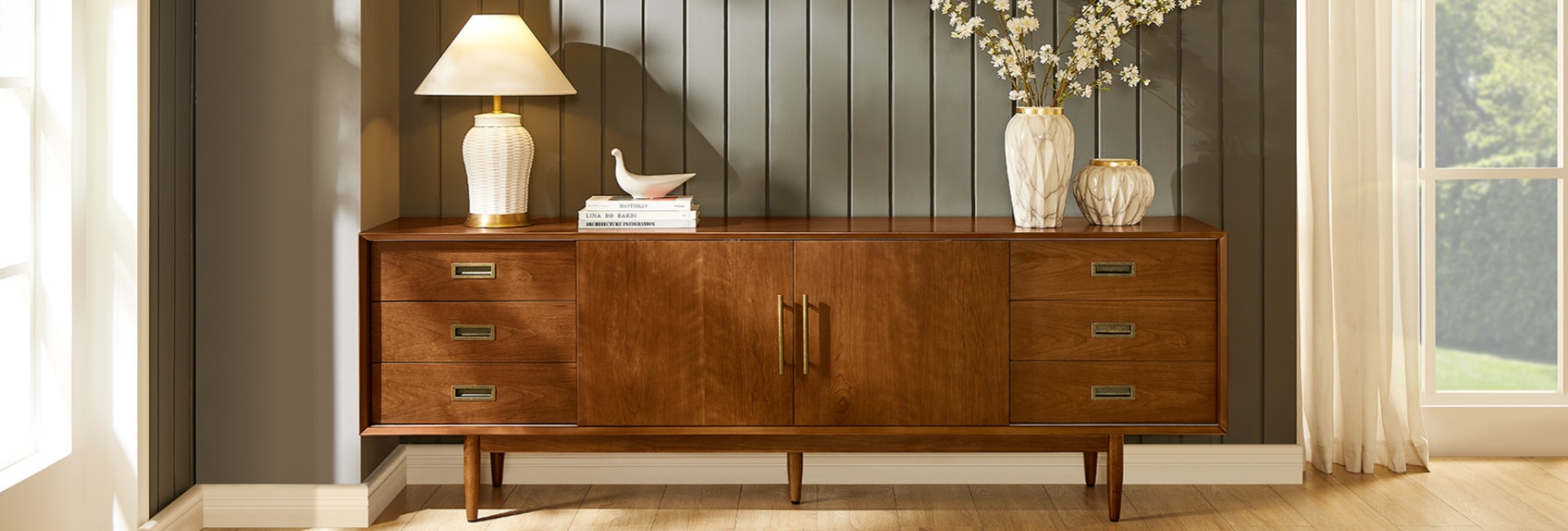
Choosing a TV stand involves more than finding a piece of furniture that fits beneath your television. Its shape, finish, storage layout, and overall proportions can influence how the entire living room looks and functions. Two styles that often come up during the search are mid-century modern and modern.
When comparing a mid century modern vs modern TV stand, the difference usually comes down to visual character. Mid-century modern designs tend to feature warm wood tones, tapered legs, and distinctive details. Modern TV stands often lean toward cleaner silhouettes, restrained ornamentation, and a more understated appearance. However, the categories can overlap, especially in contemporary furniture collections.
Neither style is automatically better. The right choice depends on your existing furniture, preferred materials, available space, and storage needs. This guide breaks down their defining characteristics and practical differences to help you choose a TV stand that works in your living room.
Table of Contents
- What Is the Difference Between Mid-Century Modern and Modern Design?
- What Defines a Modern TV Stand?
- What Defines a Mid-Century Modern TV Stand?
- Mid-Century Modern vs. Modern TV Stand: Key Design Differences
- How to Choose the Right TV Stand Size
- Consider Storage and Cable Management
- Does Mid-Century Modern Furniture Go Out of Style?
- Can You Mix Modern and Mid-Century Modern Furniture?
- TV Stand Safety: What Should You Check?
- A Practical Checklist Before Buying a TV Stand
- Should You Buy a Ready-Made or Custom TV Stand?
- FAQs
- What Is the Difference Between a Mid-Century Modern and a Modern TV Stand?
- Is Mid-Century Modern Considered Modern?
- Does Mid-Century Modern Furniture Go Out of Style?
- What Wood Is Commonly Used for Mid-Century Modern TV Stands?
- How Much Wider Should a TV Stand Be Than the TV?
- What Is the Best Height for a TV Stand?
- Are Open or Closed Shelves Better for a TV Stand?
- How Do You Hide Cables Behind a TV Stand?
- Should You Anchor a TV Stand to the Wall?
What Is the Difference Between Mid-Century Modern and Modern Design?
Before comparing individual TV stands, it helps to understand what the two terms mean.
Mid-century modern (MCM) refers to a design movement associated with the mid-20th century, particularly the 1940s through the 1960s. Furniture from this period is known for its functional approach, streamlined forms, natural materials, and thoughtful proportions. Common features include tapered legs, warm wood finishes, simple geometric shapes, and carefully considered decorative details.
Modern design is a broader term. In its historical sense, modernism encompasses design movements that emphasize function, simplicity, and the rejection of excessive ornamentation. In today's furniture retail context, however, "modern" is also frequently used to describe furniture with contemporary-looking silhouettes, clean lines, and relatively restrained detailing.
This distinction matters because a modern TV stand does not necessarily belong to one specific historical design movement. It may have a minimalist profile, a sculptural base, a stone-inspired finish, or a combination of materials.
Mid-century modern furniture has a more recognizable visual vocabulary, while modern TV stands can take many different forms. Understanding this difference makes it easier to identify which style complements your room.
What Defines a Modern TV Stand?
A modern TV stand typically prioritizes a clean appearance and practical functionality. Rather than relying on elaborate decoration, its design often uses proportions, material contrast, surface finishes, and subtle details to create visual interest.
Common characteristics include:
-
Clean silhouettes: Straight lines, balanced proportions, and uncluttered profiles help create a composed appearance.
-
Restrained detailing: Decorative elements are usually subtle, allowing the overall shape and materials to stand out.
-
Versatile finishes: Wood veneers, textured surfaces, glass, metal accents, and neutral colors can all appear in modern designs.
-
Functional storage: Cabinets, drawers, adjustable shelves, and cable openings help keep entertainment equipment organized.
For example, the Sabina 84-Inch Ash Wood Media Console combines a natural wood appearance with fluted detailing. Its construction includes solid American ash wood, rubber wood, and engineered wood with ash wood veneers. Solid ash wood fluting adds texture, while adjustable shelves provide flexibility for organizing media equipment.
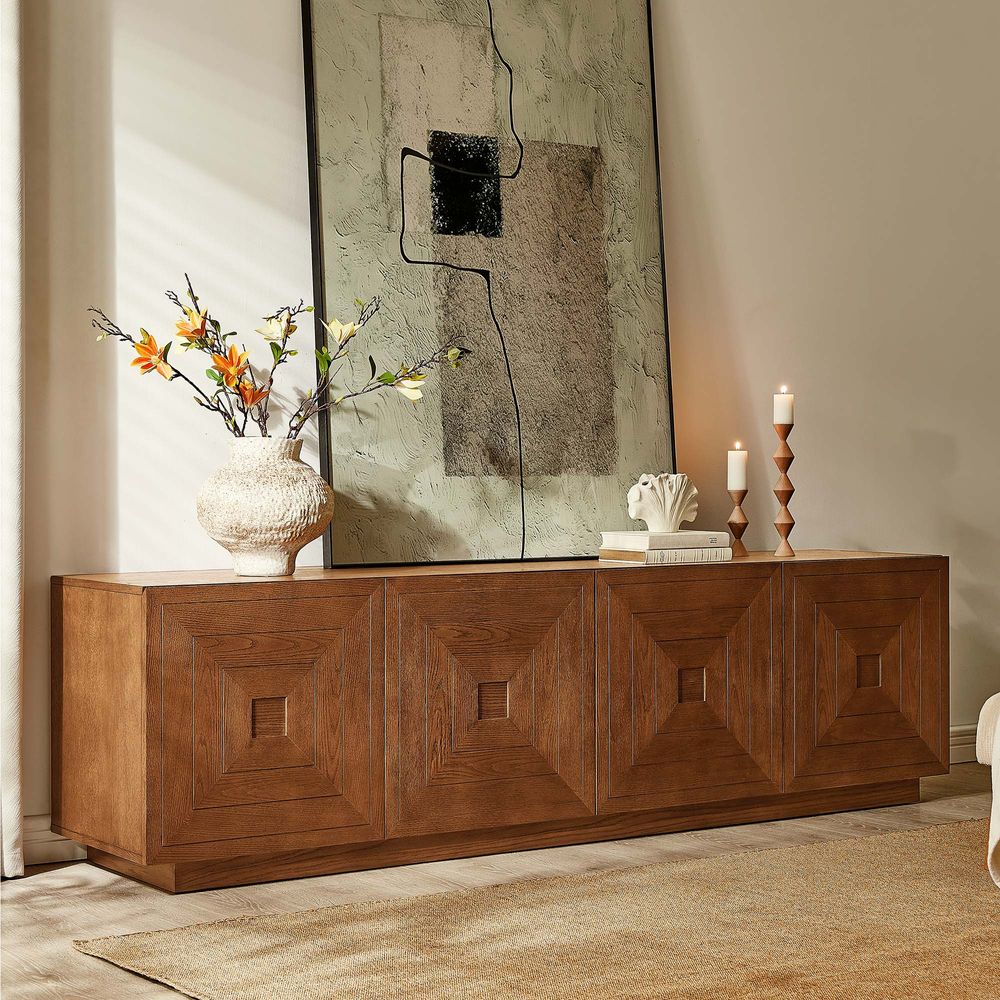
For a different interpretation of modern design, the Kaisa 86-Inch Carving Media Console features carved detailing and a recessed plinth. Its American oak veneers bring warmth to the design, while three cord cutouts help accommodate entertainment equipment.
These examples show that modern furniture does not have to look plain. Texture, wood grain, and architectural details can add character without making the overall design feel overly decorative.
Explore more styles in the Hernest Media Consoles Collection.
Kaisa 86-Inch Carving Media Console
View Product
What Defines a Mid-Century Modern TV Stand?
Mid-century modern TV stands are recognizable for their combination of streamlined forms, warm materials, and distinctive structural details. Their designs often feel visually light without sacrificing storage or everyday practicality.
Look for these common features:
-
Tapered legs: Legs that narrow toward the floor create a lighter profile and are a recognizable MCM detail.
-
Warm wood tones: Walnut, oak, and other natural-looking wood finishes help bring warmth to a living space.
-
Streamlined shapes: Rectangular cabinets, balanced proportions, and simple geometric forms keep the furniture visually composed.
-
Distinctive details: Slatted fronts, fluted surfaces, beveled edges, and understated hardware add character.
-
Practical storage: Drawers, sliding doors, and adjustable shelving provide space for accessories and media devices.
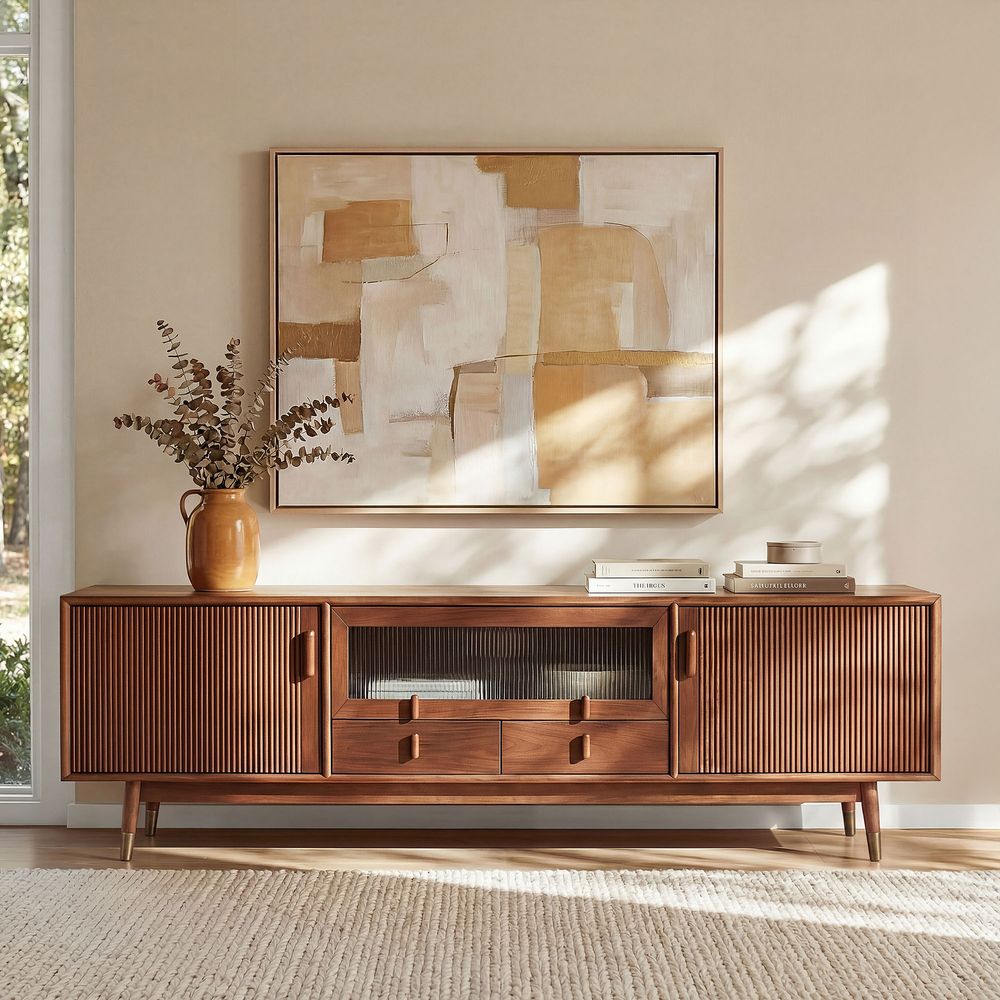
The Stavn 72-Inch MCM Fluted Media Console illustrates several of these characteristics. Its solid wood fluting creates a textured front, while tapered legs with subtle metal trim give the cabinet a distinctive profile. A central Moru glass drop-down door adds another layer of visual interest. The console is made with rubber wood and engineered wood featuring American walnut veneers.
Another example is the Kaden 84-Inch Mid-Century Media Console. Tapered wood legs, beveled front edges, antique bronze hardware, and dovetail-jointed drawers give it a more traditional MCM character while maintaining useful storage.
If you prefer these recognizable design elements, explore the Hernest Mid-Century Modern TV Stands Collection.

Kaden 84-Inch Mid-Century Media Console
View Product
Mid-Century Modern vs. Modern TV Stand: Key Design Differences
Although the two styles can share simple shapes and natural materials, their visual priorities are often different.
Lines and Silhouette
MCM TV stands often combine straight cabinet lines with tapered legs or angled supports. The result is a balanced shape with a little more visual personality.
Modern TV stands can also have rectangular profiles, but their bases and cabinet structures vary considerably. Some feature floating or recessed bases, while others use simple legs or sculptural forms.
Legs and Base
Tapered legs are one of the most recognizable features of mid-century modern furniture. They raise the cabinet off the floor and create a lighter visual effect.
Modern designs are less tied to one particular leg style. A TV stand may have a recessed plinth, a low-profile base, metal supports, or a floating appearance.
Materials and Finishes
Warm wood tones are closely associated with MCM design. Walnut, oak, and other natural-looking finishes help establish its familiar character.
Modern furniture has a wider range of material possibilities. Wood can be paired with glass, metal, resin, stone-inspired textures, or neutral finishes. The emphasis is often on how the materials work together rather than on one signature material.
Which Style Should You Choose?
Consider the overall look you want to create:
-
Choose mid-century modern if you like warm wood tones, tapered legs, streamlined cabinets, and recognizable furniture details.
-
Choose modern if you prefer restrained decoration, flexible silhouettes, and a wider range of finishes and material combinations.
-
Mix the two styles if your room already contains furniture from different design traditions. Similar wood tones, complementary finishes, and balanced proportions can help create a cohesive look.
You do not need to follow one style throughout the entire living room. A well-proportioned TV stand that complements your existing furniture will usually feel more natural than a piece selected only because it matches a particular design label.

Sabina 84-Inch Ash Wood Media Console
View Product
How to Choose the Right TV Stand Size
A TV stand should be large enough to support your television and visually balanced with the wall and surrounding furniture. A cabinet that is too narrow can make a large television look unstable, while an oversized stand may overwhelm a smaller room.
Consider the Actual Width of Your TV
Television sizes are measured diagonally, not from side to side. A 65-inch TV, for example, is not 65 inches wide. Check the manufacturer's specifications for the actual width before choosing a console.
As a general guideline, choose a TV stand that is wider than your television, often by around 6–12 inches overall. A wider console may also work if you want a more substantial look or need additional surface space.
The following measurements are practical starting points, not fixed requirements:
Always compare the console's actual width with your television's dimensions. If your TV has widely spaced feet, check that both feet fit securely on the supporting surface.
Check Height and Viewing Position
TV stand height affects where the screen sits in relation to your seating. Ideally, the center of the television should be close to seated eye level, although the best position depends on your sofa height, viewing distance, and personal comfort.
Before purchasing, consider:
-
The height of your sofa and typical seated eye level.
-
The height of the TV and its stand or mounting feet.
-
Whether the screen will be wall-mounted above the console.
-
The amount of space between the bottom of the TV and the console surface.
If the television will be wall-mounted, measure the distance between the screen and the cabinet so the arrangement looks intentional rather than crowded.
Measure Depth and Available Space
Width is not the only measurement that matters. A TV stand also needs enough depth for the television's feet, media devices, and cable connections.
Measure the available wall space, nearby walkways, and any doors or drawers that need room to open. If you plan to place a soundbar or other equipment on the console, include those dimensions in your measurements.
Stavn 72-Inch MCM Fluted Media Console
View Product
Consider Storage and Cable Management
A TV stand should accommodate the equipment you actually use. Before choosing between modern and mid-century modern designs, make a list of the items you plan to store.
Common examples include:
-
Streaming devices and media players.
-
Gaming consoles.
-
Cable boxes and routers.
-
Soundbars and related accessories.
-
Remote controls, controllers, and spare cables.
Open Shelves or Closed Cabinets?
Open shelves make frequently used devices easier to access and can provide space for equipment that requires airflow. However, they also leave devices and cables visible.
Closed cabinets create a tidier appearance by concealing accessories and less frequently used items. If you choose a cabinet with doors, check whether the internal layout can accommodate your equipment and whether sufficient ventilation is available.
Adjustable shelves can be especially useful if you own devices of different heights or expect your setup to change over time.
Check Cable Openings and Ventilation
Cable openings help route power cords, HDMI cables, and other connections toward outlets and connected devices. Their number and placement can affect how easily you can organize your setup.
Before purchasing, check:
-
How many cable openings are provided.
-
Whether the openings are positioned where your devices will sit.
-
Whether the cabinet has enough space for plugs and cable connectors.
-
Whether enclosed compartments provide adequate ventilation.
-
Whether your equipment can be accessed without repeatedly moving other items.
Avoid drilling additional openings unless the manufacturer confirms that doing so is appropriate. Modifying a cabinet without checking its construction could affect its finish or structural integrity.
Does Mid-Century Modern Furniture Go Out of Style?
Mid-century modern furniture has remained a recognizable interior design style because its emphasis on functional forms, natural materials, and balanced proportions can work across different types of spaces.
That does not mean every MCM-inspired piece will suit every room. Furniture with too many competing details or proportions that do not fit the space can make an interior feel visually crowded.
To incorporate a mid-century modern TV stand without making the room feel overly themed, consider a few practical approaches:
-
Balance warm wood with neutral colors: Cream, beige, gray, and muted green can complement natural wood finishes.
-
Mix different textures: Pair wood furniture with woven rugs, fabric upholstery, ceramic accessories, or glass surfaces.
-
Avoid matching every piece: A living room does not need identical wood finishes or furniture shapes to feel coordinated.
-
Keep the surrounding decor restrained: Let one or two distinctive pieces provide character instead of filling the room with competing patterns and details.
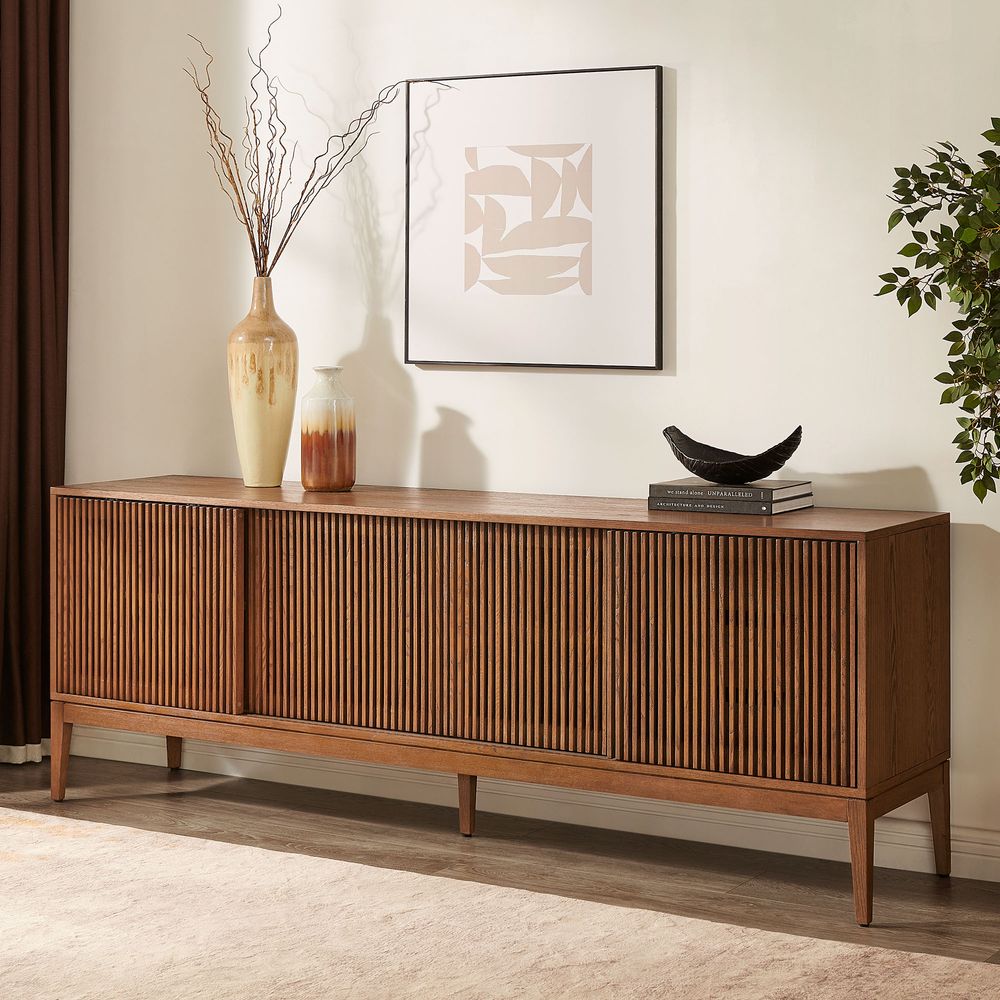
The Astrid 84-Inch MCM Slatted Media Console is one example of how MCM details can add visual interest without relying on elaborate ornamentation. Its slatted sliding doors, solid wood legs, and oak finish create a recognizable mid-century-inspired look. The construction combines American solid oak and engineered wood with oak veneers.
The key is to treat mid-century modern design as a source of inspiration rather than a strict decorating formula.
Astrid 84-Inch MCM Slatted Media Console
View Product
Can You Mix Modern and Mid-Century Modern Furniture?
Yes. Modern and mid-century modern furniture can work together because both styles can favor simple shapes and functional design. The key is to create visual connections between pieces rather than trying to make everything match.
Start with one or two shared elements:
Coordinate materials. Warm wood tones can connect an MCM TV stand with a modern coffee table or sideboard. If the finishes are not identical, look for similar undertones.
Balance shapes. A TV stand with tapered legs can pair well with a modern sofa or a simple rectangular coffee table. Contrasting shapes can add interest as long as their proportions work together.
Use color consistently. A restrained palette of warm neutrals, wood tones, and a few accent colors can help furniture from different styles feel connected.
Avoid too many competing focal points. If the TV stand has a strongly textured front, keep nearby furniture and accessories relatively simple.
The Renata 84-Inch Travertine-Textured Media Console offers another way to bring different design influences into a living room. Its travertine-inspired surface, American oak veneers, and brass-toned hammered hardware combine natural-looking textures with decorative detailing. Adjustable shelves and four cord cutouts also provide practical storage and cable access.
A mixed-style room works best when each piece contributes something distinct while sharing a consistent sense of proportion, color, or material.
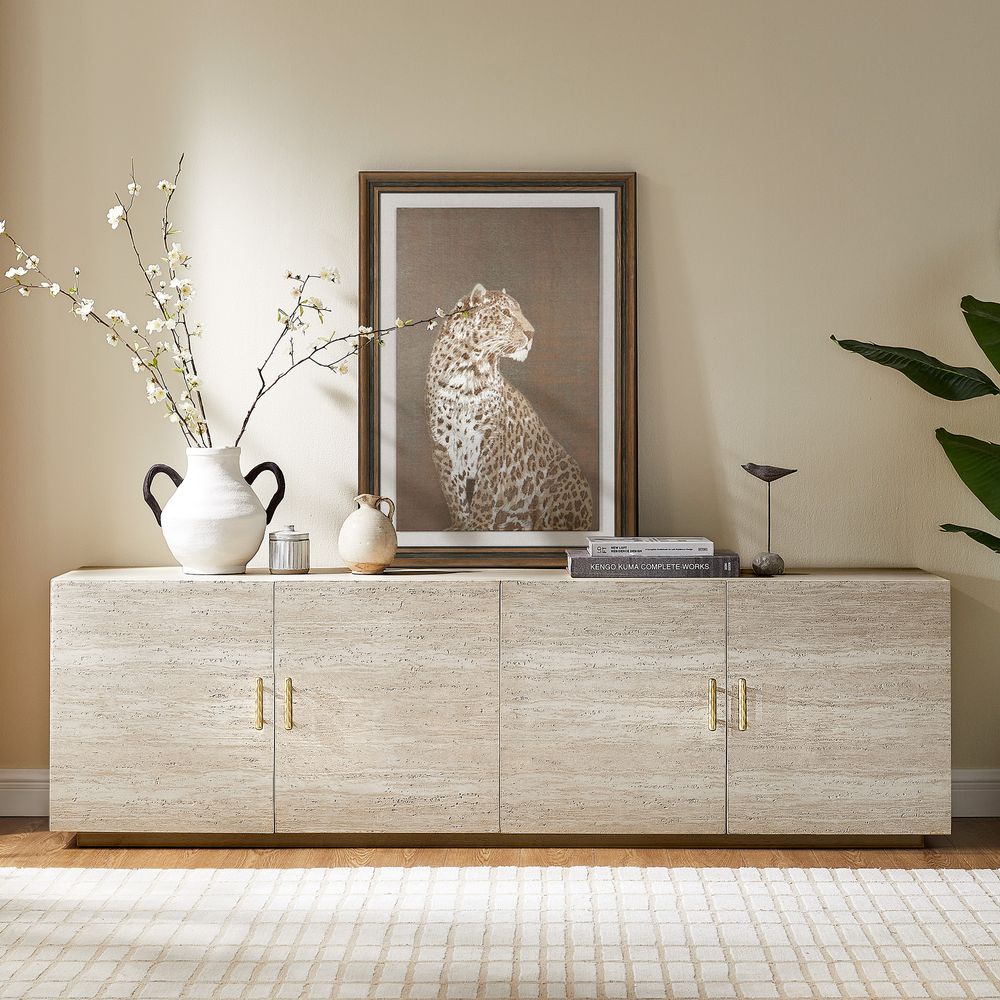
Renata 84-Inch Travertine-Textured Media Console
View Product
TV Stand Safety: What Should You Check?
Appearance and storage are important, but stability should also be part of your decision. A TV stand needs to support the television and remain stable during everyday use.
The U.S. Consumer Product Safety Commission (CPSC) has reported on injuries and fatalities associated with tip-over incidents involving furniture, televisions, and appliances. Its 2023 report recorded 217 reported tip-over fatalities from 2013 through July 2023, with televisions involved in 47% of those fatalities. The report also discusses an average of approximately 17,800 emergency-department-treated tip-over injuries per year during 2020–2022. These figures cover the broader categories of furniture, televisions, and appliances; they should not be interpreted as incidents caused exclusively by TV stands.
You can review the CPSC report here:
When selecting and setting up a TV stand, pay attention to the following:
Check the Recommended Weight Capacity
Compare the weight of your television and any other items placed on the console with the manufacturer's recommended weight capacity. Do not assume that a wider cabinet automatically supports a heavier load.
Confirm TV Compatibility
Check the manufacturer's recommended TV size and the dimensions of the supporting surface. The television's feet should fit securely without extending beyond the usable surface in a way that could compromise stability.
Secure the TV and Furniture
If the television sits on the console, use the TV manufacturer's recommended stand or anti-tip securing method to help prevent the TV from tipping. If the TV stand includes furniture anchoring hardware or the manufacturer recommends anchoring it, follow the installation instructions and secure it to an appropriate wall structure.
Securing the furniture and securing the television are related but separate precautions. One does not automatically replace the other.
Keep Heavy Items Low
Place heavier items in lower compartments whenever possible. Avoid putting heavy objects on top of the cabinet or allowing children to climb on drawers, doors, or shelves.
For additional guidance, follow the product manufacturer's assembly and safety instructions.
A Practical Checklist Before Buying a TV Stand
Before deciding between a modern and mid-century modern TV stand, review these points:
-
Style: Does the design complement your sofa, coffee table, flooring, and other furniture?
-
Width: Is the console wide enough for your television and its supporting feet?
-
Height: Will the screen sit at a comfortable viewing position?
-
Depth: Is there enough room for the TV base, devices, and cable connections?
-
Storage: Can the cabinets and shelves accommodate your entertainment equipment?
-
Cable management: Are the cord openings positioned where you need them?
-
Ventilation: Can enclosed compartments provide sufficient airflow for electronic devices?
-
Construction: Are the materials and hardware suitable for your intended use?
-
Weight capacity: Does the recommended capacity accommodate your television and stored items?
-
Stability: Can the console and television be secured according to the manufacturer's instructions?
A TV stand that meets these practical requirements will be easier to live with, regardless of whether its design is modern or mid-century modern.
Should You Buy a Ready-Made or Custom TV Stand?
A ready-made TV stand is often the more straightforward option if you can find a design that fits your television, room, and storage needs. It typically comes with defined dimensions, materials, and assembly instructions, making it easier to compare products before purchasing.
A custom TV stand may be worth considering if your room has unusual dimensions, you need a specific storage configuration, or you want the cabinet to fit a particular architectural feature. However, custom furniture generally requires more planning around measurements, materials, construction, and installation.
For most living rooms, start by comparing ready-made options. You may find that an appropriately sized console already offers the design and functionality you need without the additional time and coordination involved in a custom project.
FAQs
What Is the Difference Between a Mid-Century Modern and a Modern TV Stand?
A mid-century modern TV stand typically features warm wood tones, tapered legs, streamlined shapes, and distinctive details such as slatted fronts or beveled edges. A modern TV stand is a broader category that often emphasizes clean silhouettes, restrained decoration, and versatile materials and finishes.
Is Mid-Century Modern Considered Modern?
Mid-century modern is a distinct design movement that emerged during the mid-20th century. Although it shares some principles with modern design, such as functionality and simplicity, it has its own recognizable characteristics, including tapered legs, warm wood finishes, and streamlined forms.
Does Mid-Century Modern Furniture Go Out of Style?
Mid-century modern furniture remains a widely recognized interior design style. Its functional shapes, natural materials, and balanced proportions can work in many contemporary living spaces. Choosing pieces with suitable proportions and finishes helps them remain compatible with changing decor.
What Wood Is Commonly Used for Mid-Century Modern TV Stands?
Walnut and oak are common choices for mid-century modern-inspired TV stands because their natural grain and warm tones complement the style. Other wood species and wood veneers can also be used, depending on the design, construction, and desired finish.
How Much Wider Should a TV Stand Be Than the TV?
A TV stand that extends approximately 3–6 inches beyond each side of the television is a useful starting point. However, the ideal width depends on the actual TV dimensions, the spacing of its feet, and the proportions of the room. Always check the manufacturer's measurements before purchasing.
What Is the Best Height for a TV Stand?
The best height depends on your sofa, seated eye level, TV dimensions, and viewing position. As a general guideline, the center of the screen should be close to seated eye level. Measure your seating position and TV dimensions before choosing a console.
Are Open or Closed Shelves Better for a TV Stand?
Open shelves provide easier access and can help electronic devices receive airflow, but they leave equipment and cables visible. Closed cabinets create a tidier appearance by concealing accessories. The right choice depends on your equipment, ventilation requirements, and storage preferences.
How Do You Hide Cables Behind a TV Stand?
Use the console's built-in cable openings to route power cords and connection cables toward outlets and devices. Cable ties and cable organizers can help keep loose wires together. Make sure cables are not stretched, pinched, or blocking ventilation openings.
Should You Anchor a TV Stand to the Wall?
Follow the TV stand manufacturer's anchoring instructions and use appropriate furniture anchoring hardware when provided or recommended. If the television sits on the console, also secure the TV using the method recommended by its manufacturer. Anchoring the furniture does not replace securing the television itself.