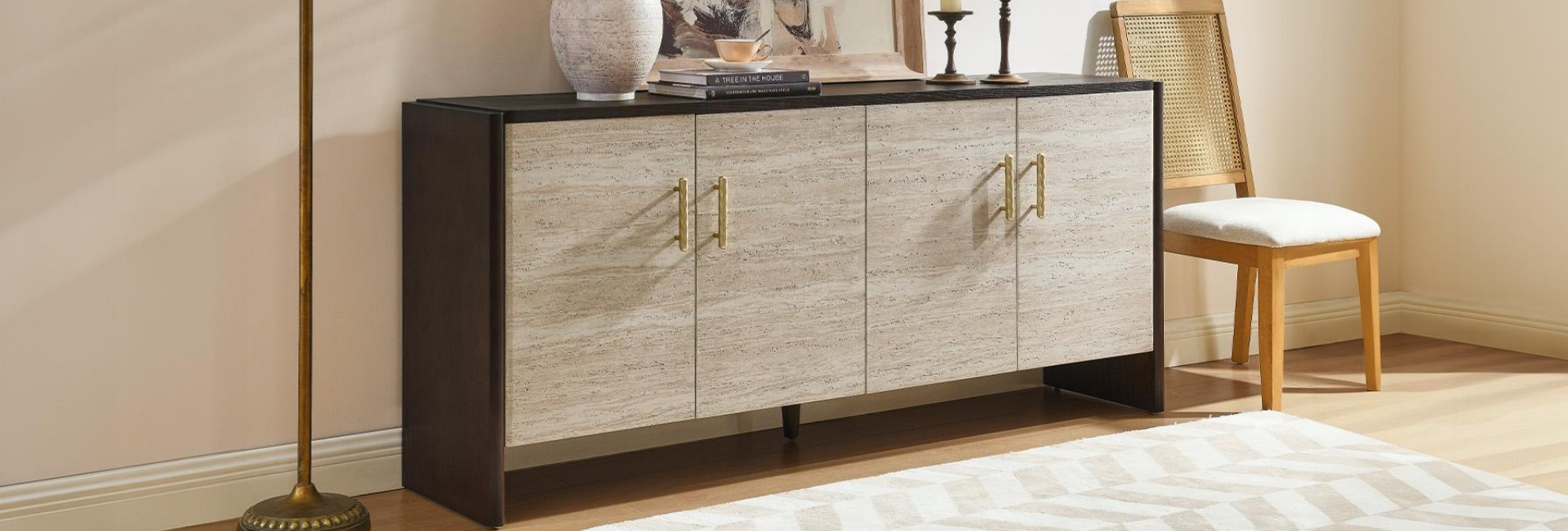
An organic modern sideboard combines clean lines with natural materials, warm finishes, and understated shapes. It provides practical storage while adding texture and warmth to a living room or dining area. When choosing one, consider more than its appearance. The wood and surface materials, overall dimensions, storage layout, and proportions should all work with your existing furniture. A suitable design can complement the room without overwhelming it.
Table of Contents
- What Makes a Sideboard Organic Modern?
- Best Materials and Finishes for an Organic Modern Sideboard
- How to Choose the Right Organic Modern Sideboard
- Where to Place an Organic Modern Sideboard
- How to Style an Organic Modern Sideboard
- Organic Modern Sideboard vs. Mid-Century Modern Sideboard
- Conclusion
- FAQs
- What Is the Difference Between an Organic Modern Sideboard and a Traditional Sideboard?
- Is Solid Wood Better Than Wood Veneer for a Sideboard?
- What Size Sideboard Should I Choose for My Dining Room?
- Can I Put a TV on an Organic Modern Sideboard?
- How Do I Choose a Sideboard That Matches Different Wood Furniture?
- Are Fluted Sideboards Suitable for Everyday Use?
- What Should I Look for When Buying a Sideboard With Fabric Doors?
- How Can I Make a Small Room Look Bigger With an Organic Modern Sideboard?
What Makes a Sideboard Organic Modern?
Organic modern design combines the simplicity of contemporary furniture with nature-inspired materials and shapes. Wood grain, textured surfaces, soft edges, and balanced proportions create visual interest without relying on elaborate ornamentation.
An organic modern sideboard follows these principles. Its structure may be relatively simple, with details such as curved frames, fluted doors, or natural wood finishes adding character.
Clean Lines and Organic Shapes
Modern furniture often uses straightforward geometric forms, while organic modern designs introduce softer details. A sideboard might have a rectangular cabinet structure with rounded corners, curved edges, or gently shaped legs.
Fluted cabinet fronts are another common detail. Their repeated grooves create subtle shadows as light moves across the surface, adding texture without making the furniture look overly decorative.
When comparing designs, consider the other furniture in the room. A cabinet with rounded edges may work well in a space that already has several decorative elements, while a pronounced fluted front can add detail to a more understated interior.
Natural Wood Tones and Visible Grain
Wood is a defining material in organic modern interiors. Oak, walnut, ash, and mindi wood each have distinctive grain patterns and color variations.
Light oak finishes work well with cream walls, beige upholstery, and lighter flooring. Walnut and darker wood finishes provide more contrast, particularly in rooms with pale walls and soft furnishings.
Some furniture emphasizes relatively uniform grain patterns, while other designs showcase more noticeable variations, such as burl patterns or brushed finishes. An oak sideboard with visible grain, for example, can introduce natural texture without adding another prominent color to the room.
Warm Neutrals and Understated Details
Organic modern color palettes often include warm whites, cream, beige, taupe, sand, and earthy brown. These shades provide a neutral background for natural materials and different surface textures.
A sideboard does not have to match the exact color of the walls or flooring. A light brown cabinet can complement a warm white wall, while a darker wood finish can provide contrast against pale upholstery.
Hardware also affects the overall appearance. Brass-toned handles, concealed pulls, and simple metal details can complement natural wood finishes. If the cabinet already has distinctive doors or surface textures, understated hardware can keep the design balanced.
Best Materials and Finishes for an Organic Modern Sideboard
Material selection affects a sideboard's appearance, maintenance requirements, and construction. Two cabinets may look similar in product photographs but use very different materials.
Understanding these differences makes it easier to compare furniture beyond its appearance.
Oak, Ash, and Walnut Wood Finishes
Oak, ash, and walnut create different visual effects.
Oak generally has a noticeable grain pattern and works well in light or medium-toned interiors. Its natural appearance makes it a versatile choice for modern organic furniture, especially alongside linen upholstery, stone accessories, and neutral rugs.
Ash wood often has a lighter appearance and distinctive grain. Depending on the stain and finish, it can range from a pale natural tone to a deeper warm brown.
Walnut is typically darker, with rich brown tones that provide contrast against lighter walls and fabrics. It can work well when a room needs a stronger visual anchor.
When comparing finishes, look at the flooring and larger furniture pieces first. A medium-brown ash sideboard, for example, can sit alongside a lighter oak dining table when their undertones are compatible.
For example, Sabina 72-Inch Ash Wood Sideboard is made with American solid ash wood and engineered wood with ash wood veneers. Its square fluted detailing uses solid ash wood, adding texture across the cabinet front.
The warm brown ash finish offers a darker wood option for rooms with lighter walls or neutral furnishings. At 72 inches wide, Sabina is better suited to a wall with enough space for a substantial cabinet. Its adjustable shelves provide different storage arrangements behind the cabinet doors.
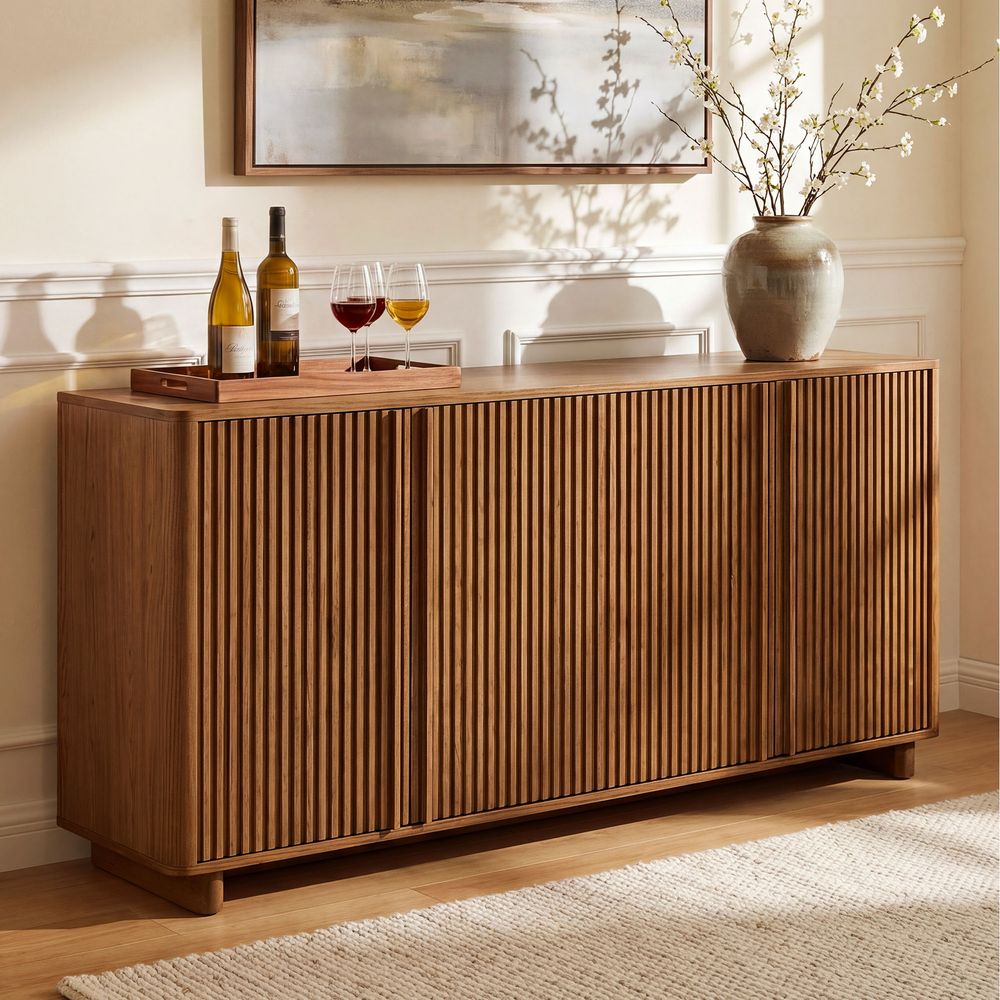
Sabina 72-Inch Ash Wood Sideboard
View Product
Solid Wood, Wood Veneer, and Engineered Wood
A natural-looking wooden sideboard is not necessarily made entirely from solid wood. Furniture can combine several materials, each serving a different purpose.
Solid wood is made from natural timber throughout the relevant component. Its grain and color variations give each piece a distinctive appearance. However, solid wood can respond to changes in temperature and humidity, so appropriate drying, finishing, and care matter.
Wood veneer is a thin layer of real wood applied to a supporting material. It allows furniture to display the grain and appearance of a particular wood species without using solid lumber throughout every panel.
Engineered wood refers to manufactured wood-based materials made by combining wood fibers, particles, strands, or layers. Depending on the product and construction, these materials can provide consistent panel dimensions and support for furniture components.
When shopping, check the material descriptions for the cabinet frame, doors, panels, legs, and surface finish rather than relying on the product title alone.
The USDA Forest Products Laboratory's Wood Handbook provides technical information on natural wood, wood-based composites, and their properties.
Stone-Inspired Surfaces and Mixed Materials
Wood is not the only material used in organic modern interiors. Stone, ceramic, and textured surfaces can introduce contrast alongside natural wood finishes.
Travertine is recognizable for its warm beige color and natural surface variations. However, not every travertine-look furniture piece contains natural stone. Some sideboards use resin, engineered wood, or other materials to create a similar appearance.
Check the material specifications before purchasing, since a stone-inspired finish does not have the same composition or care requirements as natural stone.
Mixed-material designs can also combine lighter and darker finishes. A beige textured surface paired with a dark wood frame, for example, introduces contrast without requiring a completely different color palette.
For example, Renata 71-Inch Travertine-Textured Sideboard combines a beige travertine-textured surface with a dark wood-grain frame and light brass-toned hammered hardware. Its construction uses resin and engineered wood with American ash veneers.
The combination of a beige textured surface and dark wood frame illustrates how contrasting materials can be used in an organic modern interior. Its 71-inch width and 15.7-inch depth give it a relatively shallow profile compared with deeper sideboards.
The adjustable interior shelves provide storage flexibility for tableware, small appliances, and other household items.
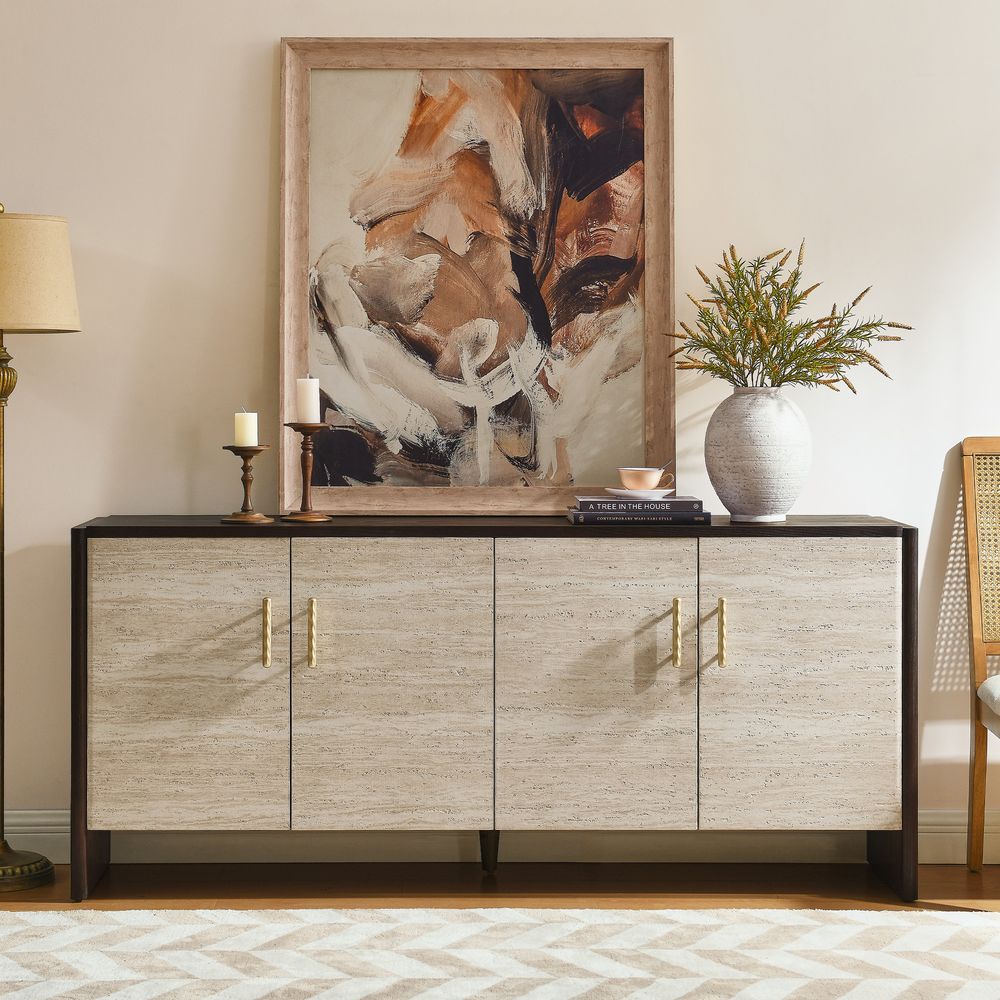
Renata 71-Inch Travertine-Textured Sideboard
View Product
Textured Fabrics and Natural-Looking Finishes
Organic modern furniture also incorporates softer materials such as linen, wool, bouclé, jute, and woven fibers. These textures can balance the harder surfaces of wood, stone, and metal.
A fabric-front sideboard is one way to introduce this contrast. A wooden frame paired with woven cabinet doors creates a different appearance from an entirely wood-finished cabinet.
For example, Walter 80-Inch Linen-Blend Sideboard combines a light brown cerused mindi wood finish with sand-colored linen-blend doors. Its construction includes mindi wood and engineered wood with mindi veneers. The tightly woven fabric adds a softly slubbed texture to the cabinet front.
The softly rounded wood frame also reflects the curved shapes often found in organic modern furniture.
At approximately 80.1 inches wide, Walter is better suited to a spacious wall or an open-plan living and dining area. Its adjustable shelves accommodate different household storage requirements.
When choosing a fabric-front design, consider how the material will be exposed to everyday use. Follow the manufacturer's care instructions and account for dust, spills, pets, and how frequently the cabinet will be handled.
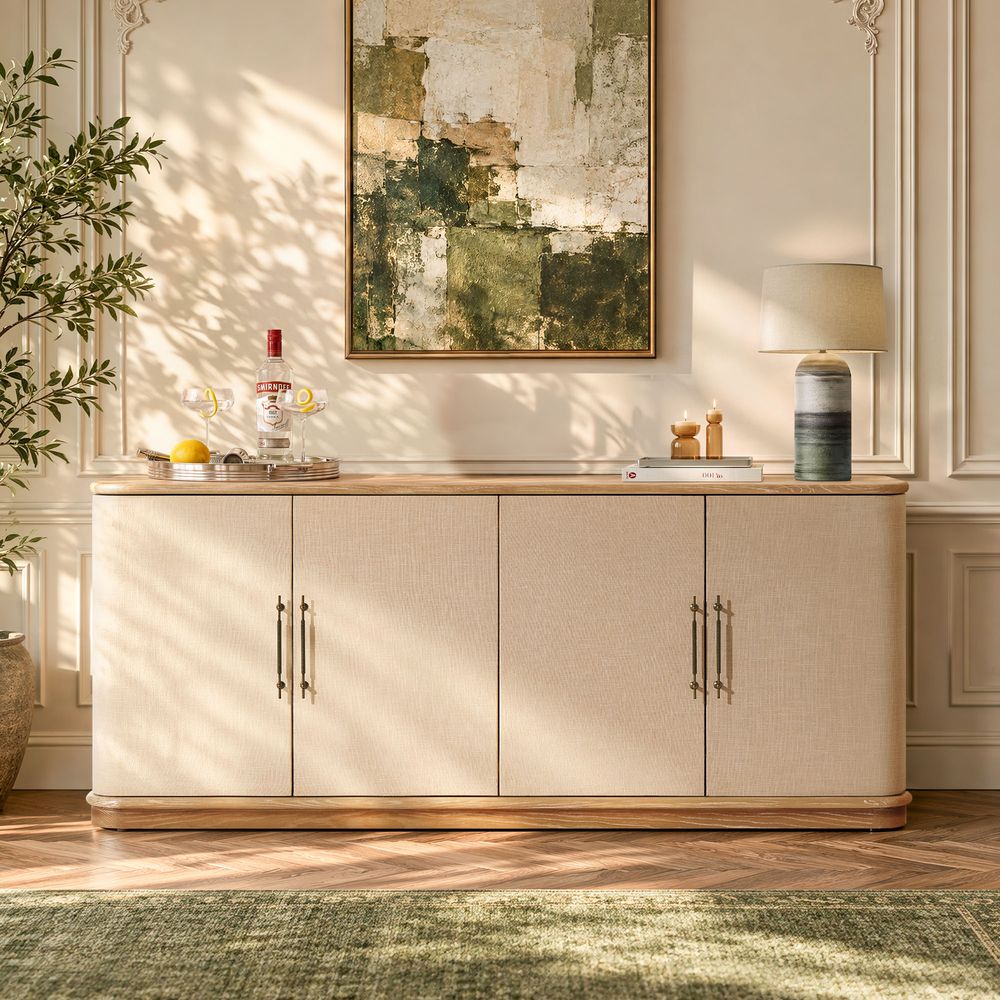
Walter 80-Inch Linen-Blend Sideboard
View Product
How to Choose the Right Organic Modern Sideboard
A sideboard needs to fit the room's layout and storage requirements. Before choosing a design, consider where it will go, what you plan to store inside, and how often you will use it.
Measure Your Space Before Choosing
Start by measuring the available wall width, height, and floor depth. Also account for nearby furniture, doorways, windows, baseboards, electrical outlets, and other features that may affect placement.
Depth is particularly important. A cabinet may fit against the wall but leave too little room for people to move around it.
In a dining room, measure the distance between the front of the sideboard and the dining table. Around 36 inches is a useful starting point for chair movement and access, although a walkway used by several people may need more space. Check the room with the dining chairs pulled out rather than measuring only the empty floor.
Height also affects how the sideboard relates to the room. A lower cabinet can sit beneath artwork or a large wall mirror, while a taller design may provide more vertical storage.
Before ordering, check the delivery measurements and the route into the room. Hallways, staircases, elevators, and narrow doorways can create access problems for large furniture, particularly when the product arrives fully assembled.
Choose the Right Storage Configuration
Sideboards come with different combinations of cabinet doors, drawers, adjustable shelves, and open compartments. The right arrangement depends on what you plan to keep inside.
-
Cabinet doors: Useful for keeping dinnerware, linens, small appliances, and everyday accessories out of sight.
-
Drawers: Suitable for smaller items such as cutlery, napkins, placemats, and household essentials.
-
Adjustable shelves: Allow you to change the available vertical space for taller dishes, serving bowls, or glassware.
-
Open shelving: Provides convenient access to frequently used items but requires more attention to arrangement and dusting.
Check the internal dimensions rather than relying only on the cabinet's overall width and height. Measure the tallest items you intend to store and account for shelf thickness, door openings, and usable depth.
Concealed storage can also be useful when you want to keep everyday belongings out of sight while leaving the top surface available for decorative objects.
Match the Sideboard With Existing Furniture
A sideboard does not need to match every other wooden piece in the room. Different but compatible wood tones can create a more natural and collected appearance.
Start with the largest existing wood surfaces, such as flooring, dining tables, coffee tables, and built-in shelving. Consider whether they have warm or cool undertones and whether their finishes are light or dark.
A walnut-colored cabinet can sit alongside a lighter oak dining table without looking out of place when their undertones are compatible. Repeating the darker wood tone in a picture frame, lamp base, or decorative tray can help connect the finishes.
Texture matters, too. A fluted cabinet front can add detail to a room with smooth furniture surfaces, while a simpler wood-grain cabinet may work better alongside patterned rugs and textured upholstery.
Consider Everyday Use and Maintenance
A sideboard's construction and surface details determine how well it fits your routine.
Check the door hinges, shelf arrangement, hardware, and overall construction. If the piece has drawers, consider their usable dimensions and how smoothly they open. For adjustable shelves, check the available positions and clearance for taller items.
Pay attention to the recommended weight capacity as well. If you plan to place heavy decorative objects, tableware, or equipment on the cabinet, make sure the specified capacity suits your intended use.
Maintenance depends on the materials and finish. Wood surfaces generally benefit from regular dusting, prompt cleanup of spills, and protection from prolonged direct sunlight. Use cleaning products recommended for the specific finish rather than assuming a general household cleaner is suitable.
Wood can exchange moisture with its surroundings, which is one reason indoor conditions and protective finishes matter. Oregon State University's Extension Service explains how moisture affects wood and why suitable finishing and environmental conditions help protect wood products.
For fabric-covered doors, check the manufacturer's care guidance before using a cleaning solution. Different fabric blends and surface treatments may require different approaches.
Where to Place an Organic Modern Sideboard
A sideboard can serve different purposes depending on its location. Choose a position that provides convenient storage without interrupting the room's natural movement.
In the Living Room
In a living room, a sideboard can store books, board games, blankets, media accessories, and other items that tend to accumulate in shared spaces.
Placing it against an open wall provides additional storage and creates a surface for artwork, a wall mirror, or a few decorative objects.
If you plan to use a sideboard for media storage, check cable access, ventilation requirements, and the dimensions of your electronic equipment before choosing a cabinet. Not every sideboard is designed to function as a media console.
A natural wood finish paired with cream upholstery, a textured rug, and ceramic accessories can work well in an organic modern living room.
In the Dining Room
The dining room is a practical location for a sideboard. It can hold dinnerware, serving dishes, glassware, table linens, and other items used during meals and gatherings.
Its top surface also provides room for serving food or displaying a decorative arrangement when it is not being used for dining.
Choose a design that works proportionally with the dining table and available wall space. A very long cabinet may dominate a small dining room, while a narrow sideboard may look undersized against a large table and open wall.
A warm wood finish can complement a wooden dining table, while a stone-inspired or fabric-front design can introduce a different texture. Upholstered dining chairs and natural textiles can help complete an organic modern dining room.
In the Entryway
A sideboard can provide convenient storage near the front door for bags, mail, everyday accessories, and other frequently used items.
However, not every sideboard is suitable for an entryway. Consider the cabinet's depth, the width of the passage, and the clearance needed to open its doors. A shallower design may work better in a narrow entrance, while a larger foyer may accommodate a wider cabinet.
Above the sideboard, a mirror or framed artwork can create a focal point. A small lamp, decorative bowl, or vase can complete the arrangement without taking up too much surface space.
Keep frequently used items within easy reach and avoid placing decorative objects where they obstruct the entrance.
How to Style an Organic Modern Sideboard
The way you arrange accessories can influence how naturally a sideboard fits into the room. Focus on a few complementary materials, shapes, and decorative elements rather than filling the entire surface.
Start With a Simple Decorative Arrangement
Begin with one larger decorative element, such as framed artwork, a wall mirror, a sculptural vase, or a table lamp. This provides a focal point for the arrangement.
Next, introduce smaller objects at different heights. A tall ceramic vase can sit beside a small stack of books, while a decorative bowl or sculptural object adds a lower element.
Vary the shapes and proportions. A rounded vase can soften a rectangular cabinet, while a simple framed print can complement furniture with more detailed surfaces.
For a sideboard with prominent wood grain or fluted doors, keep the top relatively simple so the cabinet remains visible.
Layer Natural Textures
Combine materials such as smooth ceramic, natural wood, woven baskets, linen, and stone-inspired accessories to introduce different surface textures.
For example, a beige sideboard can be styled with a textured ceramic vase, a small stone tray, and a woven basket. The colors remain relatively close, while the differences in texture add visual interest.
If the cabinet already has a pronounced finish, choose simpler accessories. A fluted wood sideboard may need only a few smooth decorative objects, while a plain cabinet can accommodate a wider variety of textures.
Add Greenery and Organic Elements
Plants and branches introduce natural shapes that contrast with the straight lines of storage furniture.
A small potted plant can sit at one end of the cabinet, while a taller arrangement of branches can add height to a room with high ceilings.
Choose greenery according to the available light and the amount of maintenance you can manage. Dried branches or seasonal arrangements are alternatives when a living plant is not practical.
Ceramic, stone, and simple woven planters work well with natural wood finishes and warm neutral colors.
Balance Decorative Objects With Open Space
Too many accessories can make a sideboard surface feel crowded. Instead, group objects into a few visual clusters and leave some space uncovered.
A tall vase on one side and a smaller arrangement of books and ceramics on the other can create an informal composition. The scale of the accessories should also relate to the cabinet. A large sideboard can accommodate taller lamps or larger artwork, while a smaller cabinet may need more compact decorative pieces.
The arrangement does not have to be symmetrical. Varying the height and placement of objects can make the display feel more relaxed.
Organic Modern Sideboard vs. Mid-Century Modern Sideboard
Organic Modern and Mid-Century Modern sideboard can share natural wood finishes, clean lines, and relatively simple silhouettes. However, their design emphasis is often different.
Understanding these differences can help you choose a sideboard that suits your preferred interior style.
Differences in Shape and Design
Organic modern designs often favor softened edges, rounded frames, irregular forms, and subtle sculptural details.
A cabinet may have a simple rectangular structure with curved corners or gently rounded legs.
Mid-Century Modern furniture is more closely associated with recognizable profiles, including tapered legs, angled supports, and structured cabinet shapes. Its strong horizontal silhouettes and distinctive leg designs are often defining features.
These are general design tendencies rather than strict rules. A sideboard can incorporate elements from both styles.
Differences in Materials and Finishes
Both styles use wood, but the way it is presented can create different visual effects.
Organic modern furniture often emphasizes natural textures, tactile surfaces, warm neutrals, and combinations of wood with materials such as linen, ceramic, and stone.
Mid-Century Modern designs frequently use recognizable wood finishes and distinctive detailing to highlight the furniture's profile.
For example, an ash wood cabinet with rounded edges and a textured finish may lean toward an organic modern look, while a cabinet with tapered legs and a more structured geometric profile may feel more mid-century.
Choosing Between the Two Styles
Your existing furniture and preferred atmosphere should guide the decision.
If you prefer softer shapes, warm neutral colors, layered textures, and a relaxed appearance, an organic modern sideboard may suit your room.
If you prefer defined silhouettes, tapered legs, and recognizable vintage-inspired details, a Mid-Century Modern design may be a better match.
You can also combine elements of both styles when their wood tones, proportions, and overall visual weight are compatible.
Conclusion
Choosing an organic modern sideboard involves more than finding a cabinet with a natural wood finish. Its shape, materials, dimensions, storage layout, and relationship with surrounding furniture all influence how well it works in your home.
Consider how the sideboard will be used as well as how it looks. Whether you prefer a wood-focused cabinet, a stone-inspired surface, or a fabric-front design, choose one that fits your space and everyday storage needs.
Explore the Hernest Sideboards Collection to compare different materials, finishes, and designs for your living or dining area.
FAQs
What Is the Difference Between an Organic Modern Sideboard and a Traditional Sideboard?
An organic modern sideboard combines the practical storage of a traditional sideboard with cleaner lines, softer shapes, and natural-looking materials. It often features warm wood finishes, rounded edges, fluted details, and understated hardware. Traditional sideboards may have more decorative detailing or formal designs.
Is Solid Wood Better Than Wood Veneer for a Sideboard?
Solid wood offers natural grain variations and can be refinished depending on its condition and finish. Wood veneer provides the appearance of real wood while using less solid timber. Neither is automatically better. Consider the construction, intended use, finish, and maintenance requirements when comparing options.
What Size Sideboard Should I Choose for My Dining Room?
Choose a sideboard that fits the available wall space without restricting movement around the dining table. Measure the wall width, cabinet depth, and clearance between the sideboard and dining chairs. A longer cabinet can work well in a spacious dining room, while a narrower design may suit a smaller layout.
Can I Put a TV on an Organic Modern Sideboard?
Yes, provided the sideboard has a suitable weight capacity and enough surface space for your television. Check the manufacturer's specifications, screen stand dimensions, cable access, and ventilation requirements. Also make sure the cabinet height provides a comfortable viewing position.
How Do I Choose a Sideboard That Matches Different Wood Furniture?
Look at the undertones, grain patterns, and overall finishes rather than trying to match every piece exactly. Warm oak, walnut, and ash finishes can work together when their colors complement the surrounding furniture. Repeating a related wood tone through smaller decorative accessories can also create visual continuity.
Are Fluted Sideboards Suitable for Everyday Use?
Yes. Fluted sideboards can provide the same general storage functions as other cabinet designs. However, their grooved surfaces may collect dust more easily than smooth fronts, so occasional cleaning with a suitable soft brush or cloth may be needed. Check the manufacturer's care recommendations for the specific finish.
What Should I Look for When Buying a Sideboard With Fabric Doors?
Check the fabric composition, construction, cleaning instructions, and how the doors open and close. Linen-blend and woven surfaces can add texture to a room, but their maintenance requirements may differ from wood or other hard finishes. Consider household factors such as pets, dust, and frequent handling before choosing one.
How Can I Make a Small Room Look Bigger With an Organic Modern Sideboard?
Choose a sideboard with a relatively shallow depth, a simple silhouette, or raised legs that leave some visible floor space underneath. Light wood finishes and uncluttered styling can also help maintain an open appearance. Avoid oversized cabinets that restrict walking paths or dominate the available wall space.