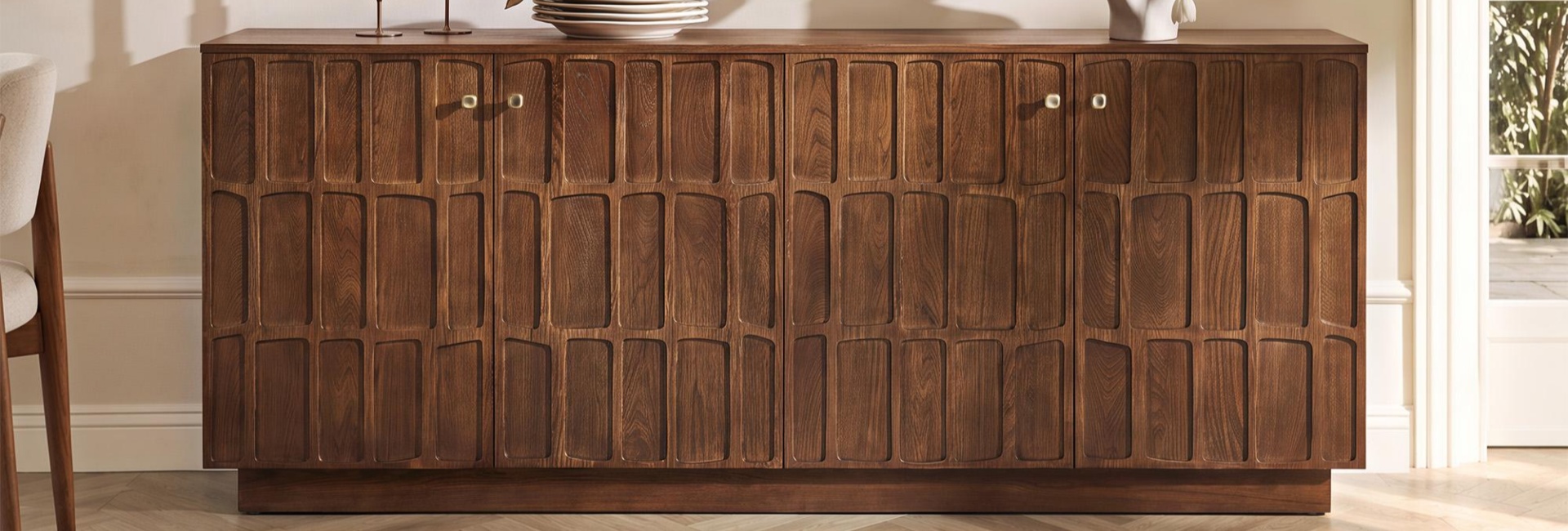
Sideboards and buffets are often used interchangeably, but they have traditionally served slightly different purposes. A sideboard is generally associated with storage and display, while a buffet is designed with dining and food service in mind. Today, however, many furniture designs combine both functions. Understanding their typical features, storage options, and practical uses can help you choose the right piece for your dining room or living space.
Table of Contents
- The Difference Between a Sideboard and a Buffet at a Glance
- What Is a Sideboard?
- What Is a Buffet?
- Key Differences Between Sideboards and Buffets
- Why Are Sideboards and Buffets Often Used Interchangeably?
- How to Choose Between a Sideboard and a Buffet
- Can You Use a Sideboard as a Buffet, or Vice Versa?
- What to Check Before Buying a Sideboard or Buffet
- FAQs
- Is a Sideboard the Same as a Buffet?
- Is a Buffet Taller Than a Sideboard?
- Can You Put a TV on a Sideboard or Buffet?
- What Is the Difference Between a Buffet and a Credenza?
- Should a Sideboard Be Longer Than a Dining Table?
- Can a Sideboard Be Used as a Dining Room Buffet?
- Can a Sideboard Be Used in a Small Living Room?
- What Size Sideboard Do I Need for a Dining Room?
The Difference Between a Sideboard and a Buffet at a Glance
Sideboards and buffets are both storage cabinets with wide tops, drawers, and enclosed compartments. Traditionally, sideboards have been used in dining rooms and other living spaces for general storage and display, while buffets are more closely associated with serving food and storing dining essentials.
However, the distinction is not always clear in modern furniture. Many pieces labeled as sideboards or buffets can serve the same purpose.
These differences describe traditional uses rather than strict rules. When comparing modern furniture, dimensions, storage layout, and intended use are more useful than the product name alone.
What Is a Sideboard?
A sideboard is a low, wide storage cabinet traditionally placed against a wall in a dining room. It provides space for storing tableware, linens, and other household items, while its top can be used to display decorative objects or hold items needed during meals.
Historically, sideboards became popular in dining rooms as a place to store and display silverware, porcelain, and glassware. Over time, their designs expanded to include different materials, storage configurations, and decorative styles.
Common Features of Sideboard Furniture
Most sideboards share a few practical characteristics:
-
Wide top surface: Provides room for lamps, artwork, vases, and serving accessories.
-
Enclosed storage: Cabinets help keep dinnerware, linens, and household items out of sight.
-
Drawers: Offer convenient storage for flatware, napkins, placemats, and smaller accessories.
-
Low, horizontal profile: Makes the cabinet suitable for placement along a dining room or living room wall.
The exact layout varies. Some sideboards have several drawers, while others feature cabinet doors, adjustable shelves, or a combination of both.
Where Can You Use a Sideboard?
Sideboards are not limited to dining rooms. Their storage and display functions make them useful in several areas of the home.
Dining Room: A sideboard can hold plates, glasses, serving utensils, and table linens. Its top also provides extra space for serving dishes when hosting a meal.
Living Room: Use drawers for smaller items such as remote controls and accessories, while enclosed compartments can hold books, board games, or extra household supplies.
Hallway or Entryway: A narrower sideboard can provide storage for everyday essentials. Check its depth and door clearance to make sure it does not obstruct the main walkway.
What Is a Buffet?
A buffet is a storage and serving cabinet traditionally associated with dining rooms. It provides a surface for placing food, drinks, and serving dishes during meals or gatherings, with storage underneath for tableware, linens, and other dining accessories.
The term is closely connected to the way the furniture is used. Rather than serving only as general storage, a traditional buffet provides a convenient place to arrange and serve food.
Common Features of a Buffet Cabinet
A buffet cabinet often includes features that support dining and entertaining:
-
Generous top surface: Provides room for serving platters, drinks, and dishes.
-
Cabinet storage: Keeps plates, bowls, glassware, and serving accessories organized.
-
Drawers: Offer space for flatware, napkins, and smaller dining essentials.
-
Adjustable shelves: Help accommodate items of different heights, depending on the design.
Not every buffet has the same configuration. Some are designed primarily for storage, while others provide a larger serving surface with fewer enclosed compartments.
Buffet Cabinet vs. Buffet Table
The terms buffet cabinet and buffet table are sometimes used interchangeably, but they can describe different types of furniture.
A buffet cabinet usually has enclosed storage, such as drawers, doors, or shelves, beneath its top surface. It can store tableware and dining accessories while also providing a place to arrange food.
A buffet table generally refers to a serving surface used for placing food and drinks. It may have an open or minimal design and does not necessarily include enclosed storage.
When shopping, check the product's actual construction rather than relying on the name. A cabinet with drawers and adjustable shelves offers different storage options from a simple serving table.
Where Are Buffets Typically Used?
The dining room is the traditional location for a buffet. It can sit along a wall near the dining table, providing convenient access to plates, glasses, and serving dishes.
During gatherings, the top can hold food and drinks, allowing guests to serve themselves without crowding the dining table.
A buffet can also work in a living room or hallway when its size and appearance suit the space. In a living room, it can store books, board games, and household accessories. In a hallway, a shallower design may be more practical.
Key Differences Between Sideboards and Buffets
Although the two types of furniture share many features, a few practical details can help you compare them.
Height and Dimensions
Buffets are sometimes described as slightly taller than sideboards, but this is not a reliable distinction. Both types come in different heights, widths, and depths depending on their design.
Instead of choosing based on a traditional height distinction, consider how the cabinet will fit with your dining table, chairs, and available wall space.
Storage Configuration
Sideboards and buffets can both include drawers, cabinets, and adjustable shelves. Their storage layouts are not determined by their names. The more useful question is whether the interior arrangement suits the items you plan to store.
For example:
-
Drawers are useful for flatware, napkins, and smaller accessories.
-
Adjustable shelves can accommodate plates, bowls, and items of different heights.
-
Enclosed cabinets help keep larger items and everyday supplies out of sight.
-
Glass-front doors allow stored items to remain visible while protecting them from dust.
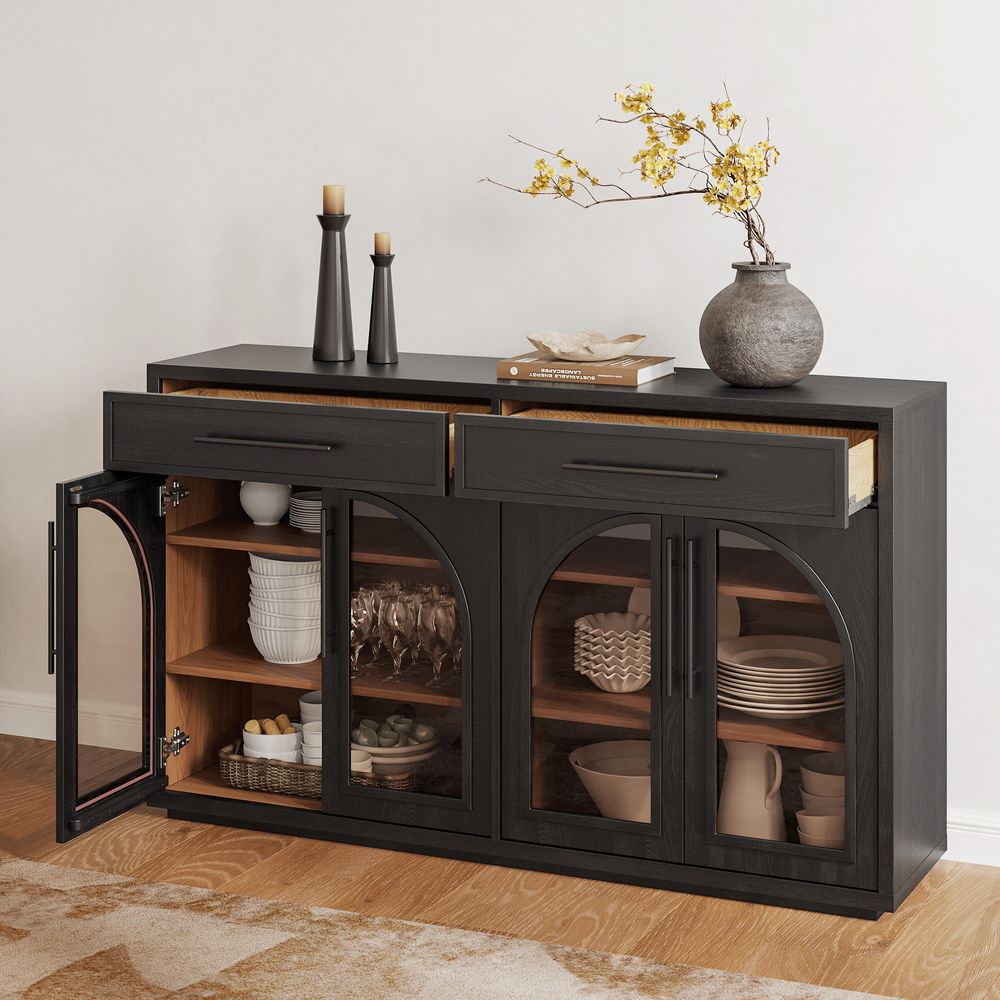
If you want both enclosed storage and display space, the Valborg 63-Inch Sideboard is one option to consider. It measures 63 inches wide, 15.7 inches deep, and 37.4 inches high, with two drawers and adjustable shelving behind arched glass doors. The drawers provide space for smaller dining accessories, while the glass-front cabinets let you display dinnerware without leaving it fully exposed.
Its listed materials include solid wood and plywood with elm veneers, and the drawers feature dovetail joints.
Compare the number of compartments and their interior dimensions before choosing a cabinet.
Valborg 63-Inch Sideboard
View Product
Top Surface and Everyday Use
A traditional buffet is associated with serving food, so its top surface is often used for dishes, drinks, and serving accessories.
A sideboard can also provide serving space, but it may be used more frequently for decorative objects, lamps, or everyday household items.
In practice, both can perform these functions. Pay attention to the usable surface area, the cabinet's recommended weight capacity, and how much room you need for serving or display.
Why Are Sideboards and Buffets Often Used Interchangeably?
The distinction between sideboards and buffets has become less obvious as furniture designs have changed.
Historically, the terms were associated with different roles in the dining room. Sideboards provided storage and display space, while buffets were closely connected to serving food. Modern cabinets, however, often combine both functions.
A single piece may have drawers for flatware, adjustable shelves for dinnerware, and a wide top for serving dishes. It can therefore work as both a storage sideboard and a dining room buffet.
Retailer naming also varies. Similar cabinets may be listed as sideboards, buffets, or buffet cabinets depending on the brand and product category.
When comparing furniture, focus on these details:
-
What items can the cabinet store?
-
Does the top provide enough room for serving or display?
-
Are the interior compartments suitable for your belongings?
-
Will its dimensions work in the intended room?
These details give you a clearer idea of how a piece will function than its label alone.
How to Choose Between a Sideboard and a Buffet
Choosing between a sideboard and a buffet is mainly a matter of how you plan to use the furniture and where you intend to place it.
Consider How You Will Use It
Start by identifying the cabinet's main purpose.
If you need additional storage for dinnerware, linens, and household accessories, look for a sideboard or buffet with a suitable combination of drawers and enclosed compartments.
If you regularly host dinners or gatherings, consider a design with a wide, accessible top surface for arranging food and drinks. A cabinet with enough storage underneath can also keep serving items close at hand.
For a piece that will serve multiple purposes, look for a balanced layout with both practical storage and usable surface space.
Measure Your Available Space
Measure the wall where you plan to place the cabinet before comparing products.
Check three dimensions:
-
Width: Make sure the cabinet fits the available wall space and does not crowd nearby furniture.
-
Depth: Allow enough clearance for people to walk past, open doors, and pull out drawers.
-
Height: Consider nearby furniture, wall decor, and the height of the dining table.
If you plan to place the cabinet near a dining table, leave enough room for chairs to move and people to walk comfortably around the furniture.
Match the Storage to Your Belongings
Think about what you need to store before deciding on a particular layout.
For example, a cabinet with several drawers may be useful for organizing cutlery, napkins, and small accessories. If you have large serving platters or taller glassware, look for spacious compartments and adjustable shelves.
Check the interior dimensions rather than relying only on the cabinet's external measurements. A wide cabinet does not necessarily have enough usable storage space for every item.
Consider the Existing Furniture and Style
A sideboard or buffet should work with the furniture and finishes already in the room.
If your dining table, chairs, or flooring feature visible wood grain, consider how the cabinet's finish will look alongside them. Matching every wood tone is not necessary. Repeating a similar tone or finish elsewhere in the room can help different pieces work together.
Also consider the cabinet's visual proportions. A large, heavy-looking cabinet may dominate a small room, while a narrower design can leave more open space around the furniture.
Can You Use a Sideboard as a Buffet, or Vice Versa?
Yes. A sideboard can be used as a buffet, and a buffet can serve as a sideboard. Their functions overlap, especially in modern homes where furniture often serves more than one purpose.
A sideboard can work well as a serving station if it has enough usable surface area for food, drinks, and serving dishes. Its drawers and cabinets can also store tableware and linens.
A buffet can serve as general storage in a living room or hallway if its dimensions and storage layout suit the space.
Before using one in place of the other, consider a few practical details:
-
Surface area: Make sure the top is large enough for the items you plan to place on it.
-
Material and care: Check whether the surface can be cleaned and maintained with the products you normally use.
-
Storage layout: Confirm that the drawers and compartments fit your intended belongings.
-
Weight capacity: Follow the manufacturer's recommended weight limits, particularly when placing heavy serving dishes or equipment on top.
-
Placement: Check door clearance and walking space around the cabinet.
The furniture's actual dimensions and construction matter more than whether the product is labeled a sideboard or a buffet.
What to Check Before Buying a Sideboard or Buffet
Once you have identified the right size and general layout, compare the product details carefully. Two cabinets with similar external dimensions can offer very different storage capacity and construction.
Material and Surface Finish
Check the materials used for the cabinet body, doors, shelves, and visible surfaces. Some products combine solid wood with plywood or wood veneers, while others use engineered wood or alternative materials.
The finish also affects the cabinet's appearance and maintenance requirements. Natural wood grain, painted finishes, and textured surfaces each create a different look.
Read the product specifications to understand the actual material composition instead of assuming that a wood-look finish means the entire cabinet is made from solid wood.
Interior Dimensions and Shelf Adjustability
External dimensions tell you how much floor and wall space a cabinet occupies, but interior measurements determine what you can store inside.
Check the width, depth, and height of individual compartments. If you plan to store large plates, serving platters, or taller glassware, make sure the available space is sufficient. Adjustable shelves can make a cabinet more flexible by allowing you to change the height of each compartment.
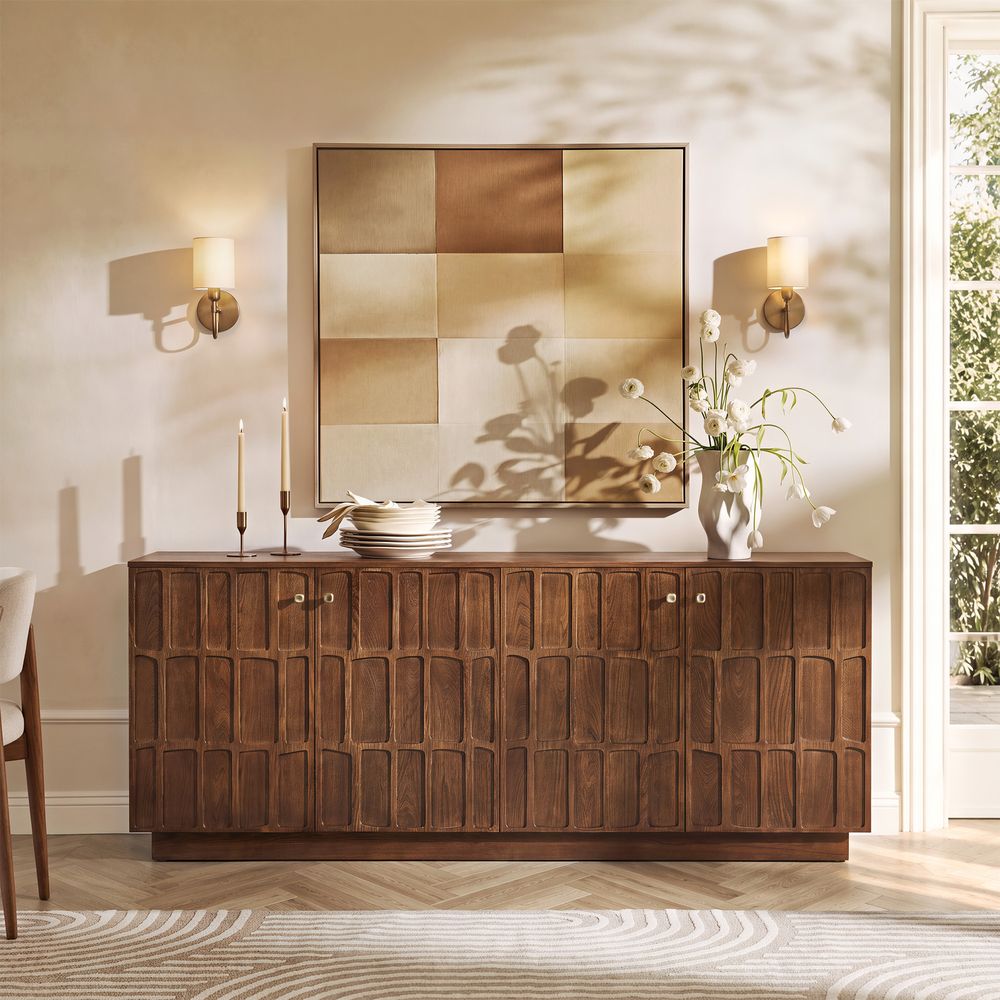
For a wider storage option, the Vittorio 80-Inch Elm Sideboard from measures 80 inches wide, 19 inches deep, and 32.1 inches high. It features adjustable shelves and separate storage compartments, giving buyers more flexibility when organizing items of different sizes. Checking its listed interior dimensions can help determine whether dinnerware, serving accessories, or other household items will fit.
The cabinet is made with solid rubber wood and plywood with elm veneers, and features a wire-brushed finish with raised grid detailing.
Before buying, compare the interior measurements with the items you intend to store rather than relying on the cabinet's overall width alone.
Vittorio 80-Inch Elm Sideboard
View Product
Drawer Construction and Weight Capacity
Look beyond the number of drawers and check their usable dimensions. A drawer that appears spacious from the outside may have limited interior room.
Also review the manufacturer's weight recommendations for the cabinet and its shelves. This is especially important if you plan to store heavy dinnerware or use the top for serving.
Assembly and Installation
Check whether the product arrives fully assembled or requires installation. Some cabinets may need only minor finishing steps, such as attaching handles, while others require more extensive assembly.
For tall or heavy furniture, review the manufacturer's installation and anti-tip recommendations. Make sure the cabinet can be positioned securely in its intended location.
FAQs
Is a Sideboard the Same as a Buffet?
Not exactly. A sideboard is traditionally associated with general dining room storage and display, while a buffet is more closely connected to serving food and storing dining essentials. However, modern designs often combine both functions, so the terms are frequently used interchangeably.
Is a Buffet Taller Than a Sideboard?
A buffet is sometimes described as slightly taller, but there is no fixed height difference. Both types of furniture come in a range of dimensions, so check the product measurements before buying.
Can You Put a TV on a Sideboard or Buffet?
You can use a sideboard or buffet as a TV stand if its dimensions and weight capacity are suitable. Check that the cabinet can support the television and that there is enough room for cables and connected devices. If the cabinet has enclosed compartments, make sure electronic equipment has adequate ventilation.
What Is the Difference Between a Buffet and a Credenza?
A buffet is traditionally associated with dining rooms and serving food, while a credenza is generally a low storage cabinet that may be used in dining rooms, offices, or living spaces. Their designs and functions can overlap, and modern furniture retailers may use the terms differently.
Should a Sideboard Be Longer Than a Dining Table?
Not necessarily. A sideboard can be shorter than, similar in length to, or longer than a dining table, depending on the room layout. What matters is whether it fits the available wall space and leaves enough room for chairs and walkways.
Can a Sideboard Be Used as a Dining Room Buffet?
Yes. A sideboard can work as a dining room buffet if its top provides enough space for serving dishes and its storage compartments can accommodate dining accessories. Check the surface material and recommended weight capacity before using it for serving.
Can a Sideboard Be Used in a Small Living Room?
Yes. A sideboard can provide useful storage in a small living room, but its dimensions should suit the available space. Consider a narrower design and check the depth to make sure it does not restrict the main walkway or interfere with nearby furniture.
What Size Sideboard Do I Need for a Dining Room?
The right size depends on the available wall space, dining table dimensions, and storage needs. Measure the intended location and account for door clearance and walking space. Also check the cabinet's interior dimensions to make sure it can hold the items you plan to store.