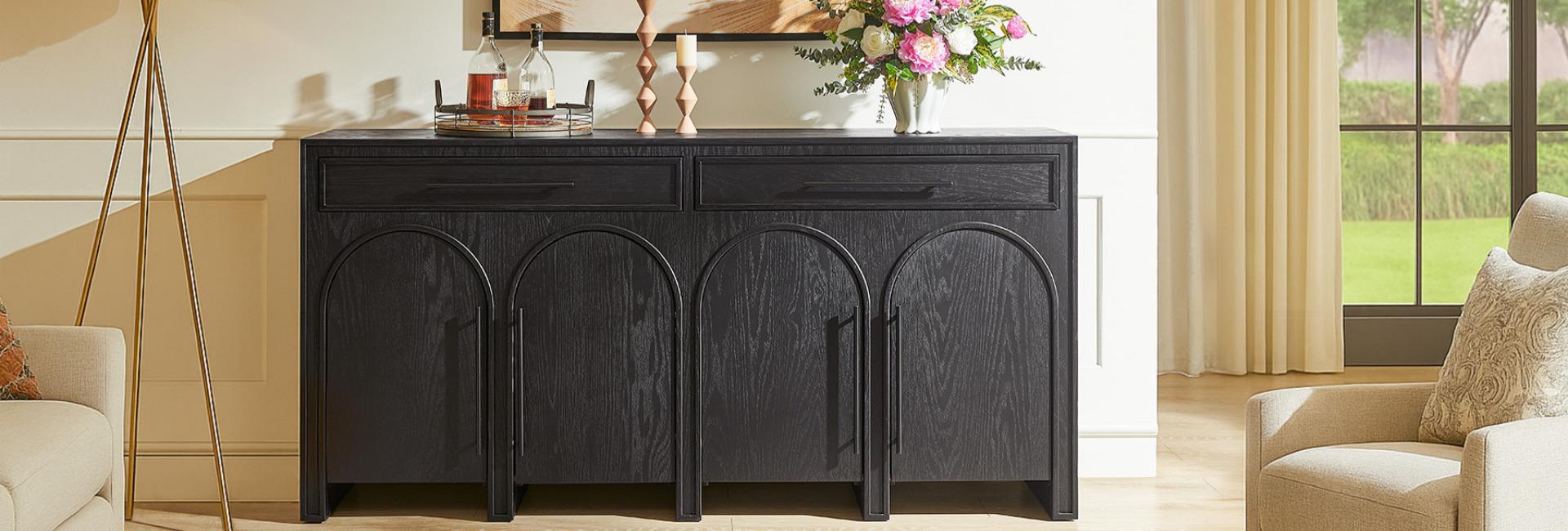
A living room sideboard provides extra storage while giving you a surface for lighting, artwork, and decorative accents. Whether you want to organize everyday belongings or fill an empty wall, choosing the right cabinet involves more than appearance. Its dimensions, storage layout, materials, and placement all affect how well it works in your space. This guide covers what to consider before choosing a sideboard for your living room.
Table of Contents
- What Is a Living Room Sideboard and What Is It Used For?
- Living Room Sideboard Dimensions: How to Choose the Right Size
- Where to Place a Sideboard in the Living Room
- How to Choose Sideboard Storage for Your Living Room
- Sideboard Materials: What Should You Look For?
- How to Match a Sideboard with Your Living Room Furniture
- Practical Features to Check Before Buying a Sideboard
- How to Style a Living Room Sideboard
- Living Room Sideboard Buying Checklist
- FAQs
- What Size Sideboard Is Best for a Living Room?
- How Deep Should a Living Room Sideboard Be?
- Where Is the Best Place to Put a Sideboard in a Living Room?
- Can You Put a Sideboard Behind a Sofa?
- What Should You Store in a Living Room Sideboard?
- What Is the Difference Between a Sideboard and a TV Stand?
- Should a Living Room Sideboard Match the TV Stand?
- Are Sideboards Suitable for Small Living Rooms?
What Is a Living Room Sideboard and What Is It Used For?
A living room sideboard is a wide, relatively low storage cabinet that typically features cabinet doors, drawers, or a combination of both. Although traditionally associated with dining rooms, it also works well in living spaces where additional storage is needed without introducing a tall bookcase or display cabinet.
Its main functions are enclosed storage and an accessible top surface. The cabinet can hold household belongings out of sight, while the top provides room for lamps, framed photographs, books, plants, and other decorative objects.
A sideboard for living room storage can help organize:
-
Everyday accessories: Remote controls, chargers, coasters, and stationery.
-
Entertainment items: Board games, gaming accessories, DVDs, and compatible electronic equipment.
-
Household extras: Throw blankets, cushions, magazines, and seasonal decorations.
-
Books and display items: Photo albums, decorative bowls, and small collections.
The amount and type of storage depend on the cabinet's interior dimensions and layout. Drawers work well for smaller belongings, while enclosed compartments can accommodate larger items.
Living Room Sideboard Dimensions: How to Choose the Right Size
Choosing the right dimensions helps a sideboard fit naturally into your living room without blocking walkways or crowding nearby furniture. Measure the intended location before comparing products, and consider the cabinet's full exterior dimensions rather than its appearance in product photos.
Measure Your Available Wall Space
Start by measuring the section of wall where you plan to place the sideboard. Focus on the usable width between nearby obstacles instead of relying on the total room width.
Pay attention to:
-
Door frames and the direction in which doors open.
-
Window trim, window sills, and built-in features.
-
Nearby sofas, armchairs, and TV stands.
-
Electrical outlets, vents, and cable connections.
-
The space needed to walk around the furniture.
If the sideboard will sit beneath a window or wall art, measure the available height as well. The cabinet should not interfere with window access or make the arrangement feel crowded.
You can also mark the proposed footprint on the floor with painter's tape. This makes it easier to judge how much room the cabinet will occupy before ordering.
Compare Width, Height, and Depth
Each dimension affects how a sideboard fits and functions in your living room.
Width determines how much wall space the cabinet occupies and how much horizontal storage it provides. A longer sideboard can work well beneath wide artwork or along an expansive wall, while a narrower design may suit an apartment or smaller seating area.
Height affects the cabinet's relationship with nearby furniture and windows. A lower sideboard creates a more horizontal profile, while a taller design offers a more substantial presence. If you plan to place one behind a sofa, compare its height with the sofa back.
Depth determines how far the cabinet projects into the room. A few extra inches can make a noticeable difference in a narrow living area, so check the full exterior depth when comparing models.
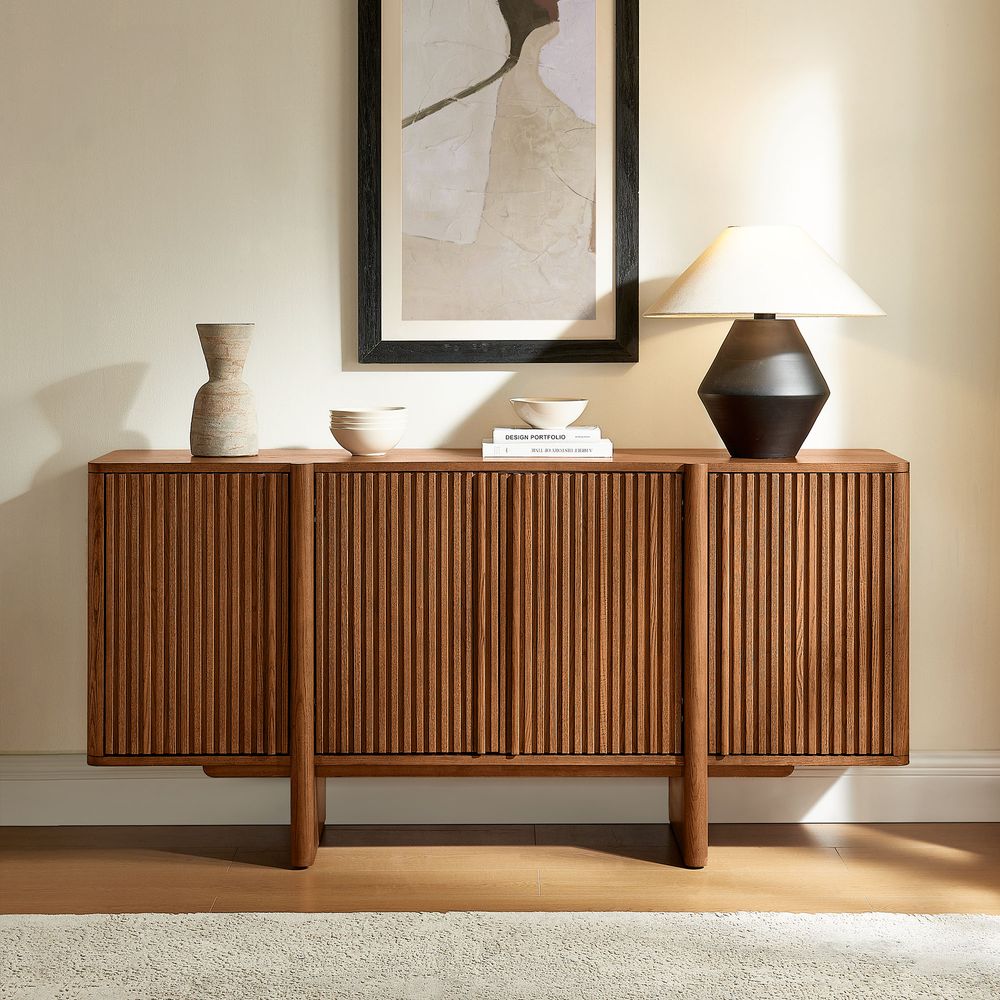
For example, the Sabina 64-Inch Ash Wood Sideboard measures 64.4 inches wide, 16.7 inches deep, and 31.5 inches high. Its relatively compact width and moderate depth may work well in living rooms where a wider cabinet would take up too much wall space. The warm brown ash finish and square fluted detailing also give it a defined look without making the design feel overly bulky.
Sabina 64-Inch Ash Wood Sideboard
View Product
Allow Clearance for Doors, Drawers, and Delivery
A sideboard needs room for its doors and drawers to open. Check whether they will hit nearby furniture and whether you can stand comfortably in front of an open drawer.
Also consider:
-
Whether open doors or drawers will block a walkway.
-
Whether nearby seating remains easy to access.
-
Whether the cabinet can be moved through doorways, hallways, and staircases.
-
Whether the product requires assembly before or after delivery.
Check the packaging dimensions and delivery requirements, especially if you live in an apartment or have a narrow entrance.
Where to Place a Sideboard in the Living Room
Sideboard placement depends on the room layout and the role you want the cabinet to serve. It can fill an empty wall, provide storage near the seating area, or help separate different zones in an open-plan home.
Against a Blank Wall
An empty wall is a straightforward place for a sideboard. It gives the cabinet enough room to stand out while leaving its top surface available for lighting and decorative objects.
You can hang a mirror, framed artwork, or a small gallery arrangement above it. Consider the width of the wall decor in relation to the cabinet so that neither looks out of proportion.
Behind a Sofa
A sideboard behind a sofa can help define the seating area in an open-plan living room. It creates a visual boundary between the lounge and another part of the home without introducing a full-height partition.
Choose a cabinet with a height that works with the sofa back and a depth that does not make the space behind the sofa difficult to access. If you only need a narrow surface for a lamp or a few decorative objects, a console table may be a better fit.
Under a Window
A sideboard can make use of the wall beneath a window when other parts of the room are occupied by seating or shelving.
Measure the window sill height and check whether the cabinet will block handles, blinds, curtains, or access to the window. A lower design is generally easier to integrate into this position.
Keep objects on the top relatively low if you want to preserve natural light and maintain access to the window.
Near the Living or Dining Area
In an open-plan living and dining space, a sideboard can serve both areas. It may hold board games and household accessories while providing storage for table linens, glasses, or serving pieces used during gatherings.
Make sure the cabinet does not interfere with dining chairs or the main route between the two areas.
In a Corner or Awkward Space
A smaller or shallower sideboard may fit beside a wall return, near an entrance, or in an underused section of the living room.
Check that the doors can open fully and that the cabinet remains easy to access. A sideboard placed in a tight corner may offer less practical storage if you cannot reach its compartments comfortably.
How to Choose Sideboard Storage for Your Living Room
The number of doors and drawers matters less than how the interior works for your belongings. Think about what you plan to store and compare the usable interior dimensions with those items.
Drawers for Small Everyday Items
Drawers are useful for belongings that you want to separate and find easily. Remote controls, chargers, stationery, coasters, and small accessories can be grouped instead of placed loosely inside a large cabinet.
Pay attention to drawer height and interior dimensions. Shallow drawers may suit flat accessories but will not accommodate taller objects. If you plan to store electronic accessories, allow room for cables and plugs. Check the listed drawer and cabinet interior measurements to confirm that the available space suits the items you intend to store.
Cabinets for Larger Household Items
Cabinet compartments are useful for items that need more height or depth, such as board games, blankets, extra cushions, and larger accessories.
Check the interior measurements rather than relying on the cabinet's exterior size. Doors, dividers, and shelf structures can reduce the usable space inside.
If you plan to store bulky belongings, look for wide openings and enough clearance to remove items without rearranging everything around them.
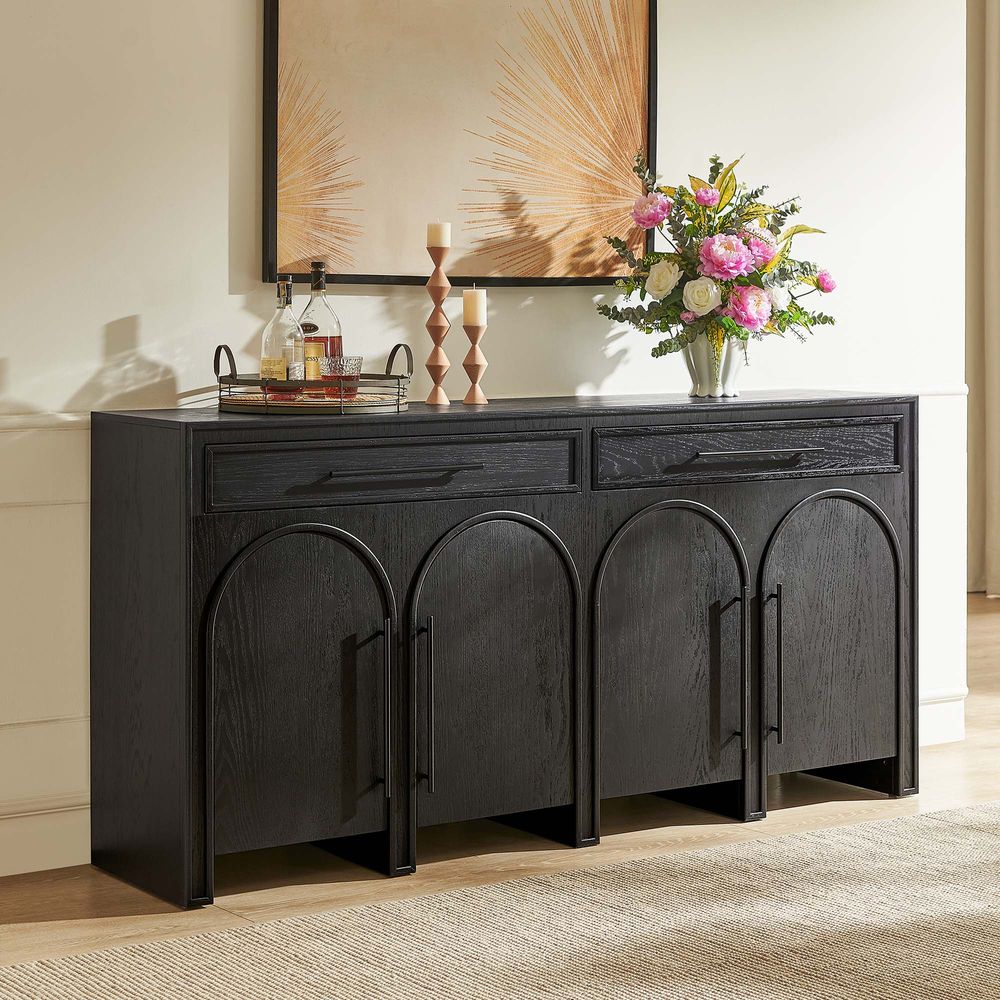
A sideboard with both drawers and cabinet compartments can also help separate smaller items from bulkier belongings. The Vera 72-Inch Sideboard features four cabinet doors and two upper drawers, providing separate spaces for household essentials. You can use the drawers for smaller items such as accessories and everyday supplies, while the cabinet compartments offer room for items like books, linens, and other larger belongings. Its oak finish and arched door details also add a distinctive look to the living room.
Vera 72-Inch Sideboard
View Product
Adjustable Shelves for Flexible Storage
Adjustable shelves let you change the interior layout to accommodate objects of different heights. You can reposition them to create more room for taller items or divide the cabinet into smaller storage sections.
Open Shelves or Glass Doors for Display
Open shelves and glass doors make stored objects visible, which can work well for books, ceramics, or decorative collections. They also make frequently used items easier to reach.
The trade-off is that visible storage requires more attention to organization. For a living room where you prefer a less cluttered appearance, fully enclosed cabinets may be easier to maintain. A combination of open and closed storage can provide both display space and concealed compartments.
Sideboard Materials: What Should You Look For?
The material affects a sideboard's appearance, construction, maintenance, and price. Instead of assuming one material is always better than another, compare how the cabinet is built and which characteristics matter most to you.
Solid Wood and Wood Veneer
Solid wood is made from natural timber and has grain patterns that vary from piece to piece. Oak and ash are common furniture choices because of their distinct grain and ability to work with different interior styles.
Wood veneer is a thin layer of natural wood applied to a supporting material. It provides the appearance of real wood grain while allowing manufacturers to combine different materials in one piece of furniture.
Burl veneer is another option if you want a sideboard with a more noticeable wood pattern. The Bodil 72-Inch Burl Sideboard combines rubberwood and engineered wood with burl veneers. Its layered brown finish creates an irregular, natural-looking pattern across the cabinet front, while the beveled frame adds definition around the edges. Behind its four push-to-open doors, adjustable shelves provide flexible space for storing tableware, glassware, and other household items.

Bodil 72-Inch Burl Sideboard
View Product
MDF and Other Engineered Wood
Engineered wood includes materials such as MDF and plywood, which are made through different manufacturing processes and should not be treated as interchangeable.
MDF typically has a smooth, consistent surface that can be used for painted or finished furniture panels. Plywood is made from layers of wood veneer bonded together. Their suitability depends on the cabinet's construction, finish, and intended use.
When comparing products, check whether the manufacturer identifies the specific materials used rather than relying on a general description such as wood construction. Edge treatment, surface finish, hardware, and structural support also matter.
Metal and Mixed Materials
Metal may be used for cabinet frames, legs, handles, or decorative details. Mixed-material sideboards combine wood, metal, glass, and other materials to create contrast.
These combinations can work well in modern or industrial interiors. Consider how the materials relate to your existing furniture and how much maintenance their finishes may require.
Look Beyond the Material Label
A product's construction details can tell you more than a broad material description. Check:
-
Which components use solid wood, veneer, plywood, or MDF.
-
Whether the finish highlights natural grain or creates a uniform surface.
-
How doors, drawers, and shelves are supported.
-
Whether the hardware suits the way you plan to use the cabinet.
-
What cleaning and maintenance the manufacturer recommends.
Check the listed materials for each component instead of relying on broad descriptions such as wood construction.
How to Match a Sideboard with Your Living Room Furniture
A sideboard does not have to be part of a matching furniture set, but it should feel connected to the rest of the room. Wood tones, colors, shapes, finishes, and proportions can help create that connection.
Coordinate Wood Tones and Finishes
If your living room already has a wooden coffee table, TV stand, or shelving unit, consider how their finishes work together.
Matching every wood tone can create a coordinated look, but it is not essential. A light oak sideboard can sit comfortably alongside darker wood furniture when other elements in the room connect the finishes.
For example, you might repeat a warm wood tone through picture frames, flooring, or a small decorative object. This creates visual continuity without making every furniture piece look identical.
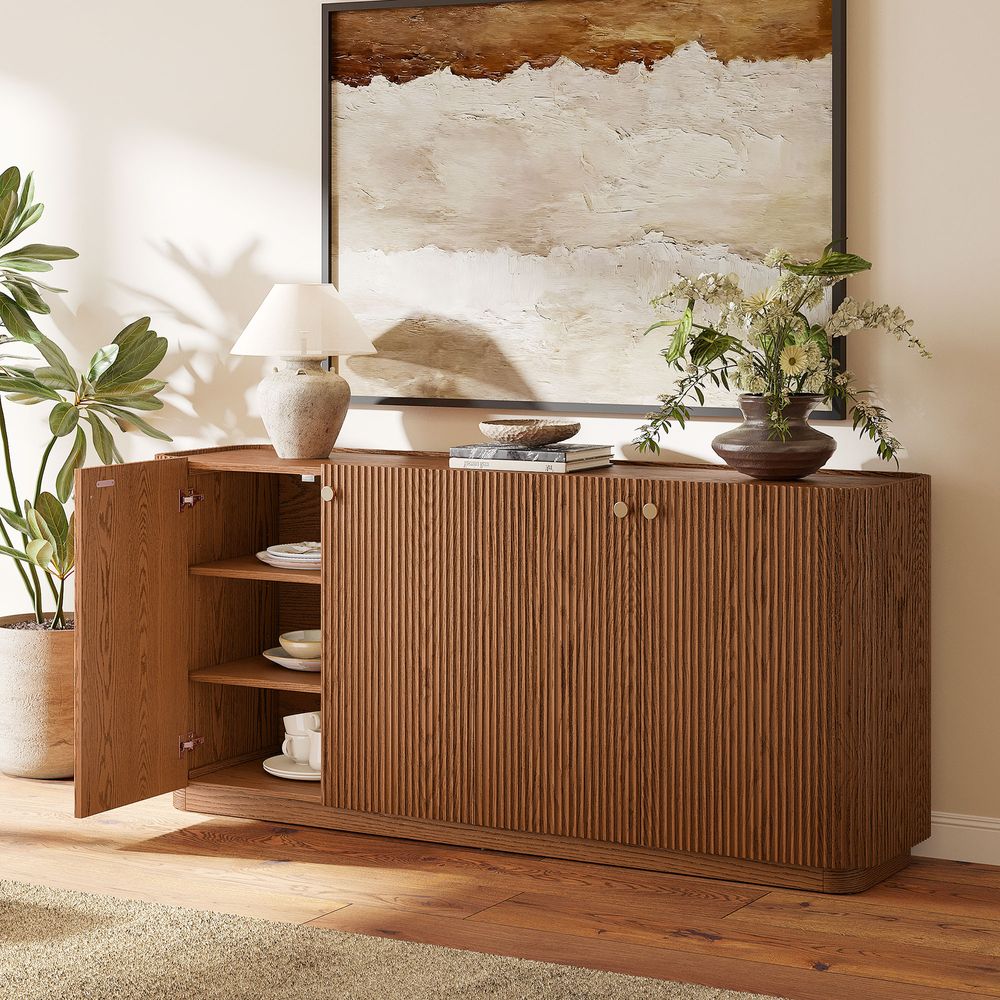
A sideboard with visible wood grain and textured detailing can also complement a room with existing wood furniture. The Skimra 72-Inch Oak Sideboard features a warm oak finish with wave-inspired solid oak fluting across the front. Its combination of American solid oak and engineered wood with oak veneers brings together natural wood grain and a more decorative surface, making it an option for living rooms with warm-toned or wood-accented furniture.
Skimra 72-Inch Oak Sideboard
View Product
Balance Furniture Proportions
A wide sideboard can look out of place beside a small sofa, while a compact cabinet may appear undersized against a large sectional.
Compare the width, height, and visual weight of nearby pieces. A long, low sideboard may balance a wide seating arrangement, while a more substantial cabinet may work better against a large blank wall.
Furniture shapes also affect the overall arrangement. Rounded coffee tables and curved sofas can soften a room with several rectangular cabinets. A sideboard with clean, structured lines can add definition to a space with softer shapes.
Choose a Style That Fits Your Living Room
Different sideboard designs create different visual effects:
-
Modern and Minimalist: Clean lines, restrained detailing, and simple finishes suit rooms where you want the furniture to blend into the overall design.
-
Mid-Century Modern: Warm wood tones, tapered legs, and balanced proportions complement retro-inspired interiors.
-
Scandinavian: Light finishes, understated shapes, and natural textures work well in bright, relaxed spaces.
-
Farmhouse and Rustic: Visible grain, textured surfaces, and warmer colors add a more traditional feel.
The style label is only a starting point. Look at the cabinet's silhouette, finish, hardware, and leg design before deciding whether it fits your room.
Use Color and Texture to Create Contrast
A sideboard can add contrast rather than blend into the background. Dark finishes can stand out against light walls, while warm wood can soften a room with cooler neutral colors.
Fluted fronts, visible wood grain, and burl veneers offer different ways to introduce texture without relying on bright colors or decorative hardware.
Practical Features to Check Before Buying a Sideboard
Beyond appearance, dimensions, and storage layout, several construction details can affect how convenient a sideboard is to use.
Door hinges and opening mechanisms: Check how the doors open and whether the design uses separate handles, integrated handles, or push-to-open hardware. Make sure the opening style suits the available space.
Cable access and ventilation: If you intend to store media equipment inside the cabinet, check for cable openings and sufficient ventilation. A closed cabinet without suitable cable access may not be appropriate for electronic devices that generate heat.
Leg height and floor clearance: Raised legs can make it easier to clean underneath the cabinet, while a low base creates a more grounded appearance. Check the actual clearance if you use a robot vacuum or need access for floor cleaning.
Assembly and delivery: Some sideboards arrive fully assembled, while others require the legs, base, or other components to be fitted. Review the assembly instructions and packaging dimensions before ordering.
Stability and safety: Consider the cabinet's weight, base design, and intended location. In homes with young children, furniture stability deserves particular attention. The U.S. Consumer Product Safety Commission recommends securing furniture and TVs to help prevent tip-over incidents. Follow the manufacturer's instructions and use appropriate anchoring hardware when needed. See the CPSC's Anchor It! furniture safety guidance.
If you plan to place a television on a sideboard, confirm that the furniture is suitable for supporting it. A cabinet intended mainly for decorative storage should not automatically be treated as a TV stand.
How to Style a Living Room Sideboard
Once the sideboard is in place, its top surface can help connect the cabinet with the rest of the room. A few carefully chosen objects can add character without leaving too little room for everyday use.
Create a Balanced Arrangement
Start with one or two larger objects, then add smaller pieces to vary the height and shape. For example, place a table lamp at one end and a stack of books with a small decorative bowl at the other.
Avoid using accessories that are all the same height or arranging every object in a straight line. Leave some open surface so the cabinet remains practical.
Add Lighting and Wall Decor
A table lamp provides additional ambient lighting and gives the sideboard a practical purpose beyond storage. Vases, framed photographs, plants, and decorative trays can introduce texture and color.
A mirror or framed artwork above the cabinet can complete the wall arrangement. Consider the width and visual weight of the artwork in relation to the sideboard, and leave enough space between the furniture and wall decor.
Keep the Surface Functional
Use trays or small containers to group frequently used objects such as remotes and coasters. This gives everyday items a defined place without spreading them across the entire surface.
Keep the cabinet interior for practical storage and reserve the top for selected decorative pieces. This makes it easier to maintain an organized living room.
Living Room Sideboard Buying Checklist
Review these points before choosing a sideboard:
-
Measure the space: Confirm the available width, height, and maximum depth.
-
Check the layout: Make sure doors and drawers can open without obstructing furniture or walkways.
-
Compare storage capacity: Match the usable interior dimensions with the belongings you plan to store.
-
Review materials and construction: Check the materials used for each component, along with the finish and hardware.
-
Consider furniture coordination: Compare the sideboard's proportions, colors, and style with your existing furniture.
-
Check delivery and safety: Review packaging dimensions, assembly requirements, and the manufacturer's stability and anchoring instructions.
A sideboard is a practical addition when its storage capacity, proportions, and appearance suit the room. Comparing these details before purchasing can help you choose a cabinet that fits your space and everyday routine.
FAQs
What Size Sideboard Is Best for a Living Room?
The right size depends on the available wall space, room layout, and storage needs. A smaller living room may benefit from a narrower or shallower cabinet, while a larger room can accommodate a wider sideboard. Measure the intended location and check the clearance needed for doors, drawers, and walking paths.
How Deep Should a Living Room Sideboard Be?
Sideboard depth varies by design. A shallower cabinet may fit more easily in a narrow living room, while a deeper model can provide more interior storage. Measure the available floor space and consider how far the cabinet will project into the room before choosing a depth.
Where Is the Best Place to Put a Sideboard in a Living Room?
Common locations include a blank wall, beneath suitable artwork, or near the boundary between living and dining areas. A sideboard can also sit behind a sofa or under a window if its dimensions allow. Choose a position that provides useful storage without blocking natural light, window access, or walking paths.
Can You Put a Sideboard Behind a Sofa?
Yes, if the sideboard's height and depth work with the sofa and the available space. A cabinet that is too tall may interrupt sightlines, while one that is too deep can make the area difficult to navigate. Compare the sofa height with the cabinet and make sure there is enough room to access both pieces.
What Should You Store in a Living Room Sideboard?
A living room sideboard can hold remote controls, chargers, board games, books, magazines, blankets, and other household accessories. Use drawers for smaller items and cabinet compartments for larger belongings. Check the interior dimensions to make sure the items you want to store will fit.
What Is the Difference Between a Sideboard and a TV Stand?
A sideboard is primarily designed for general storage and display, while a TV stand is designed to support a television and accommodate media equipment. Some sideboards can also function as media consoles, but check the weight capacity, height, dimensions, and cable access before using one for a TV setup.
Should a Living Room Sideboard Match the TV Stand?
They do not need to match exactly. Similar wood tones, complementary finishes, repeated metal accents, or related design details can make the two pieces look coordinated. Different shapes or finishes can also add interest as long as their proportions and colors work together.
Are Sideboards Suitable for Small Living Rooms?
Yes. A sideboard can provide useful storage in a small living room when its dimensions suit the available space. Look for a narrower or shallower design with an interior layout that matches your needs. Raised legs can create a more open visual effect, while enclosed cabinets keep everyday belongings out of sight. Check walking clearance and door-opening space before purchasing.