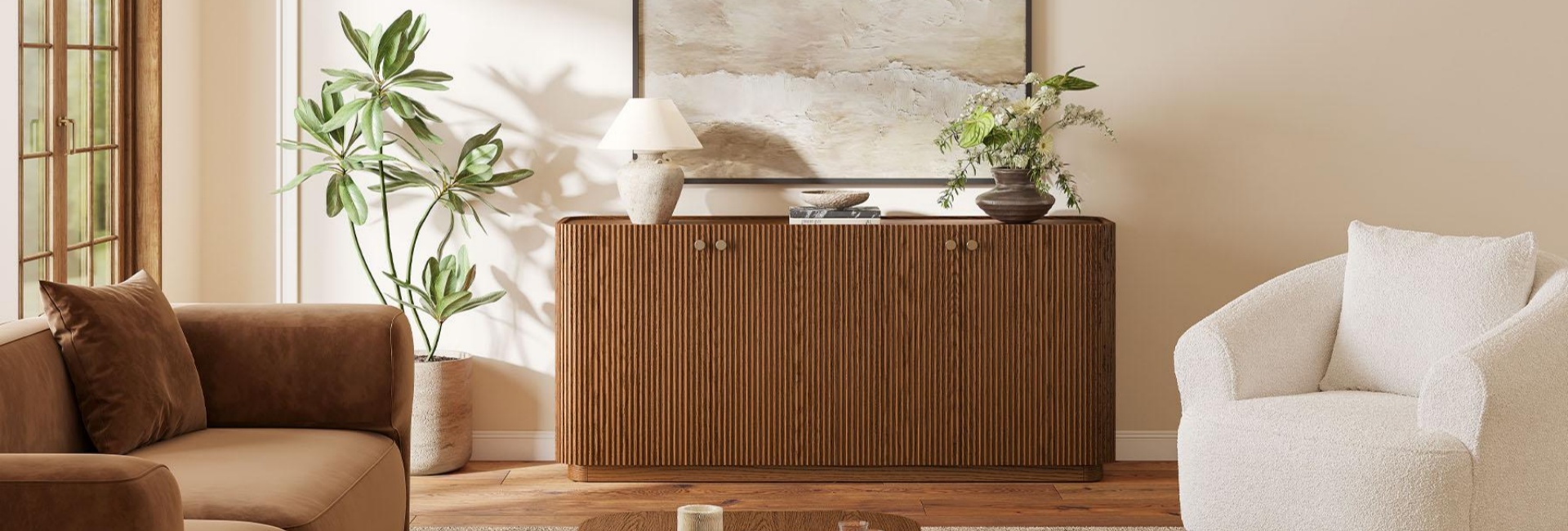
A fluted sideboard combines decorative vertical detailing with practical storage, but choosing the right one involves more than finding a finish you like. The material affects its appearance and maintenance, the dimensions determine whether it fits your room, and the interior layout decides how much you can actually store. This guide explains how to compare different materials, measure your space, evaluate storage configurations, and check construction details before buying a fluted sideboard.
Table of Contents
- What Makes a Sideboard Fluted?
- Compare the Materials Used in Fluted Sideboards
- How to Evaluate Fluted Sideboard Construction Quality
- How to Measure for the Right Sideboard Dimensions
- Choose a Sideboard Storage Layout That Works for Your Routine
- Consider Fluted Design, Finish, and Overall Style
- Cleaning, Maintenance, Assembly, and Furniture Safety
- Fluted Sideboard Buying Checklist: What to Confirm Before Purchasing
- FAQs
- What Is the Best Material for a Fluted Sideboard?
- Are Fluted Sideboards Difficult to Clean?
- What Is the Difference Between Fluted and Reeded Furniture?
- How Deep Should a Sideboard Be?
- What Should You Store in a Fluted Sideboard?
- How Do You Choose the Right Sideboard Size for a Dining Room?
- Are Fluted Sideboards Suitable for Small Living Rooms?
What Makes a Sideboard Fluted?
A fluted sideboard is a storage cabinet featuring repeated vertical grooves or channels across its doors, drawer fronts, or exterior panels. These details create alternating areas of light and shadow, giving the furniture more texture than a completely flat cabinet front.
Fluting can be subtle, with shallow grooves that blend into the wood grain, or more pronounced, with deeper channels that make the front a noticeable design feature. Depending on the material and finish, the effect can look traditional, contemporary, or somewhere between the two.
Unlike decorative details applied only to the edges, fluting often covers a large portion of the cabinet front. The spacing, depth, and consistency of the grooves therefore influence the overall appearance of the furniture.
Fluted vs. Reeded Cabinet Designs
The terms fluted and reeded are sometimes used interchangeably in furniture listings, but they describe different surface profiles.
-
Fluted: The surface has recessed grooves that curve or cut inward.
-
Reeded: The surface has raised, rounded ridges that project outward.
Both create a vertical pattern, but their light-and-shadow effects differ. Fluted panels emphasize the recessed channels, while reeded surfaces highlight the raised texture.
When shopping for a fluted sideboard cabinet, look closely at product photos instead of relying on the title alone. A close-up image should make it clear whether the texture is recessed or raised.
Fluting Details to Consider
Several design details influence the appearance and maintenance of a fluted sideboard:
-
Groove Depth: Shallow grooves create a restrained texture, while deeper channels produce stronger shadows.
-
Groove Spacing: Closely spaced grooves create a finer pattern. Wider spacing makes each channel more noticeable.
-
Full vs. Partial Fluting: Some designs feature textured doors across the entire front, while others use fluting only on selected panels, handles, or legs.
-
Consistency: Check whether the grooves follow a uniform pattern across adjoining doors. Uneven spacing or poorly aligned panels can affect the finished appearance.
Deep or closely spaced grooves can collect more dust and may take longer to clean than flat cabinet fronts.
Compare the Materials Used in Fluted Sideboards
The materials used in a sideboard affect its appearance, weight, construction, and maintenance requirements. A fluted wood sideboard does not necessarily use solid wood throughout. The exterior panels, cabinet frame, shelves, and decorative detailing may each use different materials.
Solid Wood
Solid wood is made from natural lumber rather than reconstructed wood fibers or particles. Oak, walnut, ash, and other hardwoods are common furniture materials because they offer distinctive grain patterns and can be shaped into different profiles.
For fluted furniture, solid wood allows the natural grain to remain visible across the textured surface. The grooves can reveal variations in color and grain, creating a different appearance from painted or laminated panels.
However, natural wood responds to changes in humidity. It absorbs and releases moisture as environmental conditions change, which can cause gradual swelling or shrinkage. Proper drying and construction can reduce movement, although solid wood is not completely dimensionally stable.
Solid wood is worth considering when natural grain and real wood detailing are priorities. Check which components are made from solid timber rather than assuming the entire cabinet uses the same material.
MDF and Other Engineered Wood
Medium-density fiberboard (MDF) is manufactured by combining wood fibers with resin under heat and pressure. Its relatively uniform structure and smooth surface make it suitable for painted cabinet doors and decorative profiles.
MDF can be shaped into consistent grooves, making it useful for fluted cabinet design where a uniform surface is preferred over visible natural grain variations.
Its main limitation is moisture exposure. Prolonged contact with water can cause swelling, particularly around unfinished or poorly sealed edges. For a sideboard used near a kitchen or dining area, the surface coating and edge treatment deserve attention.
Engineered wood is a broader category that includes MDF, plywood, and particleboard. These materials have different construction methods and properties, so they should not be treated as interchangeable.
In the United States, hardwood plywood, MDF, and particleboard are among the composite wood products covered by the EPA's formaldehyde emission standards. Buyers can check product documentation for applicable TSCA Title VI compliance information.
Plywood and Particleboard
Plywood is made by bonding multiple thin wood layers together, generally with the grain direction alternating between layers. This construction helps create relatively stable panels for cabinet bodies, shelves, and other furniture components.
Particleboard uses wood particles bonded with adhesive. It is commonly used in cost-conscious furniture construction and may be covered with laminate, veneer, or another decorative surface.
Neither material should be evaluated by name alone. Panel thickness, bonding quality, edge sealing, and hardware attachment all influence the finished product.
When comparing sideboard materials, identify which components use plywood or particleboard. A plywood cabinet body with a natural wood veneer can be a practical combination, while particleboard components require attention to edge protection and hardware support.
Wood Veneer and Surface Finishes
Natural wood veneer is a thin layer of real wood applied to a core material. It provides the visible grain of a particular wood species without requiring the entire panel to be made from solid lumber.
This differs from printed wood-look laminate, which reproduces the appearance of wood through a decorative surface layer.
Veneer can create a consistent appearance across large cabinet panels, while solid wood provides natural grain variation throughout the component. Both can be used effectively, depending on the construction and intended appearance.
For example, the Skimra 72-Inch Oak Sideboard combines American solid oak and engineered wood with oak veneers in its construction. The solid oak is used for its wave-inspired fluted detailing, adding depth and texture to the cabinet front, while the oak veneer brings a consistent wood grain across the larger surfaces. Finished in warm brown, the combination highlights the natural character of oak without relying entirely on solid wood.
When comparing surface finishes, look at the following differences:
-
Natural Wood Veneer: Provides real wood grain but requires care to avoid scratches and excessive moisture.
-
Painted Finish: Creates a consistent color and works well with detailed MDF panels. Check the coating around edges and grooves.
-
Laminate Finish: Offers a manufactured decorative surface. Compare edge treatments and resistance to everyday wear.
Choose a finish based on the appearance you want, the underlying construction, and how frequently the sideboard will be used.
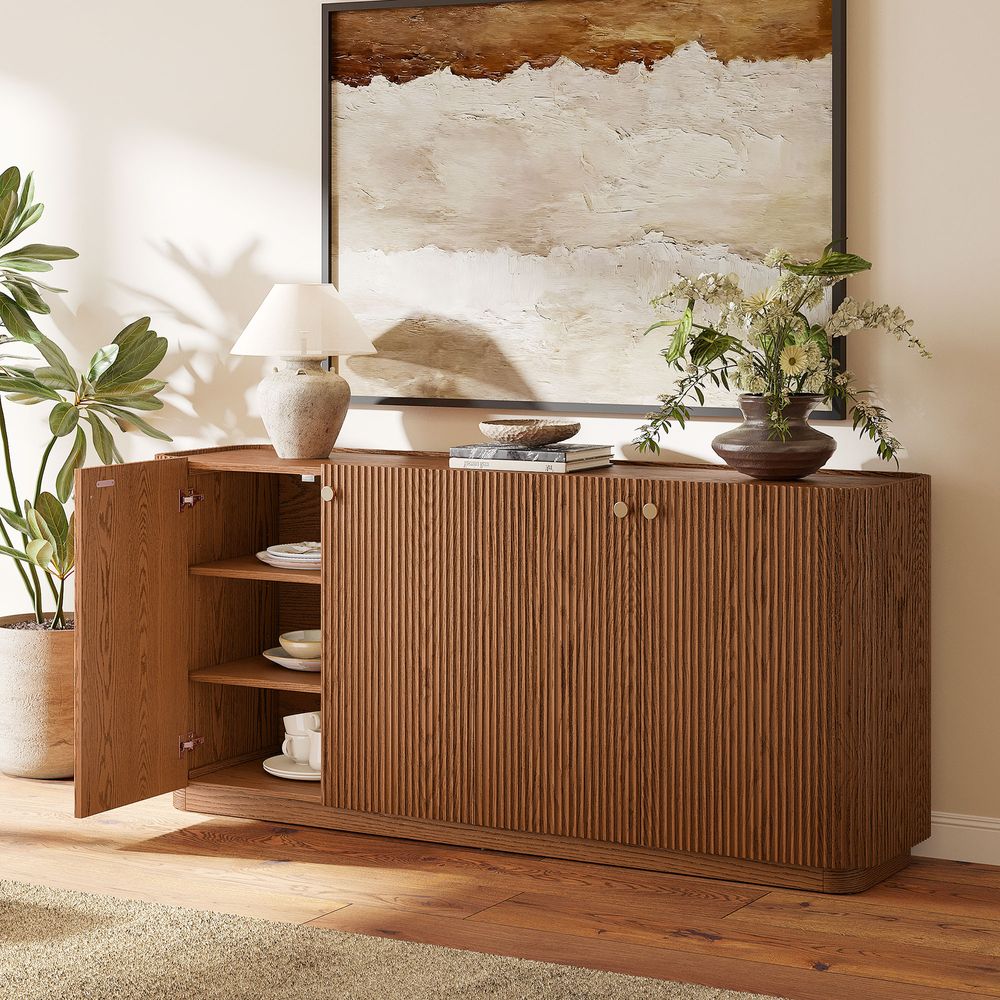
Skimra 72-Inch Oak Sideboard
View Product
How to Evaluate Fluted Sideboard Construction Quality
A sideboard can use attractive materials and still have construction details that deserve a closer look. Examine the cabinet assembly, panel alignment, hardware, and structural support before making a purchase.
Check the Cabinet Body and Fluted Panels
Panel thickness and finishing can influence how well the cabinet holds up during everyday use.
Pay attention to these details:
-
Panel Thickness: Check whether the shelves and cabinet sides are substantial enough for their intended use.
-
Edge Finishing: Look for smooth, consistently finished edges without visible gaps or peeling surface layers.
-
Panel Alignment: Fluted grooves should follow a consistent pattern across adjoining doors.
-
Joints and Connections: Examine how the frame, legs, and panels connect. Uneven gaps or visibly loose joints deserve further inspection.
-
Back Panel: Check the backing material and how it attaches to the cabinet body, particularly if the furniture will hold heavier items.
A detailed product description should identify the principal materials rather than relying on a general label such as wood construction.
Inspect Hardware and Structural Support
Hinges and drawer slides affect how comfortably you can use a sideboard every day. Doors should open without rubbing against adjacent panels, and drawers should move smoothly without excessive resistance.
The manufacturer's recommended weight capacity is another important specification. A cabinet's maximum supported load is not necessarily the same as the weight each individual shelf can hold. Look for separate shelf limits if you plan to store heavy dinnerware, glassware, or serving pieces.
Leg construction and leveling feet also affect stability. Uneven flooring can make a cabinet wobble, while adjustable levelers can compensate for minor differences in floor height.
How to Measure for the Right Sideboard Dimensions
Choosing the right sideboard dimensions starts with measuring the room, not browsing furniture widths. A cabinet that looks appropriately sized in a product photo may occupy more floor space than expected once placed against your wall.
Measure Width, Depth, and Height
Take measurements of the available area and compare them with the furniture's complete dimensions.
-
Width: Determines how much wall space the sideboard occupies. Account for nearby furniture, windows, doors, and decorative elements.
-
Depth: Determines how far the furniture projects into the room. This is particularly important in entryways, smaller dining rooms, and walkways.
-
Height: Affects accessibility and visual proportion. Consider whether you want the top to function as a serving surface, display area, or place for everyday essentials.
Account for Doors, Drawers, and Walking Space
Measure the space with the furniture in use, not just when its doors are closed.
Open nearby doors, pull out dining chairs, and consider the room's usual walking routes. Check whether cabinet doors can swing open completely without hitting a wall or another piece of furniture.
In a dining room, leave enough space to pull out chairs and move around the table when the sideboard doors are open. In a narrow entryway, make sure people can walk past the cabinet comfortably.
Also measure the delivery route from your entrance to the final location. Hallways, staircases, elevators, and tight corners can create problems even when the sideboard fits the room.
Match Sideboard Dimensions to Your Room
The ideal dimensions also depend on where you plan to place the cabinet.
Dining Room
A dining room sideboard often stores dinnerware, serving platters, table linens, and entertaining accessories. Pay attention to the depth needed for larger serving pieces and the height of your dishes.
A wider cabinet can provide separate storage areas for different categories of items. However, it should not compete with the dining table or restrict access to surrounding chairs.
Living Room
In a living room, a sideboard may hold books, board games, decorative accessories, or household electronics. Think about how its proportions relate to the sofa, television, and other storage furniture.
If you plan to use it as a media console, check its cable access, ventilation, and interior dimensions to make sure it can accommodate your equipment.
Entryway and Open-Plan Spaces
For an entryway, depth and clearance are often more important than maximum storage capacity. A cabinet that projects too far into the walkway can make an otherwise spacious entrance feel crowded.
In an open-plan living and dining area, a wider sideboard can visually anchor a wall or help distinguish one functional area from another. Compare its width with the surrounding furniture and available wall space.
Choose a Sideboard Storage Layout That Works for Your Routine
The best storage configuration depends on the items you plan to keep inside and how often you need to access them. A sideboard with drawers, closed compartments, or adjustable shelves can serve different purposes.
Drawers vs. Cabinet Doors
Drawers and cabinet compartments are designed for different types of storage.
A sideboard with drawers is useful for organizing smaller items, while closed cabinet compartments provide space for larger objects.
If you frequently entertain, a combination of both can be useful: drawers for napkins and serving accessories, with cabinet storage for plates and larger dishes.
Adjustable vs. Fixed Shelves
Adjustable shelves allow you to change the available vertical space according to what you store. This is useful when a cabinet needs to accommodate both shorter everyday dishes and taller serving pieces.
Fixed shelves have a predetermined layout. They work well when the compartment dimensions already match your storage needs, but provide less flexibility if your collection changes.
Before purchasing a sideboard with adjustable shelves, check how many positions are available, whether the shelves can be removed, and whether the manufacturer provides a weight limit.
For example, the Sabina 64-Inch Ash Wood Sideboard features adjustable shelves, allowing you to change the available vertical space based on what you plan to store. You can create more room for taller serving pieces or keep the shelf in place to organize smaller household items separately. Its square fluted detailing and integrated fluted handles also carry the textured design across the cabinet front, combining flexible storage with a consistent appearance.
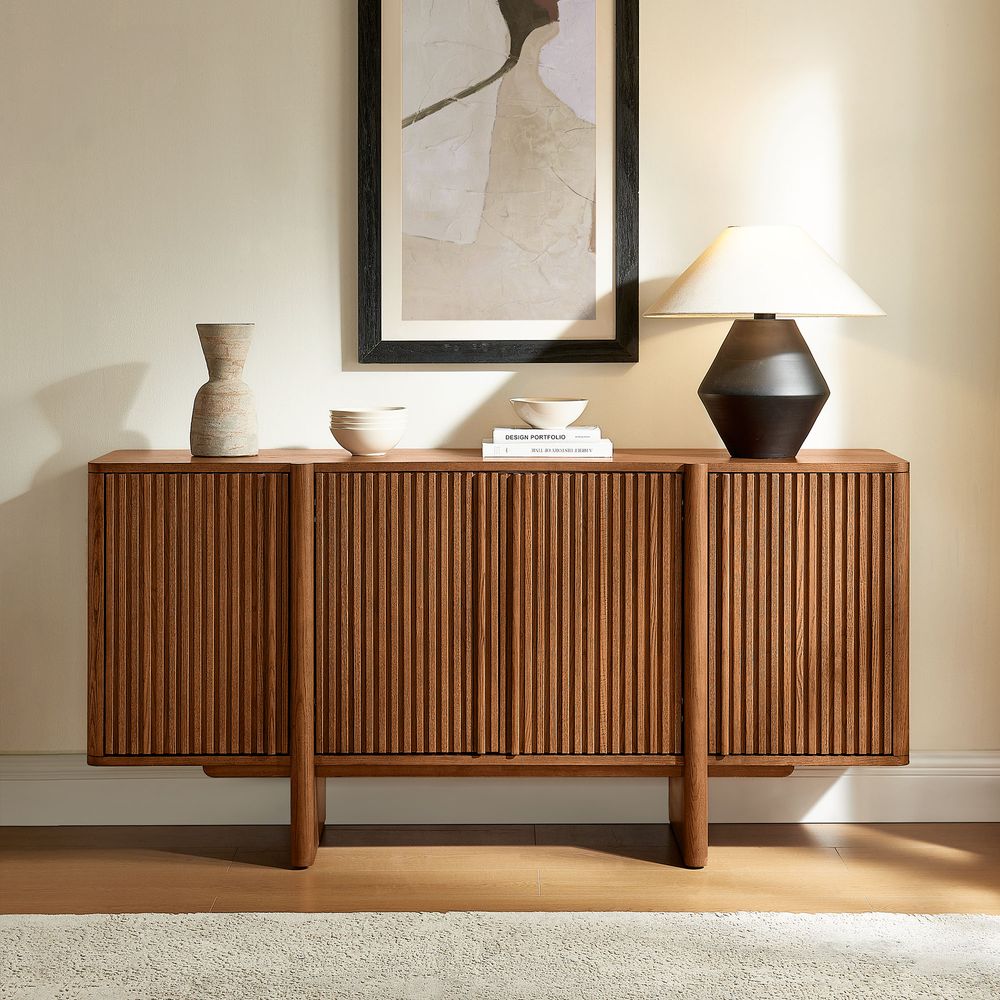
Sabina 64-Inch Ash Wood Sideboard
View Product
Compare Interior Dimensions, Not Just Exterior Size
External measurements show how much floor and wall space a sideboard needs. They do not tell you whether your belongings will fit inside.
Check the following specifications:
-
Internal compartment width, depth, and height.
-
Drawer dimensions rather than the overall drawer-front size.
-
Shelf spacing and adjustability.
-
Door opening width.
-
Recommended weight capacity.
For example, a serving platter may fit the cabinet's overall width but still be difficult to place inside because of a narrow door opening. Measuring the item against the usable compartment space can prevent this problem.
Consider Fluted Design, Finish, and Overall Style
After confirming the material, dimensions, and storage configuration, consider how the sideboard will look alongside your existing furniture.
Choose a Groove Pattern That Suits the Room
Deep, pronounced grooves create a stronger visual feature, while subtle fluting adds texture without making the cabinet the center of attention.
The scale of the furniture matters. A wide sideboard with a detailed fluted front can balance a large, relatively simple wall. In a smaller room with several patterned surfaces, a more restrained design may feel less crowded.
Coordinate Wood Tones and Finishes
Consider the existing wood tones in your dining table, flooring, shelving, and other furniture. The finishes do not need to match exactly, but their undertones should work together.
Warm brown oak, natural ash, and darker wood finishes each create a different impression. Matte, satin, and more reflective surfaces can also look different under natural and artificial lighting.
Product photographs may not show the exact color of a finish because screen settings and lighting vary. Close-up images and available finish samples provide a more useful reference when comparing options.
Cleaning, Maintenance, Assembly, and Furniture Safety
The long-term use of a fluted sideboard depends partly on how it is maintained and installed. Cleaning the textured surface, following assembly instructions, and securing the cabinet properly can help prevent avoidable problems.
Clean and Maintain the Fluted Surface
Fluted fronts have narrow grooves where dust can settle. Use a soft microfiber cloth for routine dusting. For deeper channels, a soft-bristle brush or a vacuum attachment designed for delicate surfaces can reach areas that a flat cloth misses.
For marks or spills, follow the manufacturer's cleaning instructions. A lightly dampened cloth may be appropriate for some finished surfaces, but avoid leaving water on the wood. Wipe away moisture promptly and dry the area.
Protect the cabinet top with coasters, placemats, or decorative trays when displaying drinks, plants, or frequently used objects. Wipe up spills promptly and avoid placing wet items directly on the surface.
Also keep the sideboard away from concentrated heat sources such as radiators and heating vents. For painted MDF or laminate finishes, check the manufacturer's guidance before using furniture polish or cleaning solutions.
Check Assembly and Delivery Requirements
Some sideboards arrive fully assembled, while others require you to attach legs, handles, or sections of the cabinet.
Before ordering, confirm:
-
Whether assembly is required and which components need fitting.
-
Whether installation instructions and necessary hardware are included.
-
The packaged dimensions and total delivery weight.
-
Whether the delivery route has enough clearance.
-
Whether additional assistance is needed to move the item into position.
These details are particularly important for larger solid-wood and mixed-material sideboards.
Consider Wall Anchoring and Stability
A sideboard should sit level on the floor, with its legs or base providing stable support. Follow the manufacturer's installation instructions and check whether leveling feet are included.
For households with children, furniture stability deserves particular attention. The U.S. Consumer Product Safety Commission recommends securing furniture that could tip over with appropriate anti-tip devices and following the manufacturer's anchoring instructions.
Keep heavier items in lower compartments where practical, and avoid placing objects on top that might encourage children to climb.
Fluted Sideboard Buying Checklist: What to Confirm Before Purchasing
Before choosing a fluted sideboard, compare the product specifications against your room measurements and storage requirements.
Use this checklist:
-
Design: Are the grooves fluted or reeded? Is the pattern consistent?
-
Materials: What materials are used for the cabinet body, doors, and decorative panels?
-
Construction: Are the edges, joints, and hardware properly finished?
-
Dimensions: Do the width, depth, and height fit the available space?
-
Storage: Will the internal compartments accommodate your dishes and household items?
-
Shelves: Are they adjustable, and are their weight limits specified?
-
Maintenance: Can you comfortably clean the grooves and care for the finish?
-
Delivery: Does the item require assembly, and will it fit through your entrance?
-
Safety: Are suitable anchoring provisions available when needed?
Compare the cabinet's materials, usable storage space, dimensions, and assembly requirements before making your final decision.
FAQs
What Is the Best Material for a Fluted Sideboard?
The right material depends on your priorities. Solid wood offers natural grain and real wood detailing, while MDF works well for painted grooves and uniform finishes. Plywood and wood veneer provide other construction options. Compare the materials used in the cabinet body, doors, and decorative panels rather than relying on the product's general material label.
Are Fluted Sideboards Difficult to Clean?
Fluted sideboards require slightly more attention than flat-front cabinets because dust can collect in the grooves. Regular dusting with a microfiber cloth or soft-bristle brush helps remove buildup. For deeper channels, a suitable vacuum attachment can make cleaning easier.
What Is the Difference Between Fluted and Reeded Furniture?
Fluted furniture has recessed grooves, while reeded furniture has raised, rounded ridges. Both create vertical texture, but their surface profiles and light-and-shadow effects are different. Check close-up product photos to identify which design a sideboard uses.
How Deep Should a Sideboard Be?
The appropriate depth depends on your available floor space and what you plan to store. A deeper cabinet may accommodate larger serving dishes, while a shallower design can work better in narrow entryways or smaller rooms. Measure the available space and compare it with the internal depth needed for your belongings.
What Should You Store in a Fluted Sideboard?
Common items include dinnerware, glassware, serving platters, table linens, cutlery, books, and household accessories. Drawers are useful for smaller items, while closed cabinet compartments provide room for larger belongings. Choose the layout according to the sizes and types of items you own.
How Do You Choose the Right Sideboard Size for a Dining Room?
Measure the available wall space and consider the distance between the sideboard, dining table, and chairs. Check the cabinet's width, depth, and height, as well as the clearance needed to open its doors. The interior compartments should also accommodate your dinnerware and serving accessories.
Are Fluted Sideboards Suitable for Small Living Rooms?
Yes. A fluted sideboard can work in a small living room if its width and depth leave enough walking space. Look for a layout with concealed storage to organize everyday belongings without adding several separate cabinets. A less pronounced fluted pattern can also keep the cabinet's appearance from feeling too busy in a compact room.