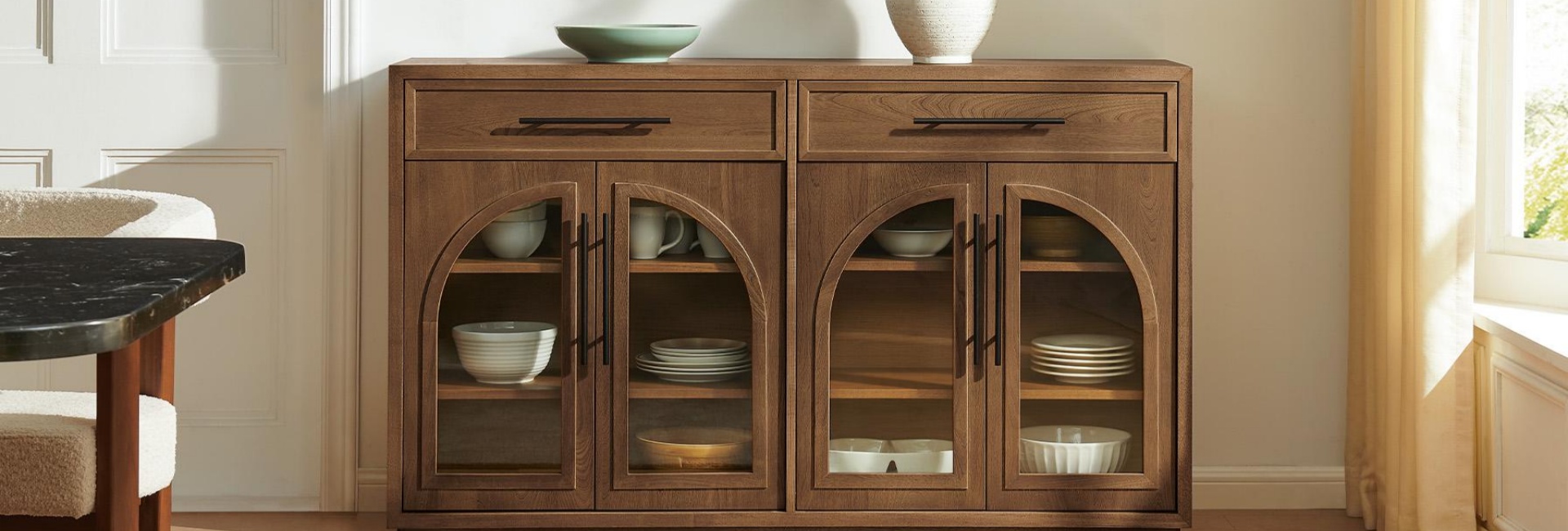
A sideboard with glass doors combines everyday storage with a place to display dinnerware, glassware, and decorative pieces. The right design depends on what you plan to store, how much of the contents you want visible, and how much room you have available. Before buying, compare the glass style, cabinet dimensions, frame materials, shelf arrangement, and door construction. These details determine how well the sideboard fits your room and daily routine.
Table of Contents
- Why Choose a Sideboard With Glass Doors?
- Choose the Right Glass Type for Your Needs
- Measure the Sideboard's Size and Available Space
- Check the Frame, Cabinet Materials, and Hardware
- Choose the Right Sideboard Storage Layout
- Match the Sideboard With Your Room Style and Placement
- Consider Cleaning and Daily Maintenance
- Conclusion
- FAQs
- What is the best type of glass for a sideboard?
- Are glass door sideboards practical for everyday use?
- Is tempered glass better for a sideboard?
- What should I store in a sideboard with glass doors?
- How do I choose the right size sideboard for my dining room?
- How do you keep a glass door sideboard organized?
- Can a sideboard with glass doors be used in a living room?
- How do you clean and maintain a glass front sideboard?
Why Choose a Sideboard With Glass Doors?
A glass-door sideboard offers a different balance of storage and display than a cabinet with solid doors. It lets you see the interior without opening the doors, making it convenient to locate frequently used plates, drinking glasses, and serving pieces. At the same time, the doors provide a more enclosed storage area than open shelving.
This combination makes glass-front furniture particularly useful in dining rooms, where practical storage and presentation often overlap.
Combine Display and Everyday Storage
Glass doors allow you to display selected items while keeping them behind a door. Coordinated dinnerware, decorative ceramics, and glass collections can become part of the room's decoration rather than remaining hidden in a closed cabinet.
They also reduce direct exposure to dust compared with completely open shelves, although they do not make a cabinet airtight.
A sideboard can hold everyday dinnerware on its lower shelves while displaying attractive serving pieces behind the glass. Drawers can keep smaller accessories out of sight.
Create a Visually Lighter Furniture Arrangement
A large wooden cabinet can sometimes appear visually heavy, particularly in a compact dining room. Glass door panels introduce transparency or texture, breaking up the appearance of a continuous solid front.
The effect depends on the frame, glass finish, lighting, and items stored inside. A cabinet with dark framing and clear glass creates a different impression from a light wood design with frosted panels.
Understand the Trade-Offs Before Buying
Glass doors are not automatically the best choice for every household. Clear glass makes the contents visible, so crowded or disorganized shelves become part of the room's overall appearance. Smooth glass surfaces also show fingerprints and smudges.
Textured glass offers more visual screening, but it does not provide the same clear display as transparent glass. If you mainly store household supplies that you prefer to conceal, a sideboard with solid doors may be more practical.
Choose the Right Glass Type for Your Needs
The glass is one of the most noticeable design features of a glass-front sideboard. Different finishes affect how clearly you can see the contents, how much visual texture the cabinet adds, and how much organization the interior requires.
When comparing different sideboard styles, consider how much you want to display and how much visual privacy you need. The right glass finish can help balance display and concealment while complementing the overall look of your furniture.
Clear Glass for an Unobstructed Display
Clear glass is suitable when you want the items inside the cabinet to remain fully visible. It works well for coordinated dinnerware, decorative ceramics, glass collections, and other objects that contribute to the room's appearance.
Its transparency also makes it easier to identify stored items without opening the doors. However, crowded shelves and unrelated household items remain visible, so this option works best when the interior is reasonably organized.
Clear glass is a natural fit for formal dining rooms and homes where the sideboard serves as a display area as much as a storage cabinet.
Frosted Glass for a More Subtle Appearance
Frosted glass diffuses light and partially obscures the objects behind it. Instead of presenting a sharp view of every stored item, it softens their outlines.
Frosted panels suit homeowners who prefer the openness of glass doors without displaying every detail of the interior. They can work well for mixed dinnerware, everyday dining accessories, and decorative objects that do not need to be seen in full detail.
The level of opacity varies between finishes. Some obscure most details, while others still reveal shapes and colors. Product photos or physical samples can help you judge how much visibility a particular finish provides.
Fluted or Textured Glass for Partial Concealment
Fluted glass, also called reeded glass, has a series of raised lines or grooves across its surface. These patterns distort the view of objects behind the panel, creating a softer display effect than plain transparent glass.
Unlike fully frosted glass, textured glass can still reveal the general shapes and colors of stored objects. It offers a middle ground when you want some visibility without exposing every item in detail.
Moru glass is one example of decorative textured glass. Its distinctive surface pairs well with furniture that combines natural wood grain and clean architectural lines.
The Stavn 72-Inch MCM Sideboard features decorative Moru glass in its central doors, complemented by tapered legs and fluted solid wood details. The combination creates a coordinated look for dining spaces with mid-century modern influences.
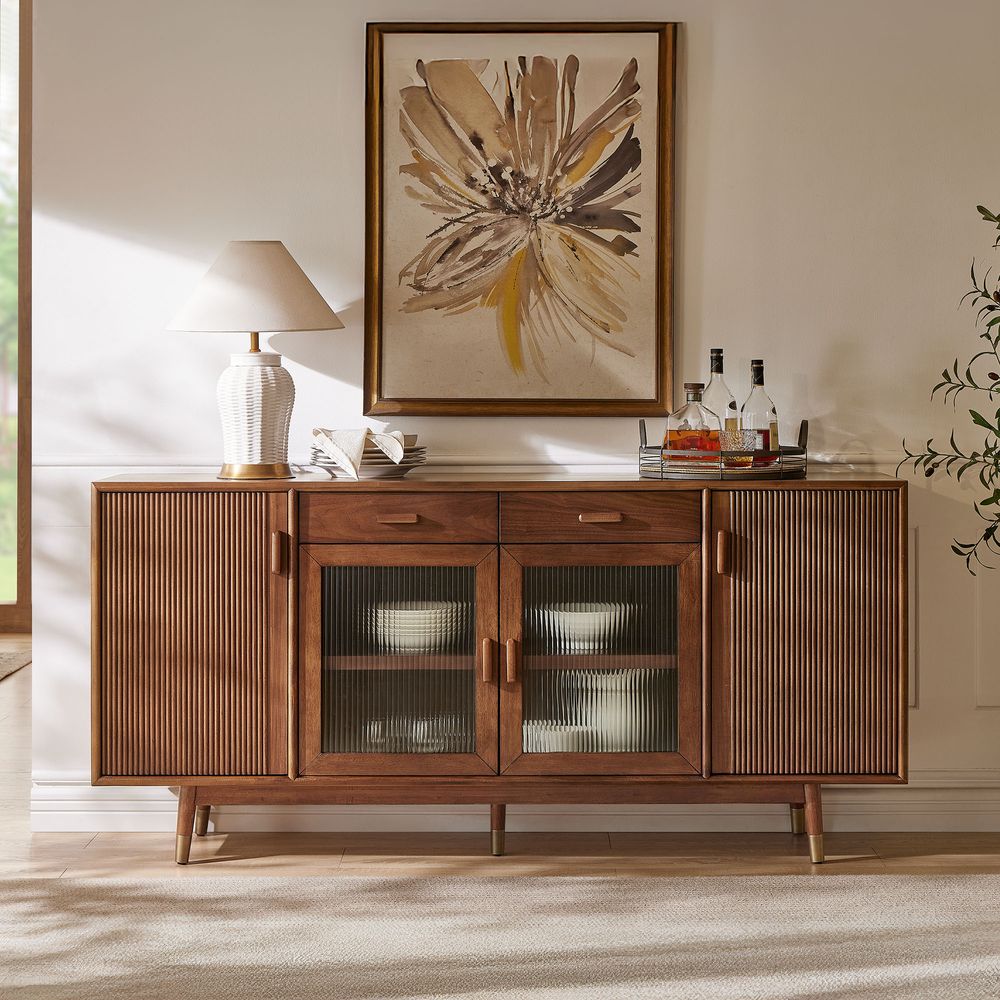
Stavn 72-Inch MCM Sideboard
View ProductCompare Glass Options Before Deciding
Choose clear glass for a more visible display, or frosted and textured finishes when you prefer some visual screening. The surrounding lighting and color of the stored items also influence how each finish looks.
Measure the Sideboard's Size and Available Space
A sideboard can look proportional in a product photo but feel oversized or awkward in an actual room. Measure the available space before choosing a finish or decorative style.
The important dimensions are width, height, and depth, along with the clearance needed to open the doors and access the interior.
Measure the Available Wall Width
Start by measuring the wall where the sideboard will stand. Account for nearby door frames, windows, outlets, baseboards, and other furniture.
Do not automatically choose the widest cabinet that fits between two walls. Leaving some visual space around the furniture can help the arrangement feel more balanced.
The sideboard should also work with the dining table. A very narrow piece may look undersized beside a large table, while an oversized cabinet can dominate a smaller room.
Consider Height and Depth
Height affects both accessibility and the visual proportions of the furniture. A taller sideboard may provide additional vertical storage, while a lower model creates a more understated profile.
Depth is especially important in dining rooms and narrow spaces. A deeper cabinet may accommodate larger serving pieces, but it also projects farther into the room.
Measure the distance from the wall to the nearest furniture or walking path. Allow enough room for dining chairs to move and people to pass comfortably.
A sideboard's exterior dimensions do not reveal its entire storage capacity. Interior depth, shelf spacing, drawer height, and door opening width also affect how much you can store.
Account for Door Opening and Delivery
Hinged glass doors need room to swing outward. Check whether an open door could interfere with a dining chair, another cabinet, or the main walking route.
Also consider the delivery path. Measure doorways, hallways, staircases, and tight turns before ordering a large piece, especially if it arrives fully assembled.
Check the Frame, Cabinet Materials, and Hardware
The glass doors may attract the most attention, but the frame and cabinet construction determine much of the furniture's overall appearance and practical use.
Look beyond broad descriptions such as wood construction. Check which components use solid wood, engineered wood, veneer, or metal, and understand how these materials are combined.
Solid Wood for Natural Grain and Character
Solid wood is made from natural timber rather than a composite wood panel. Its distinctive grain patterns bring warmth and visual depth to a sideboard.
Oak, for example, is often selected for its visible grain and versatile appearance. Other wood species offer different colors, textures, and working properties.
However, a product described as wooden furniture does not necessarily use solid wood throughout every component. The frame, doors, shelves, back panel, and drawer components may use different materials.
Read the material description carefully instead of assuming the entire cabinet is made from the same type of wood.
Engineered Wood and Veneers
Engineered wood is manufactured from wood fibers, particles, or layers bonded together. Plywood and other engineered panels are commonly used in furniture construction.
Veneer is a thin layer of natural wood applied to a supporting material. It allows furniture to display natural wood grain without every structural component being made from solid timber.
These materials are not automatically signs of poor construction. Panel quality, veneer thickness, joinery, finish, and assembly all contribute to the finished product.
For example, the Valborg 63-Inch Sideboard combines rubber wood and plywood with elm veneers. Its wire-brushed finish highlights the wood grain, while its arched glass doors add a decorative detail to the front.
Inspect Hinges, Handles, and Drawer Construction
Small hardware details influence how a sideboard feels during everyday use.
Check whether the hinges hold the doors securely and allow them to open smoothly. Look at how the glass sits inside its frame, whether the handles are comfortable to grip, and whether the doors align evenly when closed.
If the sideboard includes drawers, examine their construction and movement. Dovetail joints are a traditional joinery method that interlocks pieces of wood at the corners. Drawer slides and closing mechanisms also affect how smoothly the drawers operate.
For a large glass-front cabinet, these details deserve as much attention as the decorative finish.
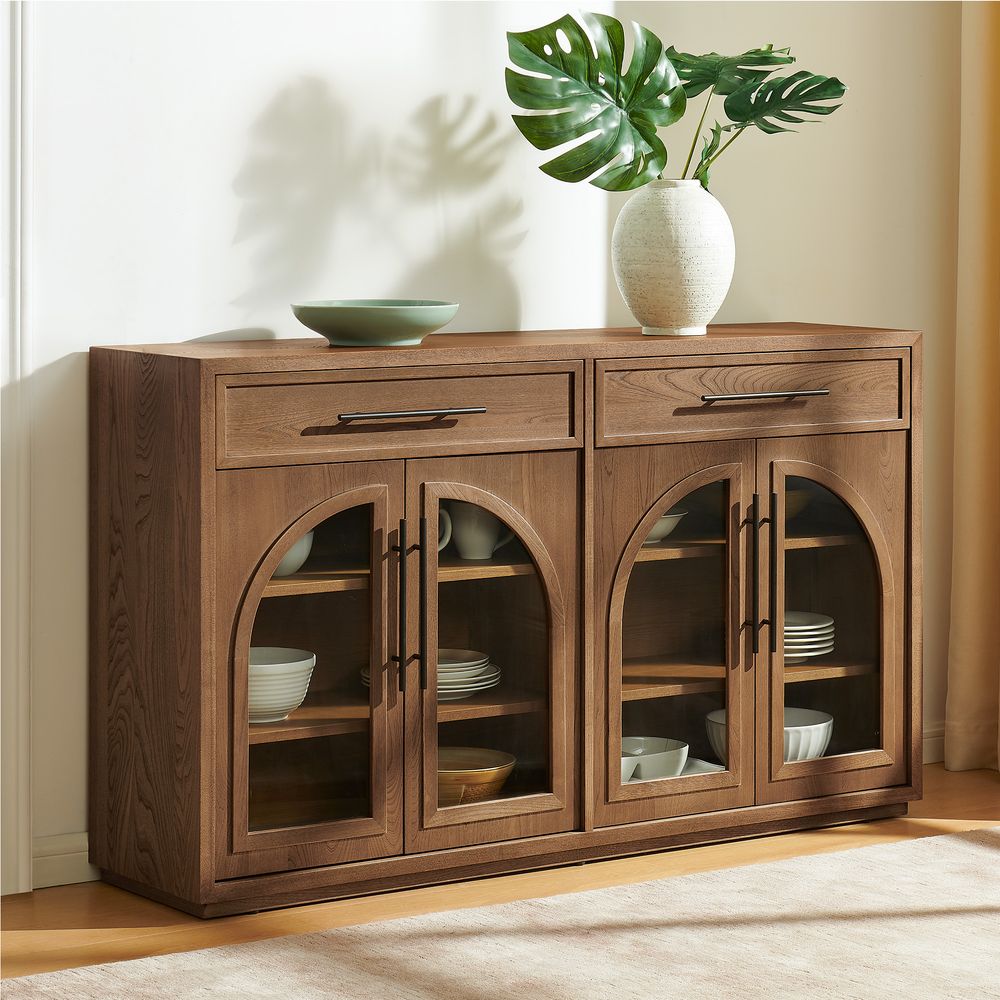
Valborg 63-Inch Sideboard
View Product
Choose the Right Sideboard Storage Layout
Two sideboards with similar exterior dimensions can offer very different amounts of usable storage. The interior arrangement determines what you can fit inside and how easily you can retrieve it.
Start with the items you plan to store, then compare shelf spacing, drawer dimensions, compartment depth, and weight limits.
Adjustable and Fixed Shelves
Adjustable shelves allow you to change the height between storage levels. This is useful when a cabinet needs to accommodate objects of different sizes.
Dinner plates and smaller bowls may fit on relatively short shelves, while tall pitchers, serving pieces, and decorative vases require more vertical clearance.
Check how the shelves are supported and whether the manufacturer provides a weight capacity, particularly if you plan to store heavy ceramics or large stacks of tableware.
Fixed shelves provide set storage levels. They work well when the cabinet will hold objects with relatively consistent dimensions, but the space between shelves cannot be changed.
Measure taller items before purchasing to make sure they fit comfortably inside each compartment.
Drawers and Open Shelves
Drawers are useful for items that are easier to organize horizontally than on shelves. Cutlery, napkins, placemats, coasters, small serving utensils, and table accessories can be stored separately from larger dinnerware.
Open shelves provide convenient access to frequently used objects, but they leave items exposed to dust and require more attention to visual organization.
A sideboard with glass doors, drawers, and open shelving can accommodate different storage needs within one piece of furniture.
Match Storage to What You Plan to Keep Inside
For dinnerware and glassware, prioritize shelf height and interior depth. Measure your largest plates and serving platters, allowing enough room to lift them out comfortably. Glassware also needs sufficient vertical clearance to stand upright without touching the shelf above.
For everyday dining accessories, look for drawers and enclosed compartments. These are suitable for cutlery, napkins, placemats, and other smaller items that are easier to sort separately.
For decorative displays and collections, consider glass visibility and shelf spacing. Clear glass provides an unobstructed view, while fluted or frosted panels soften the appearance of objects inside. Adjustable shelves are particularly useful for collections that include items of different heights.
If the sideboard will also hold books, board games, or general household supplies, prioritize compartment dimensions and weight limits. A combination of glass-front sections and solid storage areas can keep selected objects on display while concealing less decorative belongings.
Match the Sideboard With Your Room Style and Placement
A glass-door sideboard often becomes a noticeable part of the room because its doors reveal the objects inside. The frame, finish, glass pattern, and surrounding furniture should work together rather than compete for attention.
Modern Interiors
For a modern dining room, look for simple cabinet shapes, restrained hardware, and clean lines. Clear or lightly textured glass can prevent the furniture from feeling visually dense.
A neutral wood finish or darker frame can complement a room with a limited color palette. Keep displayed items relatively simple to maintain a clean appearance.
Traditional and Mid-Century Modern Interiors
Traditional interiors can benefit from framed glass doors, warm wood finishes, and decorative details.
For a mid-century modern room, tapered legs, straightforward silhouettes, and visible wood grain create a more characteristic look. A sideboard does not need to match every other furniture piece, but its proportions and finish should complement the overall arrangement.
Industrial Interiors
Industrial spaces often combine darker finishes, metal details, and strong geometric lines.
A sideboard with a metal frame or dark-colored hardware can complement these elements. Textured glass may also balance the harder appearance of metal and darker wood.
Consider how the cabinet will look alongside existing lighting fixtures, dining chairs, and shelving.
Choose the Right Location
In a dining room, place the sideboard where it can be accessed conveniently without interfering with dining chairs or the main walking route. A position near the dining table makes serving dishes and table accessories easier to reach.
In a living room, it can function as an accent storage piece for books, decorative objects, and household essentials. If you plan to use it for electronics, check ventilation, cable access, and interior dimensions rather than assuming a standard sideboard is suitable as a media console.
In an open-plan space, a sideboard can visually connect the dining and living areas. Its finish and proportions can help create a transition between different furniture groupings.
Natural light is another consideration. Prolonged direct sunlight may affect wood color and finishes over time, so avoid placing the piece directly beside a window with intense exposure when another position is available.
Consider Cleaning and Daily Maintenance
A glass-door sideboard combines several materials that need slightly different care. Glass panels show fingerprints and dust, while wooden surfaces can be affected by moisture, heat, light, and inappropriate cleaning products.
Clean Glass Doors Without Scratching Them
Use a soft microfiber cloth to remove fingerprints and everyday dust. For more noticeable smudges, follow the glass manufacturer's care instructions and use a suitable glass cleaner.
Avoid abrasive pads, rough cloths, and harsh cleaning tools that may scratch the surface or damage decorative finishes.
For textured glass, wipe along the grooves to remove dust that collects within the pattern. Avoid using excessive liquid around the frame, door joints, and hardware.
Protect the Wood Finish
Dust wooden surfaces regularly with a soft cloth. If a spill occurs, wipe it up promptly rather than allowing moisture to sit on the finish.
Avoid placing hot dishes or wet containers directly on the sideboard top. Coasters, placemats, and protective pads can help prevent stains and heat marks.
The Canadian Conservation Institute's furniture care guidance explains that changes in humidity can cause wood to expand or contract, potentially affecting its structure and finish. It also recommends limiting direct sunlight and avoiding harsh environmental conditions.
Keep the sideboard in a relatively stable indoor environment and follow the specific care instructions supplied with the product.
Check Doors, Hinges, and Shelves Periodically
Open and close the doors gently rather than pulling them by the glass panel. Use the handles whenever possible.
Check that hinges remain secure and that doors are properly aligned. If a shelf is adjustable, make sure its supports are seated correctly before placing heavy items on it.
Follow the manufacturer's recommended weight capacity and distribute heavier objects rather than concentrating them on one small area.
Inspect glass panels for chips or cracks, particularly around the edges. Stop using a damaged panel and contact the manufacturer about appropriate replacement or repair.
Conclusion
Choosing the right sideboard with glass doors involves more than finding a design that looks attractive. The glass finish affects visibility, cabinet dimensions determine how well it fits the room, and the interior layout determines how useful it will be every day.
Start by deciding what you want to display and what you need to store. Then compare glass construction, wood materials, shelf arrangements, drawer dimensions, and door clearance.
The right sideboard should provide enough room for your dinnerware and household essentials without overwhelming the space. Comparing these practical details before purchasing makes it easier to find a design that suits both your room and everyday needs.
FAQs
What is the best type of glass for a sideboard?
Clear glass is suitable for displaying dishes and decorative items, while frosted or textured glass offers more visual privacy. The best option depends on whether you want to showcase the contents or keep them less visible.
Are glass door sideboards practical for everyday use?
Yes. Glass door sideboards can provide convenient storage while keeping frequently used items visible and accessible. However, glass doors may show fingerprints and dust more easily, so they require regular cleaning.
Is tempered glass better for a sideboard?
Tempered glass is generally a better choice when safety is a priority. It is stronger than ordinary annealed glass and is designed to break into smaller, less sharp pieces if damaged. Check the product specifications to confirm whether the glass is tempered.
What should I store in a sideboard with glass doors?
You can store dinnerware, glassware, serving dishes, books, and decorative objects. Items that complement the room's style are good choices for visible shelves, while less attractive everyday essentials can be kept in drawers or concealed compartments.
How do I choose the right size sideboard for my dining room?
Measure the available wall space and allow enough clearance for doors, drawers, and nearby furniture. A sideboard should provide sufficient storage without obstructing walkways or making the dining area feel crowded.
How do you keep a glass door sideboard organized?
Group similar items together, avoid overcrowding shelves, and leave some empty space between decorative pieces. Use baskets or storage boxes in concealed compartments to keep smaller accessories organized.
Can a sideboard with glass doors be used in a living room?
Yes. It can work as a storage and display cabinet in a living room, holding books, decorative objects, collectibles, or tableware. Choose a size and finish that complement your existing furniture.
How do you clean and maintain a glass front sideboard?
Use a soft microfiber cloth and a suitable glass cleaner to remove fingerprints and dust from the glass. For the cabinet frame, follow the recommended care instructions for its material and finish. Avoid abrasive cleaners that could scratch the glass or damage the surface.