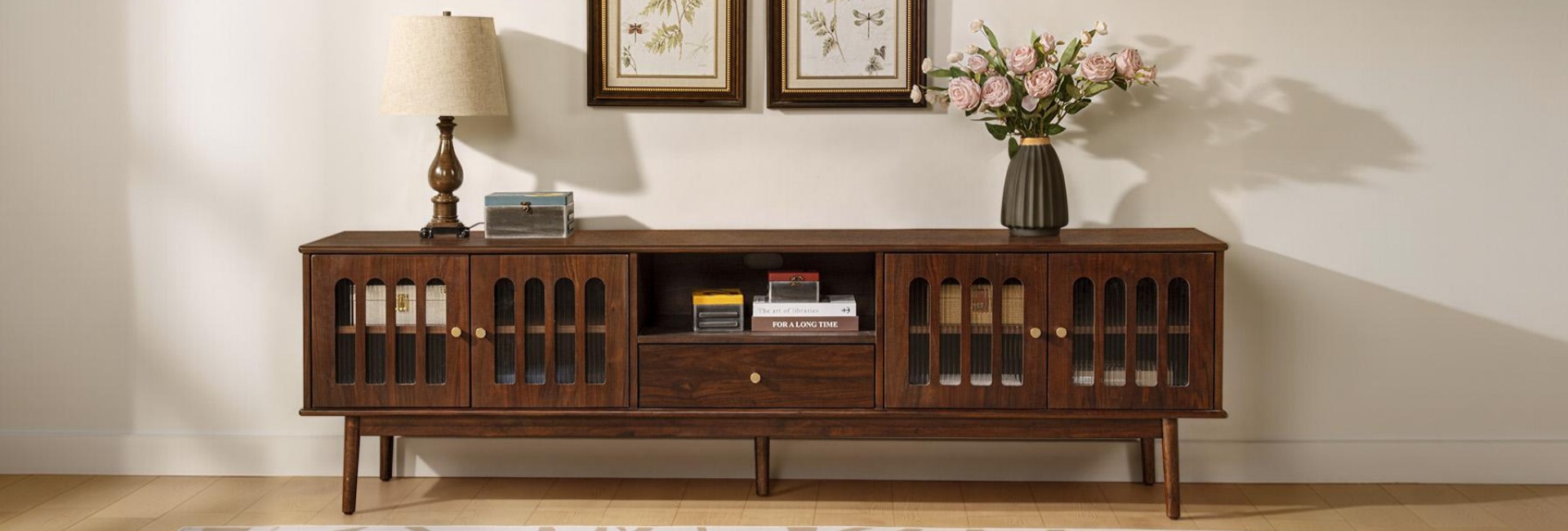
TV stands with glass doors offer a useful balance between concealed storage and open display. They let you show decorative objects, books, and selected electronics while keeping other belongings behind cabinet doors. However, because the contents remain partially or fully visible, the way you arrange the interior can affect the entire look of your living room.
Styling a glass-door TV stand does not require filling every shelf with accessories. A more considered arrangement starts with organizing the contents, choosing a few complementary decorative pieces, and leaving enough room for everyday equipment. The glass itself also matters: clear, smoked, and textured doors each create a different visual effect.
These ideas will help you style your TV stand with glass doors while keeping the cabinet practical, organized, and visually connected to the rest of your room.
Table of Contents
- 1. Start With a Clean and Organized Interior
- 2. Organize Electronics and Hide Visible Cables
- 3. Choose Decorative Accessories That Complement the Glass Doors
- 4. Arrange the Shelves With a Clear Visual Plan
- 5. Match Your Styling to the Type of Glass Doors
- 6. Decorate the Top of the TV Stand Without Crowding the Screen
- 7. Coordinate the TV Stand With the Rest of the Living Room
- 8. Use Lighting to Highlight the Cabinet Without Creating Glare
- 9. Final Checks Before You Finish Styling
- Conclusion
- FAQs
- How Do You Style a TV Stand With Glass Doors Without Making It Look Cluttered?
- What Should You Put Inside a Glass Door TV Stand?
- How Do You Decorate the Shelves of a Glass Door TV Stand?
- Is Clear Glass or Smoked Glass Better for a TV Stand?
- How Do You Decorate the Top of a TV Stand?
- Can You Put Gaming Consoles Inside a Glass Door TV Stand?
- Do Remote Controls Work Through Glass Cabinet Doors?
- How Do You Hide Cables in a Glass Door Media Console?
1. Start With a Clean and Organized Interior
Before adding decorative accessories, take everything out of the cabinet and decide what you actually want to keep inside. Glass doors make the contents part of the room's visual arrangement, so unnecessary items can make the furniture look cluttered even when the doors are closed.
Start by sorting the contents into three groups:
-
Display items: Decorative ceramics, books, small sculptures, and framed photographs.
-
Everyday essentials: Remotes, controllers, and accessories you use regularly.
-
Items to store elsewhere: Spare cables, manuals, packaging, and belongings that do not need to stay near the TV.
Use the drawers or less visible compartments for smaller items that do not contribute to the display. Keep the visible shelves for a limited selection of objects that work well together.
It also helps to leave some empty space between items. A shelf does not need to be completely filled to look finished. In fact, a little breathing room makes individual objects easier to see through the glass.
For example, a glass-door media console with adjustable shelves gives you more flexibility when arranging objects of different heights. You can change the shelf positions to accommodate books, decorative pieces, or electronic equipment without crowding the interior.
2. Organize Electronics and Hide Visible Cables
A glass-door TV stand often needs to store more than decorative objects. Streaming devices, gaming consoles, media players, and audio equipment may also need space inside the cabinet.
The main consideration is where each device should go. Frequently used equipment may be easier to access in an open compartment, while smaller accessories can be kept in drawers or closed storage.
Check Remote-Control Compatibility
Before placing a device behind a glass door, check how its remote communicates with it. Infrared remotes generally need a clear signal path, while some devices use Bluetooth or other wireless technologies that can work through cabinet doors.
Do not assume every remote will work through every type of glass. If you are unsure, test the setup before arranging the rest of the cabinet.
Allow Enough Ventilation
Electronic equipment produces heat during operation. Placing devices in tightly enclosed compartments can restrict airflow, particularly when several devices are stored together.
Check the manufacturer's instructions for ventilation requirements. Keep vents unobstructed and leave the recommended clearance around each device.
Plan Cable Routes Before Styling
Loose cables can make even a well-organized cabinet look untidy. Use the rear openings to route power and connection cables toward nearby outlets. Cable clips or sleeves can also help keep wires grouped together.
For example, Hernest's Jardine 84-Inch Oak Media Console includes six cord cutouts in the back panel. Its adjustable shelves and four drawers also provide separate spaces for equipment and smaller accessories.
Cable openings help with organization, but they do not replace the need for proper ventilation. Keep both requirements in mind when deciding where to place electronic devices.
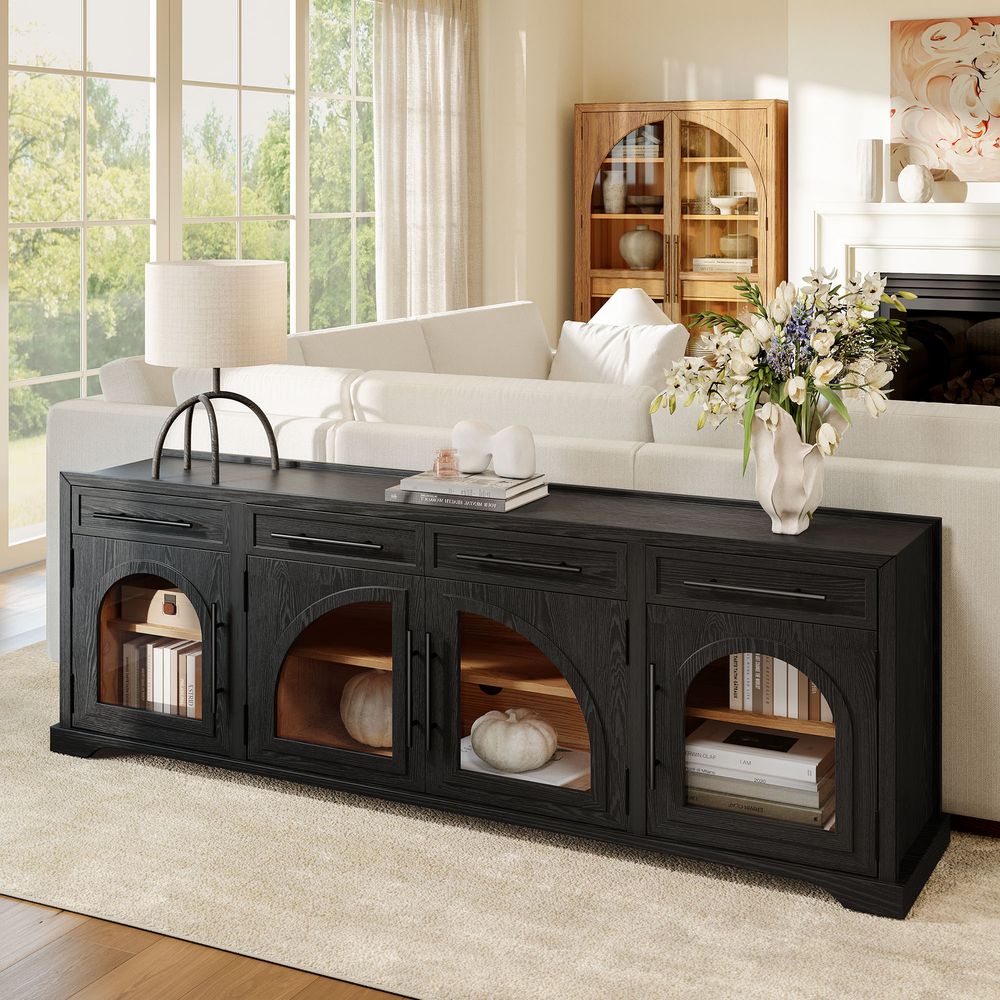
Jardine 84-Inch Oak Media Console
View Product
3. Choose Decorative Accessories That Complement the Glass Doors
Once the interior is organized, select a few decorative pieces that suit the cabinet's finish and the overall style of your living room. The glass doors already add visual detail, so accessories do not need to be elaborate.
Here are some options to consider.
Ceramic and Decorative Objects
Ceramic vases, bowls, and small sculptures can add shape and texture to the shelves. Matte finishes work well when you want a softer appearance, while glazed ceramics can introduce a little contrast.
Choose pieces that fit the available shelf space. Oversized accessories can make a cabinet feel crowded, especially when viewed through glass.
Books and Magazines
A short stack of books can add height and create a more layered arrangement. Choose covers that complement the cabinet's colors or the room's existing palette.
Books can also be displayed vertically with simple bookends. Combining horizontal and vertical arrangements creates more variation without requiring many additional accessories.
Natural Materials
Wood, stone, woven textures, and natural fibers can soften the appearance of a glass-door cabinet. These materials work particularly well with warm wood finishes and neutral interiors.
For a cabinet with a darker finish, a few lighter natural accents can create contrast without making the display feel overly busy.
Small Personal Items
Framed photographs, travel souvenirs, or a meaningful decorative object can make the display feel more personal. Use these pieces selectively rather than turning every shelf into a collection of unrelated items.
4. Arrange the Shelves With a Clear Visual Plan
Choosing suitable accessories is only part of the process. Their placement also affects how the cabinet looks from across the room.
A simple arrangement can help you create visual interest without overcrowding the shelves.
Vary the Height of Objects
Place objects of different heights together to avoid a flat, repetitive display. For example, a taller vase can sit beside a low bowl or a short stack of books.
You can also use books as a small platform to raise a decorative object. This creates different levels without adding more items.
Balance Horizontal and Vertical Arrangements
Books placed horizontally create a lower visual line, while upright books add height. Combining the two can make a shelf feel more varied.
Try not to repeat exactly the same arrangement on every shelf. Small differences help the display feel less rigid.
Repeat a Few Colors or Materials
A consistent color palette can connect objects that have different shapes and functions. For example, white ceramics, natural wood, and muted metal details can work together in a warm neutral room.
You do not need every accessory to match. Repeating one or two colors or materials is usually enough to make the arrangement feel connected.
Leave Some Negative Space
Avoid filling every available corner. Empty space gives decorative objects room to stand out and makes the cabinet easier to maintain.
Check the arrangement from your usual seating position. Small objects that look balanced up close may blend together when viewed from across the living room.
5. Match Your Styling to the Type of Glass Doors
The type of glass used on a TV stand changes how much of the cabinet interior is visible. Consider the glass finish before deciding how to arrange the shelves.
Clear Glass Doors
Clear glass provides the most direct view of the cabinet interior. It works well when you want to display books, ceramics, or decorative objects.
Because the contents remain highly visible, keep the shelves organized and avoid mixing too many unrelated colors or materials. You can also use matching storage boxes for small accessories that would otherwise create visual clutter.
Smoked Glass Doors
Smoked glass creates a darker, more subdued appearance. It partially obscures the contents, which can make the cabinet feel less visually busy than one with completely clear doors.
This finish often pairs well with dark wood, black accents, and contemporary interiors. Inside the cabinet, lighter decorative objects can provide contrast, while a restrained color palette helps maintain a cohesive look.
Fluted and Other Textured Glass Doors
Fluted and other textured glass doors introduce surface detail while softening the view of objects inside. Depending on the pattern and transparency, textured glass may make small inconsistencies less noticeable, although the shelves still need to be organized.
With this type of cabinet, keep the accessories relatively simple. The glass already provides texture, so a few well-chosen objects can be enough.
For example, Hernest's Aldric 84-Inch Media Console features textured glass doors and a Brown Walnut finish. The combination of glass and warm wood gives the cabinet visual detail without requiring an elaborate shelf display.
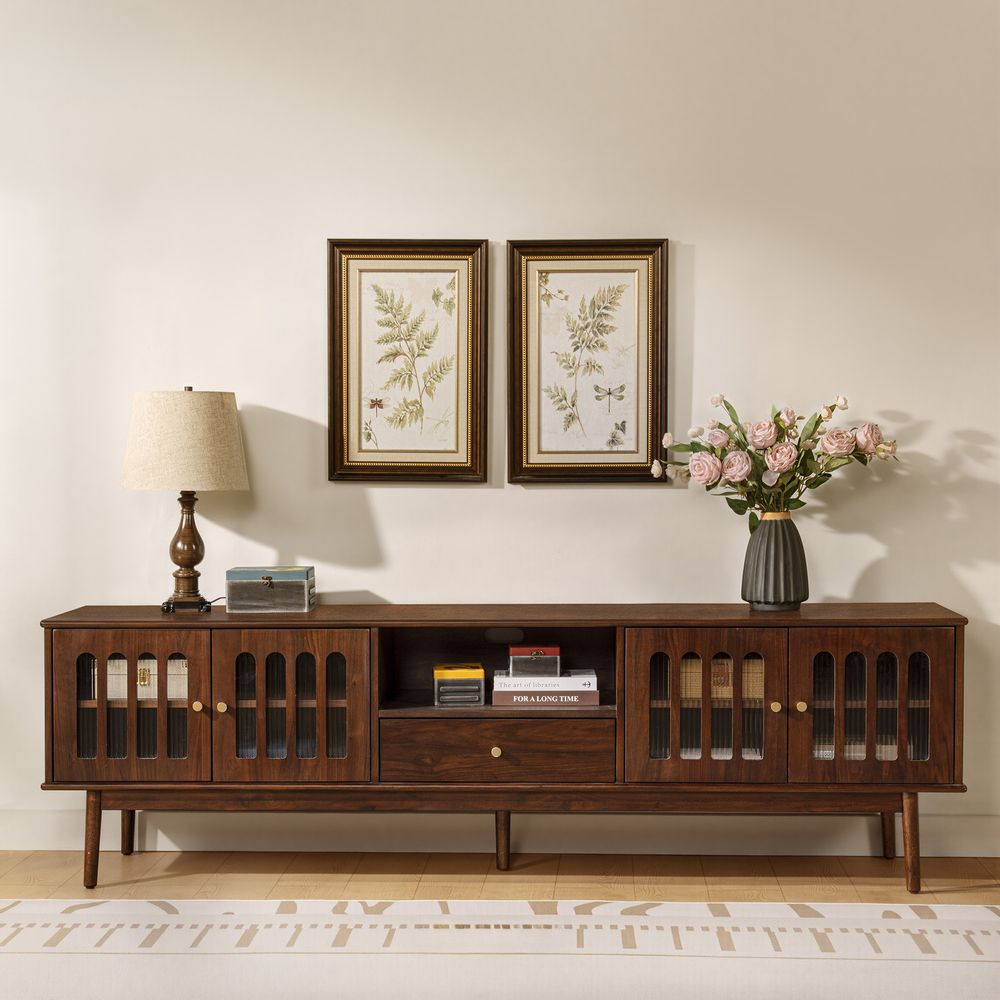
Aldric 84-Inch Media Console
View Product
6. Decorate the Top of the TV Stand Without Crowding the Screen
The top of the TV stand is another place to add decorative detail, but it needs to remain functional. The television is usually the main focal point, so accessories should not compete with the screen or interfere with equipment.
A few simple arrangements can work well:
-
A vase and a small decorative object: Place them toward one side of the console to create an asymmetrical arrangement.
-
A short stack of books: Use a few books to introduce color and height without taking up too much surface space.
-
A low decorative bowl: This adds texture while keeping the visual height relatively low.
-
A small table lamp: If there is enough space, a lamp can add a softer light source to the TV area.
Pay attention to the height of each object. Avoid placing tall accessories directly in front of the screen or where they obstruct the TV's sensors, speakers, or controls.
Also leave enough room for a soundbar, TV base, and any equipment that needs to sit on the console. The arrangement should suit how you actually use the space, not just how it looks in a photograph.
7. Coordinate the TV Stand With the Rest of the Living Room
A glass-door TV stand should feel connected to the furniture and finishes around it. It does not need to match every piece exactly, but its materials, colors, and decorative details should work with the wider room.
Consider the Existing Color Palette
Look at the wall color, flooring, sofa upholstery, and nearby furniture before choosing accessories.
A black or dark walnut console can stand out against light walls and neutral upholstery. A lighter oak finish may work well with beige, cream, or warm white interiors.
If the room already has several strong colors, keep the accessories inside the TV stand relatively restrained.
Repeat Materials and Finishes
Repeating a material or finish in different parts of the room can help connect the furniture. For example, a wood console may work well with a wooden coffee table, while brass-toned details can be echoed in nearby lighting or decorative hardware.
The pieces do not need to be identical. Similar tones and textures can create a visual connection without making the room look overly coordinated.
Pay Attention to the Entire TV Wall
Consider the wall behind the television as part of the arrangement. Artwork, wall lighting, curtains, and nearby shelving all influence how the console looks.
If the TV wall already has strong decorative elements, keep the cabinet styling simple. If the wall is relatively plain, a few carefully chosen accessories can add more character.
These TV console styling ideas work best when the cabinet, decorative objects, and surrounding furniture share a few common colors or materials.
8. Use Lighting to Highlight the Cabinet Without Creating Glare
Lighting can make a glass-door TV stand more noticeable, particularly in the evening. However, reflections on the glass and television screen can become distracting if the light source is too strong or poorly positioned.
Use Soft Ambient Lighting
A floor lamp or table lamp near the TV area can add a warm layer of light without directly illuminating the glass doors. Position the light so that it does not reflect strongly on the screen.
Consider Interior Cabinet Lighting
If the cabinet includes suitable lighting or can accommodate a compatible lighting setup, soft interior illumination can highlight selected decorative objects.
Keep the brightness moderate. Strong lighting can create glare on the glass and make the display look overly prominent.
Choose a Suitable Light Color
Warm white lighting can complement wood finishes and neutral accessories, while neutral white may suit a more contemporary arrangement. Consider the existing lighting in the room so the cabinet does not appear noticeably different from its surroundings.
Before adding lighting, check the cabinet's design and whether there is a practical way to route the power cable.
9. Final Checks Before You Finish Styling
Once the shelves and top surface are arranged, check a few practical details before considering the setup finished.
-
Test remote controls: Make sure your devices still respond when the cabinet doors are closed.
-
Check door clearance: Confirm that decorative objects and equipment do not block the doors or interfere with opening and closing them.
-
Keep frequently used items accessible: Remotes, controllers, and other everyday accessories should be easy to reach.
-
Clean the glass: Remove fingerprints, dust, and smudges so the cabinet looks tidy from different viewing angles.
These small checks help keep the arrangement convenient after the initial styling is complete.
Conclusion
Styling a TV stand with glass doors is largely about deciding what to display, what to store out of sight, and how to arrange the two in a practical way. Start with an organized interior, choose accessories that complement the cabinet's finish, and leave enough space between objects to keep the shelves from looking crowded.
The type of glass, the equipment you need to store, and the surrounding living room decor should all influence your choices. With a few thoughtful adjustments, a glass-door TV stand can provide useful storage while contributing to a more cohesive living room.
FAQs
How Do You Style a TV Stand With Glass Doors Without Making It Look Cluttered?
Start by removing items that do not need to be displayed. Keep visible shelves for a limited selection of books, ceramics, and decorative objects, and use drawers or concealed compartments for smaller accessories. Leaving some empty space between objects also helps the cabinet look more organized.
What Should You Put Inside a Glass Door TV Stand?
You can display books, small sculptures, ceramic vases, framed photographs, and selected decorative objects. The cabinet can also store media players and other electronic devices, provided there is enough space and ventilation. Keep loose cables and small everyday accessories organized rather than leaving them scattered across the shelves.
How Do You Decorate the Shelves of a Glass Door TV Stand?
Combine objects of different heights and shapes. For example, place a taller vase beside a short stack of books, or use a small bowl to balance a group of upright books. Repeat a few colors or materials across the shelves, and avoid filling every available space.
Is Clear Glass or Smoked Glass Better for a TV Stand?
Clear glass is suitable when you want the contents of the cabinet to remain fully visible. Smoked glass partially obscures the interior and creates a darker, more subdued appearance. The better option depends on your preferred style and how much attention you want the cabinet display to receive.
How Do You Decorate the Top of a TV Stand?
Use a small number of accessories, such as a vase, decorative bowl, or short stack of books. Vary their heights and place them away from the TV screen, sensors, and soundbar. Leave enough clear surface area for equipment and everyday use.
Can You Put Gaming Consoles Inside a Glass Door TV Stand?
Yes, provided the compartment has enough space and meets the console manufacturer's ventilation requirements. Check the device's dimensions, cable connections, and recommended clearance around its vents. An open compartment may be more suitable for equipment that needs substantial airflow or frequent access.
Do Remote Controls Work Through Glass Cabinet Doors?
It depends on the remote and the type of glass. Infrared remotes generally need a clear signal path, while Bluetooth and some other wireless remotes may work through cabinet doors. Test your specific device before keeping it inside a closed compartment.
How Do You Hide Cables in a Glass Door Media Console?
Use the rear cable cutouts to route wires toward nearby outlets. Cable clips, sleeves, or ties can keep them grouped together behind the equipment. Make sure cables are not pulled too tightly and that power connections remain accessible when needed.