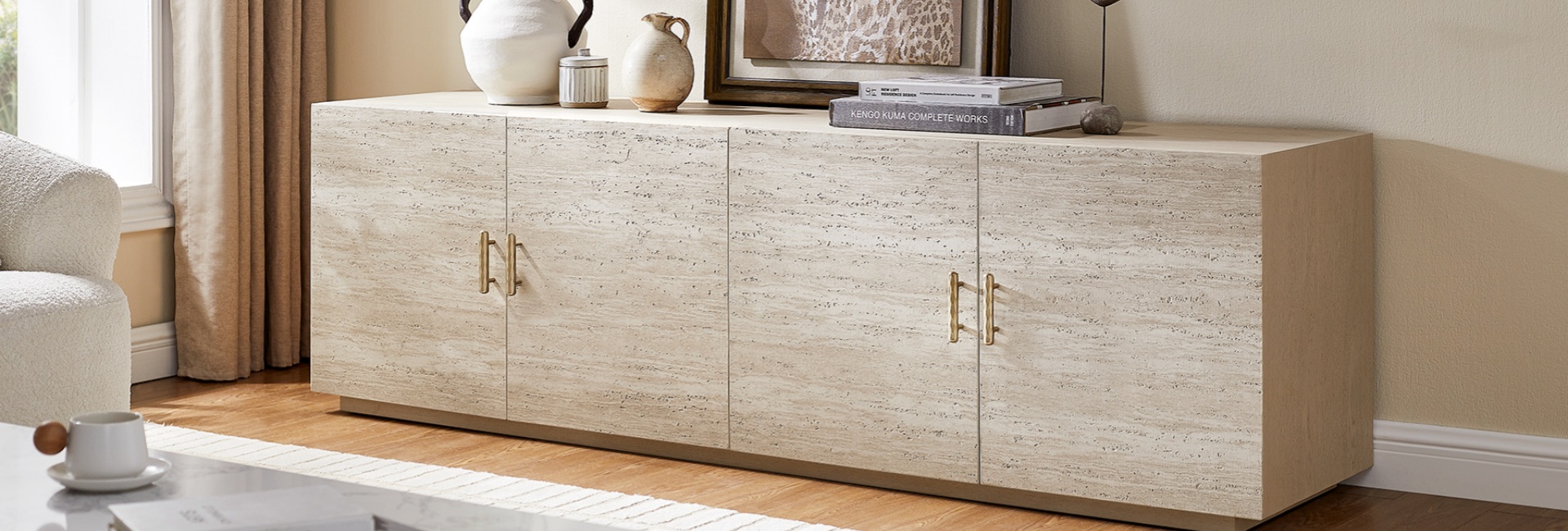
Organic modern is an interior design style that combines clean, modern lines with natural materials, warm neutral colors, and organic shapes. It creates a room that feels relaxed and uncluttered without relying on a stark, all-white palette or excessive decoration.
The style works well in living rooms, dining areas, and bedrooms because it balances visual simplicity with the textures and practical storage that make a home comfortable to use. Oak furniture, stone-inspired finishes, woven textiles, and softly curved forms can all contribute to the look, but the key is choosing pieces that work together rather than filling every corner with natural-looking materials.
This guide explains what organic modern means, how it differs from mid-century modern, and how to choose furniture that suits your space, daily routine, and preferred level of maintenance.
Table of Contents
- What Is Organic Modern Design?
- Organic Modern vs. Modern vs. Mid-Century Modern
- Materials That Work Well in Organic Modern Interiors
- Organic Modern Colors: Warm Neutrals and Subtle Contrast
- Shapes and Proportions: Using Curves Without Cluttering the Room
- Lighting and the Connection to Nature
- How to Furnish an Organic Modern Room
- How to Choose Organic Modern Furniture for Everyday Life
- Common Organic Modern Decorating Mistakes
- A Simple Starting Plan for Organic Modern Design
- FAQs
- What does organic modern mean?
- What is organic modern interior design?
- How is organic modern different from mid-century modern?
- What materials are common in organic modern furniture?
- What colors work best for organic modern interiors?
- How do I create an organic modern living room?
- Is organic modern a good style for a small apartment?
- How do you care for organic modern furniture?
- Is organic modern the same as minimalism or Japandi?
What Is Organic Modern Design?
Organic modern is a contemporary interior design style that pairs modern simplicity with shapes, colors, and textures drawn from nature. Furniture tends to have clear silhouettes, while wood grain, tactile fabrics, stone-inspired surfaces, and subtle curves add visual interest.
Three elements help define the style:
-
Simple, functional forms: Furniture has a clear purpose and a considered silhouette rather than excessive ornamentation.
-
Natural-looking materials and textures: Wood, linen, wool, jute, and stone-inspired finishes bring variation to otherwise simple spaces.
-
A restrained color palette: Warm white, beige, taupe, sand, and earthy brown create a calm backdrop, with darker accents used selectively.
Organic modern is a contemporary style, so it should not be treated as another name for the historical Organic Design movement. In 1940, the Museum of Modern Art organized a competition for furniture, lamps, and textiles under the name “Organic Design in Home Furnishings.” The resulting exhibition opened in 1941 and included work by Charles Eames and Eero Saarinen. That history provides useful context, but today's organic modern interiors are not limited to that movement or its designs. See the MoMA exhibition history for more background.
In a home, the practical idea is straightforward: keep the overall design clean, then use material, shape, and proportion to make the room feel inviting.
Organic Modern vs. Modern vs. Mid-Century Modern
These styles share an appreciation for thoughtful design, but they create different visual effects.
Organic modern usually places greater emphasis on tactile materials and a connection to nature. Mid-century modern often makes the furniture silhouette itself a defining feature, such as tapered legs, angled supports, or distinctive geometric profiles. Modern interiors can be warmer or cooler depending on the materials and colors used.
The styles can work together. A mid-century modern sideboard or TV stand can fit into an organic modern room when its wood tone, proportions, and detailing complement the rest of the furniture. For a more distinctly retro silhouette, explore Hernest's mid-century modern TV stands.
The goal is not to follow every rule of one style. It is to make the pieces feel intentional when viewed together.
Materials That Work Well in Organic Modern Interiors
Material choice affects more than appearance. It also influences weight, upkeep, texture, and how a piece fits into everyday life.
Wood: Oak and Ash
Oak and ash are useful choices for organic modern interiors because their visible grain adds detail without requiring elaborate decoration. Natural, whitewashed, and lightly stained finishes can all work, depending on the room's lighting and existing floors.
When shopping, distinguish between solid wood, wood veneer, and engineered wood. Solid wood is made from wood throughout the relevant component. Veneer is a thin layer of real wood applied to another substrate, while engineered wood uses manufactured wood-based panels. These construction methods are not interchangeable, and the right choice depends on the design, component, construction quality, and intended use.
For example, the Sabina 72-Inch Ash Wood Sideboard can introduce a wood-focused surface into a dining room or living area. Before buying any sideboard, check its listed materials, internal dimensions, shelf arrangement, and the space available for doors and drawers to open.
Stone and Stone-Inspired Finishes
Stone introduces variation that can keep a neutral room from feeling flat. Natural travertine has its own pores, markings, and variations; a travertine-inspired finish offers a different way to bring a similar visual texture into a furniture design.
The distinction matters when comparing products. The Renata 71-Inch Travertine-Textured Wood Sideboard offers an option for adding a substantial storage piece to a dining or living area. If you prefer a stone-inspired look, compare its finish and care requirements with those of the Renata 84-Inch Travertine-Textured Media Console. The console uses a travertine-inspired texture rather than a solid natural-travertine construction.
Pair stone-like finishes with wood, woven fabrics, or matte ceramics to create contrast. If the room already has pronounced wood grain or patterned flooring, a quieter surface may be easier to coordinate.
Textiles: Linen, Wool, Bouclé, and Jute
Textiles soften the clean lines of modern furniture. Linen and linen-look fabrics can bring a relaxed finish to upholstery and curtains; wool adds a denser, warmer texture; bouclé creates a visibly looped surface; and jute is often used in rugs and woven accessories.
Choose textiles according to how the room is used. A decorative fabric that looks appealing in a rarely used sitting room may not be the most practical option for a busy family space. Check the manufacturer's cleaning instructions, especially for upholstery, rugs, and items placed near food or drinks.
Rather than mixing every texture at once, start with one or two. For example, pair an oak coffee table with a wool rug and a simple cotton or linen cushion cover. The differences in texture create interest without making the room feel busy.

Sabina 72-Inch Ash Wood Sideboard
View Product
Renata 71-Inch Travertine-Textured Sideboard
View Product
Organic Modern Colors: Warm Neutrals and Subtle Contrast
A warm neutral palette is a useful starting point, but the room does not need to be entirely beige.
Consider building the palette around three layers:
-
A base color: Warm white, ivory, or a soft beige on walls and larger surfaces.
-
A grounding color: Oak, walnut-toned wood, taupe, or a deeper earthy shade in the main furniture.
-
A small accent: Black, bronze, muted green, or another restrained color in lighting, hardware, artwork, or accessories.
Pay attention to undertones. A gray-beige floor, yellow-toned oak furniture, and cool white walls may look mismatched when placed together, even if each item is neutral. Compare samples in the room's actual lighting when possible, and look at them next to existing floors, upholstery, and cabinetry.
If the room already contains several wood finishes, aim for a deliberate relationship between them rather than trying to match every shade exactly. Similar undertones and balanced proportions often matter more than identical colors.
Shapes and Proportions: Using Curves Without Cluttering the Room
Organic modern furniture often includes rounded edges, curved profiles, or irregular shapes inspired by nature. These forms work best when balanced with simpler pieces.
A round coffee table, for example, can soften a seating area dominated by a rectangular sofa and straight-edged media console. The Rolf 42-Inch Round Oak Coffee Table offers a circular shape that can create a different visual rhythm from a rectangular table. For a longer surface, the Skimra 55-Inch Oak Coffee Table is another option to consider.
Choose between them based on the room's layout rather than shape alone. Measure the available floor area, leave enough space to walk around the table, and make sure the tabletop is proportionate to the seating. A larger table may provide more usable surface, but it can make a compact room harder to move through.
The same principle applies to decorative objects. One sculptural vase or a small group of ceramics can make a stronger statement than a crowded collection of accessories. Leave some open space so the furniture's shape and finish remain visible.

Skimra 55-Inch Oak Coffee Table
View Product
Rolf 42-Inch Round Oak Coffee Table
View Product
Lighting and the Connection to Nature
Lighting helps reveal the textures that make organic modern interiors distinctive. Warm light can bring out the grain in wood and soften neutral upholstery, while daylight can change how beige, white, and gray finishes appear throughout the day.
Use a mix of lighting where practical:
-
Ambient lighting provides general illumination.
-
Task lighting supports activities such as reading, cooking, or working.
-
Accent lighting highlights artwork, architectural details, or a textured surface.
Natural elements do not have to be literal. A view of greenery, a plant, a wood-grain cabinet, or a woven lampshade can all contribute to the feeling of connection with nature. If you add plants, choose varieties suited to the available light and your willingness to care for them.
Avoid relying on lighting alone to correct a mismatched palette. Check furniture finishes and fabric colors in both daylight and the artificial lighting you normally use.
How to Furnish an Organic Modern Room
A consistent approach works better than buying a full set of furniture in the same finish. Start with the room's main functional needs, then select a few pieces that share a compatible palette and visual weight.
Living Room: Balance Storage With Open Space
In a living room, the sofa, coffee table, and media console often establish the overall style. If the sofa has a large, solid profile, a console with visible texture can add interest without requiring more decorative objects.
The Renata 84-Inch Travertine-Textured Media Console brings a stone-inspired surface and warm, neutral contrast to the media wall. For a more wood-forward look, the Skimra 84-Inch Oak Media Console features oak and fluted detailing.
These two options create different effects: the Renata introduces a stone-like texture, while the Skimra makes the wood finish and vertical detailing more prominent. Compare the available finishes with your flooring, sofa fabric, and other wood furniture before deciding.
Also check the console's width, depth, storage configuration, cable access, and recommended TV size. Browse Hernest media consoles to compare designs and storage needs.
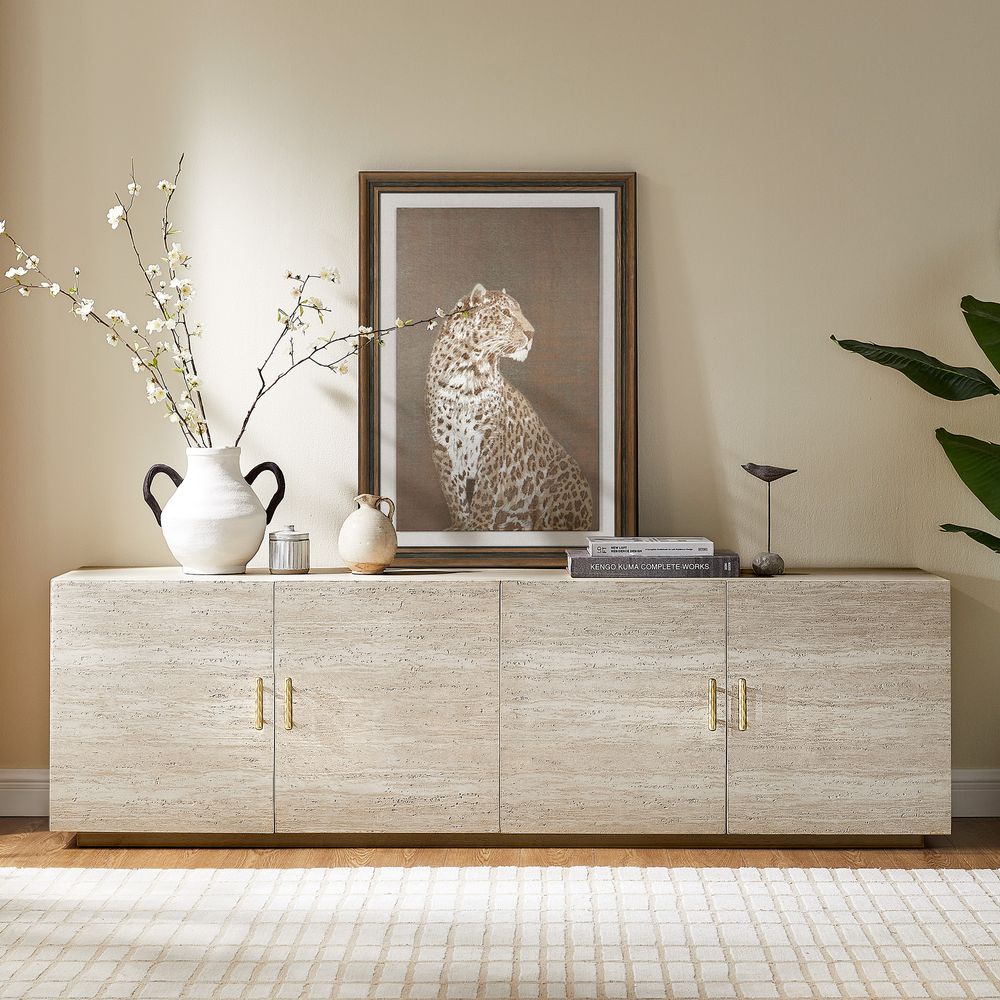
Renata 84-Inch Travertine-Textured Media Console
View Product
Skimra 84-Inch Oak Media Console
View ProductDining Room and Entryway: Make Storage Part of the Design
Sideboards are useful in organic modern spaces because they provide closed storage while giving you a surface for a lamp, artwork, or a few carefully chosen objects.
The Renata 71-Inch Wood Sideboard and Sabina 72-Inch Ash Wood Sideboard are two options to compare when planning a dining room or larger entryway. Choose based on the listed finish, storage layout, overall dimensions, and how the piece relates to your dining table or wall space.
Before placing a sideboard in a walkway, measure the available width and allow room for doors and drawers to open. In a dining area, consider how far the piece sits from the table and whether people can move comfortably around both. Explore Hernest sideboards for more storage options.
Bedroom: Keep Storage Visually Calm
A bedroom does not need matching furniture everywhere to feel cohesive. A dresser and nightstand can have different profiles as long as their finishes, scale, and overall visual weight work together.
The Skugga 63-Inch Oak 6-Drawer Dresser offers a wood-focused option for organizing folded clothing and other bedroom essentials. If you prefer a stone-inspired look, compare it with the Renata 65-Inch Travertine-Textured 6-Drawer Dresser.
For the bedside, the Skugga 26-Inch Oak Nightstand can provide a wood finish that relates to other pieces in the room. Check its height against your mattress and make sure the top offers enough space for the items you use at night.
Compare more options in Hernest's dressers and nightstands collections.
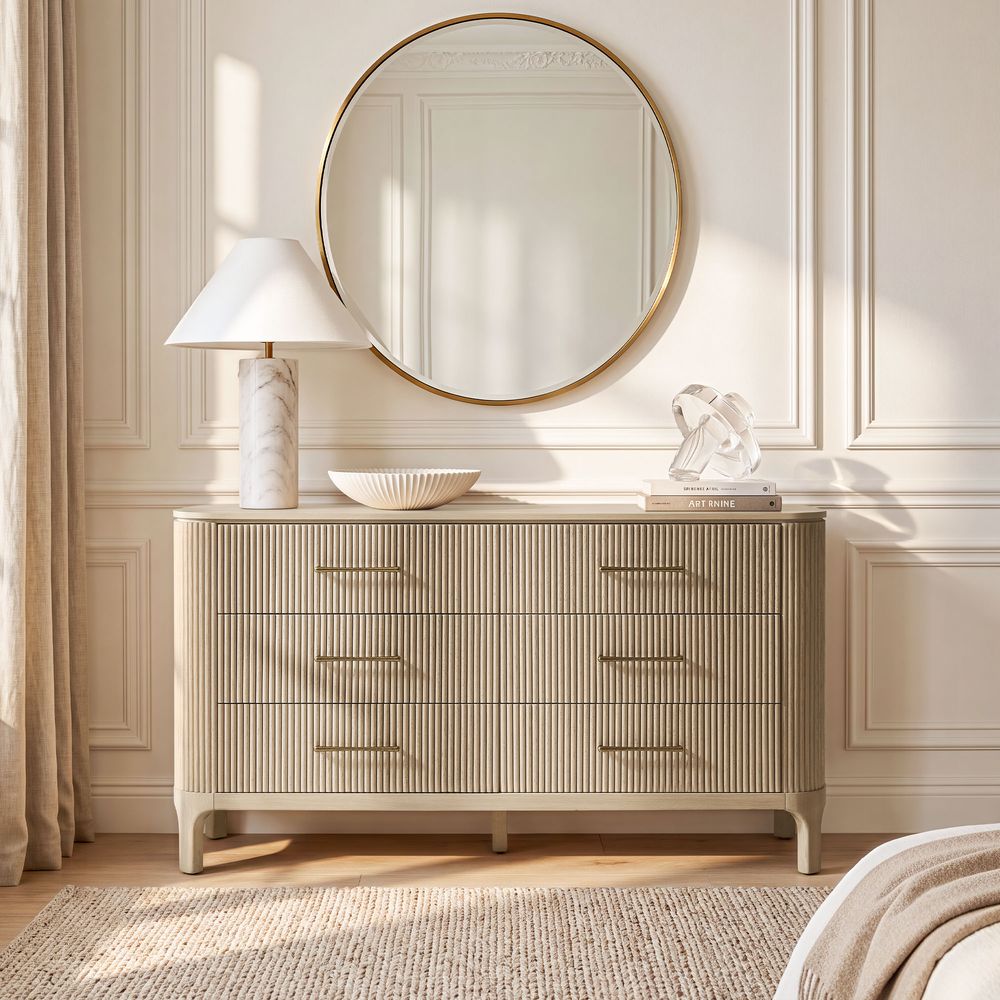
Skugga 63-Inch Oak 6-Drawer Dresser
View Product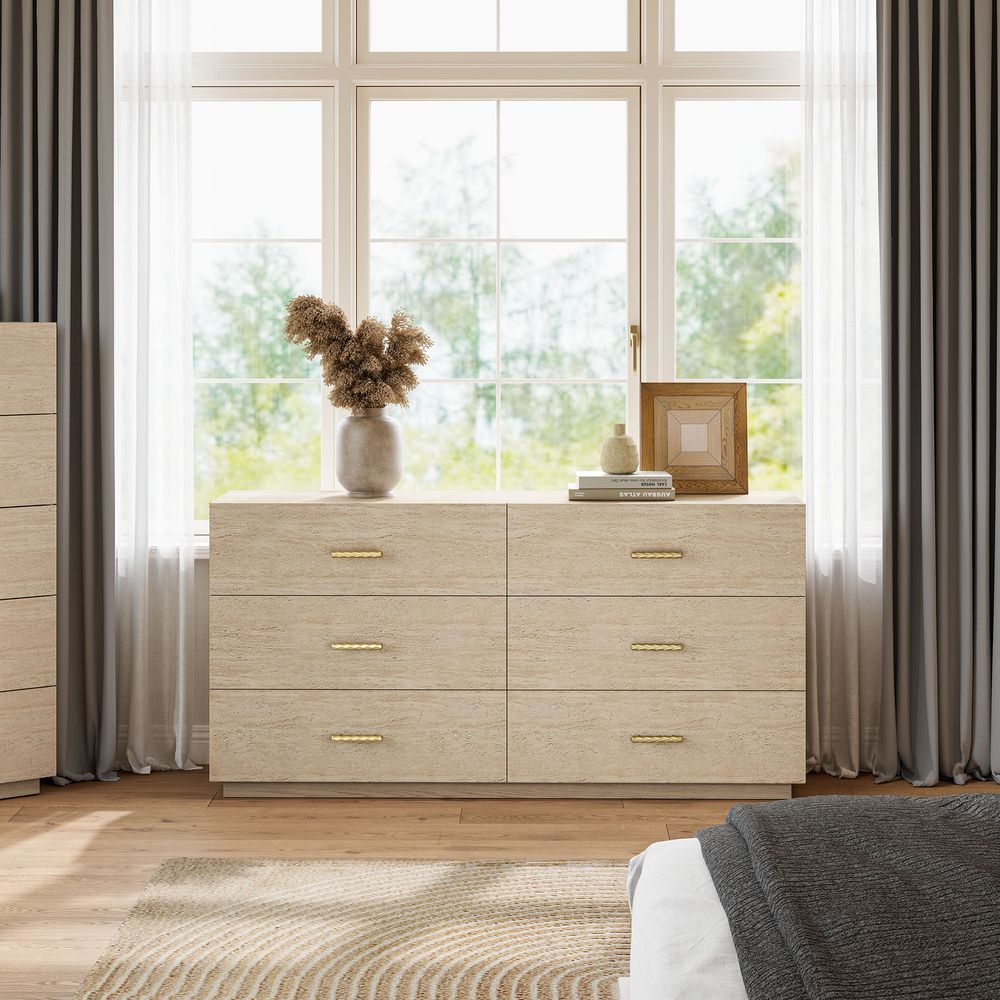
Renata 65-Inch Travertine-Textured 6-Drawer Dresser
View Product
How to Choose Organic Modern Furniture for Everyday Life
Style is only one part of the decision. The right furniture should fit the room, support your routine, and have materials and construction that suit the way you plan to use it.
Check Materials and Finish Descriptions
Read the product specifications rather than relying on the product name or photography alone. Confirm whether a piece uses solid wood, veneer, engineered wood, natural stone, resin, or a combination of materials.
For finishes inspired by natural materials, look for precise descriptions such as “travertine-textured” or “wood veneer.” These terms help set accurate expectations about appearance and construction.
Check Storage and Construction Details
For cabinets, sideboards, and dressers, look beyond the exterior. Consider drawer dimensions, shelf configuration, door clearance, cable openings where relevant, and whether the internal space can accommodate the items you intend to store.
If a product page lists details such as dovetail drawer joints, adjustable shelves, or assembly requirements, use those facts to compare options. Do not assume that all pieces with similar appearances have the same internal construction.
Measure Before You Buy
Measure the room, the intended furniture footprint, and the route the item must take to reach its final location. Check doorways, hallways, elevators, and stair turns if delivery access could be difficult.
For media consoles, compare the console width with the TV and check the recommended TV size, cable access, and space for any receivers or gaming equipment. For coffee tables, consider both the tabletop dimensions and the space needed to walk around it. For bedroom furniture, check drawer clearance and the distance between the bed and nearby pieces.
Choose Finishes You Can Maintain
Different materials and finishes require different care. Follow the manufacturer's instructions for cleaning, moisture exposure, heat, and spills. Avoid assuming that a natural-looking finish can be treated exactly like natural stone or solid wood.
If you have children, pets, or a high-traffic household, consider where scratches, fingerprints, water rings, and fabric stains are most likely to occur. Practicality should be part of the design decision from the start.
Think About Long-Term Flexibility
A piece is easier to keep in your home when it works with more than one arrangement. Neutral wood furniture, simple silhouettes, and useful storage can often move between rooms or adapt to changes in decor.
That does not mean every purchase should be plain. Choose one or two distinctive features—such as fluted fronts, a rounded tabletop, or a textured finish—and keep the remaining pieces relatively simple. This creates visual character without making future changes difficult.
Common Organic Modern Decorating Mistakes
Using too many similar textures. Wood grain, woven fabrics, stone-like surfaces, and ceramics can work together, but too many competing textures can make the room feel visually crowded. Choose a few and give each one room to stand out.
Treating every neutral as the same color. Beige, gray, ivory, and white have different undertones. Compare finishes in the room rather than selecting pieces from isolated product photos.
Buying furniture before measuring. A console or coffee table may look proportionate online but overwhelm the room in person. Confirm dimensions and walking space before ordering.
Confusing appearance with material. A stone-inspired finish is not necessarily natural stone, and a wood veneer is not the same as a solid-wood component. Read the specifications so the material matches your expectations.
Adding accessories to fill every surface. Organic modern relies on balance, not an empty room or a crowded one. Leave some open tabletop and shelf space, and use accessories that serve a purpose or add a clear visual contrast.
A Simple Starting Plan for Organic Modern Design
If you are updating one room at a time, use this sequence:
-
Choose the largest functional piece first. Start with the sofa, media console, dining table, or bed, depending on the room.
-
Set a restrained palette. Pick a base neutral and one or two complementary wood or accent tones.
-
Add contrast through shape or texture. A round coffee table, fluted cabinet front, or woven rug can create interest without adding more colors.
-
Solve storage and lighting needs. Choose furniture that fits your routine and layer lighting where the room needs it.
-
Finish with a few intentional details. Add artwork, ceramics, greenery, or textiles only where they improve the space.
This sequence keeps the design connected to how you live, rather than making the room a collection of products that happen to share a style label.
FAQs
What does organic modern mean?
Organic modern is an interior design style that combines clean, modern forms with natural materials, warm neutral colors, tactile finishes, and organic shapes. The result is simple in structure but not visually cold.
What is organic modern interior design?
Organic modern interior design uses a restrained layout and palette, then adds warmth through wood grain, stone-inspired finishes, textiles, rounded furniture, and carefully chosen accents. It can be adapted to living rooms, bedrooms, dining areas, and small apartments.
How is organic modern different from mid-century modern?
Organic modern emphasizes natural-looking textures, warm neutrals, and softer forms. Mid-century modern draws more directly on furniture and design from the mid-20th century, often featuring tapered legs, geometric silhouettes, and distinctive structural details. The styles can be mixed when their proportions and finishes work together.
What materials are common in organic modern furniture?
Common choices include oak, ash, other wood finishes, linen, wool, jute, ceramics, and stone or stone-inspired surfaces. Always check the product specifications to distinguish solid materials from veneers, engineered wood, and decorative finishes.
What colors work best for organic modern interiors?
Warm white, ivory, beige, taupe, sand, and earthy brown are common starting points. Wood tones and small accents in black, bronze, or muted green can add contrast. The best combination depends on the room's lighting and existing finishes.
How do I create an organic modern living room?
Start with the sofa and main storage pieces, then choose a compatible wood tone and a restrained color palette. Add contrast with a rounded coffee table, tactile rug, layered lighting, and a small number of accessories. Keep enough open space for comfortable movement.
Is organic modern a good style for a small apartment?
Yes. Its emphasis on simple forms and purposeful furniture can work well in compact spaces. Measure carefully, prioritize storage, and avoid oversized pieces or excessive decoration. A round coffee table may also help soften the layout, provided there is enough room to move around it.
How do you care for organic modern furniture?
Care depends on the material and finish. Follow the manufacturer's instructions, use suitable cleaning products, and address spills promptly according to the care guidance. Do not assume that veneer, engineered wood, resin, and natural stone can all be cleaned or maintained in the same way.
Is organic modern the same as minimalism or Japandi?
No. Organic modern shares minimalism's preference for restraint, but it places particular emphasis on natural-looking materials, warm tones, and organic shapes. Japandi combines Japanese and Scandinavian design influences and often emphasizes simplicity, craftsmanship, and functional calm. There can be overlap, but the styles are not interchangeable.