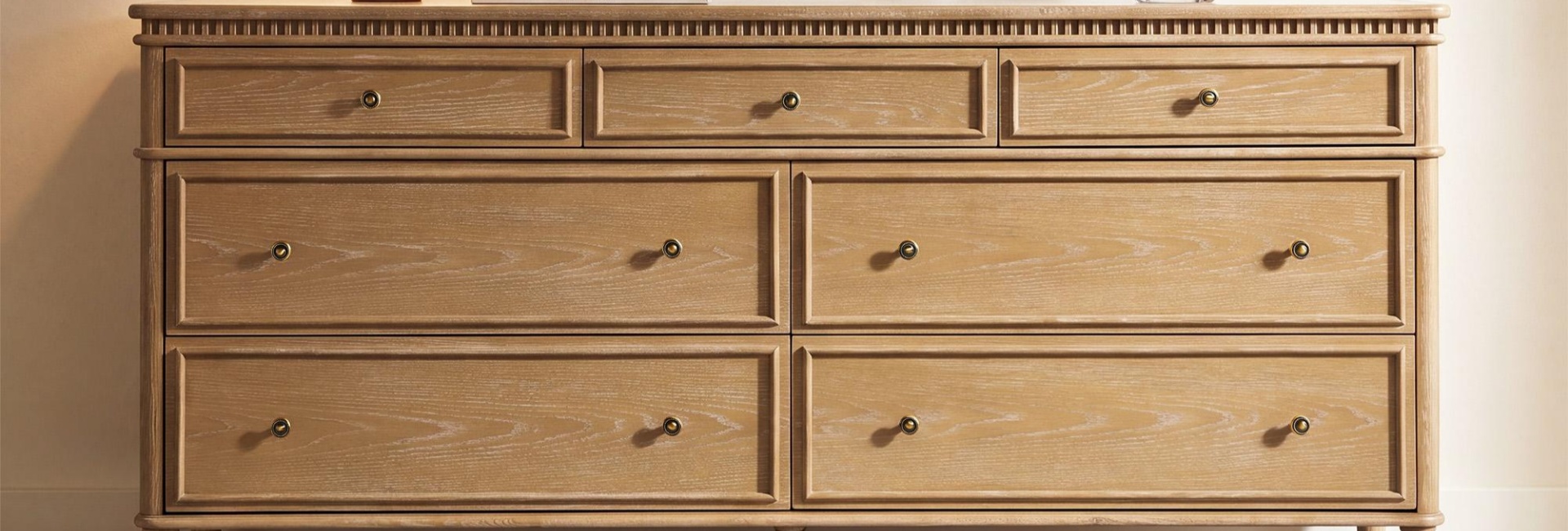
An oak dresser can bring natural wood character and practical storage to a bedroom, but choosing the right one takes more than picking a finish you like. Before buying, compare its material composition, overall dimensions, drawer capacity, and construction details. You should also consider how its finish and design will work with your existing furniture. This guide explains what to look for when choosing an oak dresser, from solid oak and veneer options to drawer layouts, safety features, and everyday care.
Table of Contents
- Understand the Different Types of Oak Dresser Materials
- Choose the Right Oak Dresser Size for Your Bedroom
- Determine How Much Storage You Need
- Evaluate Drawer Construction and Overall Build Quality
- Select an Oak Color, Grain Pattern, and Finish
- Find an Oak Dresser That Matches Your Bedroom Style
- Consider Safety and Everyday Convenience
- How to Care for an Oak Dresser
- Conclusion
- FAQs
- What Is the Difference Between Solid Oak and Oak Veneer Dressers?
- Are Oak Dressers Durable?
- How Do I Choose the Right Size Oak Dresser?
- How Many Drawers Should an Oak Dresser Have?
- What Is Quarter-Sawn Oak, and Is It Better?
- What Color Goes Well With an Oak Dresser?
- How Can I Tell If an Oak Dresser Is Well Made?
- Should I Anchor an Oak Dresser to the Wall?
Understand the Different Types of Oak Dresser Materials
The word "oak" does not always mean that an entire dresser is made from solid oak lumber. Some designs use solid oak for selected components, while others combine oak veneer with engineered wood. Understanding these material differences helps you compare products accurately and decide which construction suits your priorities.
Solid Oak
A solid oak dresser uses natural oak lumber for the components identified as solid wood. Oak is a hardwood with a recognizable grain pattern, visible pores, and natural color variation. These characteristics give each piece a distinctive appearance, particularly when the finish allows the grain to remain visible.
However, check the material description carefully. A dresser may have solid oak legs, drawer fronts, or decorative details while using other materials for its sides, back, drawer boxes, or internal structure. The term "solid oak" does not necessarily mean every component is made from oak.
Solid wood also responds to changes in humidity. It can expand and contract as indoor conditions change, so construction quality, joinery, and finish all matter when evaluating a piece of furniture.
Oak Veneer
Oak veneer is a thin layer of real oak attached to a core material. It provides the natural grain and appearance of oak without requiring every panel to be made from solid lumber.
Veneer differs from printed wood-look finishes because its surface is genuine wood. Its appearance depends on the veneer cut, how the sheets are arranged, and the finish applied.
When comparing an oak veneer dresser, identify the core material and check how the veneer is applied. Pay attention to edges, corners, and areas around drawer fronts. Cleanly finished edges help reduce the risk of lifting or damage during normal use.
Engineered Wood With Oak Veneer and Oak-Look Finishes
Engineered wood is made from wood fibers, particles, strands, or layers bonded into panels. Depending on the product, it may be finished with genuine oak veneer or a decorative surface designed to imitate oak.
These constructions are not interchangeable. Engineered wood with real oak veneer has a genuine wood surface, while printed or laminated oak-look finishes reproduce the appearance of wood. Neither material description alone determines the overall quality of a dresser.
For example, the Skugga 63-Inch Oak 6-Drawer Dresser combines American solid oak and engineered wood with oak veneers. Its solid wood fluting and rounded legs add natural oak details, while the mixed-material construction illustrates why it is important to check which components use solid wood and which use engineered panels.
When comparing oak dressers, read the full material description rather than relying on the product title. Consider the material composition alongside the construction, finish, and intended use.
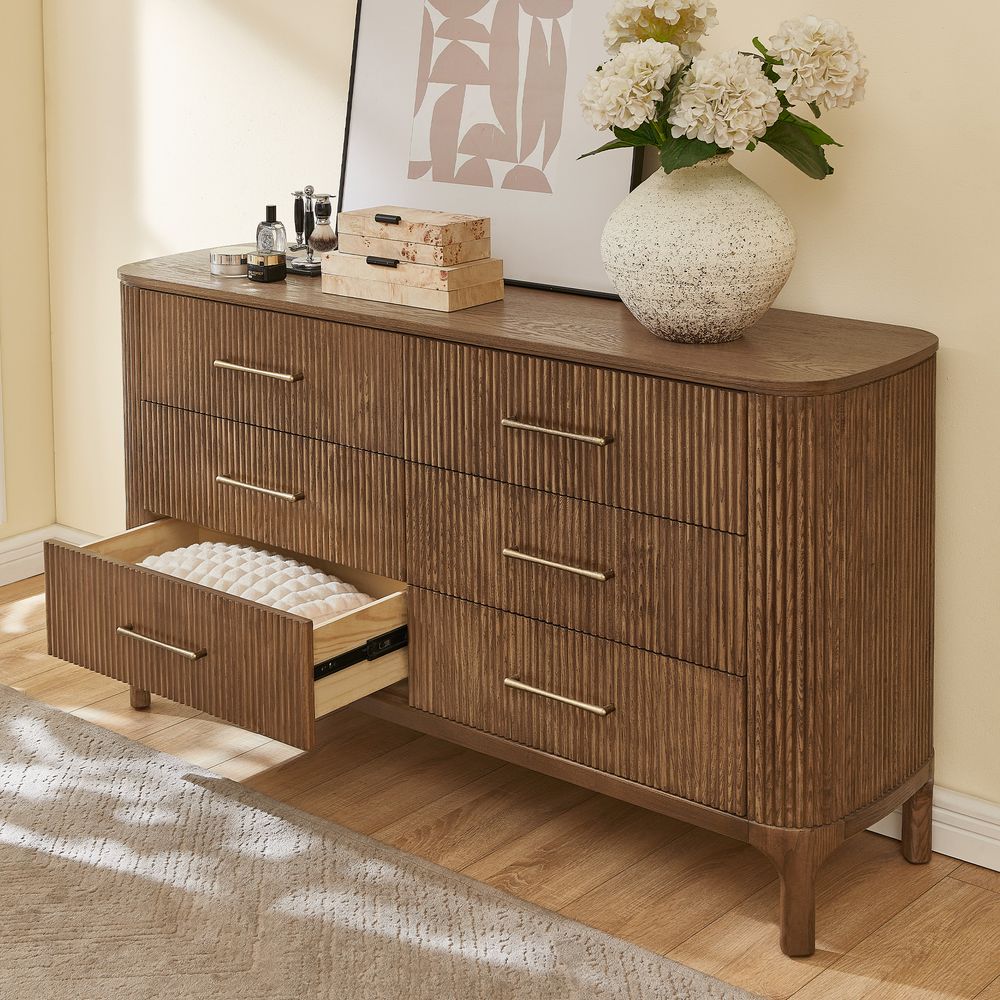
Skugga 63-Inch Oak 6-Drawer Dresser
View Product
What Is Quarter-Sawn Oak?
Quarter-sawn oak describes a method of cutting lumber, not a separate oak species. The log is divided into quarters before boards are cut, producing a different grain appearance from common flat-sawn lumber. Quarter-sawn oak often displays relatively straight grain and distinctive ray flecks, particularly in white oak.
Flat-sawn oak, by comparison, often shows more varied grain patterns, including cathedral-shaped markings. Neither cut is automatically better for a dresser. The choice mainly depends on the appearance you prefer and how the grain complements the furniture's design.
For more detail, see WOOD Magazine's explanation of wood grain patterns.
Choose the Right Oak Dresser Size for Your Bedroom
A dresser may look proportionate in a product photo but feel oversized once it is placed beside a bed or in front of a wardrobe. Measure the intended location before comparing styles. The most important oak dresser dimensions are overall width, depth, and height, along with the clearance needed to open its drawers.
Measure Width, Height, and Depth
Start with the available wall or floor space where the dresser will sit. Leave enough room for nearby furniture, doorways, and walking paths. A wide dresser provides a larger top surface and may accommodate broader drawers, but it can make a narrow bedroom feel crowded.
Height affects both the room's visual balance and the way you use the dresser. A low dresser leaves more open wall space above it, while a taller design uses vertical space for additional storage. If you plan to place a mirror or other objects on top, consider the combined height and whether the arrangement will be comfortable to use.
Depth is easy to overlook. A dresser may fit against the wall but still extend too far into a walkway. Compare its depth with the distance between the bed, wardrobe, and other furniture, especially in a narrow bedroom.
Check Drawer Clearance and Walking Space
The listed depth usually describes the dresser with its drawers closed. You also need to account for the space required when a drawer is fully extended.
Measure from the wall to the front of the dresser, then allow enough room to stand in front of it and access the contents. Check nearby obstacles such as bed frames, nightstands, closet doors, and bedroom doors. If two people share the room, make sure one person can use the dresser without unnecessarily blocking the main walkway.
Consider Delivery Access
A dresser must fit through the route into your home, not just into the bedroom. Measure the clear width and height of entry doors, interior doorways, hallways, staircases, and tight turns.
Check whether the listed dimensions describe the assembled product or its packaging. Also confirm whether the dresser arrives fully assembled or requires the legs or base to be attached after delivery. These details are particularly important for wide oak dressers and heavier solid-wood designs.
Determine How Much Storage You Need
The right oak dresser depends on what you plan to store and how you organize clothing. Consider the types of garments you own, how you fold them, and how much storage space is already available in your closet.
Choose the Right Number of Drawers
Five- and six-drawer dressers are common choices for everyday bedroom storage. An oak 5 drawer dresser or oak 6 drawer dresser can provide separate spaces for shirts, pants, sleepwear, and smaller belongings, depending on the dimensions of each drawer.
A larger drawer count does not automatically mean greater usable capacity. Five wide drawers may hold more bulky clothing than seven shallow ones. Smaller drawers can make it easier to separate accessories, socks, and other compact items, while wider drawers may be more convenient for sweaters and jeans.
Choose a configuration based on the clothing you intend to store rather than the number of drawers alone.
Compare Drawer Interior Dimensions and Layout
External dresser dimensions do not tell you how much clothing each drawer can hold. Look for the internal width, depth, and height of the drawers. These measurements provide a more useful basis for comparing two dressers with the same number of drawers.
A wide drawer can accommodate folded clothing in larger stacks, while a shallower drawer may make smaller items easier to arrange and access. Drawer height also matters when storing bulkier garments.
The Louisa Oak 7-Drawer Dresser illustrates how different drawer sizes can support different storage needs. Its smaller drawer interiors measure 20 inches wide, 14.2 inches deep, and 3.14 inches high. Its larger drawers measure 31.5 inches wide, 14.2 inches deep, and 5 inches high. This combination provides separate spaces for smaller belongings and larger folded garments.
Consider how you normally organize clothing before choosing a layout. If you prefer to keep categories separate, multiple smaller drawers may be convenient. If you store larger items, wider and deeper drawers may be more practical.
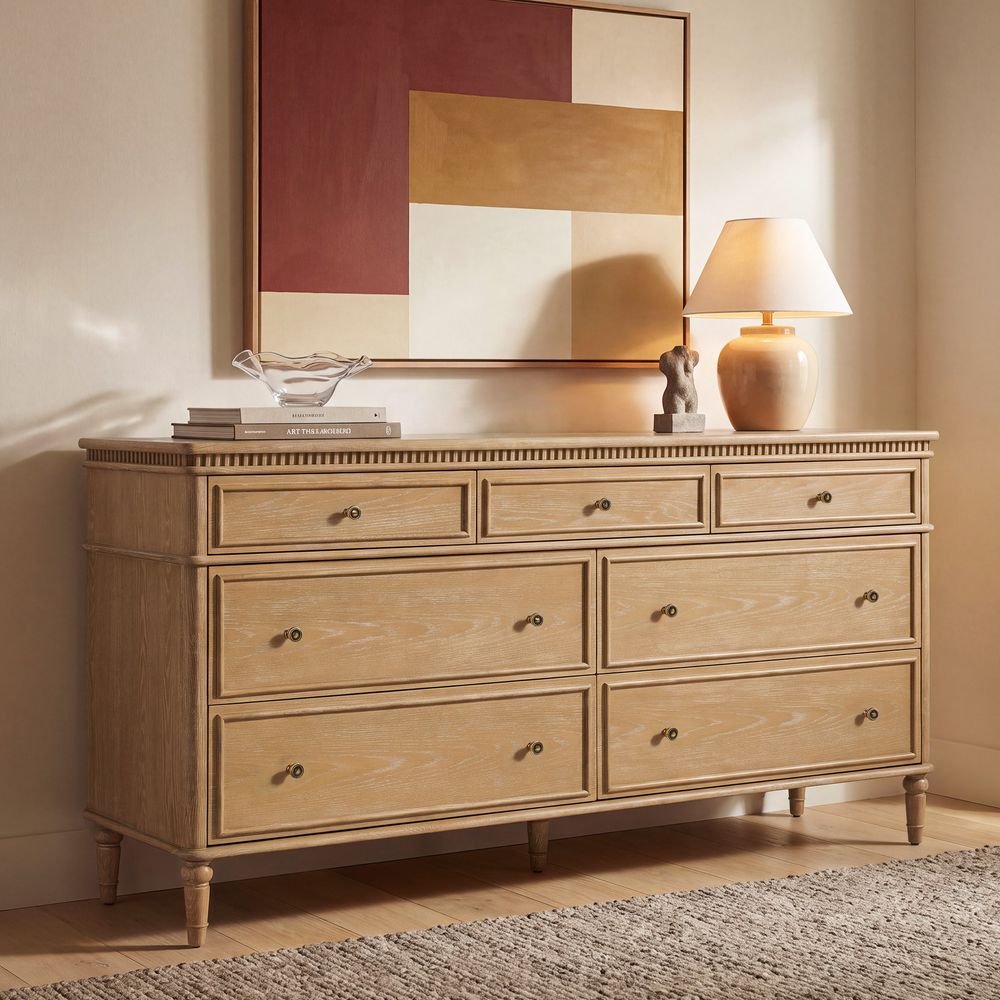
Louisa Oak 7-Drawer Dresser
View Product
Evaluate Drawer Construction and Overall Build Quality
Material descriptions explain what a dresser is made from, but construction details show how its components are assembled. When comparing oak dressers, look at the drawer joints, bottoms, slides, frame, and hardware together. No single feature guarantees quality, but these details can help you make a more informed decision.
Drawer Joinery
Drawer joints connect the sides of a drawer to its front and back. Dovetail joints are a traditional form of interlocking joinery, with angled pins and tails that fit together. They are valued for their mechanical connection and are commonly found in higher-quality drawer construction.
However, the presence of dovetail joints does not guarantee that the entire dresser is well made. Material quality, joint fit, drawer alignment, and overall assembly also affect performance.
Check whether the product page identifies the type of joinery. If it does not, avoid assuming that a drawer uses dovetail joints based on a product image alone.
Drawer Bottoms, Slides, and Frame Construction
The drawer bottom supports the items stored inside, so its material, thickness, and attachment are worth checking when this information is available. A properly fitted bottom should sit securely within the drawer structure and support its intended use.
Drawer slides affect how smoothly a drawer moves. Side-mounted slides attach along the drawer sides, while undermounted slides sit beneath the drawer. Some designs also include soft-close mechanisms that slow the drawer as it closes.
When product specifications identify the slide type, compare the listed features rather than assuming every dresser uses the same hardware. If you can inspect a dresser in person, open and close each drawer. Look for even movement, excessive side-to-side play, or resistance during operation.
The frame, base, and legs also contribute to stability. Check whether the dresser sits evenly and whether its handles and other hardware feel securely attached. Adjustable levelers can help compensate for minor differences in floor height.
Review Assembly Requirements
Assembly requirements can vary between dressers. Some arrive fully assembled, while others require the legs, handles, or base to be fitted before use. Check the product description and assembly instructions to understand what needs to be attached and whether tools are required.
Select an Oak Color, Grain Pattern, and Finish
Oak dressers come in a range of tones, from light natural finishes to deeper brown shades. The finish affects how the wood looks in a room, while the grain pattern adds variation across the surface. Compare product photos with your existing furniture and consider how the dresser may look under your bedroom lighting.
Natural and Light Oak Finishes
Natural and light oak finishes can create a brighter appearance and work well with cream, white, beige, soft gray, and other neutral colors. They can also provide contrast against darker flooring or furniture.
Light finishes do not all look the same. Some emphasize pale yellow or golden undertones, while others have muted beige or gray-brown tones. Check close-up product photos to understand the color and grain more clearly.
Medium and Dark Oak Finishes
Medium brown oak adds warmth and can coordinate with a range of bedroom furniture. It may work particularly well with warm wood flooring, neutral upholstery, and darker accent pieces.
Darker finishes create a stronger visual presence and can provide contrast against light walls and bedding. In a smaller bedroom, consider how much of the wall and floor area the dresser will occupy. A large piece in a deep finish may become a prominent feature of the room.
Understand Natural Grain and Finish Variations
Oak grain varies depending on the tree, the way the lumber is cut, and how the material is arranged on the furniture surface. Some pieces have pronounced grain patterns, while others appear more uniform. Natural variation is part of the character of real wood.
Surface treatments also affect the final appearance. Wire brushing can make the grain more noticeable, while glazing or staining can add depth or change the apparent color. Review close-up photos as well as full-room images when comparing finishes, since lighting can make a color look warmer, cooler, lighter, or darker.
Find an Oak Dresser That Matches Your Bedroom Style
An oak dresser should work with the overall design of your bedroom, but it does not need to match every other piece of furniture. Consider its silhouette, leg shape, drawer fronts, and hardware alongside the bed, nightstands, and other visible furniture.
Traditional and Farmhouse Oak Dressers
Traditional oak dressers often feature framed drawer fronts, decorative molding, classic hardware, and familiar proportions. These details work well with paneled beds, warm flooring, and other furniture with classic wood finishes.
Farmhouse-inspired designs may include turned legs, layered trim, and finishes that emphasize grain and texture. Look for these details if you prefer a more decorative appearance.
Mid-Century Modern Oak Dressers
Mid-century modern dressers tend to use clean silhouettes, balanced proportions, tapered or shaped legs, and restrained decorative details. Oak adds natural warmth to these simpler forms without making the room feel overly formal.
When considering this style, look at the leg shape, drawer fronts, and hardware. These details help distinguish a mid-century-inspired design from a more traditional dresser.
Contemporary and Textured Oak Dressers
Contemporary oak dressers often combine streamlined proportions with distinctive surface details. Fluted drawer fronts, rounded edges, and simplified hardware introduce texture without relying on ornate decoration.
The Alexa 63-Inch Fluted 6-Drawer Oak Dresser uses fluted details, rounded elements, and solid wood strips across its top, panels, and legs. Its combination of American solid oak and engineered wood with oak veneers gives the design a natural wood appearance, while the textured surfaces make it a distinctive option for a contemporary bedroom.
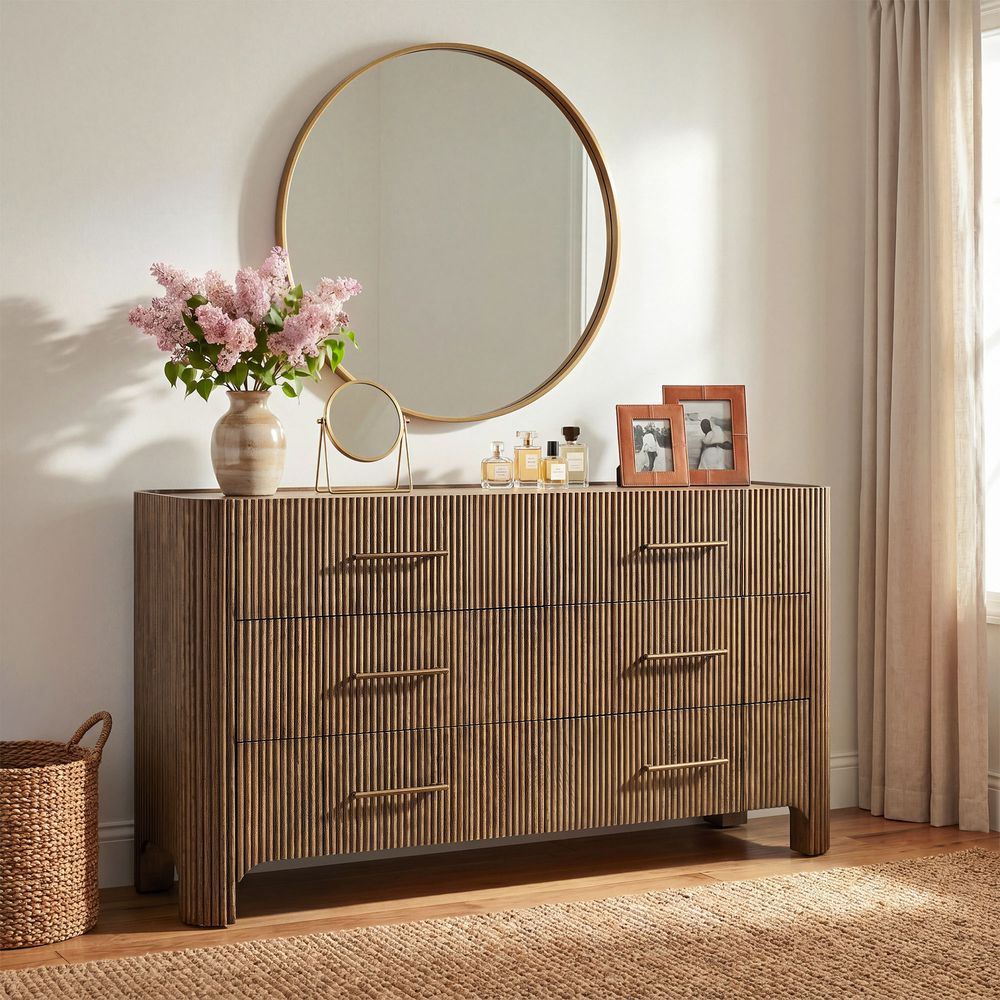
Alexa 63-Inch Fluted 6-Drawer Oak Dresser
View Product
Coordinate With Existing Bedroom Furniture
Matching every wood tone is not essential. A dresser can work with a bed or nightstand in a different finish when other elements in the room connect the pieces. You might repeat a warm wood tone in picture frames, coordinate hardware finishes, or use textiles that balance the contrast.
Pay attention to undertones as well as lightness and darkness. A yellow-toned oak finish may look different beside a cooler gray-brown wood. When possible, compare product photos with the furniture and flooring already in your room.
Consider Safety and Everyday Convenience
A dresser should be stable and practical to use. This is particularly important for taller or heavier clothing storage furniture and for households with young children.
Check Anti-Tip Features
Freestanding dressers can present a tip-over hazard if they are unstable or used in ways that affect their balance. Before buying, check whether the product includes anti-tip hardware and whether the manufacturer provides installation instructions. Use the supplied hardware as directed and follow the recommended wall-anchoring method.
Regardless of whether a particular dresser falls within the rule's scope, follow the manufacturer's safety instructions and install any supplied anti-tip hardware.
Consider Drawer Accessibility
Handles should be easy to grip, and drawers should be reachable without awkward bending or stretching. If the dresser is shared, consider whether its layout gives each person enough space for their belongings.
Check the space in front of the dresser as well. You should be able to open a drawer, stand comfortably, and reach its contents without blocking the main walkway.
Review Product Support and Delivery Terms
Before purchasing, review the warranty, return policy, delivery terms, and customer support information. Confirm whether the dresser arrives assembled and whether delivery includes bringing it into the room or only to the entrance. These details can affect the overall purchase and installation process.
How to Care for an Oak Dresser
Care requirements depend on the materials and finish used on the dresser. A piece made with solid oak components and oak veneer may have different care instructions from one with a laminate surface. Follow the manufacturer's recommendations for the specific product.
Cleaning and Protecting the Finish
Use a soft, clean cloth to remove dust. For everyday cleaning, avoid soaking the surface or allowing moisture to collect around joints and edges. Wipe spills promptly, particularly on the top and drawer fronts.
Avoid abrasive pads, harsh household cleaners, and products that have not been approved for the finish. Do not assume every oak surface needs oil, wax, or polish. Some finishes are designed to be cleaned with a dry or slightly damp cloth, while others require different care.
Use coasters or protective pads under objects that could scratch, mark, or leave moisture on the surface. Lift decorative items rather than dragging them across the top.
Avoiding Sunlight, Heat, and Moisture
Long periods of direct sunlight can change the appearance of some wood finishes. Persistent moisture and significant changes in indoor humidity can also affect wood components over time.
Position the dresser away from direct heat sources and areas exposed to repeated dampness. Maintaining relatively stable indoor conditions can help preserve the appearance and condition of the wood and finish.
Conclusion
Choosing an oak dresser involves more than comparing wood tones and exterior designs. Check whether the piece uses solid oak, oak veneer, or a combination of materials, then compare its dimensions, drawer interiors, construction, and safety features. A dresser with the right proportions and storage layout will be more useful in everyday life than one chosen on appearance alone.
FAQs
What Is the Difference Between Solid Oak and Oak Veneer Dressers?
A solid oak dresser uses natural oak lumber for the components described as solid wood. An oak veneer dresser has a thin layer of real oak attached to a core material. Some designs combine solid oak components, engineered wood, and oak veneer, so check the product's full material description.
Are Oak Dressers Durable?
Durability depends on the materials, frame construction, drawer joinery, hardware, finish, and care. Oak is a hardwood commonly used in furniture, but the word "oak" alone does not guarantee that every part of a dresser is equally strong or well made.
How Do I Choose the Right Size Oak Dresser?
Measure the available width, height, and depth where the dresser will sit. Also account for open drawer clearance, walking space, nearby furniture, and the route through your home for delivery. Compare those measurements with the product's listed dimensions before ordering.
How Many Drawers Should an Oak Dresser Have?
Choose based on what you plan to store and how you organize clothing. Five- and six-drawer designs can work for everyday bedroom storage, while a seven-drawer dresser may provide more ways to separate items. Compare internal drawer dimensions rather than choosing by drawer count alone.
What Is Quarter-Sawn Oak, and Is It Better?
Quarter-sawn oak is lumber cut using a method that produces relatively straight grain and distinctive ray flecks. It is associated with Mission and Arts and Crafts furniture. It is not automatically better than other oak cuts; the right option depends on the grain appearance and style you prefer.
What Color Goes Well With an Oak Dresser?
Oak finishes can work with cream, beige, white, sage green, soft gray, and other natural colors. Light oak often suits brighter palettes, while medium and darker finishes can add warmth or contrast. Consider the undertone of the finish and the colors already in your room.
How Can I Tell If an Oak Dresser Is Well Made?
Review the material composition, drawer joinery, drawer bottom support, slides, frame construction, and hardware. Check whether the product page provides clear specifications, and inspect the dresser's movement and stability in person when possible. No single feature should be treated as a guarantee of overall quality.
Should I Anchor an Oak Dresser to the Wall?
Follow the manufacturer's anti-tip instructions and use the supplied anchoring hardware where provided. Wall anchoring is an important tip-over prevention measure, particularly for taller dressers and homes with children. A dresser's weight does not remove the need to follow its safety instructions.