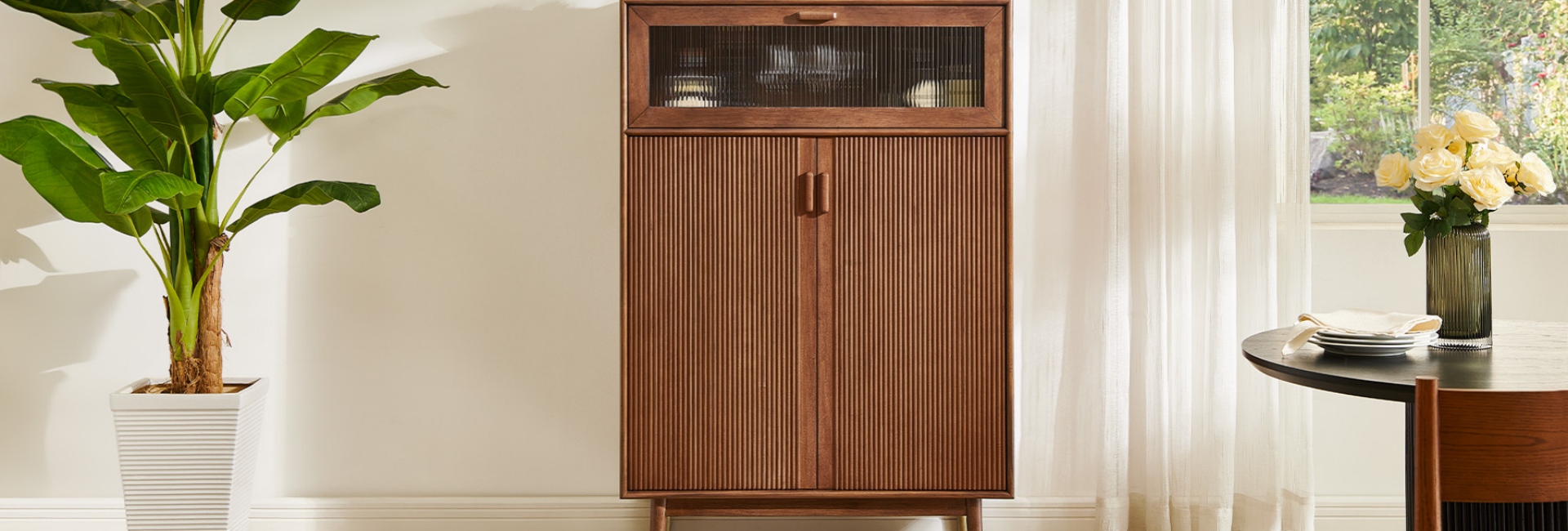
A bar cabinet can turn a collection of bottles, glasses, and bar tools into organized storage that feels like part of the room. The right one isn't necessarily the largest or most decorative option. It needs to match what you actually store, the wall or corner where it will sit, and how you use it when friends come over.
Before buying, focus on five things: the cabinet's size, usable interior space, material and finish, storage layout, and placement. A cabinet that looks great online can still be frustrating if the shelves are too short for your bottles or the doors open into a walkway. This guide breaks down what to measure and what to look for before you buy.
Table of Contents
- Start With Your Collection
- Match the Width to Your Wall
- Check the Depth and Usable Interior Space
- Choose a Material That Fits Your Priorities
- Why a Wooden Bar Cabinet Works in Many Homes
- How to Choose a Mid-Century Modern Bar Cabinet
- Look at the Interior Before the Exterior
- Where to Place a Bar Cabinet at Home
- Consider Stability, Safety, and Lighting
- Can a Bar Cabinet Be Used for Other Storage?
- Where to Start
- FAQs
- What is the best material for a bar cabinet?
- What should I look for in a durable bar cabinet?
- How much does a bar cabinet typically cost?
- What size bar cabinet do I need for my space?
- How deep should a bar cabinet be?
- Where should I place a home bar cabinet?
- Do bar cabinets need locks?
- Are bar cabinets good for storing wine?
- Can I use a bar cabinet for things other than alcohol?
- What is a mid-century modern bar cabinet, and does it fit a modern home?
Start With Your Collection
Before comparing styles, figure out what needs to go inside. Gather the bottles you keep around the house, along with your everyday glasses and bar tools such as a jigger, strainer, muddler, and bottle opener.
Don't count bottles alone. Glassware, mixers, serving pieces, and cocktail tools can take up as much usable space as the bottles themselves. It's also worth leaving around 20–30% of the available storage capacity open for future additions.
Your collection size gives you a useful starting point:
These are starting points rather than strict rules. Interior shelf height, bottle shapes, glassware, drawers, and wine racks can change how much a cabinet actually holds.
Think about how you entertain, too. If you mostly make a drink for yourself or a partner, concealed storage and a compact footprint may be enough. If you regularly host friends, easier access to everyday bottles and glasses becomes more important.
Match the Width to Your Wall
For most rooms, the best bar cabinet width is the largest size that fits comfortably without crowding nearby furniture or walkways. Measure the available wall first, then account for clearance around the cabinet and enough space for its doors or drawers to operate.
Leave roughly 6–12 inches of visual breathing room on each side when the layout allows. More importantly, make sure the cabinet doesn't interfere with a doorway, dining chair, or main walking path.
Narrow Cabinets for Apartments and Corners
If you're working with a corner, nook, or wall under about 50 inches wide, a cabinet around 30–40 inches can make better use of the space than a wide sideboard.
In a small apartment, a compact cabinet with closed or glass-front storage can keep bottles organized without making the room feel heavy. Corner placement can also work well near a dining area, provided doors and drawers have enough room to open fully.
Wider Cabinets for Larger Collections
For 25–45 bottles plus glassware, a cabinet around 40–55 inches wide can provide more flexible storage. Larger collections may call for a 55-inch-plus cabinet or two smaller units.
A wider cabinet also gives you more usable surface area for a serving tray, decanter, lamp, or decorative object. Just remember that a larger cabinet isn't automatically better. It should still leave comfortable circulation around the room.
Check the Depth and Usable Interior Space
Depth matters just as much as width. A cabinet can look spacious from the outside but offer limited usable storage if shelves are shallow or interior space is divided by drawers and hardware.
For many home setups, a cabinet around 18–24 inches deep can work well, depending on bottle sizes and the interior layout. Don't choose based on the exterior measurement alone. Check the usable interior depth, shelf height, and door construction.
Standard spirits bottles vary in height and shape, while wine bottles, decanters, cocktail shakers, and glassware can require additional clearance.
Standard Bottles vs. Larger Barware
If you store larger wine bottles, magnums, tall decanters, or bulky bar tools, look for adjustable shelves or compartments with additional vertical clearance.
A deeper cabinet can offer more flexibility, but extra depth isn't always an advantage. If you have to reach past several rows of bottles to find what you need, the storage can become harder to use. Smart shelf placement often matters more than simply adding depth.
Choose a Material That Fits Your Priorities
A bar cabinet deals with occasional spills, condensation, and frequent handling, so material and finish affect both appearance and long-term maintenance.
The best choice depends on what matters most to you: durability, appearance, budget, or stability.
Solid Oak and Hardwood
Solid hardwood is a strong choice when durability and repairability are priorities. Oak, in particular, has a visible grain and a warm appearance that works well with dining tables, sideboards, and other wood furniture.
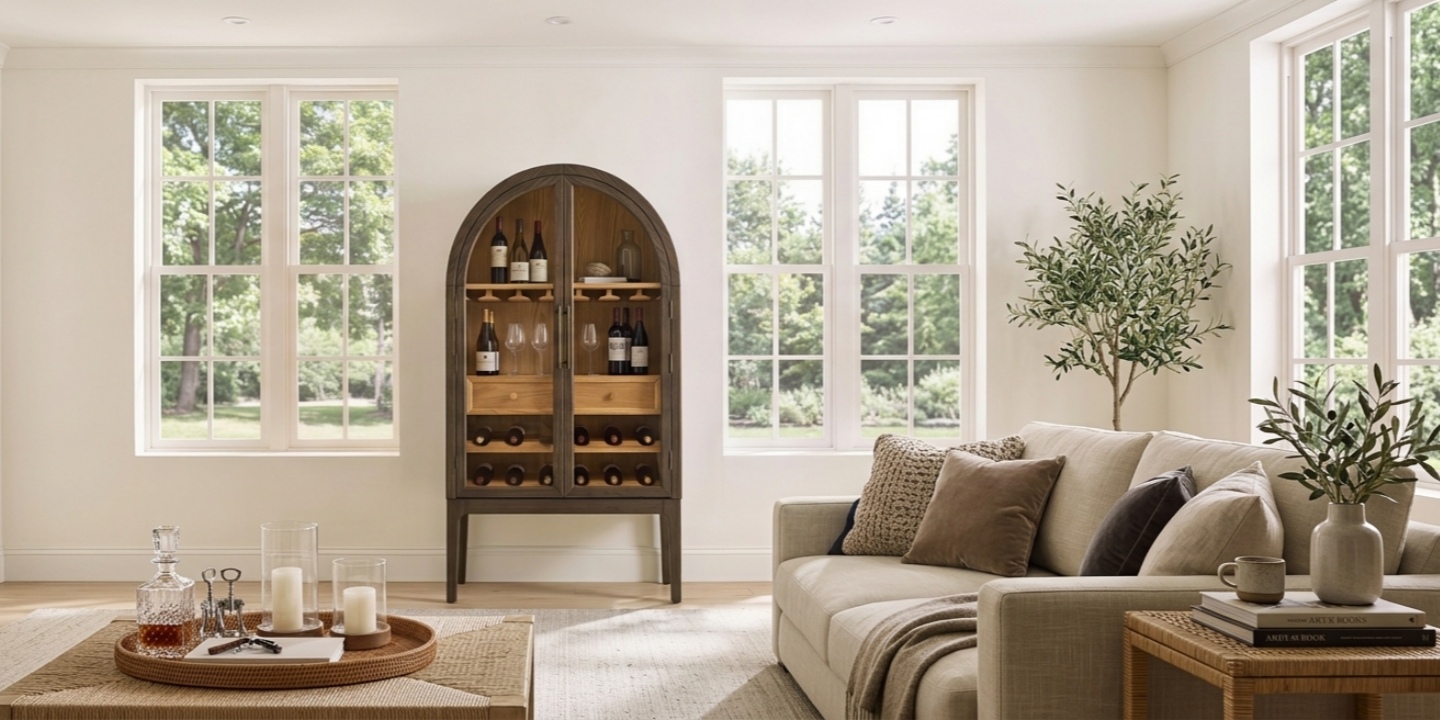
The Valborg 36" Oak Bar Cabinet crafted of American solid oak and engineered wood with oak veneers. Its 36-inch width provides a compact footprint while the interior is designed for bottles and glassware. The drawers use dovetail construction for added durability.
Solid wood can often be repaired or refinished when the construction and finish allow it, which can make it a practical long-term choice for frequently used furniture.
Engineered Wood and Quality Veneer
A quality wood veneer over a stable core can offer the appearance of real wood while helping control cost and dimensional movement.
The key is to look beyond the word "veneer." Check what material is underneath and how the surface is finished. A properly sealed surface is easier to wipe clean after small spills and condensation.
For everyday use, a quality veneer cabinet can be a practical alternative to an all-solid-wood piece, particularly when budget and stability matter.
Metal, Glass, and Stone-Look Accents
Powder-coated metal is easy to clean and can work well in modern or industrial interiors. Glass doors or shelves make bottles and glassware easier to see, although they require more frequent dusting.
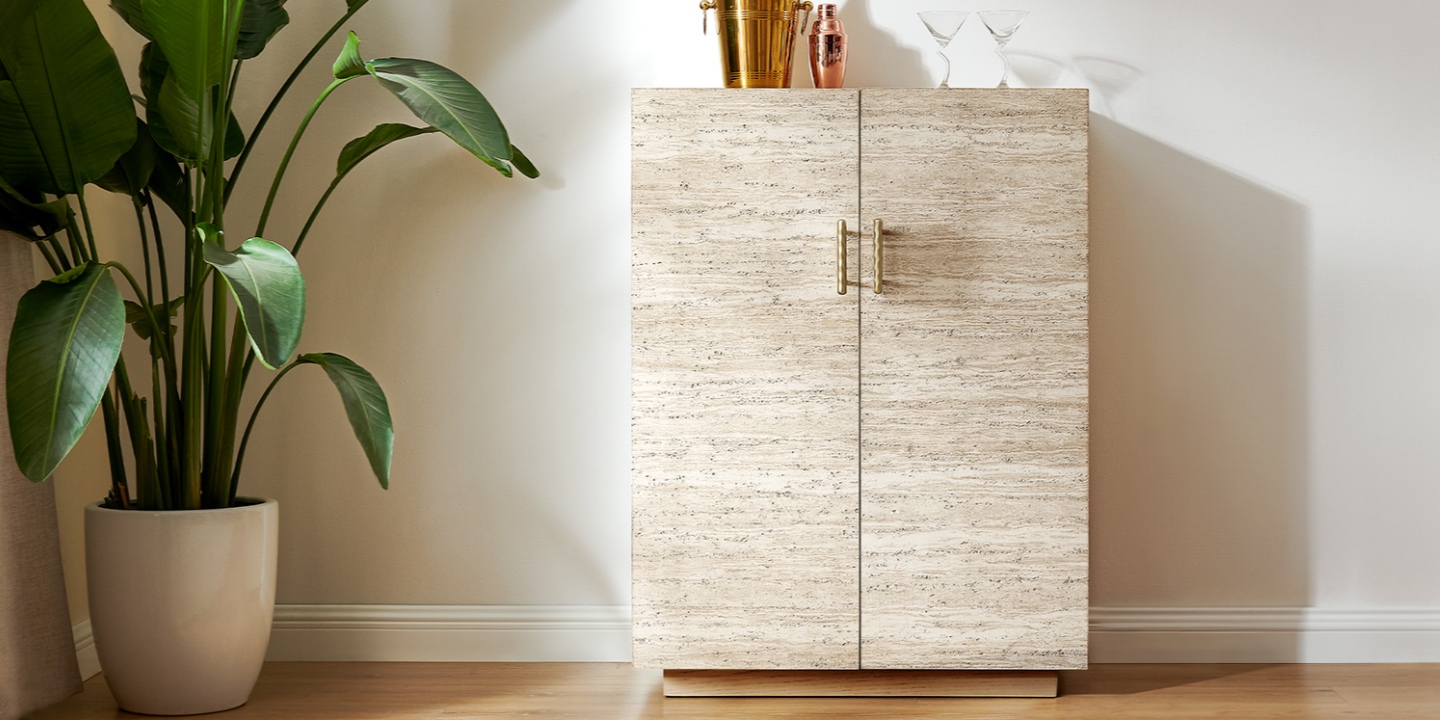
Stone-look finishes can add texture without the weight and maintenance associated with natural stone.
Here's how the main options compare:
Why a Wooden Bar Cabinet Works in Many Homes
Metal and glass can make sense for specific interiors, but a wooden bar cabinet is an easy fit for many living rooms and dining spaces. Wood adds visual warmth and can coordinate with dining tables, coffee tables, floors, and other furniture.
It also tends to age well visually. A walnut, oak, or warm wood finish can work across different decorating phases instead of locking the room into one trend.
If your room leans modern or transitional, look for simple fronts and restrained hardware rather than heavily carved details. A lighter wood finish can also keep a larger cabinet from feeling visually heavy.
How to Choose a Mid-Century Modern Bar Cabinet
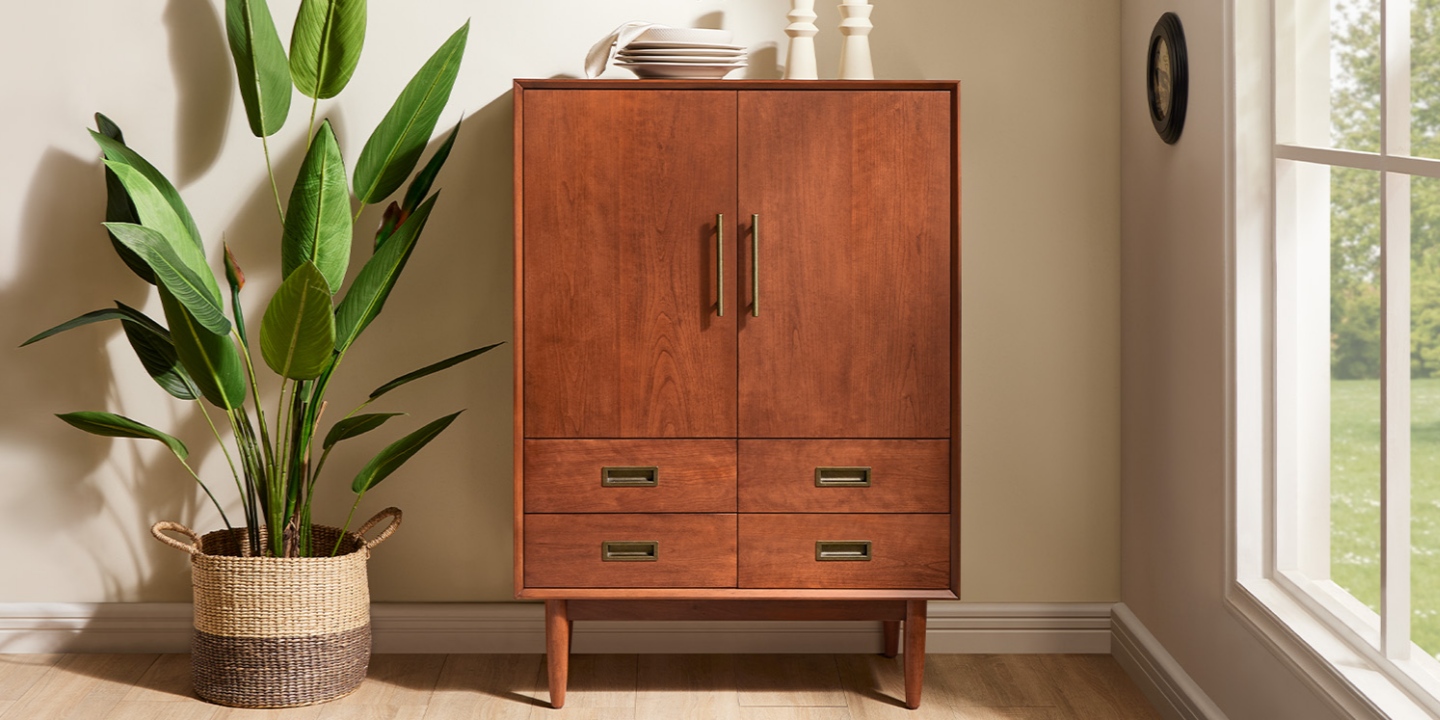
A mid-century modern bar cabinet typically combines clean lines, warm wood tones, tapered or slim legs, and restrained hardware. The design is functional without relying on excessive decoration.
Look for details such as:
Tapered legs that lift the cabinet visually off the floor
Simple or subtly curved cabinet fronts
Warm wood tones
Brass, matte-black, or similarly restrained hardware
Minimal ornamentation
A balanced combination of open and concealed storage
For a modern or transitional home, MCM-inspired furniture can pair easily with low-profile sofas, wood dining tables, neutral rugs, and other simple furnishings.
Look at the Interior Before the Exterior
The exterior is what catches your eye, but the interior determines whether the cabinet works day after day.
Before buying, check where each type of item will go. Think about bottles first, then glassware, bar tools, wine, and anything else you expect to store.
Wine Racks and Stemware Rails
Built-in wine racks can keep bottles organized and stored horizontally for short-term home use. Stemware rails use the space beneath a shelf and keep glasses suspended rather than taking up shelf space.
If you mainly store spirits, adjustable shelves may be more useful than a large wine rack. If wine and stemware are a regular part of your gatherings, dedicated storage can make the cabinet much easier to organize.
Drawers for Bar Tools
Drawers are useful for smaller items that are easy to lose in open storage. A jigger, strainer, muddler, bottle opener, cocktail napkins, and other tools can all stay together without cluttering the cabinet top.
Divided or well-organized drawers make these items easier to find. Dovetail drawer construction can also provide a more durable joint for furniture that gets frequent use.
Where to Place a Bar Cabinet at Home
Where you place a bar cabinet matters almost as much as its size. The best location is usually close to where you serve drinks while staying out of the main traffic path.
Living Room
A living room can work well for a taller or compact bar cabinet, depending on the layout. Use the top for a tray, decanter, lamp, or decorative object, but keep enough clearance around the piece for people to move comfortably.
If the cabinet has doors that swing outward, make sure they don't extend into a main walkway.
Dining Room
The dining room is one of the most practical locations for a bar cabinet because drinks and serving pieces are often needed during meals and gatherings.
A longer, lower cabinet can double as serving storage, giving you a surface for food, glassware, or a serving tray while keeping bottles and bar tools behind closed doors.
Apartments and Tight Corners
Small spaces benefit from compact cabinets that make efficient use of the available footprint. A cabinet under about 36 inches wide can work well in a smaller dining area or living room when the interior layout is efficient.
Measure three things before ordering:
The cabinet footprint
Door and drawer clearance
The working space in front
All three matter. A cabinet that technically fits the wall can still be inconvenient if there's no room to open it.
Consider Stability, Safety, and Lighting
A fully stocked cabinet can become heavy, especially when bottles and glassware are added. Use the manufacturer's recommended anti-tip hardware and wall anchoring system where appropriate, particularly in homes with children or pets.
Level the cabinet properly so doors and drawers operate as intended and bottles remain stable on shelves.
Security is another consideration. A lockable door can make sense if you have children or valuable bottles. For homes with pets, a secure magnetic catch can help keep doors closed during everyday use.
Lighting can also improve usability. Warm LED lighting around 2700K–3000K can make bottles and glassware easier to see without creating the cold appearance associated with higher-color-temperature lighting. If the cabinet doesn't include lighting, check whether there's enough interior space to add a compatible battery-powered strip later.
Can a Bar Cabinet Be Used for Other Storage?
Yes. A well-designed bar cabinet doesn't have to remain a drinks cabinet forever.
The same drawers and enclosed compartments can store:
Coffee and tea supplies
Mugs and serving pieces
Dining linens
Books and small decor
Entertainment accessories
A flat, easy-to-clean top can also serve as a coffee or serving station. If you're unsure whether you'll use the cabinet long term, choose a design that can adapt when your storage needs change.
Where to Start
Choosing a bar cabinet becomes easier when you work from the inside out. Start by counting bottles, glasses, and tools. Measure the available wall and the clearance around it. Then compare the cabinet's usable interior dimensions, material, finish, and storage layout.
For many homes, a 36–48-inch cabinet is a practical starting point for a small-to-medium collection, while larger collections may need a wider cabinet or multiple units.
A well-designed 36-inch cabinet, such as the Valborg 36-Inch Oak Bar Cabinet, can provide a compact way to organize bottles and glassware without overwhelming a dining or living room.
Most importantly, choose a cabinet that fits the way you actually use your home. The right combination of size, storage, material, and placement will make the piece useful long after the first bottle is opened.
FAQs
What is the best material for a bar cabinet?
Solid hardwood is a strong choice when durability and repairability are priorities. Quality wood veneer over a stable core can also be a practical option when you want a real-wood appearance at a lower cost. The finish matters, too, because a properly sealed surface is easier to maintain around occasional spills and condensation.
What should I look for in a durable bar cabinet?
Look for solid hardwood, quality wood veneer over a stable core, or powder-coated metal depending on your priorities. Construction also matters. Dovetail or other strong drawer joints, stable shelving, durable finishes, and properly supported doors can contribute to long-term performance.
How much does a bar cabinet typically cost?
Many well-made home bar cabinets fall roughly in the 0–,500 range, although compact pieces can cost less and solid-hardwood or designer cabinets can cost more. The final price depends on size, material, construction, hardware, and storage features.
What size bar cabinet do I need for my space?
For up to about 20 bottles, a cabinet around 30–36 inches wide may be enough. A 36–48-inch cabinet can work well for roughly 20–40 bottles, while larger collections may need 48–60 inches or more. Leave enough clearance for doors, drawers, and normal foot traffic.
How deep should a bar cabinet be?
Many home setups work well with a cabinet around 18–24 inches deep, but the usable interior depth matters more than the exterior measurement. Check the shelf dimensions and clearance for your tallest bottles, wine bottles, glassware, and bar tools before buying.
Where should I place a home bar cabinet?
Place it near the areas where you entertain, such as the living room or dining room, while keeping it away from major walkways. Dining rooms work particularly well because a bar cabinet can also function as serving storage. Keep it away from direct sunlight and heat sources when possible.
Do bar cabinets need locks?
Not every bar cabinet needs a lock. A lockable cabinet can be useful if you have children or valuable bottles, while a magnetic catch may be sufficient for everyday use. Follow the manufacturer's safety recommendations for securing the cabinet.
Are bar cabinets good for storing wine?
Bar cabinets can work for wine you plan to drink relatively soon, provided the bottles are kept in a cool, dark location. They are not a substitute for a climate-controlled wine refrigerator for long-term aging. Check the cabinet's wine rack dimensions to make sure your bottles fit properly.
Can I use a bar cabinet for things other than alcohol?
Absolutely. Bar cabinets can store coffee and tea supplies, serving ware, linens, books, and decor. If you want the cabinet to remain useful as your needs change, prioritize adjustable storage, drawers, and a practical top surface.
What is a mid-century modern bar cabinet, and does it fit a modern home?
A mid-century modern bar cabinet typically features clean lines, warm wood tones, tapered or slim legs, and restrained hardware. Its simple proportions work well with modern and transitional interiors, especially when paired with other low-profile furniture and natural materials.