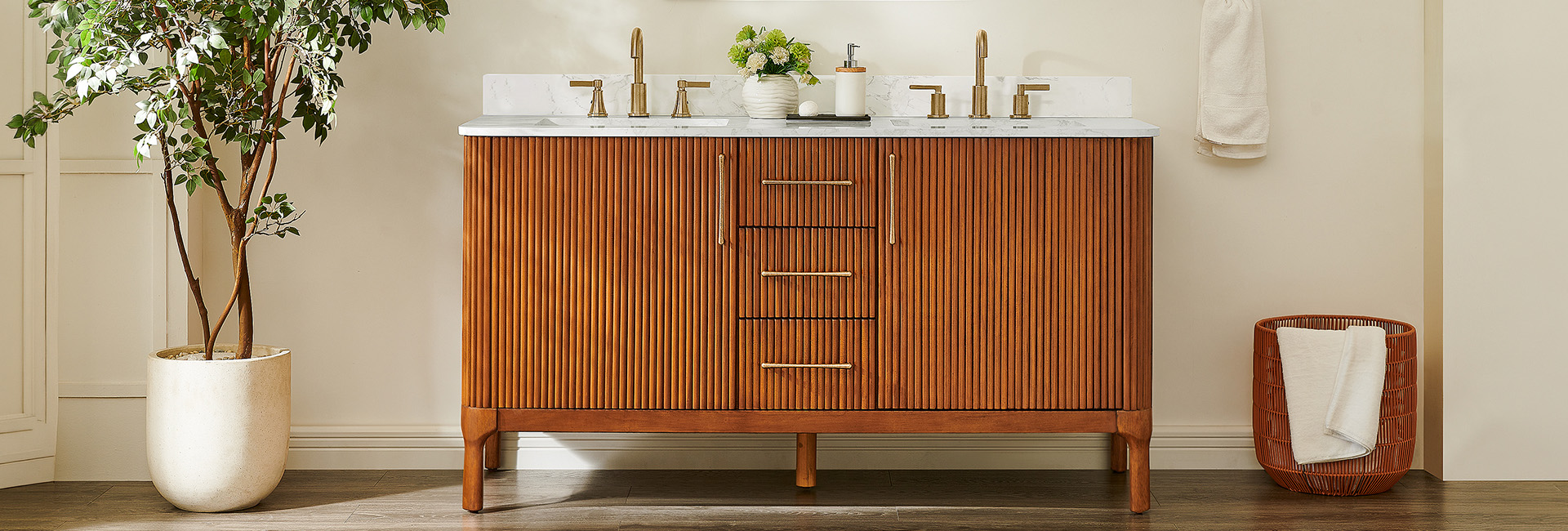
Choosing the right bathroom vanity height isn't just about measurements — it directly affects daily comfort, visual proportion, and long-term usability.
If you're wondering:
How high should a bathroom vanity be?
What is the standard height of a bathroom vanity?
Is 36 inches too high?
What is a comfort height sink?
This guide breaks down everything you need to know, including standard dimensions in inches and cm, floating vanity height, layout rules, lighting placement, and code considerations.
What Is the Standard Height of a Bathroom Vanity?
The standard bathroom vanity height is:
30–32 inches (76–81 cm) from the floor to the top of the countertop.
However, modern bathrooms increasingly use a taller option known as comfort height, typically:
34–36 inches (86–91 cm)
Here's a quick comparison:
| Vanity Type | Height (Inches) | Height (CM) | Best For |
Standard | 30–32" | 76–81 cm | Kids' baths, guest baths, traditional homes |
Comfort Height | 34–36" | 86–91 cm | Primary baths, adults, modern design |
ADA Maximum | 34" max | 86 cm max | Accessible design |
Most newly built primary bathrooms today lean toward 36 inches because it aligns more closely with kitchen counter height and reduces strain from bending.
How High Should a Bathroom Vanity Be?
The ideal vanity height depends on three factors:
1. Who Uses the Bathroom
Households with children often prefer 30–32"
Adult-only homes typically prefer 34–36"
Mixed households may choose 34" as a compromise
2. Type of Bathroom
Guest bathroom → standard height is common
Primary bathroom → comfort height is often preferred
Powder room → either works depending on design intent
3. Sink Type
The sink style affects total height.
| Sink Type | How It Affects Height |
Undermount sink | Height stays within vanity measurement |
Integrated sink | Included in total height |
Vessel sink | Adds 4–6" above countertop |
For example:
A 36" cabinet + 5" vessel sink = 41" total height, which may feel too high for many users.
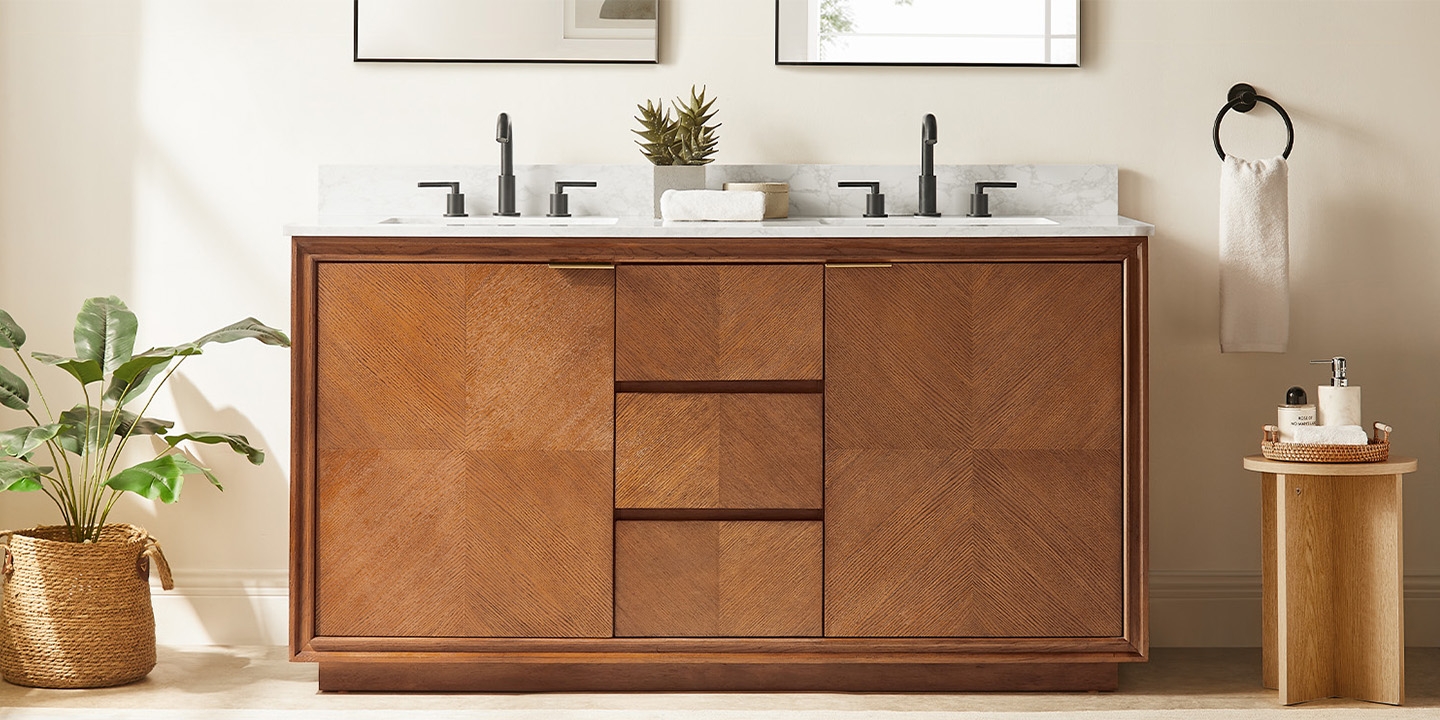
HERNEST Pick: Thursen 63" Double Bathroom Vanity
What Is a Comfort Height Sink?
A comfort height bathroom vanity typically measures 34–36 inches tall.
The idea comes from ergonomic design — similar to kitchen counters — reducing the need to bend forward during daily tasks like brushing teeth or washing hands.
Comfort height is especially suitable for:
Taller individuals (5'8" and above)
Primary bathrooms
Aging-in-place design
Modern, proportionally taller interiors
In larger bathrooms, a 36-inch vanity often feels more visually grounded and aligned with contemporary proportions.
Is 36 Inches Too High for a Bathroom Vanity?
No — 36 inches is not too high for most adults.
In fact, it is now considered the modern standard for primary bathrooms.
However, it may feel tall if:
The users are under 5'4"
The bathroom is primarily for children
A vessel sink significantly increases overall height
If you're unsure, 34–36 inches can be a balanced middle ground.
Choosing the Right Vanity for Your Space
Here's a simplified guide:
| Bathroom Type | Recommended Height | Suggested Width |
Guest Bath | 30–32" | 30–36" |
Primary Bath | 34–36" | 60–72" |
Modern Floating | 34–36" | 30–60" |
Compact Layout | 30–34" | 24–36" |
A 36-inch single vanity like the Tulipan Single Bathroom Vanity offers a balanced footprint for many primary bathrooms.
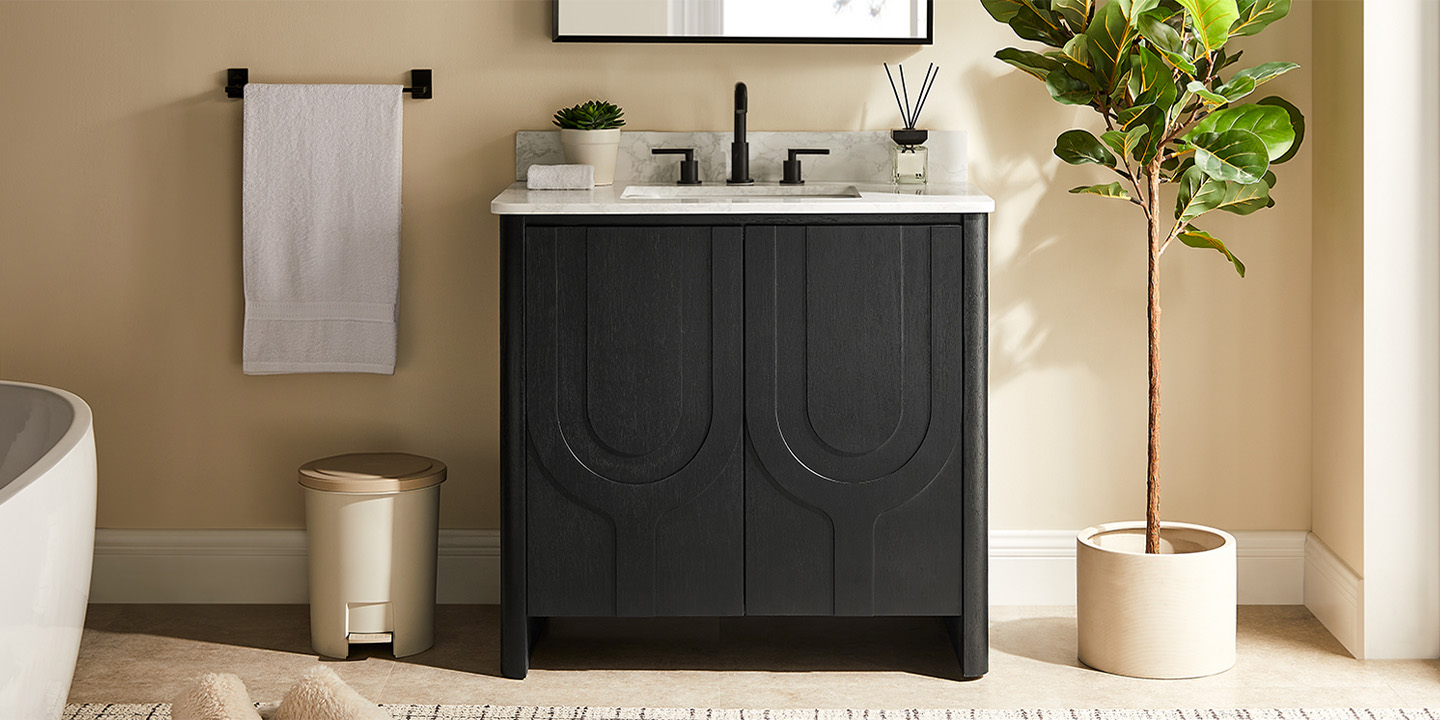
HERNEST Pick: Tulipan 36" Single Bathroom Vanity
Standard Bathroom Vanity Height in CM
For metric users, here are the common conversions:
| Inches | Centimeters |
30" | 76 cm |
32" | 81 cm |
34" | 86 cm |
36" | 91 cm |
Most comfort height vanities measure around 91 cm.
Standard Vanity Height and Depth
Height is only one dimension. Depth also impacts usability and layout spacing.
| Dimension | Standard Range |
Height | 30–36" (76–91 cm) |
Depth | 21–24" (53–61 cm) |
Width (Single) | 24–48" |
Width (Double) | 60–72"+ |
Depth affects walking clearance and door swing. In smaller bathrooms, a 21" depth may be preferable.
Floating Vanity Height
Floating vanities offer installation flexibility.
Unlike floor-mounted cabinets, they can be installed anywhere between 30–36 inches, depending on preference.
Typical installation height:
30–32" for standard look
34–36" for comfort height
Floating vanities visually expand space and work especially well in modern interiors.
For example, the Sabina Floating Single Bathroom Vanity offers a clean, elevated profile that pairs well with contemporary layouts.
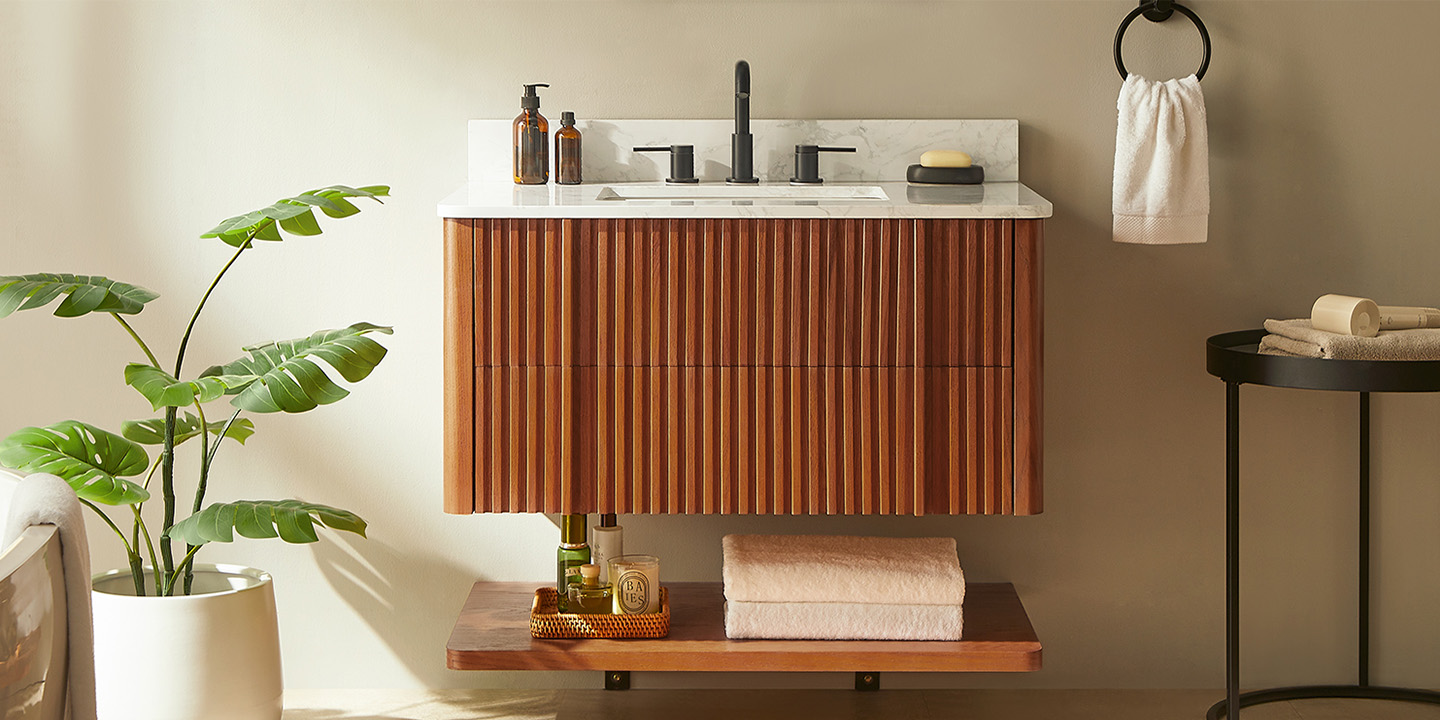
HERNEST Pick: Sabina 36" Floating Single Bathroom Vanity
Bathroom Vanity Height Code (ADA & Building Standards)
For accessible design in the U.S., ADA guidelines specify:
Maximum countertop height: 34 inches
Required knee clearance underneath
Clear floor space in front of the vanity
Standard residential bathrooms are not required to follow ADA unless specified, but understanding the code helps future-proof your design.
How High Is a Bathroom Vanity Light?
Lighting placement affects both function and visual balance.
Typical vanity light height:
60–66 inches from the floor (if mounted above the mirror)
Side sconces:
Approximately 65–70 inches from the floor
Or about 75–80 inches apart horizontally
The goal is even facial illumination without harsh shadows.
Height of Bathroom Vanity Outlet
Electrical outlets near vanities are typically placed:
Around 42 inches from the floor
Or 4–6 inches above countertop level
Always follow local building codes and NEC requirements.
What Is the Golden Rule for Bathroom Layouts?
The golden rule of bathroom design is:
Maintain comfortable clearance and balanced vertical proportion.
Key spacing recommendations:
At least 21" clearance in front of the vanity
15" minimum from the center of the sink to the adjacent wall
Mirror width aligned proportionally to vanity width
A 72-inch double vanity, such as the Valborg 72" Double Bathroom Vanity, creates symmetry and generous spacing in larger primary bathrooms.
For slightly more compact layouts, the Thursen 63-inch Double Bathroom Vanity balances double-sink functionality with space efficiency.
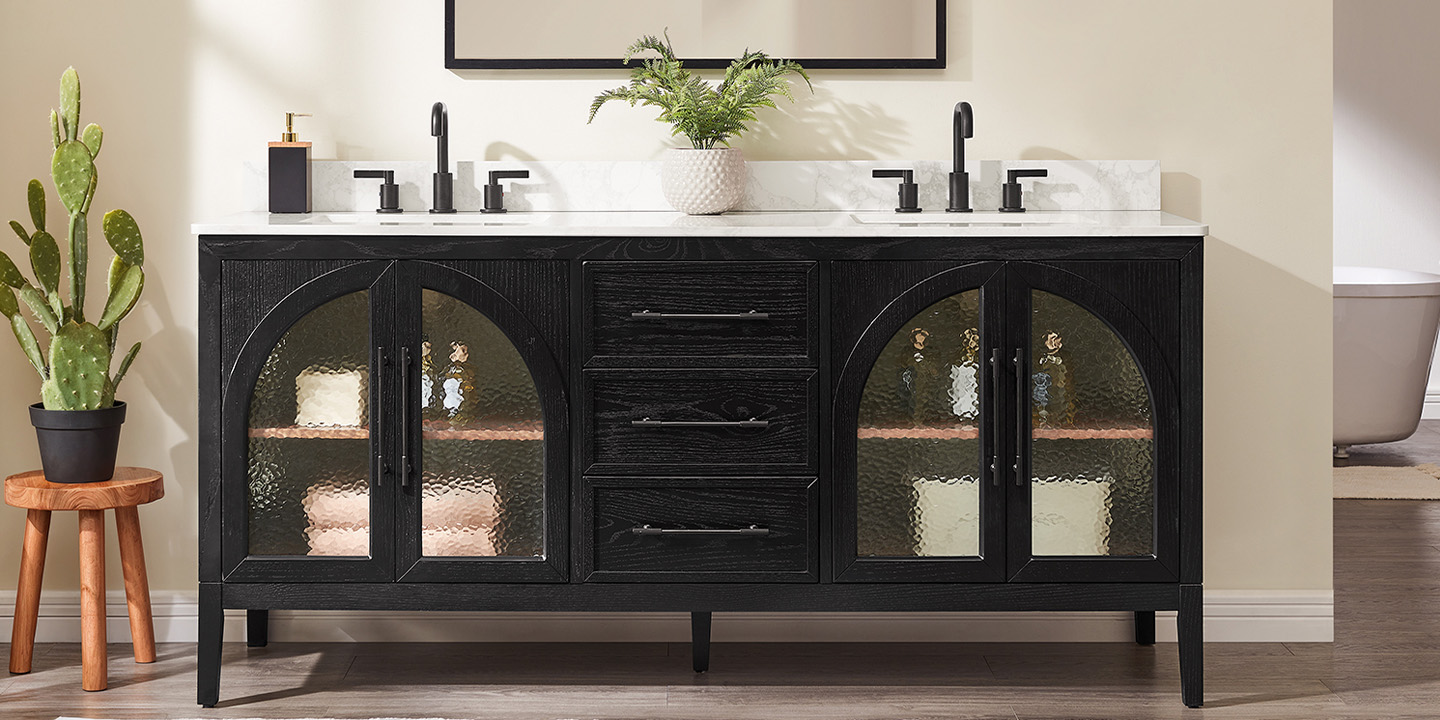
HERNEST Pick: Valborg 72" Double Bathroom Vanity
FAQ: Bathroom Vanity Height Questions
1. What is the standard height of a bathroom vanity?
The traditional standard height is 30–32 inches (76–81 cm). Modern bathrooms often use 34–36 inches for improved comfort.
2. How high should a bathroom vanity be for adults?
Most adults prefer 34–36 inches. Taller individuals often find 36 inches more comfortable for daily use.
3. Is 36 inches too high for a bathroom vanity?
No. For most adults, 36 inches is considered comfort height and is increasingly common in primary bathrooms.
4. What is a comfort height bathroom vanity?
A comfort height vanity measures approximately 34–36 inches tall, designed to reduce bending and improve ergonomics.
5. What is the standard bathroom vanity height in cm?
Standard height is typically 76–81 cm. Comfort height measures around 86–91 cm.
6. How high should a floating vanity be installed?
Floating vanities are typically installed at 30–36 inches depending on user preference and design style.
7. What is the maximum ADA vanity height?
ADA guidelines specify a maximum of 34 inches for accessible vanities, along with required knee clearance.
8. Does the sink affect vanity height?
Yes. Vessel sinks add extra height above the countertop, while undermount sinks stay within the cabinet measurement.
Final Thoughts
The right bathroom vanity height balances ergonomics, proportion, and personal preference.
Whether you choose a traditional 30-inch standard height or a modern 36-inch comfort design, understanding these measurements ensures your bathroom feels both functional and visually refined.
If you're exploring options, consider how width, sink style, and installation type work together with height to shape the overall experience of your space.