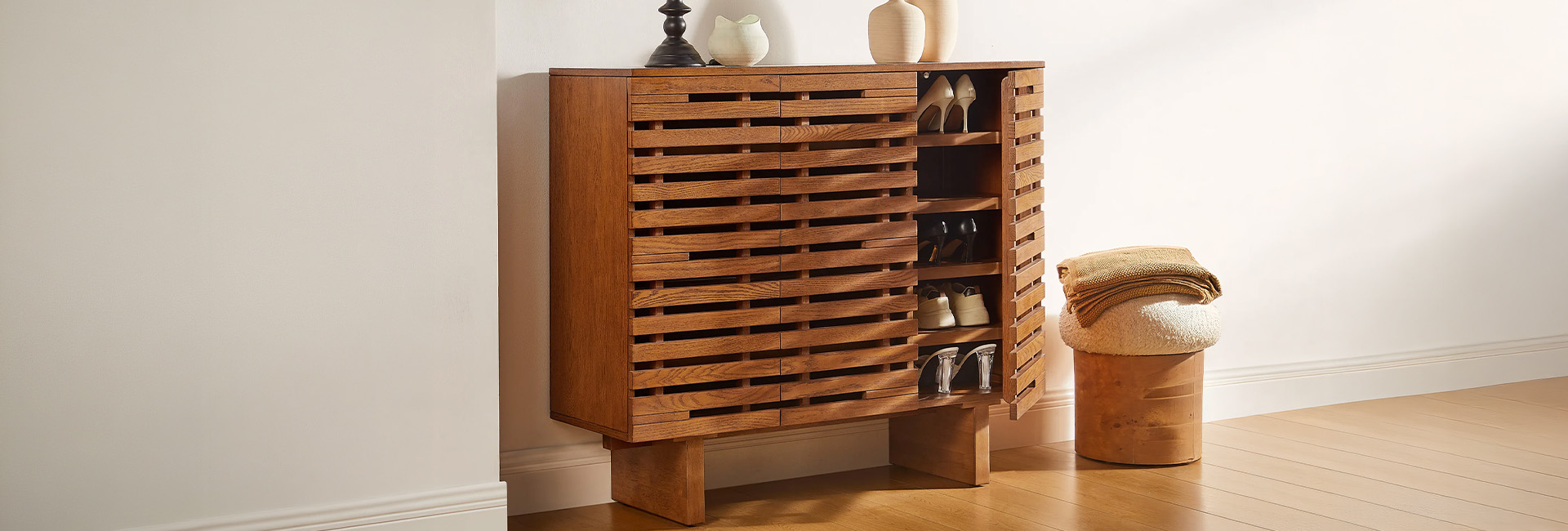
Shoes don't usually fail because you wear them too much.
They fail because they're stored incorrectly.
Many homeowners assume that placing shoes in a closet, box, or entryway corner is enough. But over time, improper storage can quietly damage materials, weaken structure, and shorten the lifespan of even high-quality footwear.
If you've ever pulled out a pair of sneakers only to see cracked soles, warped leather, or unexpected mold, you've already seen what poor storage can do.
So how long can shoes actually last in storage?
The honest answer:
It depends less on time — and more on environment.
In this guide, we'll cover:
How long different types of shoes last in storage
What really causes shoes to deteriorate
Common storage mistakes
How to store shoes properly long term
When structured shoe storage becomes essential
How Long Do Shoes Typically Last in Storage?
Shoe lifespan in storage depends on five key variables:
Material composition
Humidity exposure
Temperature stability
Air circulation
Physical compression
Here's a realistic estimate based on material type.
Estimated Shoe Lifespan in Storage
| Shoe Type | Primary Material | Storage Lifespan (Average Conditions) | Common Failure |
|---|---|---|---|
| Athletic Sneakers | Synthetic + PU sole | 1–3 years | Sole crumbling (hydrolysis) |
| Leather Dress Shoes | Full-grain leather | 3–6+ years | Mold or drying cracks |
| Suede Shoes | Suede leather | 2–4 years | Texture stiffening |
| Boots | Leather + rubber | 3–6 years | Warping |
| Mixed-Material Fashion Shoes | Synthetic blends | 2–5 years | Glue separation |
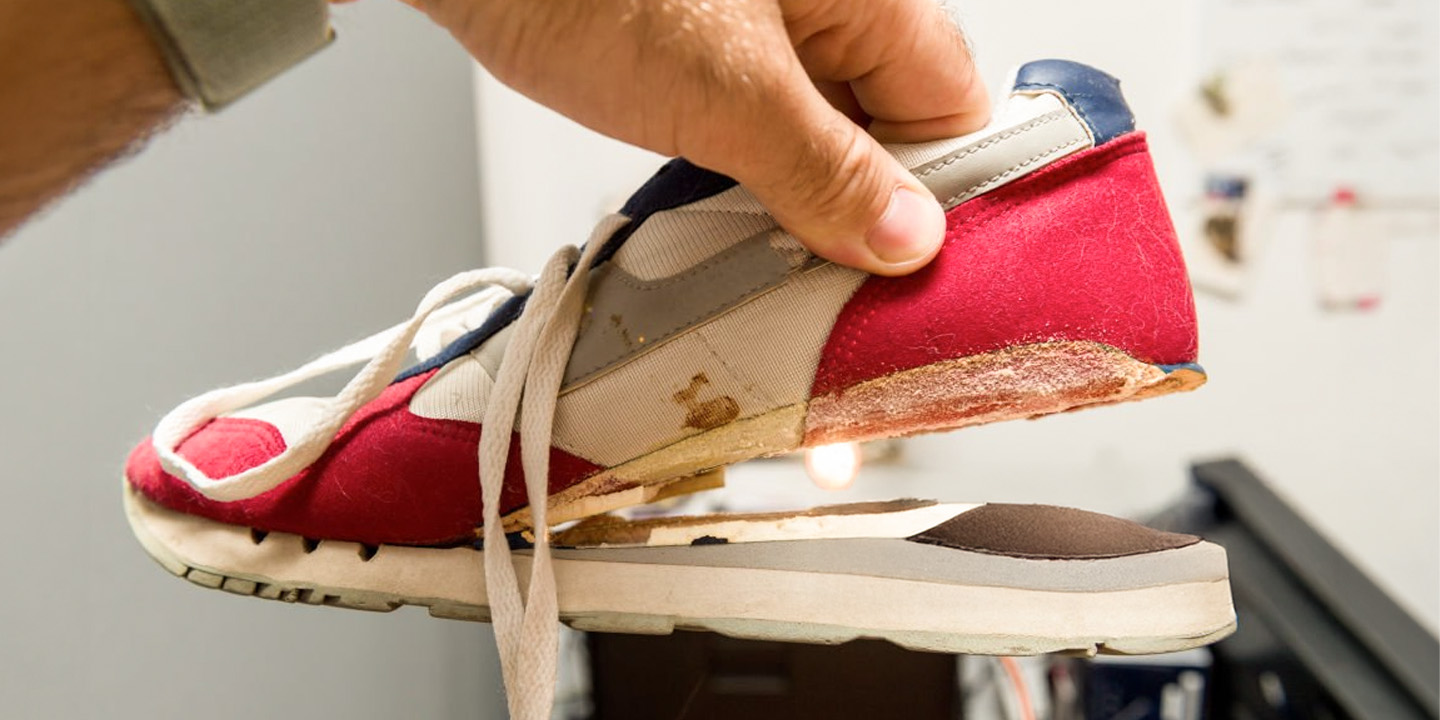
Important: Even unworn sneakers can break down due to hydrolysis — a chemical reaction in polyurethane soles triggered by moisture in the air.
That's why simply "not wearing them" does not preserve them.
Why Shoes Break Down in Storage
Shoes deteriorate because materials continue reacting with their environment.
Here are the most common causes.
1. Humidity
Humidity is the number one threat to stored footwear.
Excess moisture leads to:
Mold growth
Leather softening or cracking
Glue weakening
Sole breakdown
Ideal humidity for shoe storage: 40–55%
Basements, garages, and sealed plastic bins often exceed this range.
2. Lack of Airflow
Shoes require gentle air circulation.
Sealing them in airtight plastic containers traps moisture inside.
Leather and suede are especially vulnerable.
3. Temperature Fluctuation
Extreme heat softens adhesives.
Freezing temperatures make rubber brittle.
Avoid storing shoes in:
Attics
Outdoor sheds
Uninsulated garages
4. Improper Stacking
Stacking shoes on top of one another causes:
Toe box collapse
Permanent creasing
Misshaped soles
Structure matters more than most people realize.
Most Shoe Damage Happens in the Dark
Shoes rarely fail while you're wearing them.
They fail quietly in storage.
A $300 pair of leather boots can warp after one humid summer.
A rarely worn sneaker can crumble after sitting untouched for two years.
The problem isn't time.
It's uncontrolled storage conditions.
Storage Risk by Location
Not all storage spaces are equal.
Shoe Storage Risk Level
| Storage Location | Risk Level | Main Issue |
|---|---|---|
| Basement | High | Moisture & mold |
| Garage | High | Temperature swings |
| Closet (no airflow) | Medium | Trapped humidity |
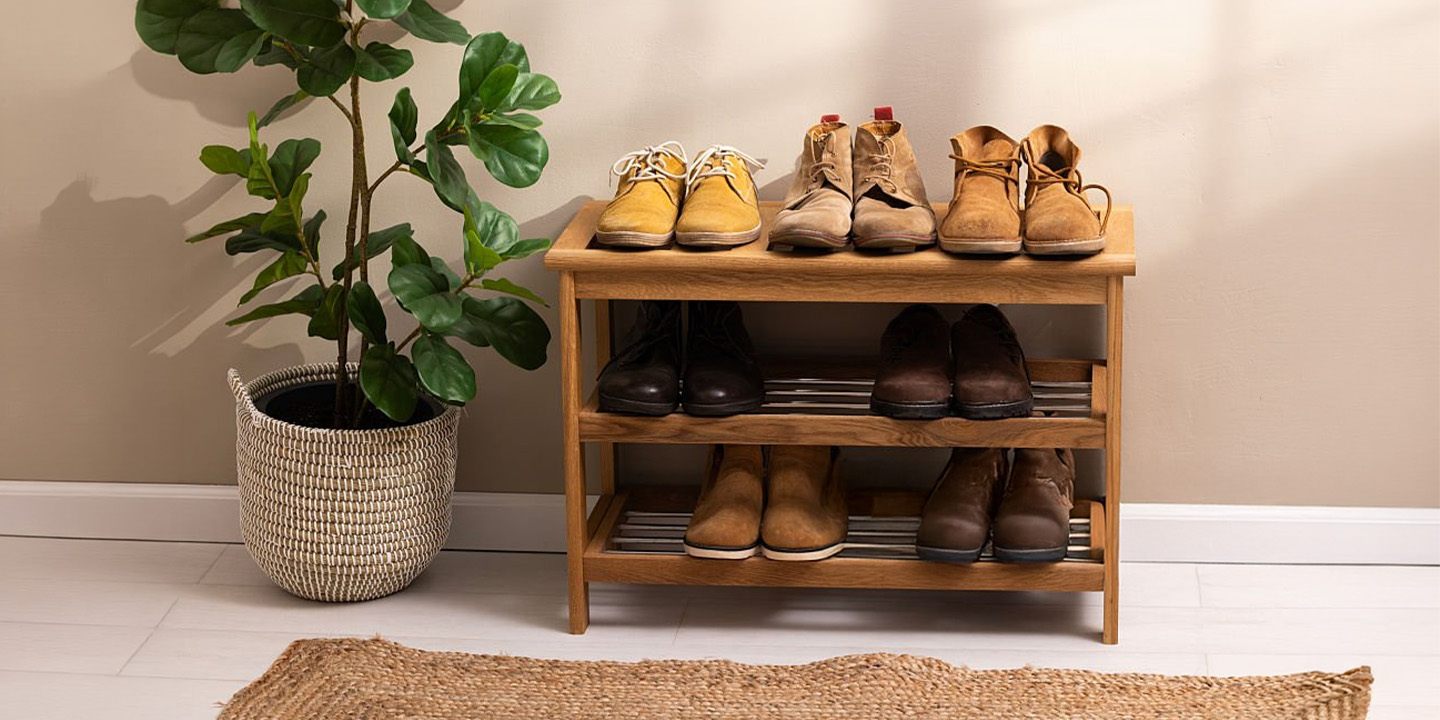
| Open rack near door | Medium | Dust & compression |
| Structured cabinet indoors | Low | Controlled exposure |
A structured indoor cabinet reduces multiple risk factors at once.
How to Store Shoes Properly Long Term
If you plan to store shoes for months or years, follow these steps.
1. Clean Before Storing
Dirt retains moisture.
Wipe and dry shoes thoroughly before placing them away.
2. Use Shoe Trees for Leather
They:
Maintain shape
Absorb internal moisture
Reduce creasing
3. Avoid Plastic Sealing
Use breathable storage environments instead.
4. Maintain Stable Climate
Keep shoes:
Away from direct sunlight
Away from damp flooring
In temperature-controlled rooms
5. Use Structured Storage Furniture
This is where long-term protection becomes practical.
A well-designed shoe cabinet:
Prevents compression
Reduces dust accumulation
Maintains organization
Elevates shoes off cold flooring
Supports controlled airflow
It's not just about tidiness.
It's about preservation.
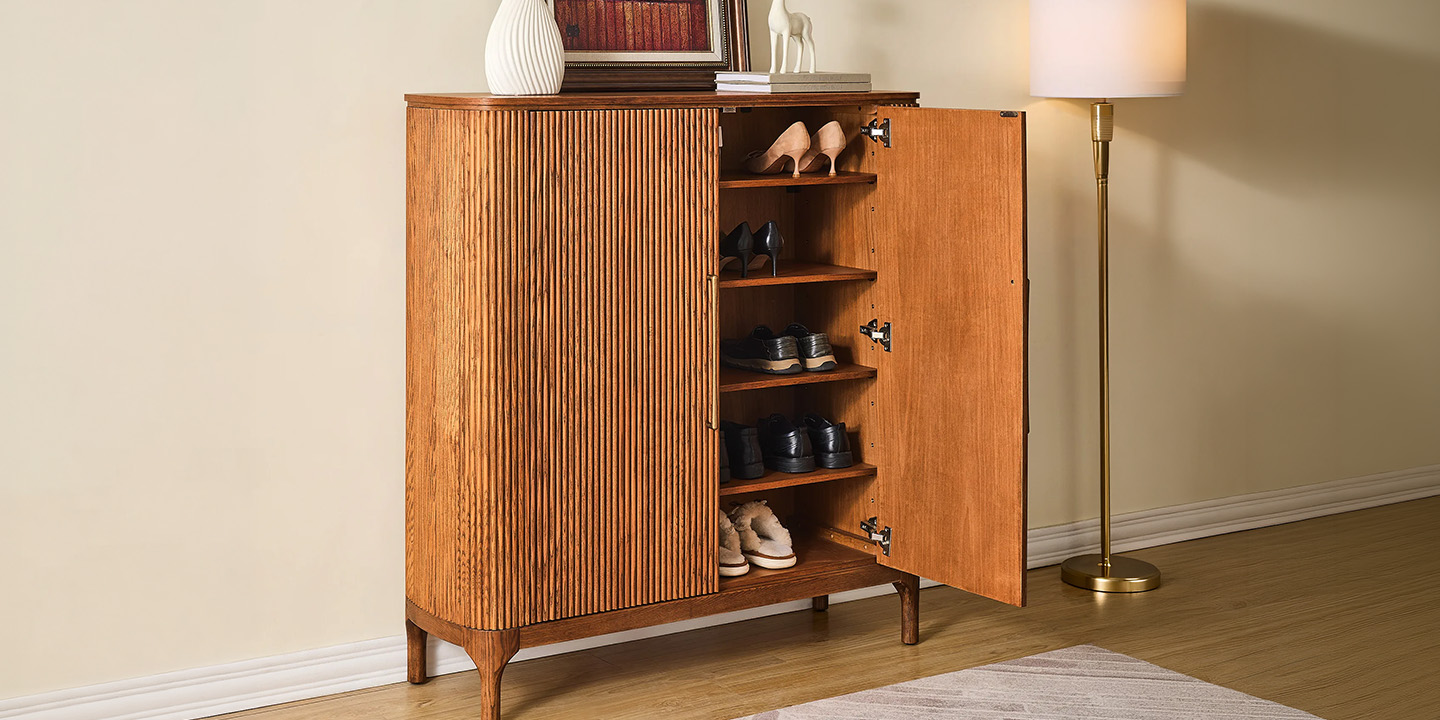
HERNEST Pick: Skugga 47" Oak Shoe Storage
With raised legs and oak detailing, Skugga elevates both structure and design.
Why elevation helps:
Keeps shoes off potentially damp flooring
Improves under-cabinet airflow
Makes surrounding cleaning easier
Well suited for minimalist interiors that prioritize structure.
Shoe Rack vs Shoe Cabinet: Does It Really Matter?
Short answer: Yes — especially for long-term storage.
Rack vs Cabinet Comparison
| Feature | Open Rack | Enclosed Cabinet |
|---|---|---|
| Dust Protection | Low | High |
| Shape Support | Limited | Strong |
| Long-Term Suitability | Moderate | High |
| Visual Clarity | Cluttered | Refined |
| Environmental Control | Minimal | Improved |
For temporary storage, racks work.
For protecting material lifespan, cabinets perform better.
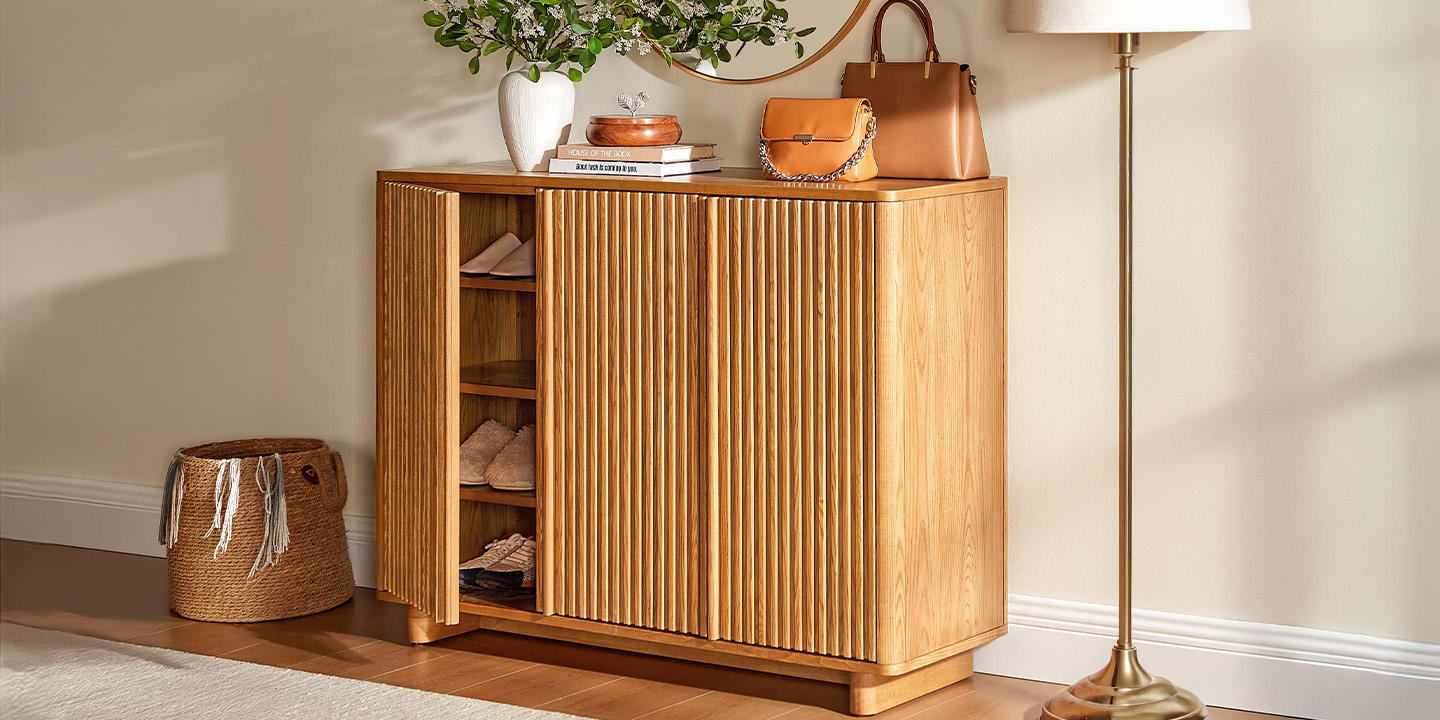
HERNEST Pick: Sabina 48" Ash Wood Shoe Storage
Crafted with natural ash wood tones and an enclosed compartment design, Sabina supports long-term organization without visual clutter.
Why it supports preservation:
Wide 48-inch layout accommodates larger collections
Structured internal divisions reduce stacking pressure
Enclosed doors limit dust exposure
Durable construction supports daily use
Best for households with expanding shoe collections.
Who Actually Needs a Structured Shoe Cabinet?
You benefit most if:
You own 10+ pairs of shoes
You rotate seasonal footwear
You invest in leather or suede
You live in a humid region
You prefer a visually calm entryway
If shoes are part of your lifestyle — not disposable items — storage deserves intention.
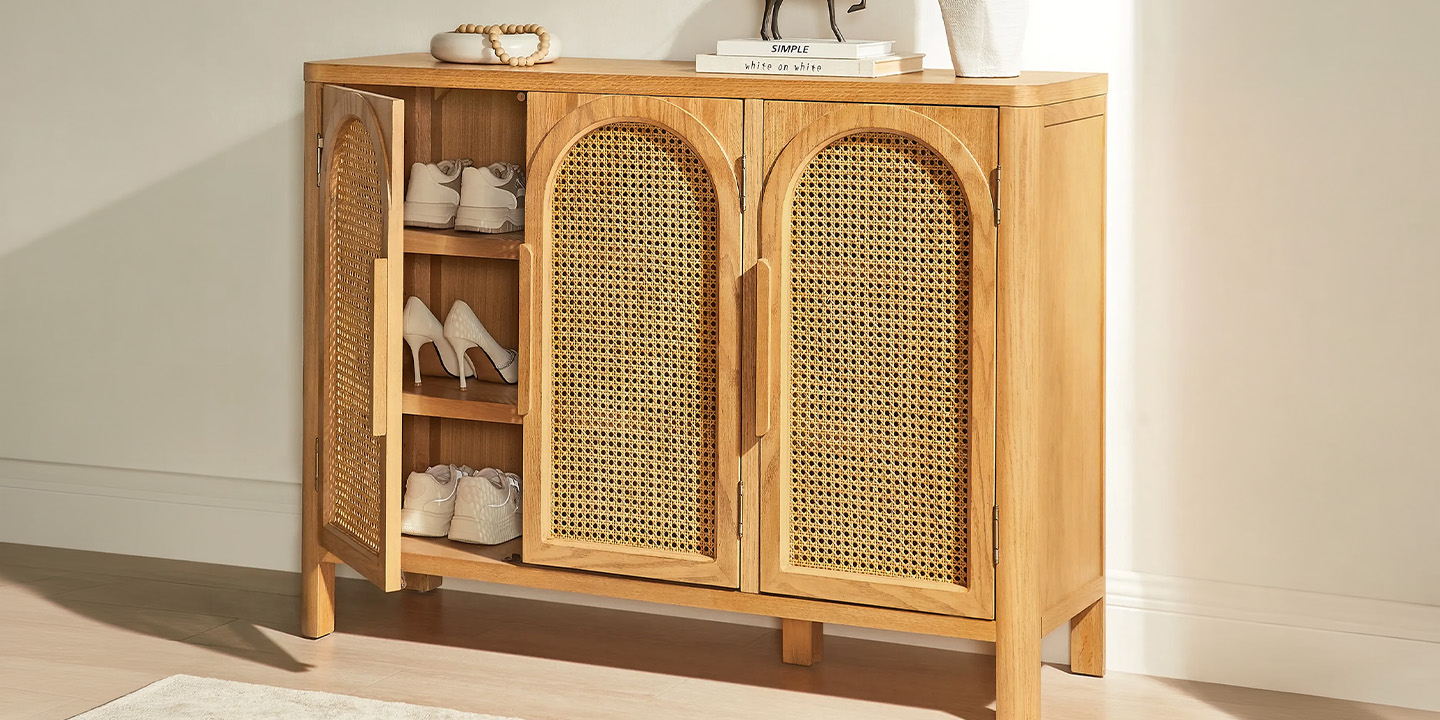
HERNEST Pick: Alvborg 48" Rattan Shoe Storage
Featuring woven rattan panels, Alvborg introduces subtle airflow while maintaining enclosed storage.
Protection advantages:
Breathable façade reduces trapped humidity
Adjustable shelves adapt to boots and sneakers
Natural texture integrates easily into warm interiors
Ideal for climates where airflow matters.
How Many Pairs Can a 48-Inch Cabinet Hold?
Capacity varies by shoe size and type.
Estimated Capacity Guide
| Cabinet Width | Approximate Capacity |
|---|---|
| 30 inches | 8–12 pairs |
| 40 inches | 12–16 pairs |
| 47–48 inches | 16–24 pairs |
Boots and high-tops reduce the total count slightly.
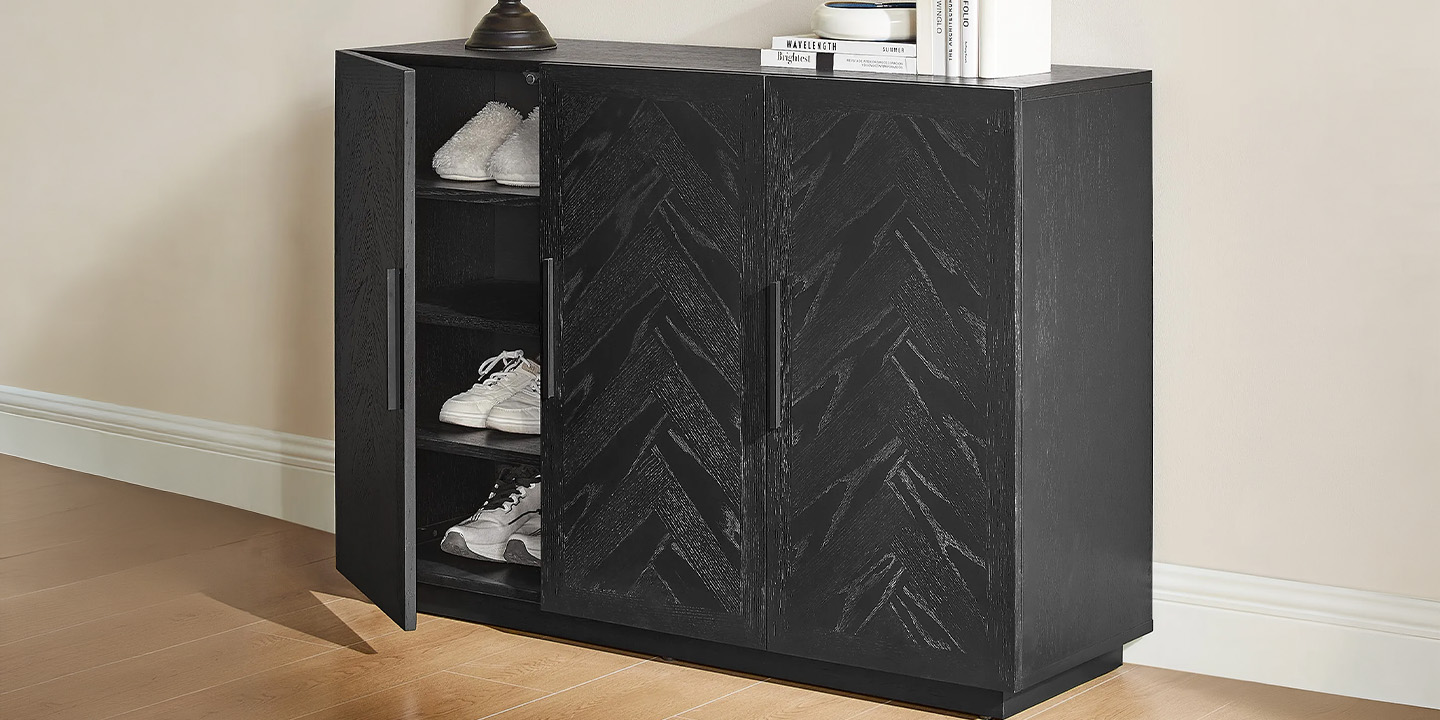
HERNEST Pick: Fiske 48" Chevron Shoe Storage
Chevron-patterned panels introduce subtle visual rhythm while maintaining functional depth.
Benefits include:
Ample internal capacity
Organized vertical compartments
Storage that doubles as a design element
Ideal for those who prefer storage that feels intentional, not hidden.
Frequently Asked Questions
1. Do shoes expire in storage?
They don't expire by date, but materials degrade if exposed to moisture or unstable temperatures.
2. Can shoes last 10 years when stored?
Leather shoes may, under controlled indoor conditions. Sneakers with polyurethane soles are less likely to last that long.
3. Is it better to store shoes in their original boxes?
Boxes protect from dust but may restrict airflow. Structured cabinets balance protection and ventilation better.
4. How often should stored shoes be checked?
Every 3–6 months. Brief air exposure helps prevent stagnation.
Final Thoughts
Shoes don't deteriorate because of age alone.
They deteriorate because of the environment.
If you want footwear to last:
Control humidity
Maintain structure
Prevent compression
Store with intention
Thoughtful storage extends lifespan, protects material quality, and maintains visual order in your home.
Because preservation isn't accidental.
It's designed.