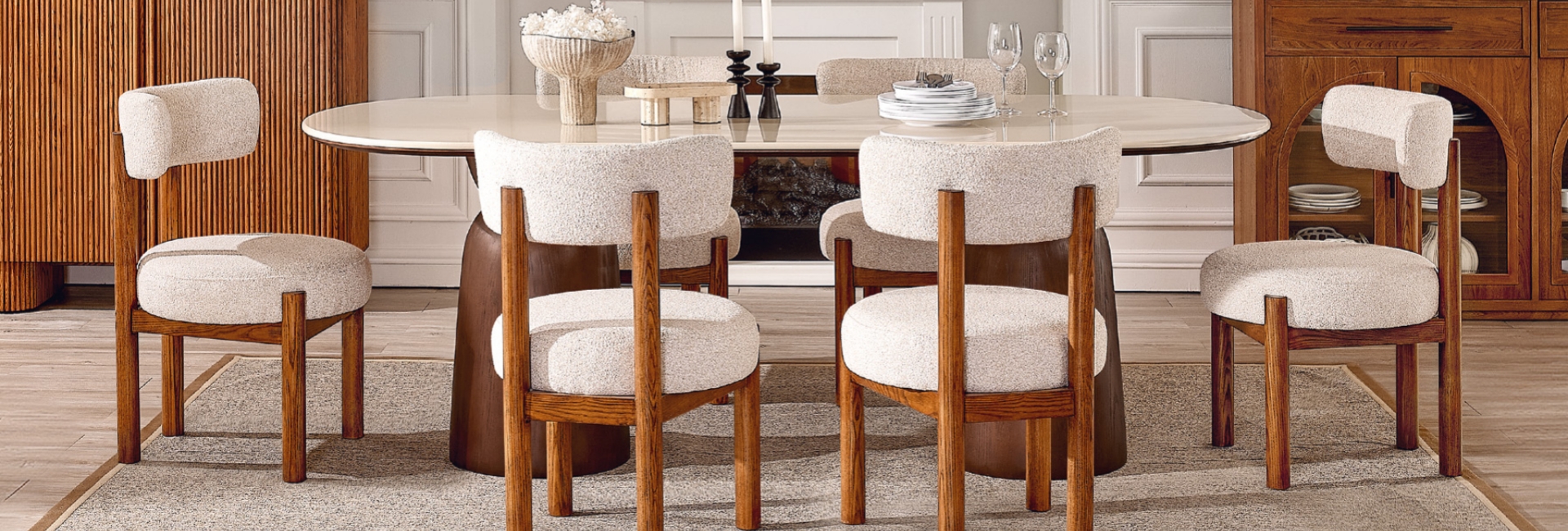
Choosing a dining table involves more than finding a shape or finish you like. The height of the dining table affects how comfortably you sit, how easily you reach your plate, and whether your chairs fit beneath the tabletop.
Most standard dining tables are about 28–30 inches tall, measured from the floor to the top of the tabletop. A 30-inch table is a common choice because it works with many standard dining chairs. However, the right height also depends on chair seat height, tabletop thickness, the space beneath the table, and the people who use it.
Whether you're furnishing a new dining room, replacing an existing table, or looking for chairs to match a table you already own, this guide explains standard dining table height, chair compatibility, practical measurement methods, and the dimensions to check before buying.
Table of Contents
- What Is the Standard Height of a Dining Table?
- Average Dining Table Height and Chair Height
- How to Measure Dining Table Height and Legroom
- Is a 28-Inch, 29-Inch, 30-Inch, or 31-Inch Table Better?
- How Table Design Affects Seating Comfort
- How to Choose the Right Dining Table Size for Your Room
- Common Dining Table Height Mistakes to Avoid
- Final Thoughts
- FAQs
What Is the Standard Height of a Dining Table?
The standard dining table height is generally around 28–30 inches from the floor to the top surface of the tabletop. Within this range, 30 inches is a common height for residential dining tables.
This range is a practical shopping guideline rather than a universal requirement. Some dining tables are slightly lower or taller because of their design, intended use, or proportions.
How Tall Is a Standard Dining Table?
If you're wondering how tall a standard dining table is, use the following measurements as a starting point.
These measurements refer to the distance from the floor to the top of the tabletop, including its thickness.
When comparing products, check the manufacturer's listed dimensions rather than relying on appearance. Two tables can have the same overall height but offer different amounts of usable legroom because of their aprons, support beams, and base designs.
Standard Dining Table Height vs. Counter and Bar Height
Standard dining tables, counter-height tables, and bar-height tables are designed for different seating arrangements. Exact dimensions vary by product, but these ranges are common shopping references.
Counter-height tables are often used in kitchen dining areas, while bar-height tables are typically paired with taller stools. Standard-height dining tables are a practical choice for conventional dining rooms because compatible chairs are widely available.
The key is to match the table with the correct seating rather than assume that one height is inherently more comfortable than another.
Average Dining Table Height and Chair Height
The average dining table height is commonly described as approximately 28–30 inches. For a typical 30-inch table, dining chairs with seat heights around 17–19 inches are a useful starting point.
However, choosing compatible furniture involves more than subtracting the chair's seat height from the table's overall height. The tabletop's thickness, the chair's cushioning, the table apron, and the position of its support structure all affect the fit.
What Chair Height Works With a 30-Inch Dining Table?
For a 30-inch dining table, start by comparing dining chairs with seat heights of approximately 17–19 inches.
The difference between a 30-inch tabletop and a 17–19-inch seat is 11–13 inches. This is the vertical distance from the top of the seat to the top of the tabletop, not the actual clearance beneath the table.
For a more useful fit check, measure from the top of the chair seat to the underside of the tabletop or apron, wherever your knees will sit. Around 10–12 inches of vertical clearance is a common starting point, but the actual fit depends on the table's construction, the chair, and your sitting position. If the table has a low apron or crossbar, measure that obstruction separately.
Use the following ranges as initial shopping references, not guaranteed combinations.
These ranges overlap because furniture dimensions and individual preferences vary. The most important consideration is whether the table and chair work comfortably together.
If possible, test the table and chair as a set. Your feet should rest comfortably, your knees should have enough room, and your arms should reach the tabletop without forcing your shoulders into an awkward position.
For more guidance, see Hernest's Dining Chair Height Guide.
Check Armrests Before Buying Dining Chairs
A chair can have a suitable seat height but still fail to fit beneath a dining table.
This is particularly important with armchairs. The armrests must clear the underside of the tabletop or apron if you want to push the chair fully underneath when it is not in use.
For example, Hernest's Liliana Armrest Leather Dining Chairs list a seat height of 18.1 inches and an armrest height of 25.2 inches.
These dimensions are useful when comparing the chairs with a 30-inch table. However, the overall table height alone does not establish whether the armrests will fit. Measure from the floor to the lowest obstruction beneath the table and compare that measurement with the armrest height.
Also consider the width of the chair, the table leg placement, and whether the chair can slide underneath without hitting the base.
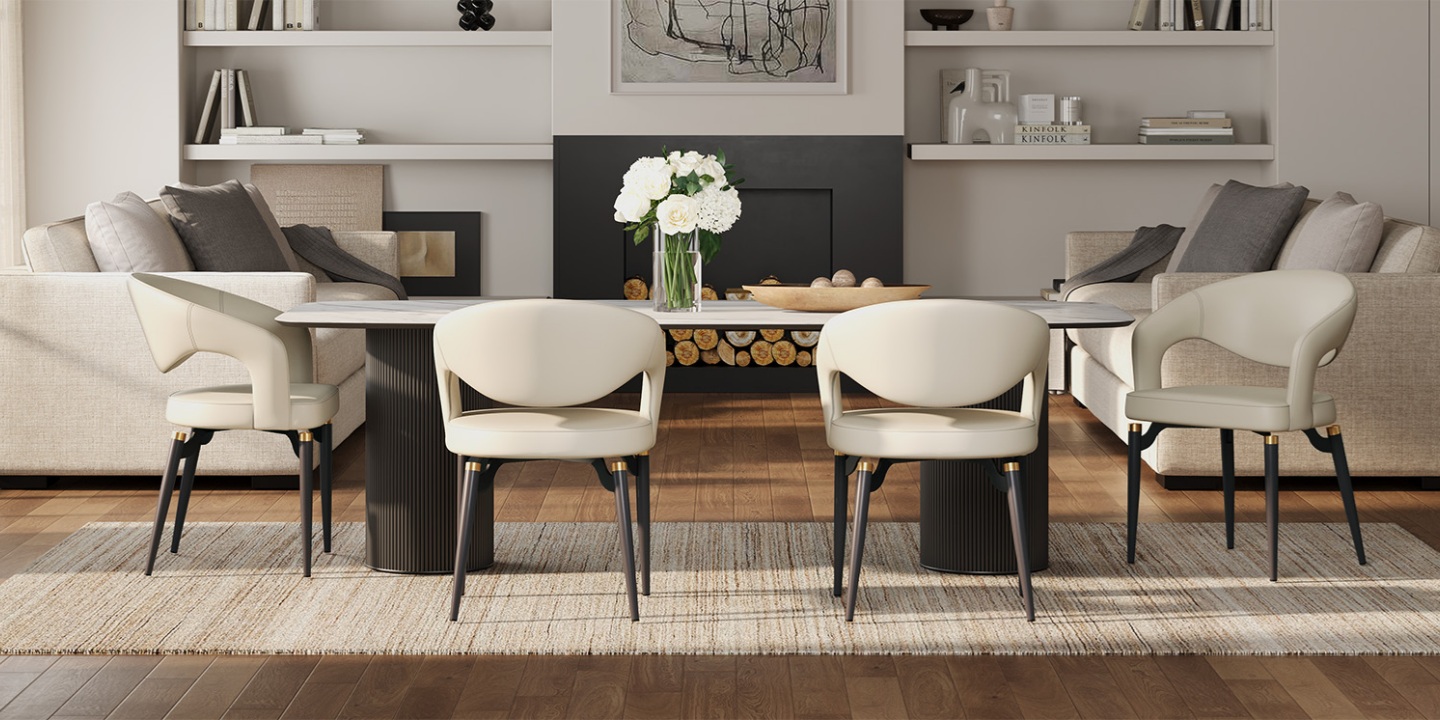
How to Measure Dining Table Height and Legroom
Measuring a table correctly helps prevent a common furniture-buying mistake: choosing a table that looks right but feels uncomfortable once you sit down.
Before purchasing a new table or replacing your dining chairs, check these four measurements.
Step 1: Measure From the Floor to the Tabletop
Place a measuring tape vertically from the floor to the top surface of the tabletop. Include the tabletop thickness in the measurement.
If you're shopping online, check the manufacturer's listed overall height and confirm that it refers to the assembled table.
Step 2: Measure the Chair Seat Height
Measure from the floor to the top of the chair's seat cushion. For an upholstered chair, remember that the cushion may compress when someone sits down.
If you already own the chairs, measure them directly. If you're buying new ones, compare their listed seat height with the table dimensions before ordering.
Step 3: Check the Space Beneath the Table
Measure the vertical distance from the floor to the lowest part of the table's underside where your legs will sit.
Pay particular attention to:
The thickness of the tabletop.
The height and depth of any apron.
Crossbars or support beams.
Pedestal bases that may interfere with feet or knees.
Armrests that need to fit beneath the table.
A table can fall within the standard table height range and still provide limited legroom because of its construction.
For example, if a table is 30 inches tall but has a thick tabletop and a low apron, the available knee space may be noticeably smaller than the overall height suggests.
Step 4: Test Your Sitting Position
If possible, sit in the chair at the table before committing to the purchase.
Check whether:
Your feet rest comfortably on the floor.
Your knees fit beneath the tabletop without hitting the apron.
Your shoulders remain relaxed while you reach the table.
Your arms rest comfortably when eating.
The chair can move in and out without hitting the table base.
If you're buying online, compare all available dimensions and review the manufacturer's specifications. When an important measurement is missing, ask the seller before ordering rather than assuming the furniture will fit.
Is a 28-Inch, 29-Inch, 30-Inch, or 31-Inch Table Better?
The best dining table height depends on the chairs, the people using the table, and the table's construction. A difference of one or two inches can affect seating comfort, particularly when matching a new table with existing chairs.
Is a 28-Inch Dining Table Too Short?
No. A 28-inch dining table is not necessarily too short. It can be comfortable when paired with suitable chairs and when the tabletop leaves enough room for your legs.
Before choosing a lower table, consider the seat height of your existing chairs, the thickness of their cushions, and the table's underside structure.
A lower table is not automatically better for a small dining room. Room size is primarily addressed through tabletop dimensions, seating capacity, and surrounding clearance. Choose table height according to the seating arrangement and intended use.
When Does a 29-Inch Table Make Sense?
A 29-inch dining table sits between the lower end of the common range and the frequently used 30-inch option.
It may be a practical choice if you're matching existing chairs or prefer a particular table design. However, there is no need to assume that 29 inches is automatically better for a particular body type.
Compare the actual measurements of the table and chairs. A well-matched 30-inch table may be more comfortable than a poorly matched 29-inch one.
Why Choose a 30-Inch Height Dining Table?
A 30-inch dining table is a common choice for everyday dining because it works with many standard dining chairs and offers a familiar seating arrangement.
It can also simplify furniture shopping. Many dining chairs are designed around conventional dining table dimensions, giving buyers a broad selection of styles and materials.
Still, not every 30-inch table will feel the same. A thick apron, low support beam, or bulky base may limit legroom. Check the usable space beneath the table as well as its overall height.
Is a 31-Inch Dining Table Too Tall?
A 31-inch dining table is slightly taller than the commonly used 28–30-inch range, but that does not automatically make it uncomfortable.
The key is whether the table works with the chairs and the people using it. A suitable chair height may help maintain a comfortable relationship between the seat and tabletop, but you should also check knee clearance and arm position.
If you already own standard dining chairs, do not assume they will work with a 31-inch table simply because the height difference is only one inch. Measure before buying.
How Table Design Affects Seating Comfort
Two dining tables with the same listed height can feel different in use. The shape of the base, the thickness of the tabletop, and the position of structural supports all affect how much room you have for your legs and chairs.
Rectangular Dining Tables
Rectangular tables are versatile for everyday dining and larger gatherings. Their length can accommodate several place settings, but leg placement and apron design determine how easily diners can sit along the sides and ends.
When comparing rectangular tables, check whether the legs interfere with chairs at the corners and whether the support structure limits legroom.
Round Dining Tables
Round tables can make conversation easier because everyone faces toward the center. Depending on the diameter and surrounding clearance, they can also work well in smaller dining areas.
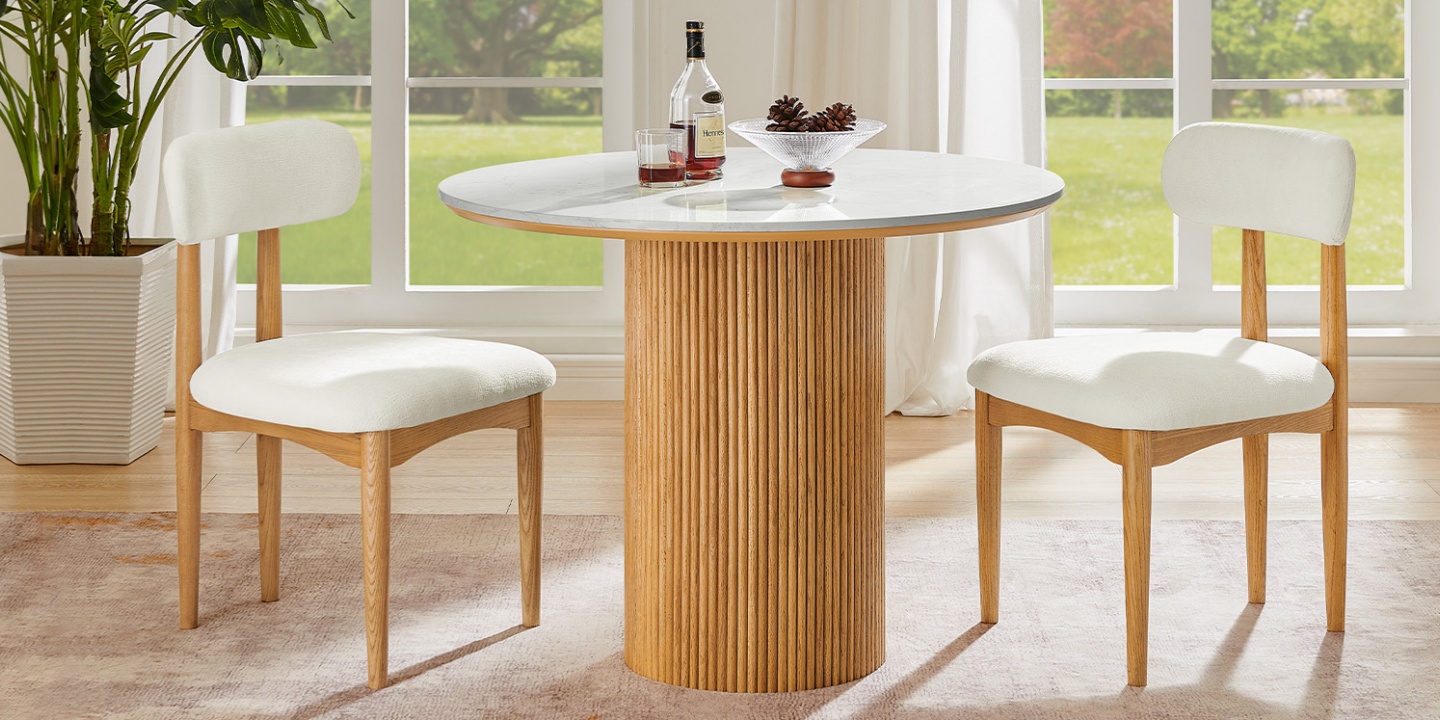
Hernest's Rolf 39-Inch Round Dining Table measures 39 inches in diameter and 30 inches high, with seating for two to four people. It features a white engineered stone top and a fluted oak pedestal base.
Its round tabletop and central base provide an example of why table shape matters when planning chair placement. Check the distance between the chairs, the table base, and the surrounding walls before deciding whether a round table will suit your room.
Pedestal Dining Tables
Pedestal tables use a central support rather than four conventional corner legs. Depending on the base's width and shape, this design can offer more flexibility for chair placement.
However, a pedestal does not guarantee more legroom. A wide base may interfere with feet or chairs, so review the base dimensions as well as the overall table height.
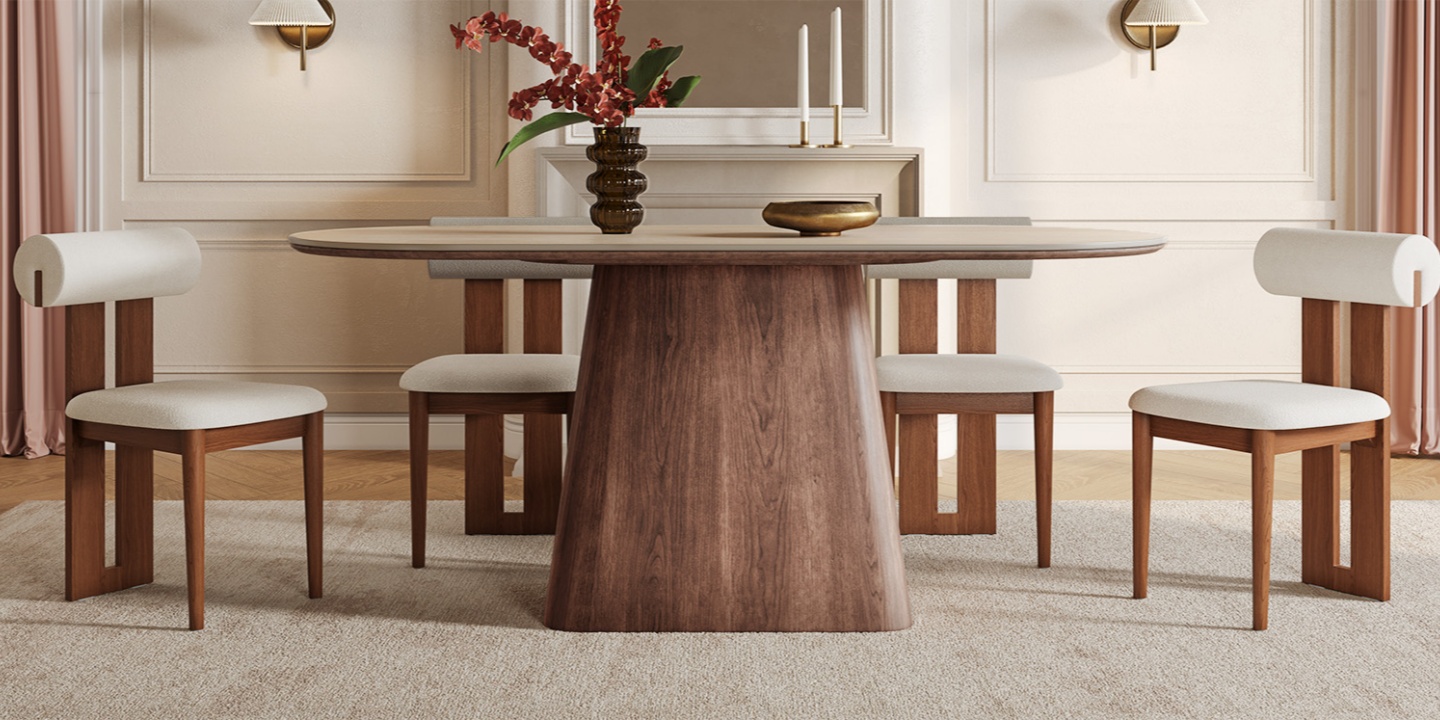
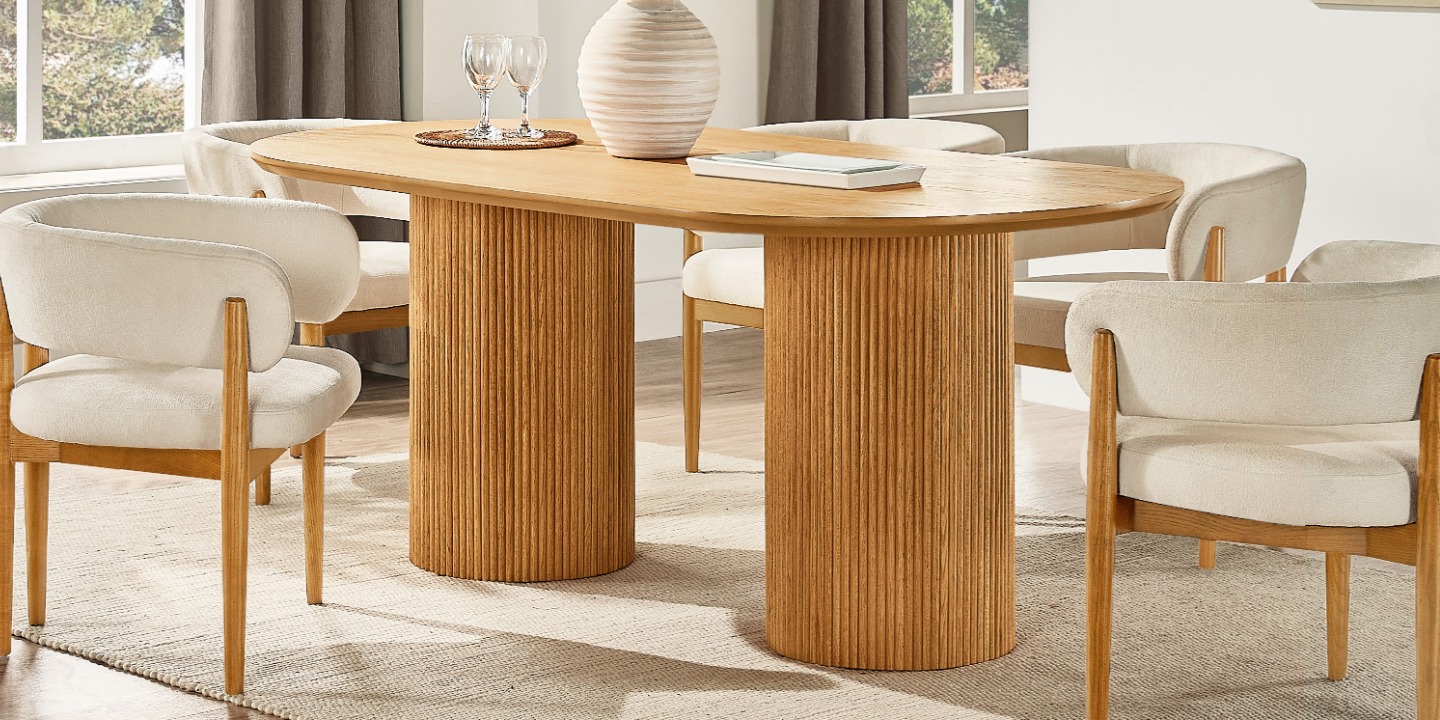
For example, the Hernest Thorsten 84-Inch Oval Dining Table measures 84 inches wide, 39 inches deep, and 30 inches high. It is designed to accommodate six to eight people.
When comparing a table of this size with other options, consider not only its overall height but also the placement of its pedestal and the positions of the chairs.
Extendable Dining Tables
An extendable table adds surface area when you need extra seating. Its height usually remains the same whether the table is extended or closed, but the expanded configuration changes the amount of room needed around it.
Before buying, measure both the table's everyday footprint and its fully extended dimensions. Make sure the expanded arrangement leaves enough room for people to sit, pull out chairs, and move around the table.
How to Choose the Right Dining Table Size for Your Room
The height of a dining table is only one part of choosing the right piece. Table length, width, seating capacity, and room clearance all influence how comfortable the finished dining area will be.
Choose a Table Based on Seating Needs
As a general starting point, many rectangular dining tables fall within these approximate length ranges.
These are planning ranges, not fixed seating rules. Actual capacity depends on table width, leg placement, chair dimensions, and the amount of elbow room each person needs.
Round tables should be evaluated by diameter rather than length. A 39-inch round table, for example, is intended for a more compact dining arrangement than a large oval table.
Before buying, check the manufacturer's stated seating capacity and compare the dimensions with your preferred chair width.
Consider Table Width and Serving Space
Many rectangular dining tables are approximately 36–48 inches wide. A narrower tabletop may work for smaller rooms or simpler place settings, while a wider one provides more room for serving dishes and centerpieces.
Think about how you usually eat. If you regularly serve shared dishes in the center of the table, make sure there is enough room between place settings and serving items.
Leave Enough Clearance Around the Table
A common planning guideline is to allow approximately 36 inches between the table edge and a wall or nearby obstacle. This provides a useful starting point for pulling out chairs and moving around the dining area.
If people need to walk behind seated guests, more space may be necessary. The amount depends on chair size, the width of the walkway, and whether doors or other furniture occupy the same area.
Measure the room with the chairs pulled out, not just the table's footprint. Cabinets, doorways, walkways, and nearby furniture can affect how much clearance you need.
If the dining area is also a main passageway, prioritize comfortable movement rather than treating a single clearance measurement as a universal rule.
Common Dining Table Height Mistakes to Avoid
Even when you choose a table within the standard range, a few overlooked details can make the dining setup less comfortable.
Buying Chairs Without Checking Measurements
Don't assume that every dining chair will fit every standard-height table. Compare seat height, armrest height, and the table's underside clearance before ordering.
Measuring Only the Tabletop Height
The overall table height does not tell you how much space is available for your knees. Thick aprons and support beams can reduce usable clearance, so review the underside dimensions as well.
Choosing a Table Based Only on Room Size
A small room does not automatically require a lower dining table, just as a large room does not automatically call for a taller one. Prioritize the seating arrangement, table dimensions, and the space needed to move comfortably around the furniture.
Assuming Every 30-Inch Table Feels the Same
Tabletop thickness, base shape, chair cushioning, and seat depth can all affect comfort. Check the complete setup rather than relying on a single measurement.
Ignoring the Needs of Different Household Members
If several people will use the table, consider their different seating needs. Children, taller adults, and people who use mobility aids may require additional attention to seat height, legroom, access, and clearance.
When accessibility is important, check the actual dimensions of the complete setup rather than assuming a standard-height table will meet every requirement.
Final Thoughts
The right height of dining table is the one that works with your chairs, your room, and the people who use it every day. A 30-inch table is a common starting point, but a comfortable setup depends on more than the number listed on a product page.
Before buying, measure the tabletop height, check the space beneath it, and make sure your chairs provide enough room for comfortable seating. By considering these details alongside table size and room clearance, you can choose a dining setup that looks right and works well in everyday life.
FAQs
Is 31 Too Tall for a Dining Table?
No. A 31-inch dining table can be comfortable, although it is slightly taller than the common 28–30-inch range. Check the chair seat height, the space beneath the tabletop, and whether you can sit with your shoulders relaxed and your arms at a natural angle.
What Is the Most Comfortable Table Height?
For many standard dining setups, a table around 30 inches tall is a practical starting point. However, comfort depends on the relationship between table height, chair seat height, tabletop thickness, and legroom. Test the complete setup rather than choosing a table based on height alone.
Is 28 Inches Too Short for a Dining Table?
No. A 28-inch dining table can work well when paired with appropriately sized chairs. Before buying, check the distance between the chair seat and tabletop, the clearance beneath the table, and whether your knees fit comfortably underneath.
How Do I Choose the Right Size for My Dining Table?
Start with the number of people you need to seat and the available room space. Compare the table's length and width, allow enough room to pull out chairs and walk around the table, and confirm that the height works with your chairs. Approximately 36 inches of clearance is a common planning starting point, but more space may be needed where people walk behind seated guests.
Is 30 Inches Standard Table Height?
Yes. A 30-inch dining table is a common standard-height option for residential dining. Many standard dining tables fall within approximately 28–30 inches, although some designs are taller or shorter. Choose a height that works with your chairs and provides adequate legroom.