Choosing the right couch size is one of those decisions that seems simple—until you actually start measuring your living room. Suddenly, inches matter. Doorways matter. Even walking paths matter more than you expected.
In real-world furniture planning, couch size is not just about comfort—it’s about proportion, flow, and how your space actually functions day to day. Whether you’re dealing with a compact apartment or a wide open living room, understanding standard couch dimensions can save you from costly mistakes and awkward layouts.
Table of Contents
- Understanding Couch Size and Standard Dimensions
- Choosing the Right Couch for Your Space
- Specific Sofa Sizes and Seating Capacity
- Tips for Measuring and Planning Your Living Room Layout
- Conclusion: Finding the Perfect Couch Size for Your Home
- FAQs
- What is the standard size of a couch?
- What is the size of a 3 seater sofa?
- How do I choose the right size sofa for my space?
- What should I consider when buying a large sofa or sectional online?
- Is a 90 inch couch big?
- How many people can sit on an 87 inch couch?
- What are the most common apartment sofa dimensions?
- How much space should I leave around my couch?
- Are sectional sofas always larger than standard couches?
- Does couch depth matter for comfort?
Understanding Couch Size and Standard Dimensions
When designers talk about couch size, they’re not just referring to length. They’re considering depth, seat height, arm thickness, and even how many people can realistically sit without feeling cramped.
Most industry references—including standard furniture dimension charts and retailer buying guides—agree that standard couch dimensions fall within predictable ranges. But “standard” doesn’t always mean “ideal for your home.”
What Is the Standard Size of a Couch?
The typical couch size for a standard three-seater sofa usually falls between 72 and 96 inches in length, with a depth of 30 to 40 inches.
To break it down more clearly:
Small sofas: 72–78 inches
Standard sofas: 78–90 inches
Large sofas: 90–96+ inches
This aligns with widely used standard couch dimensions seen across furniture industry references and design planning charts. In practice, the most commonly purchased couch size for American homes sits around 84–90 inches, because it balances seating capacity with room flexibility.
As one interior design consultant often puts it:
“The right couch size isn’t the biggest one that fits—it’s the one that fits your lifestyle without dominating your room.”
That mindset is critical when evaluating couch size for everyday use.
Standard Couch Dimensions by Style
Different sofa styles dramatically change how couch size feels in a room, even when measurements are similar.
Here’s how standard couch dimensions typically vary:
Loveseat (2-seater): 50–72 inches
Standard 3-seater sofa: 78–90 inches
Large sofa or sectional: 90–120+ inches
The challenge is that two sofas with identical couch size can feel completely different depending on arm thickness, back height, and frame design.
For example, a minimalist frame can make a 90-inch sofa feel lighter in a room, while a bulky traditional design may make the same couch size feel overwhelming.
Understanding these variations in standard couch dimensions helps you avoid visual miscalculations.
Common Sofa Lengths Explained
Let’s break down the most common real-world couch size categories people actively shop for:
84 inch couch: The “safe choice” for most living rooms
85 inch couch: Slightly more relaxed seating without overwhelming space
87 inch couch: A balanced mid-large option for families
88 inch sofa: Transitional size between standard and large seating
90 inch sofa: Full-size comfort, ideal for larger living rooms
These increments may seem small, but in real interior layouts, a 2–3 inch difference in couch size can affect traffic flow, visual balance, and even TV distance alignment.
For example, an 84 inch couch often fits perfectly in apartments with limited wall space, while an 88 inch sofa can create a more grounded, lounge-style seating zone.
When evaluating couch size, always think beyond numbers—think spatial behavior.
Choosing the Right Couch for Your Space
Getting the right couch size is rarely about picking what “looks good online.” In real homes, it’s about how the sofa interacts with your room—traffic flow, wall balance, and how people actually move through the space. A sofa that feels perfect in a showroom can feel completely off once placed in a tight living room or an awkward apartment layout. That’s why understanding how to pick a couch based on real spatial conditions matters more than anything else.
How Do I Choose the Right Size Sofa for My Space?
The most reliable way to determine the right couch size is to work backwards from your room layout—not the product listing.
Start with three practical measurements:
Wall space: Measure the main wall where the sofa will sit
Walking clearance: Keep at least 30–36 inches for pathways
Visual balance: Ensure the sofa doesn’t overpower other furniture
A useful rule used by interior planners is that the sofa should take up about 60–75% of the wall length. This creates balance without overcrowding the room.
For example:
A 120-inch wall → ideal couch size around 78–90 inches
A 150-inch wall → supports larger couch size like 90–100+ inches
Another overlooked factor in how to pick a couch is sightlines. If the sofa blocks windows or cuts the room visually in half, even the correct couch size will feel wrong.
“The right sofa is not the biggest one that fits—it’s the one that preserves breathing room in the layout.”
This mindset is especially important when evaluating standard couch dimensions, because the same size can feel completely different depending on placement.
Apartment Sofa Dimensions: Fitting Sofas in Small Spaces
In apartments, choosing the right couch size becomes a precision decision. Even 2–3 inches can determine whether a room feels open or cramped.
Typical apartment sofa dimensions:
When working with limited space, the goal is not just fitting the sofa—but maintaining usability. A poorly chosen couch size can block walking paths or reduce functional living space.
Practical apartment tips:
Choose slimmer armrests to reduce visual bulk
Prefer raised legs to create airiness under the sofa
Avoid overly deep seating unless lounging is the priority
Keep at least 18 inches between sofa and coffee table
In most apartments, anything beyond an 85 inch couch starts to require careful planning. Even if it technically fits, the perceived couch size may overwhelm the room.
Considerations When Buying a Large Sofa or Sectional Online
Buying a large sofa online adds another layer of risk because couch size alone doesn’t tell the full story. You need to think beyond the listing dimensions.
Key considerations:
Full dimensions vs. seat width
Many buyers focus only on seating width, but true couch size includes:
Arm thickness
Backrest depth
Overall footprint
A sofa advertised as 90 inches may feel significantly larger depending on structure.
Delivery and access routes
Even the perfect couch size is useless if it cannot enter your home. Always measure:
Door frames
Hallways
Stair turns
Elevator interiors
A common mistake is assuming “if it fits the room, it fits the house.”
Sectional flexibility
Large sectionals often appear more flexible, but they require careful planning. Their modular design can make the couch size adaptable, but also more complex to position.
Lifestyle fit
Ask yourself:
Do you host guests frequently?
Is lounging or sitting upright more important?
Will the sofa define the entire room layout?
For example, a 90 inch sofa works well as a central anchor in open spaces, while an 87 inch couch may offer better flexibility in mixed-use living rooms.
Ultimately, choosing the right couch size is a balance between measurements, movement, and lifestyle. When you combine spatial planning with realistic expectations, even complex layouts become much easier to design—and the sofa finally feels like it belongs there naturally.
Specific Sofa Sizes and Seating Capacity
When people compare different couch size options, the real question is rarely just about length—it’s about how that size translates into real seating comfort. Two sofas can share similar standard couch dimensions, yet feel completely different depending on arm thickness, seat depth, and overall design. Understanding seating capacity helps you avoid the common mistake of choosing a sofa that looks right on paper but feels cramped in daily use.
In practical interior planning, couch size directly determines how people interact with the space—whether it feels social, spacious, or tight.
Is a 90 Inch Couch Big?
Yes, a 90 inch couch is generally considered a large sofa in most residential settings, especially in apartments or standard living rooms. Within typical standard couch dimensions, this size sits at the upper end of what is classified as a standard 3-seater before transitioning into oversized or sectional territory.
A 90 inch couch size typically offers:
Seating for 3–4 adults comfortably
Deep lounging potential for one or two people
Strong visual presence in the room layout
To put it into perspective, a 90-inch sofa often requires at least a 10x12 ft room to avoid overwhelming the space. In smaller rooms, the same couch size may dominate visually, even if it technically fits.
Design professionals often point out that a 90 inch couch size works best as a focal anchor rather than secondary seating. It defines zones in open layouts and supports more social seating arrangements.
In real-world applications, not all 90-inch sofas feel the same. For example, a low-profile design with deep seating can make a large couch size feel visually lighter and more relaxed, even in minimalist interiors.
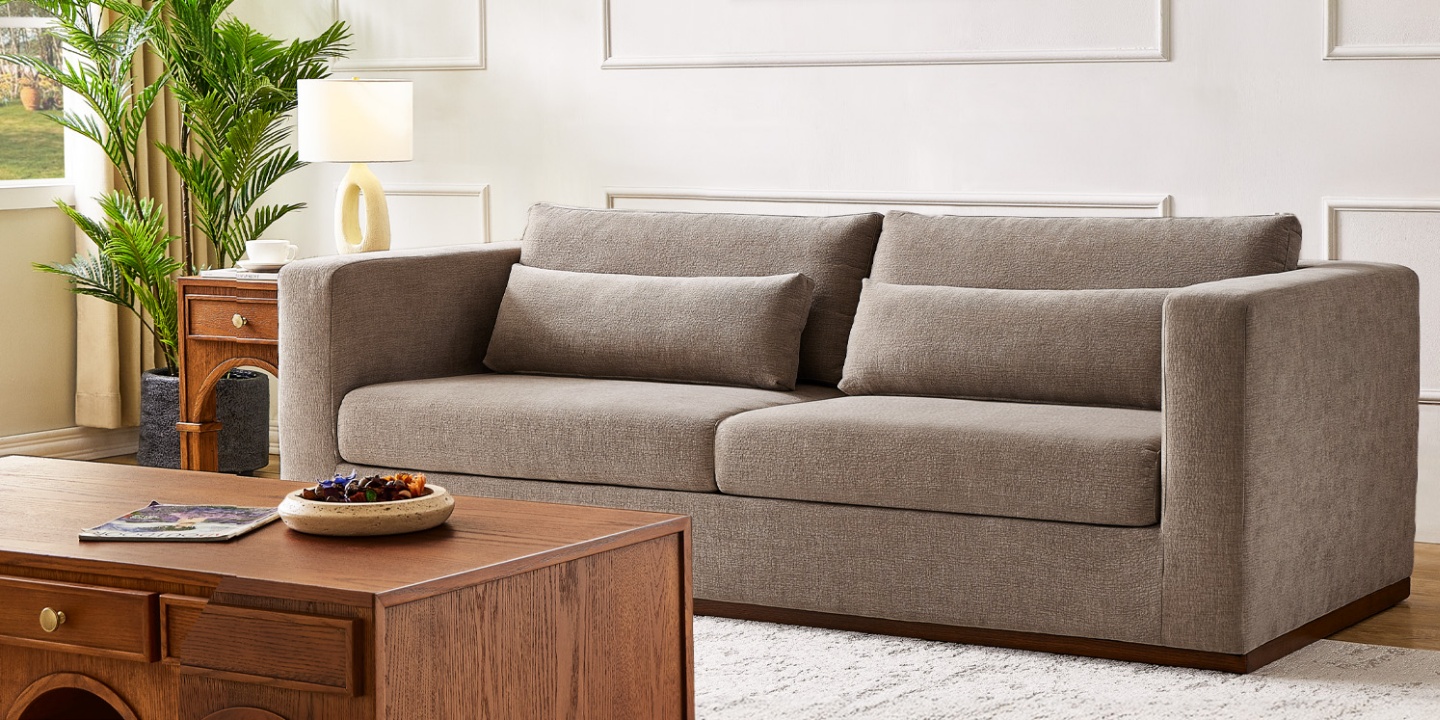
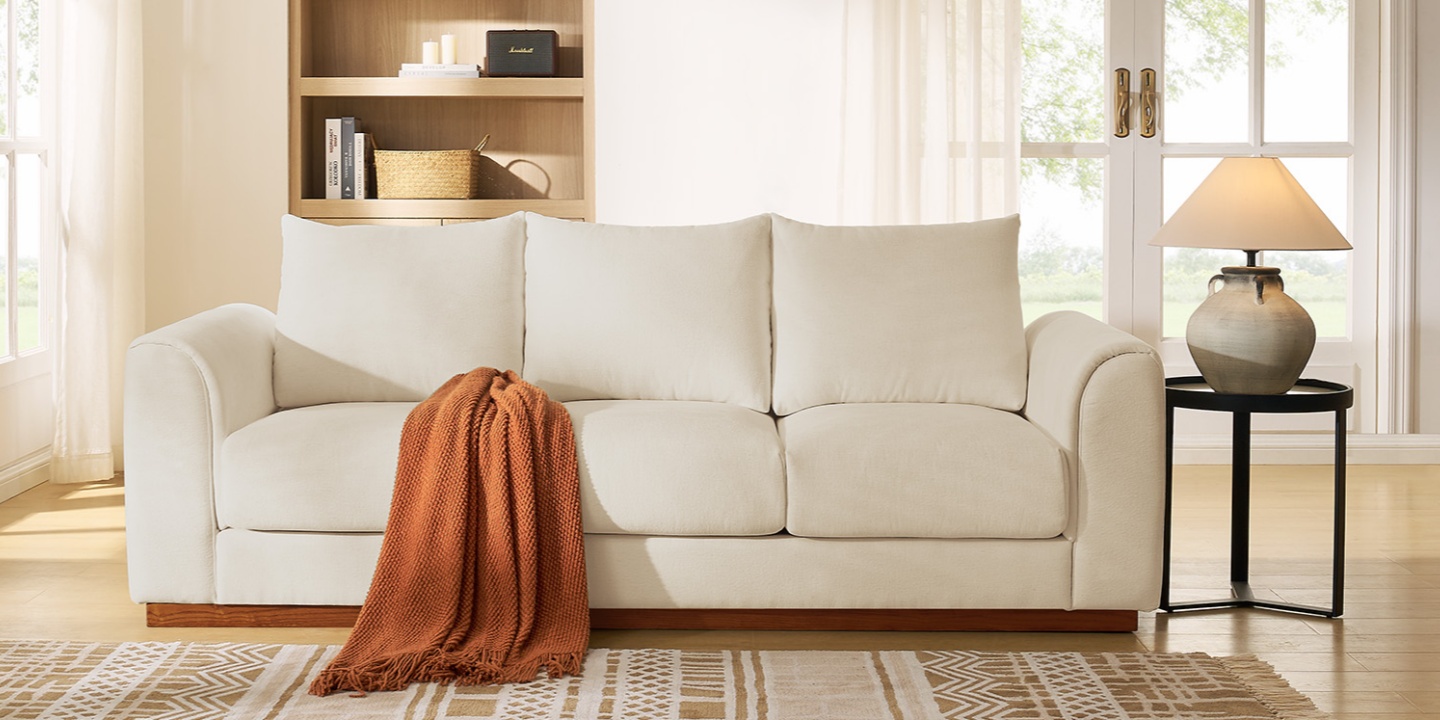
A strong example is the Jade 90 Inch Sofa, which demonstrates how a full-size 90 inch couch can still maintain balance in modern living spaces. With its recessed solid wood base, softly rounded arms, and deep cushioning, it reduces visual bulk while still offering generous seating comfort.
Built with high-resiliency foam, sinuous spring support, and a soft chenille upholstery, this type of 90 inch sofa shows how larger couch size options can still feel inviting rather than overwhelming. It’s especially effective in open-plan living rooms where the sofa needs to define space without visually closing it in.
Overall, a 90 inch couch size is not just about being “big”—it’s about how effectively it anchors a room while still maintaining comfort, proportion, and livability.
How Many People Can Sit on an 87 Inch Couch?
An 87 inch couch is one of the most balanced couch size options for everyday use. It sits in the “comfort zone” between compact and oversized furniture, making it a popular choice in many homes.
In real-world use:
Comfortable seating: 3 adults
Maximum seating: 4 adults (closer spacing)
Lounging: 1–2 people with extra legroom
Compared to other standard couch dimensions, the 87-inch length provides just enough flexibility without overwhelming the room. It is especially effective in mixed-use spaces where seating needs vary—such as living rooms that double as entertainment or work areas.
One practical observation from interior layouts:
“The 87-inch range often feels like the ‘neutral zone’ of couch sizing—it adapts easily without dictating the entire room layout.”
This makes the 87 inch couch size particularly useful for households that want flexibility without committing to oversized furniture.
Other Popular Sizes and Uses
Different couch size categories serve different lifestyle needs, and understanding these distinctions helps ensure long-term comfort and usability.
Common size breakdown:
84 inch couch: Ideal for compact living rooms or tighter layouts
85 inch couch: Slightly more relaxed seating, still space-efficient
87 inch couch: Balanced everyday use, adaptable seating
88 inch sofa: Transitional size with more lounging comfort
90 inch sofa: Large seating capacity, best for open layouts
Each step up in couch size increases comfort but also requires more careful spatial planning.
For example:
An 84 inch couch works well in apartments where walking clearance is limited
An 88 inch sofa fits family rooms where social seating is a priority
A 90 inch sofa is often chosen for entertainment-focused spaces
In terms of standard couch dimensions, these sizes form a natural progression that helps homeowners match furniture scale with lifestyle needs rather than guesswork.
Ultimately, choosing the right couch size is about matching seating capacity with how you actually live—whether that means hosting guests, stretching out after work, or simply keeping the room visually balanced.
Tips for Measuring and Planning Your Living Room Layout
When it comes to choosing the right couch size, even the most stylish sofa will fail if it doesn’t fit the room properly. In real interior planning, layout mistakes are far more common than design mistakes. That’s why measuring and planning your living room around standard couch dimensions is essential before making any purchase decision.
A well-planned layout ensures your sofa supports movement, balance, and functionality—not just appearance.
How to Measure Your Space for a New Sofa
The first step in understanding couch size suitability is accurate measurement. This is not just about wall length—it’s about the full usable footprint of the room.
Follow this practical process:
Measure the main wall length where the sofa will sit
Mark the intended couch size on the floor using tape or newspaper
Measure walking clearance paths (minimum 30–36 inches recommended)
Check distance to TV or focal point (typically 1.5–2.5 times screen size)
Account for doors, windows, and radiator clearance
A simple reference table can help visualize planning:
When applying how to pick a couch, always visualize the sofa in real scale—not just numbers. Tape outlines are surprisingly effective for understanding true couch size impact in your space.
Avoiding Common Size Mistakes
Most layout issues come from misjudging couch size relative to room flow rather than room size itself.
Common mistakes include:
Choosing a sofa that fits the wall but blocks walkways
Ignoring armrest thickness when evaluating standard couch dimensions
Forgetting to measure doorway and hallway clearance
Overfilling small rooms with oversized seating
Another frequent issue is underestimating visual weight. Two sofas with the same couch size can feel completely different depending on depth, frame design, and cushion style.
For example:
Deep, bulky designs make even mid-size sofas feel heavy
Slim, raised-leg designs make larger couch size options feel lighter
A good rule in real-world planning is:
Always prioritize circulation space before maximizing seating capacity.
Ultimately, successful layout planning is not about squeezing in the largest possible sofa—it’s about choosing a couch size that enhances how the room is actually used every day.
Conclusion: Finding the Perfect Couch Size for Your Home
At the end of the day, selecting the right couch size is about more than numbers. It’s about how your space feels when you live in it.
Whether you're considering standard couch dimensions, evaluating apartment sofa dimensions, or comparing an 84 inch couch to a 90 inch sofa, the goal is the same: balance comfort with space.
A thoughtfully chosen couch size improves movement, enhances aesthetics, and makes your living room feel intentional rather than crowded or empty.
If there’s one takeaway, it’s this: measure carefully, visualize realistically, and choose a couch size that supports your lifestyle—not just your wall space.
FAQs
What is the standard size of a couch?
The standard couch size typically ranges from 72 to 96 inches in length, with a depth of 30 to 40 inches. Most 3-seater sofas fall within this range, making them the baseline for common standard couch dimensions in residential homes.
What is the size of a 3 seater sofa?
A 3-seater sofa usually measures between 78 and 90 inches long. This couch size is designed to comfortably seat three adults while maintaining balance in most living room layouts.
How do I choose the right size sofa for my space?
To choose the right couch size, measure your wall space, allow at least 30–36 inches of walking clearance, and ensure the sofa occupies roughly 60–75% of the main wall. Always consider traffic flow, not just available space, when applying how to pick a couch principles.
What should I consider when buying a large sofa or sectional online?
When buying a large sofa online, check full standard couch dimensions, including depth and arm thickness—not just length. Also verify doorway clearance, staircase access, and packaging size to ensure the couch size can physically enter your home. Sectionals require extra planning due to modular sections.
Is a 90 inch couch big?
Yes, a 90 inch couch is considered large in most homes. It typically seats 3–4 people comfortably and works best in medium to large living rooms or open-plan spaces. This couch size often acts as a visual anchor in the room.
How many people can sit on an 87 inch couch?
An 87 inch couch generally seats 3 adults comfortably and up to 4 in closer seating conditions. This couch size is often considered a balanced option between compact and large seating arrangements.
What are the most common apartment sofa dimensions?
Most apartment sofas fall within 50 to 84 inches in length. Compact loveseats and slim 3-seaters are commonly used to match smaller couch size requirements while maintaining usable seating capacity.
How much space should I leave around my couch?
It is recommended to leave at least 30 inches for walkways and about 18 inches between the couch and coffee table. Proper spacing ensures the couch size feels proportional and does not restrict movement.
Are sectional sofas always larger than standard couches?
Generally, yes. Sectionals usually exceed standard couch size ranges and can extend beyond 90 inches. However, their modular design allows flexible configurations, which can make them adaptable to different room layouts.
Does couch depth matter for comfort?
Yes, couch depth significantly affects comfort. Standard depth ranges from 30 to 40 inches, while deeper seating provides a more relaxed lounging experience. However, deeper couch size designs may not suit smaller spaces due to reduced visual and physical balance.