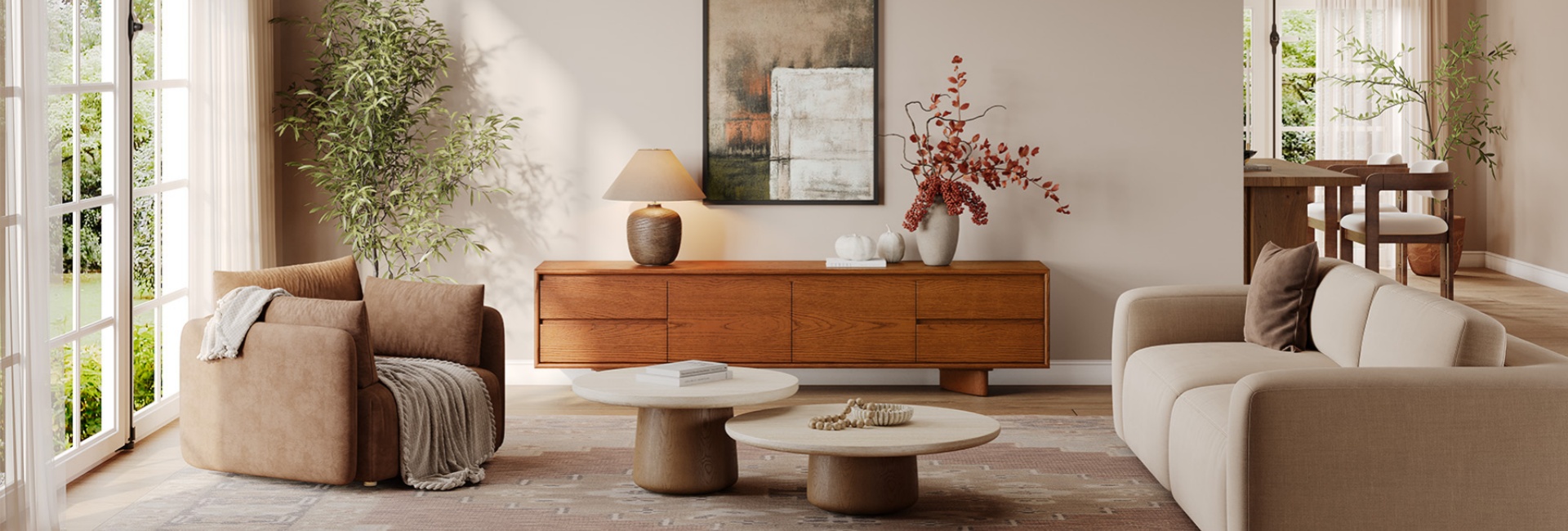
A well-designed feng shui living room is more than just a beautiful space—it’s a functional environment that supports comfort, connection, and daily well-being. In modern homes across the U.S., homeowners are increasingly turning to feng shui living room principles not as superstition, but as practical design logic that improves how a space feels and functions.
This article breaks down a real-world, expert-level feng shui living room layout strategy you can apply immediately, whether you live in a compact apartment or a large open-concept home.
Why Feng Shui Still Matters in Modern Living Rooms
The connection between Feng Shui, comfort, and everyday living
At its core, a feng shui living room is about flow—both physical and emotional. Interior designers often note that rooms feel “off” not because of style, but because of layout imbalance. A proper feng
shui for living room approach ensures that furniture supports movement, conversation, and relaxation.
Experts in environmental psychology often point out that humans naturally prefer symmetrical, open, and predictable spatial arrangements. This aligns closely with feng shui living room layout principles, where balance and visibility are key drivers of comfort.
A certified interior consultant once explained:
“Good Feng Shui is essentially good spatial psychology. When a feng shui living room feels right, it’s because your brain reads the environment as safe and organized.”
What this article will help you solve
This guide to feng shui living room design will help you:
Fix awkward furniture layouts
Improve energy flow in your home
Apply practical feng shui rules for living room design without overthinking it
Optimize feng shui sofa placement
Choose a functional tv stand
Create harmony using real furniture principles, not myths
Whether you're redesigning or adjusting, understanding feng shui living room layout fundamentals will change how your space functions.
Understanding Feng Shui for Living Room Spaces
What is Feng Shui and how does it affect a living room?
A feng shui living room is designed based on energy flow, visibility, and comfort alignment. In simple terms, it ensures no part of the room feels blocked, cramped, or visually overwhelming.
The concept of feng shui for living room design focuses on:
Natural movement paths
Balanced furniture placement
Comfortable sightlines
Reduced visual clutter
When applied correctly, a feng shui living room layout makes even small spaces feel larger and calmer.
Why the living room is considered the heart of the home
The living room is where most households spend their waking shared time. That’s why feng shui living room principles prioritize this space above others.
In traditional Feng Shui teachings, this room represents:
Family bonding
Social energy
Emotional balance
A well-structured feng shui furniture living room layout enhances communication and reduces tension in shared spaces.
Common Feng Shui misconceptions homeowners believe
Many people misunderstand feng shui living room design as restrictive or symbolic. In reality:
It is not about superstition
It is not about strict rules
It is about practical spatial flow
A common misconception is that feng shui rules for living room design require expensive redesigns. In reality, even small changes—like adjusting feng shui sofa placement—can significantly improve comfort.
The Core Feng Shui Living Room Layout Principles
Use the command position whenever possible
The command position is a central rule in feng shui living room design. It means the main seating should face the entrance without being directly aligned with it.
This principle improves awareness and comfort, a core element of feng shui living room layout planning.
Anchor the sofa against a solid wall
In any feng shui furniture living room, the sofa should ideally sit against a solid wall. This creates psychological stability and improves room structure.
This is one of the most repeated feng shui rules for living room design because it provides “support energy.”
Create clear pathways for energy flow
A functional feng shui living room always includes clear walking paths. Avoid blocking movement between:
Entrance and seating
Seating and windows
Seating and entertainment zones
Good feng shui living room layout ensures energy (and people) move freely.
Arrange seating to encourage conversation
A strong feng shui living room layout avoids rigid, one-direction seating. Instead, chairs and sofas should face each other in a conversational arrangement.
This is a key principle in feng shui for living room harmony and social connection.
Balance openness and comfort
Too empty feels cold. Too crowded feels stressful. A balanced feng shui living room layout finds the middle ground.
Designers recommend adjusting feng shui furniture living room proportions to match room size instead of overfilling it.
Feng Shui Sofa Placement Rules That Actually Work
In any feng shui living room, sofa positioning is not just about aesthetics—it directly shapes how comfortable, stable, and functional the space feels. Among all feng shui living room layout decisions, feng shui sofa placement has the strongest impact because the sofa represents the main “resting anchor” of the room. If it feels unstable or awkwardly positioned, the entire space tends to feel unsettled.
The ideal Feng Shui sofa placement
A strong feng shui sofa placement starts with visibility, support, and balance. The goal is simple: the sofa should feel protected while still maintaining a clear view of the room.
Place the sofa facing the entrance—but not directly in line with it
In a well-designed feng shui living room, the sofa should ideally face the main entrance so occupants can see who enters. However, it should never be placed in a straight line with the door. This direct alignment can create a feeling of exposure and tension. For example, in an open-plan apartment, shifting the sofa slightly off-center immediately improves the sense of comfort and control in the feng shui living room layout.
Avoid placing the sofa under heavy shelves or beams
Heavy overhead structures create psychological pressure, which disrupts a balanced feng shui furniture living room environment. Even if the furniture fits physically, the emotional effect can feel “compressed,” reducing relaxation in daily use.
Why sofas should not block windows
Blocking windows interrupts natural light and airflow—two essential elements in feng shui for living room design. A sofa placed in front of a window may feel practical in small spaces, but it often weakens energy circulation and makes the room feel visually heavy.
Mistakes to avoid with sectional sofas
Sectional sofas are common in modern homes, but in a feng shui living room, placement determines whether they support or disrupt balance.
When an L-shaped sectional improves energy flow
An L-shaped sectional works well when it subtly defines zones in open layouts. For example, it can separate the seating area from a dining space while still maintaining open movement paths—enhancing overall feng shui living room layout flow.
When a sectional creates visual blockage
However, if the sectional blocks walkways, corners off circulation, or turns the room inward too aggressively, it can create stagnant energy. In such cases, it conflicts with basic feng shui rules for living room design and makes the space feel smaller and more closed-in.
Ultimately, good feng shui sofa placement is about ensuring the sofa supports both movement and emotional comfort, not just filling space.
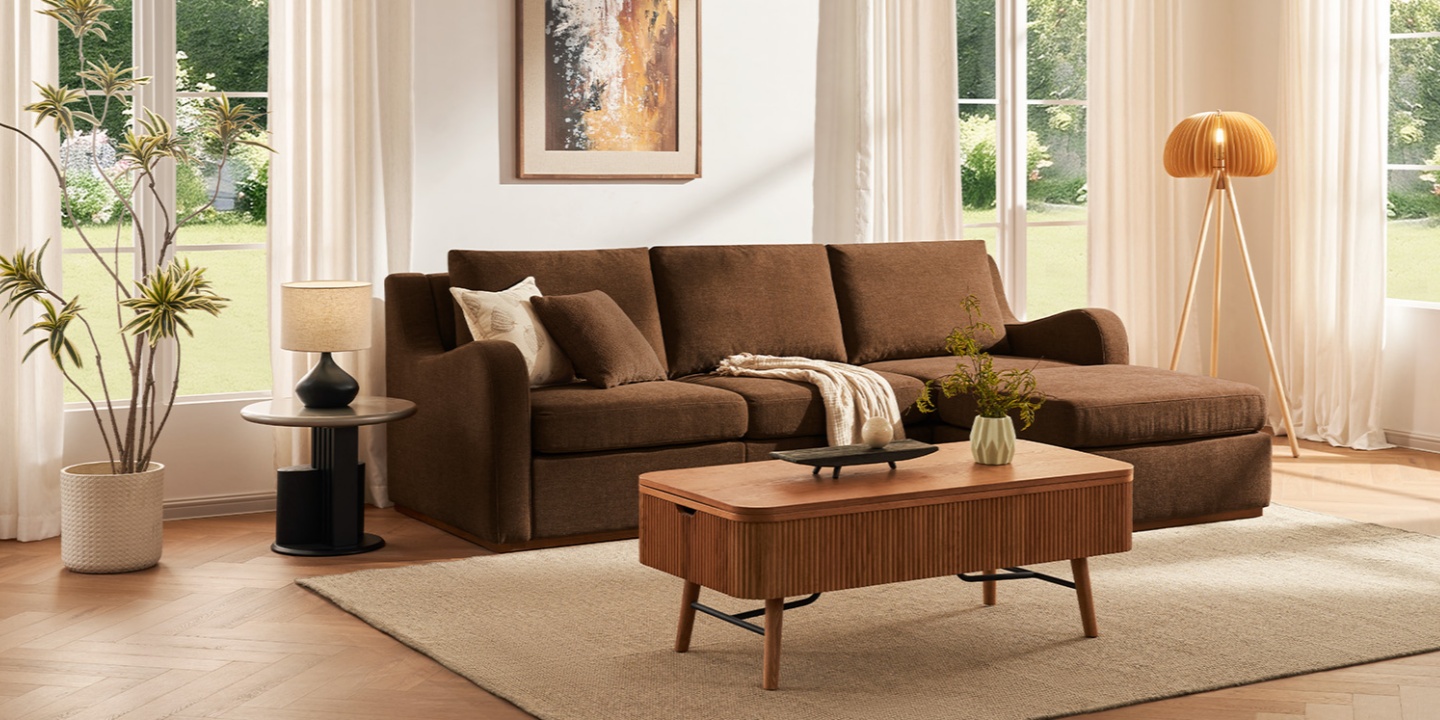
Feng Shui Furniture Living Room Essentials
In any well-balanced feng shui living room, furniture is not just decoration—it is the structural foundation that determines how energy moves, how people interact, and how comfortable the space feels on a daily basis. A thoughtful feng shui furniture living room setup focuses on proportion, shape, and material harmony rather than visual trends alone.
Choosing furniture with balanced proportions
A strong feng shui living room layout always begins with scale. Furniture that is too large overwhelms the room, while pieces that are too small feel unstable and disconnected.
For example, in a compact apartment living room, a deep oversized sofa can dominate circulation paths and disrupt feng shui for living room flow. On the other hand, low-profile seating paired with appropriately sized side tables creates visual balance and improves usability.
A simple guideline used by designers:
This balance is a core part of feng shui rules for living room design, ensuring no single object overwhelms the space.
Why rounded furniture is preferred in Feng Shui
Rounded furniture is widely recommended in a feng shui living room because it softens movement and reduces harsh visual “pressure points.”
Sharp corners are often seen as disruptive in feng shui living room layout planning because they create visual tension when pointed toward seating areas. Rounded coffee tables, curved armchairs, and oval side tables help guide movement naturally through the room.
Even small adjustments—like swapping a rectangular accent table for a rounded one—can noticeably improve the feeling of flow in a feng shui furniture living room arrangement.
The role of natural materials
Natural materials are essential in feng shui for living room design because they connect the interior space with grounding, stable energy. A good feng shui living room typically combines wood, stone, and textiles to create layered texture balance.
Wood furniture and the Wood element
Wood represents growth and vitality in a feng shui living room. Solid wood furniture—such as coffee tables or shelving—adds warmth and stability while supporting a healthier feng shui living room layout.
Stone and ceramic accents for stability
Stone and ceramic elements bring grounding energy, which is especially useful in open-plan feng shui furniture living room spaces where structure may feel lacking.
Soft textiles to balance hard surfaces
Rugs, cushions, and curtains soften acoustics and visual harshness. In feng shui rules for living room, textiles are often used to “absorb” excess visual tension and restore balance.
Together, these materials create a feng shui living room that feels both structured and livable, rather than rigid or overly styled.
Choosing a Feng Shui-Friendly Coffee Table
In a well-designed feng shui living room, the coffee table is far more than a surface for drinks or décor—it is the central anchor that connects seating, movement, and interaction. A thoughtful choice supports the overall feng shui living room layout, while a poor one can disrupt flow and create visual imbalance. Because it sits at the heart of the seating zone, the coffee table plays a key role in maintaining harmony within feng shui for living room design principles.
Why the coffee table matters in Feng Shui
A feng shui living room depends on smooth circulation of both movement and attention. The coffee table sits at the intersection of these flows, making it a visual and functional focal point. If it is too large, too sharp, or poorly positioned, it can interrupt the natural rhythm of the space and weaken overall feng shui living room layout balance.
The coffee table as the center of gathering energy
In a typical feng shui furniture living room, the coffee table acts as the “conversation hub.” It holds the energy of shared moments—whether that’s family discussions, casual gatherings, or quiet daily routines. When placed correctly, it helps unify seating arrangements and strengthens emotional connection in the space.
What is the best coffee table for Feng Shui?
The ideal table depends on room size, seating arrangement, and movement flow. In feng shui living room design, shape is especially important.
Round coffee tables
Round coffee tables are often considered the most harmonious choice in a feng shui living room because they remove sharp edges and support smooth, uninterrupted energy flow—an essential principle in feng shui living room layout design. They work especially well in compact spaces where circulation is tight, helping prevent visual pressure and awkward movement paths.
A strong example is the Hernest Magnus 39" Lift-Top Oak Coffee Table, which combines a circular silhouette with practical functionality. Crafted from American solid oak, rubber wood, and engineered wood with oak veneers, it brings the warmth and grounding qualities that are highly valued in a feng shui living room. The natural wood grain, enhanced through a wire-brushed and glazed finish, creates visual depth while maintaining a calm, organic appearance. Its lift-top design and concealed storage help reduce clutter, supporting a cleaner and more balanced feng shui living room layout.
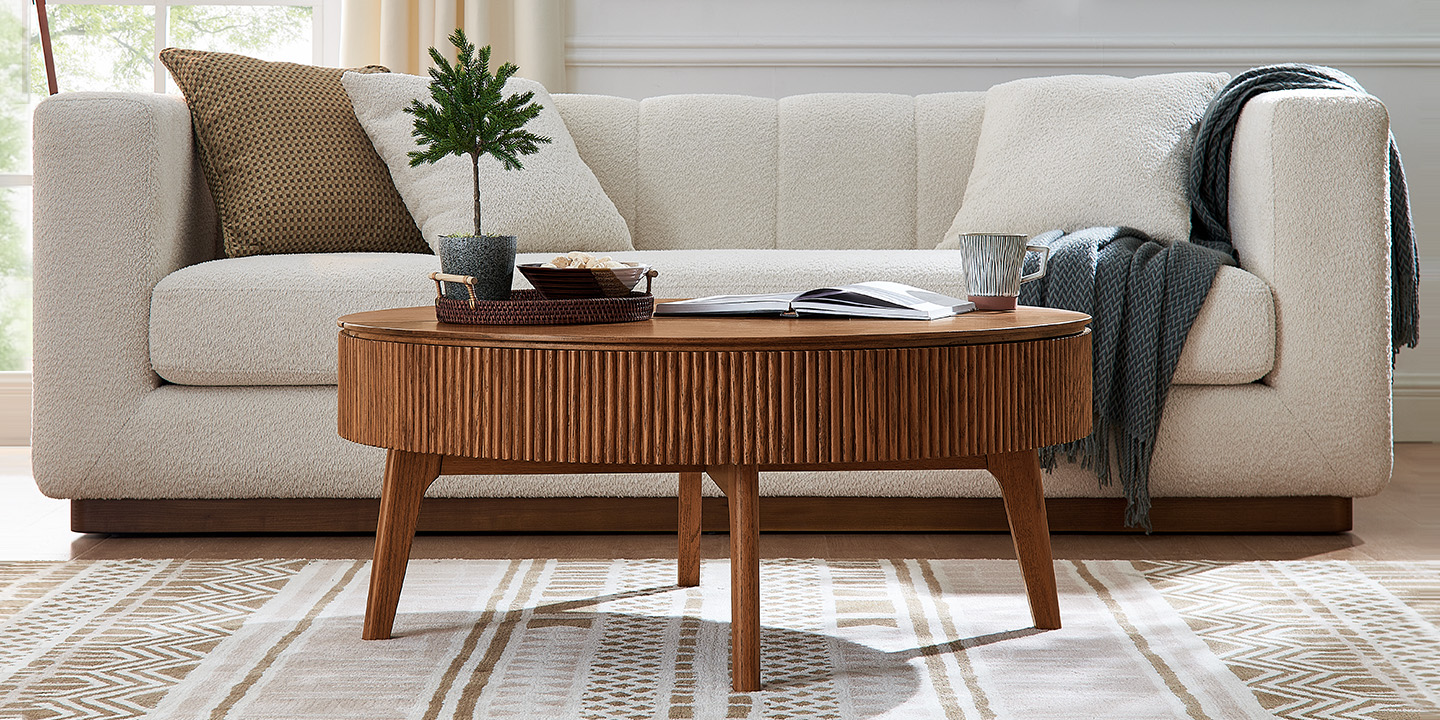
Oval coffee tables
Oval coffee tables offer an ideal balance between softness and functionality in a feng shui living room. Their curved edges help maintain smooth energy flow, while the elongated shape provides more usable surface area than a round table, making them especially suitable for family-focused feng shui for living room arrangements.
The Hernest Marisol 55" Oak Coffee Table is a strong example. Crafted from American solid oak and engineered wood with oak veneers, it features gently rounded forms, solid oak fluting, and a warm wood finish that highlights the natural grain. These organic materials and softened lines contribute to a more welcoming feng shui living room layout, while the larger tabletop comfortably accommodates everyday family activities without creating visual heaviness or disrupting circulation.
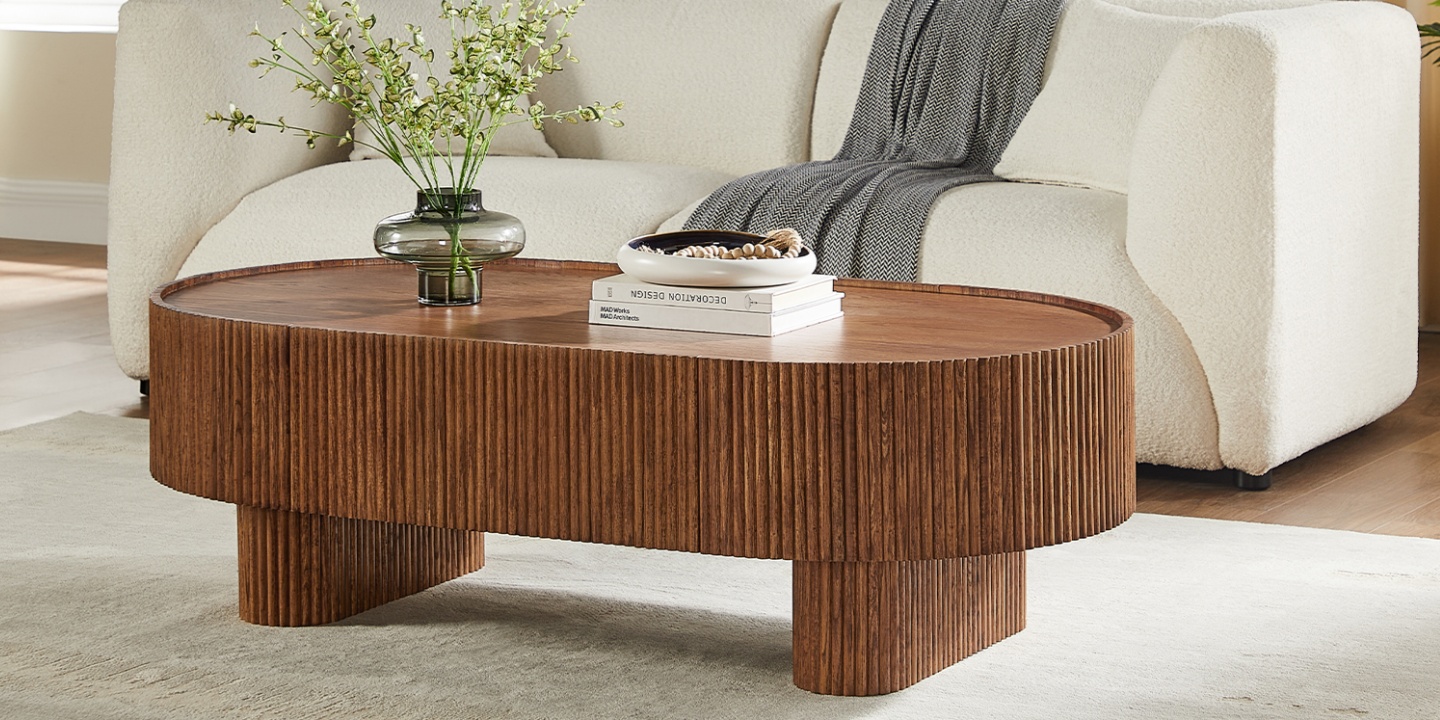
Rectangular coffee tables
Rectangular coffee tables can work exceptionally well in larger or more structured feng shui furniture living room layouts, particularly when paired with longer sofas or symmetrical seating arrangements. The key is placement—sharp corners should not point directly toward primary seating positions, as this can create visual tension and disrupt the balance of a feng shui living room.
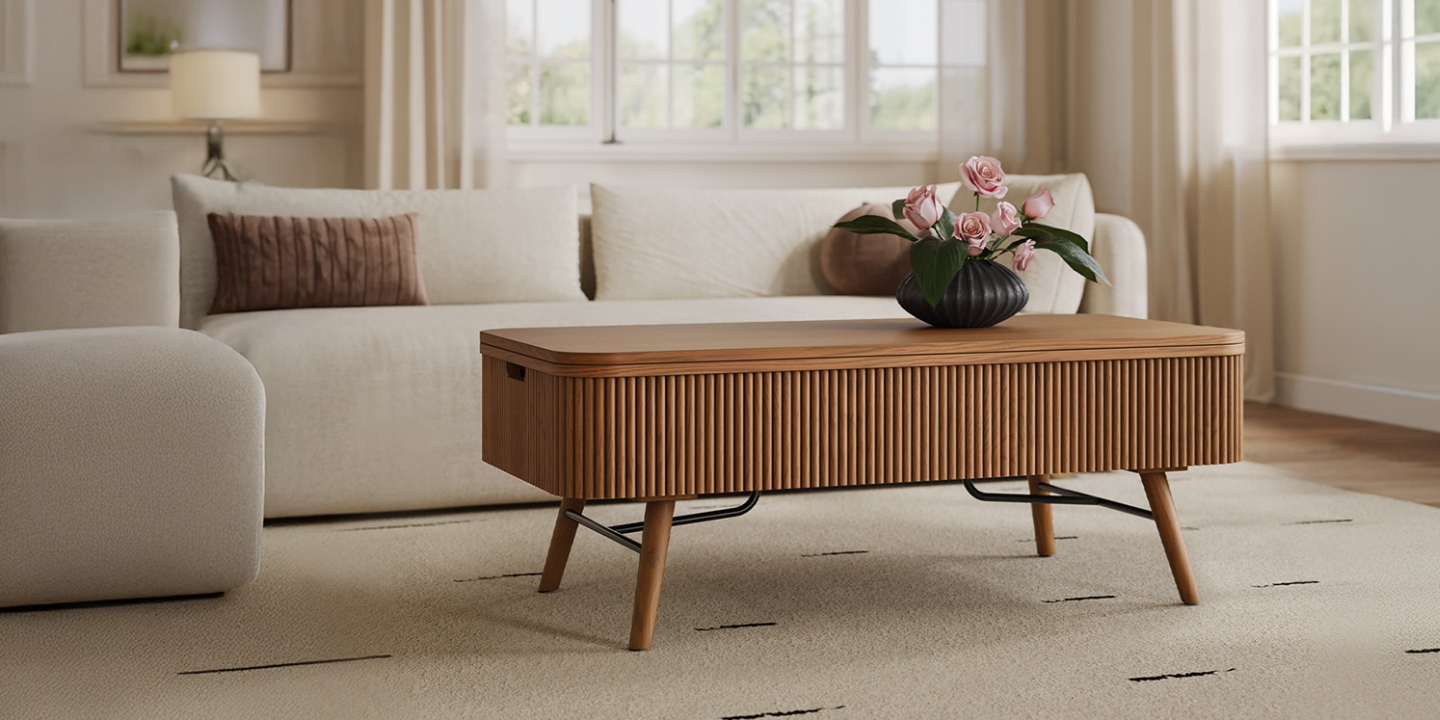
The Hernest Magnus 47" Lift-Top Oak Coffee Table offers a practical example. Crafted from American solid oak and plywood with oak veneers, it combines clean lines with warm natural materials that support a grounded feng shui living room layout. Its fluted detailing softens the visual impact of its rectangular form, while the lift-top design adds flexibility for everyday living. When centered within the seating area and surrounded by adequate clearance, it can provide both functionality and harmonious flow in a feng shui for living room setting.
Coffee table size and placement rules
Correct proportion is essential in a feng shui living room. A coffee table should feel integrated, not dominant.
Keep it lower than the sofa arms
This maintains visual balance and prevents the table from overpowering the seating zone. In feng shui rules for living room, height harmony is crucial for comfort and openness.
Leave comfortable spacing around seating
Ideally, there should be enough room to walk easily around the table without obstruction. This supports smooth circulation in a feng shui living room layout and avoids compressed energy zones.
Coffee table materials that support positive energy
Material choice affects both aesthetics and emotional tone in a feng shui living room.
Solid wood
Wood is highly recommended in feng shui for living room design because it adds warmth, grounding, and natural balance. It helps soften modern interiors and enhances stability in a feng shui furniture living room.
Stone tops
Stone introduces a sense of permanence and calm strength. In a feng shui living room layout, it works well for grounding open spaces and balancing lighter materials like fabric or glass.
Ultimately, the best coffee table in a feng shui living room is one that supports movement, feels proportionate, and enhances interaction without creating visual or physical disruption.
Feng Shui TV Stand Placement and Entertainment Areas
Many homeowners assume that televisions automatically create negative energy, but in reality, a well-designed feng shui living room can successfully incorporate modern entertainment without sacrificing balance. The key lies in thoughtful placement, visual harmony, and clutter control. When integrated properly, a tv stand can become a functional part of the overall feng shui living room layout rather than a disruptive focal point.
Can a TV create bad Feng Shui?
A television itself is not inherently bad Feng Shui. Problems usually arise when screens dominate the room or contribute to visual clutter.
Understanding screen dominance and visual clutter
Large black screens naturally attract attention, even when turned off. In a feng shui living room, an oversized television paired with excessive accessories can overwhelm the space and shift attention away from conversation, relaxation, and connection. Good feng shui for living room design aims to create balance, ensuring the TV is integrated into the room rather than becoming its only purpose.
Where should a TV stand be placed?
Proper tv stand placement helps maintain visual order and supports smooth circulation throughout the room.
Keep the TV wall balanced
The television wall should feel visually grounded rather than empty on one side and crowded on the other. A substantial media console can help anchor the screen and create proportional balance within the feng shui living room layout.
Avoid overwhelming the room's focal point
If your living room features a fireplace, large window, or architectural detail, avoid positioning the TV in a way that competes aggressively with those features. One of the most practical feng shui rules for living room design is allowing focal points to complement rather than overpower one another.
Position the TV without blocking natural light
Natural light is highly valued in feng shui for living room planning. Avoid placing a tv stand directly in front of windows, as this can reduce brightness, restrict airflow, and make the room feel heavier.
How to style a TV stand according to Feng Shui
A well-styled tv stand should blend functionality with visual calm.
Incorporate wood finishes
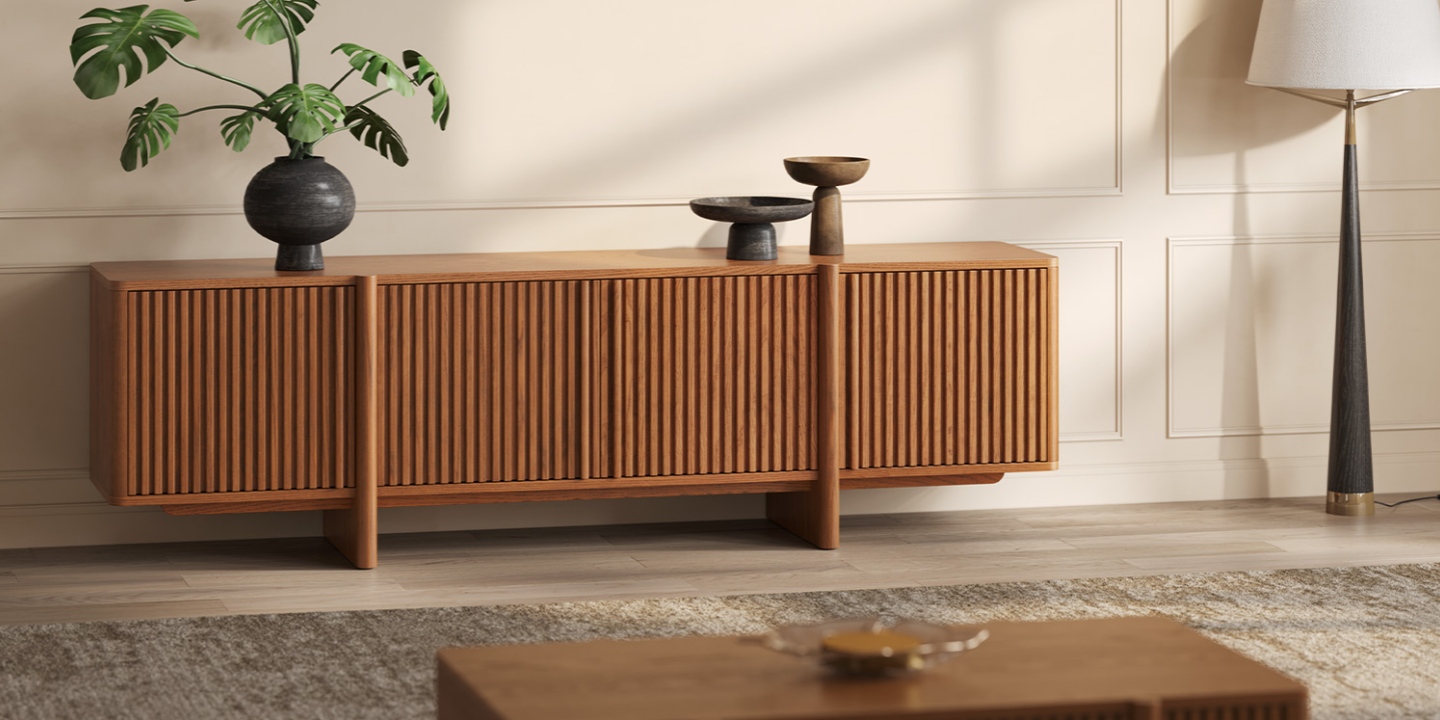
Natural wood introduces warmth and grounding qualities into a feng shui living room, helping balance the visual weight of modern electronics. For example, the Hernest Sabina 84" Ash Wood Media Console is crafted from American solid ash wood, rubber wood, and engineered wood with ash wood veneers, combining durability with an organic, nature-inspired aesthetic. Its distinctive square fluting adds architectural texture without creating visual clutter, while the wire-brushed wood grain and layered finish bring depth and warmth to the entertainment area. These natural materials help soften the technological presence of a television and contribute to a more harmonious feng shui furniture living room environment.
Use closed storage to reduce clutter
Closed storage is one of the easiest ways to improve a feng shui living room layout. The Sabina media console includes concealed compartments and adjustable shelving, allowing devices, remotes, and accessories to remain organized and out of sight. This reduces visual distractions and supports cleaner energy flow.
Balance electronics with plants and décor
Pairing electronics with natural elements helps soften the entertainment zone. A few carefully placed plants, ceramic accents, or books can create visual balance without overwhelming the space.
TV stand mistakes to avoid
Even a beautiful tv stand can undermine a feng shui living room if it is styled poorly.
Overcrowded media consoles
Avoid filling every inch of surface space with decorative objects. Too many accessories create visual congestion and distract from the room's overall harmony.
Visible cable clutter
Exposed cords are a common design issue that can make an otherwise organized room feel chaotic. A media console with integrated cable management, such as the Hernest Sabina 84" Ash Wood Media Console, helps maintain a cleaner and more intentional appearance.
Excessive decorative objects
A few meaningful decorative pieces are usually more effective than a large collection of unrelated items. In feng shui rules for living room design, simplicity often creates a stronger sense of balance than abundance.
Ultimately, a successful feng shui living room does not eliminate technology—it incorporates it thoughtfully. By choosing a well-proportioned tv stand, maintaining organized storage, and balancing electronics with natural materials, you can create an entertainment area that feels both functional and harmonious.
What Should Be Avoided in a Living Room?
Creating a balanced feng shui living room is not only about adding the right furniture and décor—it is equally important to remove elements that disrupt comfort, movement, and visual harmony. Many common design mistakes can weaken a feng shui living room layout, making a space feel cramped, chaotic, or unwelcoming. If you're applying feng shui for living room principles, avoiding the following issues should be a top priority.
Excessive clutter and unused items
Clutter is one of the most common obstacles to good Feng Shui. Piles of magazines, unused furniture, overflowing shelves, and random decorative items can make a feng shui living room feel stagnant and overwhelming. Regular decluttering helps maintain open pathways and improves the overall functionality of the space.
Broken furniture and damaged décor
Furniture with broken legs, chipped surfaces, loose hardware, or damaged upholstery can negatively affect the atmosphere of a room. From a practical standpoint, damaged items create visual disorder and make a space feel neglected. A well-maintained feng shui furniture living room should reflect care, stability, and usability.
Sharp-edged furniture pointed toward seating
One of the most recognized feng shui rules for living room design is avoiding sharp corners aimed directly at sofas or chairs. Aggressive angles can create visual tension and make seating areas feel less comfortable. Rounded or softened edges are generally preferred in a balanced feng shui living room layout.
Dead or unhealthy plants
Plants are often used to bring vitality into a feng shui living room, but unhealthy plants have the opposite effect. Yellowing leaves, dried stems, or neglected greenery can make the room appear lifeless and poorly maintained.
Mirrors directly facing the front entrance
While mirrors can enhance light and make rooms appear larger, placing one directly opposite the front door is often discouraged in feng shui for living room design. This arrangement can create visual distraction and disrupt the welcoming feel of the entry experience.
Furniture that blocks natural pathways
A key goal of any feng shui living room layout is maintaining smooth circulation. Furniture that obstructs doorways, walkways, or access to seating areas can make a room feel cramped and difficult to navigate.
Overly dark rooms with poor lighting
Insufficient lighting can make even a well-designed feng shui living room feel closed off and uncomfortable. Combining natural light, ambient lighting, and task lighting helps create a brighter, more inviting environment.
By eliminating these common issues, you can significantly improve the comfort, appearance, and overall balance of your feng shui living room.
Room-by-Room Checklist for Better Feng Shui
Creating a balanced feng shui living room does not always require a complete redesign. In many cases, a simple room-by-room review can reveal issues that affect comfort, circulation, and visual harmony. Use the checklist below to evaluate your feng shui living room layout and identify areas for improvement.
Furniture checklist
Before focusing on décor, assess the overall furniture arrangement.
✓ Furniture is proportionate to the room size
✓ Seating feels balanced rather than overcrowded
✓ Large pieces do not dominate the space
✓ Natural materials are incorporated where possible
A well-planned feng shui furniture living room should feel open, functional, and comfortable to navigate.
Sofa placement checklist
Proper feng shui sofa placement is one of the most important factors in the room.
✓ Sofa has a view of the entrance
✓ Sofa is supported by a solid wall whenever possible
✓ Seating does not block windows
✓ Walkways remain clear around the sofa
Coffee table checklist
The coffee table should support conversation and movement.
✓ Size is proportional to the seating area
✓ Table height is lower than sofa arms
✓ Adequate space exists between seating and table
✓ Rounded or softened edges are preferred
TV stand checklist
A properly positioned tv stand helps maintain visual balance.
✓ TV is not blocking natural light
✓ Media console is appropriately sized for the room
✓ Cables are concealed whenever possible
✓ Storage prevents visual clutter
Storage and decluttering checklist
One of the most practical feng shui rules for living room design is reducing unnecessary clutter.
✓ Frequently used items have designated storage
✓ Broken or unused items have been removed
✓ Decorative accessories are intentionally selected
✓ Pathways remain unobstructed
If you can check most of these boxes, your feng shui living room is likely supporting better flow, comfort, and everyday functionality.
Final Thoughts: Creating a Living Room That Feels Good Every Day
A well-designed feng shui living room is not about strict rules—it’s about how your space supports your daily life. When your feng shui living room layout is balanced, everything else feels easier: conversations flow, relaxation improves, and the room becomes genuinely enjoyable.
By applying thoughtful feng shui furniture living room principles, correct feng shui sofa placement, and a balanced tv stand setup, you create a home that feels stable and welcoming. In the end, feng shui for living room design is simply good design with intention, and the most important feng shui rules for living room always come back to one idea: make your space work for you, not against you.
Frequently Asked Questions
What is the best Feng Shui layout for a living room?
The best feng shui living room layout places the main sofa in a command position, where it can see the entrance without being directly aligned with it. Seating should feel balanced, with clear walking paths and no furniture blocking movement. This creates a stable and comfortable feng shui living room that supports both relaxation and social interaction.
What should be avoided in a living room?
Avoid clutter, broken furniture, blocked pathways, sharp-edged furniture pointing toward seating, poor lighting, and dead plants. These issues disrupt a harmonious feng shui for living room environment and make the space feel heavy or unbalanced.
What is the best coffee table for Feng Shui?
Round or oval coffee tables are generally best because they soften energy flow and reduce sharp visual tension in a feng shui living room layout. The table should also be proportionate to the seating area and allow easy movement around it.
Where should shoes be stored in Feng Shui?
Shoes should be stored in a closed cabinet near the entrance, not in the living room. This helps maintain cleanliness, reduce visual clutter, and support a more balanced feng shui living room atmosphere.
Is it bad Feng Shui to have a TV in the living room?
No, a TV is not bad Feng Shui. However, it should be integrated into the space thoughtfully using a balanced tv stand, with controlled visibility, minimal clutter, and proper placement to avoid dominating the feng shui furniture living room layout.
Should a sofa face the front door?
Ideally, a sofa should face the entrance without being directly in line with it. This is a key feng shui sofa placement principle that improves comfort, awareness, and spatial security.
Can a sofa be placed in front of a window?
It is not ideal but acceptable when space is limited. However, placing a sofa in front of a window may reduce support and disrupt the stability of a feng shui living room layout.
Are sectional sofas good for Feng Shui?
Yes, sectional sofas can work well if they define space without blocking circulation. In a feng shui furniture living room, they should enhance flow rather than create visual or physical barriers.
What colors are good Feng Shui colors for a living room?
Earth tones, soft greens, warm neutrals, and muted blues are commonly recommended. These colors help create a calm and balanced feng shui for living room environment.
How important is decluttering in Feng Shui?
Decluttering is essential. A clutter-free space improves energy flow, enhances usability, and is one of the most important feng shui rules for living room design principles.
What type of TV stand works best in a Feng Shui living room?
A simple, well-proportioned tv stand with closed storage and natural materials works best. It should reduce visual clutter, support organization, and integrate smoothly into the overall feng shui living room layout.