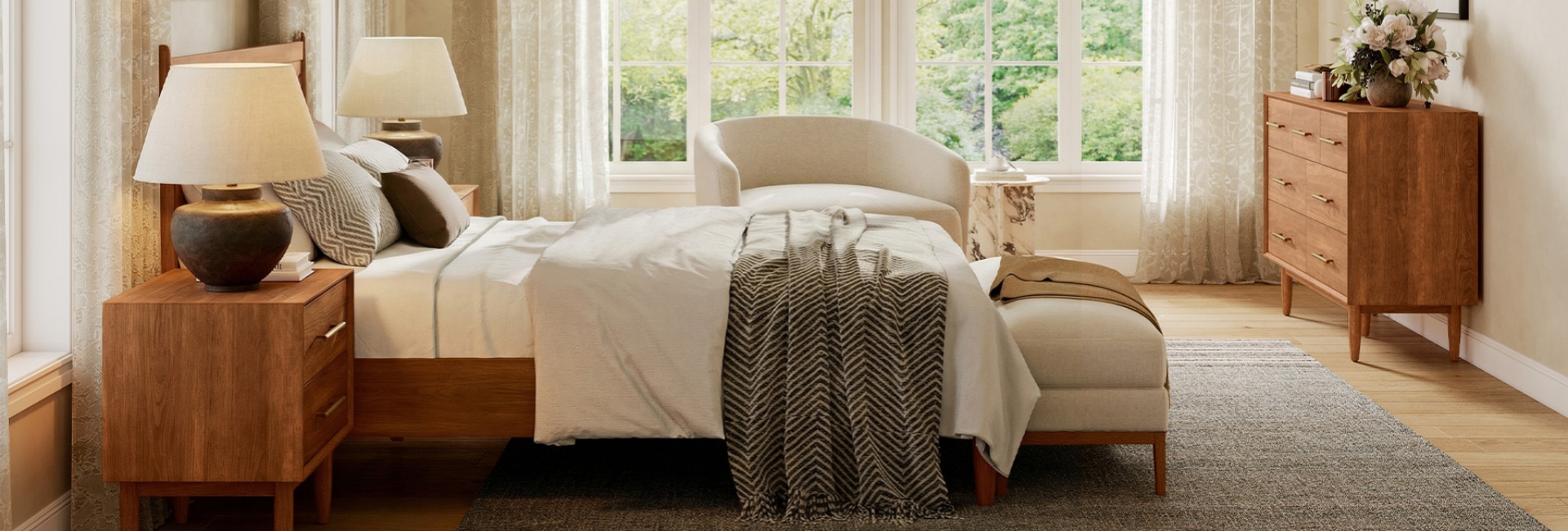
A well-planned bedroom should feel comfortable, easy to navigate, and suited to your daily routine. The bed needs enough space around it, bedside essentials should be within reach, and storage should work without blocking doors or walkways.
A feng shui bedroom layout approaches these decisions through Feng Shui, a traditional Chinese practice concerned with the arrangement of spaces and the flow of qi, often translated as energy. Common recommendations include positioning the bed thoughtfully, creating balance around the sleeping area, and reducing clutter.
Some of these principles overlap with practical interior design. A clear walkway, comfortable lighting, and a bedroom that feels calm may support a more relaxing bedtime routine. However, claims that a specific bed direction or furniture arrangement guarantees better sleep are not established scientific facts.
You can use Feng Shui as a starting point without treating every guideline as a strict rule. The goal is to create a bedroom that reflects your preferences, works with the room's dimensions, and feels comfortable to use every day.
Table of Contents
- Feng Shui Bedroom Layout at a Glance
- 5 Feng Shui Bedroom Rules to Start With
- Where to Place Your Bed for Good Feng Shui
- How to Create Positive Energy in Your Bedroom
- Feng Shui Nightstand Placement: What Belongs Beside the Bed?
- Where to Place a Dresser in Feng Shui
- Feng Shui Bedroom Layout Ideas by Room Size
- A Practical Feng Shui Bedroom Layout Example
- Final Thoughts: Build a Bedroom Around Your Needs
- FAQs
- What should I avoid in a feng shui bedroom?
- What direction should your bed face?
- What are the feng shui rules for bedrooms?
- What should not be kept in the bedroom?
- Where to place a dresser in Feng Shui?
- Where should you place a bed in a feng shui bedroom layout?
- Should you have two nightstands in a feng shui bedroom?
- Is it bad feng shui to have a mirror facing your bed?
- Is it good feng shui to store things under the bed?
- How can you create positive energy in a feng shui bedroom?
Feng Shui Bedroom Layout at a Glance
The following table summarizes common Feng Shui bedroom recommendations alongside practical ways to apply them. Traditional beliefs vary, so use these suggestions as a guide rather than a set of rigid requirements.
5 Feng Shui Bedroom Rules to Start With
1. Place the Bed in a Command Position
One of the best-known feng shui bedroom rules is the command position. In many Feng Shui traditions, this means positioning the bed so you can see the bedroom door while lying down without being directly aligned with it.
This arrangement is traditionally associated with a sense of awareness and security. It can also help establish a clear focal point in the room.
To find a practical position:
Choose a wall that can accommodate the headboard and bed frame.
Check whether the doorway is visible from the bed.
Leave enough room to get in and out of bed comfortably.
Avoid blocking the entrance, closet, or main walking path.
Not every bedroom allows an ideal command position. Windows, closet doors, and narrow floor plans may limit your options. If so, prioritize safe movement, privacy, and a bed position that works with the room.
2. Give the Headboard a Stable Backing
Many Feng Shui traditions favor placing the headboard against a solid wall. Symbolically, this is associated with support and stability. From a design perspective, a headboard can also anchor the bed and give the room a more finished appearance.
Choose a headboard that suits the scale of your bedroom. A substantial design may work well in a spacious primary bedroom, while a simpler profile can be easier to accommodate in a smaller room.
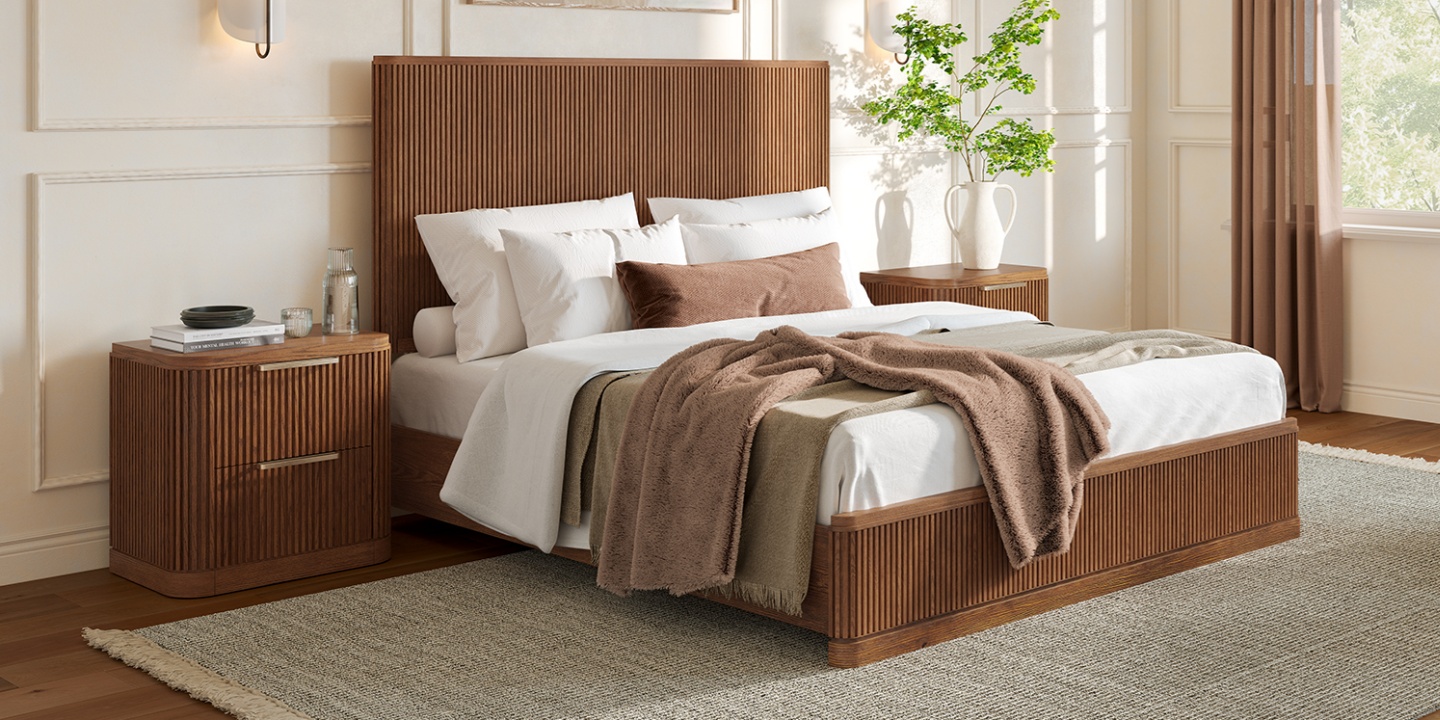
The Finnley King Size Fluted Bed offers a fluted headboard that can create a defined focal point. Before choosing a bed, check its current product specifications, overall dimensions, and the space required around the frame.
If the bed must sit against a window wall, consider privacy, drafts, light control, and whether the window can still be opened safely. A solid wall is a traditional preference, not a reason to compromise the room's practical needs.
3. Keep the Bedside Area Balanced
In many Feng Shui arrangements, two nightstands create a sense of symmetry, particularly in a shared bedroom. They also give each person a convenient place for a lamp, book, or other nighttime essentials.
Matching nightstands are not essential, though. Coordinated pieces with similar proportions or finishes can create a balanced look without being identical.
Before adding two tables, measure the space on both sides of the bed. Check that drawers can open fully and that the furniture does not make it difficult to walk around the bed.
In a narrow room, one compact nightstand may be more useful than two oversized pieces. The layout should support comfortable movement rather than forcing symmetry where there is not enough space.
4. Reduce Clutter Without Removing Everything Personal
Traditional Feng Shui often associates clutter with stagnant energy. In everyday use, clutter can also make a bedroom harder to clean and navigate.
Start with the areas that tend to collect the most items:
Put away clothing instead of leaving it on chairs or at the foot of the bed.
Keep bedside tables limited to frequently used essentials.
Store spare bedding in a closet or designated drawer.
Move boxes and baskets away from the main walking path.
Make sure closet doors and dresser drawers can open fully.
You do not need to remove every decorative object. A few photographs, books, or meaningful accessories can make the room feel personal. The aim is to avoid letting belongings take over the surfaces and floor space you need.
5. Use Lighting to Support a Comfortable Routine
A bedroom needs enough light for dressing, reading, and finding your way around, but bright or poorly positioned lights can feel uncomfortable when you are winding down.
Consider combining general room lighting with bedside lamps or adjustable reading lights. If two people share the room, separate reading lights may be more useful than relying on one central fixture.
During the day, natural light can make the space feel brighter and more inviting. At night, suitable window coverings and lower, more comfortable lighting can help reduce unwanted brightness.
These are practical considerations for a comfortable bedroom environment. They do not depend on proving that a particular lighting arrangement changes the flow of qi.
Where to Place Your Bed for Good Feng Shui
The right bed position depends on the location of the entrance, windows, closet, and other furniture. The command position is a useful traditional starting point, but it should be adapted to the actual room.
Against a Suitable Wall
When possible, place the headboard against a wall that allows the bed to sit securely without blocking a window or door. This can create a clear focal point and leave space for bedside furniture.
Measure the bed before moving it. Include the frame and headboard in your measurements, not just the mattress. Then check how much room remains for nightstands and walking paths.
If a window wall is the only workable option, focus on privacy, temperature, light control, and safe access to the window.
Within View of the Door
Traditional Feng Shui often recommends being able to see the bedroom entrance from the bed without placing the bed directly in line with the doorway.
If your room allows this, think about how the doorway affects the whole layout rather than simply centering the bed on the largest wall. A slightly off-center position may leave more useful space for a dresser or closet access.
If the bed must face the door, there is no need to create an awkward layout just to avoid the alignment. Keep the route clear and make sure the bed does not interfere with the door's swing.
What Direction Should Your Bed Face?
There is no universally established compass direction that guarantees better sleep. Different Feng Shui traditions may recommend different orientations, and current scientific evidence does not establish north, south, east, or west as the best direction for everyone.
Instead of choosing a direction solely because of a rule, consider whether the bed position provides comfortable access, privacy, and suitable control of light and noise.
For additional information about sleep position and bedroom comfort, see the Sleep Foundation.
How to Work Around a Difficult Layout
If the bed faces the door: Keep the entrance clear and make sure the bed does not obstruct the main path. Consider another position only if it improves the room's function.
If the bed must sit beneath a window: Check for drafts, exterior lighting, and privacy concerns. Choose suitable window coverings and make sure the window remains safely accessible.
If the bedroom is narrow: Try placing the bed against a shorter wall if the door and closet locations permit it. A compact nightstand or wall-mounted shelf can preserve floor space.
If several doors interrupt the walls: Choose the arrangement that leaves the clearest route between the entrance, bed, and closet. Practical access matters more than following an idealized layout.
How to Create Positive Energy in Your Bedroom
In Feng Shui, positive energy is often associated with balance, order, and a space that feels welcoming. You can apply these ideas through color, lighting, texture, and personal touches without treating energy flow as a scientifically measured effect.
Choose Colors and Materials That Work Together
Warm neutrals, earthy shades, and natural-looking finishes can help create a cohesive bedroom. These are options rather than Feng Shui requirements; choose colors that suit the room's natural light and your personal taste.
If you already have several wood finishes, look for compatible undertones instead of trying to match every piece exactly. Soft bedding and a rug can help connect different materials visually.
Keep Reflections and Screens from Becoming Distracting
Some Feng Shui traditions recommend avoiding a mirror directly opposite the bed. If you prefer to follow this guidance, consider placing the mirror on a side wall or inside a closet door.
From a practical perspective, look at whether the mirror reflects a bright window, creates unwanted glare, or makes the room feel visually busy. If none of these issues applies, its position may not need to change.
Electronics are not automatically incompatible with Feng Shui. However, notifications, bright screens, and work reminders can distract some people at bedtime. If that sounds familiar, silence notifications, dim screens, or charge your phone away from the bed.
Make Room for Personal Comfort
A bedroom should reflect the people who use it. A favorite book, a framed photograph, comfortable bedding, or a small piece of meaningful decor can make the space feel more inviting.
Rather than following a strict list of objects that must be removed, consider how each item affects the room. Keep things that contribute to comfort or serve a purpose, and relocate items that make the space feel crowded or remind you of unfinished tasks.
Feng Shui Nightstand Placement: What Belongs Beside the Bed?
Nightstands should be easy to reach without making it difficult to move around the bed. Their height, width, and storage capacity matter more to daily use than whether they are an exact matching pair.
How Many Nightstands Do You Need?
Two nightstands are a common choice for a shared bedroom. They provide separate storage and can frame the bed symmetrically.
In a small room, one nightstand may be enough. A wall-mounted shelf on the other side can provide a place for essentials without taking up as much floor space.
When comparing options, check the tabletop height against the mattress, the width available on each side, and the clearance needed to open drawers.
Explore Hernest's nightstands collection to compare options for different bedroom layouts.
What Should You Keep on a Nightstand?
A useful bedside setup might include:
A lamp or reading light.
A book or e-reader.
Glasses or other small essentials.
A stable surface for a glass of water.
One or two personal items.
Leave some of the tabletop clear so you have room for items you use at night and can clean the surface easily.
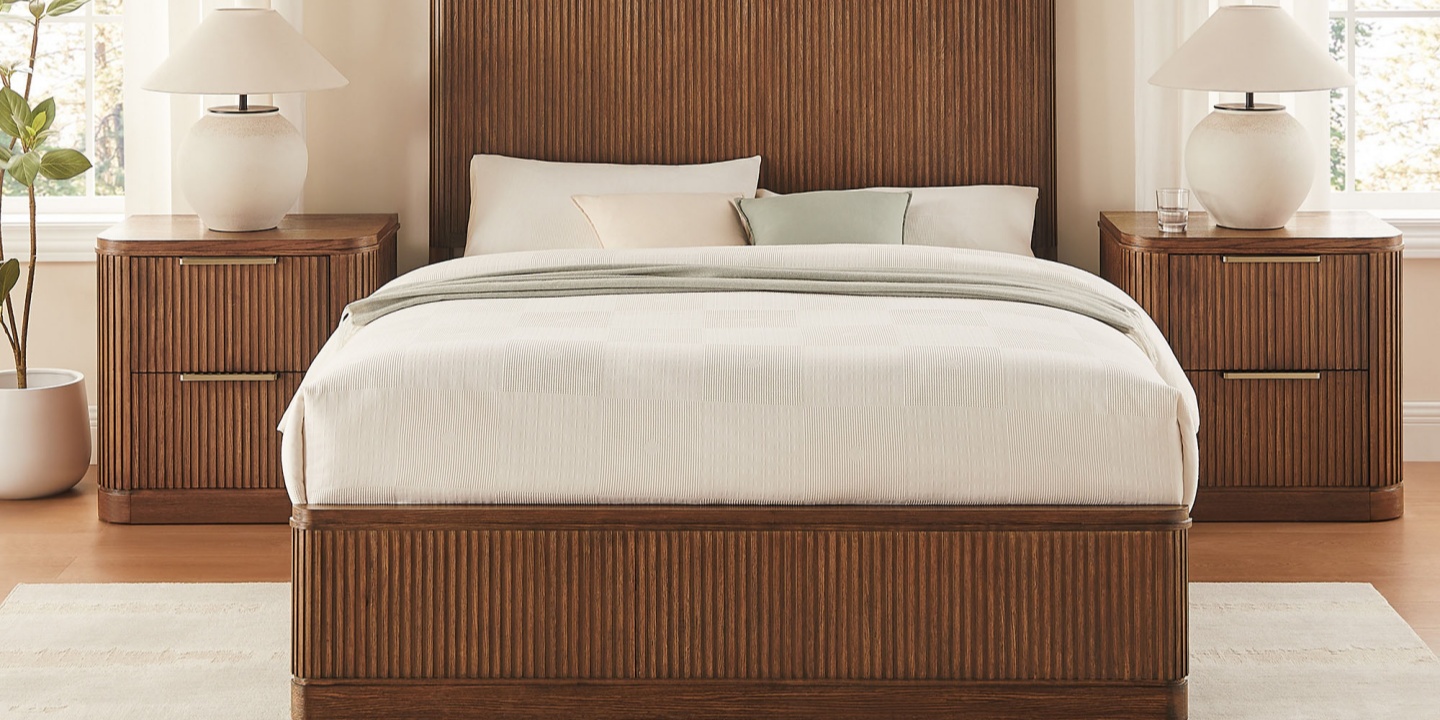
The Finnley 26-Inch Fluted Nightstand is an option to consider if you want a coordinated look with the Finnley bed. Check the current product dimensions and storage details before deciding whether it fits your needs.
What Should You Avoid on a Nightstand?
Try not to let the nightstand become a catchall for laundry, paperwork, unopened packages, and miscellaneous accessories. These items can crowd the surface and make everyday essentials harder to find.
If you use your phone as an alarm, keep it accessible while limiting unnecessary notifications. Store work documents elsewhere if seeing them at bedtime makes it harder to relax.
The objective is a convenient bedside area, not a rigid list of forbidden items.
Where to Place a Dresser in Feng Shui
A dresser provides valuable storage, but its location can affect how easily you move through the bedroom. Traditional Feng Shui generally favors a layout that feels balanced and does not obstruct movement.
Choose a Wall That Leaves Enough Clearance
A dresser often works well against a wall that does not interfere with the bedroom entrance, closet, or main walking path.
Measure its width and depth, then account for the space needed to open drawers and stand in front of them. A dresser may fit against a wall but still make the room awkward to use once the drawers are open.
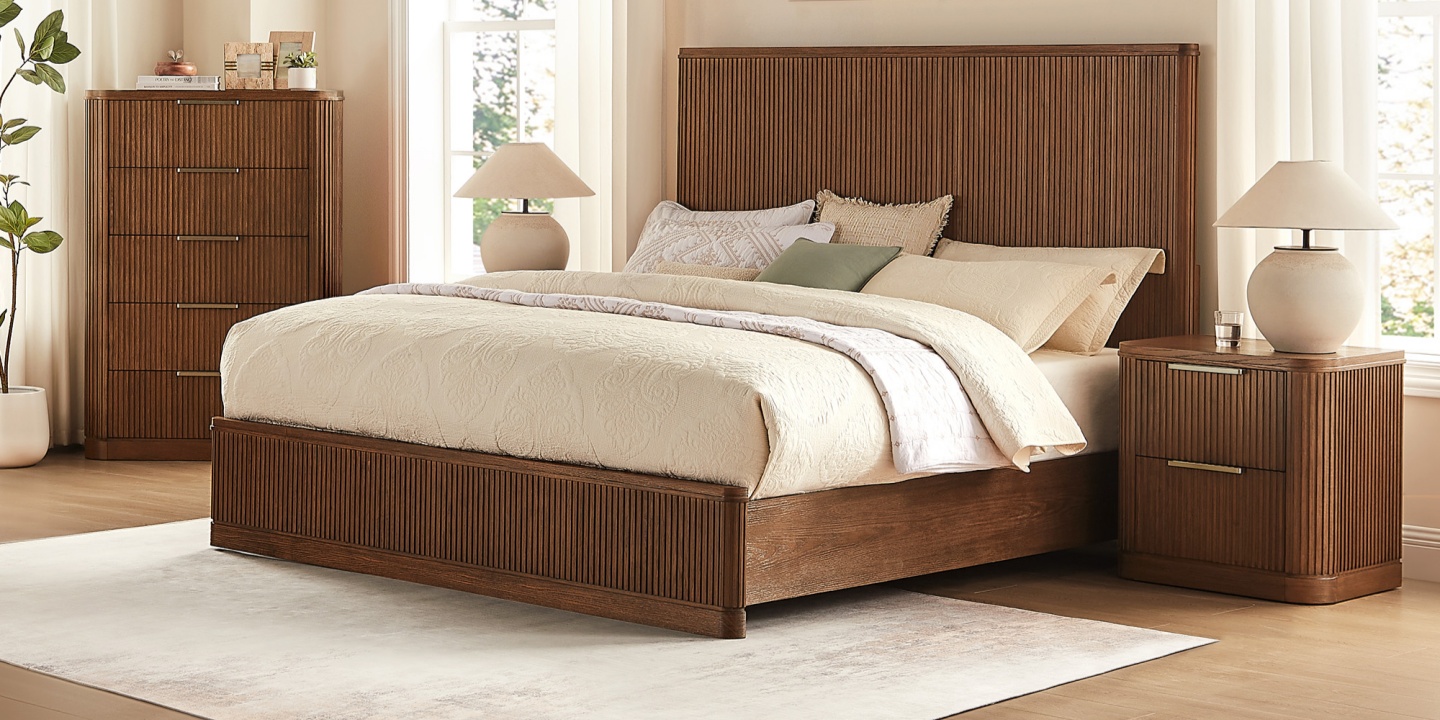
The Finnley Fluted 5-Drawer Chest offers a coordinated fluted look for bedroom storage.
Should a Dresser Face the Bed?
Some Feng Shui practitioners prefer not to place a dresser mirror directly opposite the bed. This is a traditional preference, not a universal requirement.
If the dresser faces the bed, consider whether it dominates the room visually or whether its mirror reflects light in a distracting way. If neither is an issue, there may be no practical reason to move it.
Check Drawer and Door Clearance
Open every drawer fully before deciding that a dresser fits. Make sure it does not block the bedroom door, closet, or access to the bed.
If space is limited, a narrower chest may work better than a wide dresser. Secure furniture according to the manufacturer's instructions, particularly in homes with children or pets.
Feng Shui Bedroom Layout Ideas by Room Size
The best layout depends on the location of doors and windows as well as the room's overall dimensions. Use the table below as a starting point, then measure your own space before buying or moving furniture.
Small Bedroom
In a small bedroom, prioritize the bed and walking space before adding extra storage.
Place the bed against a suitable wall.
Use one compact nightstand if two would crowd the room.
Consider vertical storage where it does not interfere with movement.
Keep the route to the door clear.
Use wall-mounted lighting if bedside surfaces are limited.
A small room does not need identical furniture on both sides of the bed to feel balanced. Coordinated finishes and an uncluttered floor can create a cohesive appearance without taking up more space.
Medium-Sized Bedroom
A medium-sized bedroom may have enough room for a centered bed, two nightstands, and a dresser.
Leave access on both sides of the bed when possible.
Coordinate bedside furniture and lighting.
Position the dresser where drawers can open fully.
Use a rug to define the sleeping area without blocking doors.
Before buying new furniture, sketch the room and mark the dimensions of each piece. Include the space needed to open drawers and walk around the bed, rather than measuring only the furniture footprint.
Large Primary Bedroom
A large bedroom can accommodate more furniture, but filling every empty corner may make it feel crowded.
Use the bed as the main focal point.
Choose nightstands proportionate to the bed.
Place the dresser where it preserves clear circulation.
If space permits, create a separate reading or seating area.
In a large room, the challenge is often defining the sleeping area. A rug, coordinated bedside furniture, and well-placed lighting can help the bed feel connected to the rest of the room.
A Practical Feng Shui Bedroom Layout Example
Imagine a rectangular bedroom with one entrance, a window on the opposite wall, a king-size bed, two nightstands, and a five-drawer chest.
Start by marking the entrance, window, and closet. Find a wall that can accommodate the bed while leaving enough space to get in and out on both sides. If possible, position the bed so the entrance remains visible without placing the bed directly in line with the doorway.
Next, place the nightstands beside the bed. Check that the drawers open fully and that you can walk around the furniture without turning sideways. If the room is too narrow for two tables, use one nightstand and consider a wall-mounted shelf on the other side.
Position the chest against a wall where its drawers can open without obstructing the entrance or closet. Finally, check the room at night: make sure the route to the door is clear, the lighting is comfortable, and the window coverings provide the privacy and darkness you prefer.
This arrangement applies several common Feng Shui ideas while keeping the focus on the room's actual dimensions. If a traditional recommendation does not fit your floor plan, adapt it rather than sacrificing comfort or access.
Final Thoughts: Build a Bedroom Around Your Needs
A feng shui bedroom layout does not require perfectly matched furniture or strict rules about every object. Start with a bed position that works for the room, then arrange nightstands and storage around the space you have.
Keep pathways clear, check drawer and door clearance, and choose lighting that suits your evening routine. If you follow traditional Feng Shui principles, use them as a guide alongside practical considerations such as privacy, comfort, and the dimensions of your furniture.
The best layout is one you can move through easily and feel comfortable using every day.
FAQs
What should I avoid in a feng shui bedroom?
Common Feng Shui recommendations include reducing clutter, keeping walking paths clear, and avoiding a bed position that feels exposed or sits directly in line with the door. Some traditions also advise against mirrors facing the bed. These are traditional guidelines rather than universal scientific rules, so prioritize comfort, accessibility, and a bedroom environment that suits your needs.
What direction should your bed face?
There is no universally established compass direction that guarantees better sleep. Different Feng Shui traditions have different views on bed orientation, while many emphasize the command position: placing the bed where you can see the bedroom door without being directly aligned with it. Choose an arrangement that also provides comfortable access, privacy, and suitable control of light and noise.
What are the feng shui rules for bedrooms?
Common feng shui bedroom rules include positioning the bed thoughtfully, using a stable headboard, keeping pathways clear, and arranging furniture in a balanced way. Matching nightstands can create visual symmetry, but they are not essential if the room is too small. Adapt traditional principles to your bedroom's dimensions and daily needs.
What should not be kept in the bedroom?
There is no universal list of items that must be removed from every bedroom. Work paperwork, unnecessary electronics, laundry, and objects that create clutter may be worth moving elsewhere if they interfere with your bedtime routine. Some Feng Shui traditions also recommend keeping the space beneath the bed clear. Focus on cleanliness, comfort, and how you use the room.
Where to place a dresser in Feng Shui?
A dresser is often placed against a wall that does not obstruct the bedroom entrance or the main route around the bed. Leave enough room to open its drawers fully and stand in front of them comfortably. Some Feng Shui practitioners prefer not to position a dresser mirror directly opposite the bed, but the best location depends on your layout and preferences.
Where should you place a bed in a feng shui bedroom layout?
Many Feng Shui traditions recommend the command position, where you can see the bedroom door while lying in bed without being directly in line with the entrance. A wall behind the headboard is also commonly preferred. If your room's windows, doors, or dimensions limit your options, prioritize a stable bed position, comfortable movement, privacy, and suitable light control.
Should you have two nightstands in a feng shui bedroom?
Two nightstands are traditionally favored in many shared-bedroom layouts because they create visual balance and provide convenient space for both sleepers. However, they are not necessary in every room. If space is limited, one compact nightstand or a wall-mounted shelf may be more practical. Choose pieces that fit the bed without narrowing the walking paths.
Is it bad feng shui to have a mirror facing your bed?
Some Feng Shui traditions recommend avoiding a mirror directly opposite the bed. This is a traditional belief, not a scientifically established rule about sleep quality. Consider whether the mirror reflects bright light, creates distracting reflections, or makes the room feel visually busy. If it bothers you, move it to another wall or use a closet-mounted mirror.
Is it good feng shui to store things under the bed?
Many Feng Shui practitioners prefer keeping the space beneath the bed clear. If you need extra storage, organized containers for spare bedding or seasonal blankets can be a practical option. Keep the area accessible for cleaning and follow the bed manufacturer's ventilation and clearance guidance. The belief that stored objects block energy is a traditional Feng Shui concept rather than an established physical effect.
How can you create positive energy in a feng shui bedroom?
In Feng Shui, positive energy is commonly associated with balance, clear pathways, and an uncluttered environment. Start by positioning the bed thoughtfully, arranging nightstands to suit the available space, and placing the dresser where drawers can open freely. Comfortable lighting, suitable window coverings, and colors you enjoy can also help create a bedroom that feels inviting and functional.