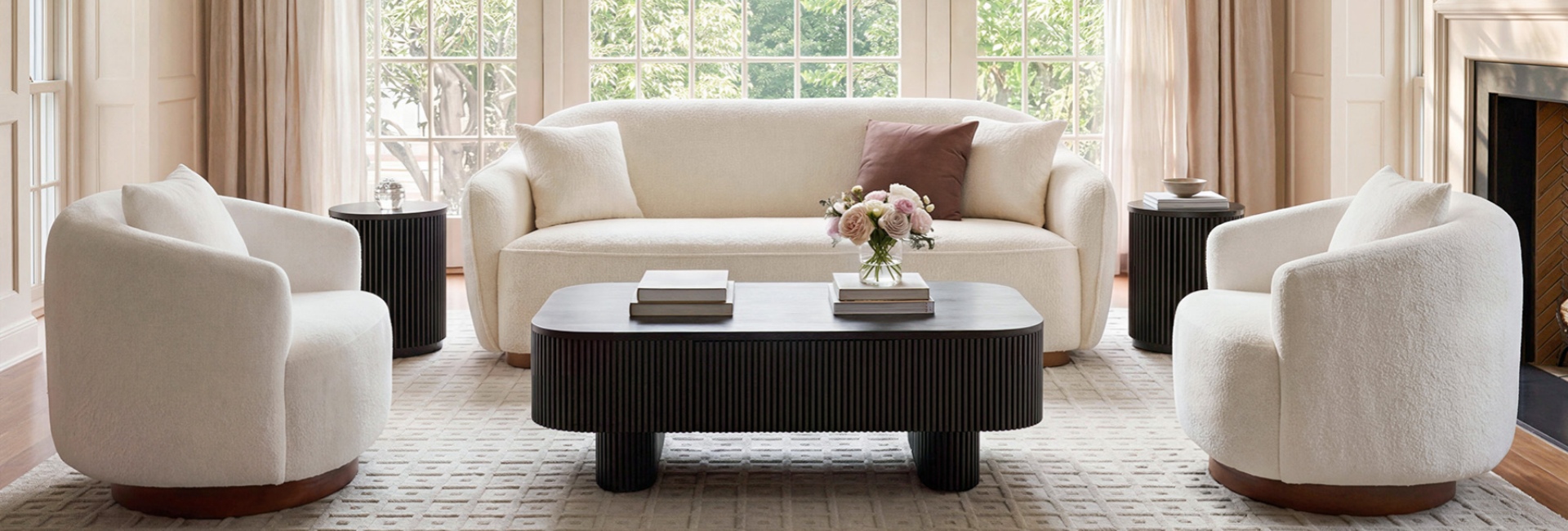
Black living room furniture can give a space a defined, sophisticated look, but too many dark surfaces may make the room feel visually heavy. The difference often comes down to furniture proportions, finishes, and the materials surrounding each piece. By balancing black with natural wood, lighter textiles, and well-placed lighting, you can create a cohesive living room without making it feel overwhelming.
So, is black living room furniture a good choice? Yes. Black works particularly well as a grounding element when paired with lighter walls, warm wood, varied textures, and thoughtful lighting. Rather than furnishing an entire room with matching dark pieces, start with one or two larger items and repeat the color through smaller accents.
This guide explains how to choose black furniture, combine different finishes, coordinate colors and materials, and arrange pieces according to your living room's size and layout.
Table of Contents
- Is Black Living Room Furniture Still in Style?
- Does Black Furniture Make a Room Look Smaller?
- How to Build a Black Living Room Without Buying a Matching Set
- How to Choose Black Living Room Furniture
- How to Mix Black Furniture Finishes, Colors, and Textures
- How to Choose Black Furniture for Different Living Room Sizes
- How to Measure and Arrange Black Living Room Furniture
- How to Light a Living Room With Black Furniture
- How to Clean and Maintain Black Furniture
- FAQs
- Is black living room furniture in style?
- Does black furniture make a room look smaller?
- What colors go best with black living room furniture?
- Should a black media console be wider than the TV?
- Can you mix black and brown furniture?
- Does black furniture work in a small living room?
- What lighting works best with black furniture?
- How far should a coffee table be from the sofa?
Is Black Living Room Furniture Still in Style?
Yes. Black remains a versatile furniture color because it works across several interior styles, from modern minimalist spaces to mid-century modern and contemporary interiors. Its appeal comes from its ability to provide contrast, define furniture silhouettes, and complement a wide range of materials.
The way black furniture is styled makes a significant difference. Matching sets with glossy surfaces and heavy silhouettes can create a dated appearance, while individual pieces with visible wood grain, textured details, or understated finishes offer more visual variety.
Black also works well with warmer interior palettes. Cream upholstery, natural oak, walnut accents, and brass-toned details soften its appearance without taking away its definition.
Why the Finish Matters More Than the Color
Two black furniture pieces can create very different impressions depending on their surface treatments and construction details.
-
Matte and satin finishes: These create a subdued appearance with less surface reflection than high-gloss finishes. Their resistance to fingerprints and dust depends on the material and surface treatment.
-
Black oak and black ash: Visible wood grain adds natural variation, preventing a dark surface from looking completely flat. These finishes also introduce the texture of wood into a darker color palette.
-
High-gloss black: Reflective surfaces can bounce light around a room, but fingerprints, smudges, and dust may be more noticeable.
-
Black metal frames: Slim metal legs and open frames introduce black through narrower visual lines rather than large solid surfaces. Pairing them with an oak or walnut top creates a balanced combination of dark and natural materials.
When choosing black living room furniture, consider the finish alongside the shape, material, and amount of visible surface area. A textured black wood console may look quite different from a glossy cabinet, even when both share a similar color.
How to Make Black Furniture Look Current
A room filled with matching glossy black furniture can look visually uniform. A more layered approach combines different silhouettes, finishes, and materials.
For example, a black media console can provide a strong focal point beneath a television, while an oak coffee table and cream-colored seating introduce contrast. A black metal lamp or a dark picture frame can repeat the furniture color without adding another substantial dark surface.
If you already have glossy black furniture, there is no need to replace it simply because the finish feels less current. Woven textiles, matte ceramics, natural wood accessories, and warm lighting can introduce variation and soften the overall look.
Does Black Furniture Make a Room Look Smaller?
Not necessarily. Dark furniture changes how a room's surfaces and boundaries are perceived, but its effect depends on more than color alone. Furniture proportions, contrast, natural light, and visible floor space all influence how open a living room feels.
A black console against a light wall creates distinct visual contrast, while a dark piece against a similarly toned wall blends more closely into its surroundings. Neither approach is automatically better. The right choice depends on the atmosphere and visual definition you want.
Contrast Is the Real Variable
High contrast, such as black furniture against white walls, creates a crisp and graphic appearance. The outlines of individual pieces become more noticeable, which can work particularly well in rooms with sufficient space and natural light.
Lower contrast softens the visual boundary between furniture and walls. For example, charcoal furniture against a warm gray wall creates a more continuous color scheme. This can make large furniture pieces feel less visually prominent.
In smaller living rooms, consider combining lighter walls, warm flooring, and dark furniture with relatively open silhouettes. The goal is to balance definition with enough visual breathing room.
Three Details That Control Visual Weight
Visual weight describes how substantial a furniture piece appears within a room. Its perceived weight does not always correspond directly to its physical dimensions.
Three design details can make a noticeable difference:
1. The base
Furniture raised on legs reveals more of the floor underneath. This visible floor space can make a piece appear less bulky than a similar cabinet with a solid base extending to the floor.
2. Surface reflectivity
Glass, polished metal, and glossy finishes reflect light differently from matte wood. Reflective elements can introduce highlights and visual variation, although their effect depends on the surrounding lighting.
3. The silhouette
Open shelving, slim frames, curved edges, and cutout details can make dark furniture feel less visually dense. Wall-mounted furniture also leaves more floor visible than a comparable freestanding cabinet.
When choosing black furniture, consider all three details rather than relying on color alone to determine whether a piece will suit your space.
How to Build a Black Living Room Without Buying a Matching Set
A coordinated living room does not require every furniture piece to come from the same collection. Combining different shapes and materials can create a more balanced result.
Start with one larger black piece, repeat the finish through smaller details, and introduce lighter materials to keep the room from looking uniform.
Start With One Anchor
Choose the largest dark furniture piece first. In many living rooms, this will be the sofa or media console.
If the sofa already has a strong color or pattern, a black media console can provide a more controlled way to introduce the darker tone. If the sofa is black, consider a lighter coffee table or natural wood side tables to break up the visual weight.
One prominent black piece can establish a clear color direction without requiring every other item to match.
Repeat the Tone Through Smaller Accents
A single black furniture piece can look disconnected if the color does not appear anywhere else in the room. Repeating black through two or three smaller elements can help create visual continuity.
Consider coordinating:
-
A black media console with black lamp bases.
-
A black coffee table with dark picture frames.
-
Black furniture legs with a black metal floor lamp.
-
A black side table with dark decorative accessories.
The finishes do not have to be identical. Similar tones and complementary shapes are often enough to establish visual continuity.
How to Choose Black Living Room Furniture
Once the overall color palette is established, consider how each furniture piece will function in the room. Media consoles, coffee tables, side tables, and console tables serve different purposes, so their dimensions, storage layouts, and silhouettes should be evaluated separately.
Choose a Black Media Console That Fits the Wall and the TV
A media console is often one of the largest furniture pieces in a living room. It provides a surface for the television, storage for media accessories, and a visual foundation for the entertainment area.
Two important considerations are its width relative to the television and the amount of storage it provides.
As a general design guideline, choose a console at least as wide as the television, with a few extra inches on either side when space allows. This creates a balanced arrangement and provides room for accessories.
Console height also matters. Consider the television's dimensions, stand height, and your usual seated viewing position together rather than relying on a fixed furniture-height range.
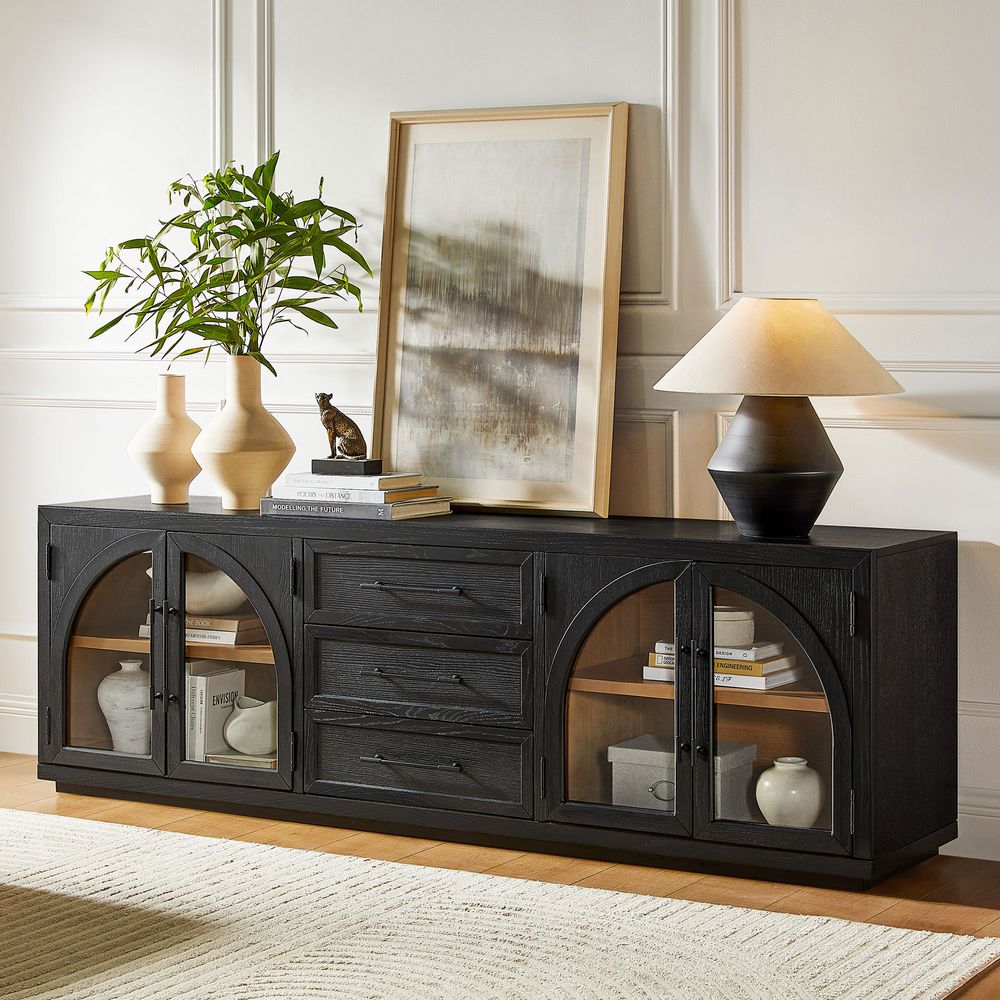
Here are two black oak options with different visual characteristics and storage configurations:
The Valborg 80-Inch Oak Media Console combines a dark wood finish with arched design details. Its wire-brushed appearance brings out the wood grain, while four cabinet doors and three drawers provide enclosed storage for everyday living room essentials. Dovetail-jointed drawers and cord management features add practical details to its design.
For a more sculptural appearance, consider the Skimra 84-Inch Oak Media Console. Its wave-inspired fluting creates texture across the front, breaking up the appearance of a wide dark surface. Three dovetail drawers, adjustable shelves, and four cord cutouts provide additional storage and cable-management options.
The main distinction is the storage arrangement and visual treatment: Valborg emphasizes enclosed cabinet storage, while Skimra combines drawers with adjustable shelving and a more pronounced textured front.
What to Check Before You Buy
-
Measure the available wall width and leave enough clearance around the console.
-
Check the depth against nearby walkways and seating arrangements.
-
Count the cord cutouts needed for your television and connected devices.
-
Confirm that the television stand and its feet fit securely on the console surface.
-
Check the console's weight, delivery requirements, and assembly details before ordering.
Explore our media consoles collection to compare widths, finishes, and storage configurations.
Valborg 80-Inch Oak Media Console
View Product
Skimra 84-Inch Oak Media Console
View ProductPick a Black Coffee Table Based on Shape and Function
A coffee table introduces another dark surface at a lower level, helping define the seating area without taking attention away from the television wall. Its shape and functionality should work with the sofa and available walking space.
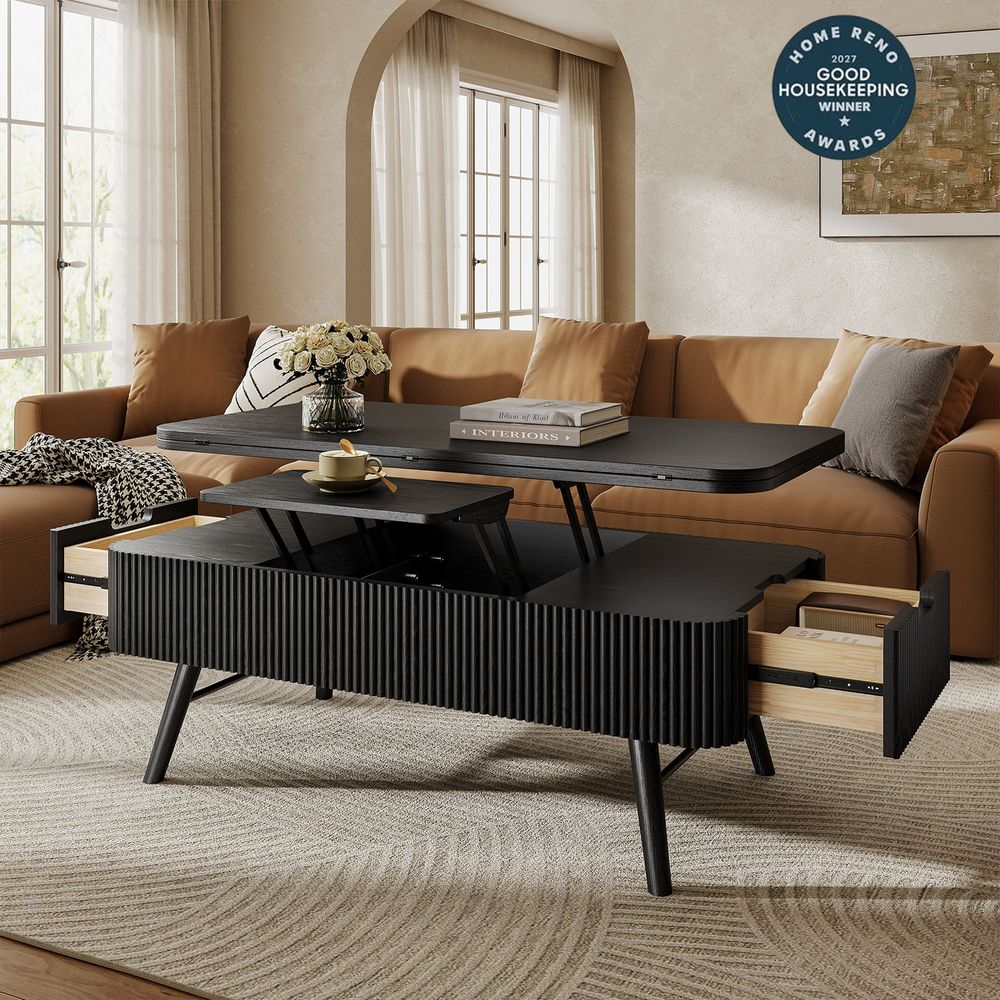
Two useful options are a rectangular lift-top table with additional storage and a round design with softer edges.
The Magnus 47-Inch Lift-Top Coffee Table suits living rooms where the coffee table may also serve as a convenient work or dining surface. Its lift-top design raises the surface for easier access, while hidden storage and a drawer provide additional space for organizing everyday items.
For a softer silhouette, the Rolf 42-Inch Round Oak Coffee Table features a rounded profile, fluted detailing, and a raised base. Its curved shape can help reduce sharp corners around a seating arrangement and create a visual contrast with rectangular sofas and media consoles.
The choice depends on how the table will be used. Magnus prioritizes an adjustable surface and concealed storage, while Rolf emphasizes a rounded shape and decorative detailing.
How Much Space to Leave
The distance between a sofa and coffee table affects both comfort and circulation.
A commonly recommended starting point is 14–18 inches between the sofa and coffee table. This provides convenient access while leaving room for movement.
For the rest of the seating area:
-
Aim for approximately 36 inches for main walkways where space permits.
-
Allow around 30–36 inches between major furniture pieces when the layout permits.
-
Check that drawers and lift-top surfaces can open without hitting nearby furniture.
-
Consider the table's full footprint, including its base, before choosing a location.
These measurements are guidelines rather than fixed requirements. Adjust them according to the sofa depth, table shape, available floor space, and household needs.
A useful way to check proportions is to mark the intended table dimensions on the floor with painter's tape. This makes it easier to assess walking space before purchasing.
Explore our coffee tables collection to compare shapes, finishes, and functional features for different seating arrangements.
Magnus 47-Inch Lift-Top Oak Coffee Table
View Product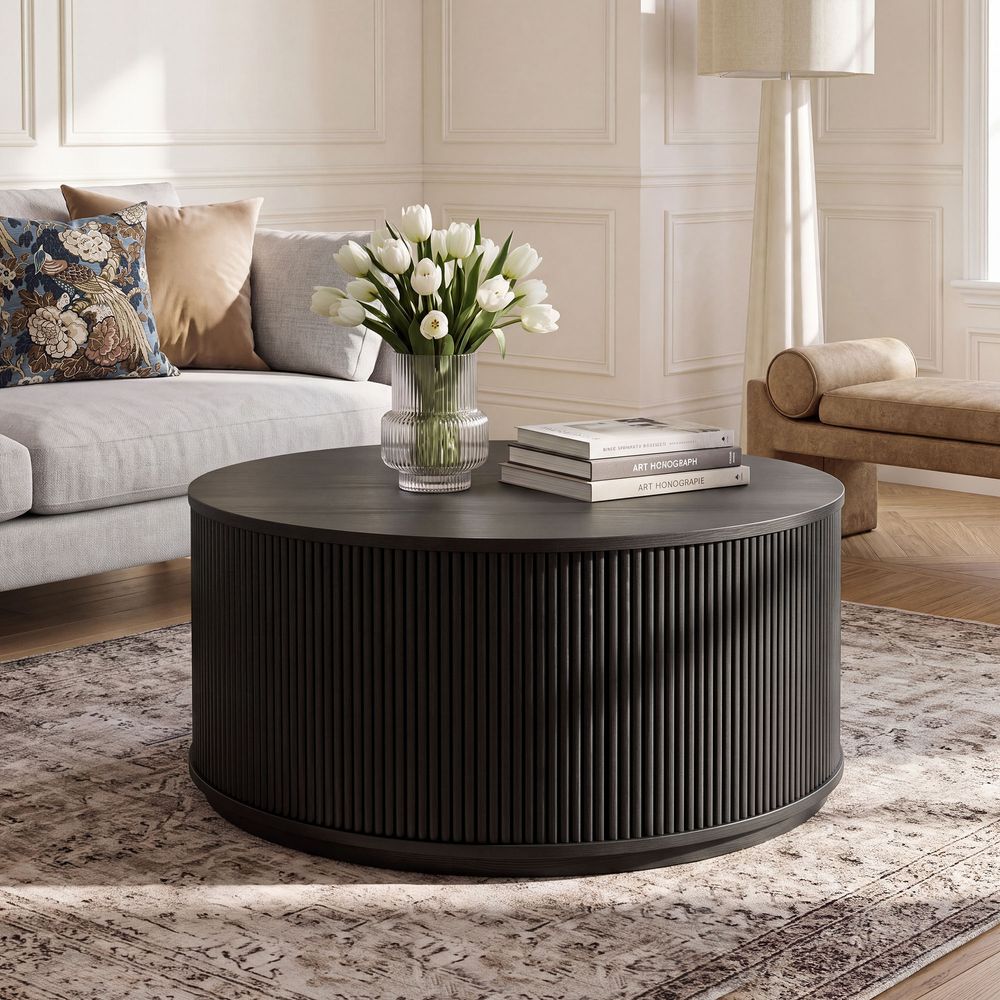
Rolf 42-Inch Round Oak Coffee Table
View ProductChoose a Black Side Table for Everyday Function
Side tables offer a practical way to introduce black into a living room without adding another large furniture piece. They provide convenient surfaces for lamps, books, drinks, and decorative accessories.
Their compact size also makes them useful in smaller seating areas where a larger table may interfere with circulation.
The Elliot 16-Inch Solid Wood Side Table combines a compact round profile with fluted detailing. Its concealed storage and open shelving offer different ways to organize smaller living room essentials while keeping the tabletop available for everyday use.
For a slightly larger surface, the Skimra 18-Inch Oak Side Table carries the wave-inspired detailing associated with the Skimra collection. Its dark oak finish and textured design can coordinate with a larger media console without requiring an identical furniture set.
These two options serve different needs: Elliot provides multiple storage areas within a compact footprint, while Skimra offers a coordinated textured appearance that can complement other pieces in the same collection.
Side tables can be purchased as a matching pair when placed on either side of a sofa, but they do not have to match the coffee table. Combining a dark side table with a lighter wood coffee table introduces variation while maintaining a coordinated palette.
Browse our side tables collection for more compact designs that complement different seating arrangements.

Elliot 16-Inch Solid Wood Side Table
View Product
Skimra 18-Inch Oak Side Table
View ProductUse a Black Console Table to Add Storage and Definition
A console table can introduce a dark accent without occupying as much floor space as a deeper cabinet. It works behind a sofa, along an open wall, or in an entry area connected to the living room.
The main decision is whether a floating or freestanding design better suits the available space.
Floating Versus Freestanding
A floating console table attaches to the wall and leaves the floor underneath visible. This can create a lighter appearance and make cleaning easier. However, secure installation is essential. The mounting method should suit the wall construction and the furniture's weight.
A freestanding console table does not require wall mounting and can be repositioned more easily. It may also provide a more substantial visual presence, depending on its base and storage design.
-
Floating: Leaves more visible floor space and works well in narrow areas, but requires appropriate wall anchoring.
-
Freestanding: Offers flexible placement and may provide additional storage, but occupies more visible floor area.
The Rolf 47-Inch Floating Console Table combines a wall-mounted design with a black oak finish. Its fluted detailing adds surface texture, while the drawers provide storage for smaller items that might otherwise clutter the tabletop. It is a practical option when floor clearance is a priority.
For a freestanding alternative, the Vidar 47-Inch Console Table features a deep black ash appearance and repeated arch details. Its wood grain adds variation to the dark finish, while its concealed drawers offers a discreet place for smaller essentials. The freestanding structure provides a more decorative presence along a wall or behind a sofa.
Before selecting a console table, measure both its width and depth. A narrow-looking design can still interfere with circulation if the available walkway is limited.
Explore our console tables collection to compare wall-mounted and freestanding designs.

Rolf 47-Inch Floating Console Table
View Product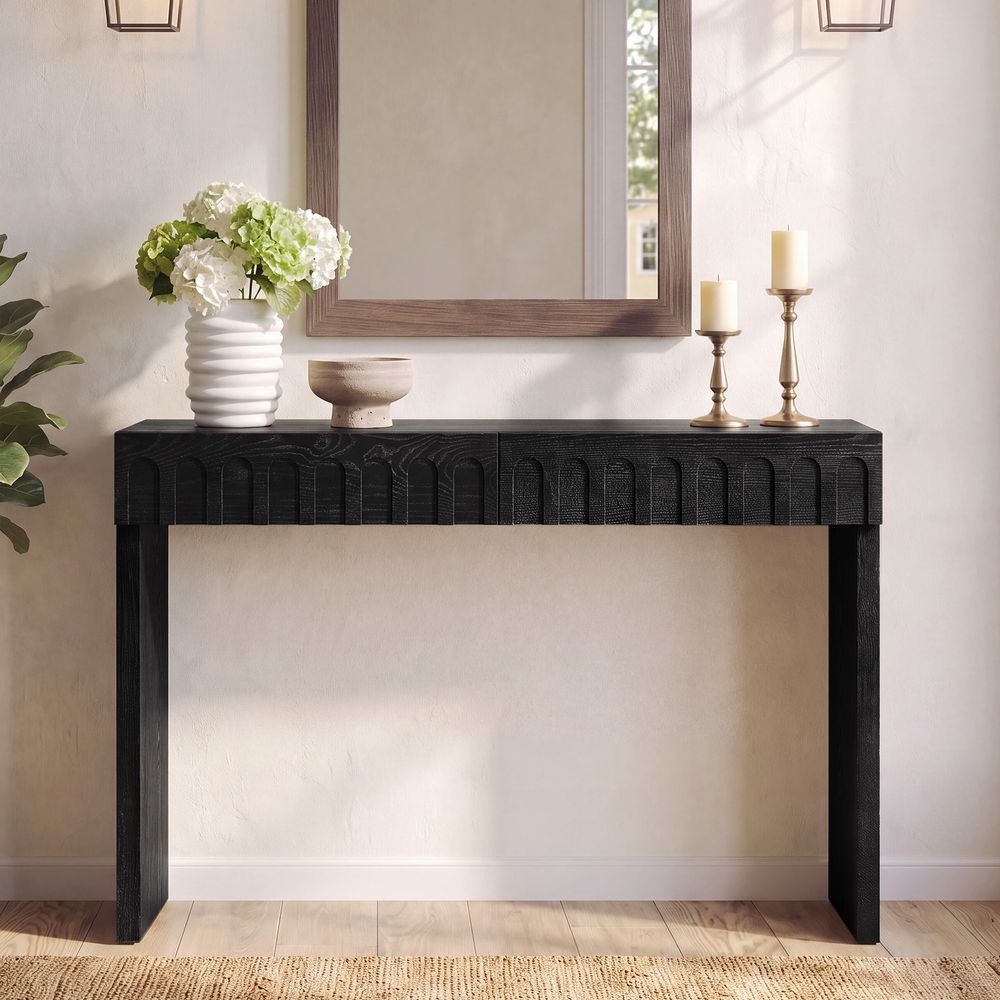
Vidar 47-Inch Console Table
View Product
How to Mix Black Furniture Finishes, Colors, and Textures
Black furniture does not need to have exactly the same finish throughout a room. Combining different textures and complementary colors can make a dark palette more visually interesting, provided the pieces share a consistent overall color direction.
Combine Black Oak and Black Ash
Black Oak and Black Ash finishes both introduce dark wood tones, but their grain patterns and surface appearances may differ. Combining these finishes can create subtle variation without moving away from the black furniture palette.
For example, a black oak media console can anchor the television wall, while a black ash console table introduces another dark finish elsewhere in the room. The pieces do not need identical grain patterns to coordinate.
Pair Black With Natural Wood
Natural oak, walnut, and ash introduce warmth and organic texture. A black media console paired with a lighter oak coffee table is one example of how different wood tones can work together.
A lighter coffee table or side table can balance a darker media console while maintaining a coordinated material palette. Pay attention to undertones and grain patterns rather than trying to match every wood finish exactly.
Use Warm Neutrals to Soften Contrast
Cream, ivory, and warm off-white soften the contrast between dark furniture and lighter surfaces. They work well on walls, upholstery, rugs, and curtains.
Compared with stark white, warmer neutrals can create a softer transition between black furniture and the rest of the room.
Introduce Brown, Green, and Metallic Accents
Chocolate brown and cognac can create a rich, layered palette with black. Use differences in tone and texture to distinguish the materials, and introduce a lighter rug or cream-colored upholstery to separate darker surfaces.
Deep green, olive, and muted mustard are useful accent colors for cushions, artwork, and decorative accessories. They add depth without requiring another large furniture piece.
Brass-toned lamps, picture frames, and furniture hardware can also add warmth. Repeating one or two metallic finishes helps keep the room visually consistent.
Balance Smooth and Textured Surfaces
A room with too many smooth, dark surfaces can appear visually flat. Fluted wood, visible grain, woven textiles, and matte ceramics introduce surface variation.
Consider combining:
-
A fluted black coffee table with a simpler media console.
-
A smooth black cabinet with a textured wood side table.
-
Woven rugs with dark wood furniture.
-
Linen or cotton upholstery with black metal details.
-
Matte ceramic accessories with reflective metallic accents.
The goal is to create contrast through material and texture, not simply by adding more colors.
How to Choose Black Furniture for Different Living Room Sizes
The best furniture arrangement depends on the room's dimensions, natural light, and circulation needs. Black furniture can work in both compact and spacious living rooms, but the scale and silhouette of each piece should suit the available space.
Small Living Rooms
Choose furniture with suitable proportions, visible legs, or open bases to keep more floor area visible. A compact side table may be more practical than adding another large cabinet.
Use lighter walls, rugs, and upholstery to create contrast, and avoid placing too many substantial dark pieces close together.
Large Living Rooms
Larger spaces can accommodate wider media consoles, substantial coffee tables, and multiple seating pieces. A black media console can establish a focal point along a wide wall, while smaller dark accents can repeat the finish elsewhere.
Rooms With Limited Natural Light
Balance black furniture with lighter wall colors, reflective accessories, and multiple lighting sources. Avoid relying on a single ceiling fixture to illuminate the entire room.
Open-Plan Living Rooms
Black furniture can help define the living area within a larger open space. A media console or coffee table can establish a visual boundary between the seating area and adjacent dining or kitchen zones.
How to Measure and Arrange Black Living Room Furniture
Furniture proportions matter just as much as color. A well-coordinated palette will not compensate for a coffee table that blocks circulation or a media console that overwhelms the available wall.
Use these general measurements as starting points:
These measurements are planning guidelines rather than fixed requirements. Actual clearances depend on the room layout, furniture design, and household needs.
Before ordering a larger piece, measure its full footprint and consider how doors, drawers, and other moving parts will operate. Also check that the furniture does not obstruct windows, doorways, or the main route through the room.
How to Light a Living Room With Black Furniture
Lighting plays an important role in rooms with dark furniture because it helps reveal surface details and reduces the appearance of shadowed corners.
Rather than relying on one central ceiling fixture, use several lighting sources at different heights.
A balanced arrangement may include:
-
Ceiling lighting: Provides general illumination throughout the room.
-
Floor lamps: Add light to corners and seating areas.
-
Table lamps: Provide localized lighting on side tables or console tables.
-
Reading lights: Direct light toward specific activities.
Warm-white bulbs around 2700–3000 K can create a comfortable atmosphere and complement black furniture and natural wood finishes. The U.S. Department of Energy's Energy Saver Guide identifies this range as suitable for warm or soft light.
When choosing bulbs, consider both color temperature and lumen output. A warm color temperature can create a comfortable atmosphere, but the brightness should still be appropriate for the room's size and intended use. A reading corner, for example, needs more focused light than a decorative lamp used mainly for ambiance.
The appropriate brightness also depends on the fixture type and surrounding light sources. Dimmers offer additional flexibility, allowing the lighting level to change throughout the day.
During daylight hours, natural light can provide most of the room's illumination. In the evening, layered lighting helps maintain visibility without making the space feel overly bright.
Mirrors can also help distribute natural light. Placing a mirror where it reflects a window or another light source can make a room feel brighter, while its frame can introduce another decorative element.
How to Clean and Maintain Black Furniture
The care requirements of black furniture depend on the material and finish. Glossy surfaces may show fingerprints and smudges more readily, while dark textured surfaces can make dust or small scratches noticeable.
Follow the manufacturer's care instructions for each piece, especially when cleaning wood veneers, solid wood, and treated surfaces.
Here are some general maintenance practices:
-
Dust regularly: Use a soft microfiber cloth to remove surface dust.
-
Clean textured details carefully: Use a soft brush to reach dust in fluted grooves and decorative detailing.
-
Avoid abrasive materials: Paper towels and rough cleaning pads may scratch or damage certain finishes.
-
Wipe spills promptly: Use a clean, slightly damp cloth when appropriate, then dry the surface.
-
Use coasters: Protect tabletops from moisture rings and heat marks.
-
Check hardware periodically: Make sure handles and accessible fittings remain secure.
Black oak and black ash finishes do not necessarily mean the furniture is made entirely from black-colored wood. Depending on the construction and finish, a deep scratch may expose a lighter underlying material. Avoid aggressive sanding or applying an unapproved touch-up product, and consult the manufacturer's care guidance when damage occurs.
Suitable cleaning methods and regular maintenance can help preserve the appearance of black furniture over time.
FAQs
Is black living room furniture in style?
Yes. Black remains a versatile furniture color for modern minimalist, mid-century modern, and contemporary interiors. Textured finishes, visible wood grain, and combinations with cream, natural wood, and warm metallic accents help create a balanced appearance.
Does black furniture make a room look smaller?
Not necessarily. Room proportions, lighting, furniture silhouettes, and contrast all influence how spacious a living room feels. Choose appropriately scaled furniture, keep some floor space visible, and balance dark surfaces with lighter materials.
What colors go best with black living room furniture?
Warm off-white, cream, natural wood, chocolate brown, cognac, and muted green are all complementary choices. Brass-toned accents can also introduce warmth. The best combination depends on the room's lighting and the overall atmosphere you want to create.
Should a black media console be wider than the TV?
Ideally, yes. A console that is at least as wide as the television, with additional clearance on either side when possible, generally creates a more balanced appearance. Also check the TV stand dimensions and the console's weight capacity.
Can you mix black and brown furniture?
Yes. Black and brown can create a warm, layered color palette. Combine different tones and materials, such as black oak furniture with walnut accents, and introduce lighter textiles to distinguish the darker surfaces.
Does black furniture work in a small living room?
Yes. Choose furniture with appropriate dimensions, raised or open bases, and relatively streamlined silhouettes. Lighter walls, rugs, and upholstery can balance the darker pieces, while carefully placed lighting helps maintain a comfortable atmosphere.
What lighting works best with black furniture?
Layered lighting is a practical choice. Combine general ceiling lighting with floor lamps, table lamps, and task lighting. Warm-white bulbs around 2700–3000 K can complement dark wood, while suitable lumen output helps provide enough brightness for the room's size and activities.
How far should a coffee table be from the sofa?
A distance of approximately 14–18 inches is a useful starting point. This generally allows convenient access to the table while leaving room to move between the furniture. Adjust the spacing according to the sofa depth, table shape, and available floor space.