Shopping for a TV stand sounds simple until you put a 75-inch television in front of a 60-inch console and realize the proportions are all wrong. Then come the practical questions: Is the stand strong enough? Will the TV feet actually fit? Where will the soundbar go? Can the gaming console breathe? Will the cabinet fit through the front door?
The best TV stands solve those problems before they become expensive mistakes.
For most modern U.S. living rooms, choosing the right TV stand comes down to five things: size, height, construction, storage, and how the furniture works with the rest of the room. Style matters, too, but it should come after the measurements.
If you're comparing the best TV stands for a 55-, 65-, 75-, or 85-inch television, this guide explains what to measure, how wide and tall your TV stand should be, which materials and features matter, and how to choose a console that fits your room and entertainment setup.
Quick Answer: What Are the Best TV Stands?
The best TV stand is one that is wider than your TV, supports its weight, fits the TV feet securely, provides enough depth and ventilation for your equipment, and works with your room and viewing height. For many 75- to 85-inch TVs, an 80- to 84-inch media console is a practical starting point.
There is no single TV stand that is perfect for every room. Your ideal choice depends on your TV dimensions, wall width, equipment, storage needs, and interior style.
Best TV Stands at a Glance
The important point is that “best” depends on how you plan to use the furniture. A minimalist setup may need little more than a stable surface, while a gaming or entertainment system may require storage, cable management, ventilation, and additional depth.
Best Overall TV Stand: Hernest Valborg 80" Oak Media Console
Best for: 75- to 85-inch TVs, large living rooms, and shoppers who prioritize storage.
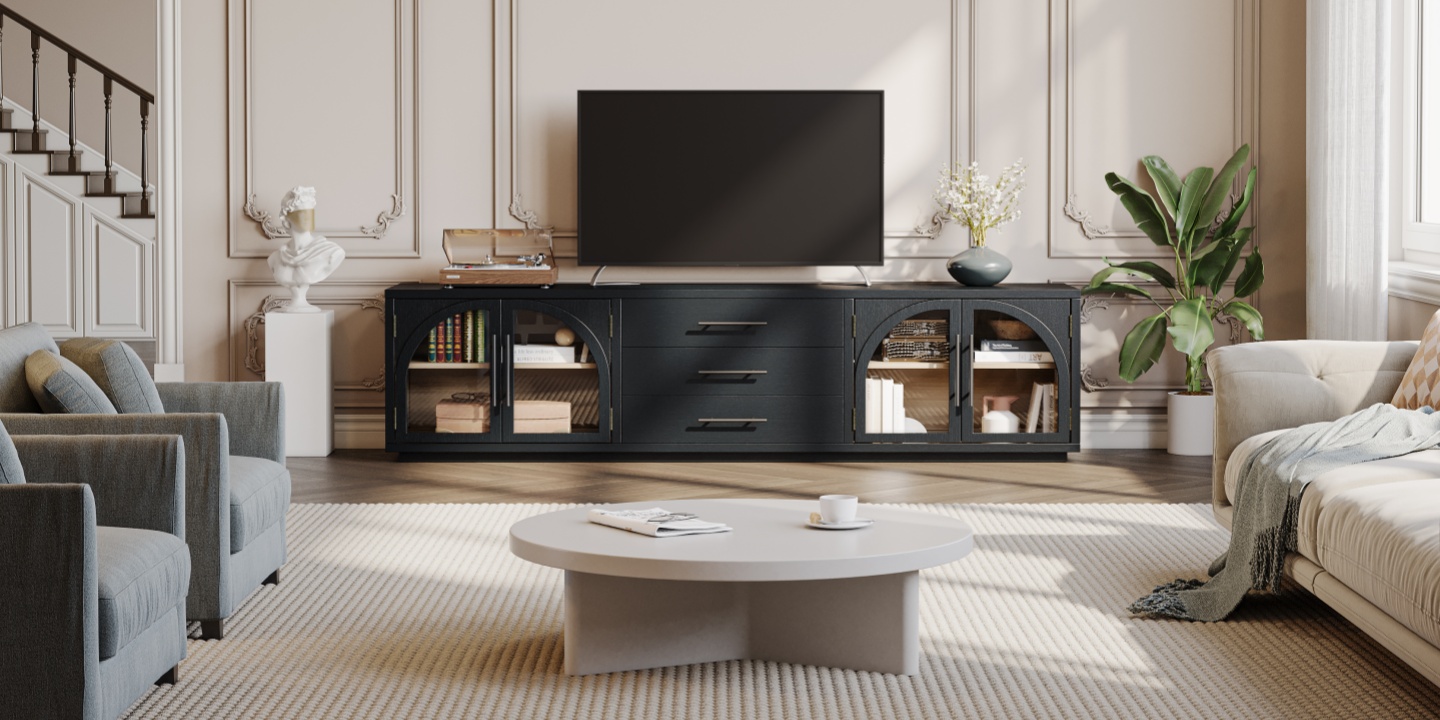
The Hernest Valborg 80" Oak Media Console measures 80.1 inches wide, 17.9 inches deep, and 25.9 inches high. It is designed for TVs up to 85 inches and has a recommended weight capacity of 230 pounds.
Why it stands out: Adjustable shelves, enclosed storage, and rear cord cutouts make it more useful as a working media cabinet than a purely decorative TV table.
Best MCM TV Stand: Hernest Astrid 84" MCM Slatted Media Console
Best for: Large TVs and mid-century modern interiors.
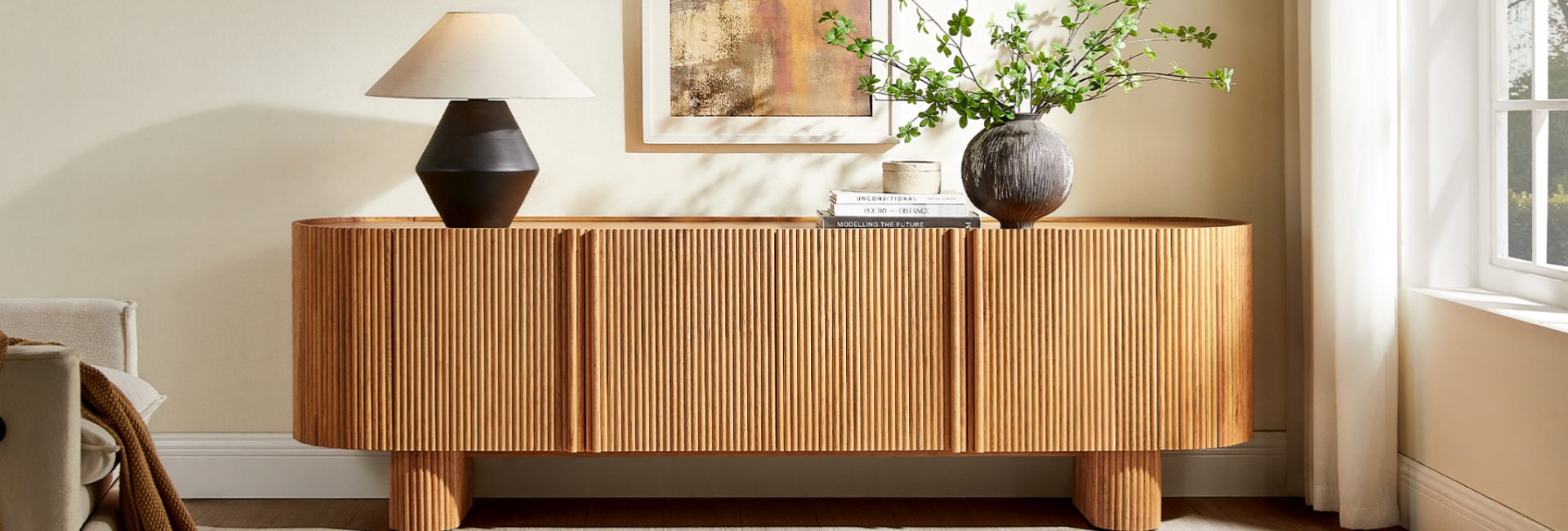
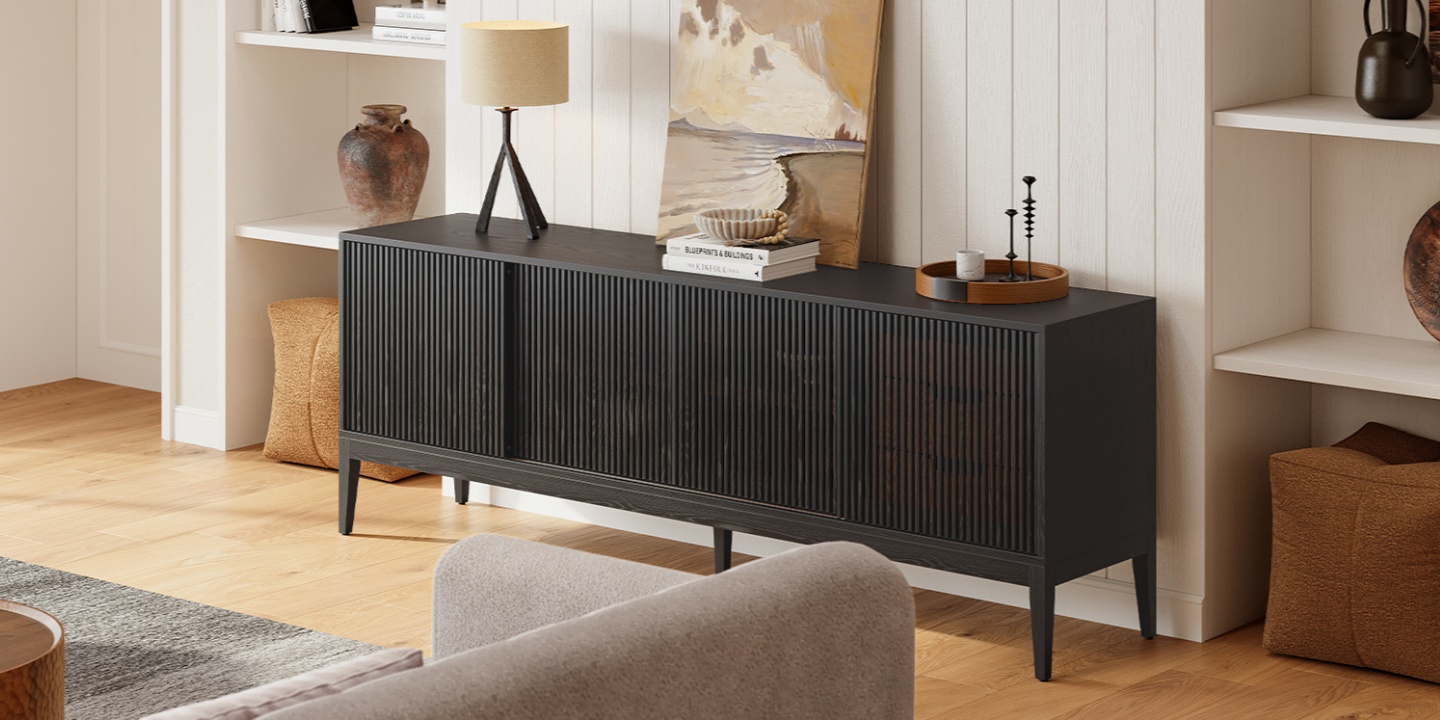
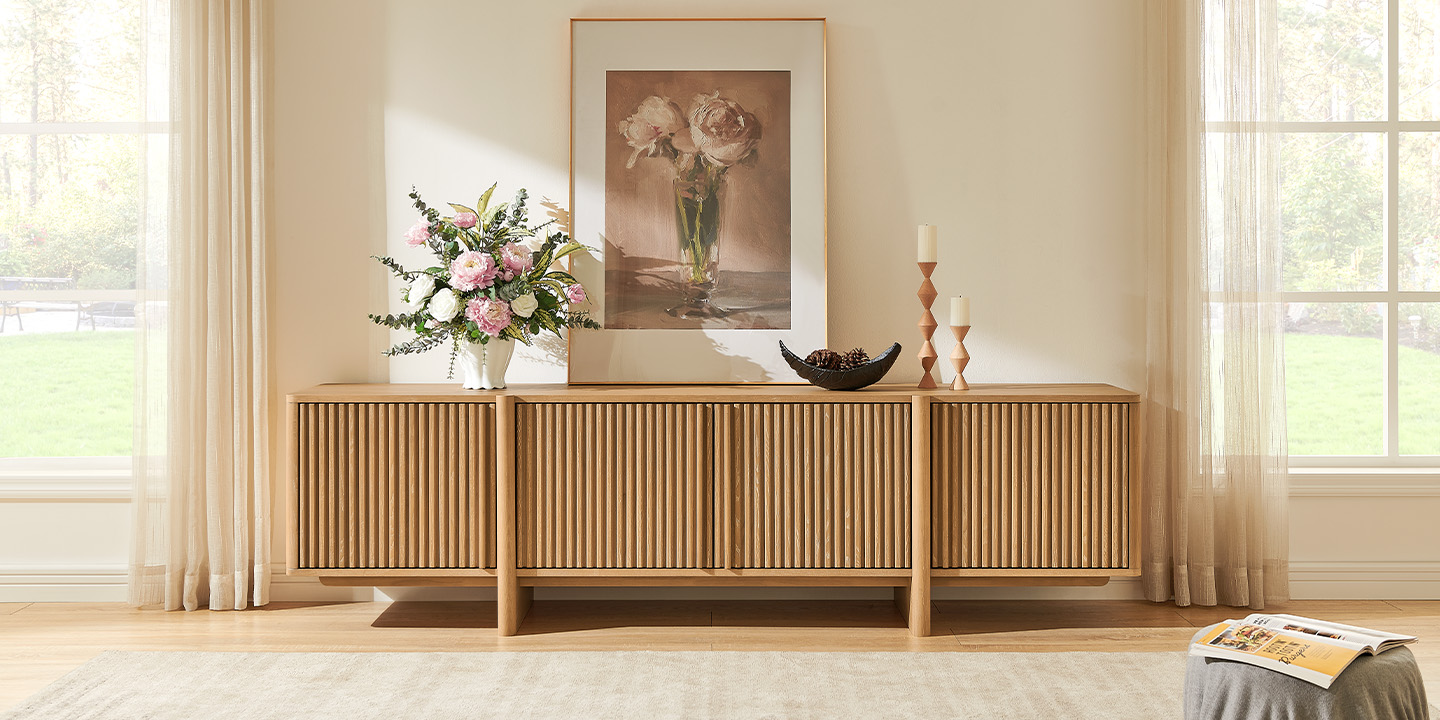
The Hernest Astrid 84" MCM Slatted Media Console combines an 84-inch-wide profile with vertical slatted doors and solid wood legs.
Why it stands out: It supports TVs up to 85 inches, includes four rear cord cutouts and adjustable storage, and brings recognizable MCM character to a modern entertainment setup.
Best Natural Wood TV Stand: Hernest Sabina 84" Ash Wood Media Console
Best for: Organic-modern, contemporary, and updated MCM interiors.
The Hernest Sabina 84" Ash Wood Media Console measures 84"W × 18.7"D × 23.6"H and is designed for TVs up to 85 inches.
Why it stands out: American solid ash wood, engineered wood, ash veneers, a wire-brushed finish, and square fluting create a more textured natural-wood appearance.
How to Choose the Best TV Stand
Choosing the best TV stand starts with measurements, not style. Before comparing finishes or decorative details, check four critical measurements: TV width, TV foot span, TV weight, and equipment depth.
What Size TV Stand Do You Need?
A TV's diagonal screen size does not tell you how wide the television actually is.
For example, a 75-inch TV typically has an overall width of roughly 65 to 67 inches, while an 85-inch TV is often around 74 inches wide. The exact dimensions vary by model.
As a general rule, choose a TV stand that is wider than the television itself. Additional width creates better visual balance and provides space for a soundbar, speakers, décor, or other accessories.
TV Size and Recommended TV Stand Width
These are practical starting ranges rather than universal requirements. Always check the actual dimensions of your TV before purchasing a stand.
How Wide Should a TV Stand Be?
Short answer: A TV stand should generally be wider than the TV, with about 3–6 inches of additional width on each side as a practical starting point.
For a 75-inch TV, an 80- to 84-inch console often creates a balanced proportion. For an 85-inch TV, an 80- to 90-inch or longer console may work depending on the TV's actual width, foot placement, wall size, and room scale.
The goal is not simply to make the furniture larger. The stand should create visual balance without overwhelming the room.
How Tall Should a TV Stand Be?
There is no universal TV stand height because sofa height, TV dimensions, and seating position all affect the ideal setup.
As a starting point, 25 to 35 inches tall works well in many living rooms. The more important test is seated comfort.
Sit where you normally watch TV and check whether the screen feels comfortable without forcing you to look noticeably upward.
How Do You Check TV Foot Placement?
TV foot placement is just as important as screen size.
A 75-inch TV can fit visually above an 80-inch console but still fail physically if its feet extend beyond the usable surface.
Before buying, measure:
The distance between the TV feet
The depth of the TV feet or base
The TV's overall width
The TV's actual weight
The TV stand surface should fully and securely support the television according to the manufacturer's specifications.
How Much Weight Should a TV Stand Support?
Check your TV's actual weight rather than relying on screen size.
The TV stand's recommended weight capacity should comfortably exceed the television's weight. If you are also placing a soundbar, speakers, or other equipment on top, account for those items as well.
A console can be wide enough for a television while still having an inadequate weight rating.
How Deep Should a TV Stand Be?
TV stand depth should be based on both the television and your equipment.
A shallow console can work well for a simple streaming setup, but deeper electronics such as gaming consoles, receivers, speakers, or networking equipment may require more usable interior space.
Measure your largest piece of equipment before buying the console. A cabinet that is two inches too shallow is still the wrong cabinet.
Best TV Stand Size by TV Size
What Is the Best TV Stand for a 55-Inch TV?
A 60- to 70-inch console can work well for many 55-inch TVs. Smaller rooms generally benefit from a shallower design and useful storage rather than an unnecessarily wide console.
What Is the Best TV Stand for a 65-Inch TV?
For a 65-inch TV, a 70- to 80-inch console is a practical range for many living rooms.
If your wall is spacious, choosing the wider option can create stronger visual balance. In a compact room, prioritize comfortable walking space and appropriate depth.
What Is the Best TV Stand for a 70-Inch TV?
A 76- to 84-inch console can work well with many 70-inch TVs.
At this size, storage and equipment organization become increasingly important because larger televisions are often paired with sound systems, gaming consoles, or multiple streaming devices.
What Is the Best TV Stand for a 75-Inch TV?
An 80- to 84-inch TV stand is a practical starting point for many 75-inch TVs.
The television's actual width is usually around 65 to 67 inches, but you should still verify the specific model's dimensions, foot span, weight, and stand depth.
What Is the Best TV Stand for an 85-Inch TV?
An 80- to 90-inch or longer console can work well for many 85-inch TVs, provided the TV feet fit securely and the stand meets the manufacturer's weight requirements.
In a large room, a longer console may create better visual balance and provide additional storage.
The key is not finding furniture labeled “for 85-inch TVs.” Check the actual dimensions and specifications instead.
TV Stand vs. Media Console: What's the Difference?
The terms are often used interchangeably, but there is a practical difference.
What Is a TV Stand?
A TV stand is primarily designed to support the television. It may include shelves, drawers, or cabinets, but its main purpose is relatively straightforward.
A traditional TV stand can work particularly well for smaller rooms, minimal equipment, or simple streaming setups.
What Is a Media Console?
A media console is generally more storage-oriented. It is designed to organize the television together with electronics, accessories, cables, and décor.
For modern living rooms with larger TVs and multiple devices, a media console is often the more versatile option.
Is a Media Console Better Than a Traditional TV Stand?
It depends on your setup.
Choose a traditional TV stand if you have limited space or very few electronics. Choose a media console if you need storage for gaming equipment, sound systems, routers, controllers, books, or other accessories.
The best choice is the furniture that matches what you actually need it to do.
What Makes a TV Stand High Quality?
A high-quality TV stand is more than a piece of furniture that is wide enough for your television. Construction, materials, storage, cable management, ventilation, and stability all affect long-term usability.
What Is the Best Material for a TV Stand?
Short answer: Solid wood, quality veneer, and well-engineered wood can all make durable TV stands. Construction quality matters more than the material label alone.
Solid wood offers natural character, strength, and potential repairability. Wood veneer provides a genuine wood surface and can be used on stable engineered panels. Engineered wood can provide structural consistency and is commonly combined with solid wood and veneer.
Instead of judging quality from the material label alone, look at:
Construction and joinery
Panel thickness
Hardware quality
Finish durability
Structural design
Weight capacity
Overall stability
Oak and ash are particularly appealing if you want natural grain, warmth, and a timeless appearance.
How Much Storage Should a TV Stand Have?
The right amount of storage depends on what you need to keep nearby.
Cabinets are useful for hiding visual clutter. Drawers work well for smaller accessories such as remotes and controllers. Adjustable shelves are especially useful because electronics can change over time.
If you expect to upgrade your gaming system or add a larger receiver, adjustable storage provides more flexibility than fixed shelving.
Do TV Stands Need Cable Management?
Yes, especially if you have multiple electronics.
Rear cord cutouts make it easier to route cables to wall outlets while keeping the front of the console clean.
Before buying, consider both the location of the cord cutouts and the position of your wall outlet. A console can have excellent storage and still be frustrating if cables cannot reach the outlet efficiently.
Do TV Stands Need Ventilation?
Short answer: Yes. Heat-producing electronics such as gaming consoles and receivers need adequate airflow and clearance.
Gaming consoles, receivers, and other electronics should not be squeezed into completely sealed compartments without sufficient clearance.
Open backs, ventilation openings, properly positioned shelves, and adequate space around equipment can make a media console easier and safer to use.
How Stable Should a TV Stand Be?
A TV stand should feel stable before the television is placed on it.
Check the manufacturer's weight rating, base construction, leveling hardware, and assembly method. A heavy television deserves furniture engineered to support it rather than a decorative cabinet that merely happens to be wide enough.
Best TV Stands for Different Living Spaces
What Are the Best TV Stands for Small Apartments?
Small apartments benefit from compact depth, useful storage, and a lower visual profile.
Choose a console that provides enough space for your equipment without extending too far into the walkway. Closed storage can also help keep a small living room visually organized.
What Are the Best TV Stands for Large Living Rooms?
Large living rooms can accommodate longer consoles and larger entertainment setups.
An 80- to 84-inch console can provide substantial visual presence beneath a 75- or 85-inch TV. If your room has a long sofa or large coffee table, a similarly substantial console can create better visual proportion.
What Are the Best TV Stands for Open-Concept Homes?
In an open-concept home, the TV console may be visible from the living room, dining area, and kitchen.
Choose materials and finishes that connect with the rest of the room instead of treating the TV wall as a completely separate zone. Natural wood is particularly versatile because it can complement multiple furniture styles.
What Are the Best TV Stands for Families?
Families often benefit from sturdy construction and concealed storage.
Look for stable feet, enclosed cabinets, practical cable management, and enough storage for controllers, chargers, toys, books, and everyday accessories.
What Are the Best TV Stands for Gaming?
Gaming setups require more than surface space.
Measure your gaming console, accessories, speakers, and other electronics before choosing the furniture. Ventilation is especially important for heat-producing equipment.
Adjustable shelving and rear cable openings can also make future equipment upgrades easier.
Best TV Stand Styles for Modern U.S. Homes
What Are the Best Mid-Century Modern TV Stands?
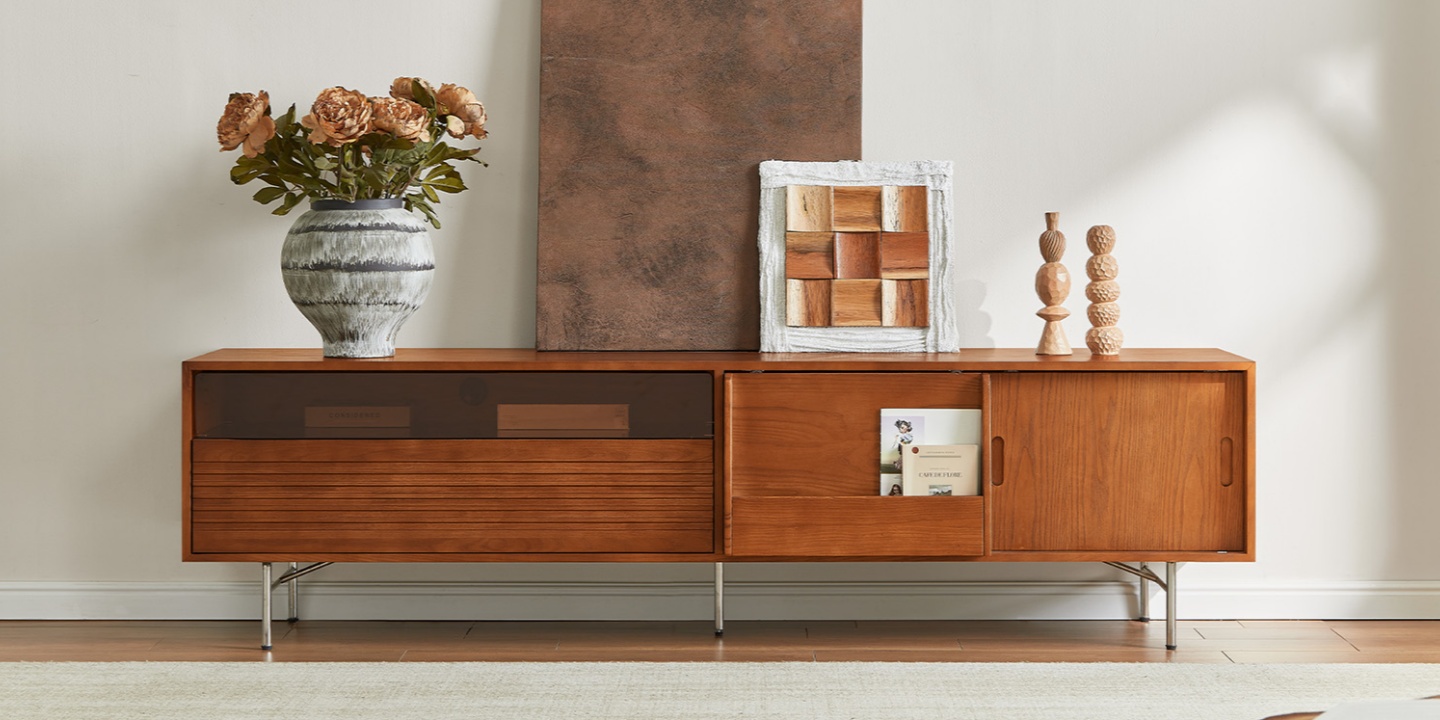
MCM furniture works naturally as TV furniture because the style emphasizes horizontal proportions, natural wood, clean geometry, and functional storage.
Look for natural wood, restrained detailing, slatted or fluted doors, tapered or angular legs, and practical storage.
The best MCM TV stand should accommodate modern electronics rather than simply imitate vintage furniture.
What Are the Best Modern TV Stands?
Modern interiors generally benefit from simple silhouettes, clean lines, and restrained detailing.
A streamlined console can help the television remain the visual focus while providing storage for electronics and accessories.
What Are the Best Organic Modern TV Stands?
Organic-modern interiors pair naturally with wood grain, tactile finishes, softer shapes, and neutral materials.
Natural oak or ash can add warmth without requiring the rest of the room to match exactly.
What Are the Best Scandinavian or Transitional TV Stands?
Scandinavian-inspired spaces often benefit from lighter finishes, simple proportions, and visual simplicity.
Transitional rooms can accommodate slightly more traditional detailing while maintaining contemporary scale and functionality.
The best style is the one that complements your existing furniture rather than forcing the rest of the room to change.
Are MCM TV Stands Worth the Investment?
A well-made MCM TV stand can remain useful long after a trend-driven piece feels dated.
Its advantage is not simply nostalgia. Clean horizontal lines, natural materials, restrained detailing, and functional storage can work with changing sofas, rugs, lighting, and artwork.
However, don't pay more simply because a product is labeled “MCM.”
Before paying a premium, look for:
Quality wood or wood veneer
Solid construction
Useful storage
Adjustable shelving
Cable management
Appropriate weight capacity
Durable finish
Proportions that suit your TV
A higher price should correspond to better materials, construction, functionality, or longevity.
TV Stand Safety: What Homeowners Should Check
TV stand safety should be considered alongside size and style, especially in homes with children or pets.
How Should a TV Stand Support a TV?
The TV should sit securely within the furniture's recommended dimensions.
The feet should remain fully supported, and the television should not hang precariously over the edge.
Always compare the TV's actual weight and dimensions with the furniture manufacturer's specifications.
Should You Anchor a TV Stand to the Wall?
Short answer: Follow the manufacturer's anchoring instructions, and consider anchoring especially when children or pets may interact with the furniture.
The U.S. Consumer Product Safety Commission recommends securing TVs and furniture to reduce tip-over hazards. Its guidance also emphasizes sturdy, low bases, keeping heavier items lower, and securing cords where children cannot reach them.
Anchoring is particularly important in homes with young children or in situations where furniture could be climbed on or bumped.
How Should Cords and Electronics Be Organized?
Use the console's cable openings whenever possible instead of allowing cords to hang freely.
Keep heavy electronics low when practical, avoid overloaded outlets, and provide sufficient ventilation around heat-producing equipment.
For safety guidance, consult the U.S. Consumer Product Safety Commission and your TV and furniture manufacturers.
Common TV Stand Buying Mistakes to Avoid
Choosing a TV Stand That Is Too Narrow
A television may technically fit while the overall arrangement still looks unbalanced.
Choose a console that is wider than the TV whenever room dimensions allow.
Choosing the Wrong Height
A beautiful console is still wrong if it forces you to look noticeably upward.
Consider your sofa height and seated eye level before deciding.
Ignoring TV Feet and Weight
Screen size alone does not tell you whether a TV will physically fit on a console.
Always check the actual TV dimensions, foot span, and weight.
Forgetting Equipment Depth and Cable Access
Measure your electronics, not just your television.
Gaming consoles, receivers, speakers, and networking equipment can be deeper than expected.
Buying for Style Before Measuring Your Space
Measure first and shop for style second.
Check wall width, console depth, walking paths, outlets, doorways, hallways, and stairways before ordering.
Forgetting Delivery and Assembly Requirements
An 80- to 84-inch console is a substantial piece of furniture.
Measure the entrance, hallway, elevator, stairwell, and room. Also check whether the piece arrives fully assembled or requires the legs, base, or other components to be fitted.
How to Style a TV Stand in a Real Living Room
How Do You Balance a TV and Console?
The TV and console should read as one visual composition.
Leave some breathing room around the television rather than filling every available inch with decorative objects.
How Do You Keep a Media Console Organized?
Use closed storage for items you do not need to display.
On the top surface, keep decorative accents limited. A lamp, small stack of books, ceramic object, or plant can add interest without competing with the screen.
How Do You Add Natural Texture?
Wood furniture pairs naturally with woven baskets, ceramics, greenery, books, and soft textiles.
The goal is to make the TV wall feel like part of the living room rather than a technology station.
How Do You Style an MCM TV Stand Without Making It Look Dated?
Avoid turning the entire room into a 1950s or 1960s theme.
Pair MCM furniture with contemporary lighting, modern upholstery, textured rugs, and current artwork. The contrast keeps the furniture feeling intentional and relevant.
Should Your TV Stand Match Other Living Room Furniture?
Not necessarily.
Instead of matching every wood finish, repeat a few visual cues such as wood tone, hardware, leg shape, or texture. This creates cohesion without making the room look overly coordinated.
Hernest's Best TV Stand Picks
Valborg 80" Oak Media Console — Best Overall
Best for: 75- to 85-inch TVs, large living rooms, and shoppers who want storage and natural wood character.
The Hernest Valborg 80" Oak Media Console measures 80.1"W × 17.9"D × 25.9"H, supports TVs up to 85 inches, and has a recommended weight capacity of 230 pounds.
Its American solid oak, engineered wood, and oak veneer construction combines natural material character with practical structure. Adjustable shelving and rear cord cutouts make it suitable for a modern entertainment setup.
Why choose it: It offers a strong balance of large-TV compatibility, storage, cable management, and classic wood character.
Astrid 84" MCM Slatted Media Console — Best for MCM Interiors
Best for: Large-screen TVs and shoppers who want a stronger mid-century modern statement.
The Hernest Astrid 84" MCM Slatted Media Console measures 84 inches wide and 30 inches high. Its vertical slatted sliding doors, solid wood legs, and warm oak character give it a distinctive MCM appearance.
It is designed for TVs up to 85 inches, provides four rear cord cutouts, and includes adjustable shelving.
Why choose it: It combines a substantial footprint with recognizable MCM detailing and practical features for modern electronics.
Sabina 84" Ash Wood Media Console — Best for Natural Wood Texture
Best for: Organic-modern, contemporary, and updated MCM interiors.
The Hernest Sabina 84" Ash Wood Media Console measures 84"W × 18.7"D × 23.6"H and is designed for TVs up to 85 inches.
It combines American solid ash wood with engineered wood and ash veneers. Its wire-brushed finish emphasizes natural grain, while square fluting adds texture without excessive ornamentation.
Why choose it: It offers a lighter, more textured interpretation of natural wood furniture for contemporary living rooms.
Which Hernest TV Stand Is Right for You?
Choose the Valborg if you want the best overall balance of large-TV compatibility, storage, cable management, and classic oak character.
Choose the Astrid if your priority is a stronger MCM statement with slatted detailing and an 84-inch footprint.
Choose the Sabina if you prefer ash wood, visible natural grain, and a more contemporary textured appearance.
Final Verdict: How to Choose the Best TV Stand
The best TV stand is the one that fits your television, supports its weight, works with your viewing position, accommodates your equipment, and fits the scale of your room.
For most shoppers, start with four measurements:
TV width
TV foot span
TV weight
Equipment depth
Then consider storage, cable management, ventilation, construction, and style.
For a 75-inch TV, an 80- to 84-inch console is a practical starting point for many living rooms. For an 85-inch TV, consider an 80- to 90-inch or longer console, depending on the television's actual dimensions and your room.
If you have a gaming setup, prioritize depth, ventilation, and cable access. If you have a busy family room, prioritize stability and enclosed storage. If you prefer MCM furniture, look for natural materials, clean horizontal proportions, and functional storage rather than retro decoration alone.
The right TV stand should make your entertainment setup easier to use while making the entire room feel more balanced.
Frequently Asked Questions About the Best TV Stands
Which Is the Best TV Stand?
The best TV stand is one that properly supports your television, fits your wall and room, provides enough storage, and suits your viewing setup. For many large living rooms, an 80- to 84-inch wood media console is a versatile choice for 75- to 85-inch TVs.
How Wide Should a TV Stand Be for a 75-Inch TV?
An 80- to 84-inch console is a practical starting point for many 75-inch TVs. Because actual TV dimensions vary, measure the television's overall width and foot placement before buying.
What Is the Best Height for a TV Stand?
Many living-room consoles are around 25 to 35 inches high, but seated viewing comfort matters more than a universal number. The TV should not force you to look noticeably upward.
What Is the Best Material for a TV Stand?
Solid wood, quality veneer, and well-engineered wood can all be good choices. Oak and ash are particularly appealing for natural grain, warmth, and durability. Evaluate the complete construction rather than the material label alone.
Is a Media Console Better Than a Traditional TV Stand?
A media console is generally more versatile for modern entertainment setups because it combines TV support with storage and equipment organization. A traditional TV stand can be better for smaller rooms or minimal electronics.
What Is the Best TV Stand for an 85-Inch TV?
An 80- to 90-inch or longer console can work for many 85-inch TVs, provided the TV feet fit securely and the furniture meets the manufacturer's weight requirements. Always verify the actual TV dimensions.
Do TV Stands Need Cable Management?
Cable management is particularly useful when a setup includes gaming systems, sound equipment, routers, or multiple streaming devices. Rear cord cutouts help route cables to outlets while keeping the front of the console organized.
Should I Anchor My TV Stand to the Wall?
Follow the furniture manufacturer's anchoring instructions. The U.S. Consumer Product Safety Commission recommends securing TVs and furniture to reduce tip-over risks, particularly in homes with young children.