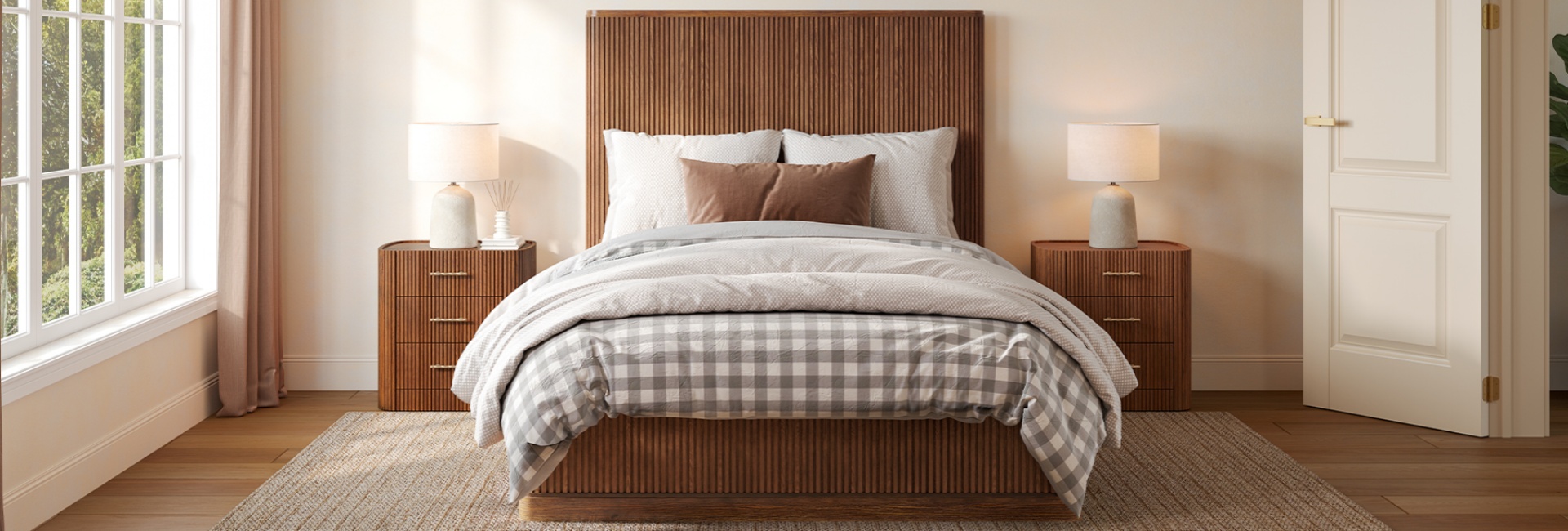
The fastest way to fix a messy bedroom is rarely another bin. The most useful bedroom storage ideas start with the pieces you already live with every day: a dresser that actually closes, a nightstand with drawers instead of a bare top, or a chest that fills a narrow wall without crowding the floor. Clutter often builds up because everyday items do not have an obvious home. Give each category a dedicated drawer, cabinet, or shelf, and the room becomes easier to maintain. Below, we cover the core bedroom storage furniture, how to size it, and where to find extra storage without taking over the room.
Table of Contents
- Start With What You Actually Own
- Bedroom Storage Ideas at a Glance
- Why a Dresser Is Still a Bedroom Storage Workhorse
- The Chest: Narrow Storage for Tight Walls
- Nightstands That Earn Their Spot
- Bedroom Furniture Space-Saving Ideas for Small Rooms
- Organizing a Bedroom With No Closet
- How to Lay Out Storage So the Room Stays Organized
- A Quick Buying Checklist Before You Shop
- Where to Start if the Room Is Already Full
- FAQs
- What are the best storage options for a bedroom?
- How can I add more storage to my bedroom?
- How do I maximize storage in a small bedroom?
- What furniture is best for bedroom storage?
- What is the difference between a dresser and a chest?
- How do I keep a nightstand organized?
- What are the best bedroom furniture space-saving ideas?
- How do I use under-bed storage without it getting dusty?
Start With What You Actually Own
Before you buy a single piece, do the unglamorous part first. Pull items out of the closet, chairs, drawers, and floor, then sort them into three groups: daily, occasional, and things you no longer use. You cannot plan storage effectively until you know what you need to store.
A bedroom that holds a full week's worth of work clothes and off-season bedding needs a different setup from one with a smaller wardrobe and a few personal essentials.
The next step is measuring the room, not just the furniture. Note the wall widths where a storage piece could sit, the clearance around the bed, door swings, windows, and the height available for taller furniture.
For a dresser, roughly 30 to 36 inches of open space in front is a useful planning range so drawers can open comfortably. For a nightstand, focus on how easily you can get in and out of bed rather than following a fixed clearance number. The right amount of space depends on the bed, nightstand width, and room layout.
One important point: a small bedroom does not necessarily become more organized by adding more small containers. It usually works better to give the things you use most a predictable place.
Bedroom Storage Ideas at a Glance
The best storage piece depends on what you need to store and how much floor and wall space you have.
A dresser and chest usually handle the bulk of clothing storage. A drawer nightstand keeps smaller items close at hand, while under-bed and wall storage provide additional capacity without necessarily adding another large piece of furniture.
If you are furnishing a bedroom from scratch, start with the Hernest bedroom collection and build around the pieces that solve your biggest storage problem first.
Why a Dresser Is Still a Bedroom Storage Workhorse
A dresser is one of the most practical pieces of bedroom storage furniture for folded clothing. Unlike a stack of bins, drawers let you separate different categories and access them without moving several containers.
For a primary bedroom, width is one of the main factors to consider. A dresser around 60 to 80 inches wide can provide substantial drawer capacity when you have a long, open wall. If your available wall is shorter, a narrower dresser or a combination of a chest and under-bed storage may make more sense.
The Renata 80-Inch Travertine-Textured 9-Drawer Dresser illustrates the larger-dresser approach. Its nine drawers spread storage across an 80-inch-wide frame, providing separate spaces for folded clothing, linens, and other bedroom items. The travertine-textured finish and hammered pulls also give the top surface a defined look, so it can function as both storage and a visual anchor for the room.
How to Size a Dresser for the Room
Start with the wall where the dresser will sit, then consider the usable floor space in front of it.
For example, a 72-inch wall may technically fit a wide dresser, but that does not mean the layout works if the bed leaves too little room for the drawers to open comfortably.
If floor space is limited, consider:
-
A narrower dresser on a shorter wall
-
A taller chest for vertical storage
-
A combination of dresser and under-bed storage
-
Wall-mounted storage for smaller items
Height can also help when floor space is scarce. A taller storage piece can add drawer capacity without increasing its footprint, although it should be properly secured according to the manufacturer's instructions.
What to Look for in Drawer Construction
Drawer construction matters because bedroom furniture gets used every day. Look for sturdy joinery, smooth glides, and drawer hardware designed for regular use.
Dovetail joints are one feature to look for, particularly on drawers that will hold heavier clothing or linens. Soft-close glides can also make everyday use quieter and reduce slamming.
For taller or heavier furniture, check whether the product includes an anti-tip kit and follow the manufacturer's instructions for securing it to the wall.
The Renata dresser uses dovetail drawer construction and soft-close rails, making those features worth considering when comparing bedroom storage furniture.
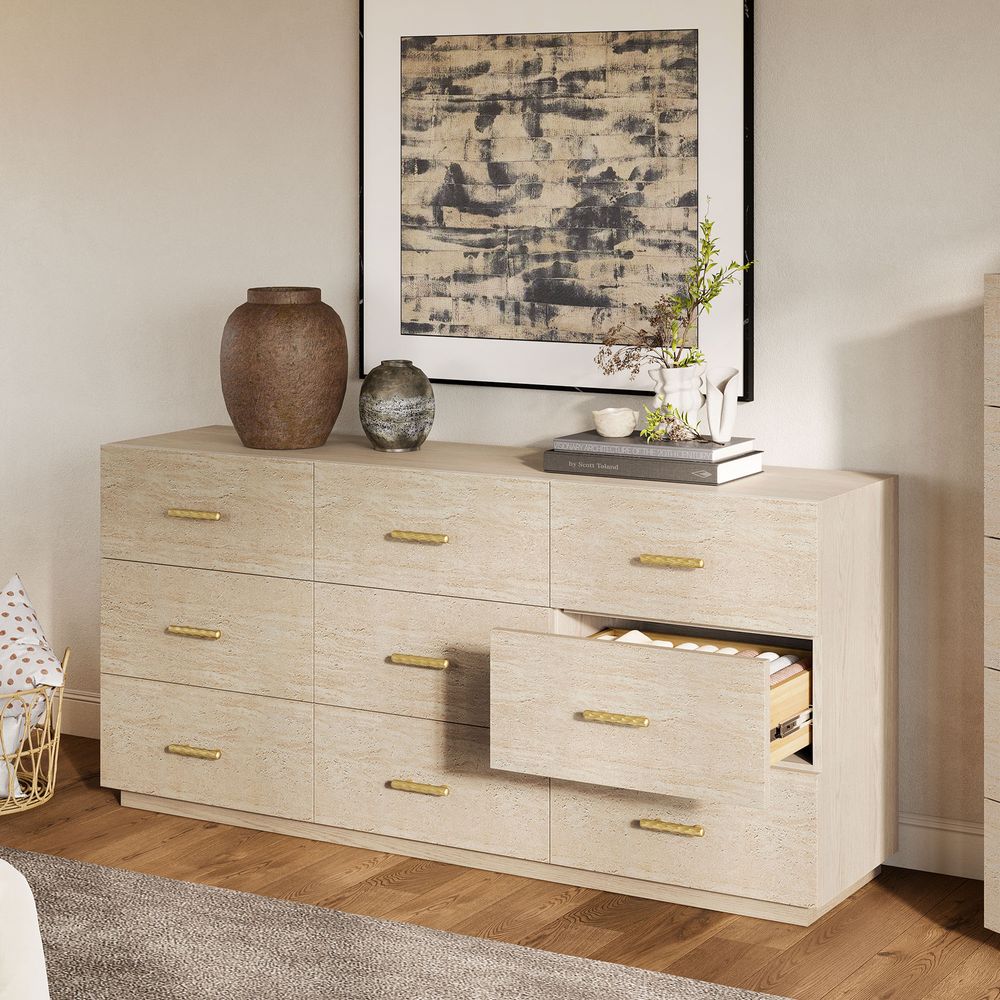
Renata 80-Inch Travertine-Textured 9-Drawer Dresser
View Product
The Chest: Narrow Storage for Tight Walls
Best for: adding vertical clothing storage when wall width is limited.
A chest is essentially a narrower, taller alternative to a dresser. It makes sense when you have enough height but not enough wall width for a large horizontal piece.
The Renata 37-Inch Travertine-Textured 5-Drawer Chest is designed around that use case. At 37 inches wide, it can fit into spaces where a larger dresser would be difficult to place, while five drawers provide dedicated storage for folded clothing and smaller categories.
Because it shares the Renata finish with the larger dresser, the two pieces can also be used together when you need additional clothing storage without introducing several unrelated finishes.
Chest vs. Dresser: When to Pick Which
The choice mostly comes down to wall width, storage volume, and how much surface area you want.
If you have a long wall and need substantial folded-clothing storage, a dresser is a natural choice. If width is the main constraint, a chest can provide useful capacity without spreading across the wall.
For a very small bedroom, consider the entire storage system rather than adding another large piece. A chest combined with under-bed storage can sometimes provide the extra capacity you need without taking up another wide section of floor space.
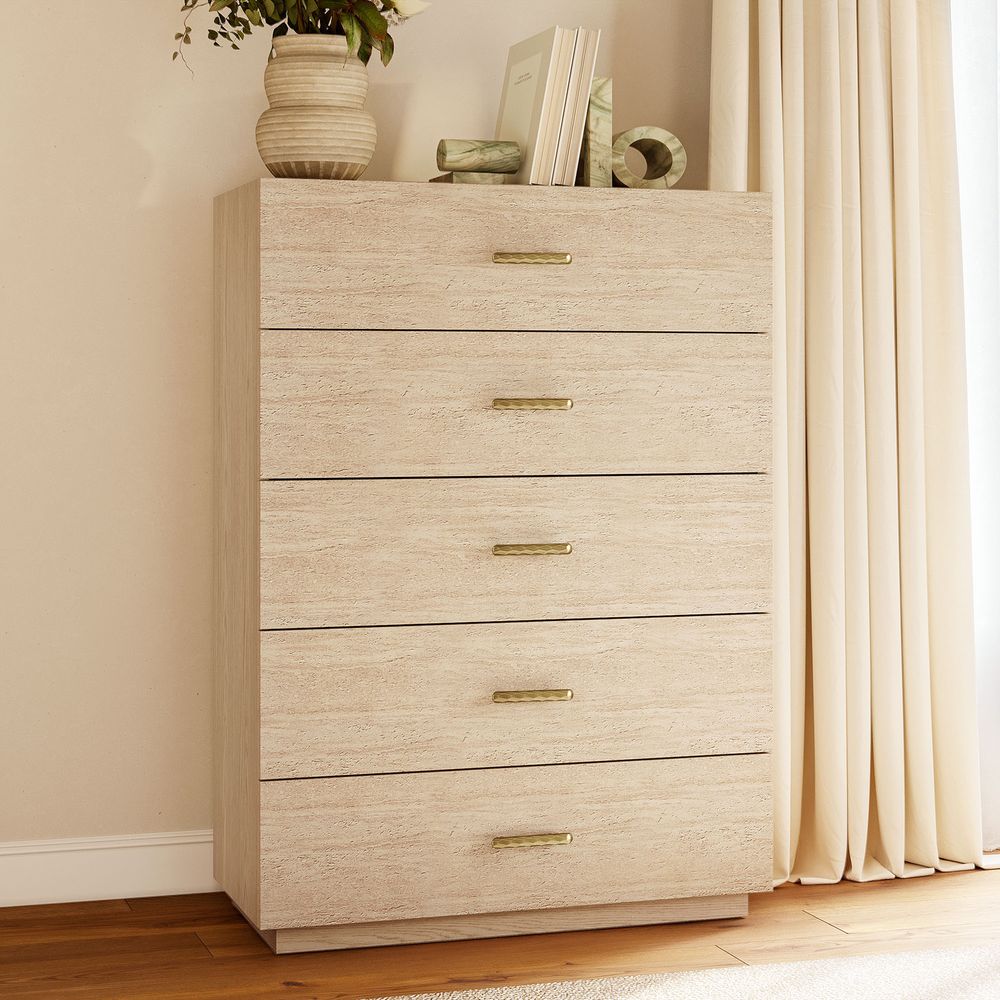
Renata 37-Inch Travertine-Textured 5-Drawer Chest
View Product
Nightstands That Earn Their Spot
Best for: keeping everyday bedside items contained and within easy reach.
A nightstand often becomes a landing place for phones, glasses, books, chargers, and anything else you do not want to put away before bed. A model with two or three drawers gives those smaller items a dedicated home while leaving the top available for the essentials.
The Walter 26-Inch Linen-Blend Nightstand provides three drawers in a 26-inch-wide frame. Its linen-blend fronts and mindi wood construction give it a softer visual presence, while the drawer storage keeps everyday items out of sight.
Keeping the Nightstand Surface Clear
One easy way to make a nightstand more useful is to move the lighting off the top.
A wall-mounted sconce or plug-in wall light can free up space for a small tray, book, or glass of water. Architectural Digest's small-bedroom storage recommendations also highlight wall-mounted lighting as a way to preserve usable surface area in compact rooms.
The basic idea is simple: keep the items you reach for every night within arm's reach, but give everything else a drawer.
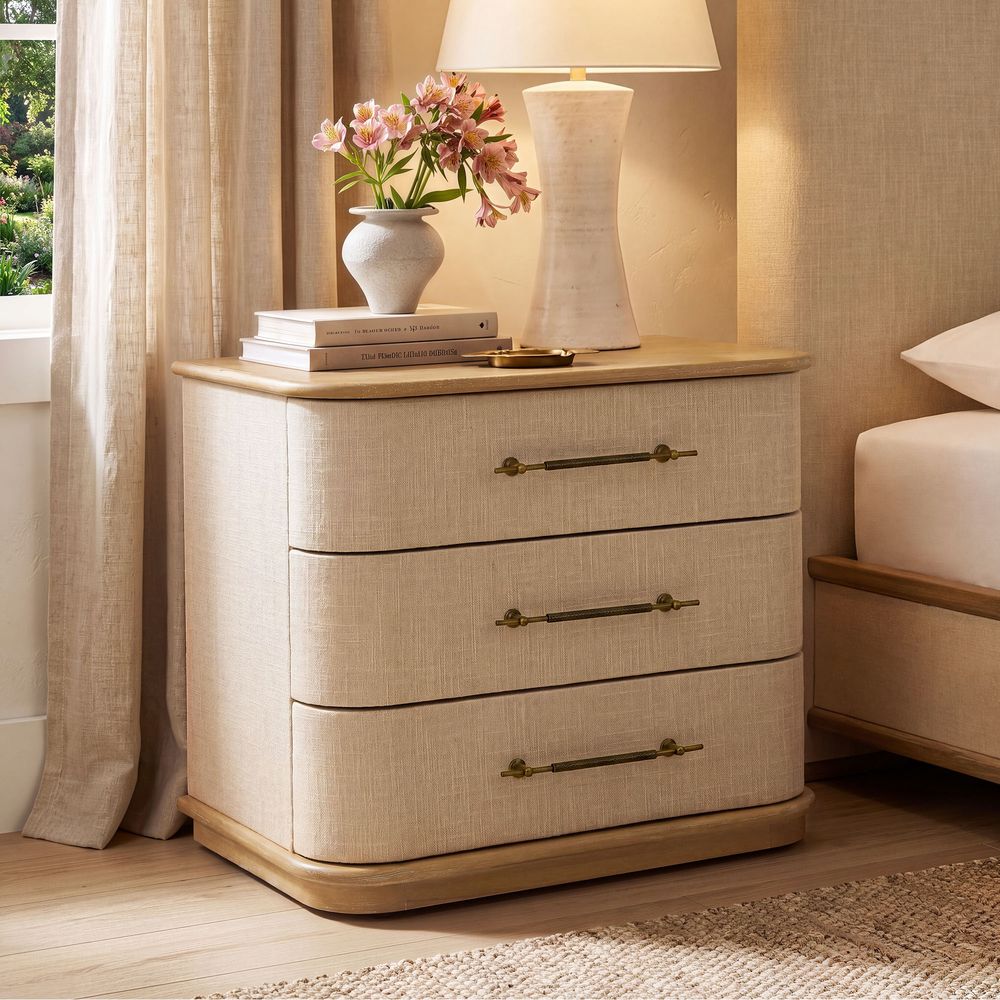
Walter 26-Inch Linen-Blend Nightstand
View Product
Bedroom Furniture Space-Saving Ideas for Small Rooms
When square footage is limited, the goal is not simply to buy smaller furniture. It is to make better use of the walls, unused space beneath the bed, and awkward corners.
These bedroom furniture space-saving ideas can make a noticeable difference:
-
Go vertical. A tall chest, wardrobe, or shelving unit uses available height instead of spreading storage across the floor.
-
Float smaller pieces. Wall-mounted nightstands and shelves can keep some floor visible and make cleaning easier.
-
Use dual-purpose furniture. A storage bench at the foot of the bed can provide seating and a place for blankets.
-
Use the space beneath the bed. Low bins, rolling drawers, or a storage bed can hold items you do not need every day.
-
Use the back of the closet or bedroom door. Over-door organizers can hold shoes, scarves, bags, and accessories without requiring another piece of furniture.
The goal is to add storage capacity without creating more obstacles around the bed.
Use the Wall, Not Just the Floor
Walls are one of the easiest places to add bedroom storage without expanding the furniture footprint.
Floating shelves above a desk or dresser can hold books, baskets, and smaller items. A peg rail can organize bags, hats, or frequently used accessories. In a bedroom without a traditional closet, a combination of wall storage, a clothing rack, and a wardrobe can provide several of the functions normally handled by built-in storage.
The trade-off is visibility. Open shelves make everything easy to reach, but they also put clutter on display. If you prefer a cleaner visual appearance, use closed drawers and doors for everyday items and reserve open shelving for things you want to keep visible.
Under-Bed Storage Done Right
The space under the bed is useful for items you do not need every day, such as seasonal clothing, spare bedding, and shoes.
Choose storage that fits the actual clearance beneath the bed. Lidded bins help keep dust out, while low rolling drawers make frequently accessed items easier to reach.
A few practical rules:
-
Measure the height beneath the bed before buying containers.
-
Keep seasonal items toward the back and frequently used items closer to the foot.
-
Use labels so you know what each container holds.
-
Keep textiles sealed and dry when storing them for long periods.
-
Avoid overfilling containers, which can make them difficult to remove.
Organizing a Bedroom With No Closet
A bedroom without enough closet space needs furniture that can perform the same basic functions: hanging clothes, storing folded items, and keeping accessories organized.
Stand-Ins That Replace a Closet
-
Wardrobe or armoire: Provides enclosed space for hanging clothes and folded items.
-
Clothing rack: Works well for frequently worn clothing, especially when paired with matching hangers.
-
Chest: Handles folded clothing while taking less wall width than a dresser.
-
Under-bed storage: Holds seasonal clothing, spare bedding, and less frequently used items.
-
Over-door organizers: Provide a place for shoes, scarves, belts, and accessories.
-
Wall hooks: Keep bags, hats, and jackets accessible without adding another floor-standing piece.
The advantage of using freestanding storage is flexibility. You can move the pieces when your needs or living situation changes. For rented spaces, choose solutions that do not require permanent modifications, and secure tall furniture according to the manufacturer's safety instructions.
How to Lay Out Storage So the Room Stays Organized
Storage works better when the furniture is placed near the point where you use it.
Think in zones:
-
Bedside zone: Nightstand, lamp, charger, books, and other nighttime essentials.
-
Dressing zone: Dresser, chest, or wardrobe near the area where you get dressed.
-
Overflow zone: Under-bed storage and higher shelves for seasonal or infrequently used items.
-
Entry zone: Hooks or a small storage piece for bags, jackets, and other items you bring into the room.
Keeping related storage together reduces the number of places where clutter can accumulate.
Visual weight matters, too. In a small bedroom, furniture with open floor beneath it, lighter finishes, or streamlined proportions can make the room feel less crowded. Closed fronts can also help hide everyday clutter.
A mirror can reflect light and create a greater sense of visual depth, particularly when positioned where it reflects a window or another bright part of the room.
The final step is maintenance. A five-minute evening reset—clearing the nightstand, putting clothes away, and returning loose items to their storage zones—can keep a small bedroom manageable without another organizational system.
A Quick Buying Checklist Before You Shop
Before buying bedroom storage furniture, check these basics:
-
Measure the wall where the piece will sit.
-
Measure the available clearance in front of drawers and doors.
-
Check door swings, windows, outlets, and other obstacles.
-
Decide whether you need horizontal or vertical storage.
-
Check drawer construction and glide quality.
-
Look for anti-tip hardware on taller furniture.
-
Match the furniture's proportions to the room rather than choosing by storage capacity alone.
-
Consider closed storage if you want to keep everyday clutter out of sight.
-
Use under-bed and wall space before adding another large floor-standing piece.
-
Choose furniture that can continue to work if your storage needs change.
Most standard bedroom storage is easier to buy than build because freestanding pieces can move with you. Built-ins make more sense when you have an unusually shaped space or a long-term need for custom storage.
Where to Start if the Room Is Already Full
If the bedroom is already full, do not automatically buy another storage piece. Start with the three-pile sort and measure the room.
You may find that the problem is not a lack of furniture but inefficient placement. Moving a chest to a narrow wall, clearing the nightstand surface, or shifting seasonal items beneath the bed can free up usable space without adding anything.
When you do need new furniture, start with the category that solves your biggest daily problem. If folded clothing is overflowing, look at Hernest dressers. If the issue is bedside clutter, browse Hernest nightstands.
The best bedroom storage setup is not the one with the most furniture. It is the one that gives the things you use a clear place to go while leaving enough room to move comfortably.
FAQs
What are the best storage options for a bedroom?
The most useful bedroom storage options are dressers and chests for folded clothing, drawer nightstands for bedside essentials, under-bed storage for seasonal items, and wardrobes for bedrooms with limited closet space. The right combination depends on your room dimensions and what you actually need to store.
How can I add more storage to my bedroom?
Start by measuring your available walls and unused spaces. A chest can add vertical storage on a narrow wall, floating shelves can use wall space, and under-bed storage can reclaim space beneath the bed. These options can increase storage without adding another large footprint.
How do I maximize storage in a small bedroom?
Use vertical space, the area beneath the bed, and furniture with multiple storage functions. A tall chest can provide more storage within a narrow footprint, while a storage bed or under-bed bins can hold seasonal items. Keep everyday clutter inside drawers or cabinets to make the room easier to maintain visually.
What furniture is best for bedroom storage?
A dresser is useful for bulk folded clothing, a chest provides vertical storage when wall width is limited, and a drawer nightstand keeps small bedside items organized. A wardrobe or armoire can add hanging storage when closet space is limited. Together, these pieces can cover most bedroom storage needs.
What is the difference between a dresser and a chest?
A dresser is generally wider and uses horizontal drawer space, while a chest is narrower and stacks drawers vertically. A dresser works well along a long, open wall and provides more surface area. A chest is useful when width is limited but you still need additional clothing storage.
How do I keep a nightstand organized?
Use the drawers for chargers, glasses, books, and other small items, and keep the top limited to the essentials. A wall-mounted light can free up additional surface space. The goal is to make the nightstand easy to use without letting it become a permanent drop zone.
What are the best bedroom furniture space-saving ideas?
The most useful space-saving approaches include vertical storage, floating shelves or nightstands, under-bed storage, storage beds, and dual-purpose furniture such as storage benches. In a particularly small room, use these areas before adding another large dresser or cabinet.
How do I use under-bed storage without it getting dusty?
Choose lidded containers or low drawers that fit beneath the bed and keep textiles sealed and dry. Measure the available height first, avoid overfilling the containers, and label them so you can find seasonal clothing or bedding without pulling everything out.