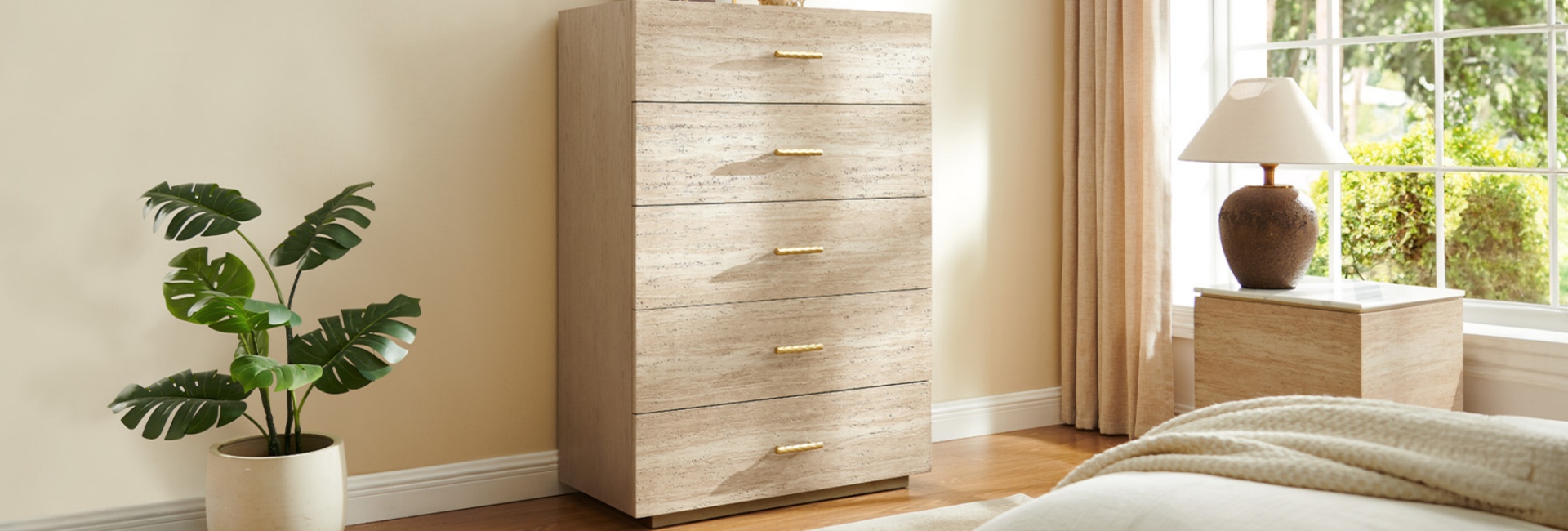
When people search for types of bedroom furniture, they are usually looking for more than a list. They want to know what each piece does, which ones they actually need, and how to fit them into the room they have.
The basics are straightforward: a bed provides the sleeping surface, nightstands keep everyday essentials within reach, and dressers or chests handle folded clothing. Depending on the room, you might also need a wardrobe, storage bed, bench, vanity, mirror, or a few wall-mounted storage pieces.
The right combination depends on your available space, what you need to store, and how you use the bedroom. A large dresser can make a spacious primary bedroom more functional, while a tall chest or floating shelf may make more sense in a smaller room. Here's a look at the main bedroom furniture types, what each one does, and how to choose pieces that work together.
Table of Contents
- Types of Bedroom Furniture at a Glance
- Dressers: Wide, Low Storage
- Chests of Drawers: Vertical Storage for Tight Spaces
- Nightstands: Everyday Bedside Storage
- Other Bedroom Furniture Worth Considering
- Bedroom Furniture Space-Saving Ideas for Small Rooms
- Dresser vs. Chest: Which One Should You Choose?
- What to Look for in Bedroom Furniture
- Plan Your Bedroom Storage Before You Buy
- Safety, Assembly, and Everyday Care
- FAQs
- What are the main types of bedroom furniture?
- What is the difference between a dresser and a chest of drawers?
- What is a nightstand used for?
- How do I choose bedroom furniture for a small room?
- How many dressers or chests does a bedroom need?
- How tall should a nightstand be next to a bed?
- What should I look for when buying a dresser or chest?
- Should bedroom furniture be anchored to the wall?
Types of Bedroom Furniture at a Glance
Bedroom furniture can be grouped by the job each piece performs. Some pieces are everyday essentials, while others address specific storage, seating, or organization needs.
Beds and bed frames provide the foundation for the sleeping area. A bed frame supports the mattress and may also include a headboard, drawers, or open space underneath for storage.
Nightstands sit beside the bed and keep frequently used items such as phones, books, glasses, lamps, and water within easy reach.
Dressers provide wide, low storage with multiple drawers. Their broad tops also create useful space for a mirror, lamp, or everyday accessories.
Chests of drawers provide vertical storage. Their narrower footprint makes them useful when wall or floor space is limited.
Wardrobes and armoires provide enclosed storage for hanging clothes and items that do not fit easily into drawers. They can be especially useful in bedrooms with limited built-in closet space.
Storage beds make use of the area around or underneath the mattress. Depending on the design, they may include drawers or a lift-up compartment for bedding and seasonal items.
Benches and bedroom seating provide a place to sit while getting dressed and may also include hidden or open storage.
Vanities and mirrors create a dedicated area for getting ready. A vanity can also provide drawers for cosmetics, accessories, and grooming supplies.
Not every bedroom needs all of these pieces. Start with the furniture that solves your biggest everyday needs, then add storage or seating where the room has space for it.
Dressers: Wide, Low Storage
A dresser is a practical bedroom storage piece. Its drawers typically run across the width of the furniture, making it useful for folded clothing, linens, accessories, and other everyday items.
The broad top is another advantage. Unlike a tall chest, a dresser can comfortably support a mirror, lamp, decorative objects, or items you use as part of your morning routine.
How to Size a Dresser
Before choosing a dresser, measure the wall where you plan to place it and the open floor in front of it. The dresser needs enough room for its drawers to open without interfering with the bed, door, or walking path.
A dresser can work especially well along a long bedroom wall. If you want substantial drawer storage and a surface for a mirror or accessories, a wider design can make good use of that wall.
The Renata 80-Inch Travertine-Textured 9-Drawer Dresser is one example. Its 80-inch width and nine drawers provide substantial storage while leaving a broad surface above the drawers for everyday items or decor.
When a Dresser Is Not the Best Choice
A wide dresser can become difficult to live with when a bedroom has limited floor space. If opening the drawers interferes with the bed or leaves little room to walk, a narrower storage solution may work better.
In a smaller bedroom, consider a chest, wardrobe, storage bed, or combination of smaller pieces instead. The goal is to get the storage you need without making the room difficult to move through.
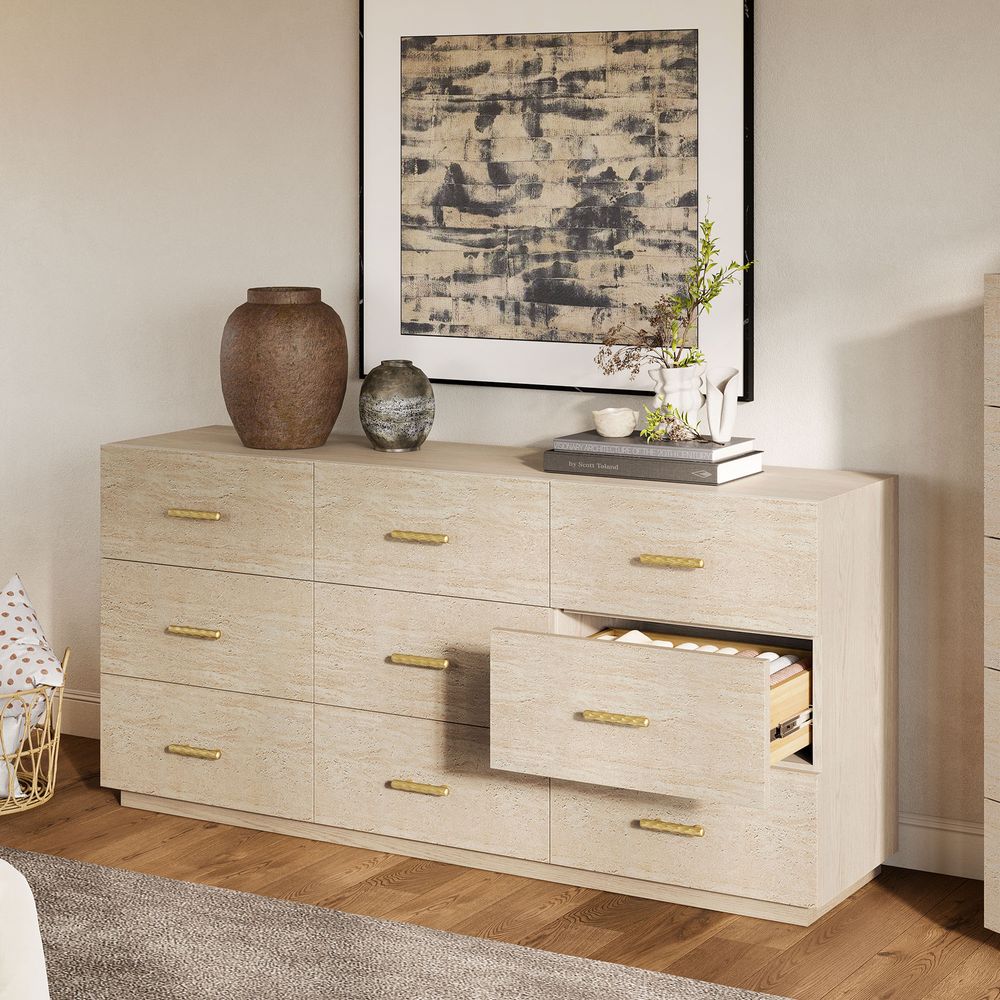
Renata 80-Inch Travertine-Textured 9-Drawer Dresser
View Product
Chests of Drawers: Vertical Storage for Tight Spaces
A chest of drawers takes the same basic storage concept as a dresser and turns it upward. Instead of spreading drawers across a wide surface, a chest stacks them vertically.
That makes it useful for narrow walls, corners, alcoves, and bedrooms where floor space is limited. It can also provide additional storage when a dresser does not offer enough capacity.
Tall vs. Wide Storage
The main difference between a dresser and a chest is how each piece uses space.
A dresser generally offers:
-
More surface area
-
Wider drawers
-
A lower overall profile
-
More room for a mirror or decorative objects
A chest generally offers:
-
A smaller floor footprint
-
More vertical storage
-
A narrower top
-
A practical option for tight wall space
Drawer dimensions also affect what each piece is best suited for. Wider drawers can make it easier to organize and see folded clothes, while deeper drawers can accommodate bulkier items.
The Renata 37-Inch Travertine-Textured 5-Drawer Chest measures 37 inches wide, 52.2 inches high, and 17.7 inches deep. Its narrower footprint makes it an option for spaces where a wide dresser would be difficult to place.
What to Check Before Buying a Chest
Look at more than the overall width. Check the height, depth, drawer dimensions, weight capacity, and the space needed to open each drawer.
Depth is particularly important in a small bedroom. A deeper chest can extend farther into the room and affect the walking path, while a shallower design may sit more comfortably against the wall.
Also check whether the furniture includes an anti-tip kit and follow the manufacturer's anchoring instructions.
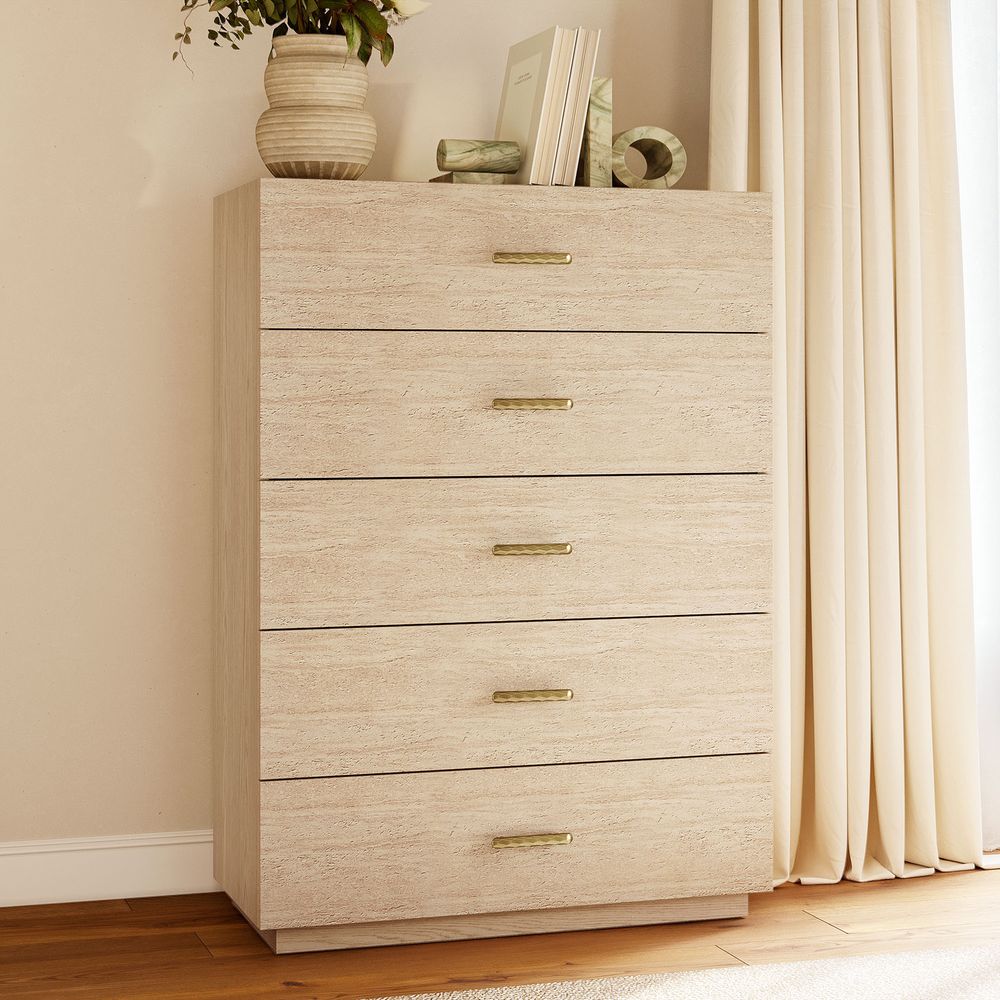
Renata 37-Inch Travertine-Textured 5-Drawer Chest
View Product
Nightstands: Everyday Bedside Storage
Nightstands are smaller than most other bedroom furniture pieces, but they solve a practical everyday problem. They keep the items you need before bed and after waking within easy reach.
A typical nightstand may hold a lamp, phone, glasses, books, water, chargers, and other small essentials.
Match Nightstand Height to the Mattress
Nightstand height should be considered in relation to the top of your mattress rather than as a standalone measurement.
A nightstand top that sits roughly level with the mattress or slightly above it is generally convenient for reaching items from bed. The ideal height can vary depending on your mattress, bed frame, and personal preference.
The Walter 26-Inch Linen-Blend Nightstand measures 26 inches wide, 18.1 inches deep, and 22.2 inches high. Its three drawers provide enclosed bedside storage without requiring much floor space.
How Much Nightstand Storage Do You Need?
Think about what you actually keep beside the bed.
If the nightstand only needs to hold a lamp, phone, and book, one drawer or an open shelf may be enough. If you keep chargers, notebooks, reading glasses, or other personal items nearby, additional drawers can make the space easier to organize.
Closed storage is especially useful when you want the top of the nightstand to stay clear.
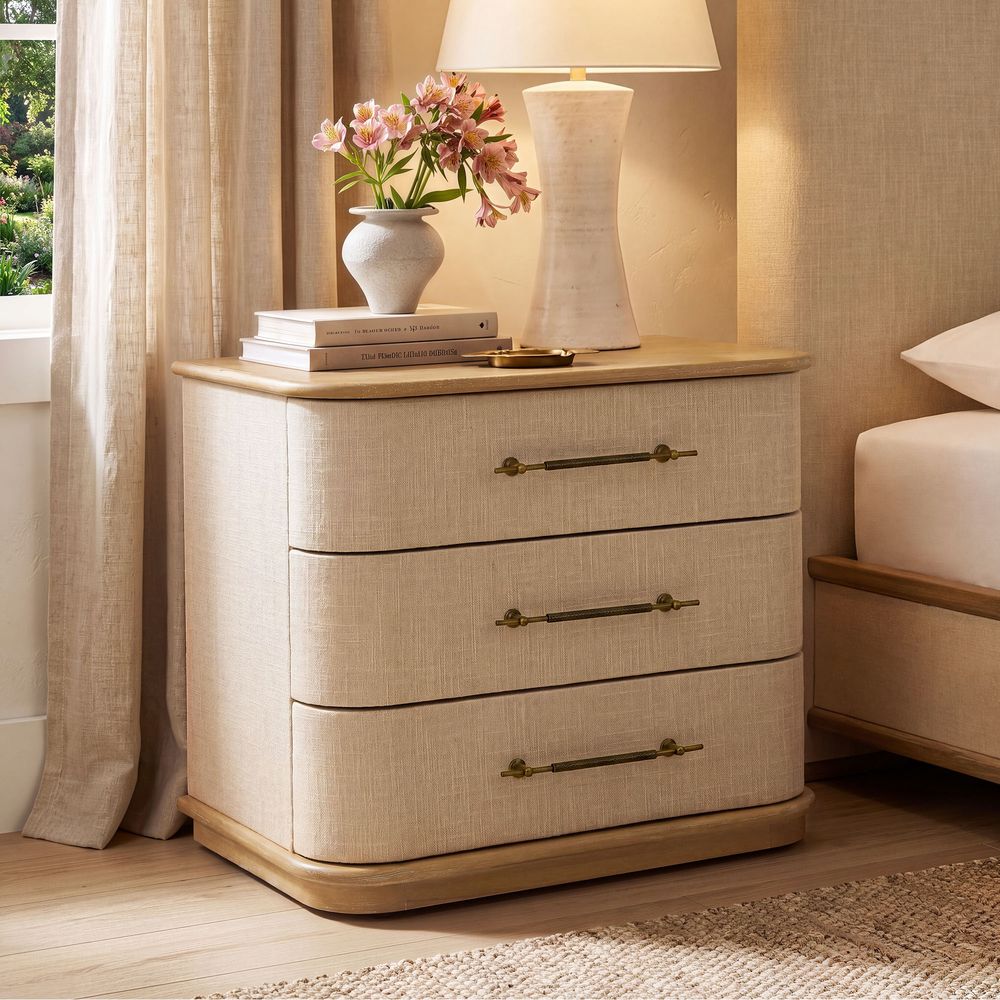
Walter 26-Inch Linen-Blend Nightstand
View Product
Other Bedroom Furniture Worth Considering
The storage pieces above handle many everyday needs, but they are not the only bedroom furniture types worth considering.
Wardrobes and Armoires
A wardrobe or armoire provides enclosed storage for hanging clothes and other items. It can be useful when a bedroom has limited built-in closet space.
Consider the door style before buying. Sliding doors require less clearance in front of the furniture than traditional hinged doors, which can be helpful in a compact room.
Storage Beds
A storage bed turns the area around or underneath the bed into usable storage. Depending on the design, drawers can hold clothing or bedding, while lift-up compartments can accommodate larger seasonal items.
Before choosing one, check how much clearance the storage mechanism needs. A drawer that opens directly into a wall or another piece of furniture will not be useful.
Benches and Bedroom Seating
A bench at the foot of the bed provides a convenient place to sit while getting dressed. Some designs also include shelves, drawers, or a lift-up seat for additional storage.
In a smaller bedroom, multifunctional seating can be useful because one piece can handle two needs.
Vanities and Mirrors
A vanity creates a dedicated getting-ready area and can provide smaller drawers for cosmetics, accessories, or grooming supplies. A wall-mounted mirror can provide a similar function without taking up as much floor space.
Floating Shelves and Wall-Mounted Storage
Wall-mounted shelves use vertical space rather than floor space. They work well for books, baskets, framed photos, and other items that do not need to be stored in drawers.
Floating nightstands can take the same approach beside the bed, leaving more floor visible in a compact room.
Bedroom Furniture Space-Saving Ideas for Small Rooms
A small bedroom does not necessarily need less storage. It needs furniture that uses the available space efficiently.
Build Up, Not Out
Vertical space is often easier to use than additional floor space. A tall chest can provide drawer storage without requiring the wall width of a dresser. Floating shelves can add storage above a desk, headboard, or dresser without taking up additional floor area.
When choosing taller furniture, make sure the height works with the room and that the piece can be safely anchored as recommended by the manufacturer.
Choose Furniture That Does More Than One Job
Multifunctional furniture can reduce the number of pieces you need.
A storage bench can provide both seating and storage. A storage bed can reduce the need for additional bins or cabinets. A compact chest may also work as a bedside table if its dimensions and height suit the bed.
The key is to choose a function you will actually use. A piece with several theoretical uses is not helpful if its primary function does not fit your routine.
Use Overlooked Areas
Look at the spaces that are often ignored:
-
The wall above the headboard
-
The area beside a closet
-
The back of a bedroom door
-
The space underneath the bed
-
Corners that are too narrow for standard furniture
These areas can accommodate shelves, hooks, baskets, or under-bed storage and may reduce the amount of bulky furniture required elsewhere.
Dresser vs. Chest: Which One Should You Choose?
The right choice depends mostly on your room layout and storage needs.
Choose a dresser when you have enough wall space and want a wide surface for a mirror, lamp, or everyday items.
Choose a chest of drawers when floor space is limited or you have a narrow section of wall that needs storage.
You can also use both. A dresser can handle the main clothing storage along a long wall, while a chest can provide additional storage in another part of the bedroom.
What to Look for in Bedroom Furniture
Once you know which type of furniture you need, construction details become more important.
Materials
Solid wood such as oak, maple, and walnut is valued for durability and can often be repaired or refinished. Quality veneer over a stable engineered-wood core can also provide reliable everyday performance.
The right choice depends on the furniture's construction, intended use, finish, and your budget rather than the material name alone.
Drawer Construction
For dressers and chests, pay attention to how the drawers are built. Dovetail joints are commonly used in drawer construction because they mechanically interlock the drawer sides and front.
Also look at the drawer slides. Soft-close hardware can reduce noise and help prevent drawers from being slammed shut.
Finish and Indoor Air
If indoor air quality is important to you, check the furniture's finish and any available emissions information. Low-VOC products can reduce the amount of volatile organic compounds released into indoor air. The EPA's guidance on VOCs and indoor air quality explains why VOC levels are worth considering indoors.
Plan Your Bedroom Storage Before You Buy
The easiest way to choose the right bedroom furniture is to start with what you need to store rather than the furniture you happen to like.
Take Inventory
Separate your belongings into broad categories such as:
-
Everyday clothing
-
Seasonal clothing
-
Bedding and linens
-
Accessories
-
Shoes
-
Suitcases and other occasional-use items
Then decide where each category should live.
Everyday clothing should be easy to reach. Seasonal bedding or luggage can usually go in less accessible storage such as under the bed or at the back of a closet.
This simple inventory can help you determine whether you need a large dresser, a tall chest, a storage bed, or a combination.
Measure the Room and Clearances
Measure the wall, floor area, door swings, closet doors, and walking paths before buying furniture.
For drawers, leave enough open space in front of the piece to stand comfortably and open the drawers without hitting the bed or another obstacle. Around 30 inches can serve as a useful planning guideline when the room allows it, but the actual clearance depends on the furniture and layout.
Don't forget the space above the furniture. A tall chest may fit comfortably on the floor but feel overwhelming if it leaves very little visual or physical clearance around windows, artwork, or ceiling fixtures.
Safety, Assembly, and Everyday Care
Bedroom furniture needs to work safely as well as look good.
Anchor Tall Furniture
Tall dressers, chests, and other storage furniture should be anchored according to the manufacturer's instructions. This is particularly important in homes with children.
Follow the included anti-tip instructions and use the appropriate hardware for your wall type. Avoid assuming that a heavy piece is stable enough on its own.
Care for Wood and Veneer
For most wood and veneer furniture, start with a soft, dry or slightly damp cloth. Avoid abrasive cleaners and follow the manufacturer's care instructions for the specific finish.
Keep moisture away from unfinished edges and wipe spills promptly. Stable indoor humidity can also help reduce the seasonal movement that naturally occurs with wood products.
Check Assembly Requirements
Assembly requirements vary by product. Before purchasing, check whether the furniture arrives fully assembled, partially assembled, or flat-packed.
This can make a meaningful difference if you live in a small apartment, have narrow stairs, or need to move the furniture through tight doorways.
FAQs
What are the main types of bedroom furniture?
The main types of bedroom furniture include beds and bed frames, nightstands, dressers, chests of drawers, wardrobes, storage beds, benches, vanities, and mirrors. Not every bedroom needs all of them, so choose pieces based on how you sleep, store belongings, and use the room.
What is the difference between a dresser and a chest of drawers?
A dresser is generally wider and lower, with drawers arranged across the width of the piece. A chest of drawers is usually taller and narrower, with drawers stacked vertically. Dressers provide more top surface, while chests use less floor width.
What is a nightstand used for?
A nightstand keeps everyday bedside essentials within reach. Common items include a phone, lamp, glasses, books, chargers, and water. Its height, width, depth, and storage configuration should work with the bed and the available walking space.
How do I choose bedroom furniture for a small room?
Start by measuring the room and identifying the storage you actually need. Choose vertical storage such as a chest or wall-mounted shelves when floor space is limited, and consider multifunctional pieces such as storage beds or benches.
How many dressers or chests does a bedroom need?
There is no fixed number. Base the decision on the amount of clothing and other belongings you need to store, the size of the room, and whether you already have closet or under-bed storage. One well-sized piece can be more useful than several smaller ones that crowd the room.
How tall should a nightstand be next to a bed?
A nightstand is generally easiest to use when its top is level with the mattress or slightly above it. Measure from the floor to the top of your mattress rather than relying on a standard nightstand height, since bed and mattress heights vary.
What should I look for when buying a dresser or chest?
Check the furniture's overall dimensions, drawer dimensions, construction, hardware, weight capacity, finish, and anchoring requirements. Also measure the room before buying to make sure the drawers can open without interfering with the bed, doors, or walking paths.
Should bedroom furniture be anchored to the wall?
Tall or potentially unstable furniture should be anchored according to the manufacturer's safety instructions. Use the included anti-tip hardware when provided and select mounting hardware appropriate for your wall type.