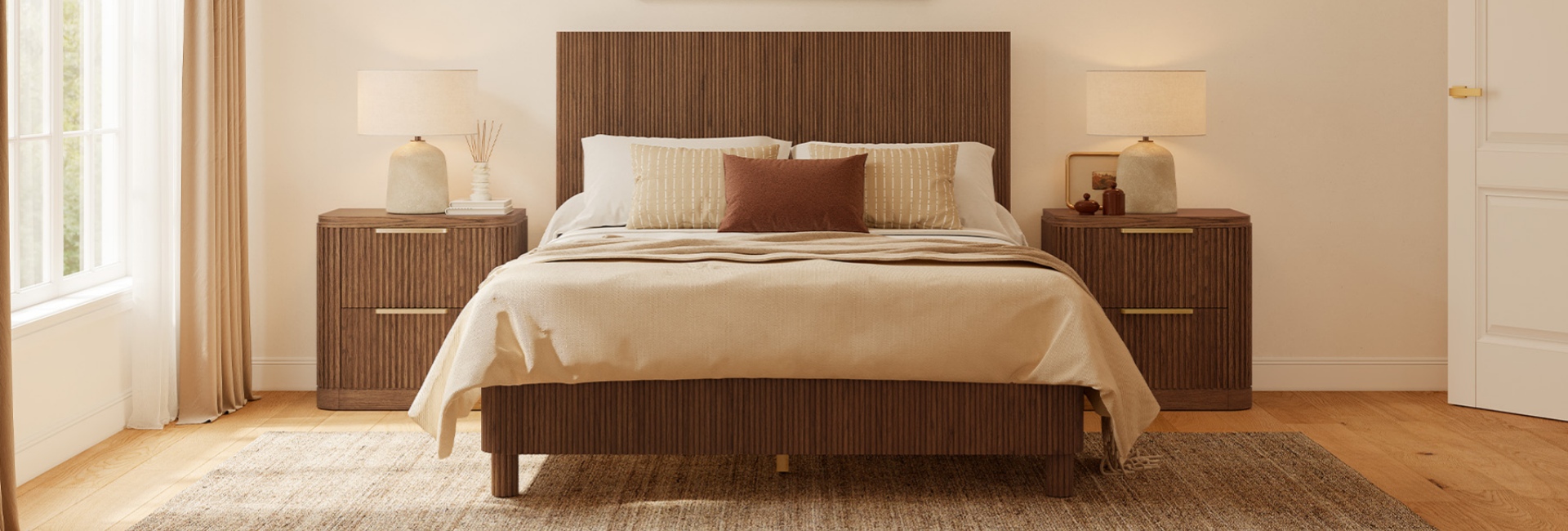
Choosing a bed involves more than picking a mattress size or headboard. The frame affects how your mattress is supported, how much floor space remains, and how the bedroom looks and functions. A storage bed can help reduce clutter, while a platform bed may offer a simpler setup with fewer components.
The challenge is that bed types are not all defined in the same way. Some describe how a bed is built, others focus on its function, and some refer mainly to its appearance. Understanding those differences makes it easier to compare options without confusing a design style with a particular frame structure.
This guide covers 10 common types of beds, explains how they differ, and walks through the practical details to check before buying.
Table of Contents
- Types of Beds vs. Bed Frame Styles: What's the Difference?
- 10 Common Types of Beds
- Modern and Mid-Century Modern Bed Styles
- Common Bed Frame Materials
- How to Choose the Right Bed for Your Room
- Types of Beds Compared
- Find a Bed That Fits Your Space
- FAQs
Types of Beds vs. Bed Frame Styles: What's the Difference?
The terms bed type and bed frame style often overlap, but they do not always mean the same thing. It helps to consider three things when comparing beds:
-
Construction: How the frame is built and how it supports the mattress. Platform and panel beds are examples.
-
Function: What the bed does beyond providing a place to sleep. Storage beds, Murphy beds, and adjustable beds fall into this group.
-
Design style: How the bed looks, including its silhouette, upholstery, finishes, and decorative details.
One bed can fit more than one category. For example, an upholstered bed may also have a platform base, and a storage bed may feature a mid-century modern design. When shopping, consider both the structure you need and the appearance you want.
10 Common Types of Beds
1. Platform Beds
Platform beds have a built-in mattress support system, often made of wooden or metal slats or a solid platform. Many are designed to support a mattress without a separate box spring, although the mattress manufacturer's requirements and the bed's specifications should always be checked.
Their relatively straightforward construction makes platform beds a practical option for bedrooms where a clean silhouette matters. Depending on the design, they may sit close to the floor or include enough clearance underneath for limited storage.
Best for: People who want a streamlined frame and a straightforward mattress setup.
What to check: Confirm the required mattress foundation, slat spacing, weight capacity, and under-bed clearance. A low-profile platform bed may leave little room for storage bins or cleaning underneath.
2. Panel Beds
Panel beds typically feature a headboard and footboard connected by side rails. The headboard may have raised panels, recessed details, or a simple flat surface, depending on the design.
Unlike a platform bed, the term panel bed mainly describes the frame's design rather than its mattress support system. Some panel beds use slats, while others require a box spring or a separate foundation. Check the specific model before purchasing a mattress or foundation.
Best for: People who prefer a more traditional bed silhouette or want a defined headboard as a focal point.
What to check: Look at the height of the headboard and footboard, the required foundation, and the total length of the assembled bed. A tall footboard can affect the visual feel of a smaller bedroom.
3. Sleigh Beds
Sleigh beds are recognized by their curved headboards and footboards, which resemble the shape of a sleigh. The curves may turn inward or outward, and the frame can be made from wood, upholstered materials, or a combination of finishes.
Because their profiles tend to be more prominent, sleigh beds can make a strong visual statement. They may suit a spacious bedroom, but the curved ends can take up more visual and physical room than a simpler frame.
Best for: Bedrooms where the bed is intended to be a noticeable design feature.
What to check: Measure the full frame, not just the mattress. The curved headboard and footboard can extend beyond the mattress dimensions and may affect walking space.
4. Canopy and Four-Poster Beds
Canopy and four-poster beds both use vertical posts, but they differ in their upper structure. A four-poster bed has posts at the corners, while a canopy bed typically connects those posts with an overhead frame. Some canopy beds are designed to hold fabric panels or curtains; others leave the upper frame exposed.
These beds draw the eye upward and can help define the sleeping area. However, their height and overall scale matter, especially in rooms with low ceilings or ceiling fans.
Best for: Bedrooms with enough vertical and floor space to accommodate a taller frame.
What to check: Measure ceiling height and account for ceiling fans, light fixtures, and window placement. If you plan to hang curtains, check whether the frame is designed to support them.
5. Storage Beds
Storage beds incorporate space-saving features into the frame. Common designs include drawers built into the sides or a lift-up platform that reveals storage beneath the mattress.
Side-drawer beds can keep clothing, linens, and other everyday items within reach. Lift-up designs may provide access to a larger storage compartment, but the lifting mechanism and the weight of the mattress can affect how convenient it is to use.
Best for: Small bedrooms, apartments, or anyone who needs extra storage without adding another large piece of furniture.
What to check: Make sure drawers can open fully without hitting nightstands, walls, or other furniture. For lift-up beds, check the mattress weight requirements and how much clearance is needed to raise the platform. Also consider whether you need frequent access to the items stored underneath.
6. Loft and Bunk Beds
Loft beds raise the sleeping surface above the floor, leaving room underneath for a desk, seating, or storage. Bunk beds stack two sleeping surfaces vertically, making them useful for shared bedrooms.
Both designs make use of vertical space rather than spreading furniture across the floor. Their suitability depends on ceiling height, access to the upper sleeping area, and the needs of the people using them.
Best for: Shared bedrooms, children's rooms, dorm-style spaces, and rooms where floor space is limited.
What to check: Review the manufacturer's age recommendations, weight limits, guardrails, ladder or stair design, and assembly requirements. Measure the ceiling height to make sure there is adequate clearance above the upper mattress. Follow the product's safety instructions rather than assuming all loft or bunk beds are suitable for every age group.
7. Murphy Beds and Wall Beds
Murphy beds, also called wall beds, fold vertically or horizontally into a cabinet or wall-mounted structure when not in use. When closed, the sleeping area can be used for another purpose, depending on the room layout and the bed's design.
This can be useful in studio apartments, guest rooms, and multipurpose spaces. However, the space-saving benefit depends on the room having enough clearance for the bed to open and close safely.
Best for: Rooms that need to serve more than one purpose, such as a home office that occasionally doubles as a guest room.
What to check: Confirm the required wall or floor attachment, installation requirements, mattress specifications, and open-bed clearance. If the unit includes cabinets or shelving, check whether doors and nearby furniture will interfere with its operation.
8. Daybeds and Trundle Beds
Daybeds often have a frame with a back and sides, allowing them to function as seating during the day and as a sleeping surface at night. Trundle beds include a second mattress on a low frame that slides beneath the main bed when not in use.
A daybed can work well in a guest room, reading nook, or home office. A trundle adds a second sleeping spot without requiring a permanent second bed at full height.
Best for: Guest rooms, smaller homes, and spaces that need flexible seating and sleeping arrangements.
What to check: Check the mattress dimensions and thickness requirements for both sleeping surfaces. For trundle beds, measure the floor clearance and make sure there is enough open space to pull the lower bed out when needed.
9. Upholstered Beds
Upholstered beds feature fabric or leather-like material over some or all of the headboard, frame, or both. They are available in many shapes, from simple padded headboards to designs with tufting, channel stitching, or fluted details.
The upholstered surface can create a softer look than an exposed wood or metal frame. It can also provide a comfortable surface to lean against while reading or watching TV in bed.
Best for: People who want a softer visual finish or a padded headboard.
What to check: Review the fabric type, cleaning instructions, frame construction, and mattress support system. Upholstery can collect dust and show wear over time, so choose a material and color that fit your household's cleaning needs.
10. Adjustable Beds
Adjustable beds use a motorized base to raise or lower sections of the sleeping surface, commonly the head and feet. They can offer more flexibility than a fixed frame for reading, watching TV, or changing sleeping positions.
Not every mattress is designed for an adjustable base. Compatibility depends on the mattress construction and the base manufacturer's requirements.
Best for: People who want to change the angle of their sleeping surface rather than keep it flat.
What to check: Confirm mattress compatibility, the base's weight capacity, power requirements, remote-control features, and clearance beneath the bed. If you are replacing an existing frame, check whether the adjustable base can fit within your bedroom layout.
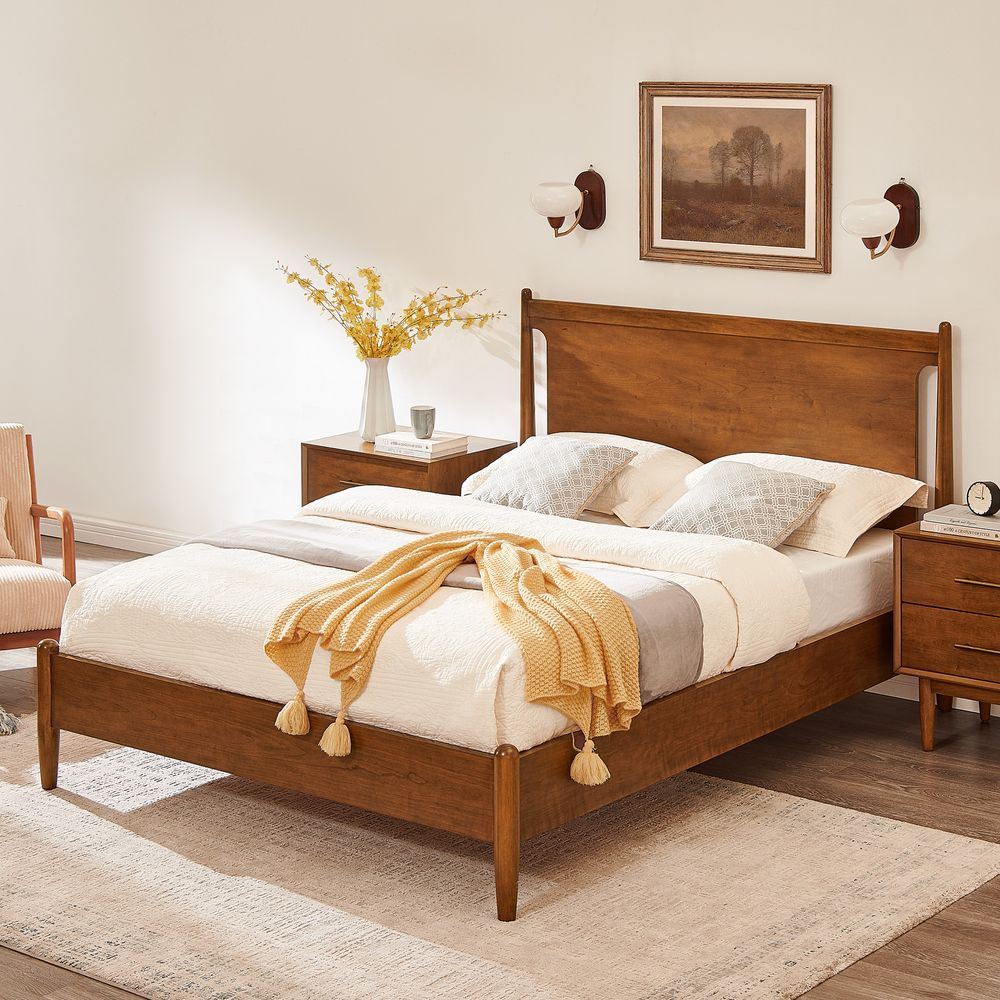
Kaden Mid-Century Bed
View Product
Modern and Mid-Century Modern Bed Styles
The bed's structure determines how it supports the mattress, while its design style influences how it looks in the room. Modern and mid-century modern beds are popular options for bedrooms that favor clean lines, practical proportions, and a considered mix of materials.
Mid-Century Modern Beds
Mid-century modern beds often feature tapered legs, warm wood tones, simple geometric shapes, and restrained detailing. Their raised profiles can make the floor beneath the bed more visible, which may help a room feel less visually crowded.
For an example, explore the Hernest Kaden Mid-Century Bed. When comparing similar designs, look at the leg shape, headboard proportions, finish, and how the frame works with your nightstands and dresser.
Fluted Beds
Fluted beds use repeated vertical grooves or ridges to add texture to the headboard or frame. The detailing gives the surface more depth without relying on elaborate ornamentation.
The Hernest Skugga Fluted Bed is one example to consider if you want a bed with a more defined headboard texture. When choosing a fluted design, consider how its lines and finish will work with other furniture in the room.
Contemporary and Transitional Beds
Contemporary beds can feature simple shapes, mixed materials, or understated decorative details. Transitional designs combine elements associated with traditional and modern furniture, creating a middle ground between ornate and minimalist looks.
The Hernest Harold King Size Bed provides another option to explore. Before choosing a design, compare the frame's dimensions, headboard height, finish, and support requirements rather than relying on the style label alone.
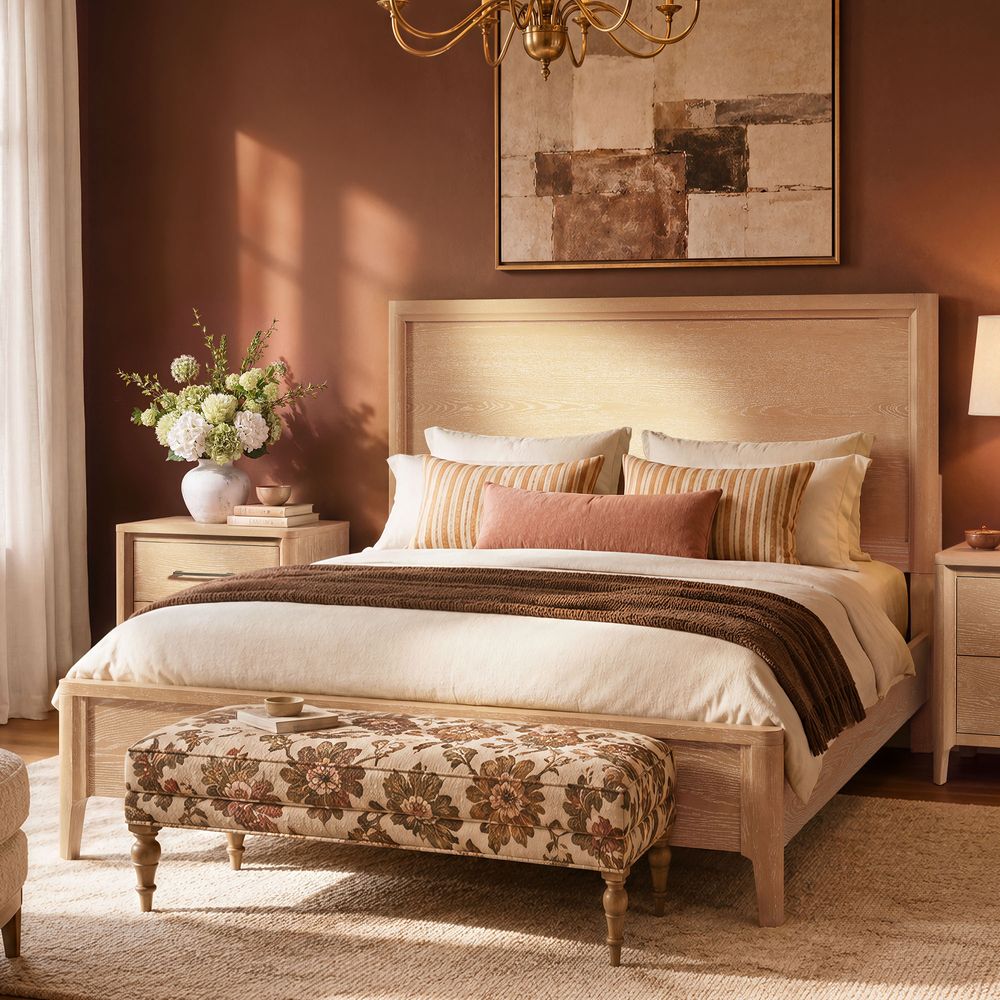
Harold Bed
View Product
Common Bed Frame Materials
The material affects a bed's appearance, maintenance, weight, and construction. The label alone does not determine quality, so check the specific materials and how the frame is assembled.
Solid Wood
Solid wood shows natural grain and can bring warmth to a bedroom. Its appearance varies by wood species, grain pattern, finish, and color. As with any material, construction quality and the design of the joints influence how well the frame holds up over time.
Consider it if: You want a wood finish with natural grain and a substantial furniture feel.
Veneer and Engineered Wood
Wood veneer is a thin layer of real wood applied to a core material. Engineered wood products can offer consistent surfaces and support a range of shapes and finishes. Their performance depends on the core material, thickness, construction, and how the frame handles weight and movement.
Consider it if: You prefer a particular wood appearance or finish and want to compare different construction options.
Metal
Metal bed frames can have a slim, open profile or a more substantial structure. They are available in many finishes, from understated black to polished or brushed metal tones.
Consider it if: You want a frame with a lighter visual profile or a design that pairs well with other metal accents.
Upholstered Materials
Upholstered frames may use fabric, synthetic materials, or leather and leather-like coverings over a padded structure. The look and maintenance requirements vary with the covering.
Consider it if: You want a padded headboard, a softer finish, or a frame that adds texture to the bedroom.
Before buying, read the product specifications to distinguish the visible finish from the material used in the underlying frame.
How to Choose the Right Bed for Your Room
Once you know the main types of beds, narrow your choices by considering how the frame will fit your room and daily routine.
1. Measure the Room and the Full Bed Frame
Start with the available floor space. Measure the wall where the headboard will sit, the distance between the bed and nearby furniture, and the walking routes around the room.
Do not use mattress dimensions as a substitute for the full bed dimensions. Headboards, footboards, side rails, and built-in storage can extend beyond the mattress.
If you are considering a storage bed, check that drawers can open fully. For a canopy or loft bed, measure the vertical space as well as the floor area.
2. Match the Bed to Your Mattress Size
Standard US mattress dimensions are a useful starting point, but always check the exact specifications of the mattress and bed frame you plan to buy.
These measurements refer to the mattress, not the assembled bed. A frame may be several inches wider or longer, depending on its design.
Also consider who will use the bed. A Twin can work for a child's room or a compact guest room, while a Queen is a common choice for couples who want to balance sleeping space with room for other furniture. A King offers more width, but it also requires more floor space.
3. Check Mattress Support Requirements
Different frames use different support systems. Some platform beds include slats or a solid base, while certain panel beds require a separate foundation. Adjustable bases have their own compatibility requirements.
Before buying, check:
-
Whether the frame requires a box spring or another foundation.
-
The permitted slat spacing, if the bed uses slats.
-
The frame's stated weight capacity.
-
Whether your mattress is compatible with the support system.
-
Any additional requirements listed by the mattress or bed manufacturer.
These details matter because a frame that looks right may not provide the support your mattress requires.
4. Decide Whether You Need Built-In Storage
Think about what you plan to keep in the bedroom and how often you need to access it. Side drawers can be convenient for clothing and linens, while a lift-up bed may offer a larger storage area for items used less frequently.
Storage beds are not always the best choice for every layout. Drawers need room to open, and lift-up mechanisms need space to operate. If the bed sits close to a wall or a nightstand, measure the clearance before making a decision.
5. Choose a Style That Works With Your Existing Furniture
A bed usually occupies a large part of the bedroom, so its shape and finish influence the overall look. Consider how the headboard, legs, wood tones, upholstery, and metal details relate to your nightstands, dresser, flooring, and lighting.
A simple frame can be easier to pair with different decor over time. A curved sleigh bed or a canopy frame may become the main focal point, while a fluted or upholstered headboard adds texture without requiring many extra decorative pieces.
You do not need every piece of bedroom furniture to match exactly. Repeating a finish, material, or shape in a few places can create a more connected look.
6. Review Assembly, Maintenance, and Warranty Details
A bed can look straightforward in a product photo but require significant assembly. Check the listed assembly requirements, whether additional help is recommended, and whether the package includes the necessary hardware.
Maintenance also varies. Wood finishes may need different care from upholstered surfaces, and motorized adjustable bases have electrical components that require attention to the manufacturer's instructions.
Finally, review the warranty terms, return policy, and delivery details before ordering. These can vary by product and seller, so use the current listing and policy documents rather than assuming all beds offer the same coverage.
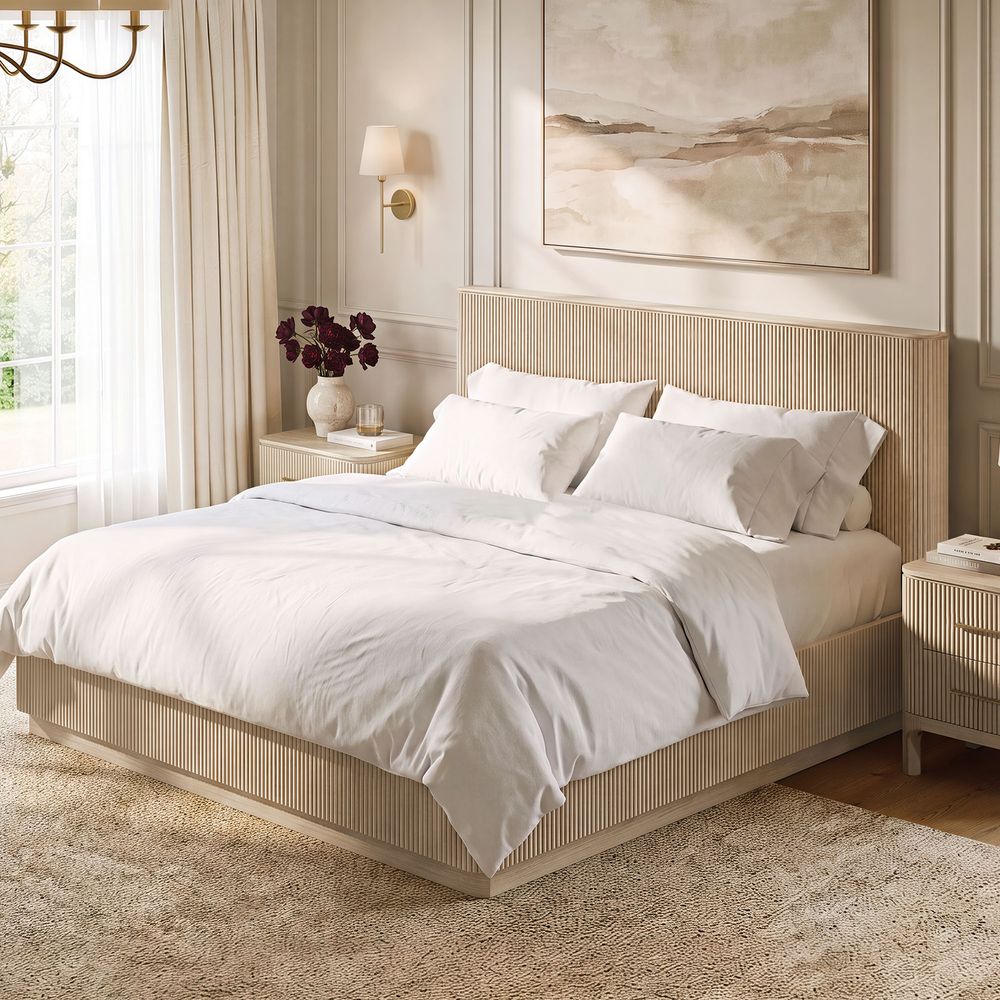
Skugga Fluted Bed
View Product
Types of Beds Compared
Use this overview to narrow down the options. The best choice depends on the exact frame design, room dimensions, mattress requirements, and your priorities.
Find a Bed That Fits Your Space
The right bed should work with your mattress, fit comfortably in your room, and support the way you use the space. Start with the practical requirements—dimensions, support, storage, and assembly—then narrow the options by material, finish, and design.
Explore the Hernest bed collection to compare available designs and find a frame that works with your bedroom.
FAQs
What are the main types of beds?
Common types include platform, panel, sleigh, canopy, four-poster, storage, loft, bunk, Murphy, daybed, trundle, upholstered, and adjustable beds. Some categories describe how the bed is built, while others describe its function or appearance.
What is the difference between a platform bed and a panel bed?
A platform bed is defined mainly by its mattress support system, which is built into the frame. A panel bed is identified by its headboard and footboard design. A panel bed may use slats or require a separate foundation, so check the specifications for the individual model.
Do all platform beds need a box spring?
No. Many platform beds are designed to support a mattress without a separate box spring. However, the correct setup depends on the bed frame's construction and the mattress manufacturer's requirements. Check the permitted foundation type and slat spacing before using your mattress on a new frame.
Which type of bed is best for a small bedroom?
The best option depends on the room layout and what you need from the bed. A platform bed can keep the design simple, while a storage bed may help reduce the need for separate storage furniture. Murphy beds are useful in multipurpose rooms, and loft beds can free up floor space when the ceiling height and safety requirements allow.
Measure the full frame and leave enough room for walking, opening drawers, and using nearby furniture.
What bed size should I choose?
Choose a mattress size based on the number of sleepers, their space needs, and the room's dimensions. Twin and Full mattresses can suit smaller rooms, while Queen and King sizes provide more width. California King mattresses are narrower and longer than standard King mattresses. Remember to measure the bed frame itself, since it will usually be larger than the mattress.
Is a wood or metal bed frame better?
Neither material is automatically better for every bedroom. Wood offers a range of natural grains and finishes, while metal can provide an open or slim profile. Durability depends on the frame's construction, joints, materials, weight capacity, and care—not just whether it is made of wood or metal.
What should I check before buying a bed frame?
Confirm the mattress size, overall frame dimensions, support requirements, weight capacity, assembly instructions, and clearance around the bed. If the frame includes storage, measure the space needed for drawers or a lift-up mechanism. Also review material details, maintenance instructions, delivery terms, and warranty coverage.