
A jammed drawer, a loose leg, or a nightstand that no longer works with your bed can all raise the same question: when is it time to replace your nightstand? There is no universal replacement date. A well-made nightstand can remain useful for many years, while lower-cost furniture may develop problems much sooner.
The more useful test is condition, function, and fit. If the piece is unsafe, difficult to use, or no longer suits your bedroom, replacement may make more sense than keeping it simply because it isn't very old. Here's how to spot the warning signs, decide what can be repaired, and choose a replacement built for everyday use.
Table of Contents
- The Quick Answer: When to Replace a Nightstand
- How Long Should a Nightstand Last?
- 7 Signs It's Time to Replace Your Nightstand
- Repair or Replace? A Simple Cost Check
- What Materials Mean for Nightstand Longevity
- Joinery and Hardware Matter Too
- How to Choose a Replacement Nightstand
- When Style Is the Reason to Replace It
- How to Make Your Next Nightstand Last Longer
- FAQs
- How often should bedroom furniture be replaced?
- How long does a nightstand typically last?
- How do you know when a nightstand needs to be replaced?
- Is it better to repair or replace a nightstand?
- What's the best material for a nightstand that lasts?
- How tall should a nightstand be next to your bed?
- Should you replace a nightstand if it just wobbles?
- How much does it cost to replace a nightstand?
The Quick Answer: When to Replace a Nightstand
Consider replacing your nightstand when it has a structural or safety problem that can't be reliably repaired, when repeated drawer or hardware failures make it difficult to use, or when it no longer fits your bed, room, or storage needs.
Look for these signs:
-
It still wobbles after you've tightened the fasteners and checked the joints.
-
A drawer sticks, comes off its track, or no longer closes properly.
-
Veneer is peeling and the material underneath is swollen from moisture.
-
Screws or hardware repeatedly pull out of the frame.
-
The wood has a structural crack, sharp splintered edge, or other damage that could cause injury.
-
The nightstand is too high, too low, or too large for your current bed and room layout.
-
You have outgrown the available storage.
Age by itself isn't a reason to replace a nightstand. A sound, functional piece can stay useful well beyond a certain number of years.
How Long Should a Nightstand Last?
There isn't one reliable lifespan for every nightstand. Construction, material, joinery, hardware, moisture exposure, and everyday use all affect how long a piece remains serviceable.
As a general guide:
-
Budget engineered-wood nightstands: may develop wear or hardware problems within several years, particularly with heavy daily use or moisture exposure.
-
Veneered and mixed-material nightstands: can provide many years of service when the frame, joints, and hardware are well constructed and properly maintained.
-
Well-made solid wood nightstands: can remain usable for decades, especially when the finish and individual components can be repaired or refinished.
A nightstand's lifespan depends less on a fixed number of years than on how well its frame, joints, drawers, hardware, and finish hold up over time.
Why Solid Wood Can Last Longer
One advantage of solid wood is repairability. A scratched surface can often be touched up or refinished, and a loose joint may be repairable without replacing the entire panel.
Veneer can also be durable when properly constructed, but its thin wood surface limits how deeply it can be sanded. Composite materials such as particleboard and MDF can work well in furniture, but moisture damage can permanently swell or weaken the affected panel.
Material isn't the only factor. Joinery, drawer hardware, assembly quality, and the conditions in the room all contribute to how long a nightstand lasts.
Why Some Budget Furniture Shows Wear Sooner
Lower-priced furniture often uses less expensive materials or hardware to control manufacturing costs. Repeated drawer movement, loose fasteners, and moisture around the bedside can eventually expose those weak points.
That doesn't mean every inexpensive nightstand has a short life. Price is only one part of the equation. Look at the construction, hardware, and materials before making assumptions about durability. If one piece in an older bedroom set is developing problems, inspect the other pieces individually rather than assuming they will all fail together.
7 Signs It's Time to Replace Your Nightstand
The reasons to consider replacement usually fall into three categories: safety, function, and fit.
1. It Still Wobbles After Tightening
A loose fastener is usually an easy fix. Persistent movement is different.
Tighten the screws, bolts, or other accessible fasteners first. Then check whether the movement comes from a loose joint, damaged leg, uneven floor, or warped component. If the frame itself is cracked or a structural joint can no longer hold securely, continued use may create a safety problem.
Don't treat a structural problem as a minor inconvenience. If the nightstand shifts noticeably when you open a drawer or place an item on top, find the source before continuing to use it.
2. The Drawers Fight You
A drawer should open and close without excessive force.
A dirty or slightly misaligned slide may be easy to clean or adjust. More serious warning signs include a drawer that repeatedly jumps its track, requires lifting to close, rubs heavily against the cabinet, or won't stay seated.
If only one inexpensive component has failed and the drawer box and cabinet remain square, repair may make sense. If several drawers have failed or the cabinet itself has shifted out of alignment, replacement becomes more practical.
3. Veneer Is Peeling and the Core Is Swollen
Peeling veneer isn't always a reason to replace a nightstand. A small lifted edge may be repairable if the substrate underneath remains sound.
The situation changes when moisture has caused the underlying particleboard or fiberboard to swell. Once a panel has significantly changed shape or lost its structural integrity, cosmetic repair won't restore the original material.
Look particularly closely around areas that regularly encounter water, such as the surface beneath a drinking glass, plant, humidifier, or bedside appliance.
4. Hardware Keeps Pulling Out
A screw that spins without tightening can sometimes be repaired by relocating or rebuilding the attachment point. Repeated failures are more concerning.
If drawer pulls, hinges, brackets, or other hardware can no longer grip the surrounding material securely, the problem may extend beyond the hardware itself. Multiple stripped attachment points can indicate that the material around the fasteners has deteriorated.
At that point, replacing the piece may be more reliable than repeatedly moving hardware to find another place for the screws to hold.
5. It Has Cracks, Sharp Edges, or a Stability Problem
A cosmetic hairline in a finish isn't the same as a crack through a structural component.
Pay attention to:
-
Cracks through legs or load-bearing joints
-
Splintered edges that can catch clothing or skin
-
A top or frame that has separated from the body
-
A stand that can be pulled forward unusually easily
-
A piece that leans because of structural damage
Furniture tip-over is a documented safety concern, particularly for children. If a nightstand is tall, top-heavy, unstable, or can be pulled forward easily, follow the manufacturer's safety and anchoring instructions rather than assuming its size makes it safe.
For furniture with a genuine structural failure, replacing it is preferable to relying on a temporary shim or cosmetic fix.
6. It No Longer Fits Your Bed or Room
A perfectly usable nightstand can become the wrong piece after you change your bed or rearrange the room.
For example, a low platform bed and a tall upholstered bed can require very different bedside proportions. A nightstand that worked beside one bed may now sit noticeably too high or too low.
As a practical starting point, look for a nightstand top that sits close to the top of your mattress. Being within roughly one or two inches can work well for many people, but your reach, mattress thickness, and personal preference matter too.
Measure the bed before shopping rather than relying on the nightstand's advertised height alone.
7. Your Storage Needs Have Changed
Sometimes nothing is wrong with the nightstand. Your routine has simply changed.
One shallow drawer may have been enough for a phone, book, and glasses. Later, the same bedside area may need space for chargers, a tablet, reading materials, or other personal items.
If items continually pile up on the floor or on top of the nightstand because the storage no longer works for you, replacement is a reasonable choice even when the furniture is still structurally sound.
If the problem is simply outgrowing one shallow drawer, the Walter 26-Inch Linen-Blend Nightstand offers three drawers for a larger bedside storage setup. Its linen-blend exterior and wood frame provide a different option when a single small drawer is no longer enough.
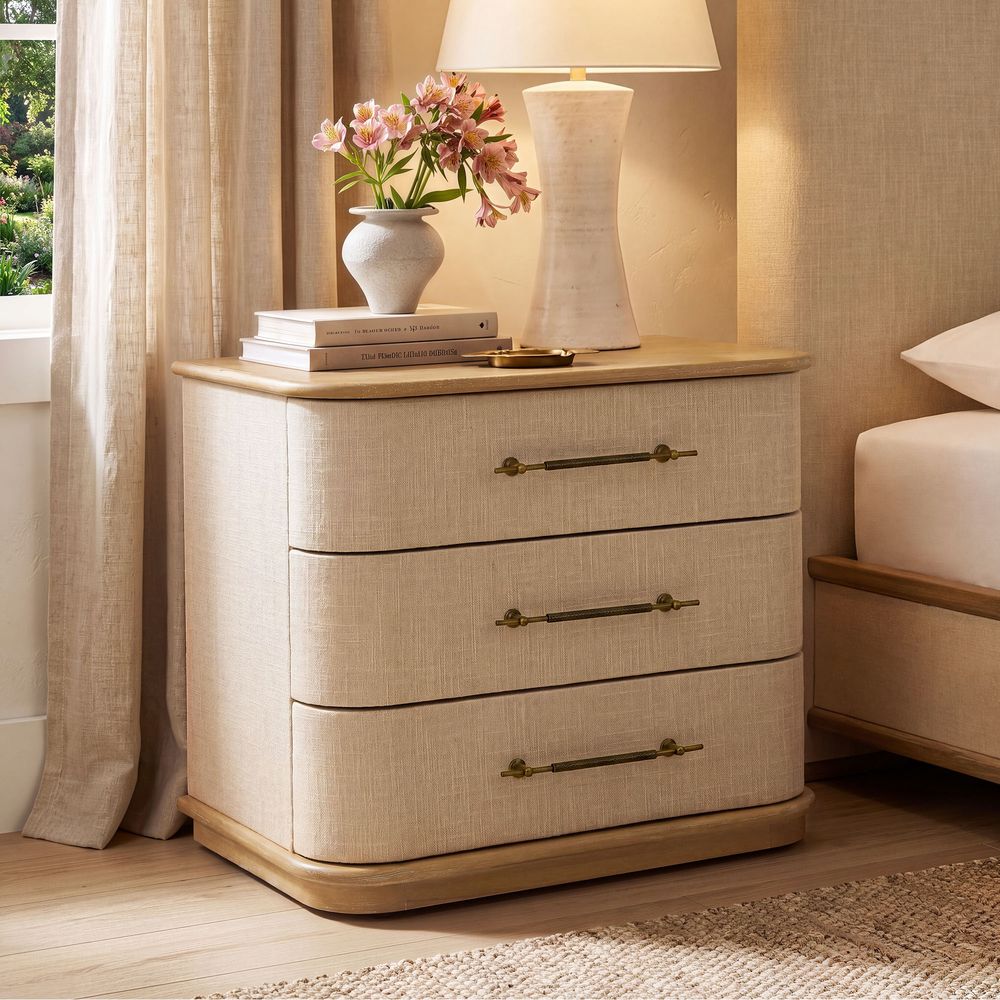
Walter 26-Inch Linen-Blend Nightstand
View Product
Repair or Replace? A Simple Cost Check
Before replacing a nightstand, separate a minor repair from a problem that affects the entire piece.
Compare the estimated repair cost with the price of a comparable replacement. This isn't a formal furniture-industry rule, but it can provide a useful starting point.
When Repair Usually Makes Sense
A repair is often worth considering when:
-
One drawer slide needs cleaning or adjustment.
-
A knob or pull has broken.
-
One joint has loosened but the surrounding wood is sound.
-
The finish has a small scratch or surface blemish.
-
A single hardware component needs replacement.
For example, spending $40 to repair a $400 nightstand may be reasonable if the rest of the piece is structurally sound and still meets your needs.
When Replacement Makes More Sense
Replacement becomes easier to justify when:
-
Several drawers have failed.
-
Multiple joints are loose.
-
Structural wood is cracked.
-
Particleboard or MDF has swollen from moisture.
-
Hardware can no longer hold securely.
-
The repair would cost a large portion of a comparable new piece.
-
The nightstand no longer provides the storage or dimensions you need.
A repair also doesn't change the basic design of the old piece. If you need more storage, better cable management, or a different height, repairing the existing nightstand only restores its previous configuration.
A Simple Decision Guide
Use the type of problem as your first filter:
Cosmetic damage → repair may be enough.
A surface scratch, loose knob, or minor finish issue usually doesn't justify replacing an otherwise sound piece.
One failed component → inspect and repair if practical.
A drawer slide, hinge, or fastener can often be replaced without replacing the whole nightstand.
Several recurring failures → compare repair and replacement costs.
Multiple drawer, joint, or hardware problems can make continued repairs less practical.
Structural damage or instability → stop and address the safety issue first.
A cracked frame, damaged leg, or serious tip-over risk shouldn't be treated as a cosmetic problem.
What Materials Mean for Nightstand Longevity
Material is an important part of durability, but it shouldn't be considered in isolation. Construction quality, joinery, hardware, and moisture exposure can be just as important.
Solid Wood
Solid wood can be sanded, repaired, and refinished more extensively than many composite materials. That makes it useful for furniture intended to remain in service for many years.
However, solid wood still needs appropriate care. Changes in humidity can cause wood to expand and contract, and poor construction can still result in loose joints or warped components.
Veneer Over an Engineered-Wood Core
Veneer uses a thin layer of real wood over another material. It can provide the appearance and texture of wood while using the core material for structural support.
A quality veneer construction can be durable, but the surface shouldn't be treated like a thick solid-wood panel. Deep sanding can remove the veneer, and moisture that reaches the substrate can cause swelling or delamination.
MDF and Particleboard
MDF and particleboard are widely used in furniture because they can provide consistent panels at a lower cost.
Their main weakness around a nightstand is moisture. Once a composite panel absorbs enough water to swell, it generally cannot be returned to its original dimensions through simple refinishing.
Joinery and Hardware Matter Too
The way a nightstand is assembled can tell you more about its construction quality than a finish or decorative detail.
Dovetail drawer joints interlock the drawer sides and can provide strong resistance to the repeated pulling forces drawers experience during everyday use. Other well-constructed drawer joints can also perform reliably when paired with suitable materials and hardware.
Drawer slides matter as well. Soft-close glides can reduce repeated slamming, while properly aligned slides reduce unnecessary friction and stress.
When evaluating a nightstand, look beyond the exterior. Check how the drawers are constructed, how smoothly they move, whether the frame feels square, and whether the hardware feels secure.
The Finnley 26-Inch Fluted Nightstand, for example, combines a poplar wood frame, poplar wood veneer, dovetail drawer joints, and soft-close glides. These are useful construction details to compare when long-term everyday use is a priority.
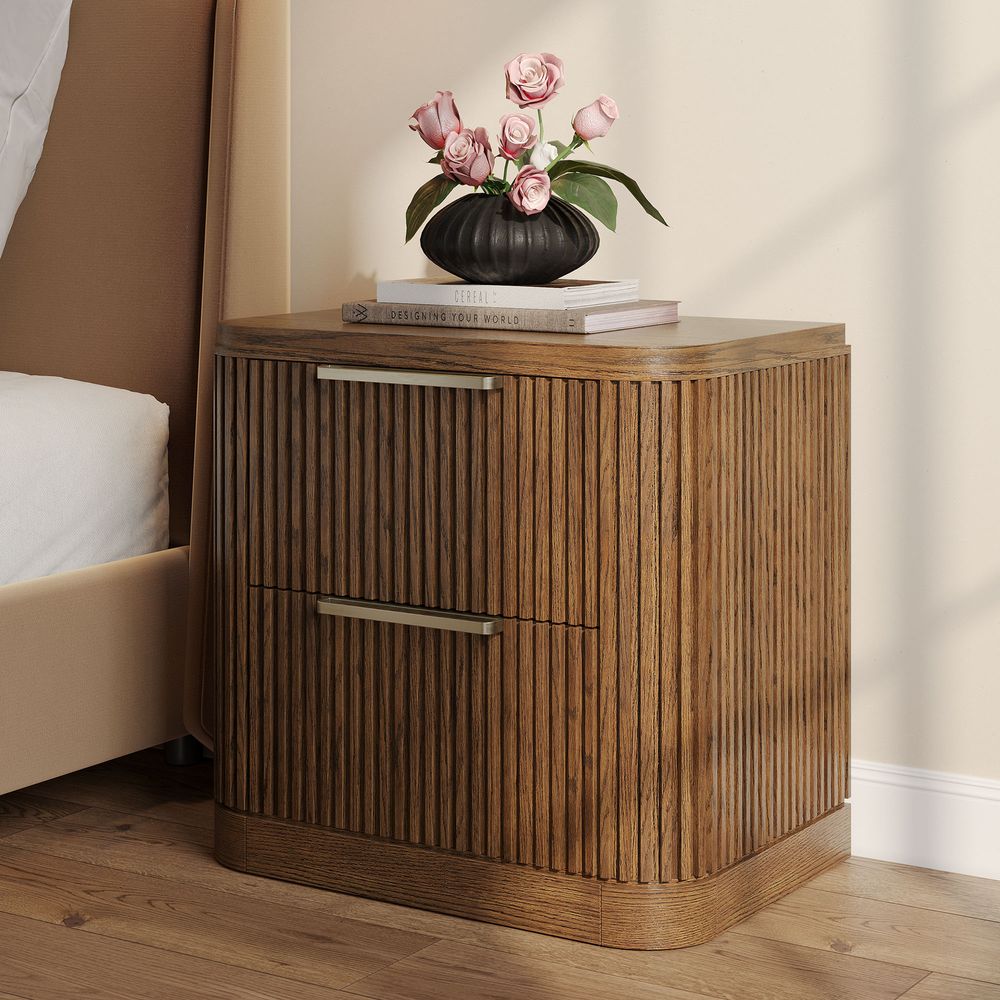
Finnley 26-Inch Fluted Nightstand
View Product
How to Choose a Replacement Nightstand
Once you've identified why the old nightstand stopped working, use that information when choosing the next one.
Start With Height
Measure from the floor to the top of your mattress. Then compare that measurement with the nightstand's finished height.
A nightstand that's dramatically lower or higher than the mattress can make everyday tasks less comfortable, particularly when you're reaching for a phone, lamp, or glass of water from bed.
Match Storage to Your Routine
Count what actually lives beside your bed.
If you regularly keep books, electronics, chargers, glasses, or other personal items nearby, one small drawer may not be enough. If your bedside setup is minimal, a larger cabinet may simply take up useful floor space.
Choose storage based on what you use rather than what looks impressive in a product photo.
Consider the Room's Conditions
Think about humidity and the activities around the nightstand.
If you regularly keep drinks, plants, or humidifiers beside the bed, moisture resistance and easy-to-clean surfaces deserve extra attention. Regardless of material, wiping spills promptly is one of the simplest ways to protect the furniture.
Look at Cable Management
A nightstand often doubles as a charging station. A rear opening or cable cutout can keep charging cables from collecting across the floor or getting trapped behind the furniture.
This is a small feature, but it can make a noticeable difference if several devices stay beside the bed.
Prioritize Stability
Check the footprint, leg design, frame construction, and overall balance. For taller or top-heavy furniture, follow the manufacturer's instructions for anchoring and anti-tip hardware.
A nightstand should feel stable before you load it with books, electronics, lamps, and other bedside items.
When Style Is the Reason to Replace It
Not every replacement needs a broken drawer or damaged frame behind it.
Your room may have changed. A nightstand that worked with your previous bed or decor may no longer suit the space. That's a design decision rather than a furniture failure, and it's useful to treat the two differently.
If the piece is still safe and functional, you don't need to replace it simply because its appearance feels dated. But if you're already redesigning the bedroom, dimensions, storage, and construction are worth considering alongside finish and style.
Texture, fluted fronts, linen details, and natural wood surfaces can all change how a nightstand reads in a bedroom. Choose the features that work with the rest of the room rather than replacing a functional piece solely because a particular trend is popular.
How to Make Your Next Nightstand Last Longer
The way you use and maintain a nightstand can affect how long it remains in good condition.
Everyday Habits
-
Tighten accessible fasteners when you notice movement rather than waiting for the joint to loosen further.
-
Use coasters or protective pads beneath drinks and other items that can scratch or leave moisture behind.
-
Wipe spills promptly, especially around seams and unfinished edges.
-
Avoid overloading drawers beyond what the drawer hardware and construction are designed to handle.
-
Keep the room's humidity reasonably consistent to reduce repeated expansion and contraction in wood components.
-
Don't drag the nightstand across the floor when moving it. Lift it or use an appropriate moving aid.
Finish Care
For routine dusting, use a soft, dry cloth. When the surface needs more cleaning, use a lightly damp cloth appropriate for the manufacturer's finish and dry the surface afterward.
Avoid leaving standing water on wood or wood-based surfaces. Direct, prolonged sunlight can also change the appearance of some finishes over time.
Most importantly, follow the care instructions supplied with the specific nightstand. Solid wood, veneer, painted finishes, and linen-wrapped surfaces don't necessarily require the same cleaning method.
FAQs
How often should bedroom furniture be replaced?
There is no fixed replacement schedule for bedroom furniture. A nightstand can remain useful for many years when its frame, drawers, hardware, and finish stay in good condition. Replace it when it becomes unsafe, difficult to use, or no longer fits your needs.
How long does a nightstand typically last?
A well-constructed nightstand can remain usable for many years, and solid wood pieces may stay in service for decades when properly maintained. Lower-cost furniture may show problems sooner, particularly if its hardware or composite panels are exposed to heavy use or moisture.
How do you know when a nightstand needs to be replaced?
Look for persistent wobbling, structural cracks, failed drawer hardware, swollen panels, repeated loose fasteners, or other damage that can't be reliably repaired. A nightstand can also be worth replacing when its height, size, or storage no longer works for your bedroom.
Is it better to repair or replace a nightstand?
Repair is usually worth considering when the problem is isolated and the frame remains sound. Replacement makes more sense when several components have failed, structural damage is present, moisture has swollen the core, or the repair would cost a large portion of a comparable replacement.
What's the best material for a nightstand that lasts?
There isn't one material that guarantees the longest life. Solid wood offers strong repair and refinishing potential, while quality veneer, engineered wood, and metal can also provide long service when properly constructed. Look at the material together with the joinery, hardware, and finish.
How tall should a nightstand be next to your bed?
A useful starting point is to choose a nightstand whose top sits close to the top of your mattress, often within about one or two inches. Measure your actual bed height before shopping because mattress thickness and bed-frame design can change the ideal nightstand height.
Should you replace a nightstand if it just wobbles?
Not necessarily. First check the fasteners, joints, legs, and floor. If the wobble comes from a simple loose connection, repair may solve it. If the frame or a structural component is cracked or damaged, continued use can create a safety problem and replacement may be appropriate.
How much does it cost to replace a nightstand?
Replacement prices vary considerably based on size, material, construction, finish, and whether you're buying one nightstand or a set. Compare the cost of a comparable replacement with the repair estimate rather than judging the decision by the original purchase price alone.