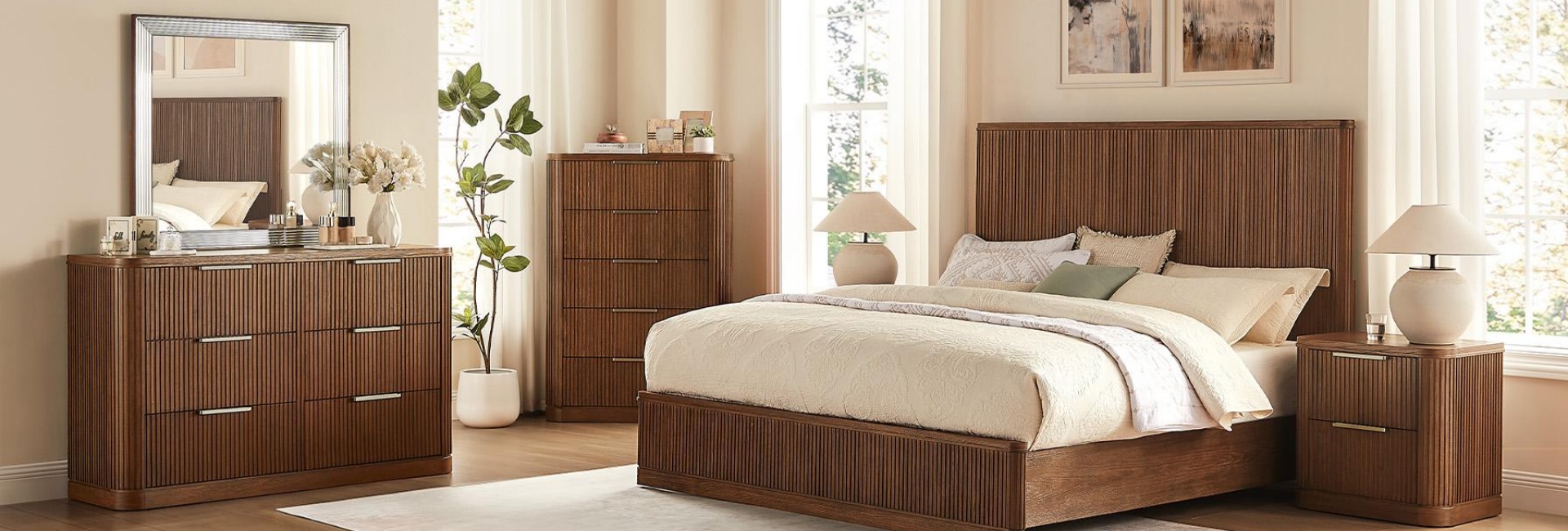
A dresser provides more than clothing storage. Its top offers space for everyday essentials and decorative accessories that reflect your personal style. If you're wondering what to put on top of a dresser, popular choices include mirrors, table lamps, decorative trays, vases, plants, and framed photographs. The right combination depends on your dresser's size, bedroom layout, and daily routine. A few well-chosen accessories can add personality while keeping the surface practical and clutter-free.
Table of Contents
- Mirrors and Wall Art
- Table Lamps and Decorative Lighting
- Vases, Flowers, and Greenery
- Decorative Trays, Bowls, and Storage
- Books, Photos, and Personal Accents
- How to Decorate a Dresser: 5 Simple Styling Tips
- What to Put on a Dresser Based on Its Size and Use
- Common Dresser Top Decorating Mistakes to Avoid
- FAQs
- What Are the Best Things to Put on Top of a Dresser?
- How Many Items Should You Put on a Dresser?
- Should You Put a Mirror Above a Dresser?
- What Should You Put on Top of a Small Dresser?
- How Do You Decorate a Wide Dresser?
- What Should You Put on a Dresser Used as a Vanity?
- Can You Put Plants on Top of a Dresser?
- How Do You Keep a Dresser Top From Looking Cluttered?
- Can You Put a TV on Top of a Dresser?
Mirrors and Wall Art
A mirror or piece of artwork can establish a focal point above your dresser. Both options add visual interest without taking up much surface space.
1. Round and Rectangular Mirrors
Mirrors are a practical choice for bedroom dresser decor, particularly if you use the furniture as a getting-ready area. When positioned near a window, a mirror can reflect natural light and make a small bedroom feel brighter.
Different shapes suit different furniture styles:
-
Round mirrors: Their curved edges soften the straight lines of rectangular dressers.
-
Rectangular mirrors: Their proportions work well above wide dressers and provide a larger reflective surface.
-
Arched mirrors: A curved top introduces a softer architectural detail.
-
Decorative mirrors: Carved wood, metallic frames, and textured finishes add another layer of detail.
Consider a mirror around two-thirds the width of the dresser as a starting point. Adjust the proportions according to the frame, available wall space, and other decorations.
2. Framed Artwork and Wall Prints
If you don't need a functional mirror, framed artwork offers another way to decorate the wall above a dresser. Prints, paintings, and photographs can introduce color and patterns that complement your bedroom.
You can arrange artwork in several ways:
-
One large print: Creates a clear focal point above a wide dresser.
-
A pair of framed pictures: Adds balance without making the wall feel crowded.
-
A gallery wall: Combines smaller photographs, illustrations, and prints.
-
Leaning frames: Creates a relaxed, layered arrangement when placed securely against the wall.
For additional depth, layer a smaller frame in front of a larger one. Keep the arrangement stable and leave enough clearance for accessing the drawers.
Table Lamps and Decorative Lighting
Lighting adds both function and visual height to a dresser display. The right option depends on whether you need task lighting for getting ready or softer illumination for the bedroom.
3. Table Lamps
A table lamp provides localized lighting while adding height to the dresser arrangement. It is useful when you want softer lighting in the evening or need a convenient light near your getting-ready area.
Consider these details when choosing a lamp:
-
Height: Choose a lamp that complements nearby mirrors and artwork without dominating the arrangement.
-
Base size: A compact base leaves more room for everyday accessories.
-
Shade shape: Wider shades create a more substantial appearance, while narrower designs suit smaller surfaces.
-
Material: Ceramic, glass, and metal bases can complement different furniture finishes.
For example, a ceramic lamp with a fabric shade pairs well with warm wood furniture, while a metal lamp can introduce contrast against a lighter dresser.
4. Wall Sconces and Accent Lighting
Wall sconces provide additional lighting without occupying dresser top space. They work particularly well beside a mirror or above a getting-ready area.
Plug-in sconces are worth considering if you prefer not to install permanent electrical wiring, provided the mounting and electrical requirements are suitable.
Small accent lights can also create a softer atmosphere without taking up much surface space. Choose lighting based on how you use the dresser rather than appearance alone.
Vases, Flowers, and Greenery
Natural shapes and greenery can soften the appearance of bedroom furniture. They also introduce color and texture, particularly in rooms with neutral walls and simple furniture.
5. Decorative Vases
A vase can serve as a decorative accent even when it doesn't contain flowers.
Consider different materials and finishes:
-
Clear glass: Keeps the arrangement light and works well with colorful flowers.
-
Ceramic: Adds color and texture, even when displayed on its own.
-
Stoneware: Suits neutral bedrooms and natural material palettes.
-
Metal: Introduces contrast and a more decorative finish.
A single vase can work well on a narrow dresser, while a larger arrangement may suit a wider surface.
6. Fresh Flowers
Fresh flowers bring seasonal color and natural texture to a dresser. A small arrangement of roses, tulips, or seasonal blooms can add interest without occupying too much space.
Choose a vase that provides enough support for the stems and leaves room for other accessories. Remember to change the water regularly and use a protective mat underneath to prevent moisture marks.
7. Dried Flowers and Faux Plants
Dried eucalyptus, preserved grasses, and artificial greenery add texture without regular watering. They are also suitable for bedrooms where natural light is limited.
Choose arrangements with a height that complements the dresser. Tall dried branches can add vertical interest, while smaller artificial plants fit more easily into compact spaces.
8. Small Potted Plants and Succulents
Small potted plants introduce greenery to an otherwise furniture-heavy space. Succulents and compact foliage plants are popular choices for dresser displays.
Select plants according to the light available near your dresser. Some varieties need several hours of bright light, while others tolerate lower-light conditions.
Use a suitable saucer beneath real plants to protect the furniture from water and soil.
Decorative Trays, Bowls, and Storage
Watches, jewelry, sunglasses, and perfume bottles can quickly clutter a dresser. Trays, bowls, and storage boxes give these everyday items a designated place while keeping the arrangement organized.
9. Decorative Trays
A decorative tray groups smaller accessories into one area instead of spreading them across the entire surface.
Wood, marble-look, glass, and metal trays can all complement bedroom furniture. Choose a size that accommodates your everyday belongings without taking up too much room.
If you use the dresser as a vanity, a tray can keep frequently used skincare products and fragrances together.
10. Jewelry Dishes and Organizers
A small jewelry dish provides a convenient place for rings, earrings, and bracelets you wear regularly.
Ceramic, glass, and metal dishes offer different decorative finishes. For more delicate pieces, a lined jewelry organizer with separate compartments provides better protection than an open dish.
11. Perfume Organizers
A perfume organizer keeps fragrance bottles together and creates a more organized vanity area.
Choose a tray or organizer with enough room for the bottles you use regularly. Leave less frequently used products in drawers or closed storage to prevent the dresser top from becoming crowded.
12. Decorative Bowls and Storage Boxes
Decorative bowls work well for watches, hair accessories, and other small belongings. Storage boxes offer a more discreet option for cables, spare accessories, and miscellaneous items.
Different materials create different visual effects:
Books, Photos, and Personal Accents
Once the practical accessories are in place, add a few personal objects to make the dresser feel connected to the rest of your bedroom.
13. Coffee Table Books and Stacked Books
A small stack of two or three books adds color and horizontal layers to a dresser. Choose covers that complement the room and place a small vase or ceramic object on top to create different heights.
Avoid stacking too many books, particularly on narrow dressers where surface space is limited.
14. Framed Photos and Personal Keepsakes
Family photographs, travel pictures, and meaningful keepsakes make a dresser feel more personal.
Display one favorite photograph or group several smaller frames together. Matching frames create a consistent look, while different materials and finishes introduce a more relaxed arrangement.
15. Candles and Decorative Objects
Candles, small sculptures, and collectible objects can add a finishing detail to a dresser display.
A ceramic figurine, decorative sculpture, or meaningful keepsake can stand out without requiring much space. Choose one or two pieces that complement the furniture rather than displaying several unrelated objects.
For bedroom safety, battery-operated flameless candles are a practical alternative to burning candles near bedding and other flammable materials.
How to Decorate a Dresser: 5 Simple Styling Tips
Choosing accessories is only part of decorating. Their arrangement, proportions, and relationship with the surrounding furniture determine how the finished display looks.
Start With a Focal Point
Choose one main element before adding smaller accessories. This could be a mirror, framed artwork, a lamp, or a decorative vase.
A clear focal point gives the arrangement direction and prevents smaller objects from competing for attention.
Mix Different Heights and Textures
Objects with different heights create a more layered display.
For example, combine a tall lamp or vase with a medium-sized framed photograph and a low decorative tray. Different materials, such as wood, ceramic, and glass, also add texture.
Choose a Consistent Color Palette
Look at the colors already present in your bedroom before choosing additional accessories.
For warm wood furniture, cream ceramics, natural shades, and muted green accents can create a coordinated look. Darker furniture can be paired with lighter accessories for contrast.
Working with two or three main colors is a useful starting point when putting together dresser top decor.
Try Symmetrical and Asymmetrical Arrangements
Both arrangements can work well, depending on the furniture and bedroom style.
Symmetrical styling uses similar objects on either side of a central focal point. For example, position a mirror in the middle and place matching lamps on both ends.
Asymmetrical styling uses different objects to create visual balance. You might place a mirror on one side and a taller lamp on the other, with a small tray between them.
Objects with different shapes and sizes can still look balanced when their visual weight is similar.
Leave Some Empty Space
Avoid filling every inch of the dresser with decorations. Open space allows individual accessories to stand out and makes the furniture easier to use.
Divide the surface into functional and decorative areas. Keep everyday essentials together, display a few decorative objects nearby, and leave the remaining space clear.

Skugga 70-Inch Oak 9-Drawer Dresser
View Product
What to Put on a Dresser Based on Its Size and Use
The dresser's dimensions and intended purpose should influence your decorating choices. A wide double dresser offers different styling opportunities from a narrow chest of drawers.
Decorating a Wide Dresser
A wide dresser provides room for separate decorative groupings. You can keep everyday accessories near one end while using the other side for a lamp, vase, or framed artwork.
For example, the Skugga 70-Inch Oak 9-Drawer Dresser measures approximately 70.9 inches wide and features nine drawers. Its fluted wood design, rounded legs, and warm brown oak finish give it a textured appearance.
The wide surface allows you to arrange accessories in separate sections without concentrating everything in the center. A mirror or large artwork above the dresser can anchor the display, while a lamp and decorative tray occupy opposite ends.
When styling a wide dresser, consider:
-
Leaving enough space between decorative groupings.
-
Keeping frequently used accessories within easy reach.
-
Choosing a mirror or artwork that complements the dresser's width.
-
Avoiding oversized decorations that make the surface feel crowded.
Decorating a Narrow or Tall Dresser
A narrow dresser or tall chest has less horizontal surface space, so compact accessories are generally easier to arrange.
The Finley 38-Inch Fluted 5-Drawer Chest measures 38 inches wide and 54.3 inches high. Its five drawers provide vertical storage, while the fluted wood fronts and warm brown finish introduce texture to the bedroom.
Because of its narrower top, a small vase, compact decorative tray, or framed photograph can be enough to complete the arrangement. Wall-mounted artwork or a mirror can provide additional visual interest without occupying the limited surface.
For tall chests, also consider the height of nearby wall decor. A large mirror or artwork should be positioned to maintain comfortable visual proportions.

Finley 38-Inch Fluted 5-Drawer Chest
View ProductDecorating a Dresser Used as a Vanity
When using a dresser as a vanity, arrange the surface around your daily routine.
Prioritize:
-
A mirror positioned at a comfortable viewing height.
-
Suitable lighting for applying makeup or grooming.
-
A tray for frequently used perfumes and skincare products.
-
A jewelry dish or organizer for everyday accessories.
-
A small storage box for items you prefer to keep out of sight.
Keep frequently used products within reach and store less frequently used items in drawers or closed containers.
Decorating a Dresser With a TV
A dresser beneath a television requires a simpler arrangement because the screen already draws attention.
Keep additional decorations low and relatively compact. A small plant, short stack of books, or decorative tray can add interest without competing with the screen.
However, an ordinary dresser should not automatically be treated as a television stand. Check its weight capacity and the TV manufacturer's instructions before placing a television on it. Secure both the furniture and television appropriately to reduce tip-over risks.
Common Dresser Top Decorating Mistakes to Avoid
Even attractive accessories can look out of place when their placement interferes with the furniture's appearance or everyday use.
Adding Too Many Decorative Objects
Too many small accessories can make a dresser look cluttered and harder to clean. Start with a few functional pieces and add decorative objects only when needed.
Blocking Drawers and Everyday Access
A dresser is still a storage piece. Avoid placing trays, baskets, or large decorations where they interfere with opening drawers.
Check the clearance around drawer handles before finalizing the arrangement.
Placing Heavy or Unstable Items in Unsafe Positions
Heavy mirrors, tall sculptures, and loosely stacked objects should be positioned carefully.
Secure wall-mounted mirrors and artwork with hardware suitable for their weight and wall type. If you have children, anchor the dresser according to the manufacturer's instructions.
Forgetting About Furniture Surface Protection
Perfume bottles, plant pots, and decorative objects can leave marks if they leak, scratch, or create moisture buildup.
Use suitable trays or protective pads under accessories, particularly on wood and finished surfaces. Follow the furniture manufacturer's care instructions when cleaning the top.
FAQs
What Are the Best Things to Put on Top of a Dresser?
Mirrors, table lamps, decorative trays, vases, small plants, framed photographs, and jewelry organizers are common choices. Combine functional accessories with a few personal decorations according to the available space and your daily needs.
How Many Items Should You Put on a Dresser?
There is no fixed number, but three to five carefully selected decorative objects can be a useful starting point for an average dresser. Wider furniture can accommodate additional groupings, while narrow chests generally look better with fewer accessories.
Should You Put a Mirror Above a Dresser?
A mirror is a practical choice, especially if you use the dresser when getting ready. Choose a size that complements the furniture's width and position it at a comfortable viewing height. Make sure wall-mounted mirrors are securely installed.
What Should You Put on Top of a Small Dresser?
Keep the arrangement simple with one main decorative piece and one or two smaller accessories. A compact vase, jewelry dish, or small tray can add personality without overwhelming the surface. Wall-mounted artwork is another way to decorate without using additional space.
How Do You Decorate a Wide Dresser?
Divide the surface into two or three decorative groupings. For example, place a lamp toward one end, a tray and small decorative object on the other, and a large mirror or artwork above. Leave enough open space between the groupings to maintain visual balance.
What Should You Put on a Dresser Used as a Vanity?
Prioritize a mirror, suitable lighting, perfume tray, makeup organizer, and jewelry storage. Keep frequently used products within easy reach and store less frequently used items in drawers or closed containers.
Can You Put Plants on Top of a Dresser?
Yes. Small potted plants, succulents, and decorative greenery can add natural color and texture. Choose plants that suit the available light and use a suitable saucer beneath the pot to protect the furniture from moisture.
How Do You Keep a Dresser Top From Looking Cluttered?
Give everyday belongings a designated place using trays, bowls, and storage boxes. Group smaller accessories together and leave part of the dresser surface clear for everyday use.
Can You Put a TV on Top of a Dresser?
Only consider this when the furniture is designed and rated to support the television. Check the weight capacity, dimensions, and installation instructions, and secure both the furniture and TV appropriately. A dedicated TV stand may be a safer choice for an ordinary dresser.