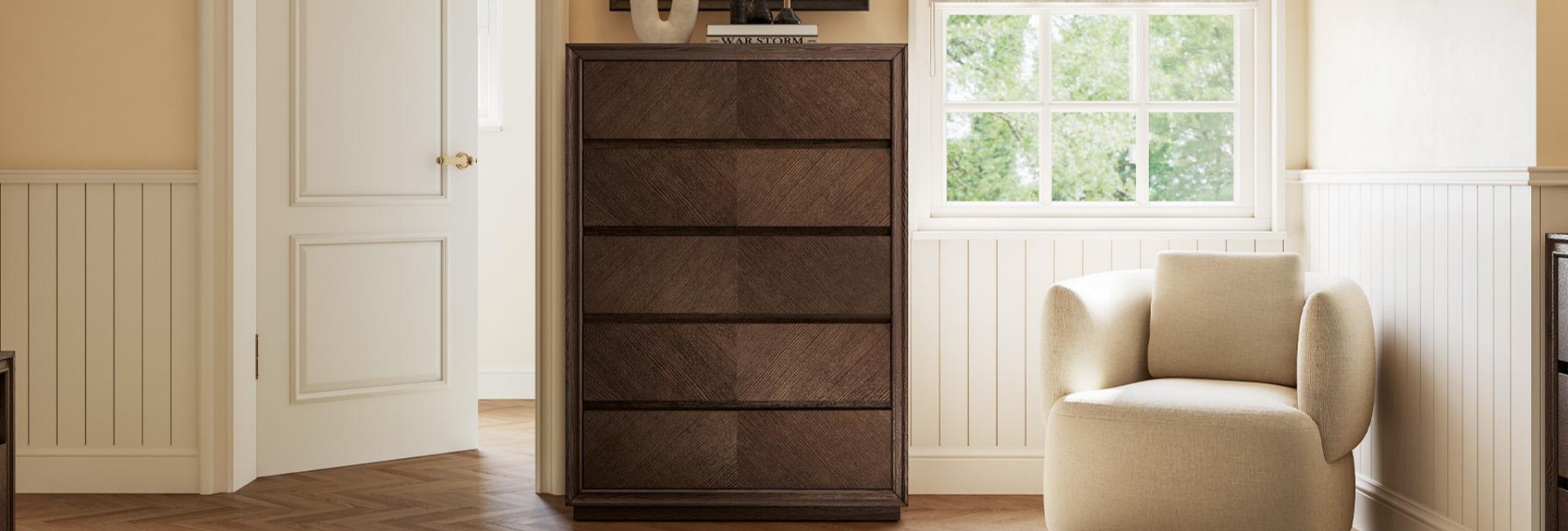
A chevron dresser combines everyday bedroom storage with a distinctive geometric pattern. Its repeating V-shaped lines add visual interest to a room while providing space for clothing, linens, and other essentials. However, dressers with similar patterns can differ significantly in material, drawer construction, and overall dimensions. Before choosing one, look at how the pattern is arranged, what materials are used, how much storage the drawers offer, and whether the dresser fits your bedroom layout.
Table of Contents
- What Is a Chevron Dresser?
- Why Choose a Chevron Dresser?
- How to Choose the Right Chevron Dresser for Your Bedroom
- Chevron Dresser Materials: Solid Wood, Engineered Wood, and Veneer
- What to Look For in a Well-Made Chevron Dresser
- Different Chevron Dresser Designs and Storage Configurations
- How to Style a Chevron Dresser in Your Bedroom
- How to Clean and Care for a Chevron Dresser
- Chevron Dresser vs. Other Bedroom Dresser Styles
- FAQs
- What Is the Difference Between a Chevron Dresser and a Herringbone Dresser?
- Is a Chevron Dresser a Good Choice for a Modern Bedroom?
- What Materials Are Used to Make a Chevron Dresser?
- Is a Wood Veneer Dresser Durable?
- How Do You Choose the Right Size Chevron Dresser?
- How Many Drawers Should a Bedroom Dresser Have?
- Can You Mix a Chevron Dresser With Other Wood Furniture?
- How Do You Clean a Chevron Wood Dresser?
- Does a Chevron Dresser Need to Be Anchored to the Wall?
What Is a Chevron Dresser?
A chevron dresser is a bedroom storage piece featuring a repeating V-shaped pattern, usually created with angled wood pieces or wood veneers arranged across the drawer fronts or other visible surfaces. The pattern forms connected points, giving the furniture a symmetrical, directional appearance.
Unlike a plain dresser with smooth drawer fronts, a chevron design makes the surface itself part of the furniture's decoration. The direction of the wood grain and the alignment of the V-shaped sections become important visual details.
Chevron vs. Herringbone: What's the Difference?
Chevron and herringbone are often confused because both create repeating zigzag patterns. The main difference is how their individual pieces meet.
In a chevron layout, angled ends meet to form continuous V-shaped points. Herringbone uses rectangular pieces arranged in alternating directions, creating a broken zigzag pattern.
On furniture, either pattern may be reproduced using wood veneer or other decorative surface construction. Look at the direction of the lines and whether they meet in continuous points to distinguish the two.
Where Does the Chevron Pattern Usually Appear?
On a chevron wood dresser, the pattern commonly appears on the drawer fronts, where the broad surface provides room for the geometric design.
Depending on the construction, the pattern may continue across multiple drawers or appear separately on each drawer front. Some designs also use complementary wood grain on the top and sides.
A continuous pattern across several drawers creates a different visual effect from individual V-shaped arrangements. When comparing chevron pattern furniture, check how the sections align around drawer gaps and whether the grain direction looks consistent.
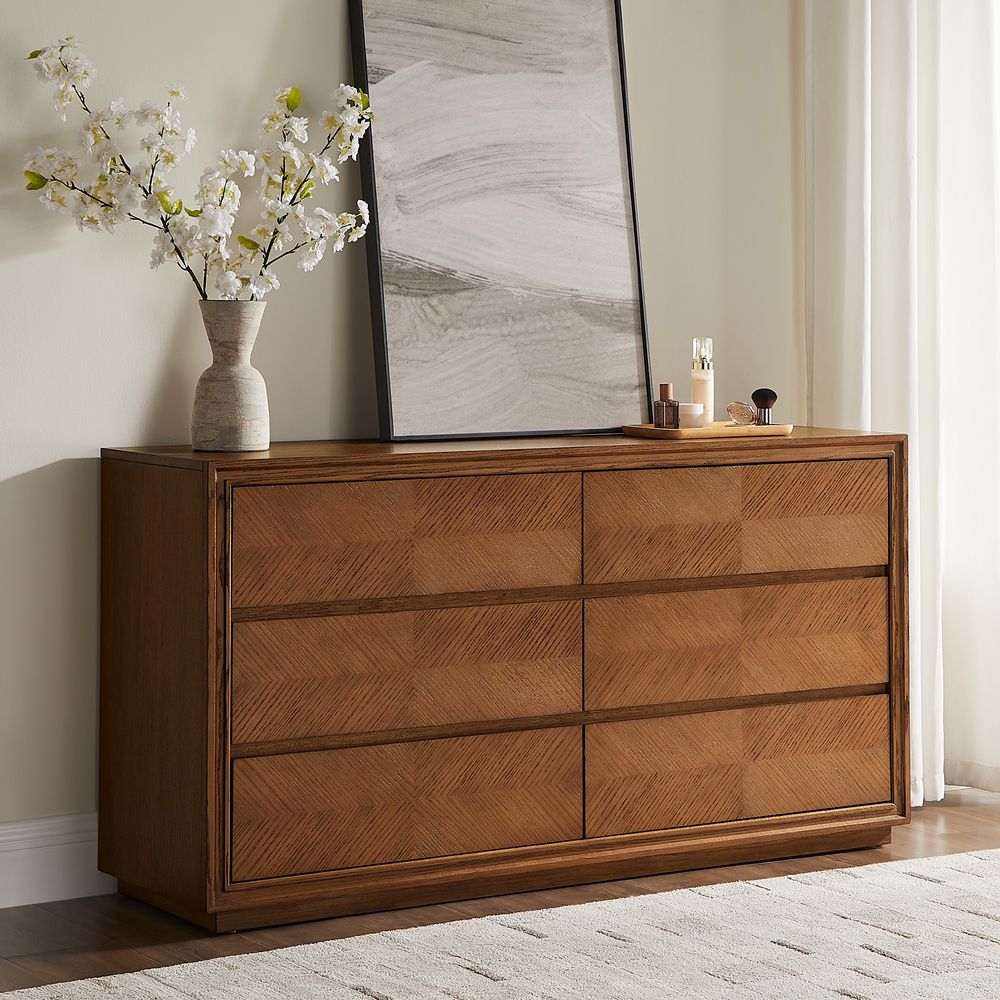
Thursen 60-Inch Chevron 6-Drawer Dresser
View Product
Why Choose a Chevron Dresser?
A chevron dresser adds decorative detail to bedroom storage through its geometric drawer-front pattern. It can introduce texture and visual interest without relying on elaborate hardware or decorative carvings.
Adds Detail to Simple Furniture
A plain wood dresser relies mainly on its color, finish, and proportions for visual impact. A chevron dresser adds another layer through the arrangement of the wood grain.
This works particularly well in bedrooms with neutral walls, solid-color bedding, or understated furniture. The geometric pattern gives a simple rectangular cabinet a more distinctive appearance.
Works With Different Bedroom Styles
Chevron patterns appear in contemporary and traditional furniture designs. The overall effect depends largely on the finish, proportions, and surrounding decor.
Warm brown finishes can complement beige, cream, and natural wood interiors. Darker finishes create stronger contrast against light walls and bedding.
For a more balanced bedroom, pair the patterned drawer fronts with simpler bed frames and nightstands. This allows the dresser to stand out without competing with several other decorative patterns.
Provides Functional Bedroom Storage
The chevron pattern doesn't change the basic function of a dresser. Drawer dimensions, interior capacity, opening mechanisms, and overall construction still determine how practical it is for daily use.
A six-drawer dresser can provide separate spaces for everyday clothing, sleepwear, accessories, and linens. A five-drawer chest offers a different arrangement, often using vertical space instead of a wider floor footprint.
Choose a drawer configuration based on the items you plan to store rather than the number of drawers alone.
How to Choose the Right Chevron Dresser for Your Bedroom
The dimensions and storage layout should fit both the available space and your daily storage needs.
Start With Width, Depth, and Height
Measure the wall where you plan to place the dresser, including the available width, depth, and vertical clearance.
-
Width: Determines how much horizontal wall space the dresser occupies.
-
Depth: Affects how far the furniture extends into the room and how much walking space remains.
-
Height: Influences accessibility and how the dresser relates to the bed, windows, and other furniture.
Drawer clearance also matters. Open the drawers fully when checking the available space to make sure they won't hit the bed, a chair, or another piece of furniture.
Match Drawer Capacity to Your Storage Needs
The number of drawers alone doesn't indicate how much useful storage a dresser offers. Interior width, depth, height, and drawer configuration also matter.
Check the interior drawer measurements rather than relying only on the dresser's external dimensions. Two dressers with the same number of drawers can offer noticeably different storage capacity.
Wide Dresser or Tall Chest?
A wide dresser spreads storage across a larger horizontal footprint. It also provides more surface area for a mirror, lamp, or decorative objects.
A tall chest uses vertical space instead. It may fit better in a bedroom where a wider cabinet would interfere with walkways or other furniture.
For example, the Thursen 60-Inch Chevron 6-Drawer Dresser measures 60 inches wide, 18 inches deep, and 32 inches high. Its horizontal layout provides six drawers across a wider cabinet.
The Thursen 36-Inch Chevron 5-Drawer Chest measures 36 inches wide, 18 inches deep, and 52 inches high. Its narrower footprint provides a taller storage arrangement.
Compare the available wall width, ceiling height, and surrounding furniture before deciding between these configurations.
Check the Delivery Path
A dresser may fit in the bedroom but still be difficult to bring into the house.
Measure door openings, hallways, staircases, and elevator interiors before ordering. Account for the furniture's full dimensions and any protruding hardware.

Thursen 36-Inch Chevron 5-Drawer Chest
View Product
Chevron Dresser Materials: Solid Wood, Engineered Wood, and Veneer
The materials behind a chevron pattern affect the dresser's appearance, construction, and maintenance.
A visible natural wood grain doesn't necessarily mean the entire dresser is made from solid wood. Decorative wood furniture can combine solid wood, engineered wood, and wood veneer.
Understanding Wood Veneer
Wood veneer is a thin layer of natural wood applied to a supporting material, such as solid wood or an engineered wood panel. The U.S. Forest Products Laboratory describes veneer as a thin wood sheet bonded to a substrate to provide a decorative surface.
Because veneer uses real wood, it can display natural variations in grain and color. It also allows manufacturers to arrange different wood sections into decorative patterns.
For a chevron dresser, grain direction is particularly important. The angled arrangement creates the V-shaped design, so selecting and positioning the visible wood surfaces affects how clearly the pattern appears.
Veneer construction isn't automatically a sign of poor quality. Its performance depends on the substrate, adhesive, surface preparation, manufacturing quality, and conditions in which the furniture is used.
Solid Wood vs. Engineered Wood With Veneer
These materials serve different purposes in furniture construction.
Some dressers combine these materials to balance the appearance of natural wood with the structural properties of panel construction.
The Thursen collection combines American solid oak and engineered wood with oak veneers. The product also features kiln-dried wood and wire-brushed surfaces
The wire-brushed finish emphasizes the natural grain, while the geometric parquet pattern creates a distinctive appearance across the drawer fronts.
How Does the Finish Affect Appearance?
The finish changes how a chevron pattern looks under different lighting conditions.
A natural or warm brown finish highlights variations in the wood grain. A darker finish can emphasize contrast between the V-shaped sections, while a lighter finish gives the pattern a softer appearance.
Surface treatments also affect texture. A wire-brushed finish makes the natural grain more noticeable, while glazing can add depth to the color.
When comparing products, look at close-up images as well as full-room photographs. Close-ups reveal grain, texture, and finish details that may be less visible in lifestyle images.
What to Look For in a Well-Made Chevron Dresser
A decorative pattern attracts attention, but the construction underneath determines how the dresser performs during everyday use. Check the drawer boxes, glides, cabinet structure, pattern alignment, and safety hardware before making a decision.
1. Chevron Pattern Alignment
The visual consistency of the pattern is one of the main details to inspect.
Look at the central points of the V shapes and check whether the lines appear balanced. If the pattern continues across several drawer fronts, examine how the sections meet at the drawer gaps.
Look for V-shaped sections that align consistently across the drawer fronts. Natural variations in wood grain and color are normal, so the markings don't need to be identical throughout the piece.
2. Drawer Construction
Check the drawer sides, bottom panels, corner joints, and overall fit to assess whether the construction suits its intended storage load.
Dovetail joints are one recognizable method of connecting drawer fronts and sides. Their interlocking shape helps hold the components together.
Joint type alone doesn't determine drawer quality. Material thickness, workmanship, drawer-bottom support, and overall fit also matter.
3. Drawer Glides and Opening Mechanisms
Drawer glides influence how easily a drawer opens, closes, and supports its contents.
Different products may use side-mounted, undermount, or other sliding systems. Some also include soft-close mechanisms, while others use more traditional hardware.
When evaluating a dresser, check:
-
Whether the drawers open and close smoothly.
-
Whether they extend far enough for convenient access.
-
Whether the mechanism supports the intended storage load.
-
Whether the manufacturer provides information about the slide type and maintenance.
Not every dresser uses soft-close or full-extension slides. Confirm these features in the product specifications.
4. Case Construction and Stability
Check the frame, side panels, back panel, and overall construction to understand how the cabinet supports its drawers and stored belongings.
A heavy dresser isn't automatically stable. Its design, weight distribution, drawer extension, and placement all affect its stability.
Review detailed product photographs and construction information when available, especially if the dresser has a tall or narrow design.
Different Chevron Dresser Designs and Storage Configurations
Chevron dressers come in different finishes, silhouettes, and drawer arrangements. The following two Thursen designs illustrate how a similar geometric pattern can be used in different bedroom storage configurations.
Wide Six-Drawer Dressers
A wide six-drawer dresser provides multiple storage sections across a horizontal layout. This arrangement works well for organizing different types of clothing, such as T-shirts, pants, sleepwear, and accessories.
The wider top surface also offers room for a mirror, table lamp, decorative tray, or other bedroom essentials. However, it requires sufficient wall space and enough clearance for the drawers to open fully.
Tall Five-Drawer Chests
A tall five-drawer chest uses vertical space to provide storage without taking up as much horizontal wall space. Its narrower footprint can be useful in smaller bedrooms or areas where a wide dresser would obstruct walkways or other furniture.
The taller design may also provide convenient access to different clothing categories through separate drawers. Before choosing one, check the ceiling height, nearby windows, wall decorations, and the space needed to open each drawer.
Choosing Between Different Finishes
Finish selection should take into account the colors and materials already present in your bedroom.
A warm brown chevron dresser can complement beige upholstery, natural wood flooring, and warm neutral walls. A dark brown finish provides stronger contrast and can work well with lighter bedding or pale wall colors.
The finishes of your bed frame and nightstands don't need to match exactly. Compare their undertones instead. Wood tones with similar warmth can create a coordinated appearance, while deliberate contrast can also work when the colors are balanced.
How to Style a Chevron Dresser in Your Bedroom
If you're looking for chevron dresser ideas, start with the pattern, finish, and surrounding bedroom furniture. Because the drawer fronts already have visual detail, a few carefully selected accessories are usually enough.
Keep the Top Relatively Simple
Start with one or two functional pieces, such as a table lamp, decorative tray, or small vase.
For a wide dresser, place a lamp on one side and a framed photograph or decorative object on the other. Leave some open surface rather than filling the entire top with accessories.
Balance Geometric Patterns With Solid Colors
Pair the patterned drawer fronts with solid-color bedding, simple curtains, or an understated rug.
This doesn't mean every other surface needs to be plain. A subtle striped cushion or lightly textured rug can work alongside a chevron dresser, provided the patterns and colors don't compete for attention.
Coordinate Wood Tones Carefully
Your dresser doesn't have to match your bed frame or nightstands perfectly.
Compare the undertones of the wood. Warm brown finishes often work with other warm natural finishes, while darker oak tones can complement deeper furniture colors.
A wooden picture frame, tray, or bedside accessory can also connect different wood tones throughout the room.
Consider the Wall Behind the Dresser
The wall can influence how prominently the chevron pattern appears.
Against a cream or light neutral wall, a dark or warm brown dresser may create a clear focal point. A heavily decorated wall can make the pattern less noticeable.
A mirror or framed artwork above the dresser can complete the arrangement. Choose a size that suits the dresser's width and leave enough space between the artwork and the furniture.
Use Practical Accessories
Decorative styling should not interfere with everyday use.
A small tray can hold watches and jewelry, while a decorative bowl keeps loose personal items together. A table lamp provides additional lighting, and a mirror can make the dresser more useful for everyday grooming.
Keep frequently used items within easy reach and leave enough room to open the drawers comfortably.
How to Clean and Care for a Chevron Dresser
A chevron dresser needs the same general care as other finished wood furniture, although textured or patterned surfaces may require additional attention when removing dust.
The finish, veneer construction, and manufacturer's instructions should determine which cleaning methods are appropriate.
Remove Dust Regularly
Use a soft, clean cloth to remove dust from the top, drawer fronts, and sides.
Pay particular attention to the angled sections of the pattern. Dust can settle along small surface variations, especially on textured or wire-brushed finishes.
Avoid rough cleaning materials that could scratch the surface.
Deal With Spills Promptly
Liquid should not be left sitting on finished wood surfaces.
Use a soft cloth to absorb spills, then follow the furniture manufacturer's cleaning instructions. Avoid excessive moisture, particularly around drawer joints, edges, and seams.
Wood veneer is bonded to a supporting substrate. Prolonged moisture exposure can damage the veneer surface or weaken the bond, so spills should be cleaned promptly.
Avoid Harsh Cleaning Products
Don't assume that every wood polish, wax, or spray cleaner is suitable for every finish.
Some products can leave residue or affect certain surface coatings. A mild cleaning method recommended by the manufacturer is a better starting point than experimenting with different chemicals.
The Canadian Conservation Institute's wood furniture care guidance also emphasizes gentle dusting, appropriate surface care, and maintaining a stable environment.
Protect the Finish From Sunlight and Heat
Direct sunlight can gradually change the appearance of wood finishes. Strong heat and significant humidity changes can also affect wooden furniture.
Avoid positioning a dresser directly beside a heat source or somewhere exposed to intense sunlight throughout the day.
Use coasters or protective mats beneath decorative objects that may leave moisture rings or scratches. These small precautions help protect the surface over time.
Chevron Dresser vs. Other Bedroom Dresser Styles
Chevron is one of several ways to add character to bedroom storage. Comparing it with other common designs can help you decide how much visual detail you want in your room.
Choose a chevron dresser when you want geometric detail to stand out. A fluted design offers vertical texture, while a flat-front dresser creates a simpler appearance. A plain wood dresser emphasizes the natural grain without introducing a prominent pattern.
Compare these bedroom dresser styles with your existing furniture and consider how much visual detail your bedroom already has.
FAQs
What Is the Difference Between a Chevron Dresser and a Herringbone Dresser?
A chevron dresser features a repeating V-shaped pattern in which angled sections meet at points. A herringbone dresser uses a staggered arrangement that creates a broken zigzag. Both introduce geometric detail, but chevron generally has a more continuous and symmetrical appearance.
Is a Chevron Dresser a Good Choice for a Modern Bedroom?
Yes. Its geometric pattern can complement modern bedrooms with clean lines, neutral colors, and simple furniture. A warm wood finish can soften a minimalist room, while a darker finish can create stronger visual contrast.
What Materials Are Used to Make a Chevron Dresser?
Chevron dressers may use solid wood, engineered wood, wood veneer, or a combination of these materials. Wood veneer is commonly used to create decorative grain patterns on furniture surfaces. Check the product specifications to understand the construction of each component.
Is a Wood Veneer Dresser Durable?
A properly constructed wood veneer dresser can be suitable for everyday bedroom storage. Its performance depends on the supporting material, veneer adhesion, surface finish, and overall construction. Avoid prolonged moisture exposure and follow the manufacturer's care instructions.
How Do You Choose the Right Size Chevron Dresser?
Measure the available wall space, dresser depth, and height before purchasing. Check how far the drawers extend and how much room you need to walk comfortably in front of the furniture. Also account for doorways, hallways, and delivery access.
How Many Drawers Should a Bedroom Dresser Have?
The number depends on what you plan to store. A five-drawer chest or six-drawer dresser can accommodate different categories of clothing and personal items, but interior dimensions matter just as much as drawer count. Compare drawer width, depth, and height before deciding.
Can You Mix a Chevron Dresser With Other Wood Furniture?
Yes. The finishes don't need to match exactly. Try coordinating the wood undertones and keeping other large furniture pieces relatively simple. Neutral bedding and understated accessories can balance the geometric pattern.
How Do You Clean a Chevron Wood Dresser?
Dust it regularly with a soft cloth and follow the manufacturer's instructions for cleaning the finish. Remove spills promptly, avoid harsh chemicals, and use as little moisture as practical. Pay attention to textured areas where dust may collect.
Does a Chevron Dresser Need to Be Anchored to the Wall?
Qualifying clothing storage units should have appropriate anti-tip hardware and be anchored according to the manufacturer's instructions. This is particularly important in homes with young children. Check the applicable CPSC safety guidance and install the supplied hardware properly.