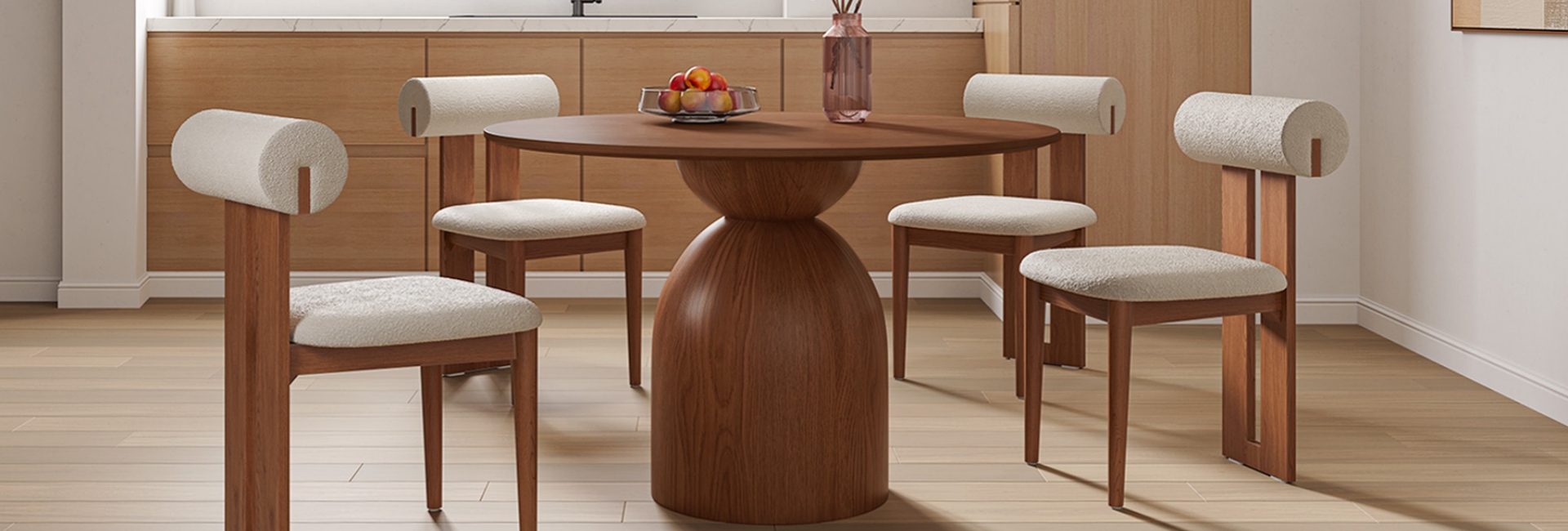
A unique dining table is one that earns attention on its own, usually through an unexpected base, a live-edge or stone top, or a finish you don't see in every showroom. If you're tired of the same four-leg rectangle, the good news is that 2026 has more interesting options than any year in recent memory. Below we break down the cool dining room tables, funky dining table ideas, and unique small dining tables worth knowing about, then show how to pick one that fits your space and holds up for the long run.
Table of Contents
- What actually makes a dining table "unique"
- The 2026 direction: sculptural naturalism
- Funky dining table ideas that work at home
- Unique small dining tables for apartments and breakfast nooks
- Unusual wood dining tables: oak, ash, and walnut
- Stone-top and mixed-material tables
- How to choose the right unique dining table
- Caring for wood and stone so they last
- FAQs
- What is the latest trend in dining tables?
- What makes a dining table "unique"?
- Are stone-top dining tables durable for everyday use?
- What is the best dining table for a small apartment?
- How many inches should I leave between the table and the wall?
- Should I match my dining chairs to the table?
- What wood is best for a dining table that lasts decades?
- Are pedestal bases better than four legs?
- How do I protect a wood or stone dining table?
What actually makes a dining table "unique"
The word gets thrown around, so let's be specific. A table reads as unique when one element does real design work instead of blending in. That element is usually the base, the top, or the finish.
The base is the easiest place to make a statement. A sculpted pedestal, a turned trumpet column, or an arched leg turns the underside of the table into the visual anchor of the room. The top matters too: a live edge keeps the tree's natural contour, while an oval or capsule shape softens a boxy space. Finish is the quiet third lever. Wire-brushed oak shows the grain instead of hiding it, and a honed stone top catches light without the glare of high gloss.
The trap is chasing novelty for its own sake. A table that looks wild in a photo can feel exhausting after six months of dinners. The pieces that stay interesting are the ones with a clear idea behind them, not just a weird shape.
What types of unique dining tables are there?
The 2026 direction: sculptural naturalism
One of the clearest 2026 directions is a mix of sculptural forms and natural materials. It brings together organic shapes such as ovals and live edges with bases designed more like architectural forms than simple supports.
Organic shapes and live edges
Rounded rectangles, ovals, and live-edge tops are showing up more often alongside traditional rectangular tables. An oval seats almost as many people as a rectangle of the same length but lets traffic flow around it, which is why it works so well in open-concept homes. A live edge keeps one or both long sides wavy, so no two tables look identical. If you like that look but worry about crumbs in the grain, ask for a filled and sealed edge rather than a raw one.
Stone and mixed-material tops
Warm wood bases paired with cool stone tops are everywhere right now, and for good reason. The contrast gives a table instant depth. Engineered stone and sintered surfaces resist heat and stains far better than many natural slabs, and they don't need the resealing cycle that marble demands. For a quieter take, a beige or greige engineered stone keeps the room calm while still reading as a premium material.
Pedestal and architectural bases
The four-leg table isn't going away, but pedestal and sculpted bases are having a moment. A single central support opens up the floor under the table, which makes a small room feel larger and gives everyone legroom without bumping a neighbor's knee. Arched, fluted, and trumpet bases all fall into this camp, and they photograph as a design feature rather than a necessity.
Funky dining table ideas that work at home
"Funky" can tip into costume if you're not careful. The versions below stay livable because the quirk sits in one place, not everywhere at once.
Turned and trumpet bases with bistro charm
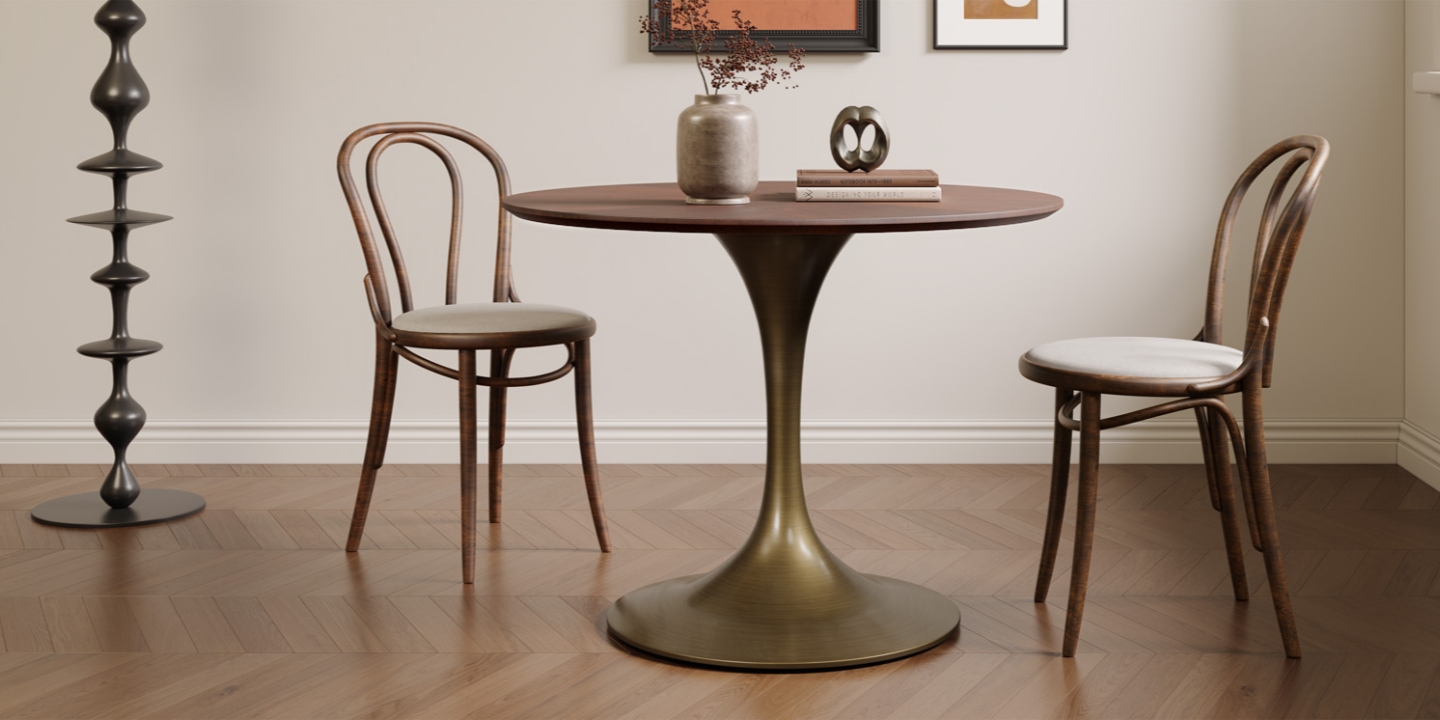
A tall, turned metal column under a small oval top reads as Parisian bistro without needing a themed room. It's a great move for a breakfast nook or a condo corner where a full-size table would crowd the space. Keep the rest of the furniture plain so the base stays the star.
The Estelle 42" Wood Bistro Table is a clean example of this idea done right. Its walnut finish round top sits on a bronze carbon-steel trumpet base, so the silhouette does the talking while the materials stay grounded. At 42 inches, it seats two to four comfortably and tucks into a nook without dominating it.
Color and finish as the statement
If a sculptural base feels like too much, let the finish carry the personality. A cerused (limed) oak, a deep matte walnut, or a gray-washed ash gives a familiar shape a fresh attitude. These finishes also hide daily wear better than gloss, which is a quiet win for busy households.
Mixing chairs instead of matching
One of the easiest funky moves costs nothing: don't buy the matching set. Pair a wood table with upholstered end chairs, or mix two chair styles around the same table. The room reads as collected rather than catalog, and you can upgrade one seat at a time. Just keep the chair seat heights within an inch of each other so the table edge lines up.
Unique small dining tables for apartments and breakfast nooks
Small spaces are where unique tables shine, because a compact piece can become the whole personality of the room. The trick is matching the shape to the footprint.
Round and oval bistro tables
For a tight eat-in kitchen or a studio, a 36 to 44 inch round or oval table beats a rectangle almost every time. You lose the corner that always bangs a hip, and you can pull a chair in from any side. The Estelle 42" Wood Bistro Table fits this niche: its round top and slim steel base leave the floor open, which is exactly what a small room needs.
Wall clearance and seating math
Before you fall for a table, do the clearance check. You want about 36 inches of walkway between the table edge and any wall or furniture so chairs pull out without scraping. Here is the quick version:
If you can't hit 36 inches, drop to the next size down rather than squeezing. A table you can actually walk around gets used; a tight one becomes a laundry pile.
Unusual wood dining tables: oak, ash, and walnut
Solid wood is the most forgiving path to a unique table, because the grain is literally one of a kind. The species you pick changes the whole mood of the room.
How the woods compare
A good wood species guide is worth a read before you commit, since hardness and color shift a lot between cuts.
Finding wood that fits your style
Start with the room's existing tones. Already have warm trim and brass hardware? Walnut or a warm brown oak slides in. Cooler, grayer rooms take ash or a gray-washed oak without fighting the space. Then decide how much texture you want: a wire-brushed surface shows the grain and hides scratches, while a smooth satin reads cleaner and more formal.
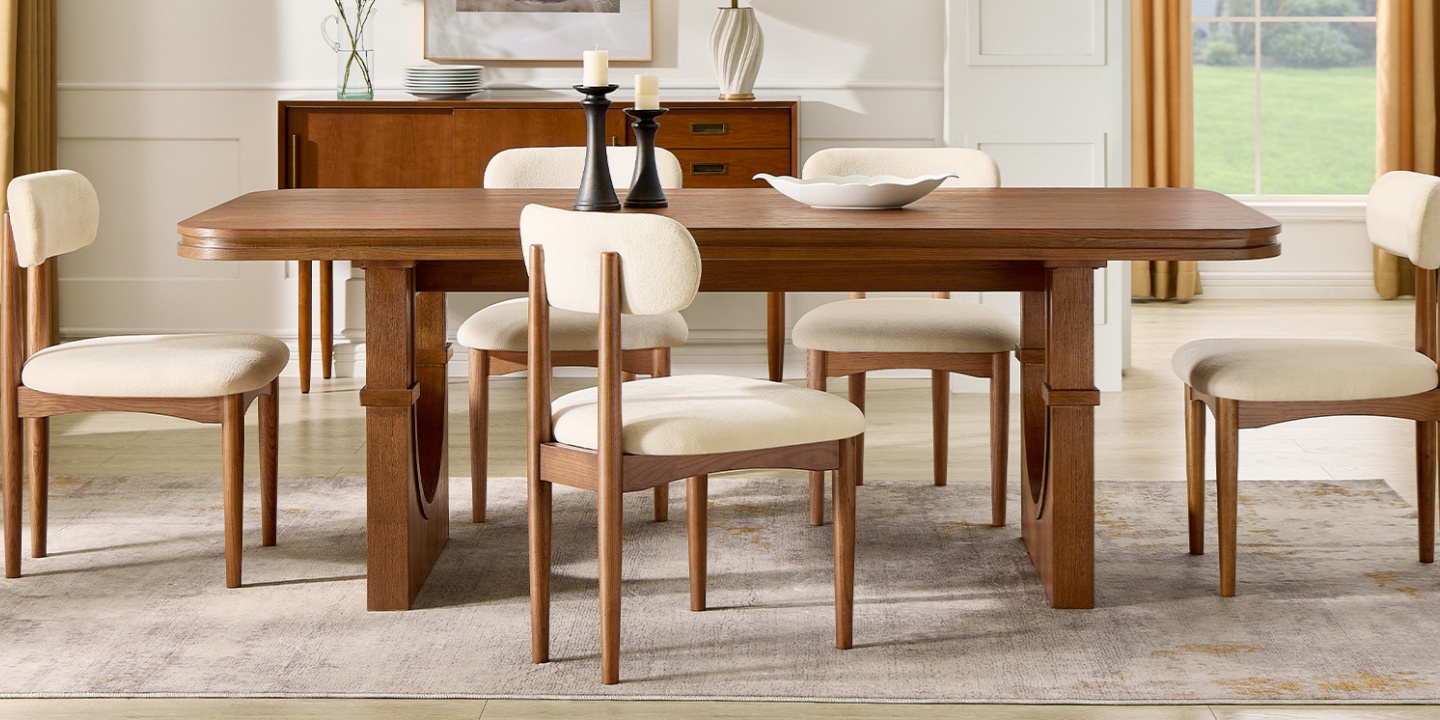
The Solvind 84" Oak Dining Table is built from American solid oak and engineered wood with oak veneers, and the top is wire-brushed to pull the grain forward. At 84 inches it seats six to eight, and the arched base (the shape takes its cue from the Puente de Toledo aqueduct) gives a long table a focal point instead of a flat front. If you want unusual wood character without going full live-edge, this is the middle path.
Stone-top and mixed-material tables
If wood feels too safe, a stone top is the fastest way to make a table feel architectural. The key is pairing the cool top with a warm base so the piece doesn't read cold.
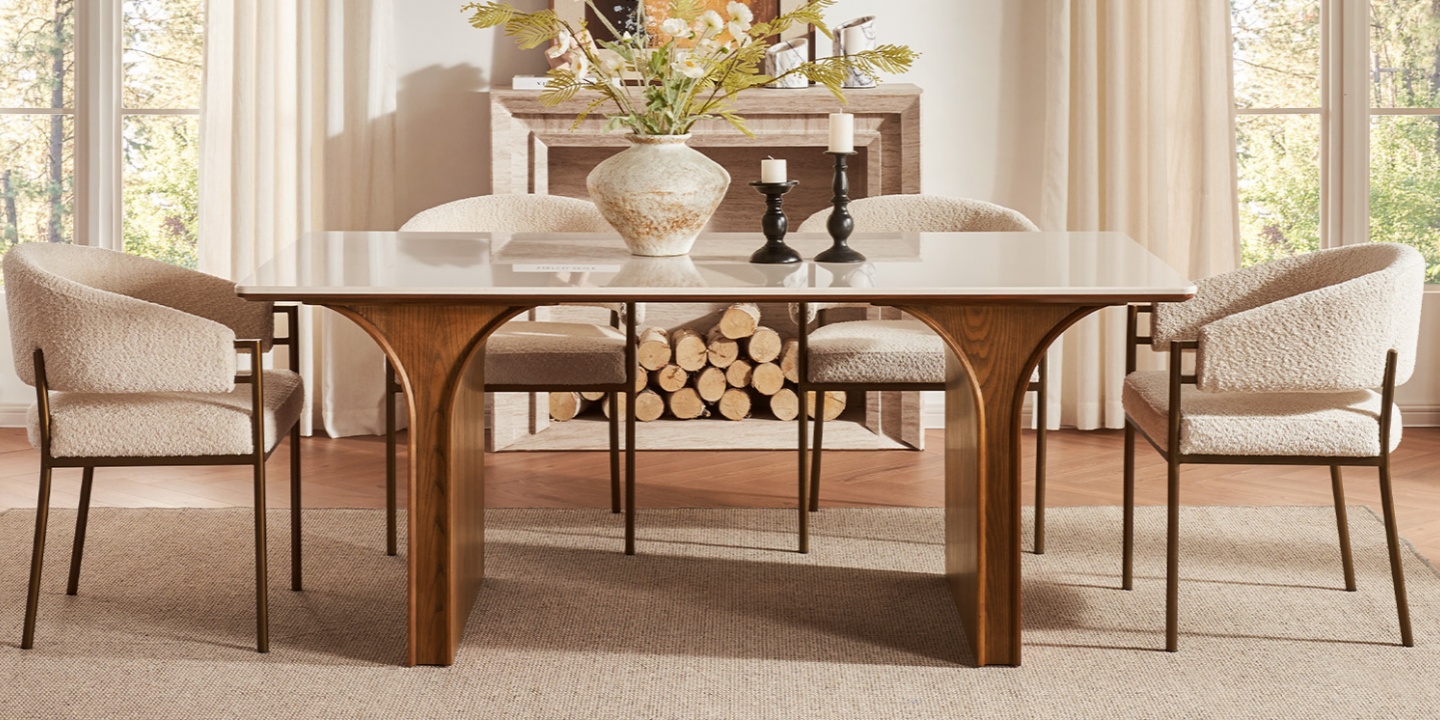
The Matilda 72-inch Dining Table does exactly that. Its beige engineered-stone top is honed and sealed for a soft satin finish with visible veining, while the base is warm wood shaped into a sculpted arch that opens into a dome-like legroom cavity. At 72 inches it seats six, and the stone-on-wood contrast is what makes it feel current rather than classic.
How to choose the right unique dining table
Trends are fun, but the table you keep is the one that fits the room and your habits. Run this short checklist before you buy.
Measure first, fall in love second
Measure the room, then subtract 36 inches from each side for chair clearance. Whatever fits in the remaining footprint is your real maximum size. A table that clears the walkway will bother you less over time than a slightly prettier one that doesn't.
Match the base to your floor plan
Open-plan, high-traffic room: an oval or pedestal base keeps sightlines and feet clear.
Narrow galley kitchen: a round bistro table tucks against one wall.
Formal dining room with space to spare: a long rectangular or arched-base table becomes the centerpiece.
Decide your maintenance tolerance
Wood asks for coasters and the occasional polish. Engineered stone shrugs off heat and stains but needs a level floor and careful moving. If you have young kids and zero patience for coasters, lean stone or a sealed wood with a durable topcoat.
Caring for wood and stone so they last
A well-built table should last decades, sometimes generations, but only if you treat the surface right. For wood, wipe spills at once with a slightly damp cloth and dry behind it; use coasters for anything with alcohol or citrus, since both can strip a finish. For stone, mild soap and water is enough, and you should still use trivets for hot pans because heat can mark even engineered tops. Skip harsh chemicals on both.
When you're ready to browse, our dining tables collection pulls together wood, stone, and mixed-material options, and the wider dining room furniture range covers chairs and storage that complete the setup.
FAQs
What is the latest trend in dining tables?
The 2026 direction is sculptural naturalism: organic shapes like ovals and live edges, mixed-material tops that pair warm wood bases with cool stone, and bases treated as architecture (arched, fluted, or pedestal instead of plain four legs). Warm wood tones and quiet neutrals are leading the palette.
What makes a dining table "unique"?
Usually one element does real design work: an unexpected base (arched, trumpet, or pedestal), a top with character (live edge or oval), or a distinctive finish (wire-brushed, cerused, or gray-washed). The best unique tables have a clear idea behind the shape rather than novelty for its own sake.
Are stone-top dining tables durable for everyday use?
Engineered and sintered stone tops resist heat, scratches, and stains better than most natural marble and need no resealing, which makes them strong for daily use. They are heavy and want a level floor, so check weight limits and delivery access before buying.
What is the best dining table for a small apartment?
A 36 to 44 inch round or oval bistro table. It removes the corner that crowds a tight room and lets you pull a chair in from any side. Pair it with a slim pedestal or trumpet base so the floor stays open and the space reads larger.
How many inches should I leave between the table and the wall?
About 36 inches of clearance on the sides where chairs pull out, so people can sit and stand without scraping the wall. If you can't reach 36 inches, choose the next smaller table rather than squeezing a larger one into the room.
Should I match my dining chairs to the table?
Not necessarily. Mixing chair styles (say, upholstered ends with wood sides) makes a room feel collected rather than catalog. Keep all seat heights within about an inch so the table edge lines up and no one ends up too low.
What wood is best for a dining table that lasts decades?
Solid white oak and ash are both hard, stable, and easy to refinish, which is why they lead for long-lived tables. Walnut is also durable but costs more. The real longevity factor is construction and finish: kiln-dried wood and a sealed top survive far longer than a pretty but unprotected surface.
Are pedestal bases better than four legs?
For legroom and small rooms, yes. A pedestal opens the floor under the table and removes the corner legs that bump knees. Four legs can feel sturdier for very long planks and give a more traditional look, so the choice depends on your space and style more than on durability.
How do I protect a wood or stone dining table?
For wood, wipe spills immediately with a damp cloth and dry, use coasters for alcohol and citrus, and polish as recommended. For stone, use mild soap and water and trivets for hot pans; avoid harsh chemicals on both. Neither surface likes prolonged standing water or direct heat.