The fastest way to make a bedroom feel unfinished is to grab whatever nightstand was on sale and hope it works. Nightstand styles aren't just decoration; they help set the tone of the room and determine how well the bedside area works with the bed, lighting, and other furniture.
Choosing a style doesn't have to be complicated. Start with the bedroom you already have, then match the nightstand's material, shape, storage, and height to the space. This guide covers popular nightstand styles, from mid-century modern and Scandinavian to Japandi, farmhouse, minimalist, and organic modern, plus the sizing and storage details that are easy to overlook.
Table of Contents
- Why Nightstand Style Matters
- Nightstand Styles at a Glance
- Start With the Bedroom You Already Have
- Mid-Century Modern and Scandinavian Nightstands
- Japandi and Organic Modern Nightstands
- Farmhouse, Rustic, and Traditional Nightstands
- Minimalist and Contemporary Nightstands
- Boho and Cane Nightstands
- Nightstand Storage Types
- Choosing the Right Nightstand Material
- How to Size a Nightstand to Your Bed
- Nightstand Design Details That Change the Look
- FAQs
- What are the different styles of nightstands?
- What is the standard height for a nightstand?
- How wide should a nightstand be for a queen or king bed?
- What's the difference between a nightstand and a bedside table?
- Should both nightstands match?
- Are drawers or open shelves better for a nightstand?
- What materials make the most durable nightstand?
- Is a wood nightstand better than metal or glass?
Why Nightstand Style Matters
A nightstand has a small footprint, but it sits in one of the most visible positions in a bedroom. Positioned beside the bed and usually close to eye level, it becomes part of the room's visual balance.
A nightstand can also make an otherwise coordinated bedroom feel disconnected. A heavily carved piece may look out of place beside a low platform bed, while an ultra-minimalist table can feel too stark in a traditional or farmhouse room.
Think of the nightstand as part of the bed's visual frame rather than a separate accessory. The goal isn't necessarily to find an identical style. It's to choose a piece that shares enough material, color, shape, or finish with the furniture already in the room.
Nightstand Styles at a Glance
The most common nightstand styles include mid-century modern, Scandinavian, Japandi, organic modern, farmhouse, rustic, traditional, minimalist, contemporary, and boho or cane. Design details such as floating construction, fluted fronts, pedestal bases, and neotenic curves can add another layer of personality.
The best style depends less on what's trending and more on what already exists in your bedroom. Use the table as a starting point, then look at your bed, flooring, lighting, and other storage pieces before choosing a finish.
Start With the Bedroom You Already Have
There's no single "best" nightstand style. The easiest way to narrow your choices is to match the room's existing design language.
Use this simple filter:
Warm and wood-forward rooms: Mid-century, Scandinavian, or farmhouse nightstands work well with visible grain and finishes that relate to the bed or flooring.
Calm and uncluttered rooms: Minimalist, Japandi, and contemporary designs tend to work best with clean fronts, simple hardware, and lighter visual weight.
Layered or characterful rooms: Boho, rustic, and traditional styles can introduce texture, richer materials, or more visible detailing.
Mixed-style rooms: Look for one shared element, such as wood tone, hardware finish, or material, rather than trying to make every piece match.
If your room already contains several wood tones, keep the nightstand closer to one of the dominant finishes. Two related wood tones can create contrast without making the room feel visually busy.
Mid-Century Modern and Scandinavian Nightstands
These two styles are common choices for warm, minimalist bedrooms. Both favor practical shapes and natural-looking materials, but they create different moods.
Mid-Century Modern Nightstands
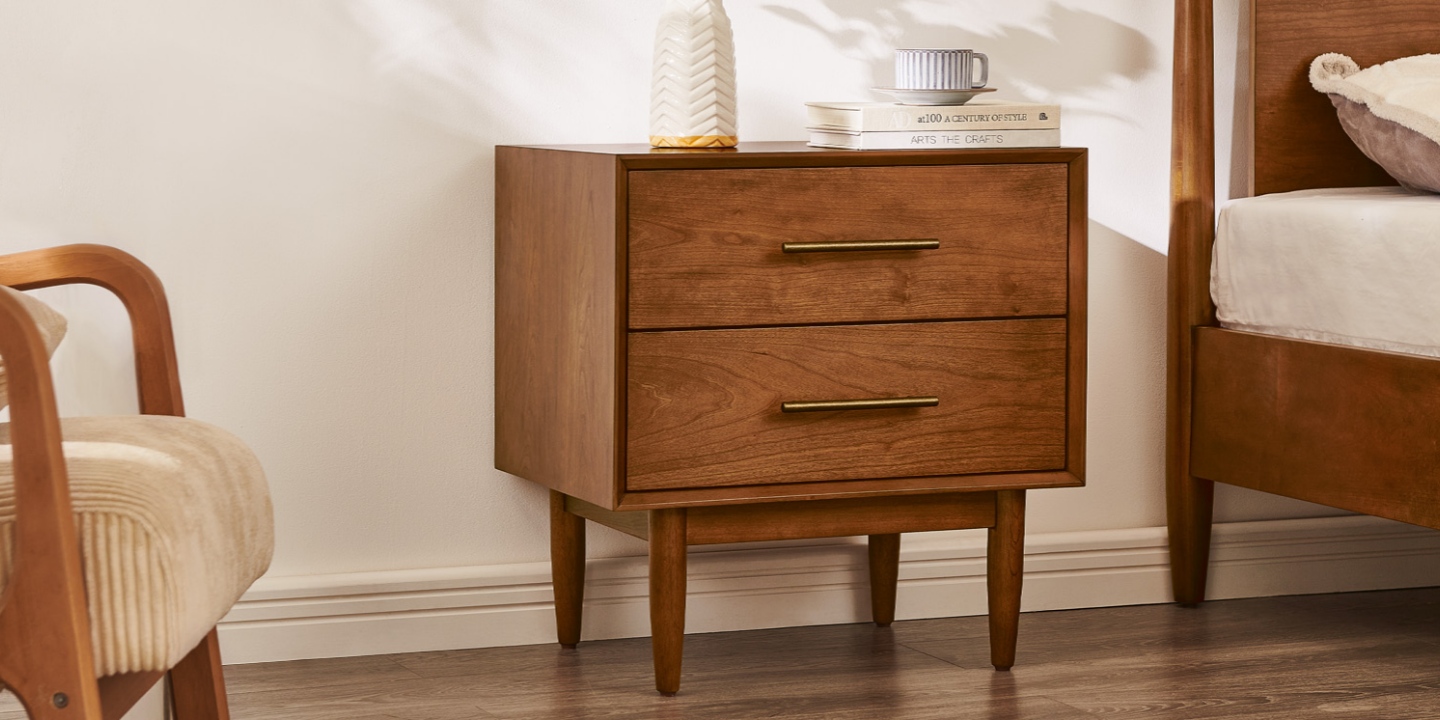
Mid-century modern design is associated with the mid-20th century and is easy to recognize in bedroom furniture. Typical cues include warm wood tones, tapered or splayed legs, simple functional lines, and one or two drawers.
Hardware is often understated, with finishes such as bronze, brass, or other warm metals adding a small amount of contrast without dominating the piece.
Best for: Retro, MCM, transitional, and warm contemporary bedrooms.
The Kaden 23" Mid-Century Nightstand follows these cues with tapered solid wood legs, beveled fronts edges, antique bronze pulls, and a warm brown cherry finish. At 23 inches wide, it provides useful bedside storage without taking up excessive floor space.
Scandinavian Nightstands
Scandinavian nightstands typically use light wood, simple silhouettes, and practical storage. White and black finishes are also common, but the overall look remains understated and approachable.
The distinction from strict minimalism is warmth. Scandinavian design often uses natural materials, rounded edges, or softer proportions to keep a simple room from feeling stark.
Best for: Light, airy bedrooms with neutral colors, natural wood, linen, or soft textiles.
Japandi and Organic Modern Nightstands
Both Japandi and organic modern styles use natural materials and restrained silhouettes, but they create different effects.
Japandi Nightstands
Japandi combines Japanese and Scandinavian design principles. In a bedroom, that often means low profiles, natural wood, simple shapes, and carefully controlled texture.
Fluted wood, woven rattan, and stone can add visual interest without making the piece feel ornate. A lower Japandi nightstand can also work particularly well with a low platform bed, where a tall bedside table may disrupt the room's horizontal lines.
Best for: Calm bedrooms, platform beds, neutral palettes, and natural-material interiors.
Organic Modern Nightstands
Organic modern design takes natural materials in a more sculptural direction. A simple silhouette may be paired with a live-edge wood detail, stone surface, rounded base, or other irregular texture.
The goal is to introduce character without relying on heavy ornament.
Best for: Contemporary bedrooms that need more warmth, texture, or sculptural detail.
Stone and live-edge materials can show natural variation from one piece to another. Keep the practical side in mind: stone can be heavy, while unfinished or highly textured surfaces may require more specific care than a sealed wood finish.
Farmhouse, Rustic, and Traditional Nightstands
These styles all bring warmth to a bedroom, but the amount of texture and ornament varies.
Farmhouse and Rustic Nightstands
Farmhouse nightstands often use light or washed finishes, painted wood, simple paneling, and aged or matte hardware. Rustic furniture usually takes the natural character further, with heavier grain, reclaimed wood, visible knots, or metal accents.
Best for: Casual bedrooms, country-inspired interiors, and rooms with warm textiles.
Distressed and heavily textured finishes can add character, but they also create more surface detail. If you prefer easier maintenance, look for a smoother finish that provides a similar warm color without deep grooves or excessive distressing.
Traditional and Classic Nightstands
Traditional nightstands tend to feature richer wood tones, paneled drawer fronts, shaped feet, or restrained carved details. Cherry and walnut are common choices when a room calls for deeper color and a more formal appearance.
Best for: Classic beds, upholstered headboards, traditional interiors, and formal primary bedrooms.
If you want a traditional look that remains versatile, choose restrained detailing rather than heavily ornate construction. A shaped edge or tapered foot can provide character without locking the entire bedroom into one period.
Minimalist and Contemporary Nightstands
Not every bedroom needs visible texture or ornament. Minimalist and contemporary nightstands focus more on proportion, clean geometry, and functional storage.
Minimalist Nightstands
A minimalist nightstand typically uses flat fronts, simple geometry, and little or no visible hardware. Materials can include wood, veneer, painted engineered wood, metal, or other smooth finishes.
The main consideration is storage. A clean exterior works best when the interior provides enough room for everyday items.
Best for: Small or uncluttered bedrooms, modern platform beds, and neutral interiors.
If your bedside essentials include chargers, books, glasses, or other small items, at least one concealed drawer can make a minimalist design easier to live with.
Contemporary and Two-Tone Nightstands
Contemporary nightstands are less tied to a particular historical design period. Common features include clean rectangular bodies, soft-close drawers, mixed materials, and contrasting finishes.
Two-tone designs can be useful when a bedroom contains furniture from different styles. A contrasting body and drawer finish can connect warm and cool elements without requiring every piece to match.
Best for: Modern bedrooms, guest rooms, rentals, and spaces that mix furniture styles.
Boho and Cane Nightstands
Boho nightstands often introduce woven materials such as rattan, bamboo, or cane into the bedroom. These details work especially well with linen, plants, natural wood, and layered textiles.
Cane fronts can add texture without the visual weight of carved or heavily detailed furniture.
Best for: Relaxed bedrooms, coastal-inspired rooms, layered interiors, and natural-material palettes.
Woven surfaces can collect dust in the weave, and natural rattan generally benefits from a dry, controlled indoor environment. Synthetic woven materials can be a more forgiving option in higher-use rooms.
Nightstand Storage Types
Style determines how the piece looks, but storage determines how well it works every night.
For many bedrooms, a hybrid design offers the most flexibility: use the drawer for small everyday items and the open shelf for a book or decorative object.
Drawer construction also matters. Dovetail joints are commonly used in quality wood drawers because they mechanically interlock the drawer sides rather than relying only on fasteners. Hernest nightstands use dovetail drawer joints and kiln-dried wood as part of their construction approach.
Choosing the Right Nightstand Material
Material affects durability, appearance, maintenance, and weight. The best choice depends on how the nightstand will be used.
For most bedrooms, wood remains one of the easiest materials to live with because it adds warmth and works across a wide range of styles.
Hardwoods such as oak, maple, and walnut are commonly evaluated using Janka hardness ratings, which measure resistance to indentation. A higher rating generally indicates greater hardness, although hardness is only one factor in furniture durability.
For a practical middle ground, engineered wood with a real wood veneer can provide a consistent appearance while reducing some of the weight and cost associated with solid hardwood.
Stone creates a different look. A marble or stone top can add visual weight and a sculptural quality, but it also makes the piece heavier and may require sealing or other care depending on the material.
How to Size a Nightstand to Your Bed
Style gets attention, but size is what determines whether a nightstand feels comfortable to use.
Nightstand Height
The most useful measurement is the height of your mattress, not a generic nightstand dimension.
As a practical guideline, aim for a nightstand surface that is level with the top of the mattress or within about 2 inches above or below it. Measure from the floor to the top of the mattress, including any topper, before buying.
Many standard nightstands fall around 24 to 28 inches tall, but low platform beds may require something shorter while beds with thick mattresses or taller foundations may need more height.
Nightstand Width
Width should balance the size of the bed and the available wall space.
These are practical starting ranges rather than strict standards. A wider nightstand can work beside a large bed if the room has enough clearance, while a compact table may be better in a small bedroom.
Nightstand Depth and Placement
Most nightstands fall around 14 to 18 inches deep, which is enough space for a lamp, phone, book, and glass in many bedrooms.
Leave enough space between the nightstand and mattress to open drawers comfortably. Around 2 to 6 inches is a useful starting point, depending on the bed frame and room layout.
Also consider the walking path. A nightstand should not reduce the usable walkway to the point where getting in and out of bed becomes awkward.
Nightstand Design Details That Change the Look
Once the main style, material, and size are settled, smaller design details can make the piece feel more distinctive.
Floating Nightstands
A floating nightstand mounts to the wall instead of standing on legs. Because the floor underneath remains open, it can make a small bedroom feel less crowded and makes cleaning underneath easier.
Best for: Small bedrooms, narrow walkways, and minimalist interiors.
The main limitation is installation. The wall and mounting hardware need to support the weight of the nightstand and everything stored inside it.
Fluted Nightstands
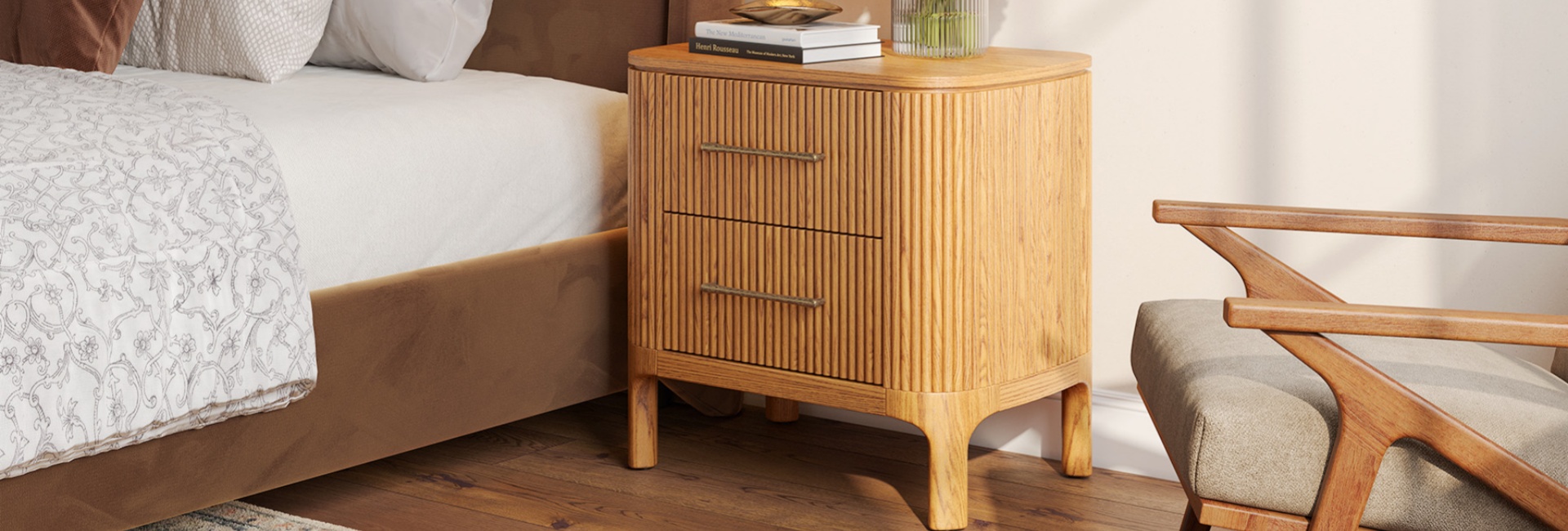
Fluted fronts use repeated vertical grooves to create texture and shadow. The detail can work in both modern and traditional interiors because it adds dimension without requiring elaborate ornament.
Best for: Contemporary, Japandi, transitional, and warm minimalist bedrooms.
Pedestal Nightstands
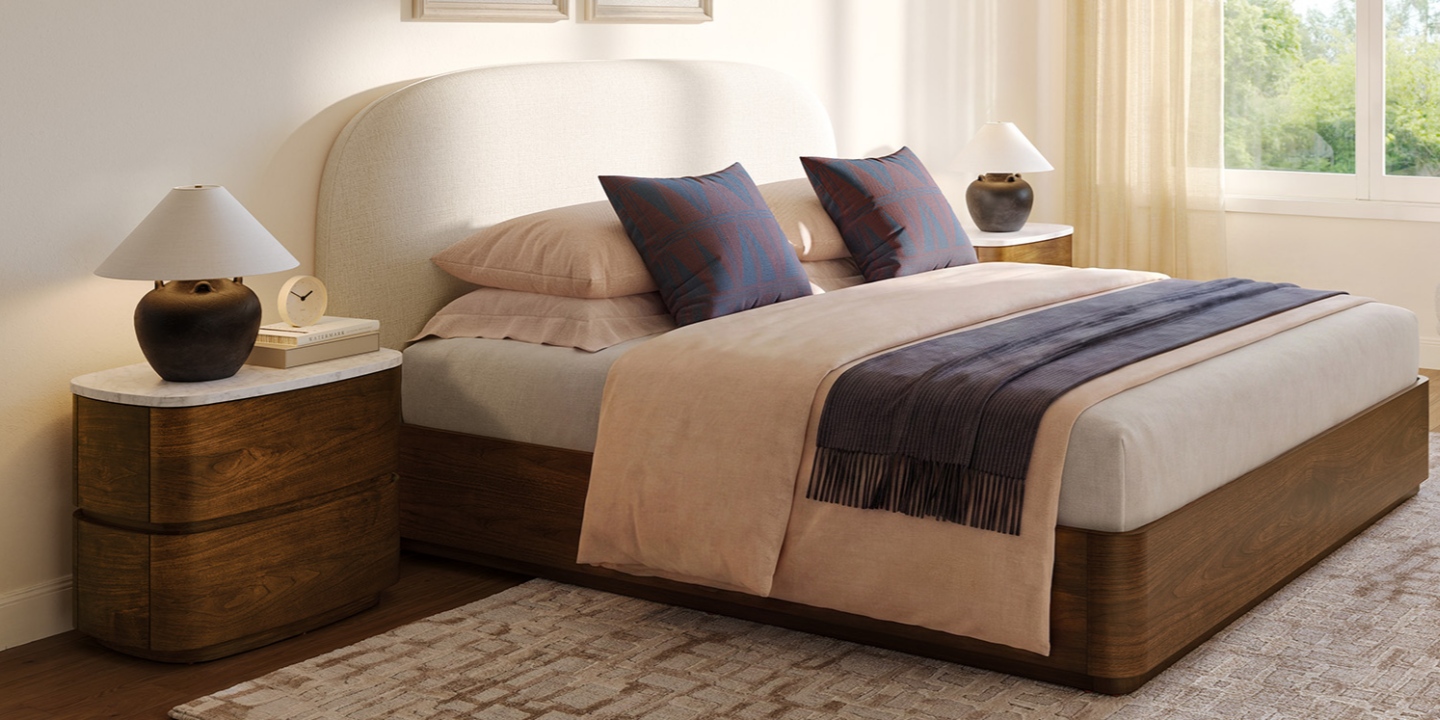
A pedestal base replaces traditional legs with a broader central support. This creates a more substantial, furniture-like appearance and can make a simple top feel more sculptural.
The Verona 26" Walnut Nightstand uses a walnut-toned base with a Carrara marble top, combining the visual richness of walnut with the contrast of stone. At 26 inches wide, it is particularly suited to a king-size primary bedroom where the bedside furniture needs more visual presence.
Neotenic Nightstands
Neotenic design uses rounded, playful, sometimes asymmetrical forms inspired by soft or childlike shapes. Rather than being a traditional furniture style, neotenic is better understood as a design language that can be layered onto a contemporary bedroom.
Best for: Neutral rooms that need one playful accent.
A single rounded nightstand can create contrast beside a boxy bed without making the entire room feel themed.
FAQs
What are the different styles of nightstands?
Common nightstand styles include mid-century modern, Scandinavian, Japandi, organic modern, farmhouse, rustic, traditional, minimalist, contemporary, and boho or cane. Details such as floating construction, fluted fronts, pedestal bases, and neotenic curves can add another layer of style.
What is the standard height for a nightstand?
Many nightstands are around 24 to 28 inches tall, but the better rule is to match the mattress. Aim for a surface that is level with the top of the mattress or within about 2 inches above or below it. Measure your mattress height, including any topper, before choosing.
How wide should a nightstand be for a queen or king bed?
For a full or queen bed, 20 to 26 inches is a practical starting range. A king or California king can generally accommodate a 24- to 29-inch nightstand, provided the room has enough space. Wall space and the visual scale of the bed matter as much as the exact number.
What's the difference between a nightstand and a bedside table?
In everyday US usage, the terms generally refer to the same type of furniture. "Nightstand" is more common in furniture listings, while "bedside table" can sometimes describe a smaller table without storage.
Should both nightstands match?
Matching nightstands create a symmetrical, polished look. Mismatched pieces can also work if they share a material, finish, height, or other visual element. Keeping their surfaces at similar heights helps maintain visual balance.
Are drawers or open shelves better for a nightstand?
Drawers are better for hiding chargers, glasses, books, and other small items. Open shelves are useful for books and objects you want to display but require more visual tidiness. A hybrid drawer-and-shelf design provides both options.
What materials make the most durable nightstand?
Solid hardwoods such as oak, maple, and walnut are durable choices and can often be repaired or refinished. Engineered wood with real veneer can also perform well when properly constructed and maintained. Metal is durable and easy to clean, while glass and acrylic tend to show fingerprints and surface marks more easily.
Is a wood nightstand better than metal or glass?
Wood is a versatile choice when you want warmth, natural texture, and a style that works across multiple bedroom designs. Metal can create a cooler industrial or contemporary look, while glass and acrylic provide a lighter visual effect but tend to show fingerprints and surface marks more easily.