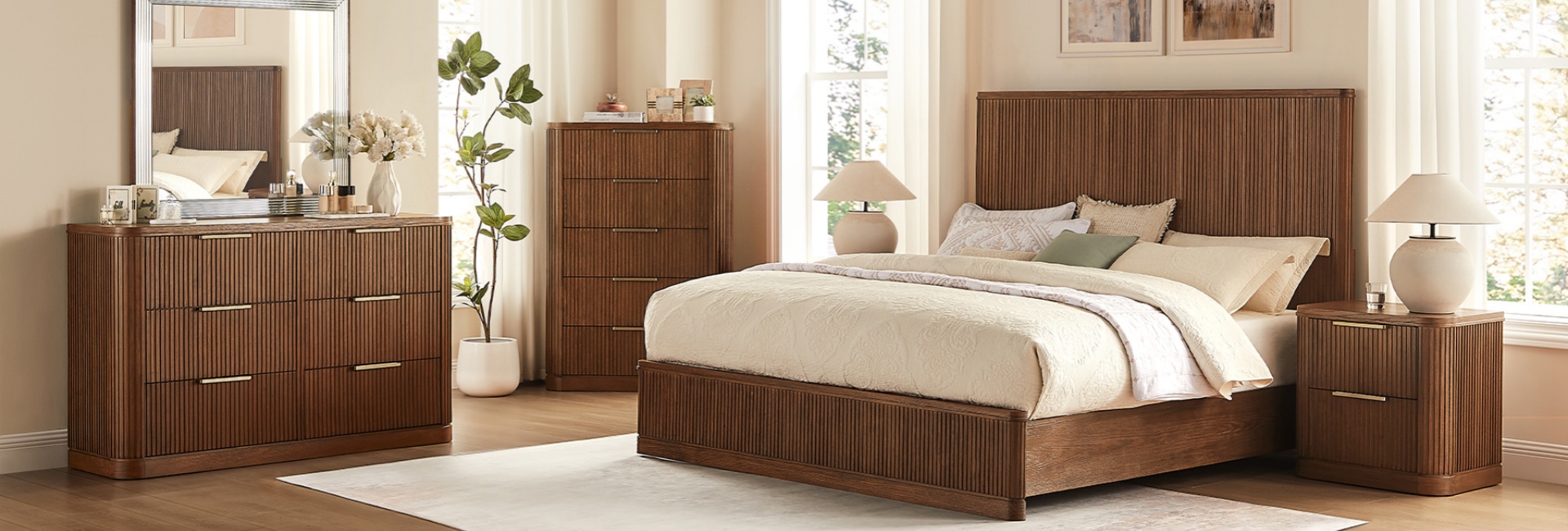
If the case rocks when you pull a drawer, the drawers keep sticking, or you keep finding reasons not to use it, those may be signs your dresser has reached the end of its useful life.
A dresser is usually ready for replacement when structural problems, repeated repairs, safety concerns, or changing storage needs make it unreliable or impractical to use.
The good news is that you don't have to wait for a dramatic failure to make the call. A few smaller problems can tell you a lot about whether your dresser is still worth repairing—or whether it's time to start looking for a replacement.
Table of Contents
- How Long Should a Dresser Actually Last?
- Why Dressers Fail Slowly
- The 7 Signs You Need a New Dresser
- 1. The Dresser Wobbles or Rocks
- 2. The Drawers Stick, Sag, or Keep Falling Off Track
- 3. The Finish Is Bubbling, Peeling, or Chipping Across Large Areas
- 4. The Dresser Tips Forward When Drawers Are Open
- 5. The Joinery Has Started to Come Apart
- 6. It No Longer Fits Your Storage Needs
- 7. You've Repaired It More Than Once and the Same Problems Keep Coming Back
- How to Tell If a Dresser Is Good Quality
- Is Your Dresser a Tipping Hazard?
- The Real Cost of Holding On
- Repair or Replace? An Honest Test
- What to Look for in a Replacement Dresser
- How to Shop for a Dresser Online Without Regret
- Ready to Replace Your Dresser?
- FAQs
- What are the signs you need a new dresser?
- How can you tell if a dresser is good quality?
- How long does a dresser last?
- How can you tell if a dresser is solid wood or particle board?
- Why do my dresser drawers stick or fall off track?
- Is my dresser a tipping hazard, and should I anchor it?
- What does the STURDY Act require for dressers?
- Can a worn dresser be repaired, or is replacement better?
- What size dresser fits a standard bedroom?
- Are anti-tip kits included with new dressers?
How Long Should a Dresser Actually Last?
There isn't a fixed expiration date for a dresser. Its useful life depends on the materials, construction, drawer hardware, how much weight it carries, how often it is moved, and how well it has been maintained.
A lower-cost dresser may show wear sooner, while a well-constructed piece can remain useful for many years. But age alone doesn't tell you whether a dresser needs to be replaced. A ten-year-old dresser in good condition may be perfectly serviceable, while a much newer one can become unreliable if the case has warped, the joints have loosened, or the drawer hardware has failed.
What Usually Shortens a Dresser's Life?
Common causes of premature wear include:
-
Overloading drawers beyond what the construction can comfortably support
-
Worn, bent, or damaged drawer slides
-
Loose screws, fasteners, or joints
-
Repeated moving or rough handling
-
Exposure to moisture or significant changes in humidity
-
Poor assembly that leaves the case out of square
-
Repeated repairs to the same structural problem
Instead of asking only, "How old is my dresser?" look at how well it still performs.
Why Dressers Fail Slowly
Most dressers don't suddenly become unusable overnight.
The warning signs tend to build gradually. A drawer starts catching near the back. The case develops a slight wobble. One joint becomes loose. You stop using the bottom drawer because it doesn't open properly.
Eventually, the dresser may still look acceptable from across the room, but using it becomes frustrating.
Maybe you put heavy sweaters somewhere else because you're worried about the drawer. Maybe you have to push the dresser back against the wall after opening a drawer. Or perhaps you wedge something under one corner because the case doesn't sit level anymore.
Those small workarounds are worth paying attention to. They often tell you more about the condition of a dresser than its appearance does.
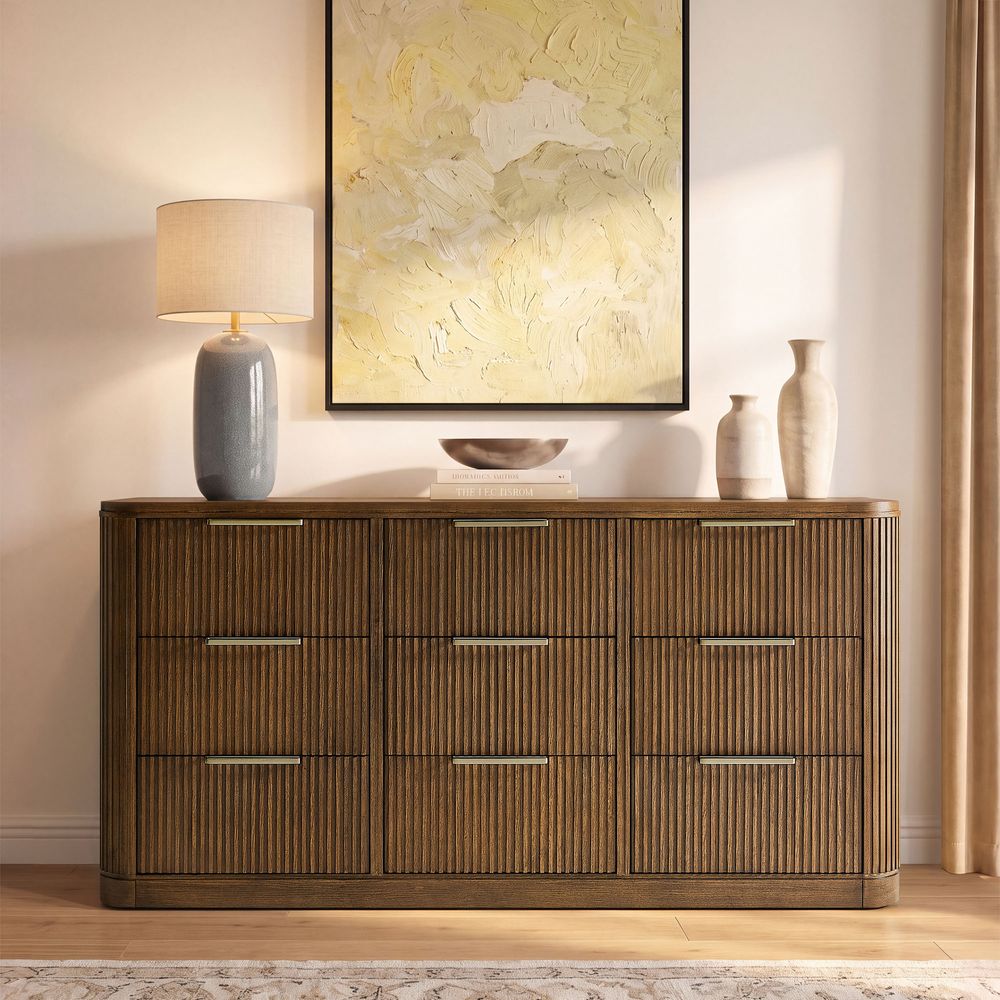
Finnley 76-Inch Fluted 9-Drawer Dresser
View Product
The 7 Signs You Need a New Dresser
1. The Dresser Wobbles or Rocks
A dresser should sit securely on the floor without rocking when you open or close a drawer.
A small issue with a floor that isn't perfectly level may be fixable with an appropriate leveler. But if the entire case shifts, twists, or rocks even on a reasonably level surface, the problem may be more serious.
Check whether the wobble comes from a loose leg, missing leveler, loose hardware, or an uneven floor. If those simple fixes don't solve it, the case itself may have lost its structural rigidity.
A dresser that no longer stays stable during normal use is a strong reason to consider replacement.
2. The Drawers Stick, Sag, or Keep Falling Off Track
One sticky drawer doesn't automatically mean you need a new dresser.
Drawer problems can come from dust, misalignment, loose hardware, worn slides, or an overloaded drawer. Some of those problems are relatively easy to fix.
The bigger warning sign is when several drawers have the same problem.
If multiple drawers stick, sag, scrape against the frame, or repeatedly come off their tracks, the issue may go beyond the hardware. A warped or out-of-square case can make it difficult for replacement hardware to solve the underlying problem.
If you've already adjusted or replaced the hardware and the drawers still don't work properly, replacement may make more sense than another repair.
3. The Finish Is Bubbling, Peeling, or Chipping Across Large Areas
A small scratch doesn't mean your dresser has reached the end of its life. Furniture gets used, and minor cosmetic wear is normal.
The situation is different when the finish is bubbling, peeling, cracking, or separating across large areas.
This can be a sign of moisture exposure, finish failure, or long-term wear. If the underlying material is also swollen, warped, or damaged, refinishing may not be enough to restore the piece.
Ask yourself whether you're dealing with a surface problem or a deeper construction problem. A small area of cosmetic damage may be worth repairing. Extensive finish failure combined with structural issues is a different story.
4. The Dresser Tips Forward When Drawers Are Open
A dresser can be stable with all its drawers closed and become less stable when one or more drawers are extended.
This is one of the most important signs to take seriously because furniture tip-over can cause serious injury, particularly to children.
If your dresser moves forward when drawers are opened, don't treat it as a minor inconvenience. Stop using it until you've identified the cause and addressed the stability issue.
CPSC's Anchor It! guidance recommends securing furniture to the wall with appropriate anti-tip devices and following the manufacturer's instructions.
If the dresser remains unstable or has a structural problem that cannot be corrected, replacing it may be the safer long-term choice.
5. The Joinery Has Started to Come Apart
Look closely at the corners, drawer boxes, frame, and other major joints.
If a joint is slightly loose, it may be possible to repair it. But if multiple joints are separating, the case is twisting, or the same joint keeps coming apart after repair, the problem is more significant.
The drawer construction matters, too. Dovetail joints, for example, mechanically interlock the drawer components and can provide strong drawer construction when properly made.
When shopping for a replacement, don't judge quality by the exterior finish alone. Look at how the case and drawers are actually constructed.
6. It No Longer Fits Your Storage Needs
Sometimes a dresser doesn't need to be physically broken to be ready for replacement.
Your storage needs can change.
Maybe you've accumulated more clothes. Maybe you've moved into a larger bedroom. Perhaps the old dresser has six shallow drawers when what you really need is fewer, deeper drawers—or the opposite.
If you're constantly moving clothes to another room, stacking things on top of the dresser, or leaving drawers half-open because they're overcrowded, the problem may simply be that the storage configuration no longer works for you.
A replacement dresser should solve that problem rather than simply give you a newer version of the same inconvenience.
7. You've Repaired It More Than Once and the Same Problems Keep Coming Back
One repair isn't necessarily a reason to replace a dresser.
A damaged drawer slide, loose handle, or minor joint problem can often be fixed.
The calculation changes when repairs become a pattern.
If you've already repaired the drawers, tightened the frame, fixed the finish, and adjusted the hardware—and you're still dealing with the same problems—the money may be better spent on a dresser that addresses the underlying issues.
Think about the total cost, not just the next repair bill. Your time, frustration, and the reliability of the furniture all matter.

Renata 65-Inch Travertine-Textured 6-Drawer Dresser
View Product
How to Tell If a Dresser Is Good Quality
Once you've decided to replace your dresser, the next question is what to look for.
A higher price doesn't automatically mean better construction. Instead, pay attention to the materials, joinery, hardware, case construction, and details that affect everyday use.
Solid Wood, Veneer, or Engineered Wood?
Solid wood is made from natural wood throughout the relevant component. It can be durable and repairable, but the quality of the construction still matters.
Veneer uses a real wood layer over another substrate. Good veneer construction can provide the appearance and character of natural wood while allowing manufacturers to use engineered materials for other components.
Engineered wood is not automatically poor quality either. What matters is how the material is used, how the piece is constructed, and whether the finished dresser feels rigid and stable.
Rather than treating "solid wood" as the only quality signal, look at the complete construction.
The Details That Signal Good Construction
When comparing dressers, pay attention to:
-
Dovetail or other durable drawer-joint construction
-
Smooth, well-supported drawer rails
-
Drawer bottoms that are properly supported
-
A rigid case that doesn't flex or twist easily
-
Consistent gaps around the drawers
-
Levelers where appropriate
-
Anti-tip hardware and clear installation instructions
-
A drawer configuration that provides useful storage rather than simply adding drawer count
For example, the Finnley 76-Inch Fluted 9-Drawer Dresser uses poplar wood and engineered wood with poplar wood veneers, precision dovetail drawer joints, soft-close rails, and solid wood fluting. It also includes anti-tip kit hardware.
The point isn't that one construction method automatically makes a dresser better than another. It's that these details give you something concrete to evaluate beyond appearance.
Is Your Dresser a Tipping Hazard?
Tip-over deserves special attention when you're evaluating an old dresser or shopping for a replacement.
A dresser's stability can change when drawers are extended, especially if the furniture is top-heavy, overloaded, or not secured properly.
What the STURDY Act Changed
The federal STURDY Act directed the U.S. Consumer Product Safety Commission to establish a mandatory safety standard for covered clothing storage units.
The CPSC's final rule incorporates ASTM F2057 and is codified in 16 CFR Part 1261. The requirements apply to covered clothing storage units manufactured after September 1, 2023.
The rule covers certain free-standing clothing storage units based on factors including height, weight, enclosed storage volume, and intended use. It is designed around tip-over safety under specified testing conditions.
That doesn't mean every dresser is impossible to tip over or that an older dresser is automatically unsafe. It does mean that stability has become an increasingly important part of how covered clothing storage units are designed and evaluated.
Anchoring 101
If your dresser includes anti-tip hardware, install it according to the manufacturer's instructions.
If you're using an older dresser without an appropriate anchoring system, consider a suitable anti-tip device and make sure it is securely attached to the furniture and the wall as directed.
CPSC's Anchor It! campaign specifically recommends securing top-heavy furniture and installing anti-tip devices on new furniture such as dressers.
If you have young children in the home, anchoring becomes especially important. Keep climbable objects and tempting items away from the top of furniture as well.
The Real Cost of Holding On
Keeping an old dresser can feel cheaper than replacing it.
Sometimes it is.
But add up the less obvious costs:
-
Repeated repair parts
-
Time spent fixing drawers
-
Clothes and belongings that no longer fit
-
Frustration every time a drawer sticks
-
The risk of continued instability
-
A piece of furniture that no longer works with your room
If the dresser is structurally sound and the problem is minor, repairing it can be the sensible option.
If you're constantly working around the same problems, replacement may be the more practical solution.
Repair or Replace? An Honest Test
Before buying a new dresser, ask yourself these questions:
Repair may make sense if:
-
The case is still rigid and stable
-
The problem is limited to one component
-
The damage is primarily cosmetic
-
Replacement hardware can solve the issue
-
The dresser still provides the storage you need
Replacement deserves consideration if:
-
The case rocks, twists, or feels unstable
-
Several drawers are failing
-
Multiple joints are separating
-
The furniture remains unstable when drawers are opened
-
Extensive finish damage is accompanied by material damage
-
The dresser no longer fits your storage needs
-
You've repaired the same problem more than once
This isn't about replacing furniture at the first sign of wear. It's about recognizing when another repair is unlikely to solve the underlying problem.
What to Look for in a Replacement Dresser
A replacement should fix the problems that made you replace the old one in the first place.
Look for:
-
A stable, rigid case
-
Drawer construction suited to regular use
-
Durable drawer hardware
-
Materials that fit your budget and expectations
-
Dimensions that work in your room
-
Enough drawer capacity for the way you actually store clothes
-
Anti-tip hardware and clear installation instructions
Don't choose based on appearance alone. A dresser can look great online and still be inconvenient if the drawers are too shallow, the overall depth doesn't work, or the configuration doesn't match what you store.
Sizing It to Your Room
Start with the wall where the dresser will sit.
Measure:
-
Available width
-
Maximum depth
-
Available height
-
Distance from nearby furniture
-
Space needed to fully open drawers
-
Clearance for walking in front of the dresser
-
Baseboards or other obstacles along the wall
Painter's tape can help you mark the dresser's footprint on the floor before ordering. This makes it easier to see whether the proportions actually work.
Don't forget delivery. A dresser that fits perfectly against the bedroom wall may still be difficult to get through a doorway, hallway, stairway, or elevator.
Matching Storage to How You Actually Live
Drawer count isn't the only thing that matters.
Think about what you're storing. Folded T-shirts, sweaters, underwear, linens, and accessories don't all require the same drawer dimensions.
A wide six-drawer dresser can work well if you want broad, accessible storage without moving to a tall chest.
For example, the Renata 65-Inch Travertine-Textured 6-Drawer Dresser measures 65 inches wide by 17.7 inches deep and 34.1 inches high. It uses precision dovetail drawer joints, soft-close rails, American oak veneers with engineered wood and resin, and includes anti-tip kit hardware.
Its six-wide-drawer layout is particularly relevant if your main goal is replacing an old dresser that doesn't provide enough usable storage. Instead of simply buying a larger piece, compare the actual drawer dimensions and the amount of storage you'll gain.
How to Shop for a Dresser Online Without Regret
Shopping online makes it easy to compare finishes and dimensions, but product photos can't tell you everything.
Before ordering, check:
-
Overall dimensions — width, depth, and height
-
Drawer dimensions — not just the exterior size
-
Materials — including veneers and engineered wood
-
Drawer construction — such as dovetail joints
-
Drawer hardware — including soft-close or other glide systems
-
Weight capacity — for the overall piece and, when provided, individual drawers
-
Assembly requirements — especially for large or heavy furniture
-
Anti-tip hardware — whether it is included and how it should be installed
-
Delivery requirements — box dimensions, number of packages, and access to the room
-
Return policy and warranty — understand what is covered before purchasing
Customer reviews can help, too, but don't look only at the highest ratings. Reviews that describe drawer operation, assembly, delivery, dimensions, and long-term use can give you more useful information than a simple five-star rating.
Ready to Replace Your Dresser?
If your current dresser is becoming difficult to use, unstable, or simply too small for the way you live now, replacing it can be more practical than continuing to work around the same problems.
Explore Hernest's dresser collection to compare different widths, drawer configurations, materials, and finishes for your bedroom.
FAQs
What are the signs you need a new dresser?
The most common signs include a wobbly case, repeatedly failing drawers, major finish damage, loose or separating joints, instability when drawers are open, insufficient storage, and repeated repairs that don't solve the problem.
How can you tell if a dresser is good quality?
Look beyond the finish. Check the case rigidity, drawer construction, drawer joints, hardware, drawer support, materials, weight capacity, and included anti-tip hardware.
How long does a dresser last?
There is no universal lifespan. A dresser's useful life depends on its materials, construction, hardware, load, environment, maintenance, and how frequently it is moved. Condition matters more than age alone.
How can you tell if a dresser is solid wood or particle board?
Check the manufacturer's material specifications rather than relying on appearance. A dresser may combine solid wood, veneers, and engineered wood in different components, so the full material description is more useful than a single label.
Why do my dresser drawers stick or fall off track?
Possible causes include worn or misaligned hardware, loose fasteners, overloaded drawers, warped components, or a case that is no longer square. If several drawers have the same problem, the issue may be structural rather than limited to one drawer.
Is my dresser a tipping hazard, and should I anchor it?
A dresser can present a tip-over risk if it is unstable, top-heavy, overloaded, or unsecured. Follow the manufacturer's anchoring instructions and CPSC safety guidance, particularly if children are present in the home.
What does the STURDY Act require for dressers?
The STURDY Act directed the CPSC to establish a mandatory safety standard for covered clothing storage units. The resulting rule incorporates ASTM F2057 and applies to covered units manufactured after September 1, 2023.
Can a worn dresser be repaired, or is replacement better?
Repair may make sense when the problem is isolated and the case remains stable. Replacement is worth considering when multiple structural problems keep returning, the furniture remains unstable, or it no longer meets your storage needs.
What size dresser fits a standard bedroom?
There isn't one standard dresser size for every bedroom. Measure the available wall space, depth, height, drawer clearance, and walking space before choosing a dresser. The right size depends on both the room and the amount of storage you need.
Are anti-tip kits included with new dressers?
It depends on the product. Check the product specifications before purchasing. For example, current Hernest dressers such as Finnley and Renata list anti-tip kit hardware as included.