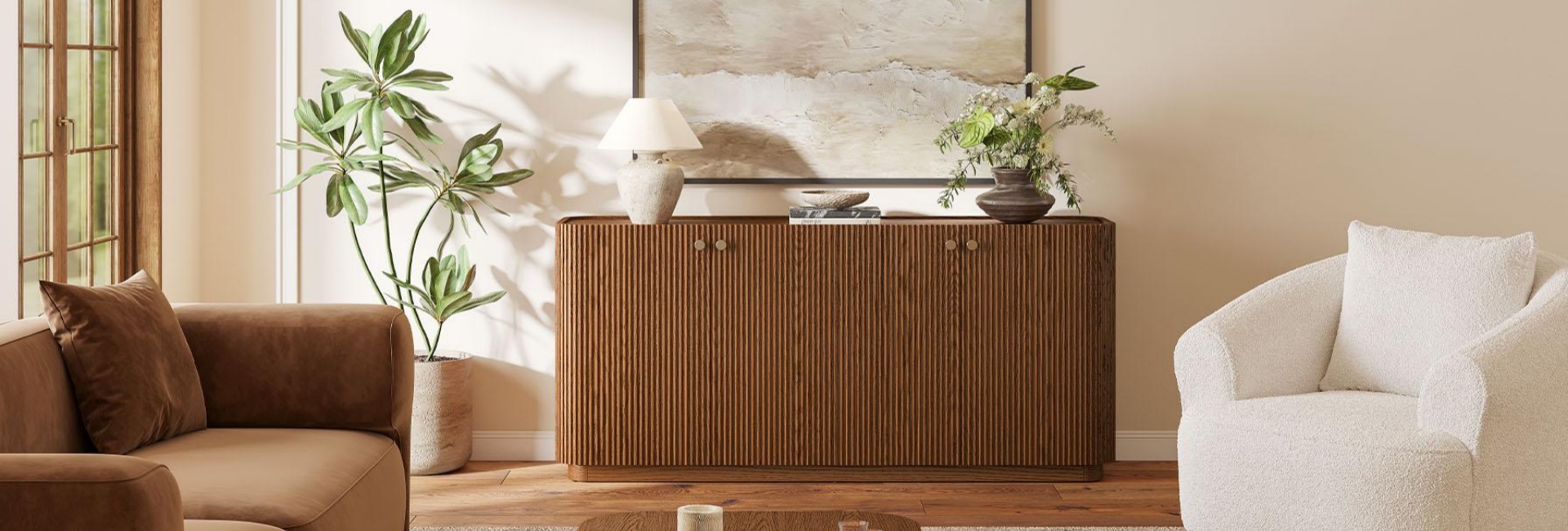
Good sideboard decor ideas come down to a few simple choices: add an anchor on the wall above, vary the heights of objects on the surface, combine decorative pieces with practical accessories, and leave enough open space to keep the arrangement from feeling crowded. When these elements work together, the top of a sideboard looks intentional rather than like a collection of objects placed in a row.
A good way to approach the process is to work from the wall down. Choose the main visual anchor first, add height at one or both ends, build a middle layer, and then remove anything that feels unnecessary. The following ideas cover the basics, room-by-room styling, seasonal updates, and common mistakes to avoid.
Table of Contents
- What Makes a Sideboard Display Look Styled?
- Start Above: The Wall Anchor
- Add Height at Both Ends
- Arrange Decor with the Triangle Rule
- Layer Books, Trays, and Decorative Bowls
- Choose the Right Decorative Objects
- Mix Textures and Finishes
- Sideboard Decor by Room: Dining, Living, and Entry
- Refresh Your Sideboard Decor Each Season
- Avoid These Five Sideboard Styling Mistakes
- Follow a Five-Minute Styling Formula
- One Worked Example, Start to Finish
- FAQs
- What do you put on top of a sideboard?
- How high should artwork hang above a sideboard?
- Should I style a sideboard symmetrically or asymmetrically?
- What is the triangle rule in sideboard styling?
- What kind of lamp works on a sideboard?
- Can I style a sideboard without art or a mirror above it?
- How do you decorate a sideboard for a dining room without blocking serving space?
What Makes a Sideboard Display Look Styled?
A well-styled sideboard usually has three qualities: a clear focal point, a mix of heights and textures, and enough space between objects.
First, it needs a visual anchor. This is often a mirror or artwork above the cabinet, but a large leaning frame or a tall decorative object can also draw the eye. Without a focal point, the accessories on the surface may look disconnected from the rest of the room.
Second, vary the shapes and materials. Combine tall vases with low bowls, smooth ceramics with textured wood, or metal accents with natural greenery. When every object has the same height, shape, or finish, the arrangement can look flat.
Finally, avoid filling every inch of the surface. Grouping accessories into a few arrangements and leaving visible space between them makes each piece easier to notice. On a larger sideboard, keeping roughly one-third of the top open can be a useful starting point, though smaller cabinets may need a different balance.
Start Above: The Wall Anchor
The wall above the sideboard sets the scale for the entire display. A mirror or artwork helps connect the cabinet to the room and gives the accessories below a visual center.
Art and Mirror Sizing
A useful starting point is to choose artwork or a mirror around two-thirds the width of the sideboard. For example, a 72-inch cabinet could work well with a piece approximately 48 inches wide. This is a visual guideline rather than a strict measurement. A wider piece can also work if it leaves enough space around the edges and does not overwhelm the wall.
For hanging height, try positioning the bottom of the frame about 6 to 10 inches above the sideboard. This keeps the artwork visually connected to the furniture instead of leaving a large gap between them. Adjust the distance based on the frame size, ceiling height, and other objects on the surface.
Mirrors are especially useful in entryways and darker dining rooms because they reflect light and make a space feel more open. Artwork offers more flexibility in style: one large print creates a simple focal point, while a coordinated pair or a small gallery arrangement can add more detail. Keep the overall arrangement within the visual width of the sideboard so the wall and cabinet feel connected.
To Hang or to Lean
Leaning a large frame against the wall is an easy alternative to hanging it. It creates a relaxed look and makes it easier to change artwork without drilling new holes.
Place the frame toward one end of the sideboard and arrange a few smaller objects around its base. Make sure it rests securely against the wall rather than sitting at an unstable angle. If the cabinet is frequently used or has doors that close with force, secure the frame to reduce the risk of it tipping over.
Add Height at Both Ends
Once the wall anchor is in place, add one or two taller objects to establish the height of the display. Table lamps are a popular choice because they provide both visual interest and practical lighting.
A pair of matching lamps at opposite ends creates a balanced, formal arrangement. For a more relaxed look, use one lamp on one side and a lower grouping of decorative objects on the other. Both approaches can work as long as the arrangement feels intentional.
Buffet lamps around 32 to 36 inches tall can work well on a standard-height sideboard, but the right size depends on the cabinet height, lamp proportions, and room. Check the shade position from your usual seated and standing viewpoints. It should provide useful light without obstructing the view across the room.
If a lamp does not suit the space, a tall vase with branches can provide similar height. A floor lamp placed beside the sideboard is another option, leaving more of the cabinet top available for smaller decorative pieces.
Arrange Decor with the Triangle Rule
The triangle rule is a simple way to arrange objects at different heights. Each grouping should include something tall, something medium, and something low. Arrange the three objects so their different heights create a loose triangular shape when viewed together.
For example, a lamp can provide the tallest point, a vase can sit beside it at medium height, and a stack of books with a small bowl can complete the lower part of the arrangement. The tallest object does not need to sit in the center. Placing it toward one end often creates a more relaxed composition.
Odd-numbered groupings, especially groups of three or five, are another useful styling technique. They help prevent accessories from looking too evenly spaced or arranged in a rigid row. However, the objects should still vary in size and shape. Three nearly identical pieces can look just as repetitive as four.
Also consider how the objects overlap. Larger items such as frames, trays, and book stacks can sit toward the back, while smaller accessories go in front. Slight overlap creates depth and makes the arrangement feel more connected.
Layer Books, Trays, and Decorative Bowls
The middle of the sideboard is where you can add personality without making the surface difficult to use. A few practical accessories can also help organize smaller objects.
Book stacks add height. Two or three hardcover books laid flat create a low platform for a candle, small sculpture, or decorative bowl. Choose books with covers or subjects that suit the room, and vary the stack height to keep the arrangement from looking too uniform.
Trays keep smaller items together. Keys, matchboxes, candles, and remote controls can quickly make a sideboard look cluttered when scattered across the surface. A tray groups these items into one arrangement. Wood, marble, and woven trays also introduce another texture. In a dining room, a tray with glasses and a decanter can become a small drinks station that is easy to move when serving food.
Bowls fill wider areas. A large, low bowl can add shape without taking up as much visual space as several small accessories. It can hold fruit, decorative objects, or nothing at all. Choose a size that suits the cabinet rather than adding a bowl simply to fill an empty spot.
Keep frequently used items easy to reach. Decorative objects should not interfere with drawers, doors, or the space needed for serving.
Choose the Right Decorative Objects
You do not need to buy a matching sideboard decor set. Many useful pieces may already be in your home. Start with a few different categories and choose items that suit the cabinet and the room.
Vases add height and shape. A statement vase around 14 to 18 inches tall can work well on a larger sideboard, while smaller cabinets may need something more compact. Ceramic and stone vessels add texture, while clear glass creates a lighter look. A few branches or stems can provide a simple finishing touch without making the arrangement too full.
Plants bring natural texture. A trailing pothos or ivy can soften the straight lines of a long cabinet. More upright plants, such as a snake plant, can provide height when there is no room for a lamp. For darker spaces, dried branches or realistic faux greenery offer a similar decorative effect without requiring much maintenance.
Candleholders add warmth. Combine different heights instead of arranging identical holders in a straight line. Brass, ceramic, and glass can work together when their finishes complement the cabinet and other accessories. In a dining room, keep candles away from artwork, curtains, and other materials that could catch fire.
Personal objects make the display feel individual. A ceramic piece from a trip, a family bowl, or an object from a local maker can add character. One or two meaningful pieces are often enough to make a grouping feel personal without turning the surface into a collection of unrelated items.
If you are buying new accessories, start with the larger pieces that establish the scale, such as a lamp or vase. Add trays and smaller decorative objects afterward. This makes it easier to avoid buying items that do not fit the finished arrangement.
Mix Textures and Finishes
Decorative objects should complement the sideboard without matching every material and finish. Contrast helps the cabinet and accessories stand out from one another.
A warm wood sideboard can look balanced with cool ceramics, matte stone, or greenery. A pale or painted cabinet may benefit from warmer accents such as terracotta, rattan, or aged brass. The goal is to create a mix of finishes that feels connected rather than overly coordinated.
The cabinet's own design should also influence how much decor you add. Take the Skimra 72-Inch Oak Sideboard, for example. Its wave-inspired oak fluting adds texture and visual movement to the cabinet front. A simple arrangement of a sculptural vase, a table lamp, or a low bowl can complement the detailed surface without competing with it.

Skimra 72-Inch Oak Sideboard
View ProductThe Thursen 72-Inch Sideboard offers a different look with its geometric chevron-pattern doors and slim metal handles. Its structured design pairs well with softer shapes and materials, such as rounded ceramics, linen accents, and trailing greenery. These contrasting elements help balance the cabinet's angular details and create a more cohesive display.
One useful finish guideline is to balance shine and texture. Matte accessories can soften a glossy cabinet, while a glass vase or brass candlestick can add contrast to a matte wood surface. You do not need every object to match, but the finishes should work together as a group.
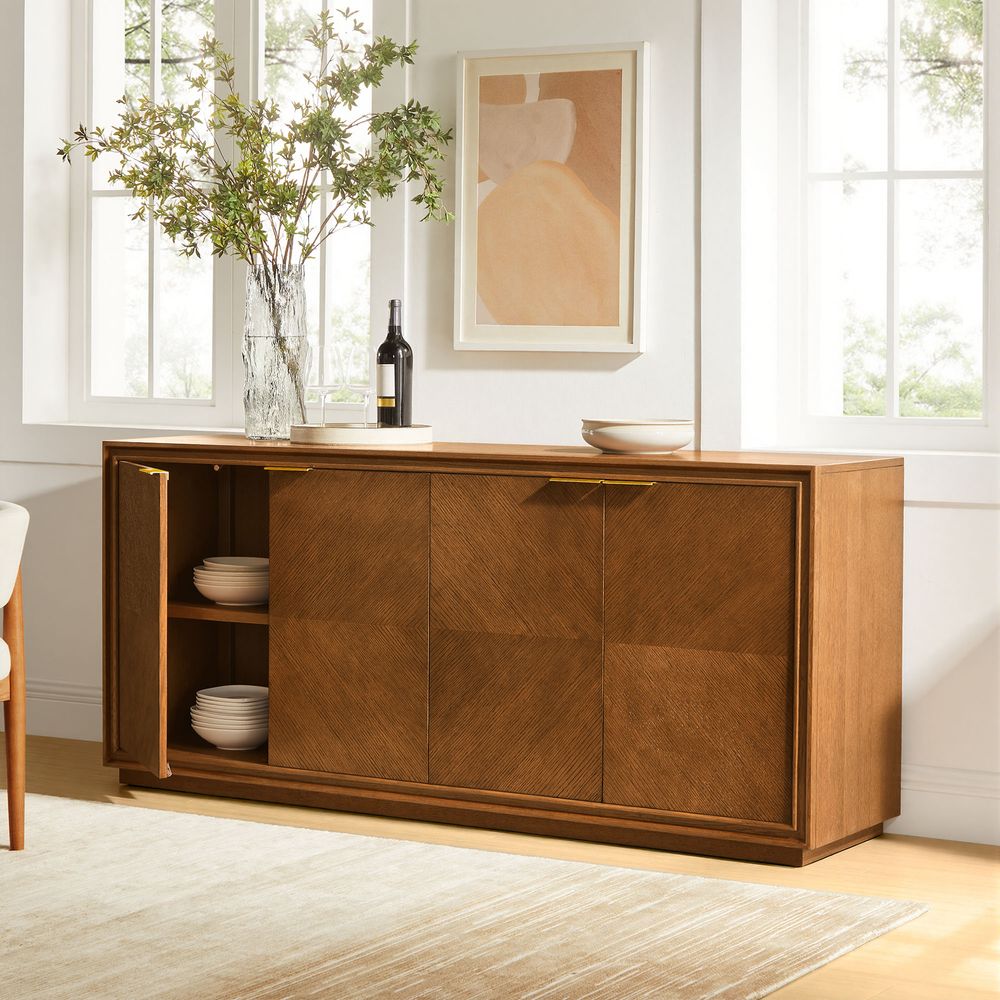
Thursen 72-Inch Sideboard
View Product
Sideboard Decor by Room: Dining, Living, and Entry
The same styling principles can work throughout the home, but each room has different practical needs.
Dining Room: Keep the Center Clear
A dining room sideboard often doubles as a serving surface, so leave enough room for platters, dishes, and drinks. Place lamps or candleholders toward the ends, and use a tray near the back edge for smaller accessories.
Choose pieces that can be moved easily when hosting. A decorative bowl or candle arrangement should not prevent you from using the cabinet for serving. You can also coordinate the sideboard accessories with the dining table through similar wood tones, metal finishes, or ceramic details.
Living Room: Create a Fuller Display
A living room sideboard usually has fewer serving demands, so the surface can accommodate a fuller arrangement. A larger art piece, a stack of books, a plant, and a few sculptural objects can create a focal point along the wall.
If a television sits above the cabinet, keep the accessories lower and position them toward the sides. Avoid tall lamps or vases that block the screen or compete with the television for attention.
Entryway: Combine Decor and Storage
An entryway sideboard needs to be practical as well as attractive. A tray for keys and mail, a lamp for soft lighting, and a mirror above the cabinet can create a useful everyday setup.
Keep the number of decorative objects limited, especially in narrow hallways. Leave enough room for people to set down bags and access drawers or doors without moving the entire arrangement.
Refresh Your Sideboard Decor Each Season
You do not need to rebuild the entire display every season. Keep larger elements, such as the wall art and lamp, in place and change a few accessories in the middle layer.
Keep seasonal decorations to a few pieces so they do not overwhelm the rest of the display. A vase arrangement, tray accessories, or one decorative accent is often enough to make the sideboard feel current without changing its overall style.
Avoid These Five Sideboard Styling Mistakes
A sideboard can look cluttered or unfinished even when the individual objects are attractive. These common problems are usually easy to fix.
If the display still feels unbalanced, change one element at a time. Removing an object or adjusting the position of a lamp may make a bigger difference than rearranging everything.
Follow a Five-Minute Styling Formula
Once you understand the basic principles, styling a sideboard does not need to take long. Try this simple sequence:
-
Choose the wall anchor. Add a mirror, artwork, or leaning frame that suits the width of the cabinet.
-
Set the height. Place a lamp or tall vase toward one end.
-
Build a grouping. Combine a medium-sized object with a lower piece, such as books and a bowl.
-
Add practical accessories. Use a tray to organize smaller items that you need regularly.
-
Edit the surface. Remove anything that feels unnecessary and leave visible space between groupings.
Try using objects from other rooms before buying new decor. You can experiment with different arrangements and see what works with the cabinet's size, finish, and surrounding furniture.
One Worked Example, Start to Finish
Consider a 72-inch warm-oak sideboard in a dining room. The goal is to create a balanced display while keeping enough room for serving.
Above the cabinet, hang a 48-inch abstract landscape with the bottom edge about 8 inches above the top. This creates a visual connection between the wall and the furniture.
At the left end, place a buffet lamp with a linen shade. Beside it, add a matte stone vase with a few eucalyptus stems. A short stack of two art books in front of the vase provides another height, with a small brass bowl on top.
Keep the center sectioan open for serving platters. This is especially useful in a dining room where the sideboard is used during meals and gatherings.
At the right end, place a woven tray with two pillar candles in ceramic holders of different heights and a small glass votive. The tray keeps the arrangement together and can be moved easily when more surface space is needed.
The result combines different heights, textures, and practical pieces without covering the entire cabinet. The lamp creates the main vertical element, the vase and books add layers, and the tray balances the opposite end.
For a smaller sideboard, use fewer objects and one main grouping. The same principles still apply: vary the heights, keep the accessories connected, and leave enough room for the cabinet's everyday use.
FAQs
What do you put on top of a sideboard?
Common choices include a lamp or tall vase, a stack of books, a decorative bowl, and a tray for smaller items. Combine different heights and textures, and leave some open space so the surface does not feel crowded.
How high should artwork hang above a sideboard?
A useful starting point is to position the bottom of the frame about 6 to 10 inches above the sideboard. Artwork around two-thirds the cabinet's width can also create balanced proportions. Adjust both measurements to suit the wall and the size of the frame.
Should I style a sideboard symmetrically or asymmetrically?
Both approaches work. Matching lamps at each end with centered artwork create a formal, symmetrical look. One tall object on one side and a lower, wider grouping on the other create a more relaxed arrangement. Choose the approach that suits the room and the cabinet.
What is the triangle rule in sideboard styling?
The triangle rule uses three objects at different heights: one tall, one medium, and one low. Arrange them so their highest points form a loose triangle. This adds visual movement and helps the grouping look more balanced.
What kind of lamp works on a sideboard?
A buffet lamp can work well because its proportions suit a long, relatively narrow surface. Lamps around 32 to 36 inches tall are one option for a standard-height sideboard, but check the cabinet height, shade position, and room sightlines before choosing one.
Can I style a sideboard without art or a mirror above it?
Yes. Use a tall lamp, a vase with branches, or a large leaning frame as the main vertical element. Balance it with a lower grouping on the other side so the arrangement does not feel too heavy in one spot.
How do you decorate a sideboard for a dining room without blocking serving space?
Place lamps or candleholders toward the ends, and keep the center available for platters and dishes. Use trays for smaller accessories so they can be moved easily when you need more surface space.