If you have been furniture shopping, you have probably noticed how often modern and mid-century modern appear side by side. The names are similar, but the styles are not interchangeable.
Modern design is a broad design tradition associated with the early 20th-century modernist movement. It emphasizes function, simplified forms, and a restrained approach to decoration. Mid-century modern developed from broader modernist ideas and became especially influential in the post-war period, particularly from the 1940s through the 1960s. It kept the focus on function and clean lines but introduced warmer woods, tapered legs, organic curves, and more expressive color.
There is also a practical distinction worth knowing. In furniture shopping today, modern can refer to both modernist design principles and the streamlined furniture style commonly sold as modern furniture. Mid-century modern, often shortened to MCM, refers to a more recognizable historical design language.
At Hernest, these ideas come together in a furniture approach that includes Mid-Century Modern, Modern, and Organic Modern influences. We believe good design should be accessible to everyday homes—not limited to one design era, one decorating formula, or a perfectly styled room. Clean forms, useful storage, natural materials, and thoughtful details can work across different interiors.
Table of Contents
- Modern vs. Mid-Century Modern: The Short Answer
- What Is Modern Interior Design?
- What Is Mid-Century Modern Design?
- Modern vs. Mid-Century Modern: Key Differences
- Materials: Clean Precision vs. Natural Texture
- Color and Mood: Neutral Foundations With More Warmth
- Shapes and Silhouettes: Geometric Forms Meet Organic Curves
- MCM, Modern, and Organic Modern: How the Styles Connect
- Where Modern and Mid-Century Modern Work Best in the Home
- Can You Mix Modern and Mid-Century Modern?
- Modern vs. Contemporary: What's the Difference?
- How Mid-Century Modern Has Evolved Into 2026
- How to Shop for Mid-Century Modern Furniture
- Modern or Mid-Century Modern? A Quick Guide
- FAQs
- What is the difference between modern and mid-century modern?
- What is mid-century modern furniture?
- What are the main characteristics of mid-century modern design?
- What materials are common in modern and mid-century modern furniture?
- What colors work best with mid-century modern furniture?
- What is the difference between mid-century modern and Organic Modern?
- Can Modern and Mid-Century Modern furniture be mixed?
- How can I make mid-century modern furniture work in a modern home?
Modern vs. Mid-Century Modern: The Short Answer
Modern design is the broader design tradition, rooted in modernist principles such as clean lines, functional forms, minimal ornament, and an honest use of materials.
Mid-century modern is a distinct post-war design style that developed from modernist ideas. It is known for warm woods, tapered or splayed legs, organic shapes, lighter proportions, and earthy accent colors.
The easiest way to tell them apart is to look at material, shape, proportion, and warmth. Modern furniture often has a more restrained and geometric appearance, while mid-century modern furniture tends to combine clean lines with warmer wood tones, lighter silhouettes, and more organic details.
That does not mean modern furniture has to feel cold or that MCM furniture has to look retro. Modern interiors can include natural wood, linen, textured finishes, and soft shapes. Likewise, contemporary MCM interiors can incorporate stone, metal, glass, and other current materials.
What Is Modern Interior Design?
Modern interior design grew out of the modernist movement of the early 20th century. Designers began moving away from heavy ornament and historical decoration, instead exploring simpler forms, new manufacturing methods, and materials such as steel, glass, concrete, and plywood.
A central idea was straightforward: furniture and buildings should serve a purpose without unnecessary decoration.
Modern furniture often features:
-
Clean, streamlined silhouettes
-
Geometric or simplified forms
-
Limited ornamentation
-
Neutral or restrained color palettes
-
Materials such as wood, metal, glass, stone, and concrete
-
A clear relationship between form and function
One common misconception is that modern style means white, gray, black, and nothing else. Natural wood, warm neutrals, textured fabrics, and softer shapes can also work within a modern interior when the overall composition remains simple and uncluttered.
There is also an important difference between historical Modernism and how the word modern is used in furniture retail today. A product labeled modern may simply describe a clean, current-looking piece rather than a strict historical interpretation of modernist design.
For shoppers, the more useful question is whether the furniture's proportions, materials, silhouette, and details create the look you want.
What Is Mid-Century Modern Design?
Mid-century modern design became especially influential during the post-war period, with the strongest association generally falling between the 1940s and 1960s. It combined modernist principles with advances in manufacturing and a growing interest in furniture that felt practical, comfortable, and visually lighter.
Common mid-century modern characteristics include:
-
Warm wood tones
-
Tapered or splayed legs
-
Organic curves combined with geometric forms
-
Lower, visually lighter proportions
-
Minimal ornamentation
-
Earthy or muted accent colors
-
A mix of natural and manufactured materials
-
Function-focused storage and seating
The result is often cleaner than traditional furniture but warmer and more expressive than some interpretations of modern design.
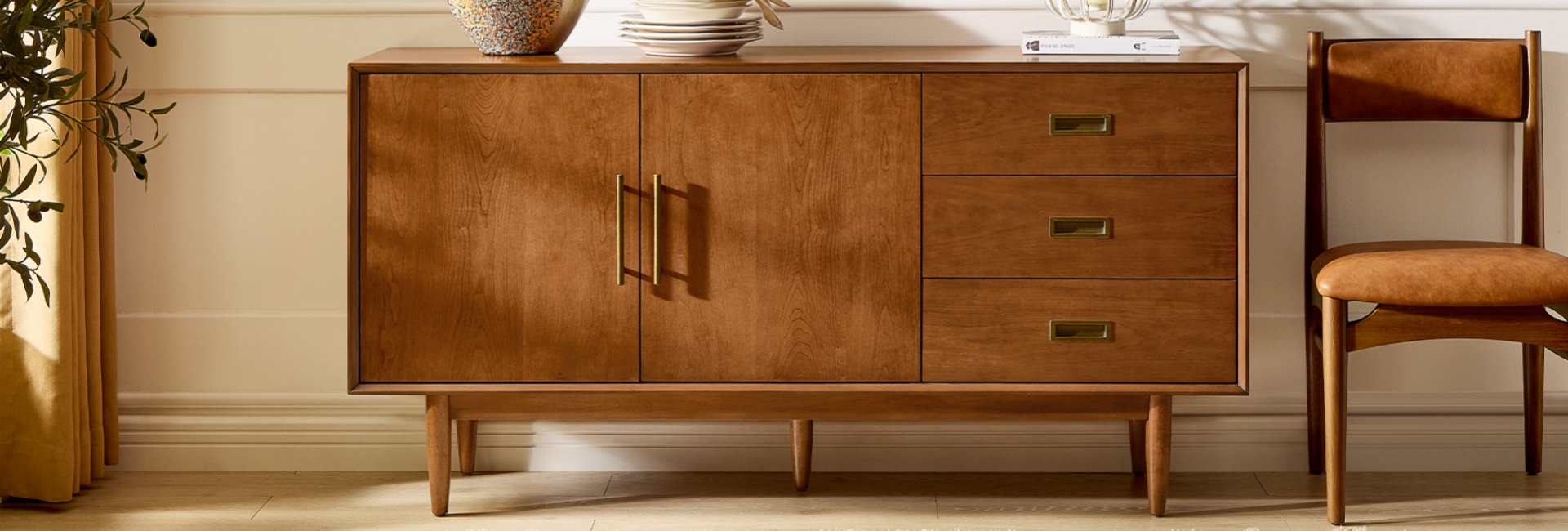
That combination is one reason MCM furniture remains easy to recognize. A sideboard with tapered legs and warm wood, for example, can immediately create a mid-century modern impression without requiring the entire room to look like a 1950s interior.
Modern vs. Mid-Century Modern: Key Differences
These distinctions are useful guidelines rather than strict rules. Modern furniture can use warm wood and curves, while contemporary MCM furniture can use stone, metal, or other materials associated with modern interiors.
Materials: Clean Precision vs. Natural Texture
Material is one of the quickest ways to understand the difference between modern and mid-century modern furniture.
Modern furniture often emphasizes visual clarity. Smooth wood, glass, metal, stone, and other relatively clean surfaces can reinforce a structured, streamlined look. The material is usually allowed to contribute to the design without being heavily ornamented.
MCM furniture places more emphasis on natural wood and the visual warmth it brings to a room. Walnut, teak, oak, and plywood are strongly associated with the style, although contemporary interpretations are not limited to those materials.
The boundaries are flexible.
A modern media console can have a natural wood finish. An MCM sideboard can combine wood with metal hardware. An Organic Modern piece may emphasize visible wood grain and tactile surfaces while keeping the overall silhouette simple.
For Hernest, these styles often overlap through natural materials, clean proportions, functional storage, and understated details.
Color and Mood: Neutral Foundations With More Warmth
Modern interiors often begin with neutral foundations such as white, black, gray, beige, and natural wood. The goal is not necessarily to avoid color, but to keep the overall palette controlled.
Mid-century modern interiors tend to introduce more warmth. Walnut and other wood tones can become major visual elements, while colors such as mustard, olive, rust, ochre, burnt orange, or muted blue can add character.
Today's MCM interiors do not have to rely on strong retro colors, either. A more restrained palette of warm wood, cream, brown, muted green, and soft blue can create the same sense of warmth without making a room feel themed.
This is also where Organic Modern can act as a natural bridge. Its palette often centers on warm neutrals, natural materials, soft textures, and understated forms.
If you want to introduce MCM character gradually, start with one substantial piece—a walnut-toned media console, a tapered-leg dresser, a curved chair, or a warm wood sideboard—rather than changing every surface in the room.
Shapes and Silhouettes: Geometric Forms Meet Organic Curves
Shape is another useful clue when comparing modern and mid-century modern furniture.
Modern furniture often relies on geometric forms and visual simplicity. Rectangles, squares, straight lines, and streamlined silhouettes can create a sense of order.
Mid-century modern furniture tends to soften that structure with details such as:
-
Tapered legs
-
Splayed legs
-
Rounded chair backs
-
Curved edges
-
Low-profile tables
-
Slim frames
-
Organic or gently sculpted shapes
MCM is not simply a style of curved furniture, though. Many well-known mid-century pieces are strongly geometric. What matters is the combination of proportion, material, function, and detail.
Why Tapered Legs Are So Associated With Mid-Century Modern
Tapered legs are one of the most recognizable MCM details because they visually reduce the weight of a furniture piece.
Raising a cabinet, dresser, or sideboard above the floor creates visible space underneath, which can make the room feel more open. It also gives storage furniture a lighter appearance than a solid block sitting directly on the floor.
That detail can be especially useful in smaller rooms where bulky furniture can quickly dominate the space.
Tapered legs also fit naturally with Organic Modern interiors because both approaches favor simpler silhouettes and a stronger connection to natural materials.
MCM, Modern, and Organic Modern: How the Styles Connect
These three terms describe related but different approaches.
Modern emphasizes simplicity, function, clean lines, and reduced ornament.
Mid-Century Modern adds a recognizable post-war design vocabulary, including warm woods, tapered legs, organic curves, and lighter proportions.
Organic Modern combines modern simplicity with natural materials, softer forms, earthy colors, and a stronger visual connection to nature.
That means one room does not have to fit neatly into a single category.
For example, a living room could combine:
-
A clean-lined modern sofa
-
A walnut-toned MCM media console
-
An organic-shaped coffee table
-
Natural wood flooring
-
Linen upholstery
-
Stone or travertine-inspired accents
-
Muted earth tones
The result can feel cohesive without every item sharing the same historical design label.
At Hernest, Organic Modern often comes through natural wood grain, tactile finishes, warm neutrals, and simple forms that bring texture into a room without adding visual clutter.
The goal is not to make style complicated. Choose the pieces that fit your room, storage needs, materials, and personal taste.
Where Modern and Mid-Century Modern Work Best in the Home
The difference between modern and MCM becomes easier to see when you apply each style to an actual room.
Living Room: Let the Media Console Set the Direction
A media console is often one of the largest pieces in a living room, so its material and silhouette can establish the direction for the rest of the space.
The Frode 84-Inch MCM Media Console combines warm wood tones, a raised base, clean lines, and practical storage. Its sliding solid-wood doors and five cord cutouts make the MCM-inspired silhouette useful for a contemporary entertainment setup.
The Renata 84-Inch Travertine-Textured Media Console takes a different approach. Its stone-inspired surface, brass-toned hammered hardware, adjustable shelves, and cord cutouts work naturally with Modern and Organic Modern interiors.
If you are comparing these styles, think about the impression you want the largest furniture pieces to create before adding smaller decorative details.
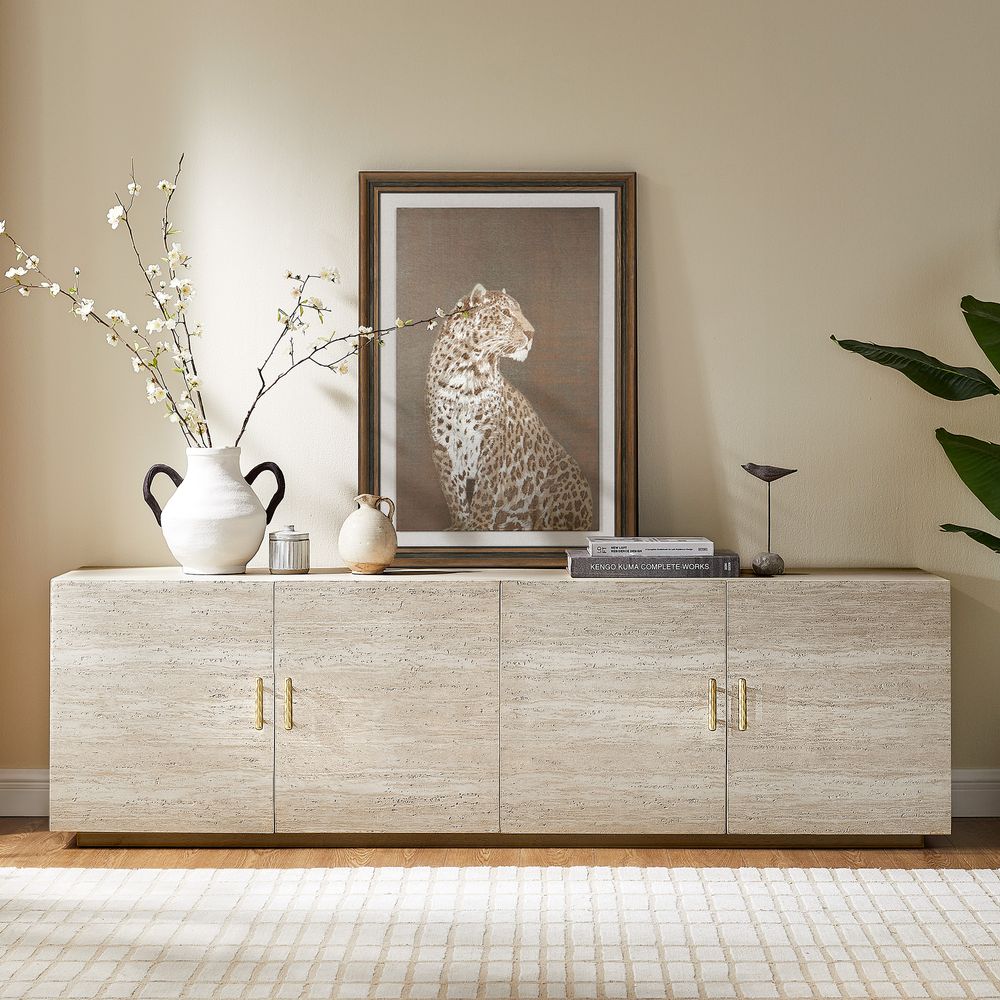
Renata 84-Inch Travertine-Textured Media Console
View Product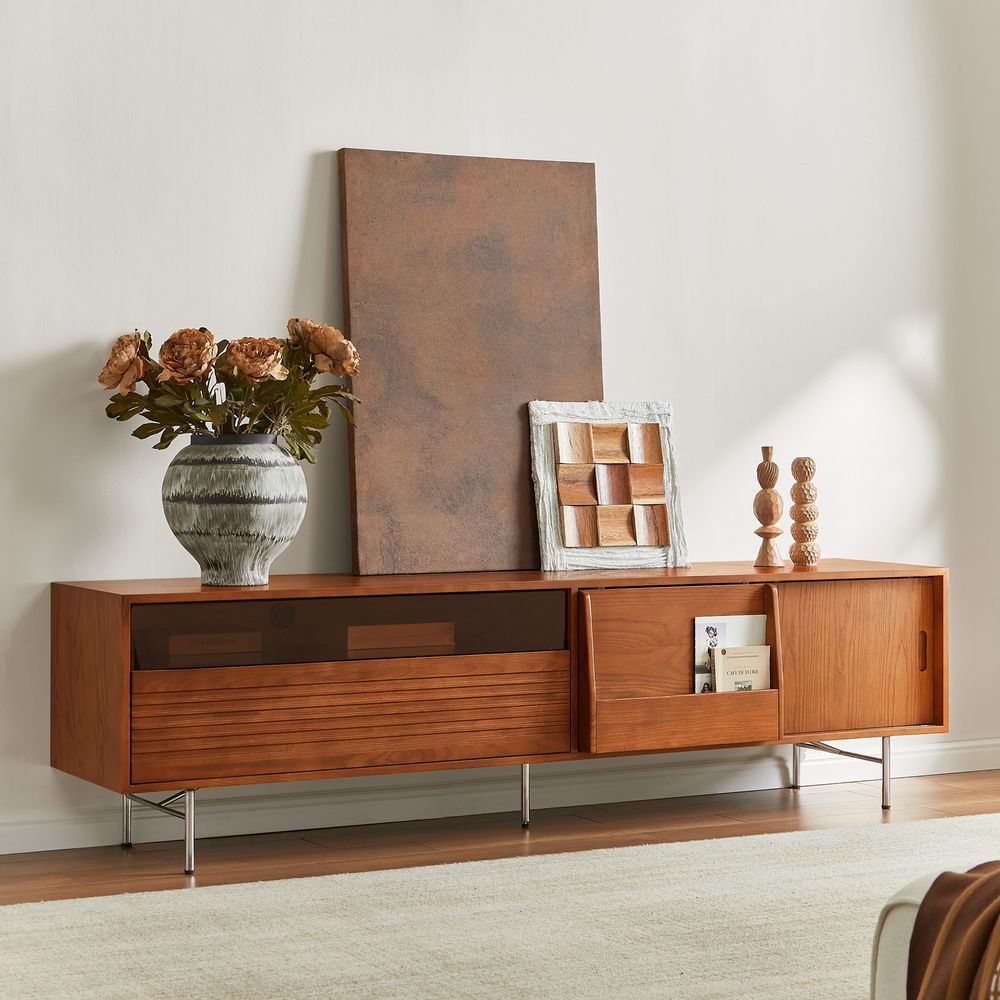
Frode 84-Inch MCM Media Console
View ProductDining Room and Entryway: Use a Sideboard as a Bridge
Sideboards are particularly flexible because they can bring warmth and storage into either a modern or MCM room.
The Kaden 63-Inch Mid-Century Sideboard uses tapered wood legs, a warm finish, and clean lines to create a recognizable MCM profile while keeping the storage practical.
The Sabina 72-Inch Ash Wood Sideboard takes a more natural direction. American solid ash, ash veneers, wire-brushed grain, and fluted detailing give it a strong connection to Modern and Organic Modern interiors.
Both approaches can work with simple dining tables, neutral walls, natural flooring, and understated lighting.
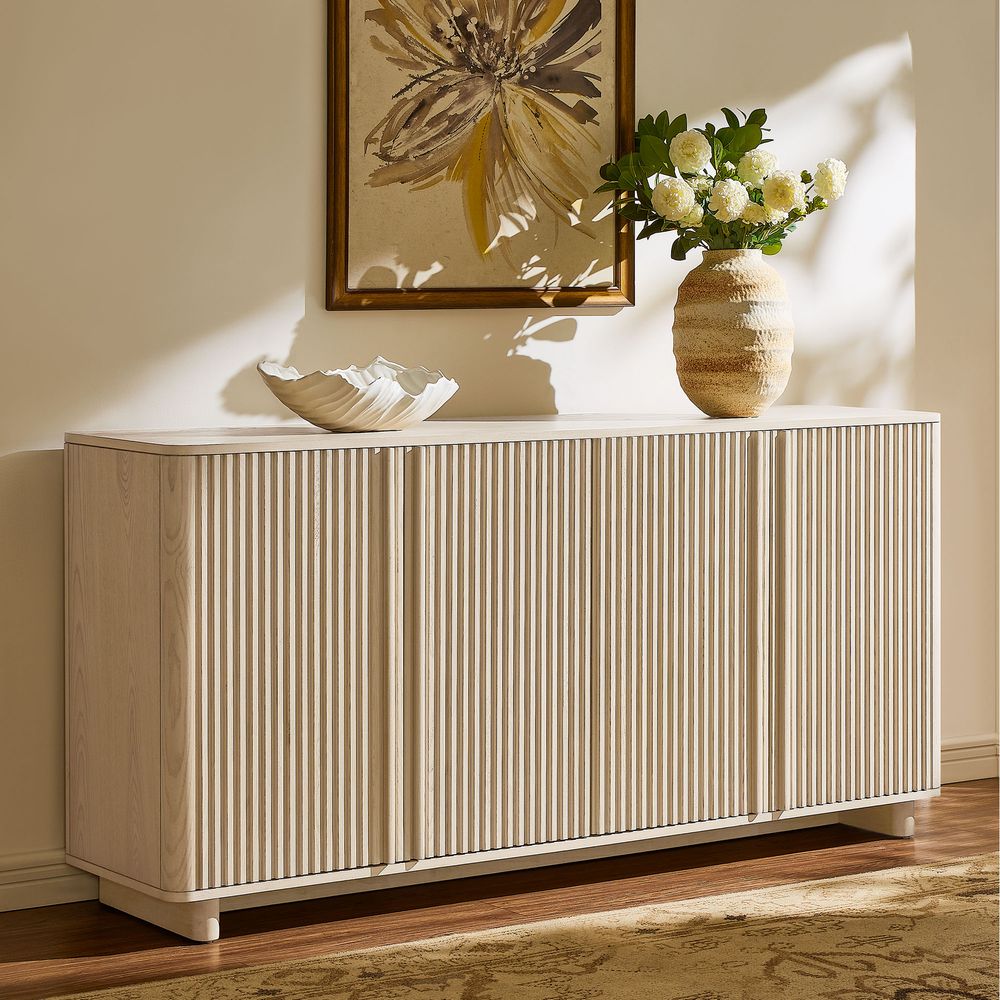
Sabina 72-Inch Ash Wood Sideboard
View Product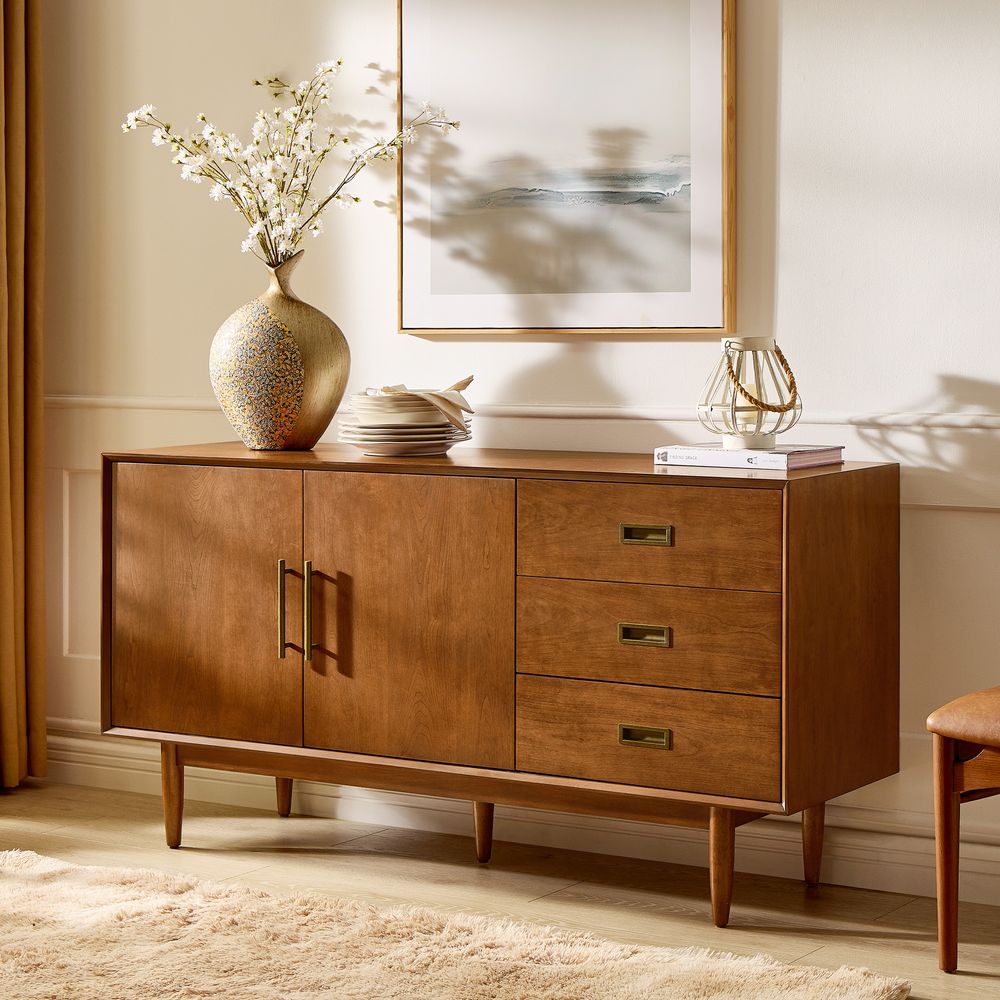
Kaden 63-Inch Mid-Century Sideboard
View ProductBedroom: Keep Storage Simple and Visually Light
Bedroom furniture benefits from the lighter proportions often associated with both modern and MCM design.
The Kaden 55-Inch Mid-Century 7-Drawer Dresser combines tapered legs, beveled details, warm wood, dovetail construction, and practical storage. It introduces MCM character without requiring a fully retro bedroom.
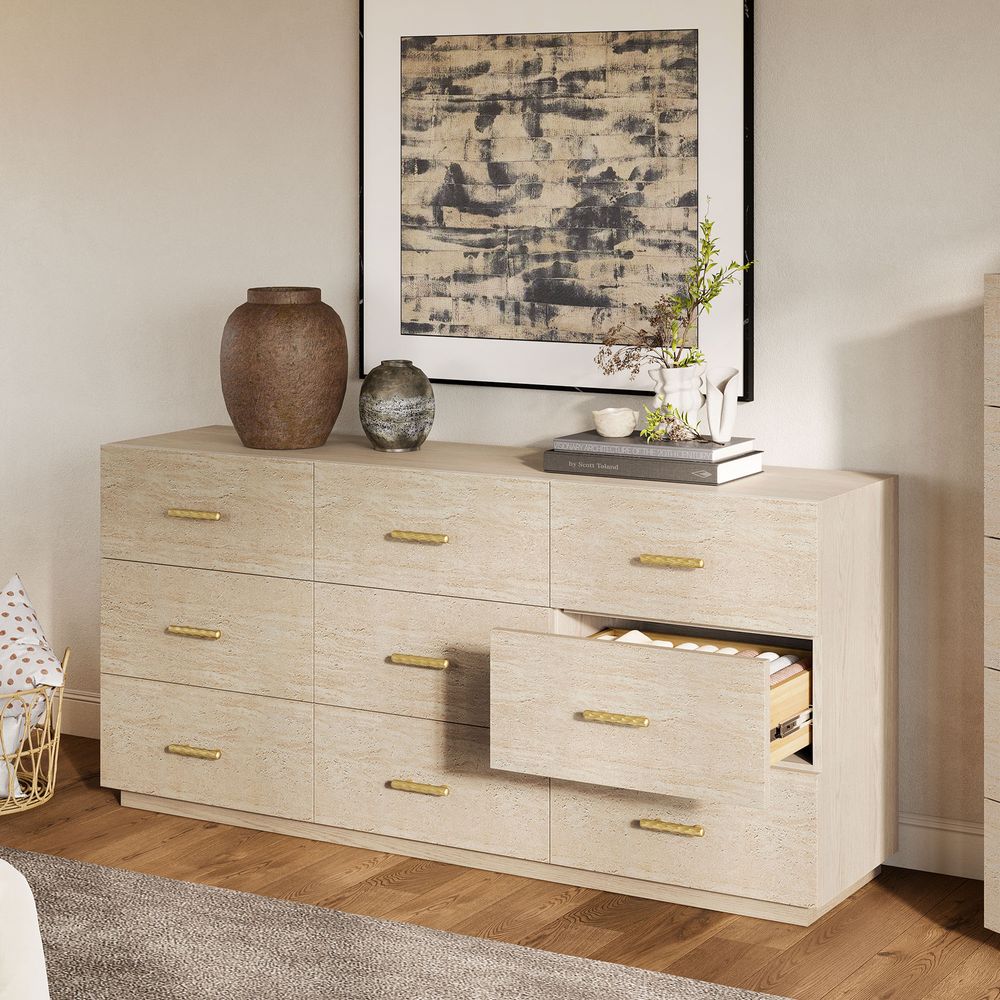
For a more streamlined look, the Renata 80-Inch Travertine-Textured 9-Drawer Dresser uses a stone-inspired surface and brass-toned hammered hardware to create a modern, understated focal point.
In either case, the surrounding pieces can remain simple. A neutral bed, natural textiles, and restrained lighting are often enough to let the dresser establish the room's character.
Renata 80-Inch Travertine-Textured 9-Drawer Dresser
View Product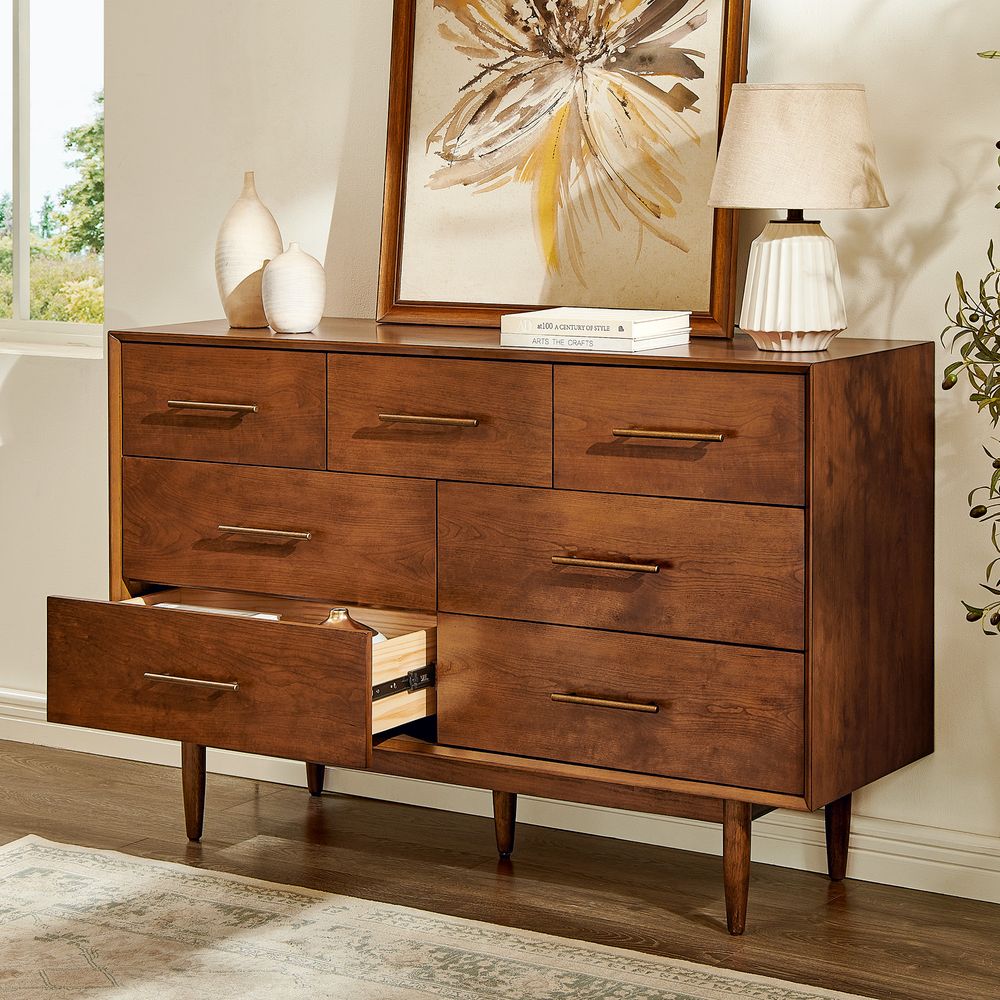
Kaden 55-Inch Mid-Century 7-Drawer Dresser
View Product
Can You Mix Modern and Mid-Century Modern?
Yes. In fact, the two styles can work together naturally because they share several fundamentals: function, clean lines, simplified forms, and limited ornamentation.
A practical approach is to use modern furniture as the foundation and MCM pieces as warmer focal points.
For example:
-
Start with a simple modern sofa.
-
Add an MCM media console in warm wood.
-
Use a streamlined coffee table with an organic shape.
-
Keep textiles neutral.
-
Repeat one or two materials across the room.
The key is proportion rather than matching every item to the same style label.
Too many highly recognizable MCM details can make a room feel themed. Too many stark modern surfaces can make it feel visually flat. Mixing materials and keeping the overall palette controlled can create more balance.
Organic Modern can also help connect the two. Natural wood, stone-inspired surfaces, linen, warm neutrals, and soft shapes can sit comfortably between the cleaner side of Modern and the warmer side of MCM.
Modern vs. Contemporary: What's the Difference?
Modern and contemporary are often used interchangeably in furniture shopping, but they are not technically the same.
Modern refers to a design tradition with roots in the early 20th-century modernist movement.
Contemporary means what is current or happening now. Contemporary interior design can borrow from many influences, including modernism, minimalism, Organic Modern, Scandinavian design, and Mid-Century Modern.
That is why a contemporary living room can contain an MCM sideboard, a modern sofa, and an Organic Modern coffee table without creating a contradiction.
When shopping, the distinction matters because a product described as contemporary does not necessarily belong to the historical Modern movement.
How Mid-Century Modern Has Evolved Into 2026
Mid-century modern continues to influence furniture and interiors, but today's rooms do not necessarily try to recreate a 1950s or 1960s interior piece by piece.
Instead, many contemporary interpretations focus on individual MCM characteristics: warm wood, tapered legs, lighter proportions, curved details, and functional silhouettes.
These elements can be paired with materials and finishes that feel current, including natural stone, travertine-inspired textures, linen, textured upholstery, and muted earth tones.
This approach puts more emphasis on the principles of MCM design than on creating a period-specific room.
That also explains why MCM works so well with Organic Modern. Both can use natural materials, warm colors, simple silhouettes, and a less cluttered approach to decorating.
For Hernest, Modern, Mid-Century Modern, and Organic Modern are not rigid boxes. They are accessible design directions that can be adapted to how people actually live.
How to Shop for Mid-Century Modern Furniture
A product does not become MCM simply because it has tapered legs or a walnut-colored finish. Look at the whole piece.
Start With Proportion
MCM furniture often feels visually lighter than traditional storage furniture. Raised bases, slim legs, and balanced proportions can make a large piece feel less imposing.
Look at the Material
Warm wood remains one of the strongest visual signals of MCM furniture. Pay attention to the grain, finish, and how the material interacts with the rest of the design.
Pay Attention to the Details
Look beyond the overall color. Tapered legs, rounded edges, beveled fronts, slim frames, and simple hardware can all contribute to a mid-century modern appearance.
Consider How You Will Actually Use It
Style should not come at the expense of function. Check drawer capacity, shelf adjustability, cord management, cabinet space, dimensions, and clearance before buying.
Think Beyond One Style Label
A piece can have MCM influences without requiring an entirely MCM room. If you like the silhouette but prefer a more contemporary interior, use it as an accent and let the rest of the room remain modern or Organic Modern.
Modern or Mid-Century Modern? A Quick Guide
Choose Modern if you prefer:
-
Clean, structured silhouettes
-
Minimal visual decoration
-
Neutral or restrained color palettes
-
A streamlined, uncluttered room
-
Materials such as wood, metal, glass, or stone
Choose Mid-Century Modern if you prefer:
-
Warm wood tones
-
Tapered or splayed legs
-
Lighter furniture proportions
-
Organic curves mixed with geometric forms
-
A little more warmth and personality
Choose Organic Modern if you prefer:
-
Natural wood grain
-
Warm neutrals and earthy colors
-
Tactile, natural-looking materials
-
Softer shapes
-
A modern room with more visual warmth
You can also combine them. The most useful style is often the one that makes your home comfortable, functional, and visually cohesive.
FAQs
What is the difference between modern and mid-century modern?
Modern is a broad design tradition rooted in early modernism, while mid-century modern is a distinct post-war style influenced by modernist ideas. MCM is especially associated with warm woods, tapered legs, lighter proportions, and organic curves.
What is mid-century modern furniture?
Mid-century modern furniture is associated primarily with the post-war period from the 1940s through the 1960s. Common characteristics include warm woods, tapered or splayed legs, clean lines, organic shapes, minimal ornamentation, and functional forms.
What are the main characteristics of mid-century modern design?
Common MCM characteristics include warm wood tones, tapered or splayed legs, clean lines, organic curves, lighter proportions, minimal ornamentation, functional forms, and muted or earthy colors.
What materials are common in modern and mid-century modern furniture?
Modern furniture can use wood, metal, glass, stone, concrete, and other materials. MCM is particularly associated with woods such as walnut, teak, oak, and plywood, along with materials such as metal, fiberglass, and molded plastics.
What colors work best with mid-century modern furniture?
Warm wood tones pair well with neutral foundations and earthy accents such as olive, mustard, rust, ochre, muted blue, cream, and brown. A more restrained palette can create a contemporary MCM look.
What is the difference between mid-century modern and Organic Modern?
MCM is tied to a recognizable post-war design history and has characteristic details such as tapered legs and warm woods. Organic Modern is a broader contemporary approach centered on natural materials, warm neutrals, softer forms, and a connection to nature.
Can Modern and Mid-Century Modern furniture be mixed?
Yes. Both styles share clean lines, functional forms, and limited ornamentation. A modern foundation can be paired with selected MCM pieces in warm wood or lighter proportions to add character.
How can I make mid-century modern furniture work in a modern home?
Start with one or two MCM pieces, such as a wood sideboard, media console, or dresser. Keep the surrounding furniture simple, use a restrained palette, and repeat natural materials or warm tones to create a cohesive transition between styles.