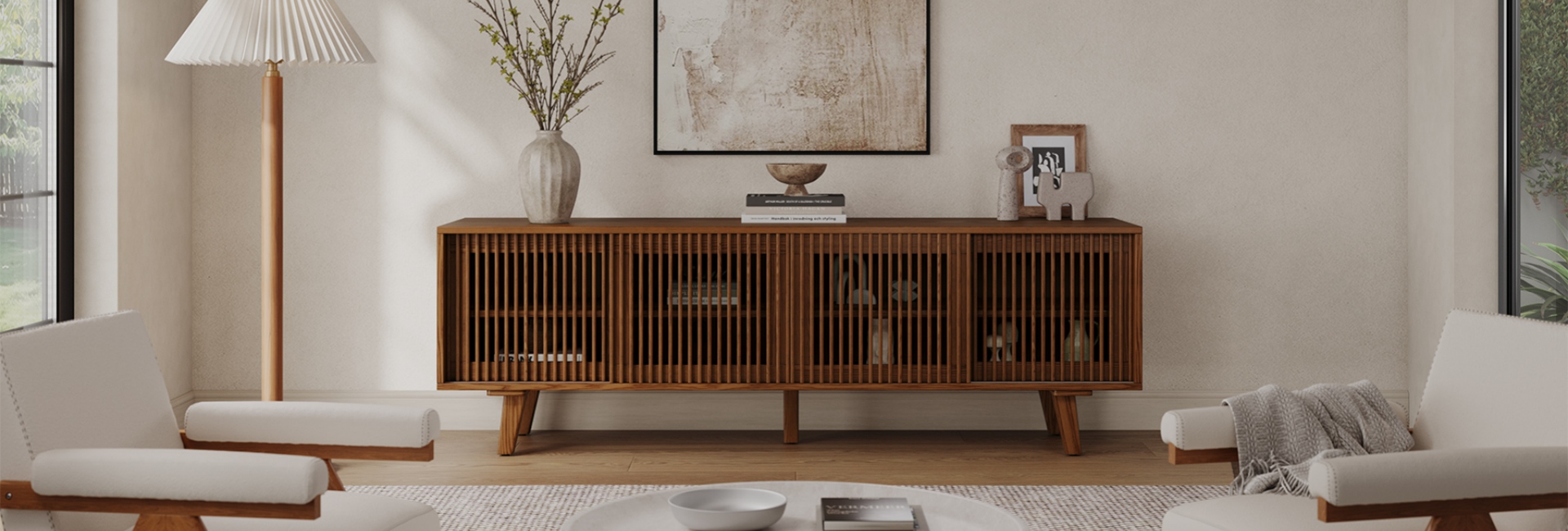
A mid century modern media console typically combines a low profile, clean lines, tapered or splayed legs, and warm wood tones such as walnut or oak. The result is a TV cabinet that feels visually light while still providing practical storage. In this guide, we'll look at the characteristics that define the style, compare common wood and leg choices, explain how to size a console for your TV, and cover storage and cable-management details worth checking before you buy.
Table of Contents
- What Is a Mid-Century Modern Media Console?
- Where Did Mid-Century Modern Furniture Come From?
- The Defining Characteristics of Mid-Century Modern Style
- Walnut, Oak, or Teak: Which Wood Fits Your Room?
- Tapered, Hairpin, or Sled: Which Leg Style Works Best?
- Solid Wood vs. Veneer: What Should You Buy?
- How to Size a Mid-Century Modern Media Console for Your TV
- Storage That Earns Its Footprint
- Cable Management: The Detail That Makes a Difference
- Mid-Century Modern vs. Scandinavian vs. Danish Modern
- How to Style the Top of a Mid-Century Modern Media Console
- What to Look for Before Buying a Mid-Century Modern Media Console
- FAQs
- What makes a media console mid-century modern?
- What wood is most common for mid-century modern media consoles?
- How wide should a media console be for a 75-inch TV?
- Can a mid-century modern media console work with a wall-mounted TV?
- Is solid wood necessary for a mid-century modern media console?
- How do I hide cables in a media console?
- Are mid-century modern and Scandinavian media consoles the same?
What Is a Mid-Century Modern Media Console?
A mid-century modern media console is a TV storage piece influenced by the furniture design of the mid-20th century. It usually emphasizes horizontal proportions, simple geometry, natural wood, and functional storage rather than heavy ornamentation.
Unlike a bulky traditional entertainment center, a mid-century modern console tends to keep the visual footprint low and streamlined. Tapered legs can lift the cabinet off the floor, while sliding doors, drawers, or cabinets provide space for electronics and everyday living-room clutter.
The style works particularly well when you want your TV area to feel organized without making the television wall look visually heavy.
Where Did Mid-Century Modern Furniture Come From?
Mid-century modern design generally refers to furniture and architecture associated with the middle decades of the 20th century, particularly from the 1940s through the 1960s. Designers focused on practical forms, new manufacturing techniques, and materials that could be produced at scale.
Furniture from this period often replaced elaborate decoration with proportion, material, and function. Wood remained important, but it was commonly combined with metal, glass, molded materials, and other modern elements.
Today's furniture labeled mid-century modern does not need to be an exact reproduction of a 1950s piece. Instead, it typically borrows recognizable design cues such as tapered legs, warm wood, clean lines, and understated hardware.
The Defining Characteristics of Mid-Century Modern Style
Clean Lines and a Low, Horizontal Profile
One of the easiest ways to recognize mid-century modern furniture is its emphasis on horizontal lines.
A media console usually has a relatively long and low silhouette, which works naturally with the horizontal shape of a television. The lower profile also helps keep the TV wall from feeling dominated by a large piece of furniture.
Look for:
-
Straight or gently curved cabinet fronts
-
Simple rectangular proportions
-
Limited decorative detailing
-
A relatively low overall height
-
A strong horizontal orientation
The goal is not to make the console disappear. It is to give the TV area a clean visual foundation.
Tapered or Splayed Legs
Leg design is another defining feature.
Tapered legs gradually become narrower toward the floor, while splayed legs angle outward slightly. Both create a lighter appearance than a solid cabinet sitting directly on the floor.
They can also make a longer console feel less bulky because more of the floor remains visible underneath.
Warm Wood and Visible Grain
Walnut, oak, and teak are commonly associated with mid-century furniture because their natural grain adds visual warmth without requiring elaborate decoration.
Wood selection also changes the character of the room.
Walnut tends to create a deeper, richer appearance, while oak usually feels lighter and more casual. The right choice depends on your existing flooring, furniture, wall color, and overall amount of visual contrast.
Minimal Hardware
Hardware is usually understated rather than decorative.
You may see:
-
Small pulls
-
Recessed handles
-
Simple knobs
-
Push-to-open doors
-
Integrated finger pulls
The hardware should support the cabinet's function without becoming the main visual feature.
Quiet Use of Mixed Materials
Mid-century modern pieces can combine wood with metal, glass, or other materials.
For a media console, metal legs paired with a wood cabinet are particularly common. The contrast adds definition while keeping the overall design relatively simple.
The key is restraint. Too many contrasting materials can make the piece feel more contemporary than mid-century modern.
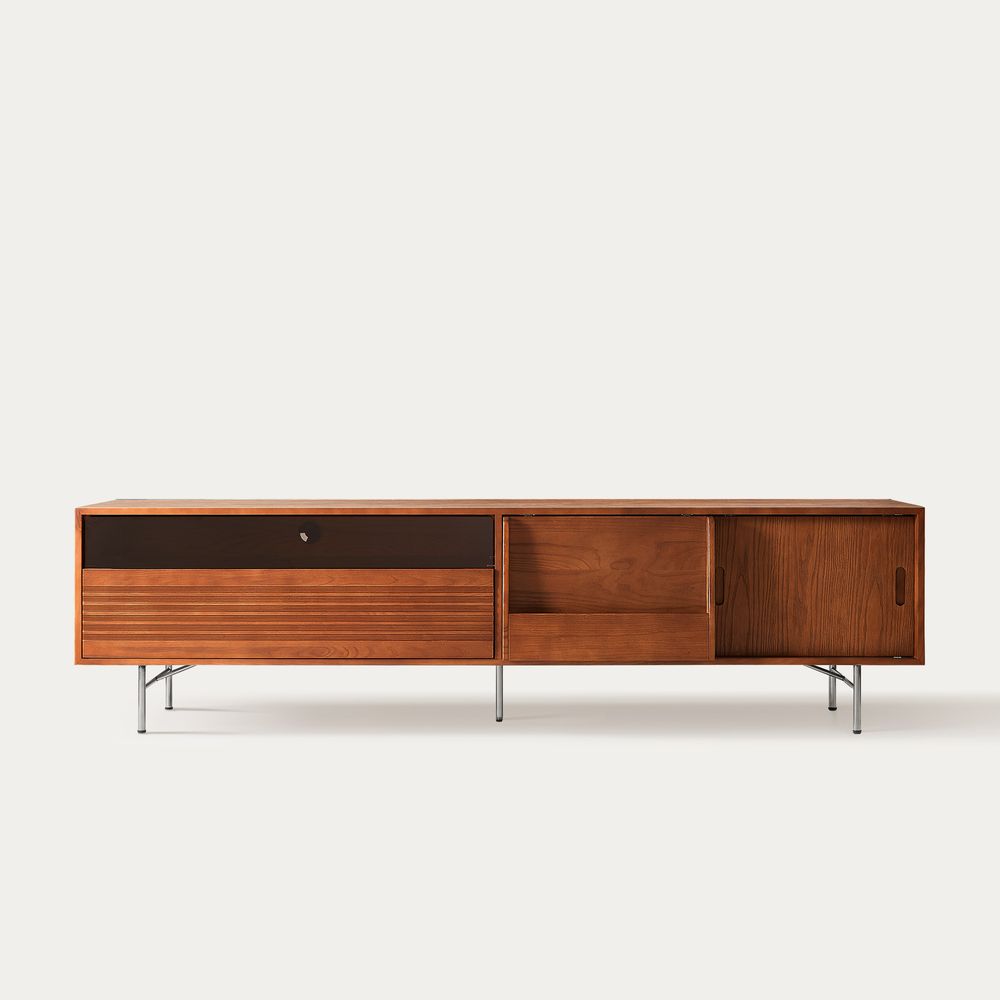
Frode 84-Inch MCM Media Console
View Product
Walnut, Oak, or Teak: Which Wood Fits Your Room?
Wood choice affects more than color. Grain pattern, visual weight, and finish can all change how the console works with the rest of your furniture.
Why Walnut Is a Classic MCM Choice
Walnut has long been associated with mid-century furniture because of its warm brown color and distinctive grain.
A walnut media console can work especially well with neutral upholstery, cream or white walls, black accents, and other warm wood furniture.
Cost is one consideration, but the bigger differences for most shoppers are color, grain, visual weight, and how the finish works with the rest of the room.
Oak for a Lighter Look
Oak offers a lighter alternative to walnut. Depending on the finish, it can range from pale natural tones to warmer brown shades.
An oak console can help keep a living room feeling open, particularly when the space already has lighter flooring, neutral upholstery, or plenty of natural light.
Oak is also useful when you want visible wood grain without the deeper visual weight of darker walnut.
What About Teak?
Teak is another wood strongly associated with classic mid-century furniture.
Its warm color and natural grain can give a console a distinctly vintage character. However, today's mid-century-inspired furniture does not need to use teak to achieve the look.
For many modern interiors, walnut and oak provide more flexibility because they can work across a wider range of contemporary furniture and finishes.
Tapered, Hairpin, or Sled: Which Leg Style Works Best?
Leg shape can change the character of the entire console.
Tapered legs are one of the most recognizable mid-century choices. They create a traditional MCM look while keeping the cabinet visually light.
Hairpin legs use thin metal rods bent into a simple shape. They can give a console a more industrial or contemporary edge.
Sled legs form a continuous support beneath the cabinet. Depending on their thickness and material, they can look more modern and substantial than traditional tapered legs.
If your goal is a clearly recognizable mid-century modern appearance, tapered or gently splayed wooden legs are usually the most straightforward visual cue.
Solid Wood vs. Veneer: What Should You Buy?
The choice between solid wood and veneer is not simply a matter of one being good and the other being bad.
Solid wood is made from natural wood throughout the component. It can offer substantial weight and a strong connection to the material itself.
Wood veneer uses a thin layer of real wood over another material. This approach allows manufacturers to use natural wood grain while controlling cost, stability, and construction.
When comparing a media console, look beyond the material label. Check the construction of the cabinet, doors, drawers, hardware, and legs. These details have a direct impact on everyday use.
How to Size a Mid-Century Modern Media Console for Your TV
The console should be proportional to the TV rather than simply matching the screen size.
A common starting point is to choose a console that is at least several inches wider than the television on both sides. This gives the setup a more balanced appearance and provides some visual breathing room.
Use the TV's actual width rather than the advertised screen size when checking the fit. A 75-inch TV, for example, does not measure 75 inches from side to side because the advertised size refers to the diagonal measurement.
These ranges are starting points rather than strict rules. Your room layout, TV height, viewing position, and console proportions should also influence the final choice.
For a wall-mounted TV, the console does not need to physically support the television, but its width and height still affect the overall composition of the wall.
Storage That Earns Its Footprint
A media console should solve a storage problem, not create another one.
Before buying, think about what actually needs to go inside. Common items include:
-
Streaming devices
-
Game consoles
-
Controllers
-
Remotes
-
Blu-ray players
-
Books and media
-
Cables and accessories
-
Small speakers or other electronics
Cabinet doors are useful when you want to keep visual clutter hidden. Drawers can work well for smaller items such as remotes, controllers, and accessories.
Open shelving is convenient for equipment that needs frequent access, but it also leaves cables and electronics visible.
If you want to compare different cabinet layouts, widths, and storage configurations, explore Hernest's media console collection.
The important point is to match the storage configuration to how you actually use the TV area. A beautiful console with the wrong interior layout can become frustrating surprisingly quickly.
Cable Management: The Detail That Makes a Difference
Cable management is easy to overlook when shopping for furniture, but it becomes obvious once everything is connected.
Look for rear openings or cord cutouts that allow cables to pass from your devices toward the wall outlet.
A useful setup should let you:
-
Connect devices without bending cables sharply.
-
Keep power and signal cables reasonably organized.
-
Access equipment without completely emptying the cabinet.
-
Avoid having cords hang visibly over the sides.
For larger media setups, multiple cable openings can be especially useful because different devices may sit in separate compartments.
This is one area where the internal construction of the console matters just as much as its appearance.
Mid-Century Modern vs. Scandinavian vs. Danish Modern
These styles can overlap, which is why furniture descriptions sometimes use the terms interchangeably.
Mid-century modern is the broadest visual category of the three in many contemporary furniture collections. Scandinavian design tends to emphasize lightness and simplicity, while Danish Modern is often associated with refined craftsmanship and organic forms.
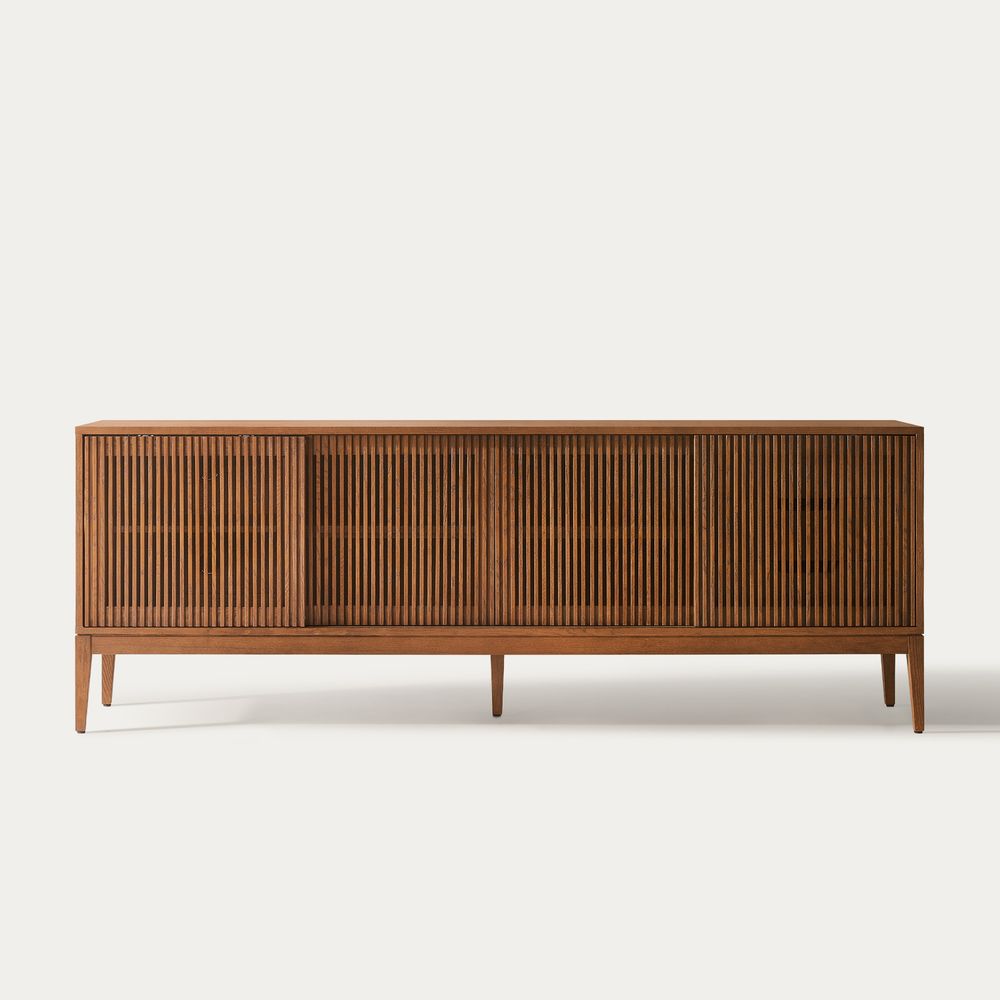
Astrid 84-Inch MCM Slatted Media Console
View Product
How to Style the Top of a Mid-Century Modern Media Console
The top of the console can either reinforce the clean lines of the furniture or make the TV wall feel cluttered.
A simple arrangement usually works best.
Try combining a few different heights and shapes, such as:
-
A low ceramic vase
-
One or two books
-
A small plant
-
A table lamp
-
A framed print
-
A sculptural decorative object
Avoid filling every inch of the surface. The open space is part of the design.
If the TV already dominates the wall, keep the objects below it relatively low-profile. This helps maintain the horizontal emphasis that makes mid-century furniture work so well in living rooms.
What to Look for Before Buying a Mid-Century Modern Media Console
Before choosing a console, check these five areas:
1. Width
Measure the actual width of your TV and compare it with the console's overall width.
2. Height
Think about your seated eye level and how high the TV sits above the floor.
3. Storage
Decide whether you need drawers, enclosed cabinets, open shelving, or a combination.
4. Cable management
Check for rear cord cutouts and make sure they align with your equipment and wall outlets.
5. Construction and materials
Look at the cabinet material, door construction, drawer operation, leg design, and hardware rather than judging the piece only by its exterior appearance.
For example, Hernest's Astrid 84-Inch MCM Slatted Media Console uses vertical slatted doors, four rear cord cutouts, and solid wood drawers, with enough width for TVs up to 85 inches. Those details illustrate how the visual design and practical features can work together.
The Frode 84-Inch MCM Media Console takes a different approach, combining five rear cord cutouts with a wide drawer, side cabinets, sliding solid-wood doors, and streamlined metal legs.
The right configuration depends on what you need to store and how you use your TV area every day.
FAQs
What makes a media console mid-century modern?
A mid-century modern media console typically features clean horizontal lines, a low profile, tapered or splayed legs, warm wood tones, and minimal hardware. Storage is usually integrated into the design rather than added as heavy decorative elements.
What wood is most common for mid-century modern media consoles?
Walnut, oak, and teak are commonly associated with mid-century modern furniture. Walnut creates a deeper, richer appearance, while oak offers a lighter and more versatile look.
How wide should a media console be for a 75-inch TV?
A console around 80 to 90 inches wide is a useful starting range for a 75-inch TV, but you should compare the console with the TV's actual width rather than relying only on the advertised screen size.
Can a mid-century modern media console work with a wall-mounted TV?
Yes. A low console can provide storage and visually anchor a wall-mounted TV without physically supporting the television. Match the console's width and height to the TV and surrounding wall space.
Is solid wood necessary for a mid-century modern media console?
No. Solid wood is one construction option, but quality veneer can also provide a natural wood appearance. Compare the overall construction, materials, hardware, storage, and finish rather than focusing on one material label alone.
How do I hide cables in a media console?
Look for rear cord cutouts or cable-management openings. Place electronics near the appropriate openings and keep power and signal cables organized so they can be accessed without moving the entire console.
Are mid-century modern and Scandinavian media consoles the same?
Not exactly. The styles share an emphasis on simplicity and function, but mid-century modern furniture often uses stronger horizontal proportions and more pronounced tapered legs, while Scandinavian designs commonly emphasize lighter colors and a softer, more understated appearance.