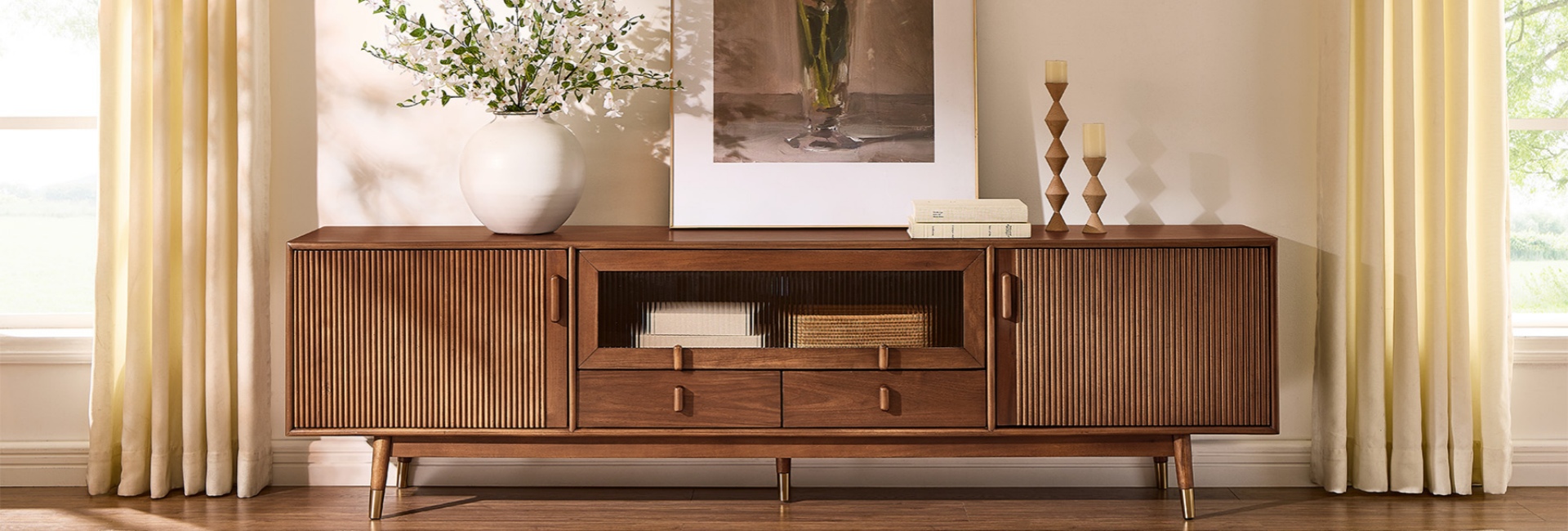
The fastest way to refresh a tired living room is also the most durable: lean into mcm living room ideas that put warm wood, clean lines, and real comfort first. A midcentury living room isn't a costume. It's a way of arranging a space so the furniture does the work and the room stays calm. Below, we'll look at what makes the style read, how to choose the major pieces, and where people tend to go wrong so you can skip the expensive mistakes.
Midcentury design has lasted because it solves everyday problems. It keeps sightlines low, gives clutter somewhere to go, and leaves enough open floor to make a room feel comfortable rather than crowded. Get those basics right, and you can make the style work in a contemporary home without turning the room into a time capsule.
Table of Contents
- What Makes a Living Room Read as Midcentury
- Start With the Sofa and Seating
- Choose a Coffee Table That Earns Its Spot
- Pick a Media Console That Hides the Clutter
- Use a Console Table as a Styling Moment
- Build a Midcentury Color Palette That Won't Date
- Light the Room in Layers
- Add Texture, Plants, and a Few Vintage Touches
- Small-Space MCM: How to Get the Look in a Compact Room
- MCM Living Room Ideas on a Budget
- Common Mistakes That Break the Midcentury Spell
- Bringing It Together: A Sample Plan
- FAQs
- How do I style a mid-century modern living room?
- What are the key elements of a mid-century modern living room?
- What colors work best in a mid-century modern living room?
- What furniture pieces are essential for an MCM living room?
- How do I add mid-century modern style without buying all new furniture?
- Do I need original or vintage mid-century furniture to get the look?
- What rug works best in a mid-century modern living room?
- How do I choose a TV stand or media console for a mid-century living room?
- How can I make a small living room feel mid-century modern?
- How do I mix mid-century modern with other styles like Scandinavian or boho?
What Makes a Living Room Read as Midcentury
A midcentury modern living room typically combines low-profile furniture, tapered legs, warm wood, clean lines, organic curves, and a restrained palette. The goal is an open, functional room where furniture feels light rather than bulky.
You don't need a house full of vintage finds to get there. The silhouette does most of the talking.
The silhouettes that signal the era
Look for furniture that sits relatively low and lets some of its base show. Sofas with slim angled legs, coffee tables with raised or tapered supports, and credenzas that sit above the floor all create the visual lightness associated with the style.
Organic curves are useful too. The midcentury era borrowed plenty of shapes from nature: kidney tables, rounded credenza corners, boomerang forms, and sculptural chairs. You don't need all of them. One curved piece surrounded by straighter furniture is often enough to give the room some tension and personality.
Why wood tone does the heavy lifting
Warm wood is the anchor. Walnut, teak, oak, and cherry each create a different mood. Walnut feels rich and grounded. Teak has a sunnier, more casual character. Oak feels cleaner and lighter, while cherry brings reddish warmth.
Think of your main wood tone as one of the room's largest colors. Once you've chosen it, let upholstery, walls, and accessories support it rather than compete with it. Warm white walls, cream upholstery, and a few muted accents give the grain room to stand out.
Start With the Sofa and Seating
The sofa is the anchor of any living room, and in a midcentury scheme it establishes the proportion for everything around it. Look for a relatively low profile, visible legs, and a shape that feels streamlined rather than heavily upholstered.
Scale matters more than hitting one exact measurement. In a 12-by-15-foot room, a sofa around 72 to 84 inches can keep the seating group balanced while leaving room for circulation. In a tighter room, a 60- to 70-inch loveseat can work better, especially when paired with a single lounge chair.
Accent chairs are where you can introduce a little more personality. A sculptural leather or warm-fabric chair gives the eye somewhere to land without requiring a perfectly matched sofa set. If the sofa is cream, for example, a cognac or olive chair creates contrast without making the room feel themed.
One honest caveat: low-slung sofas look great, but they aren't ideal for everyone. If you've got tall family members or uncomfortable knees, test the seat height before committing. Comfort beats authenticity in a room you actually use every day.
Choose a Coffee Table That Earns Its Spot
The coffee table sits in the middle of the action, so it needs to work visually and practically. Round or oval tops can soften the hard edges of a rectangular sofa and rug, while also making it easier to move around the seating area.
For a narrow room, rounded edges can be especially useful because they reduce the chance of walking directly into a sharp corner.
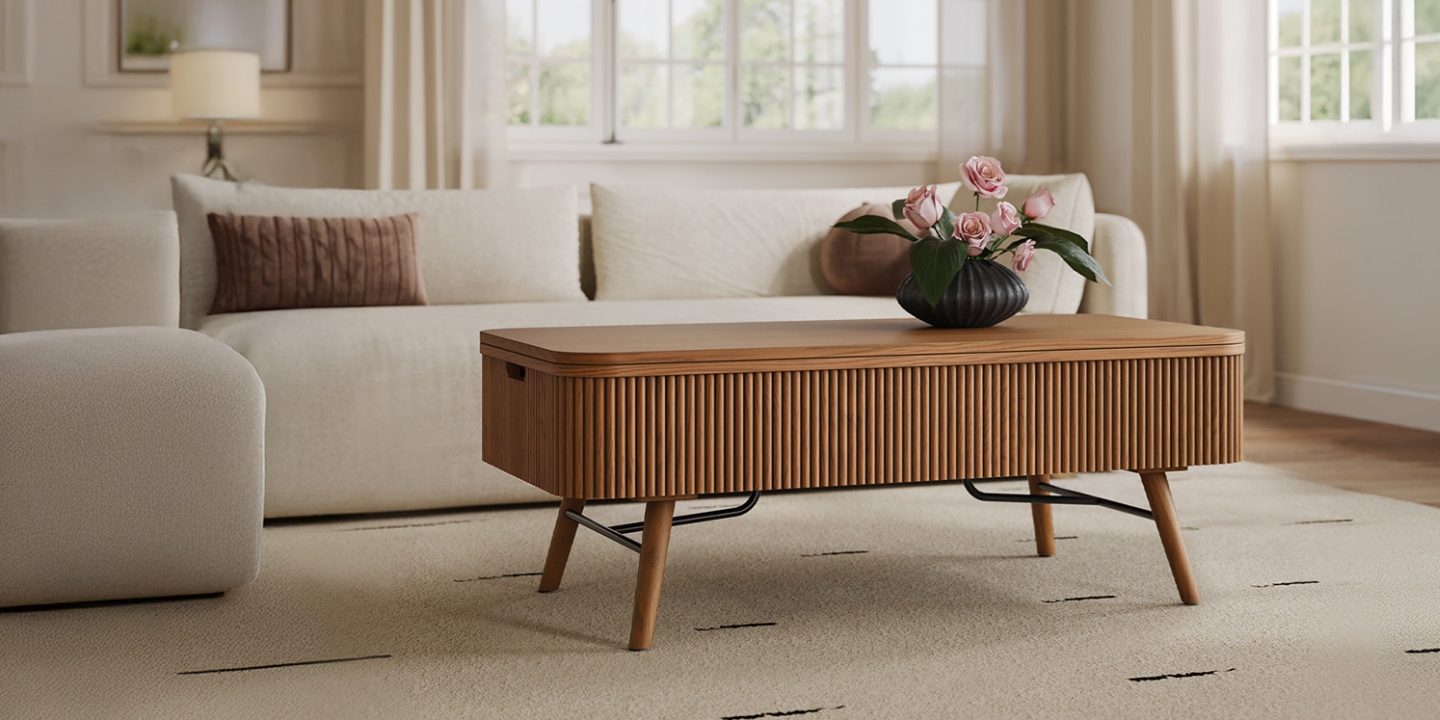
For small spaces, a lift-top design can add another layer of function. The Magnus 47" Lift-Top Oak Coffee Table combines a compact footprint with a raised work surface and concealed storage. Its American solid oak construction, oak veneer, dovetail-joint drawers, soft-close rails, and fluted base give it enough material detail to feel substantial without overwhelming a smaller seating area.
When placing a coffee table, leave about 14 to 18 inches between the table and the sofa. That gives you enough room to reach a drink while keeping the table connected to the seating group.
Pick a Media Console That Hides the Clutter
A TV is a fact of life, but a tangle of cords and game boxes doesn't have to be. The media console is the workhorse of the modern living room. A good midcentury-inspired design keeps electronics organized behind clean wood so the screen feels integrated rather than visually dominant.
Size the console to the TV and the wall. A console at least as wide as the TV usually feels more grounded, while going slightly wider can create a more balanced composition. For a 65- to 75-inch TV, an 84-inch console can provide useful visual breathing room if the wall allows it.
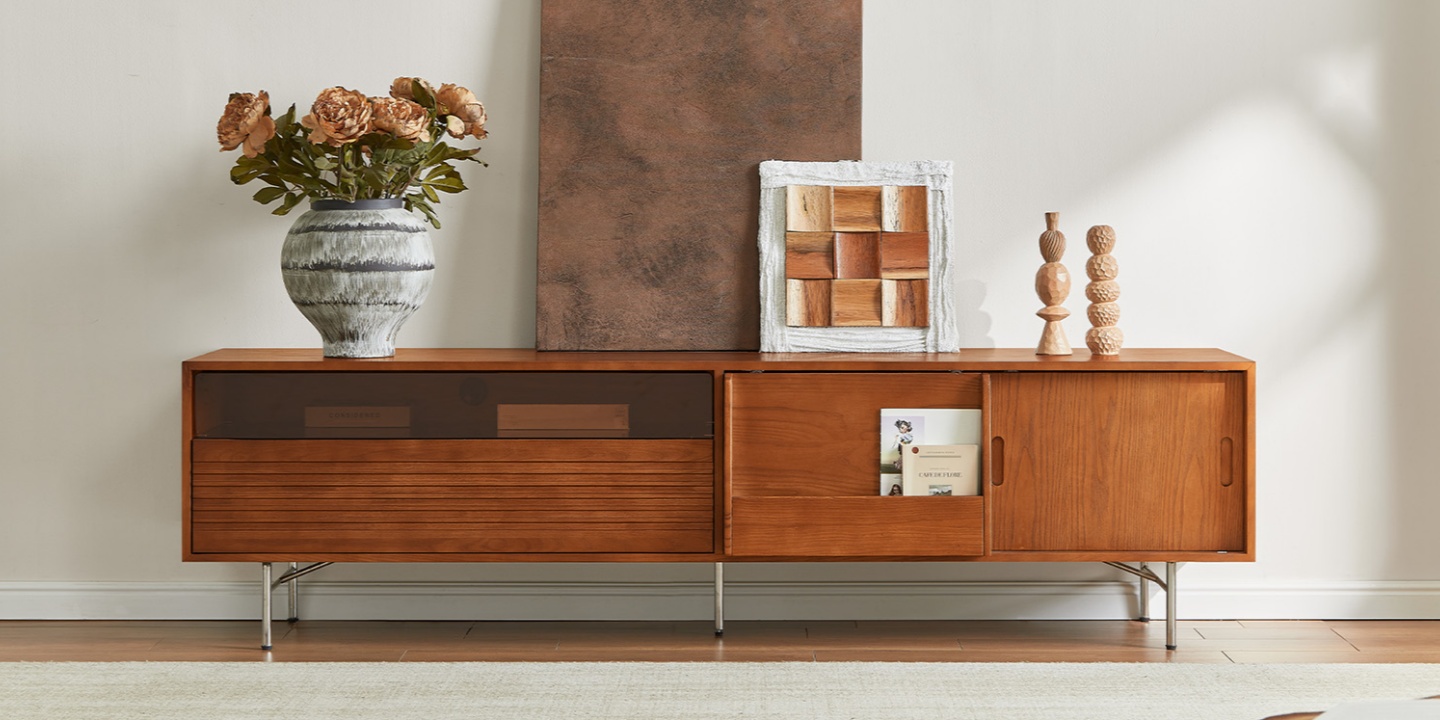
The Frode 84" MCM Media Console is designed around that combination of storage and visual lightness. It uses rubber wood and plywood with American ash veneers, with metal legs that keep the substantial body from feeling too heavy. It accommodates TVs up to 85 inches and includes five cord cutouts for cable management. A large drawer and side cabinets provide closed storage, while sliding solid wood doors let you display a few objects without leaving the entire unit open.
If your room is smaller or your TV is more modest, you don't need an 84-inch console. Follow the same principle with a narrower piece: prioritize closed storage, practical cable management, and proportions that leave the wall feeling balanced.
Use a Console Table as a Styling Moment
Not every table belongs in front of the sofa. A console table against a blank wall, behind a sectional, or near an entry gives you a place to add lighting, art, books, and everyday storage without filling the center of the room.
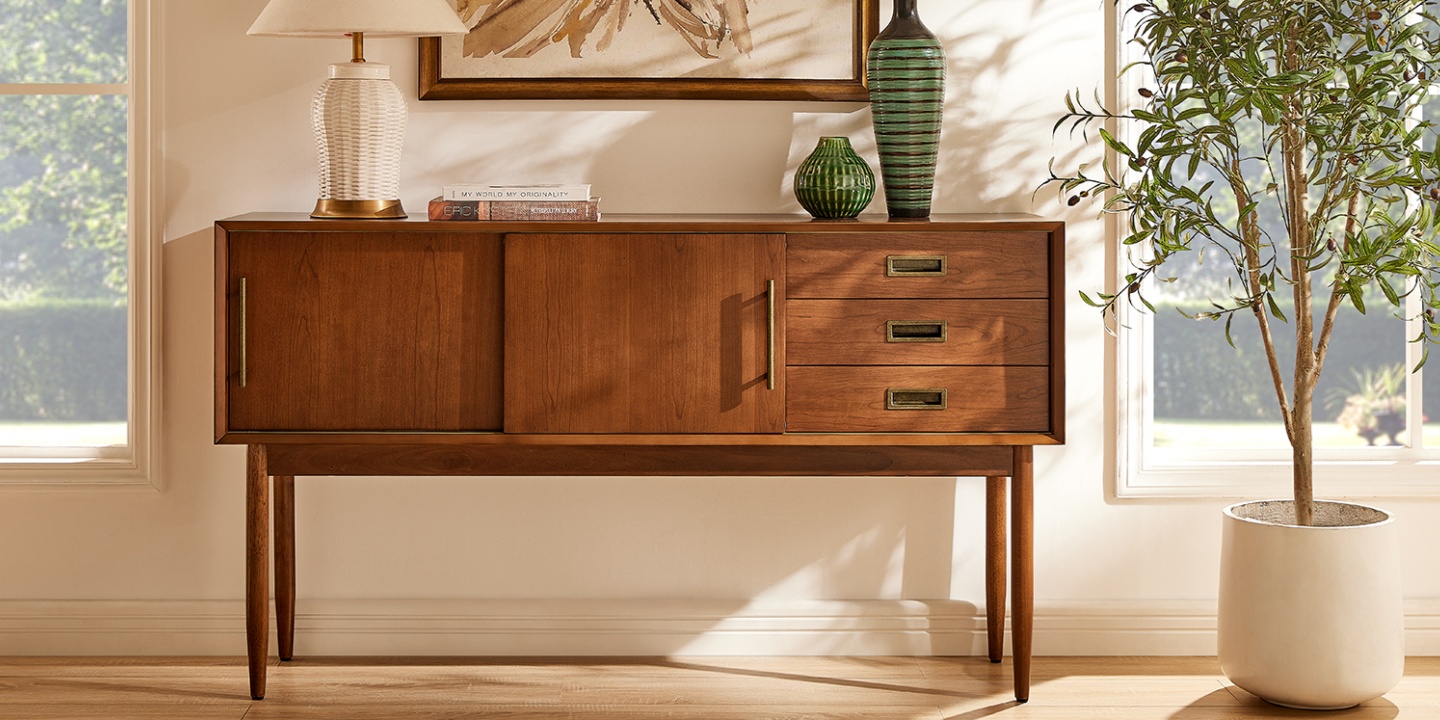
The trick is to treat the surface as a composed vignette rather than another shelf. The Kaden 60" Mid-Century Console Table has a brown cherry finish, tapered legs, three dovetail-joint drawers, and adjustable shelves. The raised base keeps the 60-inch form visually light, while the storage makes it useful beyond decoration.
Style the top with a mix of heights. A lamp, a low bowl, and one piece of art leaned against the wall can feel intentional without looking overworked. Five identical candles are more likely to look like a store display.
Build a Midcentury Color Palette That Won't Date
Color is where midcentury rooms either sing or scream. A warm neutral base gives the wood and furniture room to lead, while one or two accent colors add personality without taking over.
Three tiers that work well
Pick one accent and repeat it a few times. A mustard pillow, a small vase, and a piece of artwork with the same undertone are enough to connect the room without making everything match.
If you want more drama, an olive or terracotta accent wall can work, but keep the surrounding pieces quiet. Midcentury interiors can handle strong color; they just don't need every color at once.
Common color mistakes
Stark white walls are one of the easiest ways to make warm wood look colder than it is. A warm white or cream usually works better.
The other trap is going too orange. Muted mustard, rust, olive, and brick tones tend to feel more sophisticated than highly saturated versions. Also pay attention to undertones. A cool gray next to warm cherry or walnut can clash even when both colors look fine on their own.
Good mid century modern living room design depends less on having the "right" colors than on keeping their temperature and intensity under control.
Light the Room in Layers
Midcentury lighting can function almost like another piece of furniture. Instead of scattering small sources everywhere, use one statement fixture and a few purposeful lamps.
Pick one statement fixture
A sputnik chandelier or cluster of globe pendants establishes the style quickly. In a seating area, an arc floor lamp adds a sculptural vertical line while directing light exactly where you need it.
You don't have to make every metal finish identical, but keeping them within the same visual family—such as brass, black, or brushed nickel—helps the room feel deliberate.
Bulb temperature and dimmers
Warm bulbs in the 2700K to 3000K range generally make wood and upholstery feel more inviting. A dimmer on the main fixture lets the same room shift from bright daytime use to a softer evening setting.
Give floor lamps enough clearance from sofas and chairs that people can sit down and use them comfortably. Around 18 to 24 inches of breathing room is a practical starting point, depending on the fixture.
Add Texture, Plants, and a Few Vintage Touches
A room built only from wood and neutral fabric can feel a little thin. For mid century living room decor, texture gives the space depth without requiring more furniture.
Layer wool or jute rugs with velvet or boucle cushions, and consider a leather accent if it fits the budget. Warm caramel leather on a chair or ottoman adds richness against wood and lighter upholstery.
Plants that fit the style
Greenery works naturally with midcentury furniture. Tall, structured plants such as fiddle-leaf figs, rubber plants, snake plants, and pothos add height without making the room feel crowded.
Put a taller plant near a window for vertical interest, or group smaller plants on a credenza. Simple ceramic or woven planters can reinforce the natural materials already in the room.
The vintage touches that read authentic
You don't need a museum collection. A ceramic vase, teak bowl, retro clock, or small bar cart can bring in the era without making the room feel themed.
A useful rule is to mix older-looking pieces with contemporary furniture. That keeps the room from becoming a period set while still giving it some history.
Small-Space MCM: How to Get the Look in a Compact Room
You can absolutely create a mcm living room in a small apartment. The style works especially well in compact spaces because its furniture tends to emphasize visual openness rather than bulky silhouettes.
Scale down without losing the look
Choose furniture that fits the room instead of choosing the room around oversized furniture. A 60- to 70-inch sofa, compact lounge chair, and round coffee table can establish the seating area without consuming the main walkway.
Wall-mounted pieces can free up floor space, but furniture on raised legs can achieve a similar effect while keeping the room easy to rearrange. A low credenza can add storage along one wall without creating the visual weight of a floor-to-ceiling cabinet.
Storage that pulls double duty
In a small room, prioritize furniture that solves more than one problem. A lift-top coffee table can provide a work surface and hidden storage. A media console can organize electronics while keeping the TV wall clean.
Keep a minimum circulation path of about 30 to 36 inches where possible. That practical measurement often matters more than adding another decorative piece.
MCM Living Room Ideas on a Budget
You don't need a trust fund to get the look. Midcentury style rewards a few deliberate choices more than a room full of expensive pieces.
Where the money should go
One of the cheapest ways to change the character of existing furniture is to alter its base. Replacing bulky sofa or table legs with tapered wooden ones can shift the silhouette without replacing the entire piece.
A tired wood table can also respond well to refinishing, while a geometric rug, vintage lamp, or a few carefully chosen pillows can introduce the visual language without requiring a full-room makeover.
If you have more to spend, choose one standout piece and let it anchor the room. The rest can come together gradually. A room assembled over time usually feels more personal than one bought in a single weekend.
Common Mistakes That Break the Midcentury Spell
Even good instincts can go sideways. A few common mistakes are easy to avoid once you know what to watch for.
The clutter trap
Midcentury interiors benefit from visual breathing room. Closed storage helps keep everyday objects from taking over the surfaces.
Use credenzas, media consoles, and drawers for the things that don't need to be seen. Trays can corral smaller objects, while baskets give throws and pillows a home. The room should feel edited, not empty.
Wood-tone mismatch
You don't have to use one wood throughout the room, but it helps to choose a dominant tone and treat other finishes as supporting players.
If walnut is the main wood, for example, another warm wood can work as an accent. Problems usually appear when several competing undertones are introduced without a clear hierarchy. Test samples in your actual lighting before committing to a large piece.
And don't confuse coordination with matching. A room where every piece has the same wood, finish, and era can feel more like a showroom than a home. A mix of contemporary and vintage-inspired pieces gives the room more character.
Bringing It Together: A Sample Plan
Here's how these principles can come together in a real 14-by-16-foot living room, or about 224 square feet.
Start with a low 80-inch sofa in warm gray and a cognac leather accent chair. Use the Magnus 47" Lift-Top Oak Coffee Table between the seats, the Frode 84" MCM Media Console beneath a 75-inch TV, and the Kaden 60" Mid-Century Console Table behind the sofa or in the entry.
The important part isn't simply owning these pieces. It's how they work together. The coffee table stays compact enough for circulation, the media console is slightly wider than the TV, and the console table adds storage and styling space without competing with the main seating group.
Layer a wool geometric rug under the front legs of the sofa and chair, hang one large abstract print above the sofa, and use a sputnik fixture on a dimmer. Finish with a fiddle-leaf fig and a few brass accents.
That's a room you can build over a season rather than a weekend. The proportions matter more than buying everything at once, and the style gives you plenty of room to change the accessories as your taste shifts.
FAQs
How do I style a mid-century modern living room?
Start with a low-profile sofa, warm wood, and a restrained color palette. Add a sculptural chair, geometric rug, layered lighting, and a few plants or vintage-inspired objects. The furniture's shape should establish the style before accessories do.
What are the key elements of a mid-century modern living room?
The essentials are low-profile furniture, tapered legs, warm wood, clean lines, selective organic curves, and a restrained palette. The room should feel functional and open rather than heavily decorated.
What colors work best in a mid-century modern living room?
Start with warm white, cream, beige, or soft warm gray. Then introduce one or two muted accents such as mustard, burnt orange, olive, teal, or brick red. Let the wood tone act as one of the room's major colors.
What furniture pieces are essential for an MCM living room?
A sofa, accent chair, coffee table, and storage piece such as a credenza or media console form the core. Add a rug and statement lighting as the room develops. You don't need every piece at once.
How do I add mid-century modern style without buying all new furniture?
Change the silhouette first. Tapered legs, a geometric rug, a vintage lamp, warm wood accessories, or a refinished table can shift the room without replacing everything. Shape and proportion often have more impact than quantity.
Do I need original or vintage mid-century furniture to get the look?
No. Contemporary furniture can capture the style through its proportions, tapered legs, clean lines, and wood finishes. Mixing newer pieces with one or two vintage finds often feels more natural than creating a room entirely from period furniture.
What rug works best in a mid-century modern living room?
Geometric, abstract, or solid earthy-toned rugs generally work well. Choose a flat-weave or low-pile style if you want to reinforce the clean lines of the furniture, and aim for a size that allows at least the front legs of the seating to sit on the rug.
How do I choose a TV stand or media console for a mid-century living room?
Start with proportion. The console should be at least as wide as the TV when possible, with slightly wider often looking more grounded. Closed storage and rear cable cutouts are useful for keeping electronics out of sight.
How can I make a small living room feel mid-century modern?
Use smaller-scale furniture, visible legs, and rounded pieces that preserve circulation. A 60- to 70-inch sofa, compact chair, and round coffee table can work well. Prioritize storage that doesn't add visual bulk and keep major walkways around 30 to 36 inches where possible.
How do I mix mid-century modern with other styles like Scandinavian or boho?
Keep the proportions and overall palette consistent. Scandinavian furniture can reinforce the clean, functional side of midcentury design, while boho elements can add plants and layered texture. Limit competing patterns so the furniture's shape remains the visual focus.