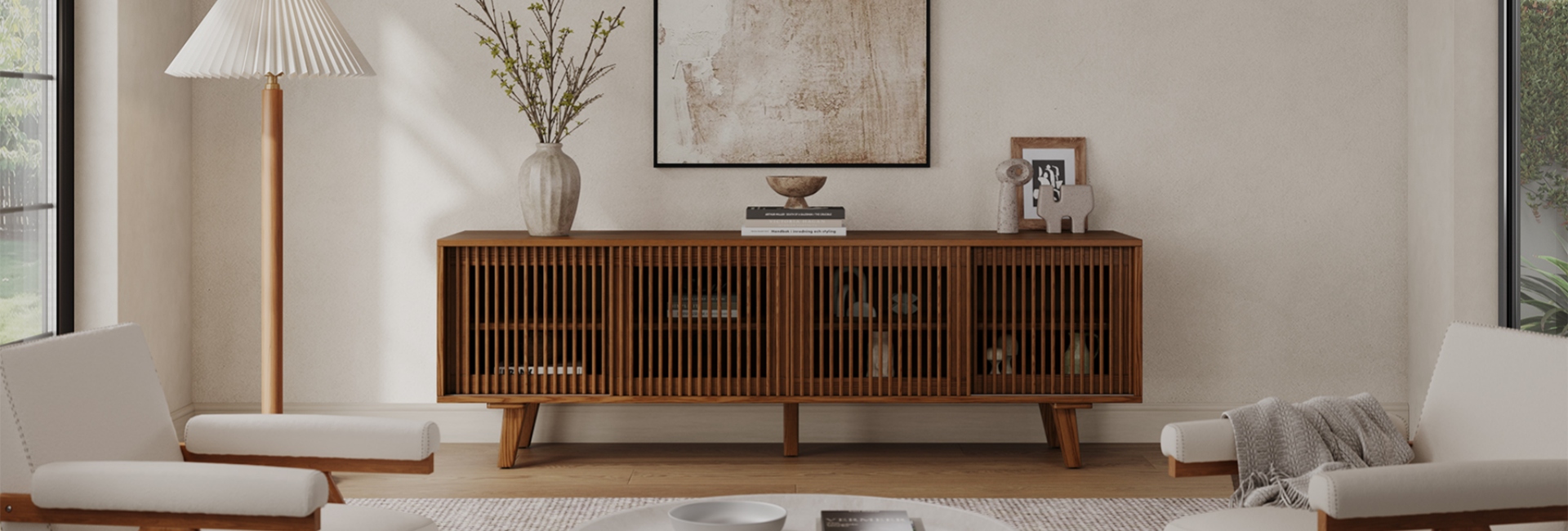
A TV stand and coffee table are two of the most noticeable pieces of furniture in a living room. Since they often sit within the same line of sight, their finishes, shapes, and proportions can influence how the entire space comes together.
But do they need to match? Not necessarily. Buying both pieces from the same collection creates a coordinated look, while choosing different finishes and materials can make a room feel more layered and personal. A shared wood tone, similar detailing, or complementary materials can make separate pieces feel like they belong in the same room.
If you're choosing a matching TV stand and coffee table, these ideas can help you create a balanced living room without making every piece look identical.
Table of Contents
- Do a TV Stand and Coffee Table Need to Match?
- Three Ways to Coordinate a TV Stand and Coffee Table
- Start With the TV Stand as Your Visual Anchor
- Can Different Wood Tones Work Together?
- Choose the Right Size and Proportion
- Create Contrast With Stone, Wood, and Other Materials
- Consider Mid-Century Modern Design Details
- When to Choose Matching or Mixed Furniture
- Matching TV Stand and Coffee Table Ideas for Different Living Rooms
- Practical Details to Check Before Buying
- Final Thoughts
- FAQs
- Should a TV stand and coffee table be the same color?
- Can I mix a wood TV stand with a glass coffee table?
- Should the coffee table be lower than the TV stand?
- How long should a coffee table be compared with a sofa?
- Can I use different wood finishes in one living room?
- Is it better to buy a matching TV stand and coffee table set?
- How much space should I leave between a sofa and coffee table?
- What should I check before buying a media console?
Do a TV Stand and Coffee Table Need to Match?
No. Your TV stand and coffee table do not have to come from the same collection or share an identical finish. They simply need to work together within the room.
A coordinated pair usually shares at least one visual element:
-
A related material: Oak furniture, stone-look surfaces, or metal accents can create a connection.
-
A compatible color palette: Similar warm or cool undertones help different finishes feel intentional.
-
A repeated design detail: Fluted fronts, rounded corners, tapered legs, or geometric patterns can visually connect separate pieces.
For example, a walnut TV stand can work with a lighter oak coffee table when the rest of the room includes complementary wood tones and neutral upholstery. A stone-look coffee table can also balance a wood media console by introducing a different texture.
The goal is to create a visual connection, not to find two identical pieces.
Three Ways to Coordinate a TV Stand and Coffee Table
You only need one or two shared details to bring the pieces together. Start with material, color, or shape, then consider how the furniture fits into the rest of the room.
1. Connect the Materials
Material is a useful starting point because it influences both the appearance and feel of furniture.
Wood brings warmth and visible grain. Stone and engineered-stone surfaces introduce a different texture and a more substantial look. Metal details can add contrast and give a combination a more contemporary edge.
You can use the same material on both pieces or combine different materials that complement one another.
For example, a wood media console paired with a coffee table featuring an engineered-stone top creates contrast while keeping the room grounded. If both pieces have noticeable grain or texture, keep nearby decor relatively simple so the surfaces do not compete.
2. Coordinate Wood Tones and Colors
Matching wood tones exactly is not essential. What matters more is whether their undertones work together.
Warm brown and walnut finishes generally pair well with cream, beige, and other warm neutrals. Lighter or whitewashed oak can brighten a room, while a darker wood finish adds contrast. Mixing light and dark wood can also give a living room more depth.
A few practical guidelines:
-
Pair warm wood finishes with cream, beige, tan, or other warm neutrals.
-
Use lighter oak tones to balance darker furniture and make a room feel more open.
-
Repeat one of the wood tones in smaller details, such as picture frames, shelving, or decorative objects.
-
Avoid introducing too many unrelated wood finishes in a small space.
Look at the flooring and larger furniture before choosing a coffee table. Its finish should complement the room's existing palette rather than match only the TV stand.
3. Repeat a Shape or Design Detail
A shared design detail can connect two pieces even when their materials and colors differ.
Look for features such as:
-
Rounded corners and curved edges
-
Fluted or ribbed surfaces
-
Tapered legs
-
Geometric patterns
-
Similar proportions or low-profile silhouettes
For instance, a media console with a textured front can work with a coffee table that has a related surface detail. The patterns do not need to be identical. A subtle connection is often enough to make the combination feel considered.

Skimra 84-Inch Oak Media Console
View Product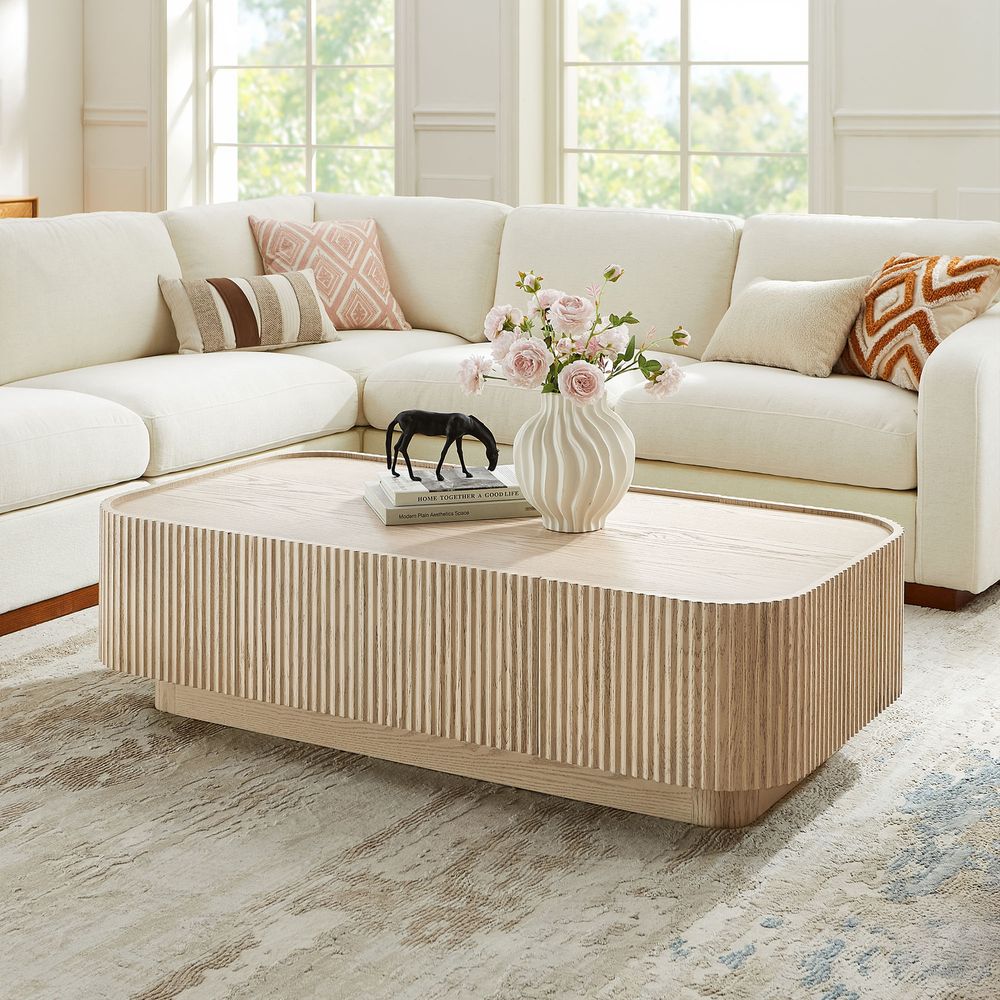
Skimra 55-Inch Oak Coffee Table
View Product
Start With the TV Stand as Your Visual Anchor
In many living rooms, the TV stand or media console is the larger piece and helps establish the direction of the entertainment area. Its width, finish, and storage design can guide your coffee table choice.
Before selecting a coffee table, consider:
-
The width and height of the media console
-
The color of the flooring and nearby furniture
-
Whether the console has a prominent texture or decorative front
-
How much visual weight the TV area already carries
A wide console with a detailed front may work best with a simpler coffee table. A more understated TV stand gives you room to choose a coffee table with a distinctive shape or surface.
Explore Hernest's Media Consoles to compare different finishes, widths, and storage styles before deciding on a coordinating coffee table.
Can Different Wood Tones Work Together?
Yes. Different wood tones can make a living room feel more natural and less uniform. The important part is to create a connection between them.
A darker walnut or elm-finish media console can provide contrast against a lighter coffee table. To bring the combination together, repeat one of the finishes elsewhere in the room, such as on a side table, shelving unit, or decorative frame.
The Vittorio collection offers one example of a coordinated wood-furniture look. The Vittorio 84-Inch Elm Media Console features a walnut elm finish and raised grid detailing. Pairing it with the Vittorio 55-Inch Elm Coffee Table creates a consistent visual direction through the shared collection finish.
If you prefer a mixed look, use the same principle in reverse: keep one element consistent, then introduce contrast through the second piece.
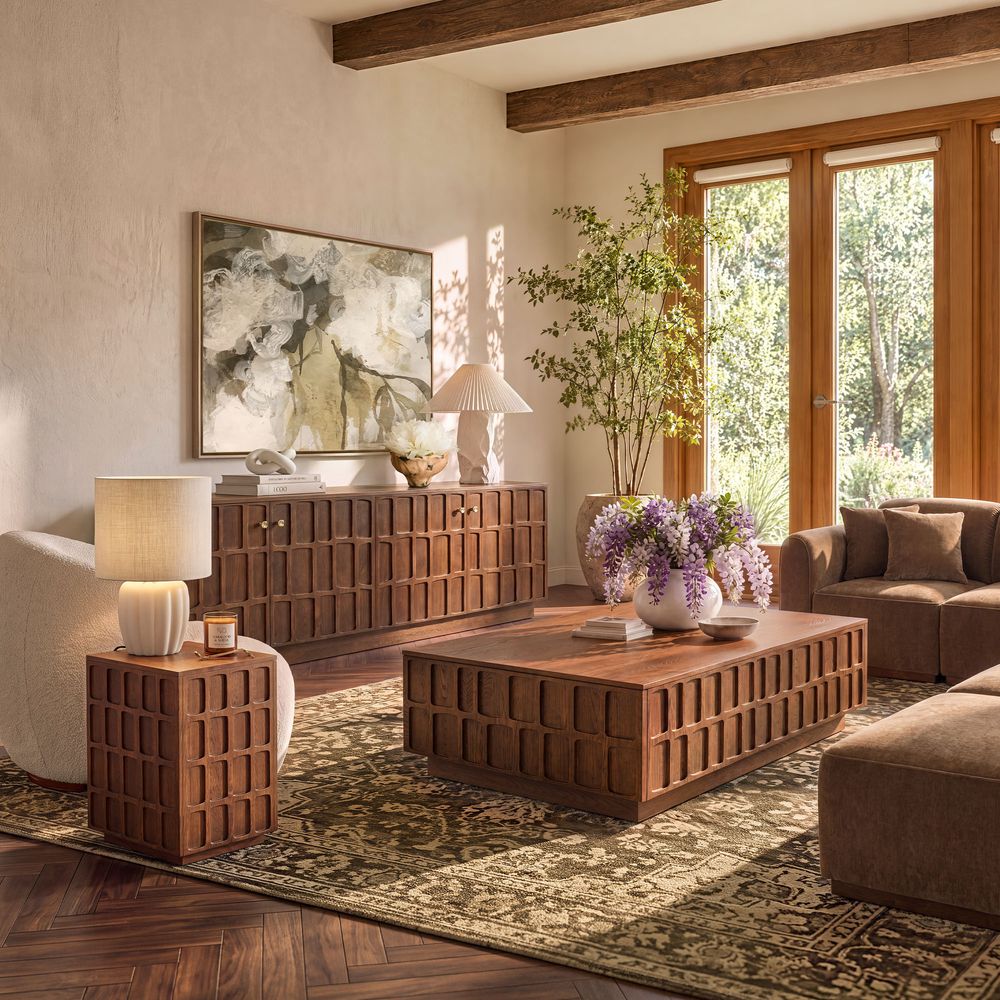
Vittorio 84-Inch Elm Media Console
View Product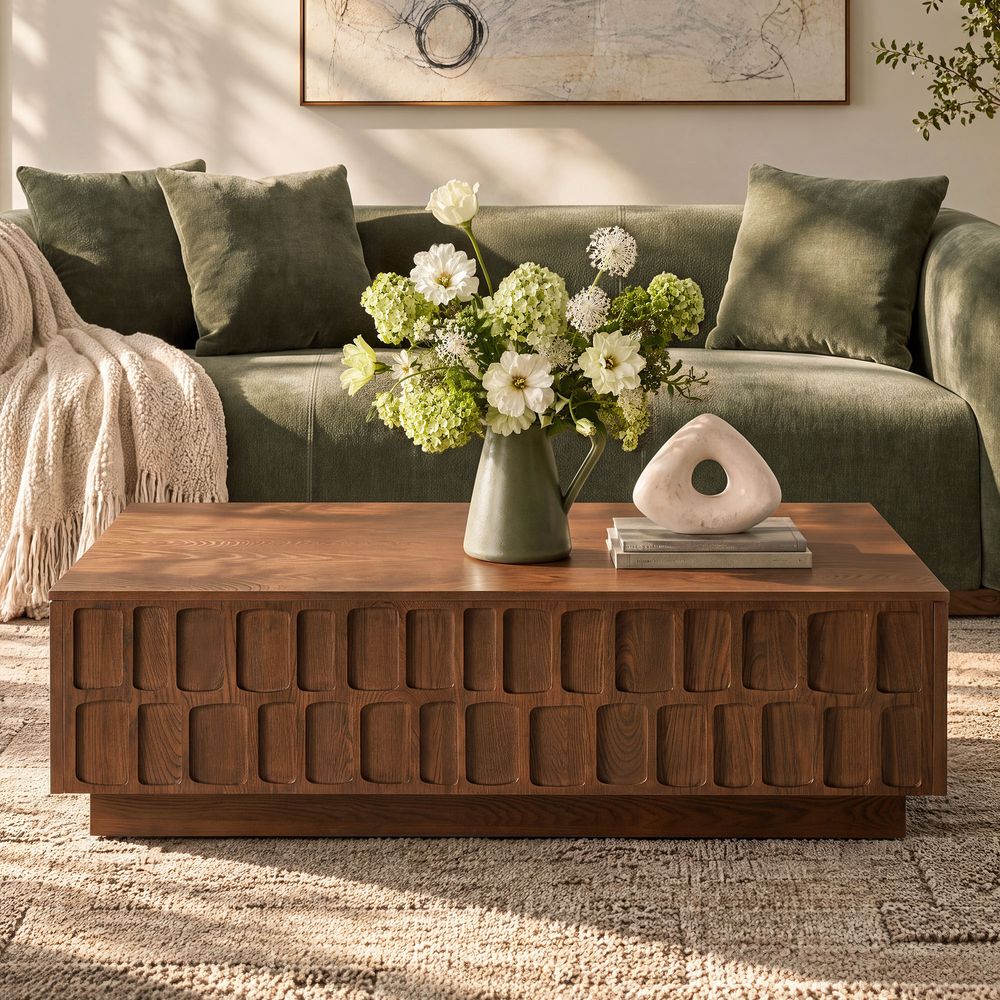
Vittorio 55-Inch Elm Coffee Table
View Product
Choose the Right Size and Proportion
Even well-coordinated furniture can look awkward if the proportions are off. Before focusing on finishes, make sure the TV stand and coffee table fit the room and the seating arrangement.
TV Stand Width
A TV stand should be wide enough to support the visual scale of the screen and the surrounding wall. When space allows, a console that extends several inches beyond each side of the TV can create a more balanced arrangement.
Check the console's actual dimensions, especially if you plan to place it beneath a wall-mounted TV or between other furniture.
Coffee Table Length
A common starting point is to choose a coffee table around two-thirds the length of the sofa. This is a guideline rather than a strict rule. Sectional sofas and different seating layouts may call for different proportions.
A table that is too small can look disconnected from the seating area. One that is too large may restrict movement.
Coffee Table Height
Many coffee tables sit close to the height of the sofa seat or slightly lower. A height of around 16 to 18 inches is common, but compare the table with your actual sofa rather than relying on a standard measurement.
Space Around the Table
Leave enough room for people to walk around the coffee table and sit down comfortably. Around 18 inches between the sofa and coffee table is a useful starting point, though the ideal clearance depends on the room and furniture layout.
If you're comparing different shapes and sizes, browse Hernest's Coffee Tables to find options that fit your seating area.
Create Contrast With Stone, Wood, and Other Materials
A TV stand and coffee table can coordinate even when they use different materials. Contrast can keep a living room from looking too uniform.
A wood media console paired with a stone-look coffee table is one way to introduce a different surface without changing the room's overall color palette. The wood adds warmth, while the stone-inspired finish brings another layer of texture.
The Renata 84-Inch Travertine-Textured Media Console and Renata 47-Inch Travertine-Textured Coffee Table offer a coordinated look through their travertine-inspired finishes.
One distinction matters when comparing these pieces: a travertine-inspired finish is not the same as natural travertine. Check each product's material specifications if the exact surface composition is important to you.
You can also combine a wood console with a glass or metal coffee table. Repeat a finish or color elsewhere in the room so the contrast feels connected to the rest of the decor.
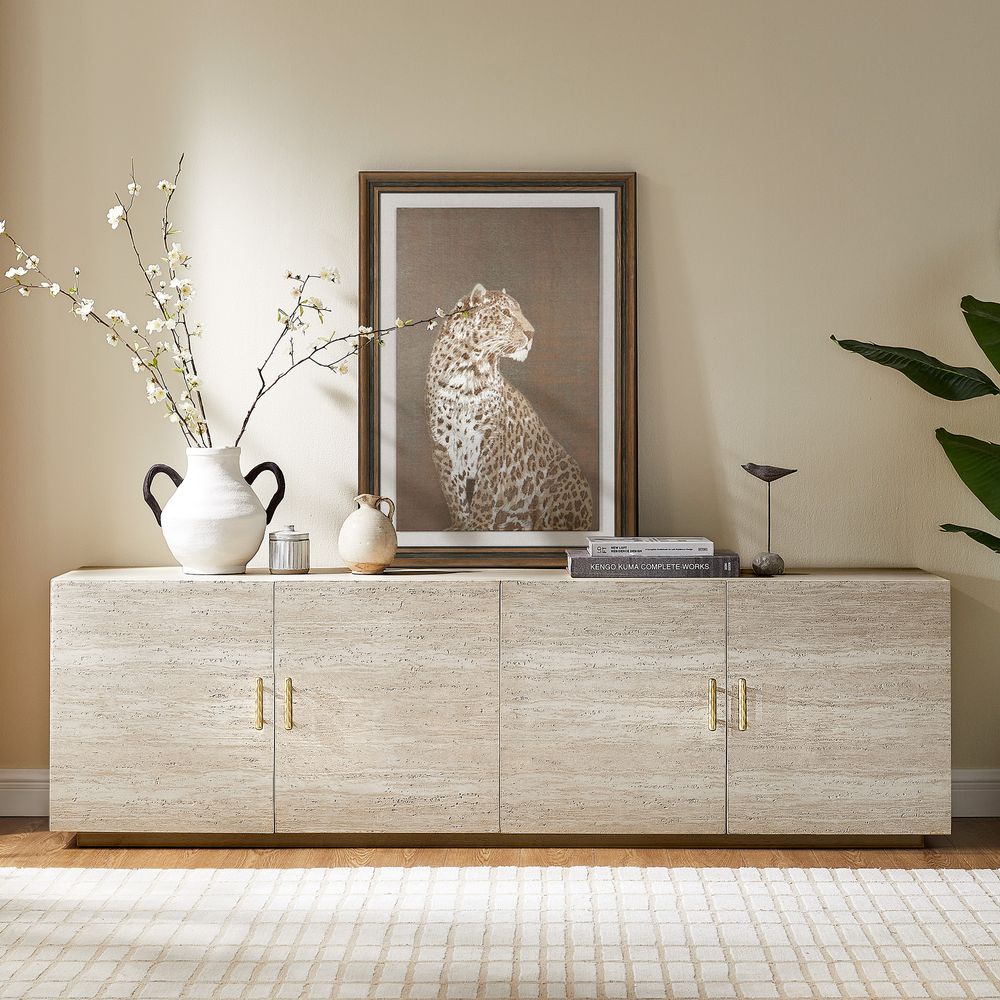
Renata 84-Inch Travertine-Textured Media Console
View Product
Renata 47-Inch Travertine-Textured Coffee Table
View Product
Consider Mid-Century Modern Design Details
If you prefer a mid-century modern living room, look for furniture with clean lines, warm wood finishes, tapered legs, and carefully considered details.
Rather than making every piece identical, choose a few shared features. Tapered legs, warm wood finishes, or clean-lined silhouettes can help different furniture pieces sit comfortably together.
The Stavn 72-Inch Solid Wood TV Stand has a 72-inch width and a grille-inspired design. Pairing it with the Stavn 55-Inch MCM Fluted Coffee Table creates a coordinated look through the shared collection and wood detailing.
For more options, explore Hernest's Mid-Century Modern TV Stands.
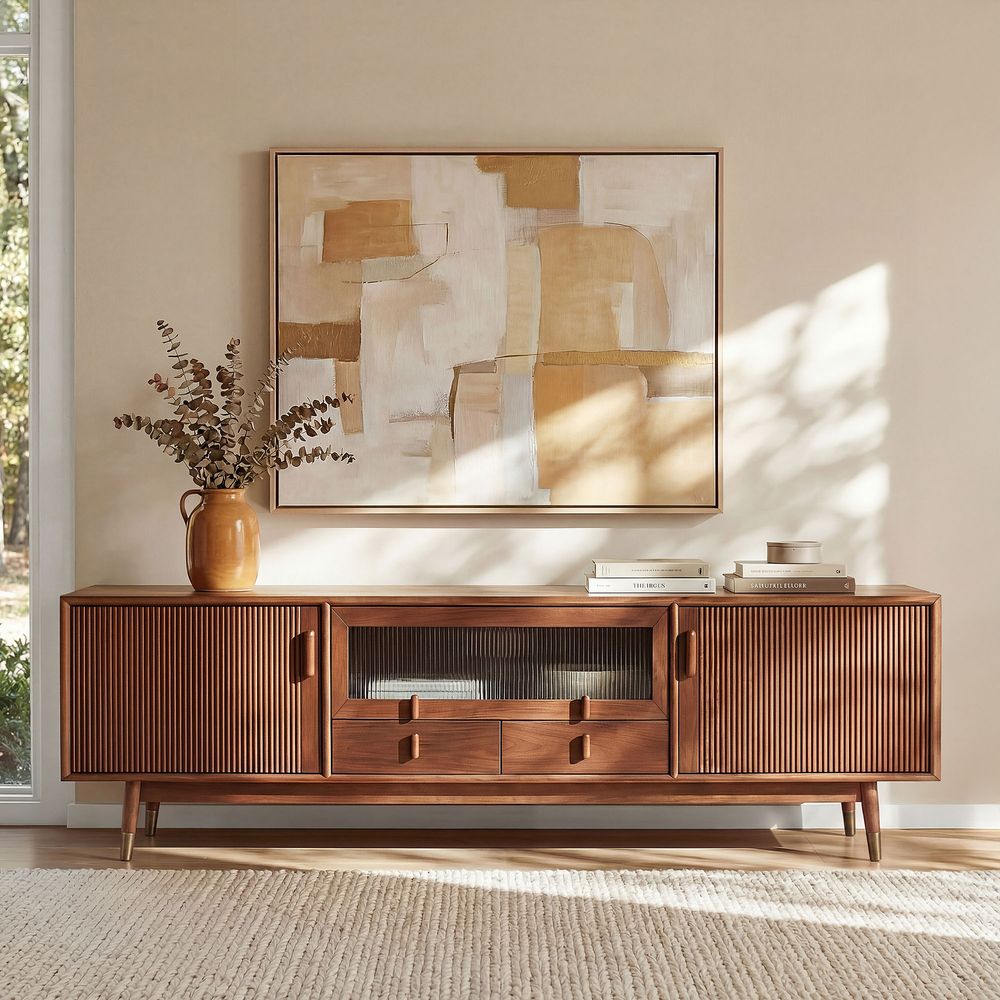
Stavn 72-Inch MCM Fluted Media Console
View Product
Stavn 55-Inch MCM Fluted Coffee Table
View Product
When to Choose Matching or Mixed Furniture
The right choice depends on your existing furniture, available floor space, and preferred finishes. Both approaches can work, but they suit different situations.
Choose matching pieces if:
-
You're furnishing a living room from scratch.
-
You prefer a coordinated look with fewer competing finishes.
-
You want the TV stand and coffee table to share the same design details.
-
You want a straightforward way to create visual consistency.
Choose mixed pieces if:
-
Your living room already has furniture in different wood tones.
-
You want to introduce a new material, such as glass, stone, or metal.
-
You prefer a more layered look instead of a coordinated furniture set.
-
You want the coffee table to stand out as a separate design feature.
Combine both approaches if you want some consistency without making the entire room look like a furniture set. For example, choose a media console and coffee table with complementary shapes but different finishes, then repeat one color or material in the surrounding decor.
Matching TV Stand and Coffee Table Ideas for Different Living Rooms
Your room's existing furniture, available floor space, and preferred finishes will help determine which pairing works best. These combinations offer a few starting points.
Marisol: Warm Brown Oak and Rounded Details
Marisol 84-Inch Oak Media Console
Marisol 55-Inch Oak Coffee Table
The Marisol collection is an option if you want a warm wood look with consistent design details. Its brown oak finish and fluted styling help connect the media console and coffee table.
This combination works well with warm neutral upholstery, textured rugs, and understated decor. Rounded edges can also soften a room with many straight lines.
Skimra: Light Oak and Wave-Inspired Texture
Skimra 84-Inch Oak Media Console
Skimra 55-Inch Oak Coffee Table
Skimra offers a lighter direction through its whitewashed oak finish and wave-inspired fluting. The matching collection pieces can create a cohesive look without relying on dark or heavy colors.
Consider pairing them with cream upholstery, pale rugs, and simple decorative accents to keep the room feeling open.
Vittorio: Walnut Elm and Geometric Detailing
Vittorio 84-Inch Elm Media Console
Vittorio 55-Inch Elm Coffee Table
For a richer wood palette, Vittorio brings a walnut elm finish and raised grid detailing. Using both pieces together creates a stronger visual connection through their shared finish and decorative pattern.
Keep nearby decor relatively restrained so the furniture details remain noticeable.
Renata: Travertine-Inspired Texture
Renata 84-Inch Travertine-Textured Media Console
Renata 47-Inch Travertine-Textured Coffee Table
Renata is an option for rooms that lean toward natural textures and lighter neutral colors. Its travertine-inspired look gives the two pieces a shared visual character.
Pair them with beige, ivory, or warm gray furnishings. Natural wood accents can balance the stone-inspired surfaces.
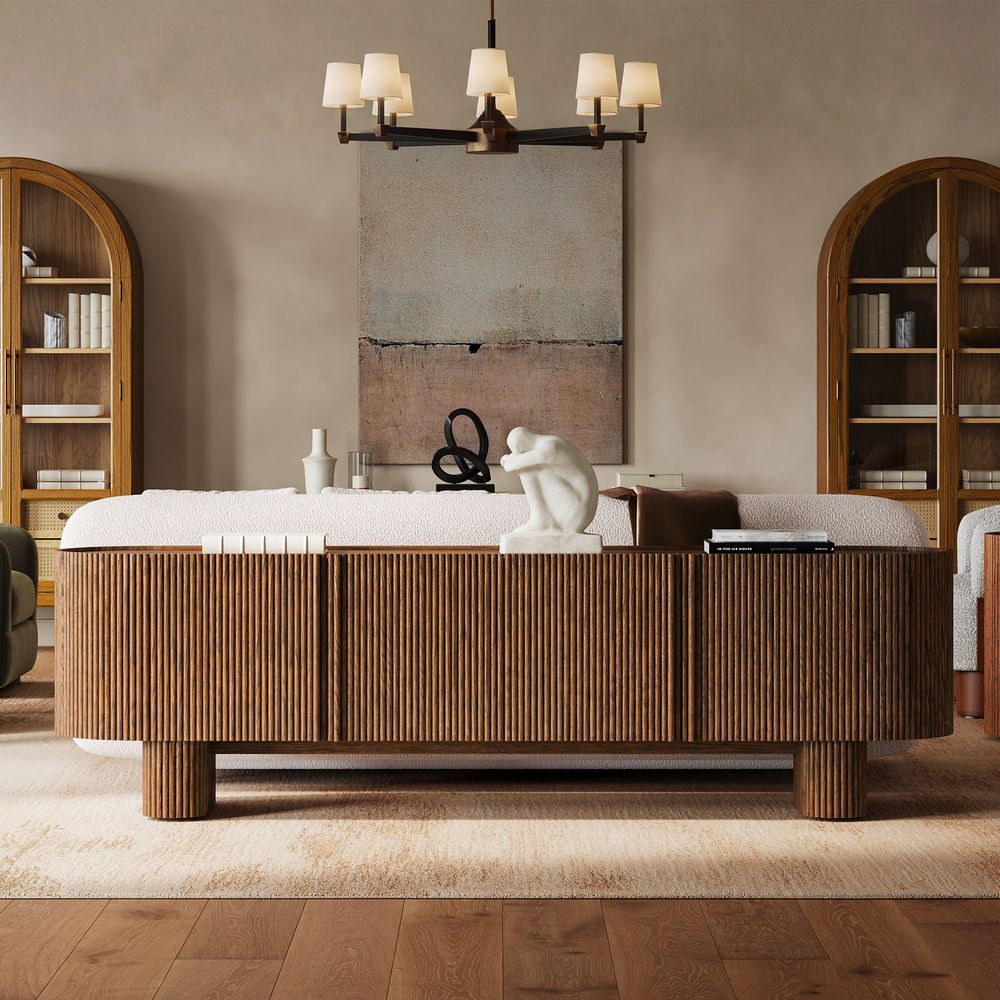
Marisol 84-Inch Oak Media Console
View Product
Marisol 55-Inch Oak Coffee Table
View Product
Practical Details to Check Before Buying
Appearance is only one part of choosing a TV stand and coffee table. Both pieces should also work with your daily routine.
For the TV stand:
-
Confirm that its width and height suit your TV and wall arrangement.
-
Check the number and placement of cable openings.
-
Make sure shelves and cabinets can accommodate your media devices.
-
Review the dimensions of the storage compartments, not just the overall cabinet.
For the coffee table:
-
Check whether its height works with your sofa.
-
Consider whether the surface provides enough room for everyday items.
-
Decide whether you need drawers or open storage.
-
Check the table's weight and assembly requirements before delivery.
For example, the Marisol and Skimra 84-inch media consoles are listed as compatible with TVs up to 85 inches and include four rear cord cutouts. These are model-specific features, so check the individual product specifications rather than assuming every media console offers the same setup.
Final Thoughts
A TV stand and coffee table do not have to match perfectly to look good together. Start with the room's existing colors and furniture, then choose one or two details that connect the pieces. Similar wood tones, complementary materials, or repeated shapes can bring the room together without making it feel overly coordinated.
Before choosing, compare dimensions, finishes, storage, and practical features. Explore Hernest's Media Consoles and Coffee Tables to find pieces that suit your layout and preferred style.
FAQs
Should a TV stand and coffee table be the same color?
No. They can have different finishes as long as the colors work together. Consider their undertones and repeat one of the finishes elsewhere in the room to create a visual connection.
Can I mix a wood TV stand with a glass coffee table?
Yes. Wood adds warmth, while glass can make the seating area feel visually lighter. Repeating a metal or wood detail elsewhere can help connect the two pieces.
Should the coffee table be lower than the TV stand?
Not necessarily. Their heights serve different purposes. A coffee table is usually close to or slightly below sofa seat height, while a TV stand should suit the screen position and viewing setup.
How long should a coffee table be compared with a sofa?
A coffee table around two-thirds the length of the sofa is a useful starting point. Adjust the size based on the seating arrangement and the amount of walking space available.
Can I use different wood finishes in one living room?
Yes. Mixing wood finishes can add depth. Try to keep their undertones compatible and avoid introducing too many unrelated finishes in the same space.
Is it better to buy a matching TV stand and coffee table set?
A matching set makes coordination easier, but it is not the only option. Separate pieces can create a more layered look when they share a color, material, shape, or design detail.
How much space should I leave between a sofa and coffee table?
Around 18 inches is a common starting point. The right distance depends on the room, the sofa depth, and how easily people need to move around the table.
What should I check before buying a media console?
Check its width, height, storage dimensions, cable openings, TV compatibility, and material specifications. Make sure it can accommodate your equipment and fit the available wall space.